Heavy Metals in Supplements: What You Need to Know
Your supplement contains liver powder. Liver concentrates minerals brilliantly. It also concentrates heavy metals if they're in the environment or feed. Most brands don't test for this. We do. Here's why it matters.
By Niall Kiddle, Founder, Organised

Reviewed by Pedro Rodrigues, Agronomist (farming and sourcing only) ·
6 min read · Published · Updated · 4 cited sources
Makers of the Organised Daily blend, a grass-fed beef organ supplement from regenerative UK farms

Heavy metals in supplements isn't a conspiracy theory. It's a real, measurable problem that most companies ignore because testing costs money and might reveal problems they'd rather not know about.
Where heavy metals come from
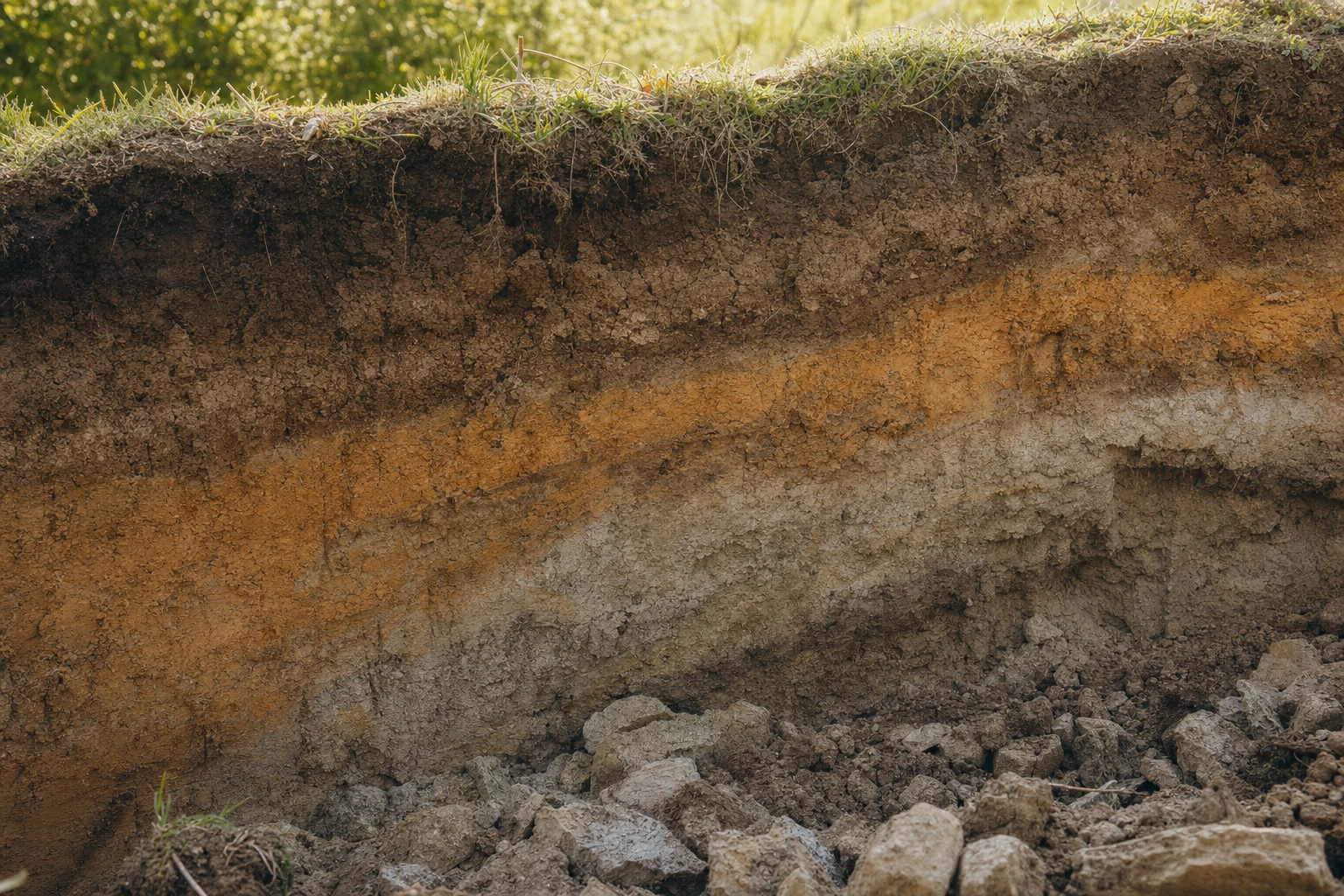
Heavy metals are naturally present in soil. Lead, cadmium, mercury, arsenic. They accumulate over decades from industrial pollution, old pesticides, air deposition, and water contamination. In agricultural land, they're already there.
Plants absorb these metals from the soil. Cattle eat the plants. The metals accumulate in the animal's tissue. The liver and kidneys, which filter toxins, accumulate them at the highest concentrations.
When you freeze-dry that liver, you're removing water and concentrating everything else by a factor of 4 to 8. A heavy metal at a low level in fresh liver becomes higher in freeze-dried liver just because of the concentration effect. This is a mathematical inevitability, not a processing failure. But it means testing is essential.
Most food systems don't address this. Beef regulations focus on bacterial contamination, not heavy metals. Organic certification doesn't require heavy metal testing. Most supplement companies don't test because it's expensive (rough costs: 300 to 500 pounds per batch) and they might fail. If they fail, product gets wasted and liability becomes a question.
Heavy metals in supplements aren't intentional. They're an oversight nobody is looking at hard enough.

Which metals matter most
Lead is the primary concern. It accumulates in bone and soft tissue. Even low chronic exposure affects neurological development in children and cognitive function in adults. There's no safe threshold.1 Lead exposure is linked to IQ reduction, attention problems, and behavioural issues in children. In adults, it affects blood pressure and kidney function.
Cadmium damages kidneys. It accumulates over time and has a long biological half-life (approximately 30 years).2 A small amount today is still present in your body in 30 years. Chronic low-level exposure matters. Cadmium is also a carcinogen (IARC Group 1).
Mercury damages the nervous system. Fish are the common source, but some organ meats can contain it depending on feed and environment.3 Mercury is neurotoxic at low levels and bioaccumulates in the nervous system.
Arsenic is a carcinogen. It's present in soil and water, particularly in certain regions. Rice, which accumulates arsenic, has received regulatory attention. Organ supplements less so, but the risk is real.
None of these are good. Even at low levels, they accumulate over time and can cause problems.

The accumulation problem
This is the critical part people miss. You don't get sick from one serving of high-lead supplement. You get sick from 10 years of low-level exposure accumulating in your body.
If you're taking an organ supplement daily (which is the idea), you're exposing yourself to these metals every day. A supplement containing 50 parts per billion of lead sounds small. Taken daily for years, it becomes a significant burden on your system. Lead bioaccumulates. It stays in your body.
Some people are more vulnerable. Children have developing brains that are more sensitive to lead. Women of childbearing age accumulate metals that can be mobilised during pregnancy (metal stores can shift to fetal tissue). People with kidney problems can't excrete metals efficiently. Older people often have accumulated years of exposure.
The standard protective approach is to keep exposures as low as possible. Test and exclude products with detectable levels of heavy metals when possible. This is basic toxicology. It's the approach regulatory bodies take with water contamination and air quality. Why not supplements?

Testing standards and gaps
There are testing standards. California's Prop 65 sets limits for lead (around 12.5 micrograms per day). The FDA has guidance on various heavy metals in foods and supplements.4 But supplements are loosely regulated. The burden of testing and compliance falls mostly on the company, not on government inspection.
Many supplement companies don't test for heavy metals because the cost is high and if they find problems, they have to pull product. It's cheaper to hope nothing goes wrong and assume their suppliers are clean. This is cost-shifting to the consumer (who bears the health risk).
Some companies test sporadically (a few batches per year). Some never test and rely on supplier claims. Very few test every batch. The transparency is near-zero.
Most concerning: there's no transparency. A supplement could be contaminated and nobody would know unless someone bought it, got tested, and discovered a problem. By then, the damage is done. The liability falls on the consumer, not the manufacturer.
Testing gaps aren't accidents. They're the path of least financial resistance.

Get farming and sourcing guides, free
Two short reads a week on regenerative farming and where real food comes from.
By signing up you agree to receive emails from us. No spam, unsubscribe anytime.
How to know if your supplement is safe
First: ask if the company tests for heavy metals. If they say no, or they don't know, that's a red flag. A serious company testing for purity would know this about their own product.
Second: ask for the testing standard. Do they test against California Prop 65, FDA guidance, or something else? Stricter standards are better. Prop 65 is a useful baseline. Many companies don't even meet that.
Third: ask how often they test. Every batch? Once per year? Only if the supplier claims they tested? The frequency matters. Every batch is the gold standard.
Fourth: ask for the results. A company that tests thoroughly should be happy to share. If they won't, or say the results are proprietary, they're hiding something. Transparency is the only way to build trust.
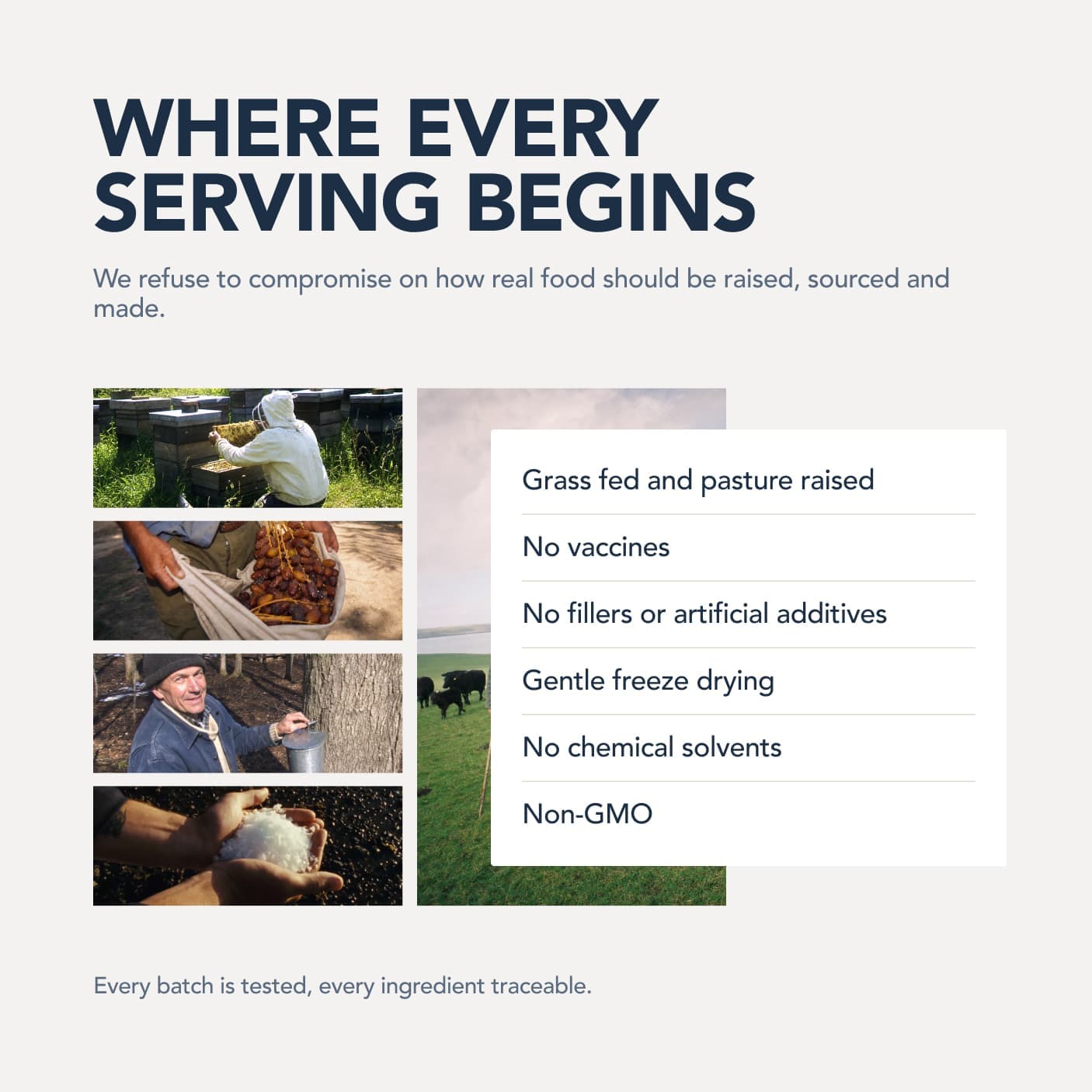
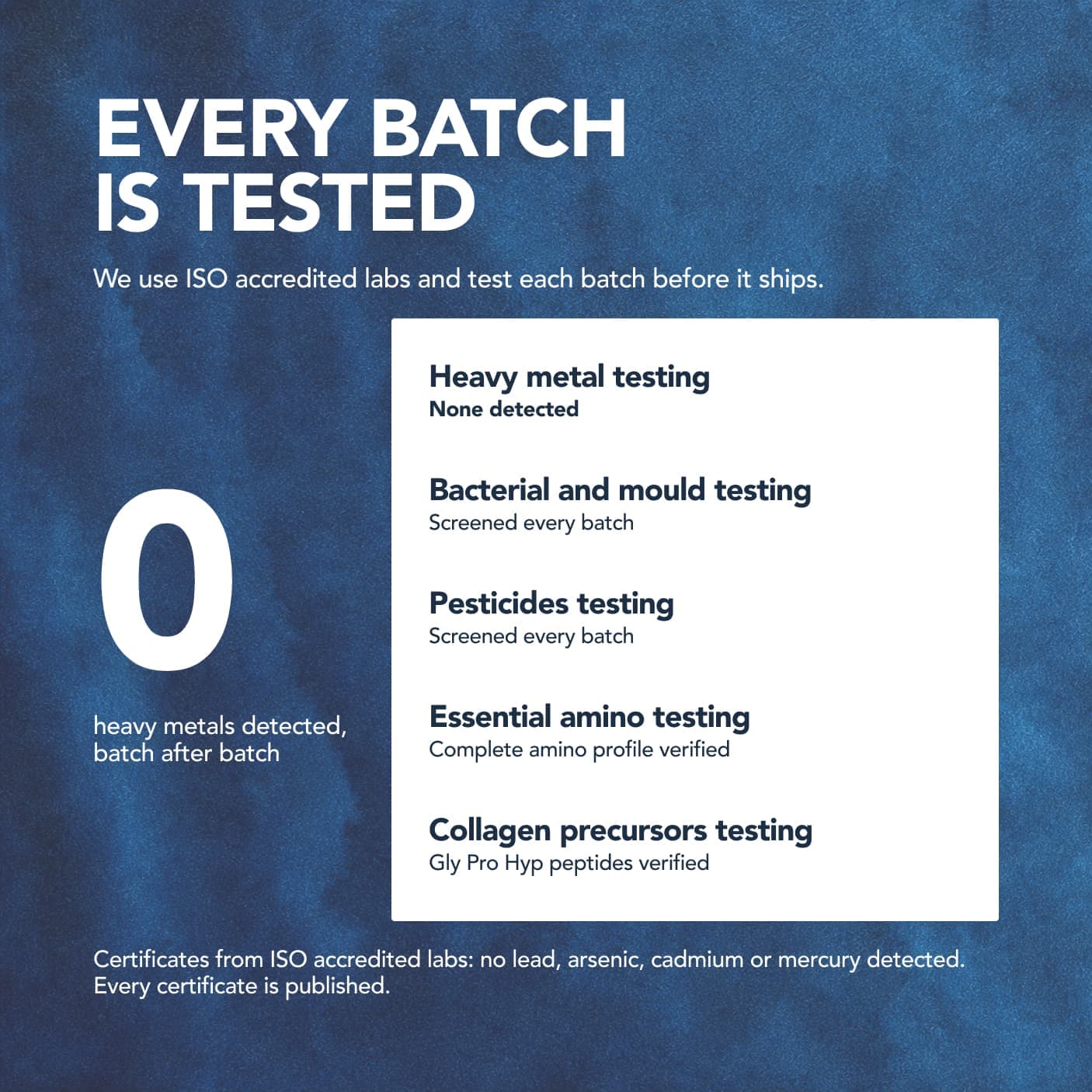
Our approach: every batch is lab tested for heavy metals, mould, pesticides and mycotoxins. We publish the results. And if you ask which farm your batch came from, we'll tell you.
Trust is earned through transparency. If a company won't show you the testing, you can't trust the product.

1 of 9
Daily blend
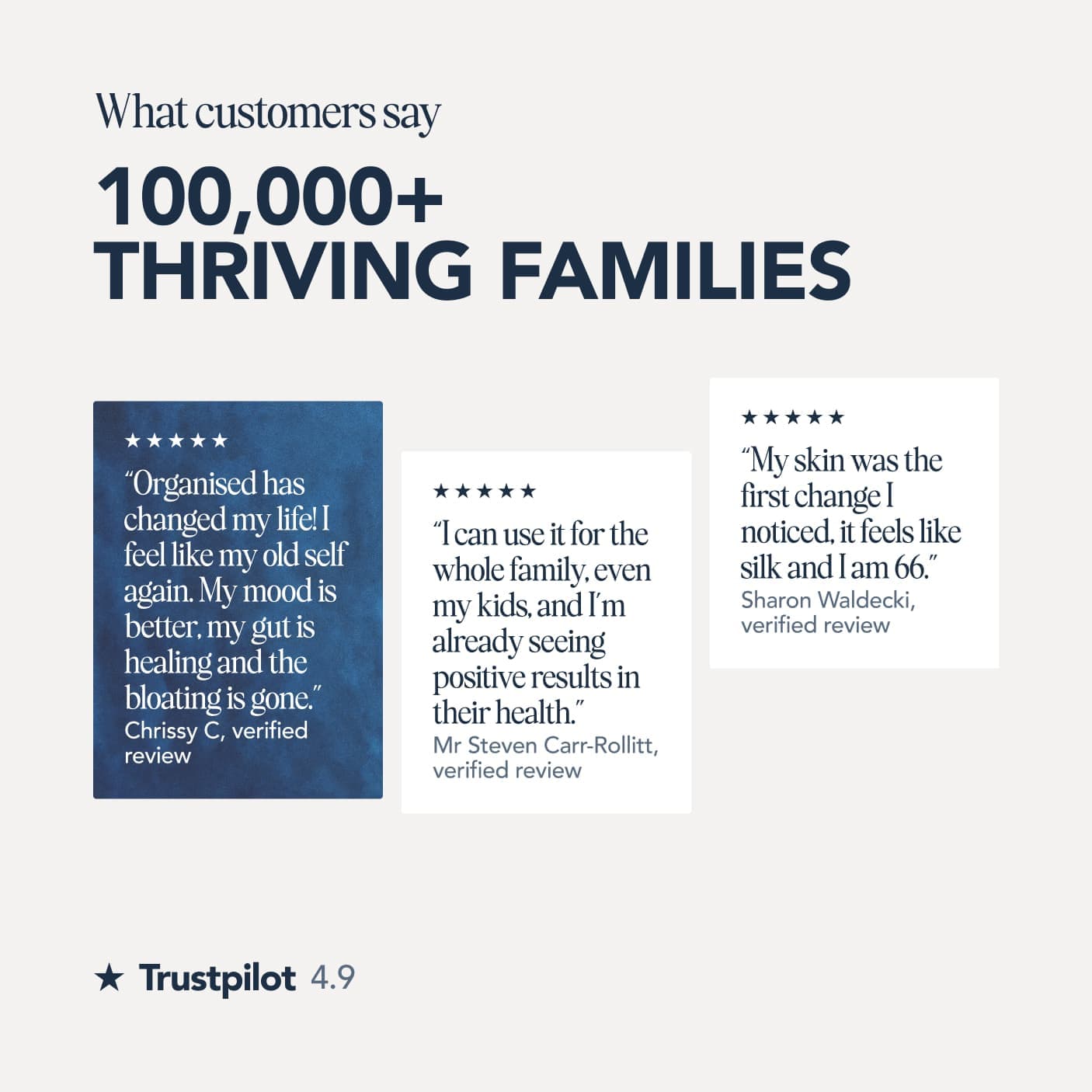
100,000+ thriving families4.9 on Trustpilot
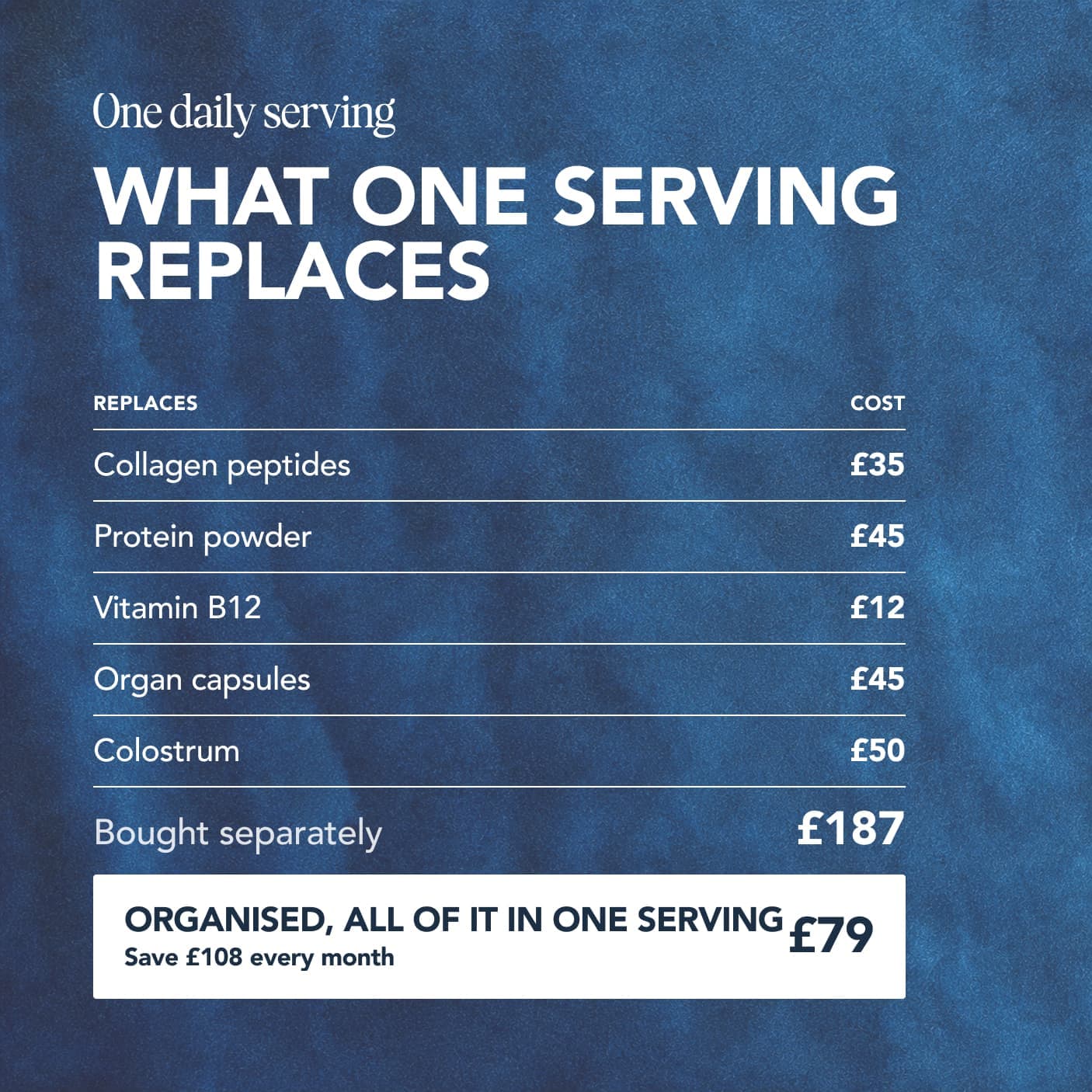
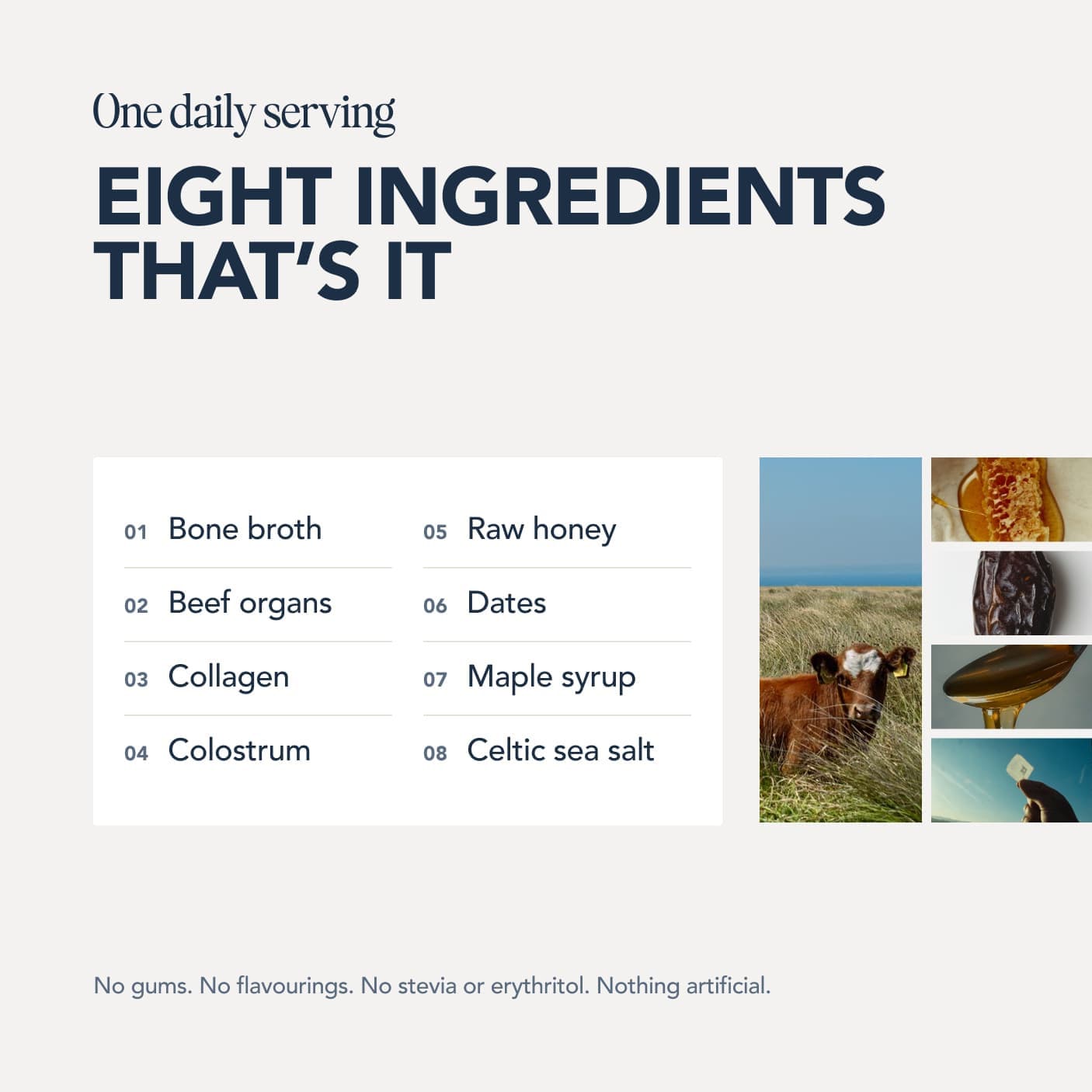
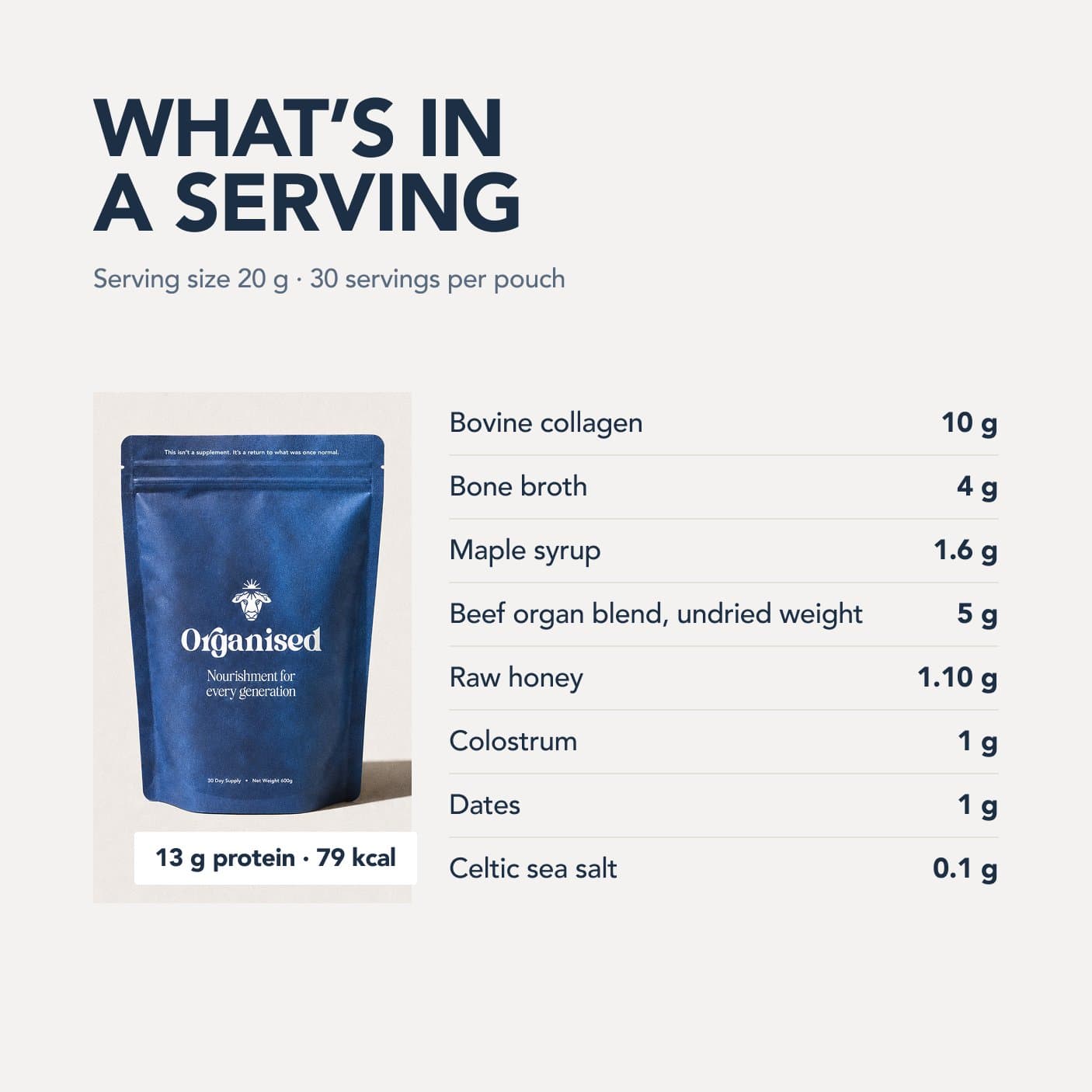
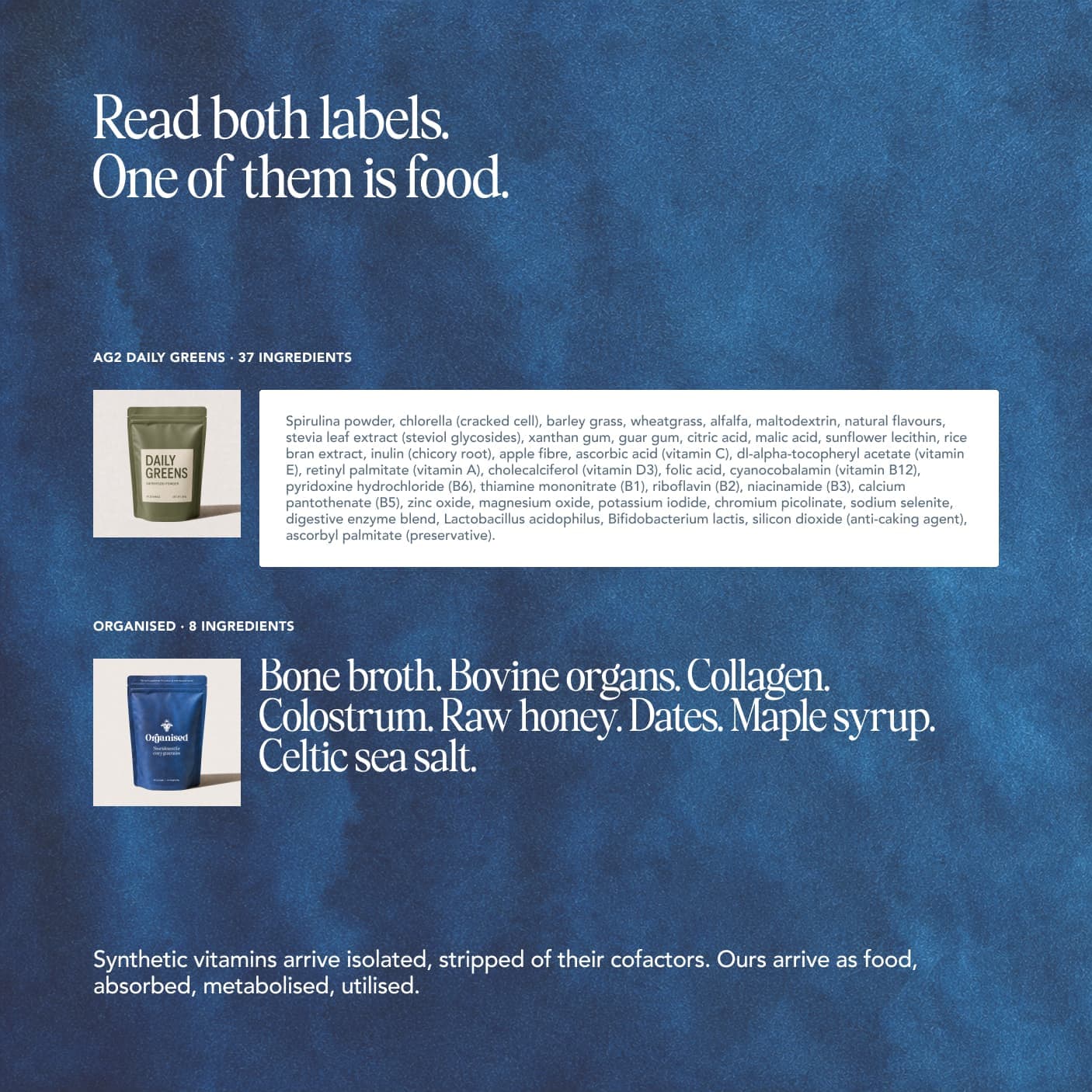
Eight real ingredients built around grass-fed beef organs, collagen and colostrum. Nothing synthetic added.
Free with your first order, worth £38. Plus £10 off the pouch with a subscription.
Free UK shipping · Made in England · 100 day money back guarantee on your first pouch · Skip, pause or cancel anytime
Geographic variation in heavy metals
Heavy metal soil concentrations vary by location. Industrial areas have higher lead and cadmium. Mining regions have higher arsenic and mercury. Agricultural areas with a long pesticide history have accumulated heavy metals from decades of use.
A UK farm near an old industrial site might produce beef with higher lead. A farm in a clean region will produce beef with lower lead. Sourcing location matters for heavy metal risk.
This is another reason farm-specific testing is essential. A general claim that beef is safe doesn't account for local soil conditions. Individual batch testing catches problems that generalised standards would miss.
The personal accumulation timeline
A person taking a lightly contaminated supplement (20 parts per billion lead) daily for 10 years accumulates roughly 20 micrograms of lead in bone tissue. Most people unknowingly have background lead exposure from water, dust, and other foods. The supplement becomes the additional burden that tips the scales.
By the time you notice a health effect (cognitive decline, blood pressure rise, kidney function decline), the lead has been accumulating for years. Prevention is cheaper than treatment.
Insurance against risk
Testing every batch is insurance. It costs money upfront. If you never find contamination, it feels wasteful. But the risk of serious harm from accumulated heavy metals is genuinely significant. The testing is worth it for peace of mind alone.
The bottom line
Heavy metals in supplements are a real concern that most companies ignore. Organs concentrate them. Freeze-drying concentrates them further. If you're taking supplements daily, the source and testing matter.
Ask questions. Demand to see testing. If a company is offended by the request, they don't deserve your business. A supplement company that takes purity seriously will have this data and be proud to share it.
You're taking this supplement to improve your health. It defeats the purpose if you're accumulating heavy metals in the process. Choose a company that tests transparently and frequently.
References
Every source below was checked on 27 August 2026. Each link was requested and read. Where a citation and its identifier disagreed, the citation was corrected to the record or the reference was deleted along with the sentence marker that pointed at it, and where the resolved paper turned out not to support the sentence, the sentence was cut back to what it does support. Borrowed authority is worse than none, because it looks like rigour.
- U.S. Centers for Disease Control and Prevention. Health Effects of Lead Exposure. https://www.cdc.gov/lead-prevention/health-effects/ [accessed May 2026].
- European Food Safety Authority. Cadmium in food. EFSA Journal. https://www.efsa.europa.eu/en/efsajournal/pub/980 [accessed May 2026].
- U.S. Environmental Protection Agency. Health Effects of Exposures to Mercury. https://www.epa.gov/mercury/health-effects-exposures-mercury [accessed May 2026].
- California Office of Environmental Health Hazard Assessment. Proposition 65: List of Chemicals. https://oehha.ca.gov/proposition-65 [accessed May 2026].
Who wrote and reviewed this guide
Niall Kiddle
Author · Founder, Organised
Niall is the founder of Organised. He started the company in 2024 after fixing his own health the slow way: in 2022 he swapped a cupboard of synthetic supplements for real food, raw milk, organ meats, bone broth and honey, and felt the difference within months.
Areas of expertise: Ancestral nutrition, Organ meats, Whole-food supplementation, Gut health, Regenerative sourcing
Read Niall's full profile
Pedro Rodrigues
Reviewer · Agronomist (farming and sourcing only)
Pedro is the agronomist Organised works with on farming and sourcing. His job on the guides is to keep the science honest: he reviews what we publish about soil health, regenerative agriculture, grazing and the way food is actually produced.
Areas of expertise: Regenerative agriculture, Agronomy, Soil health, Grass-fed farming, Food sourcing
Reviewed this guide on
Read Pedro's full profileMore on transparency
View all- How to Read a Supplement Label (And Spot the Red Flags)
- How We Test Every Batch: Our Quality Assurance Process
- Our Blend Changelog: Why We Publish Every Formula Update
- Supplement Industry Secrets: What Most Brands Don't Tell You
- The Organised Code: Our Non-Negotiable Standards
- Why We Don't Use Proprietary Blends
Browse the guides library
All guidesKeep reading

Farming
Why Animal Welfare Matters for the Quality of Your Food
Understand the link between animal welfare and food quality, and how stress and cortisol in animals can shape the meat you eat. The connection explained.

Farming
What Is Regenerative Agriculture? A Complete Guide
What is regenerative agriculture? Explore the five core principles, practices like cover crops and no-till, plus soil health and carbon, all explained simply.
Farming
The Difference Between 'Natural' and 'Whole Food'
The terms 'natural' and 'whole food' mean very different things. Here's how to decode supplement labels and understand what you're actually buying.
Real food, made effortless
Shop the blendA few ways to use it
All recipes
5-Minute High-Protein Breakfasts Using Organised
Quick, high-protein breakfast ideas using Organised. Five recipes you can make in minutes with real food. No fussing around.

How to Make Your Own Gelatine Gummies
A simple recipe for homemade gelatine gummies using grass-fed gelatine, fresh juice, and raw honey. Better than shop-bought, kids love them.
10 Ways to Use Organised That Aren't Just a Shake
Move beyond the basic shake. Discover 10 creative ways to use Organised in smoothie bowls, oats, yoghurt, baking, and more.


 Join over 100,000+ members
Build a better food system with us
The Organised community is thousands of people choosing real food and backing the farmers who grow it, all of us trying to leave the world a little better than we found it. If that is what you care about too, you belong here.