How to Read a Supplement Label (And Spot the Red Flags)
The supplement label is written in plain English. The ingredients are listed. But most people can't actually decode what they're looking at. By the time you finish reading this, you will.

By Niall Kiddle, Founder, Organised

Reviewed by Pedro Rodrigues, Agronomist (farming and sourcing only) ·
6 min read · Published · Updated · 2 cited sources
Makers of the Organised Daily blend, a grass-fed beef organ supplement from regenerative UK farms
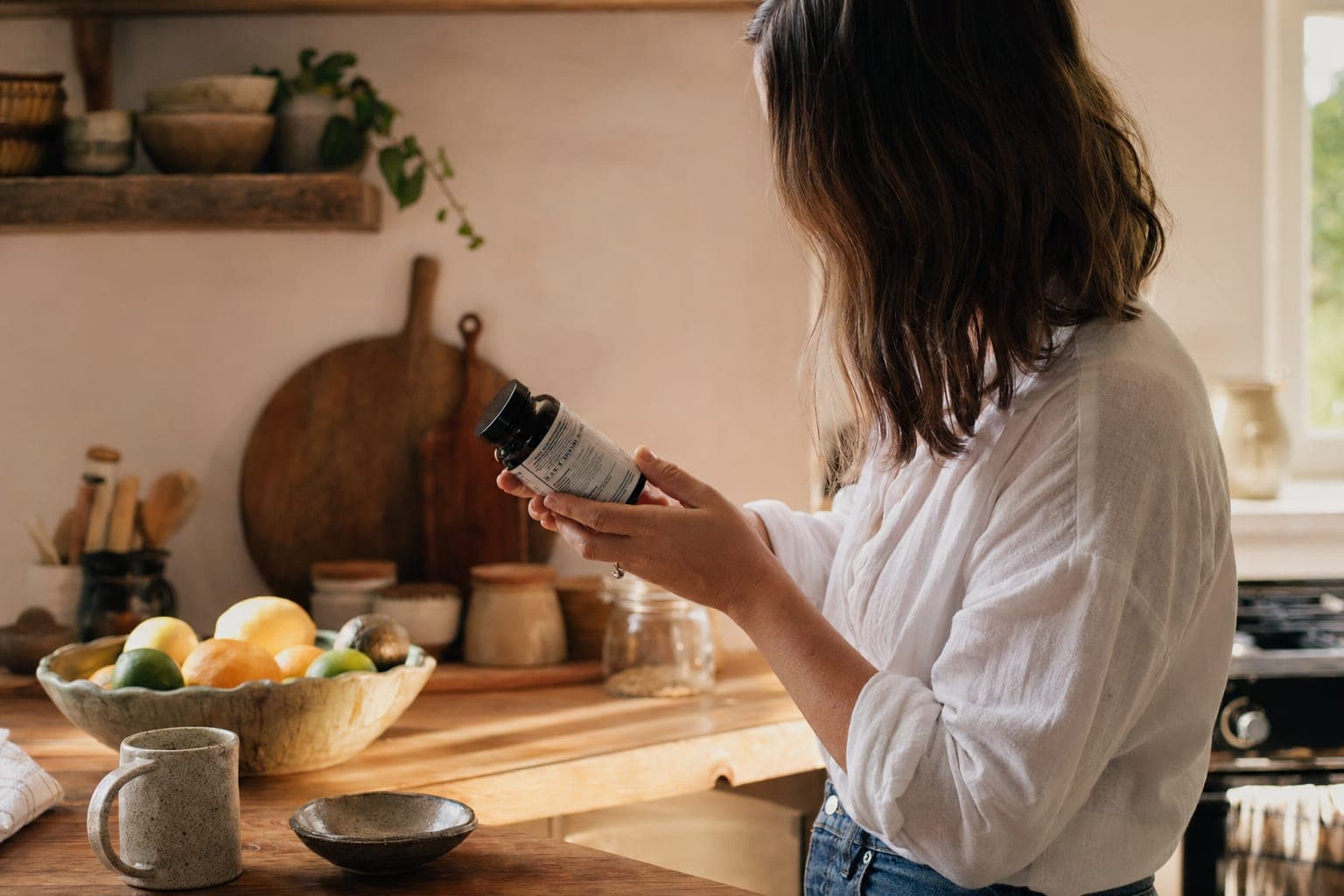
The label isn't designed to hide things. But it's designed in a way that hides things from people who don't know to look.

The structure of a supplement label
The nutrition facts panel tells you what you're actually getting. Below that is the ingredient list, in descending order by weight. Then the fine print: serving size, recommended dosage, manufacturer.
Read the label in this order: first, the serving size. If a powder says "1 teaspoon" is a serving, be sceptical. Most active ingredients don't deliver meaningful doses in a teaspoon. Second, the ingredient list. This is where the story lives.
UK food information law requires food and supplement labels to disclose ingredients in descending order of weight; supplement-specific labelling is regulated under the Food Supplements (England) Regulations 2003 and FSA guidance.1
The ingredient list is the truth. Everything else is storytelling.

Proprietary blends: the hiding place
A proprietary blend is a mixture of ingredients listed as a single item with a single total weight. For example: "Proprietary Blend: 500mg" containing five different plants.
This is legal. It's also deliberately opaque. You know the total weight of the blend (500mg) but not the individual amounts of each ingredient. One plant could be 450mg (the real active ingredient) and the others could be filler at 10mg each. You won't know.
Most proprietary blends are set up this way on purpose. A brand wants you to think all five ingredients are in therapeutic doses. They're not. They can't be, or they'd have to list them individually and the formula would look weak.
If a company hides doses behind proprietary blends, they're not confident in the strength of their product.
Good supplements list every ingredient with its exact dose. Organised does. If you see a proprietary blend, that's a red flag. It doesn't mean the product is worthless, but it means the company has something to hide.

Flow agents and fillers
These are listed innocently in the ingredient list, usually near the bottom. Silicon dioxide (silica). Magnesium stearate. Cellulose. Dicalcium phosphate.
Flow agents help powders move through manufacturing equipment without clumping. They're not active ingredients. They're there for the company's convenience. A capsule or tablet needs some, but the amount should be minimal, not padding out the weight of the product.
If a supplement's weight is listed as 1000mg but only 600mg is the actual ingredient (the rest is flow agents and fillers), you're paying for 40% inert material. This is standard in cheap supplements and usually signals low quality across the board.
The better sign: a label that says "other ingredients: none" or lists only a capsule material. Gel capsules are usually bovine or plant-based gelatin. Some contain only starch. Both are fine. They're not padding.
Fillers are efficient for manufacturing and cheap for companies. They're not good for you.
Natural flavouring and other vagueness
Natural flavouring can mean almost anything. It's a catch-all term for flavouring compounds derived from natural sources, but the source could be anything and the compound could be heavily processed. It tells you nothing useful.
If the label just says "natural flavouring" without specifying what (strawberry flavouring, vanilla extract, etc.), that's vague on purpose. They're not proud of what it is.
Similarly, watch for "natural colour" instead of listing the actual source. "Titanium dioxide" is more transparent (even though it sounds worse). At least you know what it is.
The best sign: no flavouring at all. Organ supplements don't need flavouring. If they taste earthy or mineral, that's information about the product. Adding flavour covers that up.
Vague language on a label usually means the company doesn't want you thinking too hard about what it is.
Dosage transparency
A good label tells you exactly what's in a serving and whether that's a meaningful dose. A serving of liver powder should contain actual liver, in an amount that delivers real nutrition.
If the label says "500mg liver powder per serving" and recommends three servings per day, you're getting 1.5 grams of actual liver. That's not nothing, but it's modest. You'd need to take it every day for months to feel it.
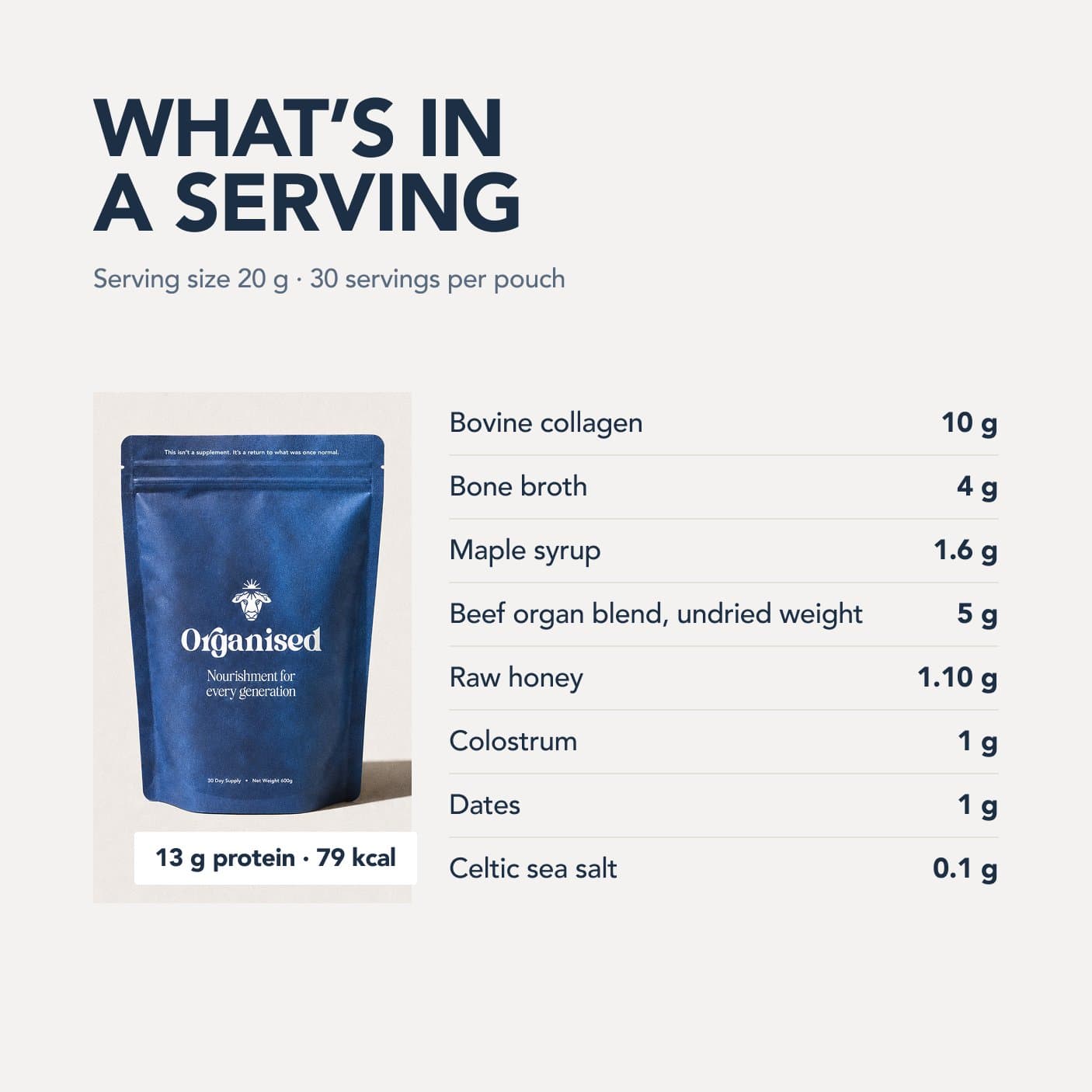
Organised's serving is 20g, two heaped tablespoons, once a day. That's a meaningful dose of whole food, not a token sprinkle. The label is clear about it. You know what you're taking and why.
Compare this to a brand that says "take as needed" or "recommended serving is one capsule (250mg total product)" without specifying what the 250mg actually is. That's evasion.

Get farming and sourcing guides, free
Two short reads a week on regenerative farming and where real food comes from.
By signing up you agree to receive emails from us. No spam, unsubscribe anytime.
The ingredients to question
Some ingredients are automatic red flags in organ supplements:
- Microcrystalline cellulose at high percentages. It's a binder. Some is fine. Lots of it means you're eating filler.
- Magnesium stearate at anything above 1 to 2%. It's a flow agent, not an active ingredient. High amounts suggest bulk padding.
- Corn starch or tapioca starch as fillers. These add weight and calories and no nutrition.
- Silicon dioxide (silica) above 1%. At these levels it's filler, not anti-caking agent.
- Dextrose or maltodextrin in powder form without explanation. These are cheap fillers that don't deliver nutrition.
The ingredient list should read like food. If it reads like chemistry, something is wrong.
How to spot quality
A quality supplement label has these traits:
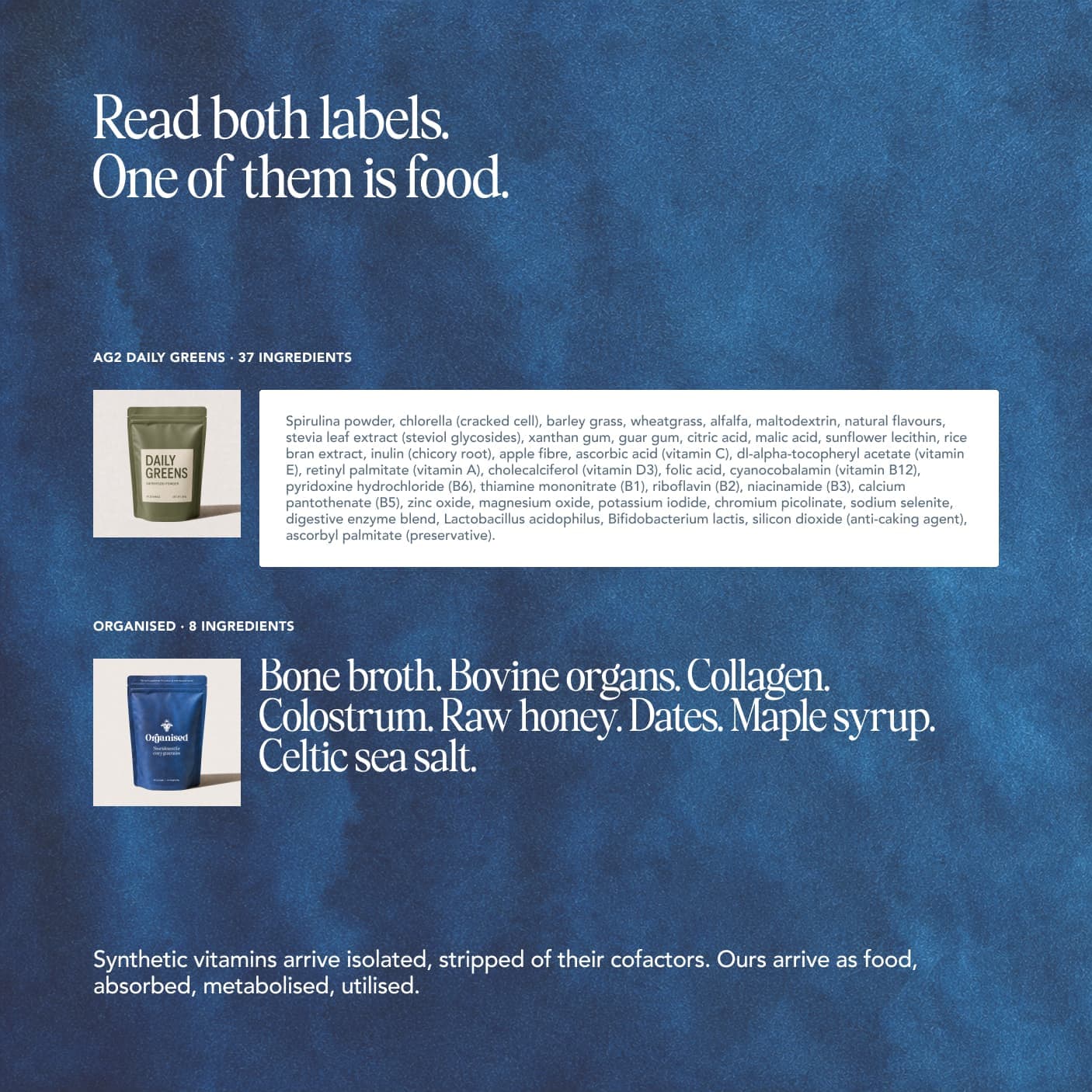
- Every ingredient listed with its exact dose. No proprietary blends.
- The primary ingredient (e.g., liver) is listed first and makes up the majority of the weight.
- Minimal flow agents and fillers. If the total weight is 1000mg and 950mg is ingredient, that's good.
- No vague language. "Natural flavouring" is replaced with actual descriptions, or absent entirely.
- Serving sizes that deliver meaningful nutrition. 500mg of liver per serving is weak. 2 to 3g is reasonable.
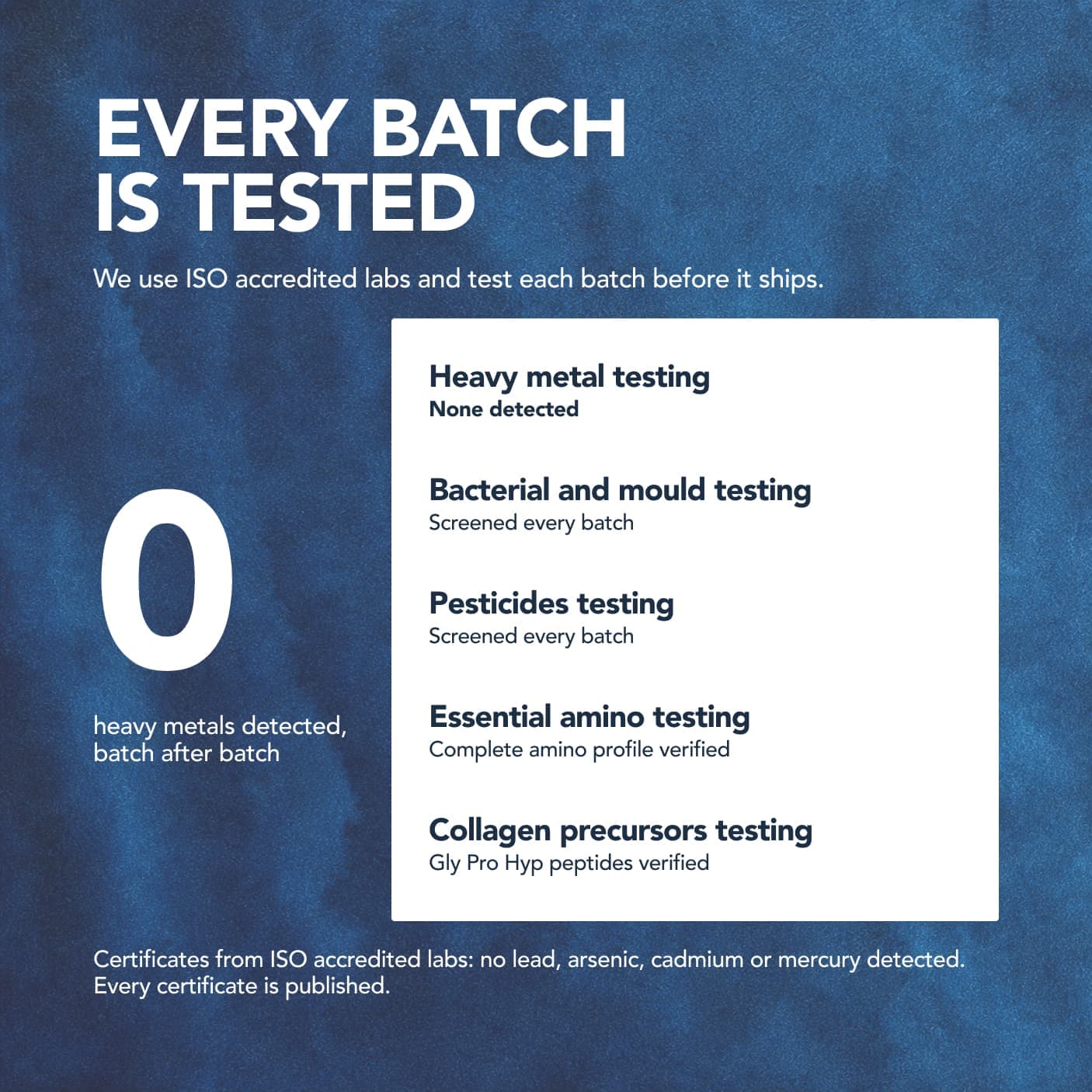
- A statement of third-party testing if they claim it.
- A manufacturer name and address you can actually contact.
A clean label isn't an accident. It's a choice to be transparent.

1 of 9
Daily blend
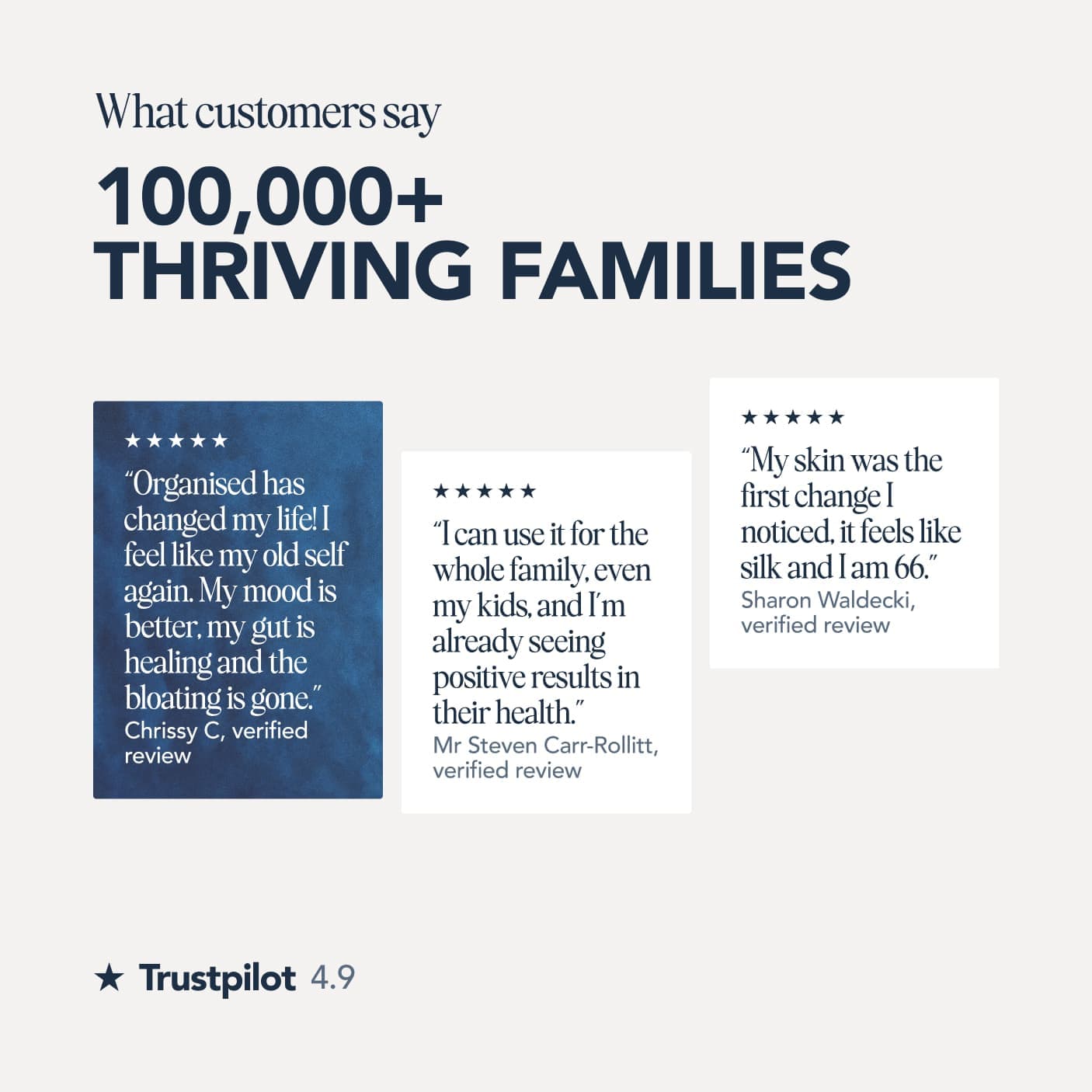
100,000+ thriving families4.9 on Trustpilot
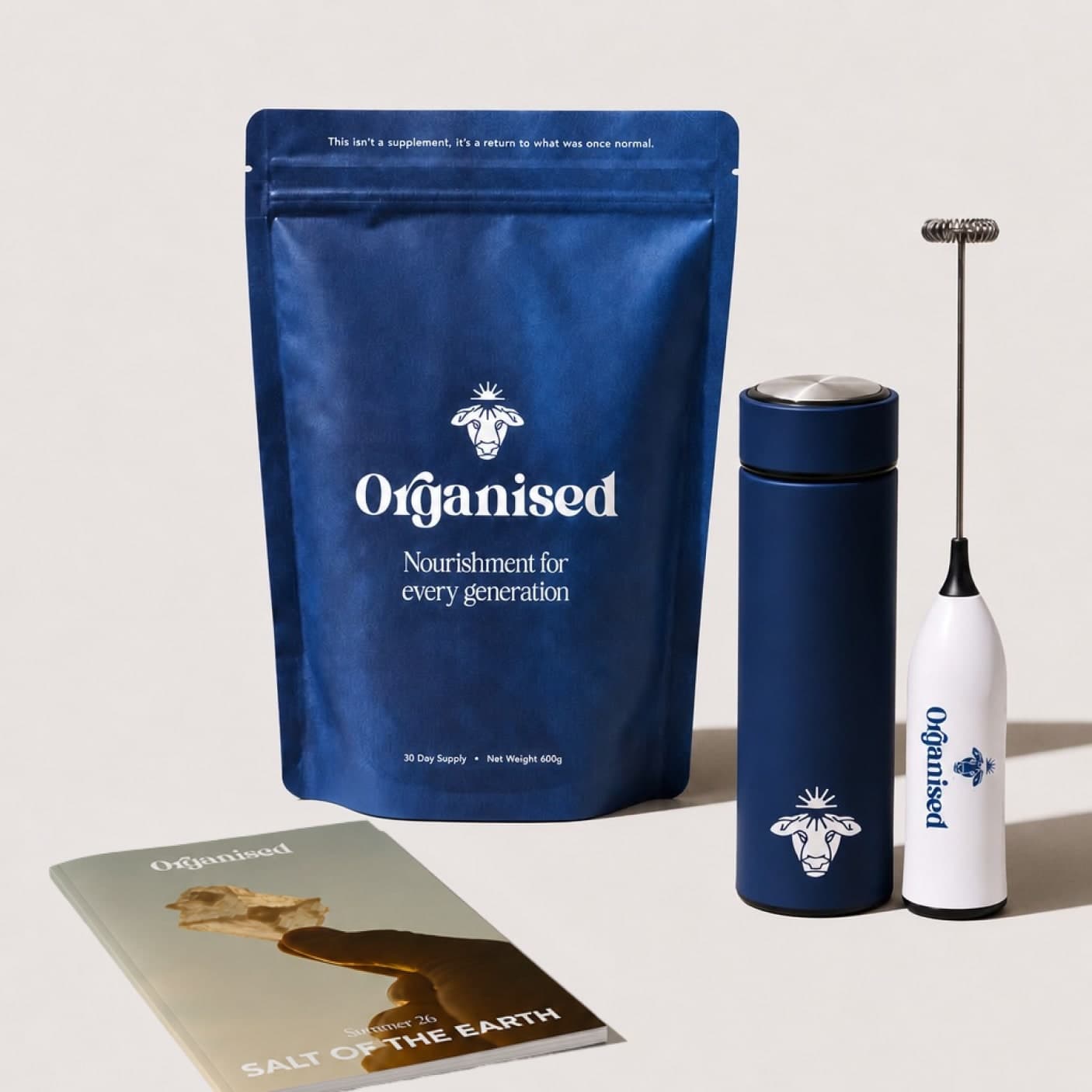
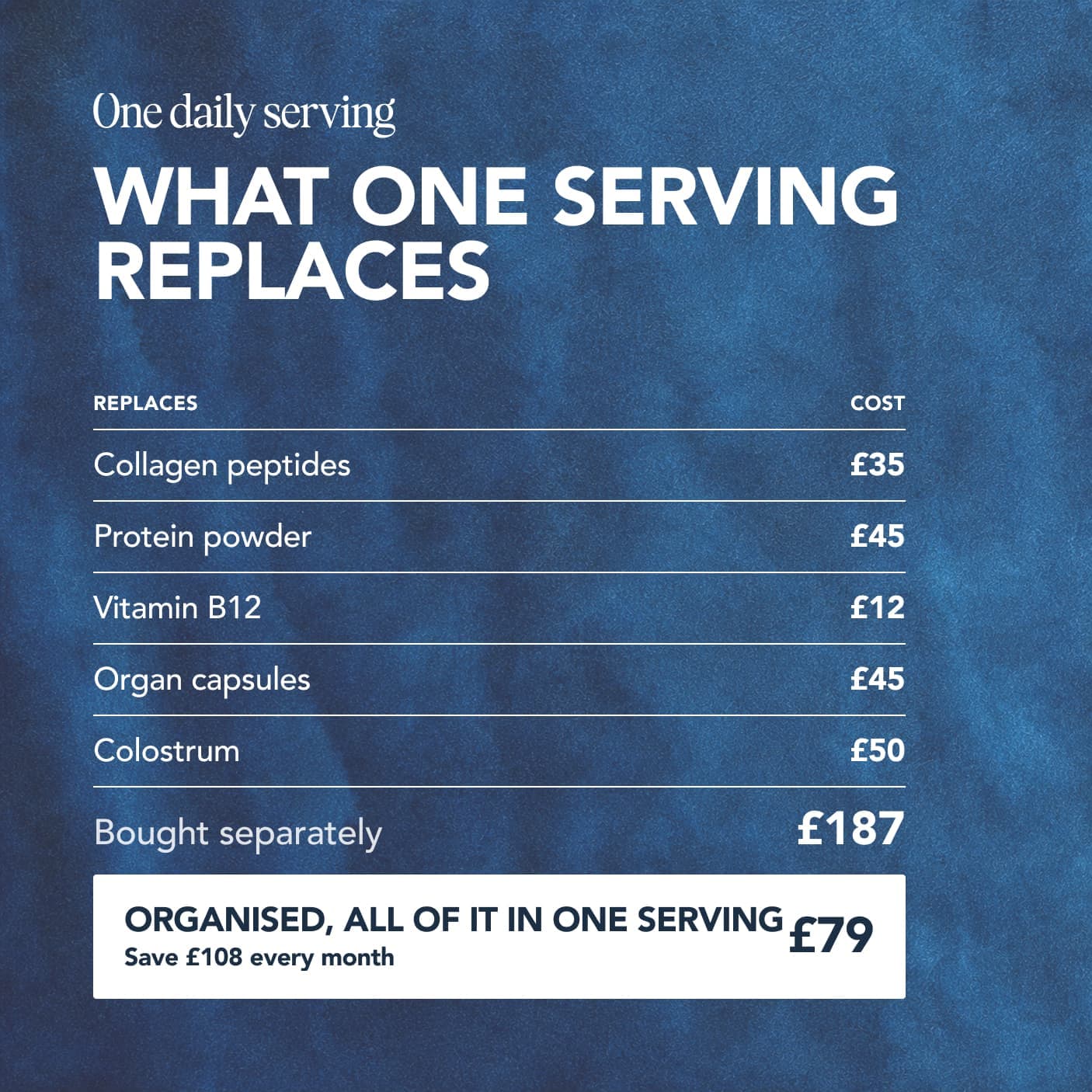
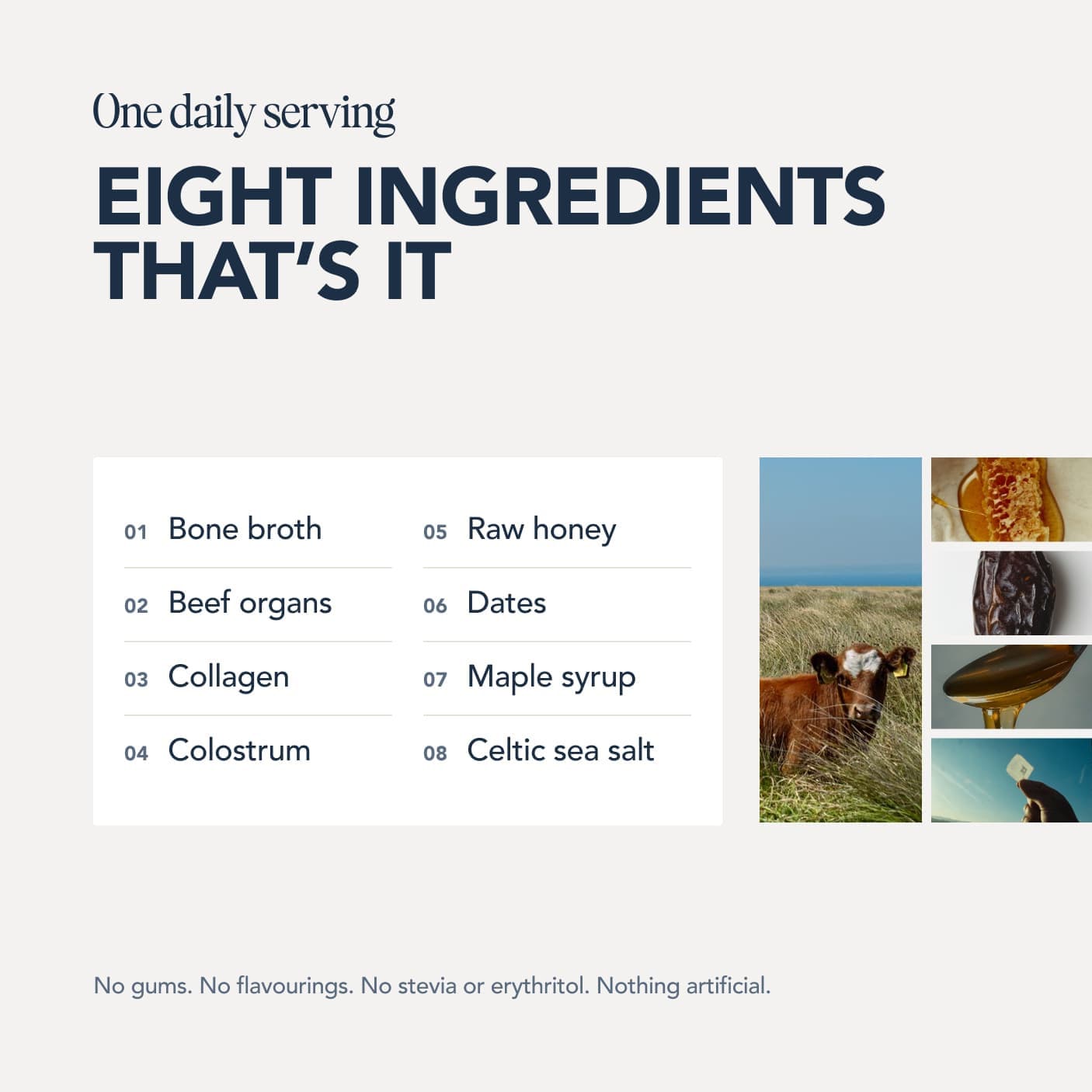
Eight real ingredients built around grass-fed beef organs, collagen and colostrum. Nothing synthetic added.
Free with your first order, worth £38. Plus £10 off the pouch with a subscription.
Free UK shipping · Made in England · 100 day money back guarantee on your first pouch · Skip, pause or cancel anytime
The dose is the dose
One thing labels must disclose is the amount of active ingredient per serving. This is where you find evidence of whether a supplement is genuine or a con.
If a label claims to contain magnesium but lists the amount below 50mg per serving, that is a token amount. If it is 300mg, that is a therapeutic dose. The difference is immediate once you know what to look for.
Some brands use a proprietary blend to hide the exact amounts of individual ingredients. This is a red flag. If they are hiding the dose, it is usually because the dose is inadequate and they do not want you to know.
A label that does not clearly state the dose is hiding something.
Look for specific, transparent dosing. Magnesium 400mg per serving. Zinc 15mg per serving. Vitamin D3 2000 IU per serving. Specific, measurable, verifiable. That is a trustworthy label. Vague claims and hidden blends are the opposite.
What you will not find on the label
Labels are required to disclose ingredients and amounts. They are not required to disclose the sourcing, the manufacturing process, whether the ingredient was processed with heat or solvents, or the bioavailability of the final product.
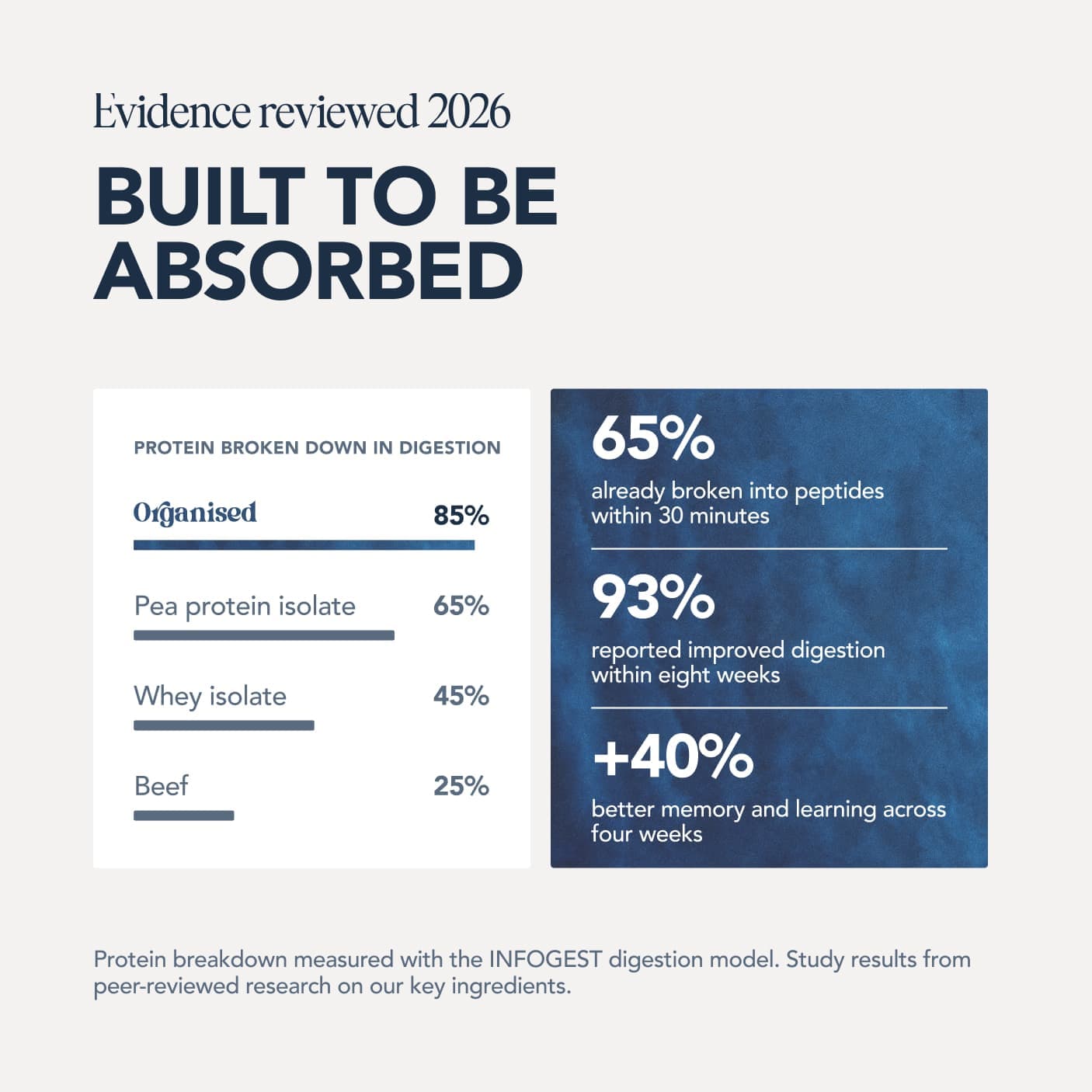
A vitamin D3 label will not tell you whether it was derived from lanolin (the most common commercial source), fish liver oil, or lichen (a plant-derived option). All three can legally be labelled cholecalciferol (vitamin D3).2
A calcium label will not tell you whether it is from bone meal (highly bioavailable), chalk (poorly bioavailable), or a synthetic chelate (moderately bioavailable). All can be called calcium on the label. Your absorption depends on which one you get.
A label tells you the minimum. What you do not see on the label is often more important than what you do.
This is why relationship with the brand matters more than the label alone. If a company is transparent about sourcing, processing, and bioavailability (beyond what is legally required), they are probably trustworthy. If they hide behind regulatory minimums, they are probably optimising for cost, not effectiveness.
The bottom line
Your supplement label is telling the truth. It's just not telling the whole truth unless you know how to read it. Proprietary blends hide doses. Fillers pad weight. Vague language obscures ingredients.
The next time you pick up a supplement, read the ingredient list and ask: do I know what each thing is? Can I see the actual doses? Is the serving size realistic? If the answers are yes, you're probably looking at something good.
If the answers are no, you're probably looking at marketing dressed up as nutrition.
References
Every source below was checked on 27 August 2026. Each link was requested and read. Where a citation and its identifier disagreed, the citation was corrected to the record or the reference was deleted along with the sentence marker that pointed at it, and where the resolved paper turned out not to support the sentence, the sentence was cut back to what it does support. Borrowed authority is worse than none, because it looks like rigour.
- UK Food Standards Agency. Food labelling and packaging. https://www.food.gov.uk/business-guidance/packaging-and-labelling
- National Institutes of Health, Office of Dietary Supplements. Vitamin D — Health Professional Fact Sheet. https://ods.od.nih.gov/factsheets/VitaminD-HealthProfessional/
Who wrote and reviewed this guide
Niall Kiddle
Author · Founder, Organised
Niall is the founder of Organised. He started the company in 2024 after fixing his own health the slow way: in 2022 he swapped a cupboard of synthetic supplements for real food, raw milk, organ meats, bone broth and honey, and felt the difference within months.
Areas of expertise: Ancestral nutrition, Organ meats, Whole-food supplementation, Gut health, Regenerative sourcing
Read Niall's full profile
Pedro Rodrigues
Reviewer · Agronomist (farming and sourcing only)
Pedro is the agronomist Organised works with on farming and sourcing. His job on the guides is to keep the science honest: he reviews what we publish about soil health, regenerative agriculture, grazing and the way food is actually produced.
Areas of expertise: Regenerative agriculture, Agronomy, Soil health, Grass-fed farming, Food sourcing
Reviewed this guide on
Read Pedro's full profileMore on transparency
View all- Heavy Metals in Supplements: What You Need to Know
- How We Test Every Batch: Our Quality Assurance Process
- Our Blend Changelog: Why We Publish Every Formula Update
- Supplement Industry Secrets: What Most Brands Don't Tell You
- The Organised Code: Our Non-Negotiable Standards
- Why We Don't Use Proprietary Blends
Browse the guides library
All guidesKeep reading

Farming
Why Animal Welfare Matters for the Quality of Your Food
Understand the link between animal welfare and food quality, and how stress and cortisol in animals can shape the meat you eat. The connection explained.

Farming
Biodynamic Farming: What It Means and Why It Matters
Biodynamic farming goes beyond organic. Learn what Demeter certification means and why closed-loop regenerative systems matter for food quality.

Farming
Why We Don't Use Proprietary Blends
Proprietary blends hide how much of each ingredient you get. See why we publish exact amounts and why this transparency matters for what you take.
Real food, made effortless
Shop the blendA few ways to use it
All recipes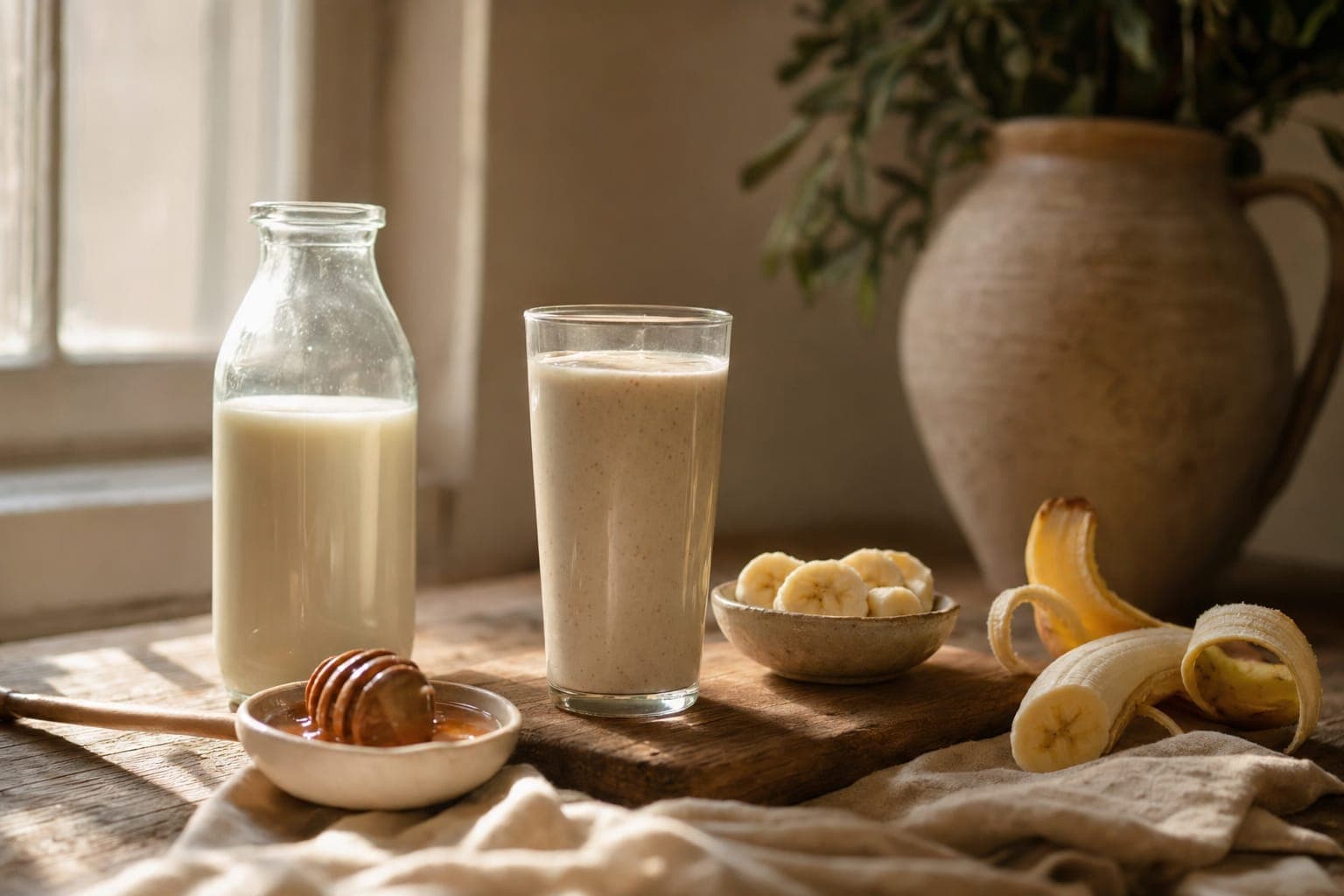
The Perfect Organised Morning Shake: Our Favourite Recipe
Our signature morning shake: Organised, raw milk, banana, honey. Simple, nourishing, and optimised for an empty stomach.

Organised Smoothie Bowl Recipes for Every Season
Four seasonal smoothie bowl recipes using Organised. Berry in summer, apple-cinnamon in autumn, tropical in spring, warming chocolate in winter.
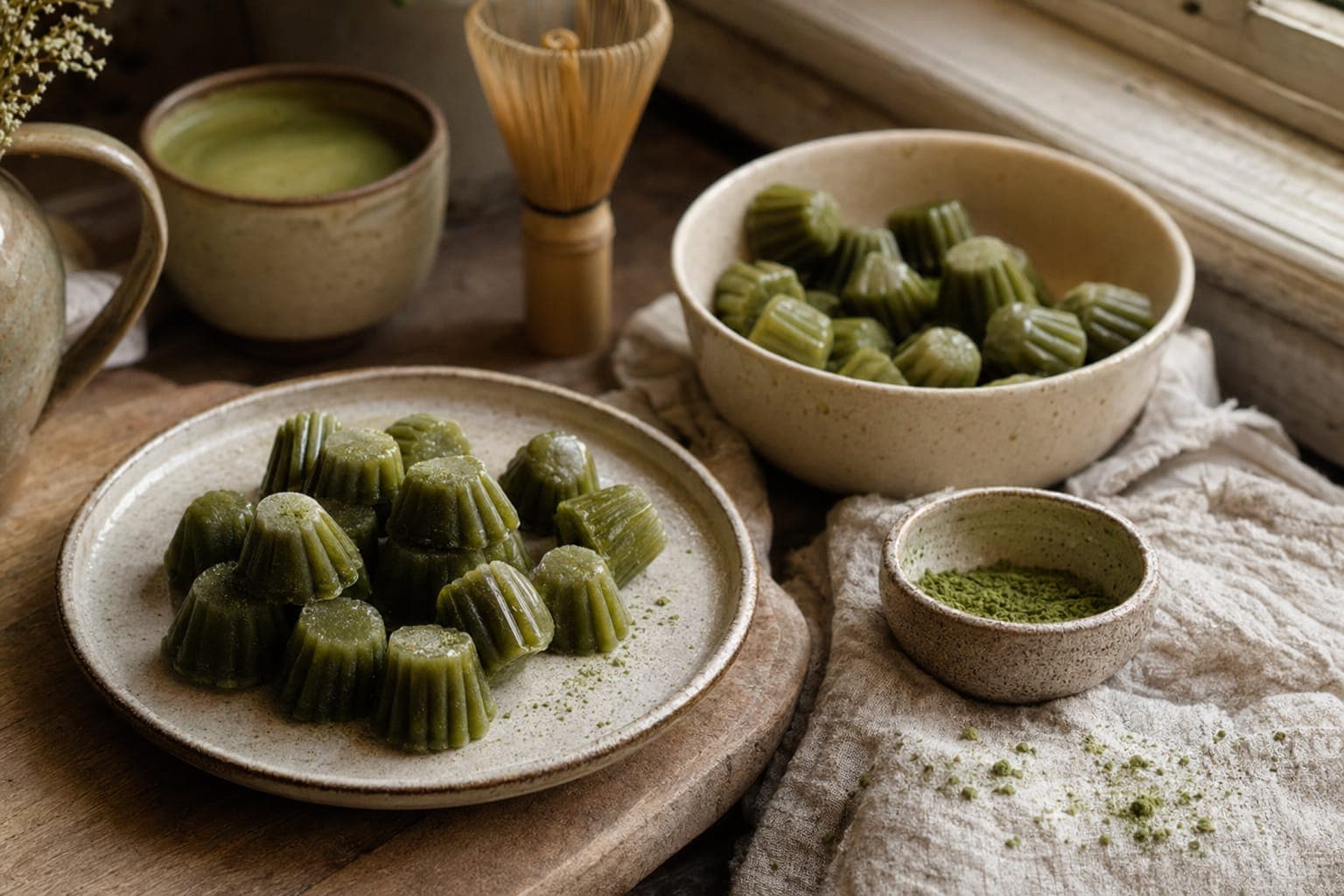
Matcha Latte Gummies with Collagen and Gelatine
Make visually stunning matcha latte gummies infused with collagen and gelatine. Simple recipe for gut-healing sweets you'll actually want to eat.


 Join over 100,000+ members
Build a better food system with us
The Organised community is thousands of people choosing real food and backing the farmers who grow it, all of us trying to leave the world a little better than we found it. If that is what you care about too, you belong here.