Why We Don't Use Proprietary Blends
Open a supplement bottle from almost any brand and you'll see a list called 'proprietary blend'. Below it, a total weight. Inside it, individual nutrients listed with zero quantity. You're paying for a mystery box.

By Niall Kiddle, Founder, Organised

Reviewed by Pedro Rodrigues, Agronomist (farming and sourcing only) ·
5 min read · Published · Updated · 1 cited source
Makers of the Organised Daily blend, a grass-fed beef organ supplement from regenerative UK farms

This practice is completely legal. It's also completely unhelpful. And after talking to hundreds of people using supplements, we realised that proprietary blends are where transparency goes to die.
What proprietary blends actually hide
A proprietary blend is a mixture of ingredients listed under a single header with no individual quantity disclosures. So a product might say "Proprietary Blend 750mg" and underneath list liver powder, beef kidney, heart, thyroid, and adrenal. You see all five ingredients. You have no idea whether the blend is 700mg liver powder with 25mg of everything else, or if it's distributed equally, or anything in between.
Manufacturers claim this protects their secret formula. In practice, it protects their ability to cut corners without transparency. A brand can use fillers. They can load the blend heavily toward cheaper ingredients and lighter on expensive ones. They can change the formula without changing the label. You'd never know.
This matters because nutrients aren't fungible. Liver and kidney are both nutrient-dense, but they carry different micronutrient profiles. If a blend is mostly kidney and barely any liver, the nutrient you actually get is different from what you expected. And since you were never told the ratio, you can't adjust your consumption or choose a different product.
You cannot make an informed choice about a supplement if you don't know what you're actually taking.
The regulatory loophole
The FDA permits proprietary blends under the provision that they're protecting trade secrets.1 In practice, almost no supplement company actually uses proprietary blends because they've discovered something genuinely new or revolutionary. They use them because it gives them legal cover to be vague.
Other major regulated industries don't work this way. Pharmaceutical manufacturers must disclose exact quantities of every active ingredient. Food manufacturers must list nutritional content with precision.1 Even cosmetics, which are far less scrutinised than supplements, typically need to list ingredients and percentages.
But supplements exist in this middle ground where opacity is tolerated. The result is a market where brands can literally change their formula week to week without customers noticing, because the label tells you nothing about actual quantities.
Some brands use proprietary blends because their formula is actually incomplete or underdosed. Rather than commit to quantities that would look weak on paper, they hide behind the blend label. If they published the quantities, it would be immediately obvious that the nutrient amount is inadequate for human biology.

Why quantities matter more than you think
Your body doesn't respond to an ingredient. It responds to a dose. Liver is nutrient-dense, but 10mg of liver powder is a homeopathic gesture. It will do nothing. 1,000mg of liver powder actually carries meaningful nutrition.
The difference between a therapeutic dose and a useless dose might be ten-fold. You could be taking two entirely different products depending on where the brand cut corners, and the label would look identical.
Research on supplementation is always dosed. Studies that show benefit of iron supplementation in anaemia use specific quantities. Studies on B12 absorption use measurable amounts. When a brand refuses to tell you quantities, they're essentially saying "we don't know if our dose works, and we don't want you to find out."
Women's health particularly suffers from this. Menstrual-support formulas often use proprietary blends claiming to address hormonal balance. You have no way to know if the formula contains 5mg of a supporting herb or 500mg. The therapeutic threshold might be 200mg, but you'd never know if you're getting 10% of that or 250% of that. You're guessing.
A dose below the threshold of efficacy is useless. A dose above it is often wasted. Only transparent quantities let you make the right choice.
Get farming and sourcing guides, free
Two short reads a week on regenerative farming and where real food comes from.
By signing up you agree to receive emails from us. No spam, unsubscribe anytime.
What real transparency looks like
Real transparency means publishing the exact quantity of every ingredient in the product. Not as a percentage. As actual mass in milligrams or grams. If it's freeze-dried organ meat, state the amount of freeze-dried powder. If it's an herbal extract, state the dose and the extraction ratio.
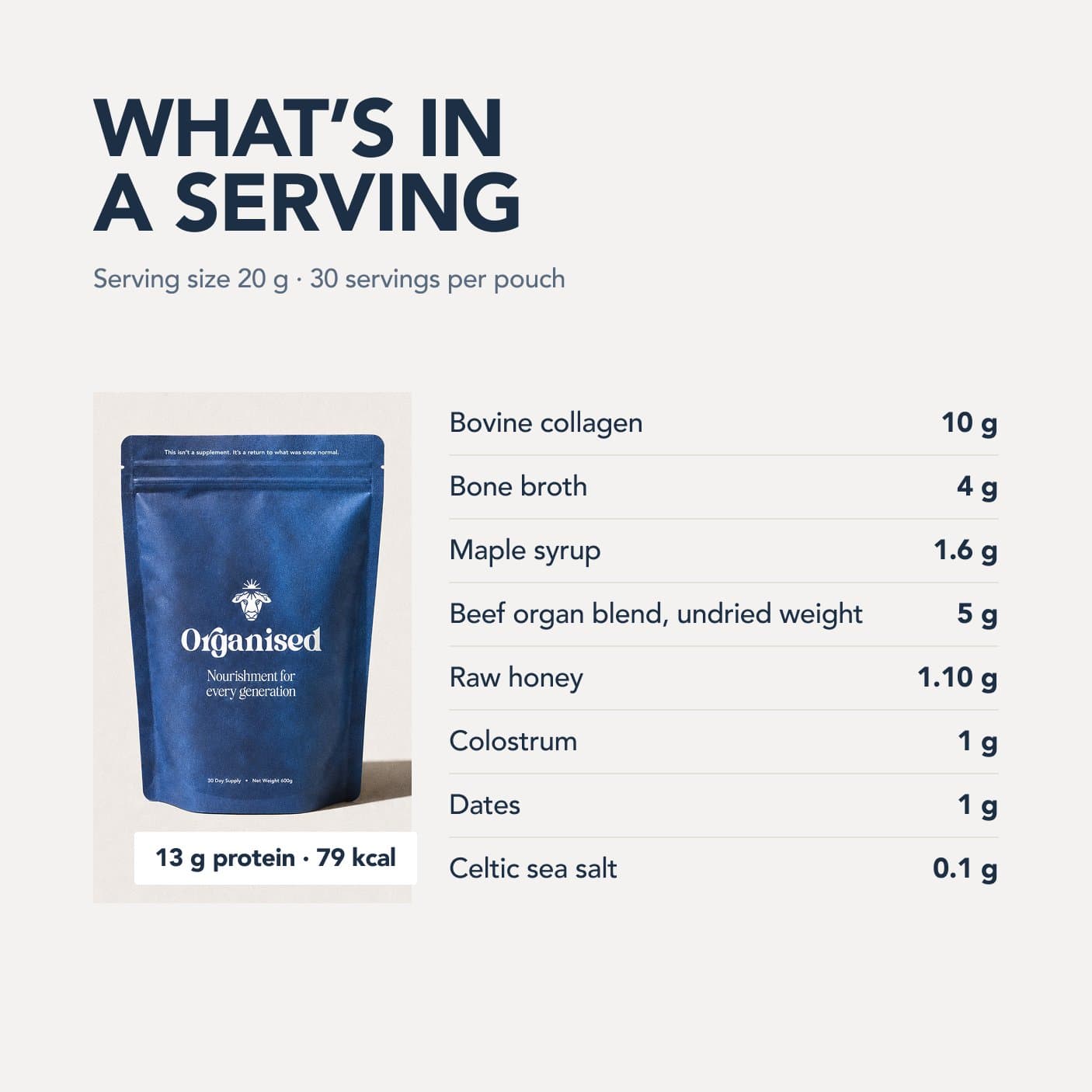
This is how we work. Every ingredient in every product has a published quantity. Not hidden in a proprietary blend. Not under a vague category. Stated clearly so that if you want to research the dose, you can. If you want to compare to another product, you can. If you want to understand whether this supplement actually contains a therapeutic dose of what it claims to address, you have the information to make that decision.
This costs more. Transparent formulation requires committing to specific doses, which means the cost structure is fixed. With proprietary blends, brands can fiddle with ratios quarterly to chase cheaper ingredients. We can't do that. Once we publish a quantity, we deliver that quantity.
Real transparency also requires publishing when we change a formula. We maintain a complete changelog. Every update, every reason, every substitution. It's extra work. It's completely unnecessary from a legal standpoint. And it's non-negotiable for us because you deserve to know what changed and why.
1 of 9
Daily blend
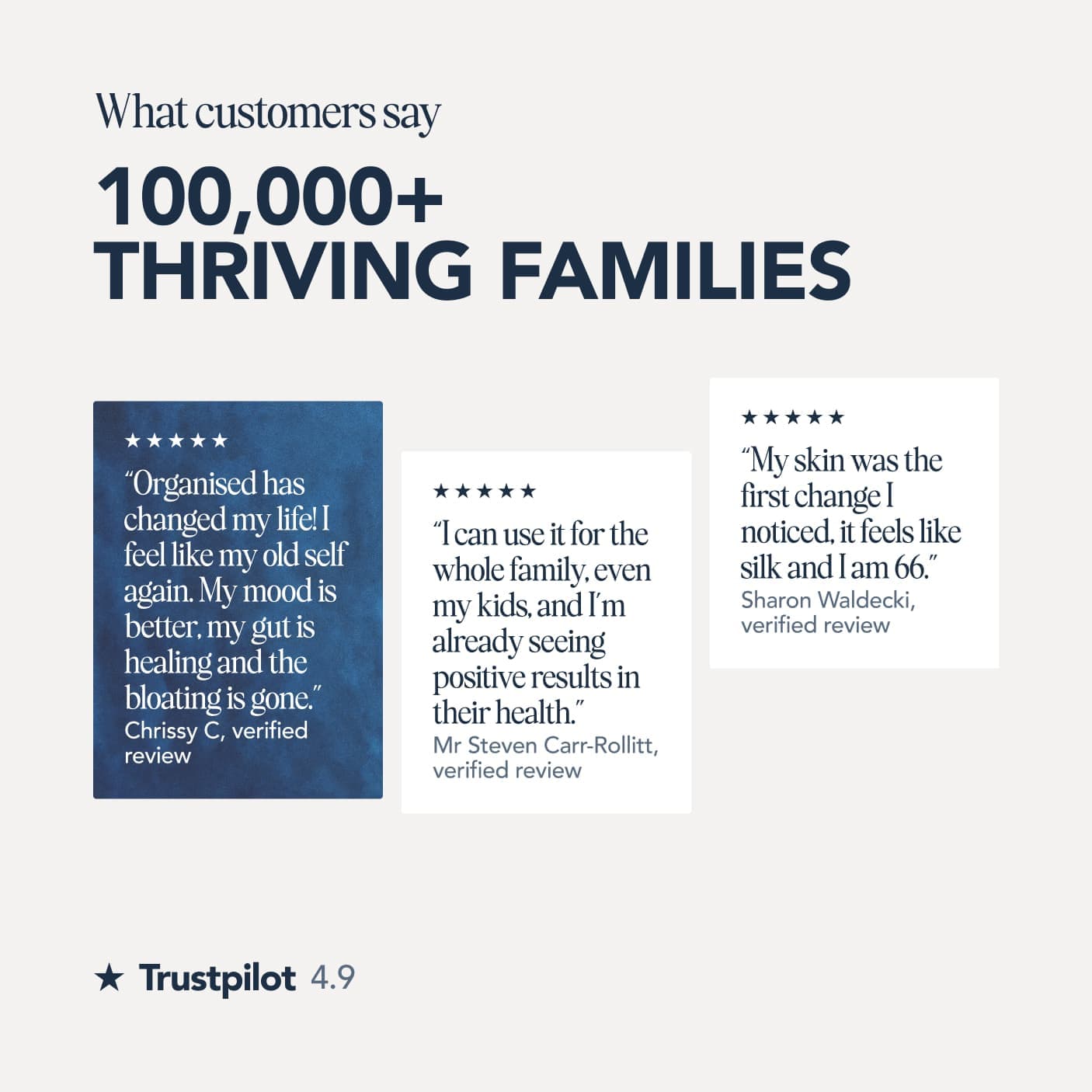
100,000+ thriving families4.9 on Trustpilot
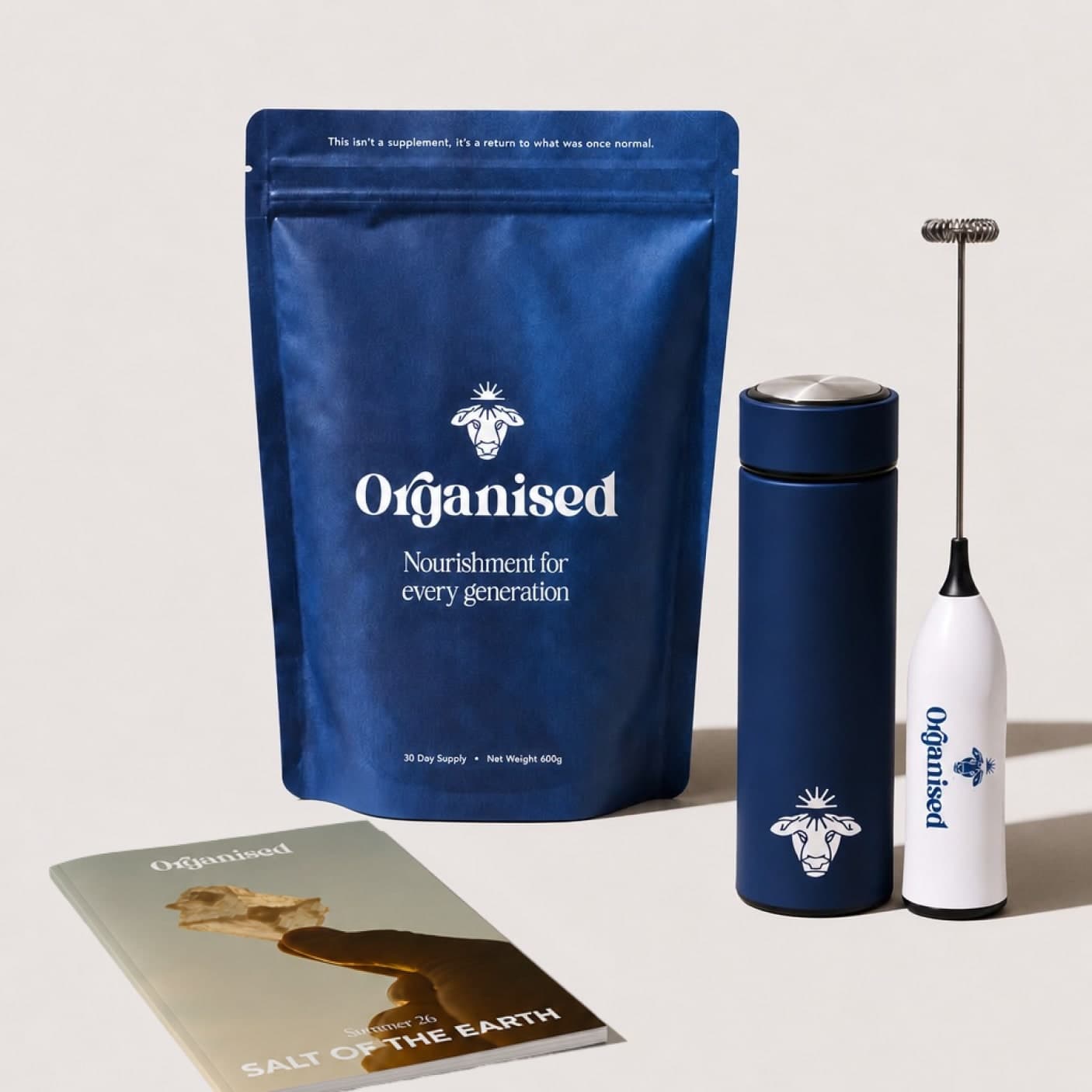
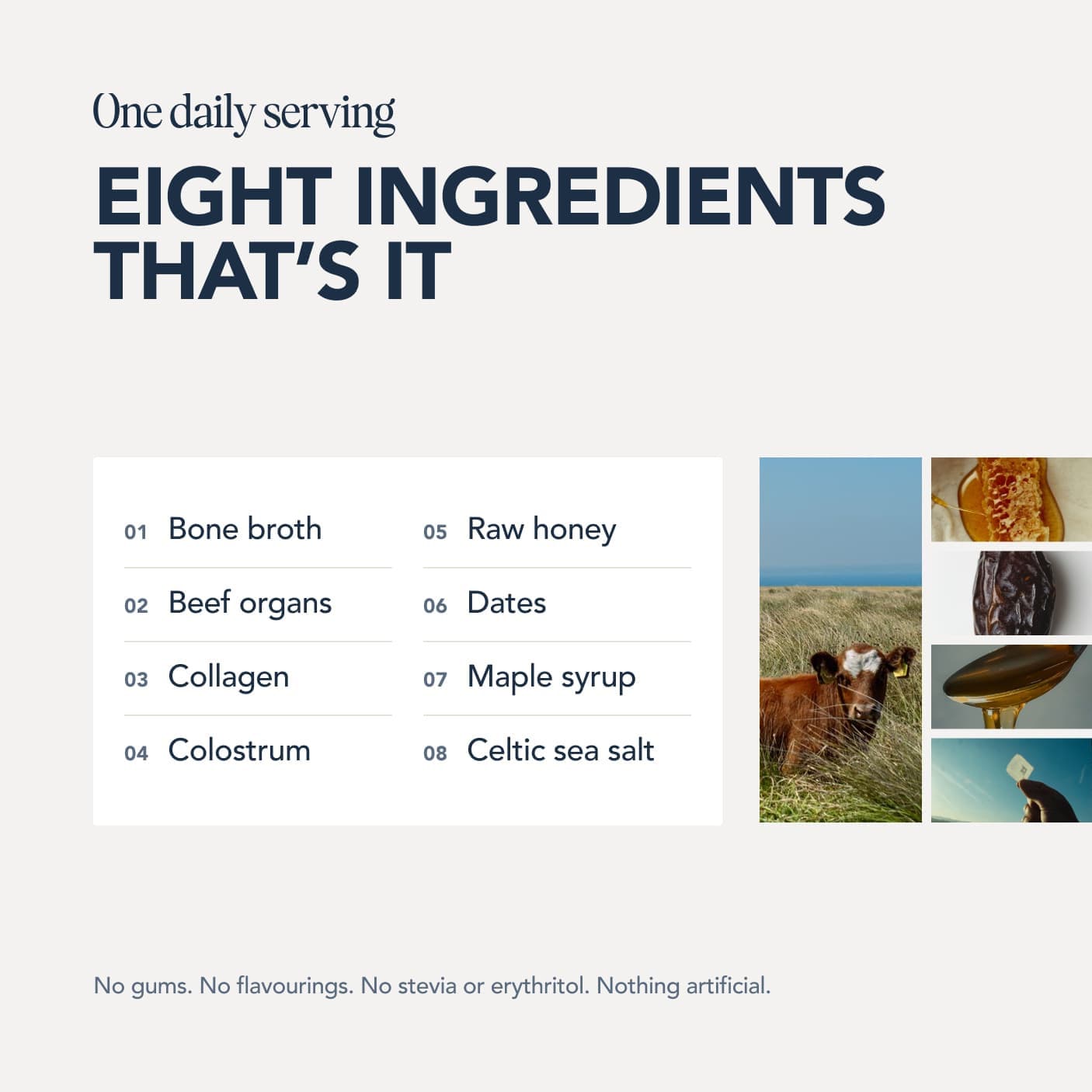
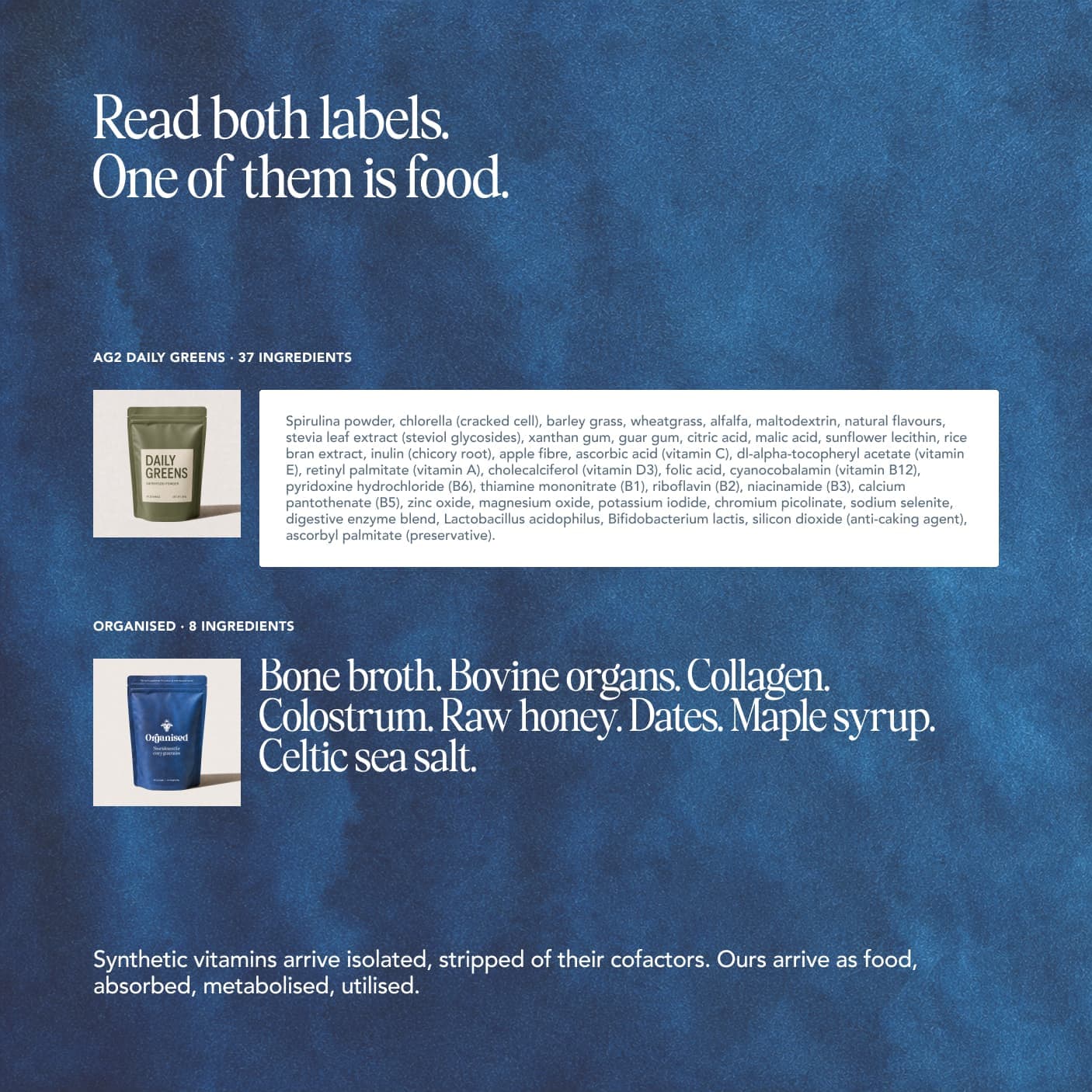
Eight real ingredients built around grass-fed beef organs, collagen and colostrum. Nothing synthetic added.
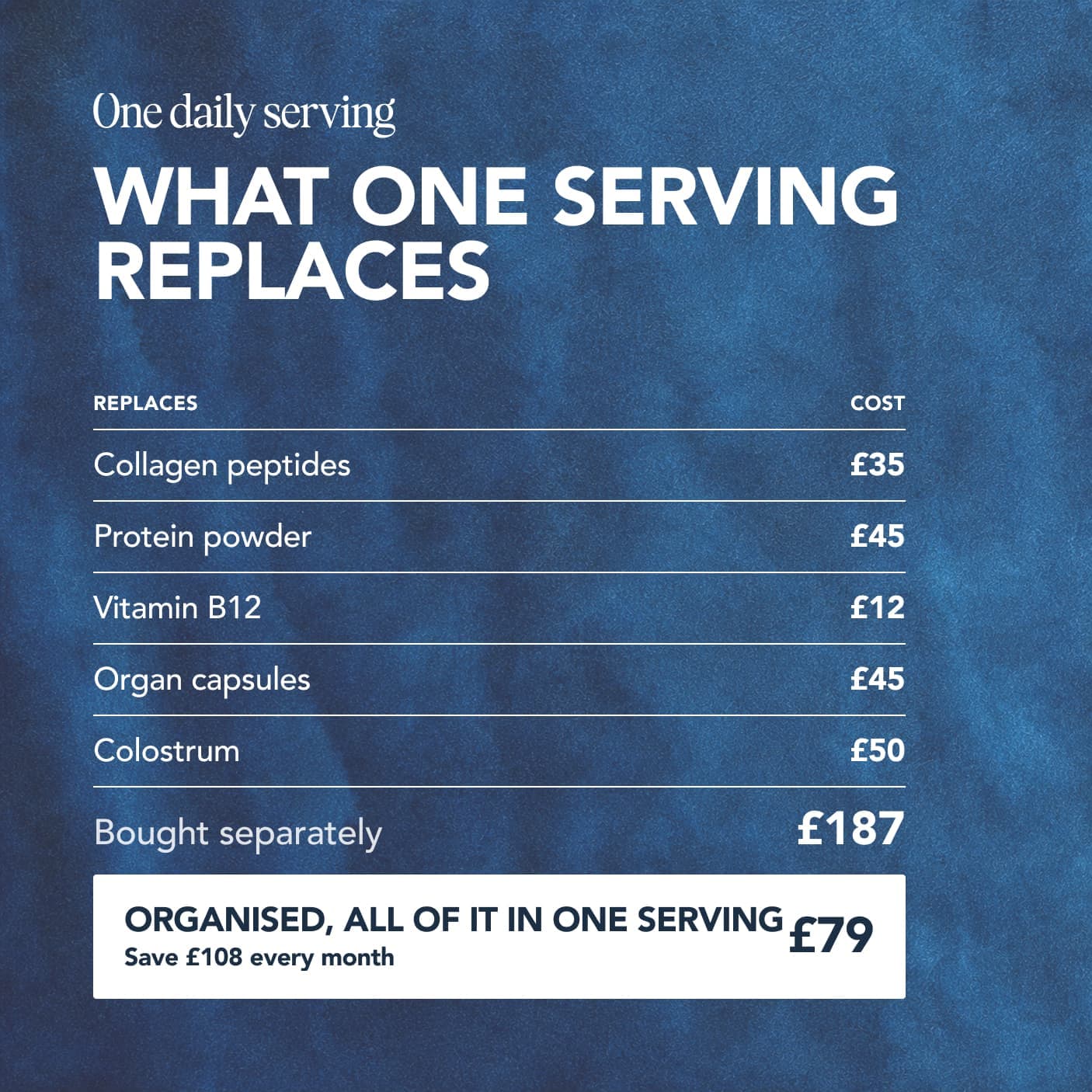
Free with your first order, worth £38. Plus £10 off the pouch with a subscription.
Free UK shipping · Made in England · 100 day money back guarantee on your first pouch · Skip, pause or cancel anytime
The cost of honesty
Being transparent costs approximately 15% more in manufacturing costs. We can't obscure the ratio with fillers. We have to use the actual ingredients we claim at the actual quantities we publish. Our cost of goods is higher because we're not cheating.
It also costs in marketing simplicity. A proprietary blend is sexy on a label. Mysterious. Scientific-sounding. You can make wild claims about it without specific evidence. You can imply efficacy without stating it. The vagueness becomes a feature.
Transparency is the opposite. It's boring. It's a spreadsheet of quantities. It requires you to actually understand biology and dosing to appreciate what you're holding. But it respects your intelligence. It trusts that if you know what you're taking, you'll make better choices. And you will.
The bottom line
Every supplement brand that uses a proprietary blend is making the same calculation. Transparency would force them to either publish a weak dose (which looks bad) or use better ingredients at higher quantities (which costs more). Instead, they hide behind regulatory opacity.
You deserve better. Your body is worth more than a mystery box masquerading as health. When you choose a supplement, ask for quantities. If a brand won't provide them, you've learned everything you need to know.
References
Every source below was checked on 27 August 2026. Each link was requested and read. Where a citation and its identifier disagreed, the citation was corrected to the record or the reference was deleted along with the sentence marker that pointed at it, and where the resolved paper turned out not to support the sentence, the sentence was cut back to what it does support. Borrowed authority is worse than none, because it looks like rigour.
- U.S. Food and Drug Administration. Dietary Supplement Labeling Guide: Chapter IV. Nutrition Labeling. https://www.fda.gov/food/dietary-supplements-guidance-documents-regulatory-information/dietary-supplement-labeling-guide-chapter-iv-nutrition-labeling [accessed May 2026].
Who wrote and reviewed this guide
Niall Kiddle
Author · Founder, Organised
Niall is the founder of Organised. He started the company in 2024 after fixing his own health the slow way: in 2022 he swapped a cupboard of synthetic supplements for real food, raw milk, organ meats, bone broth and honey, and felt the difference within months.
Areas of expertise: Ancestral nutrition, Organ meats, Whole-food supplementation, Gut health, Regenerative sourcing
Read Niall's full profile
Pedro Rodrigues
Reviewer · Agronomist (farming and sourcing only)
Pedro is the agronomist Organised works with on farming and sourcing. His job on the guides is to keep the science honest: he reviews what we publish about soil health, regenerative agriculture, grazing and the way food is actually produced.
Areas of expertise: Regenerative agriculture, Agronomy, Soil health, Grass-fed farming, Food sourcing
Reviewed this guide on
Read Pedro's full profileMore on transparency
View all- Heavy Metals in Supplements: What You Need to Know
- How to Read a Supplement Label (And Spot the Red Flags)
- How We Test Every Batch: Our Quality Assurance Process
- Our Blend Changelog: Why We Publish Every Formula Update
- Supplement Industry Secrets: What Most Brands Don't Tell You
- The Organised Code: Our Non-Negotiable Standards
Browse the guides library
All guidesKeep reading

Farming
Our Blend Changelog: Why We Publish Every Formula Update
See why we publish every supplement formula update in our blend changelog. Few brands do this, and here is what real transparency means for what you take.

Farming
The Future of Food: Why Regenerative, Not Lab-Grown, Is the Answer
Lab-grown meat offers a technological fix. Regenerative farming offers a system overhaul. Here's why the latter actually matters.

Farming
How We Test Every Batch: Our Quality Assurance Process
Our batch testing process explained. Heavy metals, mould, pesticides and mycotoxins, tested every batch, with the results published.
Real food, made effortless
Shop the blendA few ways to use it
All recipes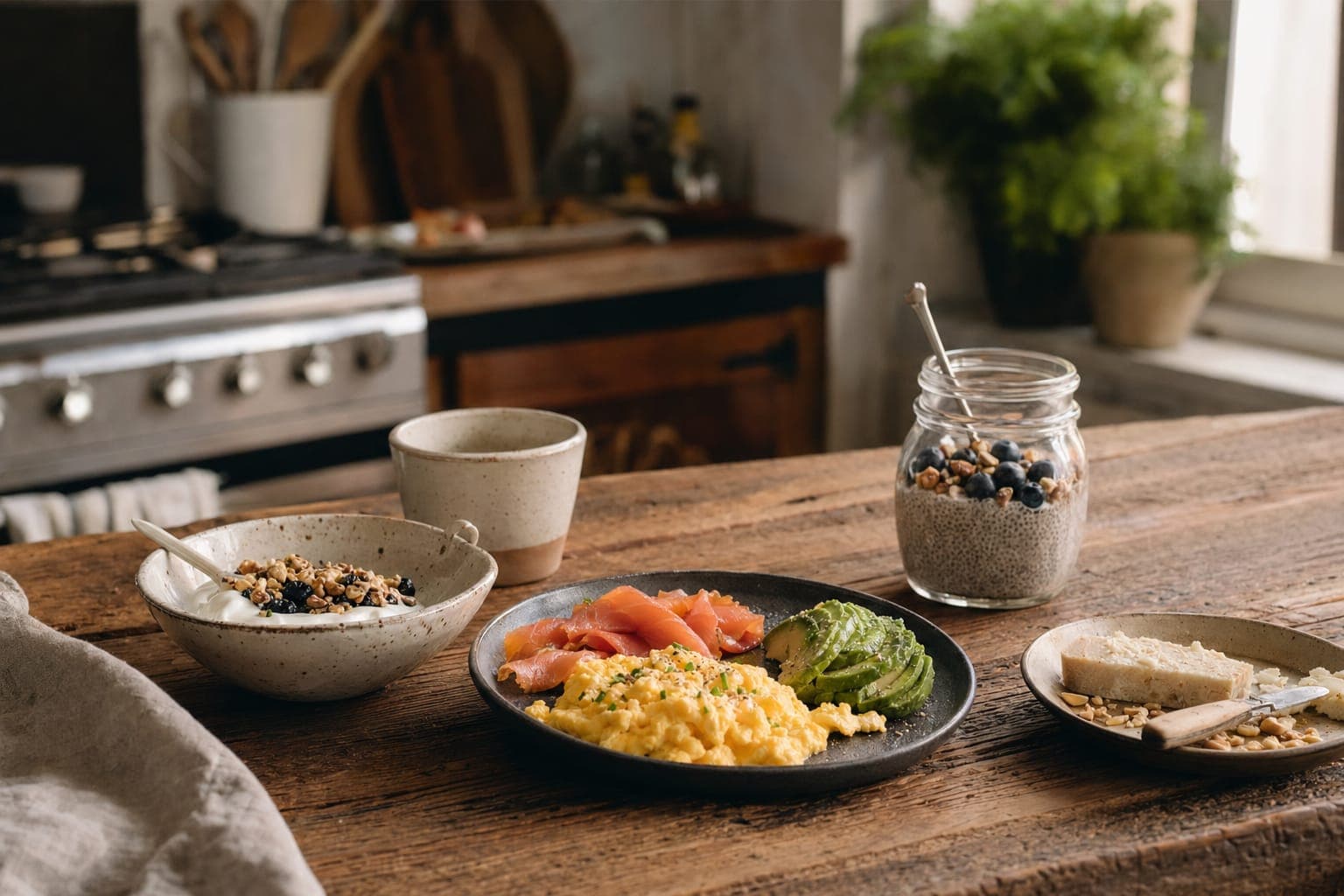
5-Minute High-Protein Breakfasts Using Organised
Quick, high-protein breakfast ideas using Organised. Five recipes you can make in minutes with real food. No fussing around.

Organ Bolognese: The Family Dinner That Heals
Practical organ meat recipe using fresh beef liver and heart. Family-friendly bolognese that bridges supplements to whole food.
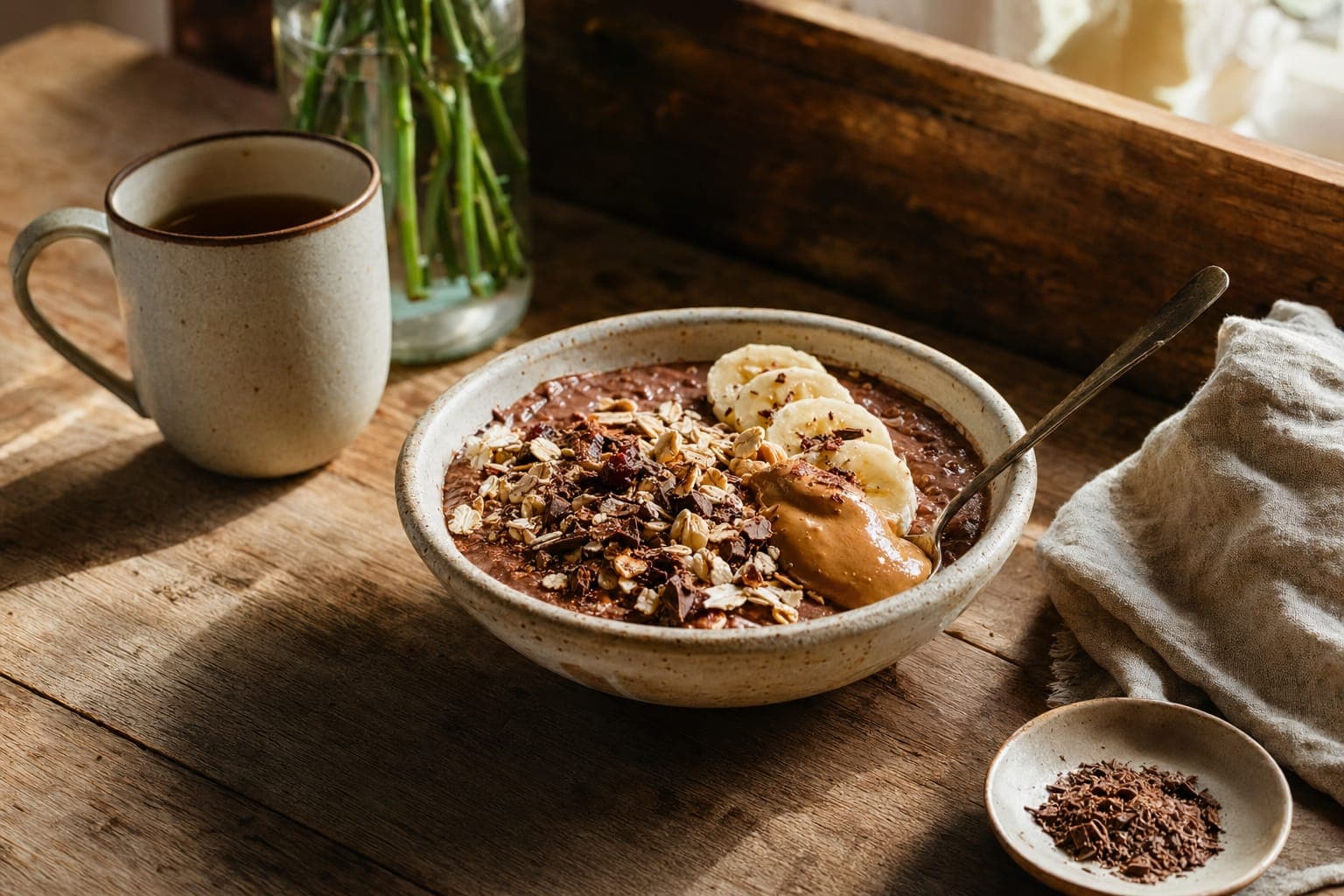
10 Ways to Use Organised That Aren't Just a Shake
Move beyond the basic shake. Discover 10 creative ways to use Organised in smoothie bowls, oats, yoghurt, baking, and more.


 Join over 100,000+ members
Build a better food system with us
The Organised community is thousands of people choosing real food and backing the farmers who grow it, all of us trying to leave the world a little better than we found it. If that is what you care about too, you belong here.