How We Test Every Batch: Our Quality Assurance Process
Most supplement companies have a quality control process. They test a few batches per year. We test every single batch. It's expensive. It's thorough. It's non-negotiable.
By Niall Kiddle, Founder, Organised

Reviewed by Pedro Rodrigues, Agronomist (farming and sourcing only) ·
5 min read · Published · Updated · 3 cited sources
Makers of the Organised Daily blend, a grass-fed beef organ supplement from regenerative UK farms
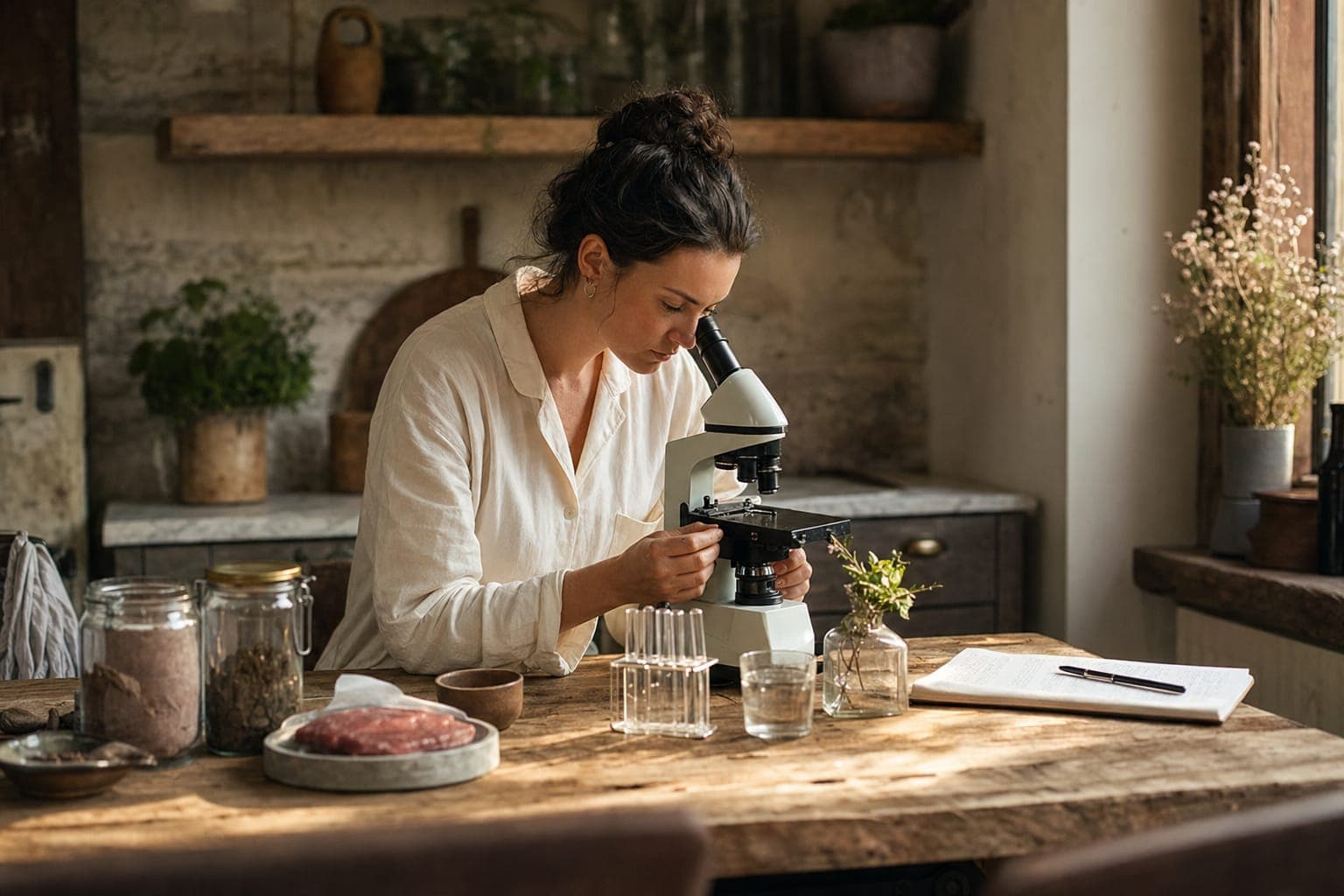
Here's how it works and why we do it.
The testing we do
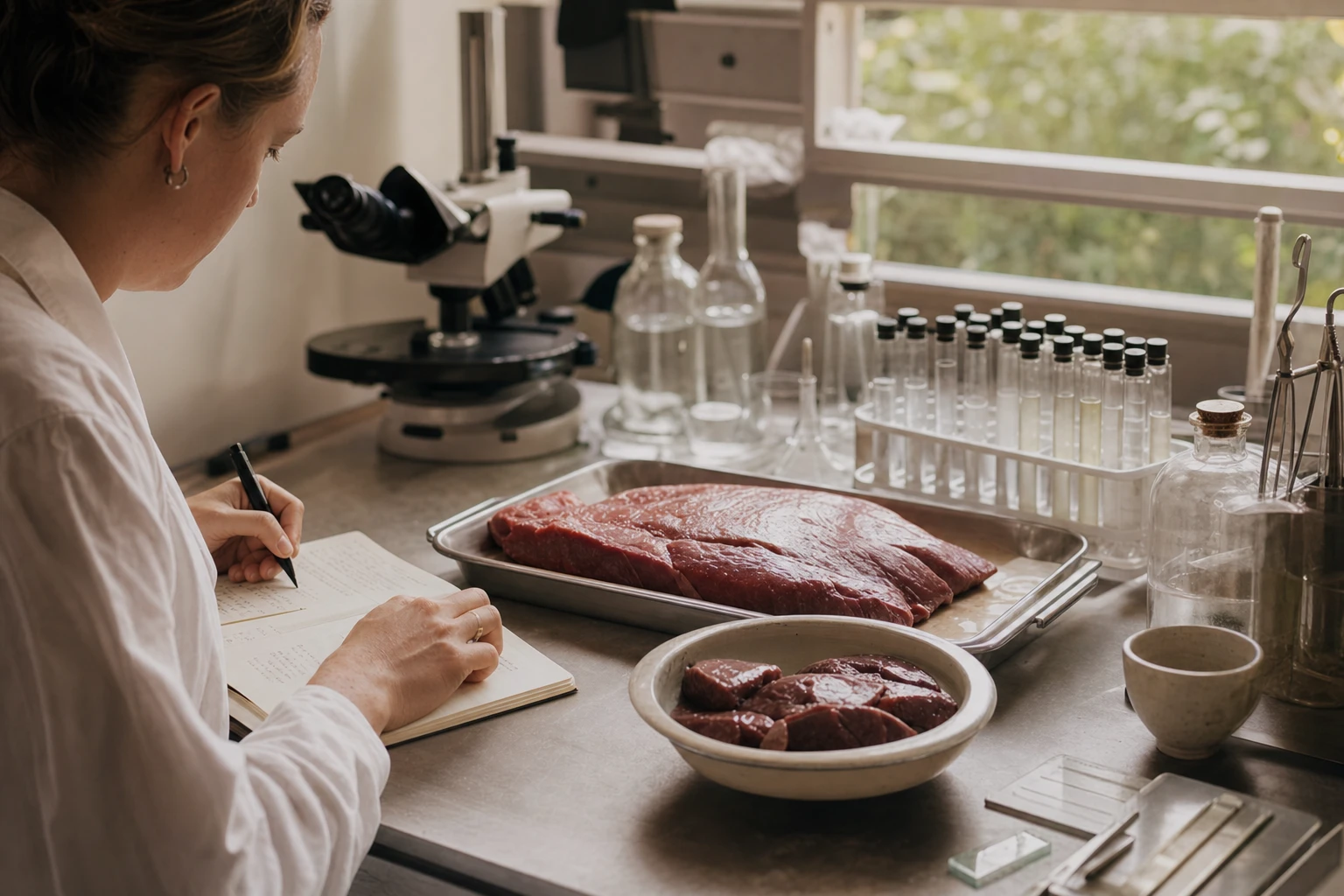
The moment a batch arrives for processing, a representative sample is taken and sent to the lab. The batch doesn't get freeze-dried until we have results back confirming it's clean.
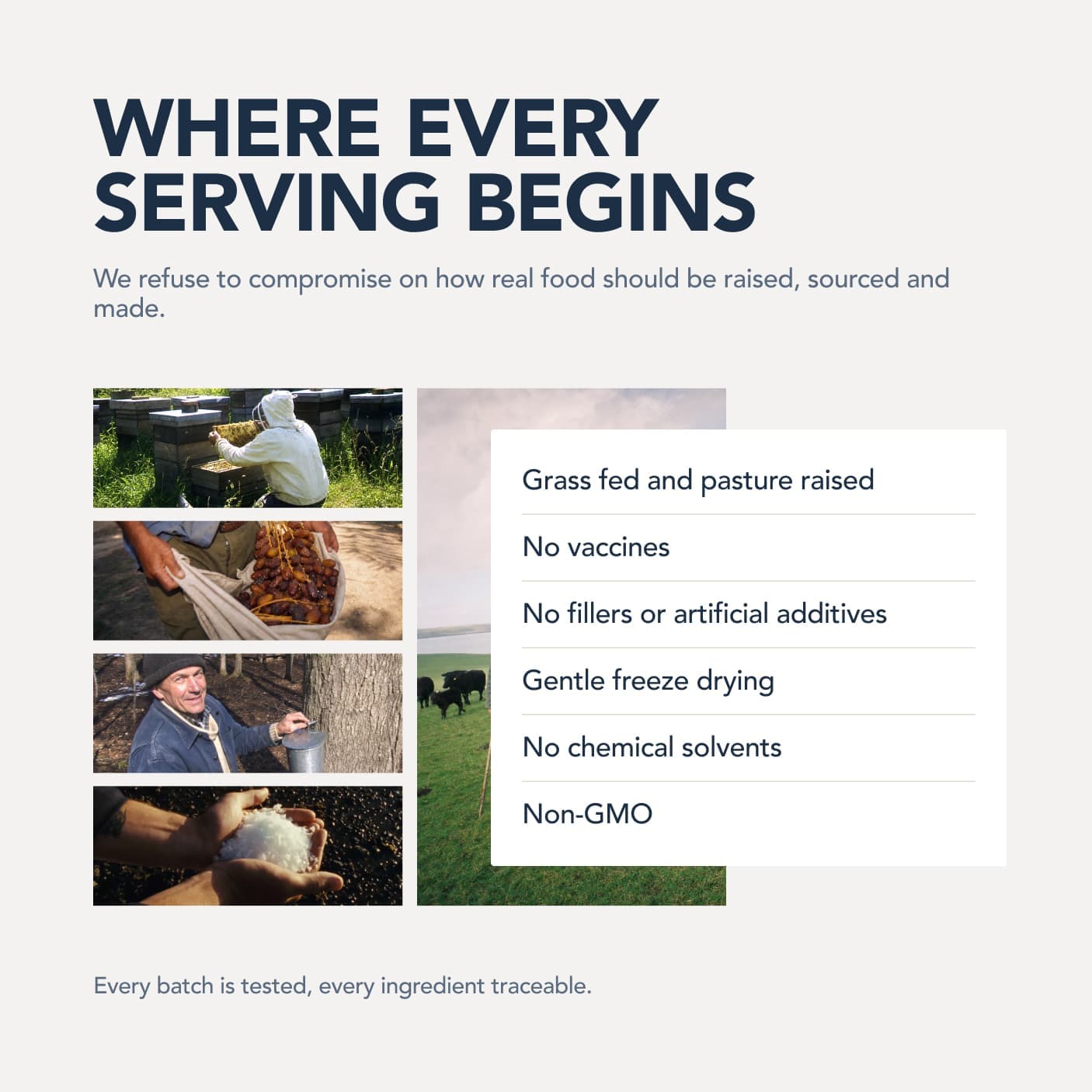
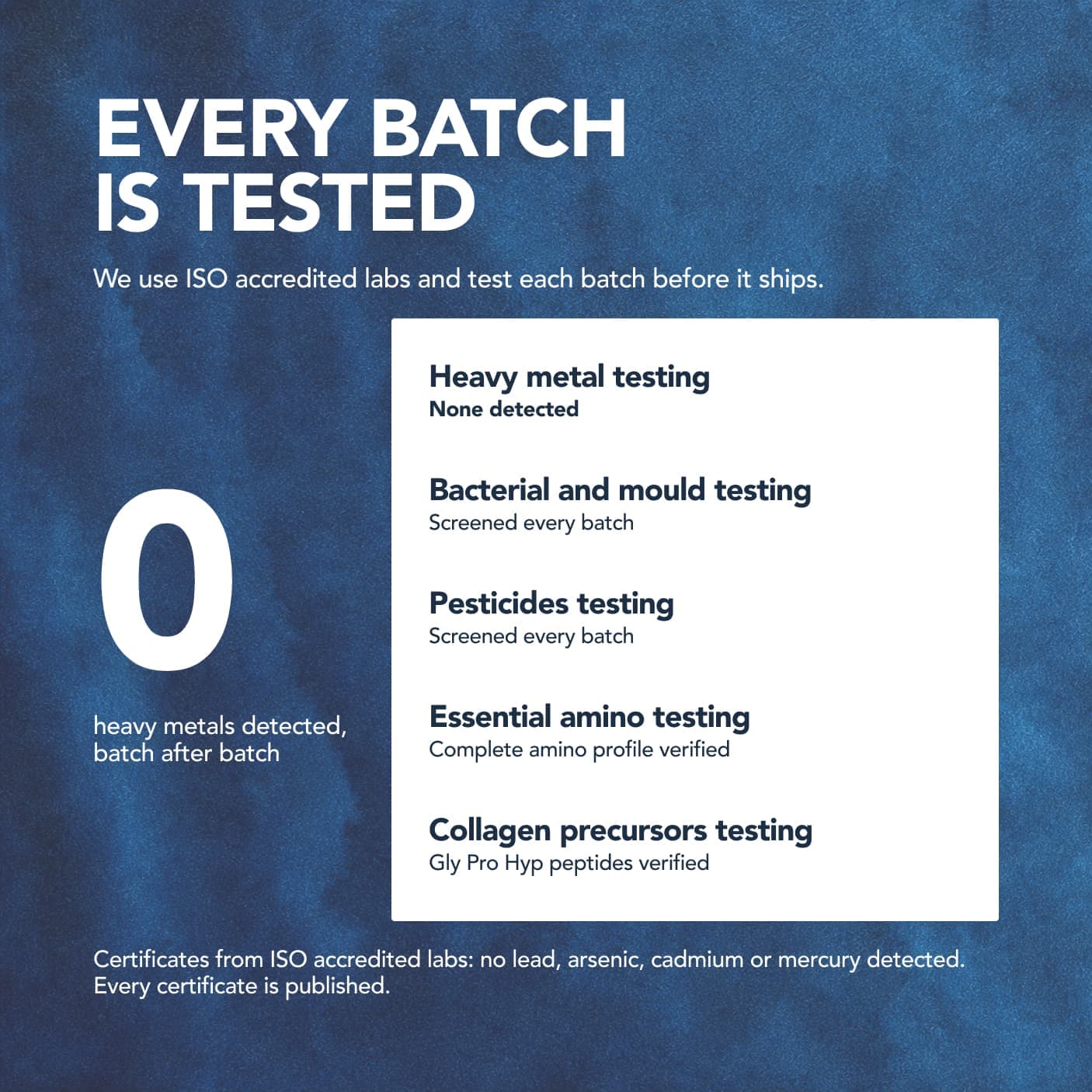
Every batch is lab tested for heavy metals, mould, pesticides and mycotoxins. We publish the results. Testing this way, batch after batch, is a real and permanent expense.
Most supplement companies accept a lower testing frequency because the cost adds up. We accept the cost because the alternative is accepting the risk that a batch might contain something it shouldn't.
Testing every batch isn't a marketing point. It's basic due diligence when you're recommending something people eat.

Heavy metals screening
Organs naturally concentrate minerals. That's what makes them valuable as food. But they also concentrate heavy metals if they're present in the environment or feed.
Lead, cadmium, and mercury are the primary concerns. All three can accumulate in organ tissue, particularly liver and kidneys. A freeze-dried organ supplement concentrates whatever was in the original tissue by a factor of 4 to 8 (you're removing water, not the minerals).
A heavy-metals panel looks for lead, cadmium, mercury and arsenic, measured by ICP-MS (inductively coupled plasma mass spectrometry), the established analytical method for trace heavy metals in foods.1 It detects elements at the parts-per-billion level, and the strictest public benchmarks, such as California's Proposition 65 limits, sit far below anything you could ever taste or see.3
Heavy metals don't always show up at dangerous levels, but when they do, they're concentrated exactly where they need to be removed. Any batch failing this test is rejected entirely. We don't redistribute it or try to dilute it. It goes.
One heavy-metal batch out of a thousand isn't a one-in-a-thousand problem. It's a hundred-percent problem for the person who got it.
Mould, mycotoxins and pesticides
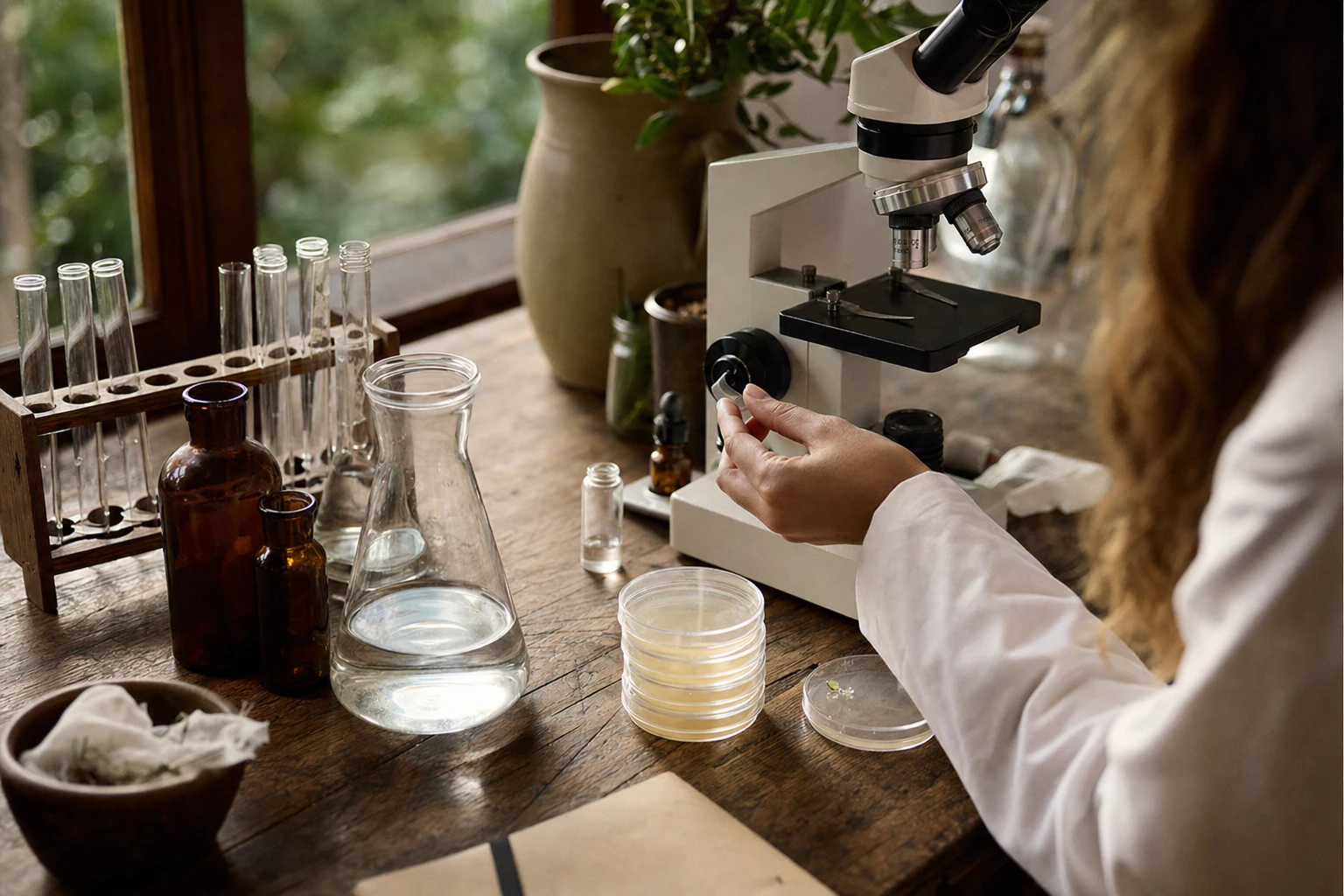
Mould is a risk for any dried food, and mycotoxins, the toxic compounds certain moulds produce, are the part you cannot see or smell. They can survive processing even after the mould that made them is gone, which is why the testing looks for the toxins themselves rather than waiting for visible spoilage.
Pesticides matter for the same reason heavy metals do: animals concentrate what their environment carries. Residues in feed or on pasture can end up in tissue, so every batch is screened rather than assumed clean because the farming looks right.
This is particularly important because Organised is taken daily, shared with children, and taken through pregnancy. The bar is high for good reason.
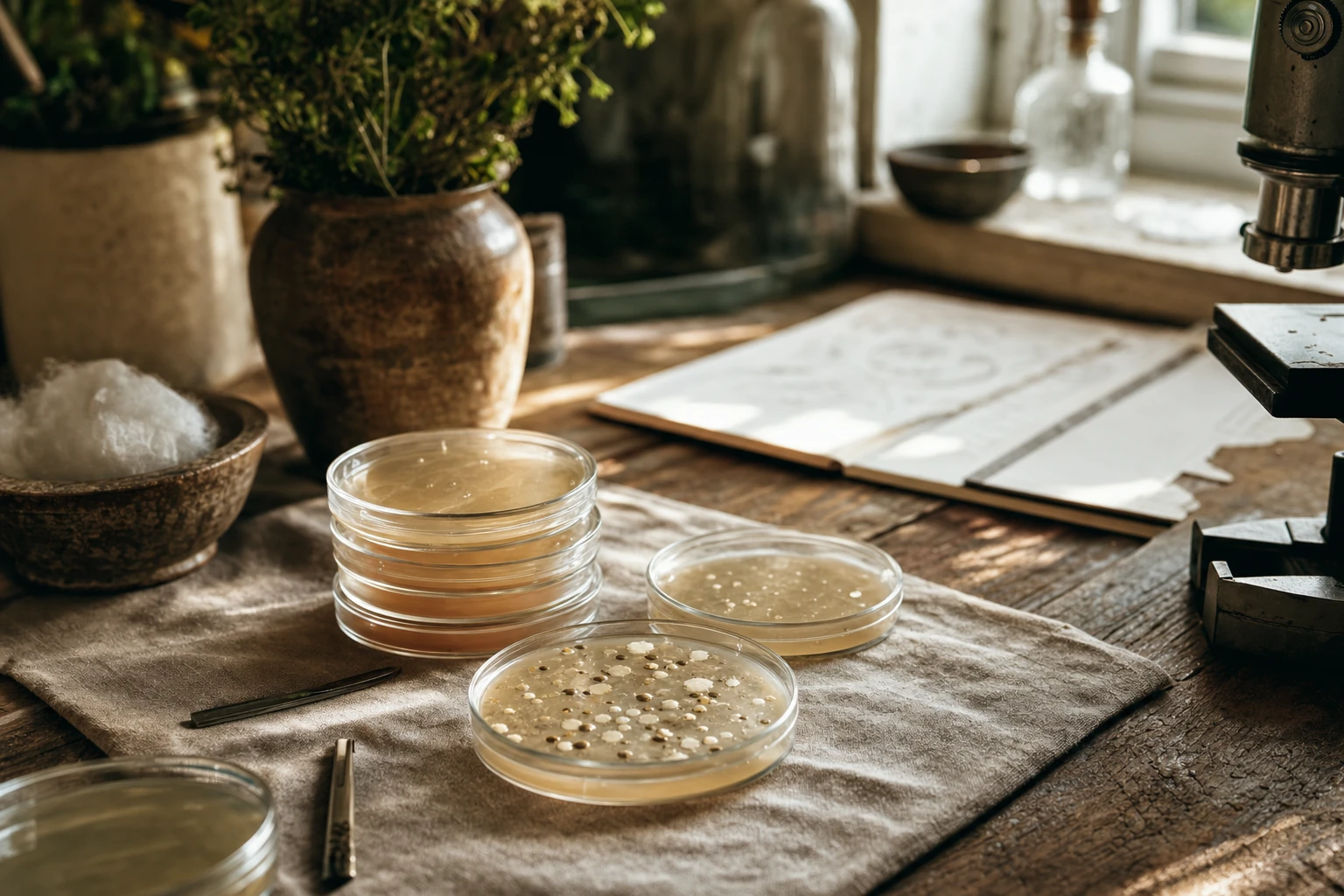
Results you can actually see
Testing claims are cheap. "Lab tested" appears on plenty of labels that would struggle to produce a single result, which is why the phrase alone should never reassure you, from us or from anyone.
What separates a real testing programme is whether you can see the numbers. We publish our results. Not a summary, not a reassuring badge, the results.
When you read any brand's lab work, ours included, accreditation is worth checking too: ISO/IEC 17025 is the international standard for testing laboratory competence.2
Some of our customers read the results closely. We like this. It means they're paying attention.
Get farming and sourcing guides, free
Two short reads a week on regenerative farming and where real food comes from.
By signing up you agree to receive emails from us. No spam, unsubscribe anytime.
The cost of doing this right
Testing every batch means we can't compete on price with brands that test sporadically or not at all. A competitor testing 10% of batches has a 90% cost advantage over us on quality control.
We've chosen not to compete on price. We compete on honesty. Testing everything is part of that.
It also means our timelines are longer. A batch takes 2 to 3 weeks from arrival to final product because we're waiting for test results. Shortcuts would get products to market faster. We don't take shortcuts.
The reality is simple: most supplement companies make their money by moving product fast. We make our money by moving product people can trust. Those are different models.
The cost of testing every batch is real. It's the price of being able to say we've actually verified what we're selling.

Why published results matter
Publishing removes the conflict of interest. A private result can be quietly explained away; a published one cannot. If a batch fails testing, it gets pulled. There's no political negotiation.
This costs more. Testing every batch adds significant expense. We pass that cost to customers. We think it's necessary because it removes the incentive to pass a borderline batch.
Heavy metals accumulation is one reason this matters. Lead, cadmium, and mercury bioaccumulate in organ tissue. An animal raised on soil with historical lead contamination (like old orchard land) or in an area with industrial pollution can carry elevated levels. Testing catches this before the batch ships. Without testing, you wouldn't know until problems emerge.
Testing that you can't fake is expensive. It's also the only testing worth doing.
Every batch is lab tested for heavy metals, mould, pesticides and mycotoxins. The testing takes time. The batch sits in holding whilst results come back. This slows our turnover and increases costs. We accept this constraint because without it, the product isn't trustworthy.
1 of 9
Daily blend
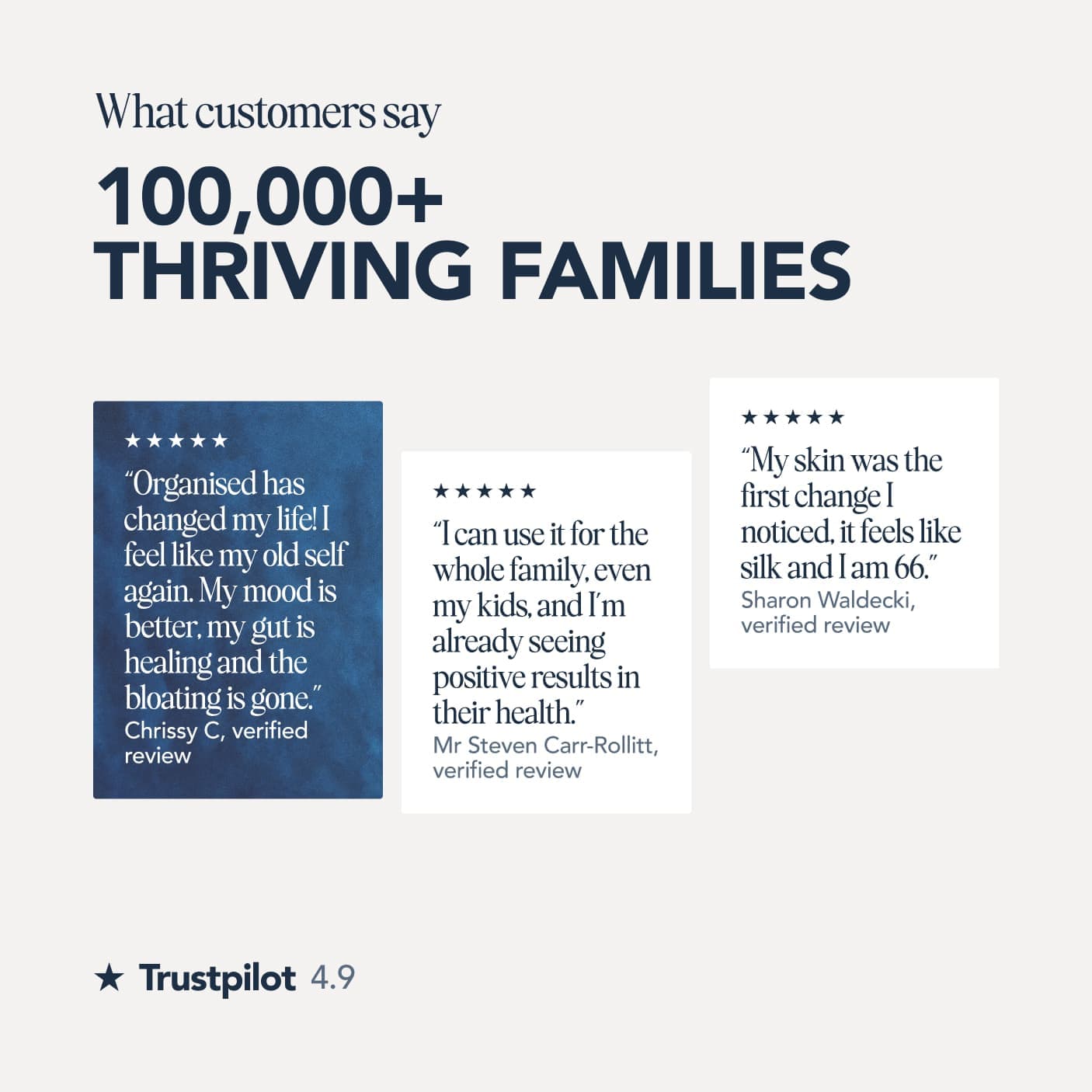
100,000+ thriving families4.9 on Trustpilot
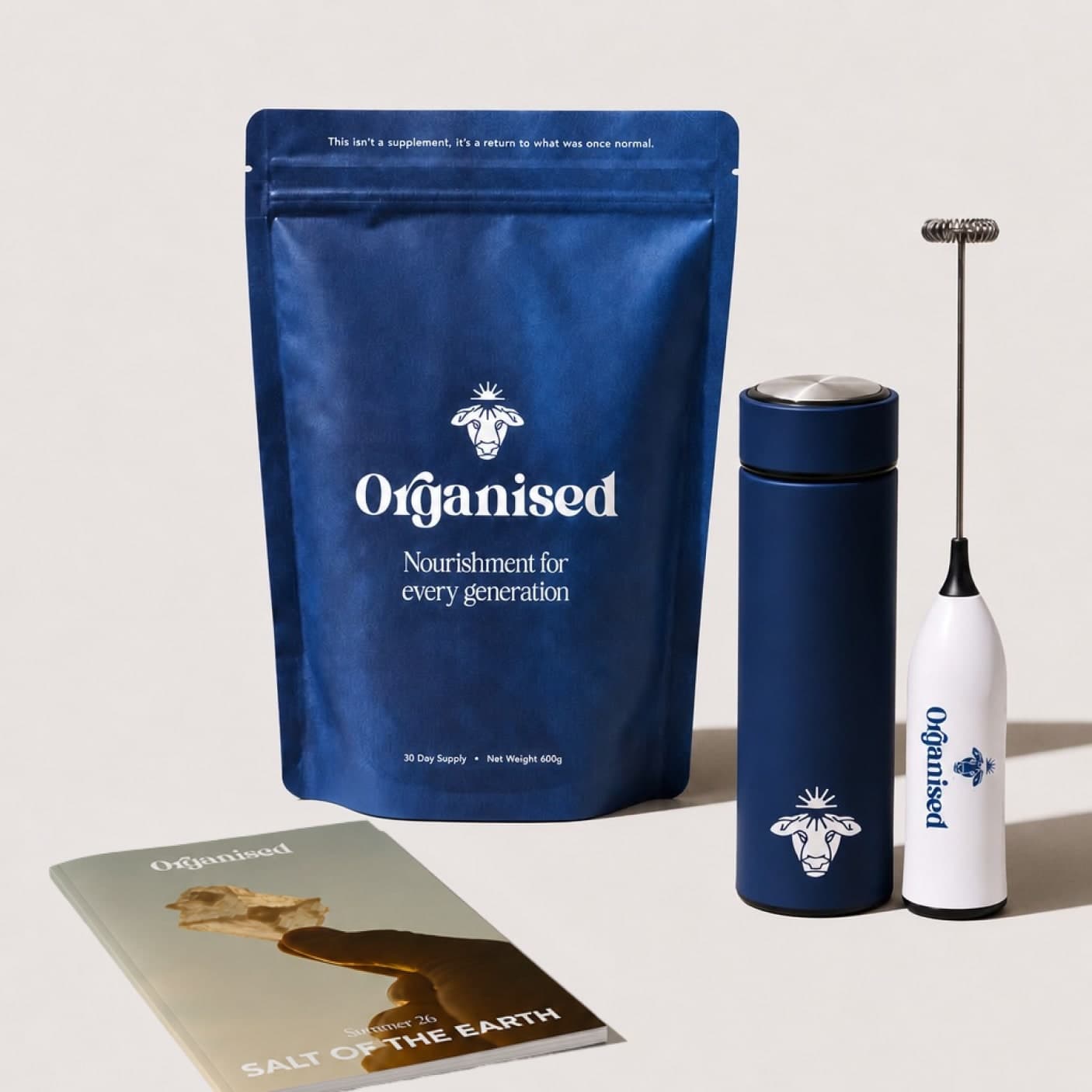
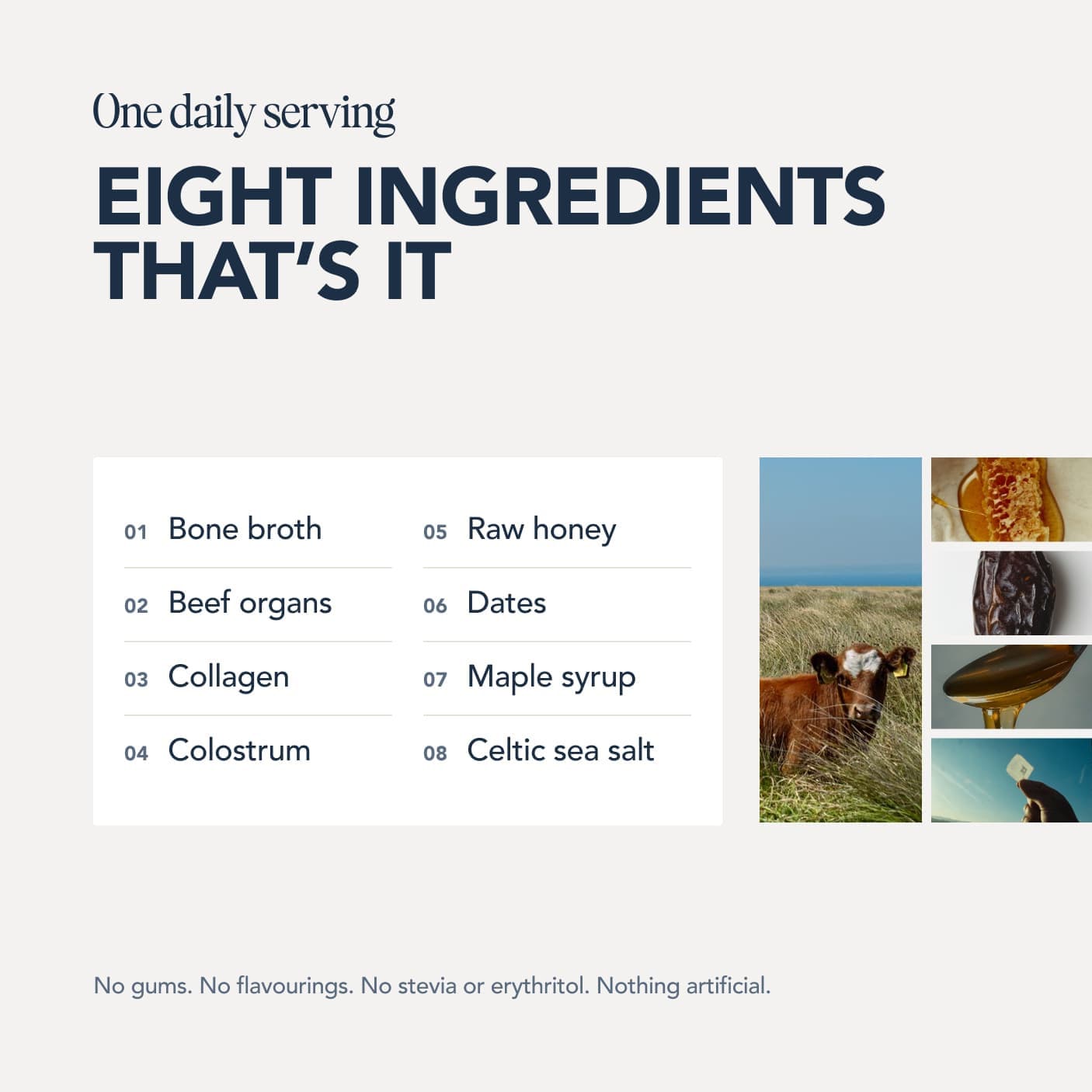
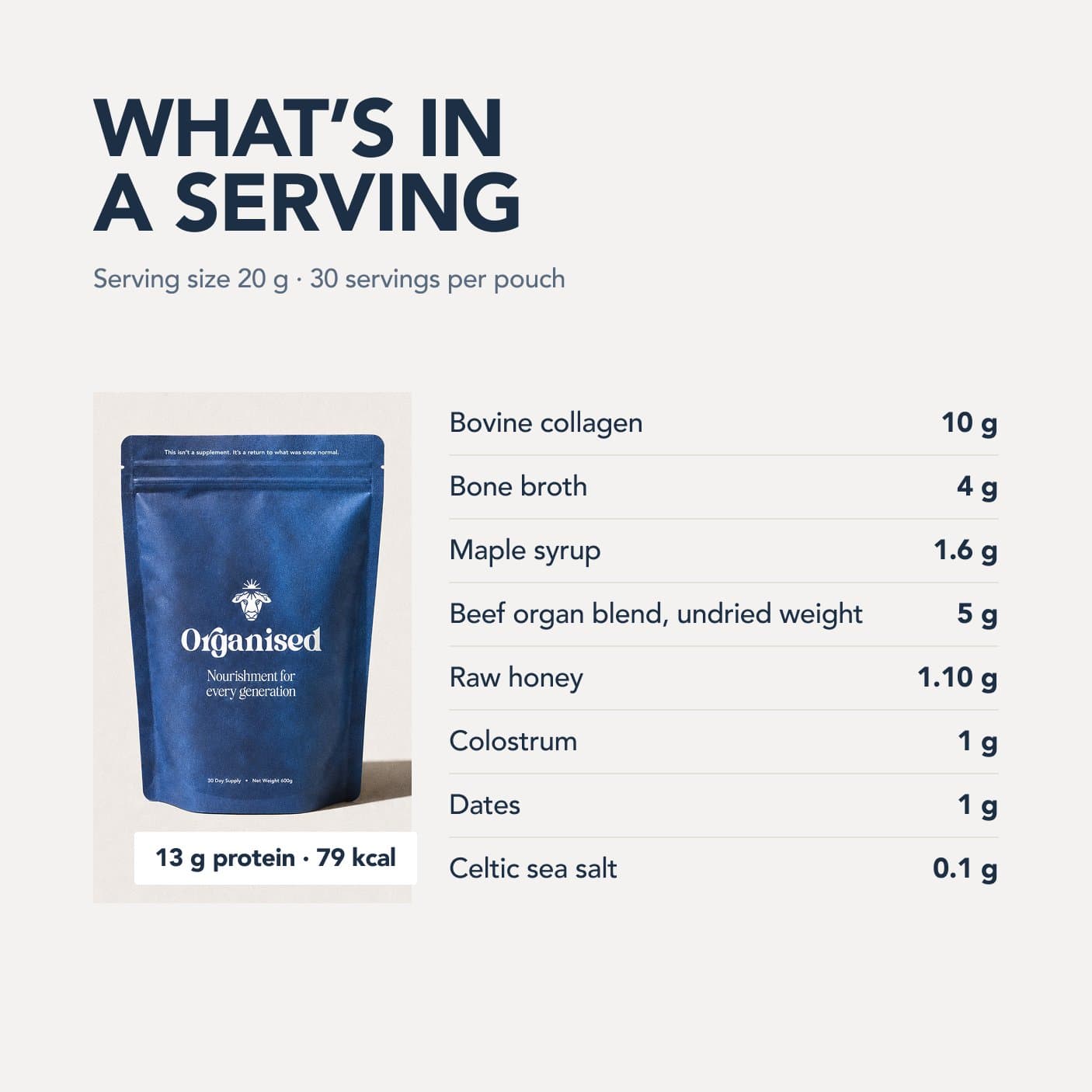
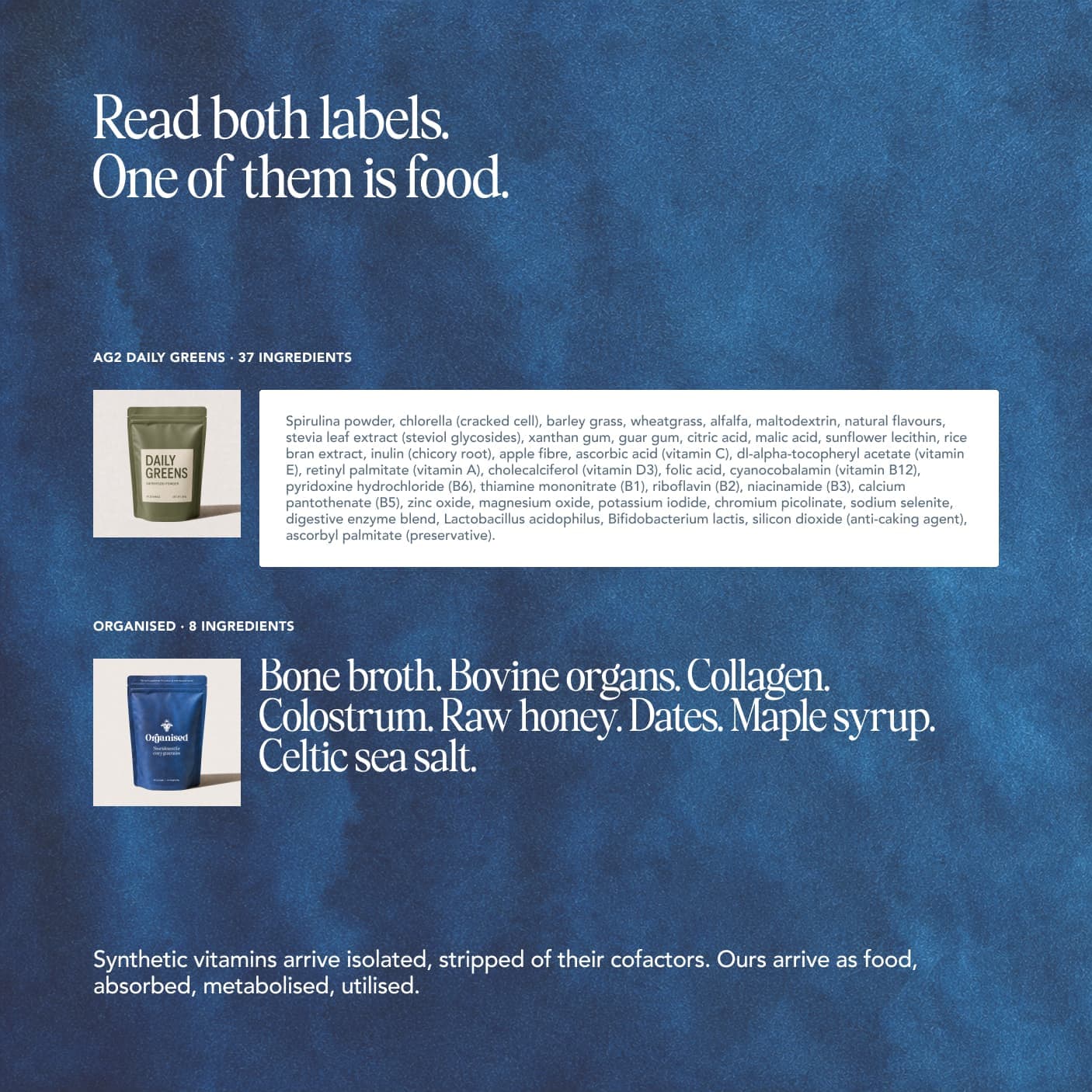
Eight real ingredients built around grass-fed beef organs, collagen and colostrum. Nothing synthetic added.
Free with your first order, worth £38. Plus £10 off the pouch with a subscription.
Free UK shipping · Made in England · 100 day money back guarantee on your first pouch · Skip, pause or cancel anytime
What happens if a batch fails
It happens. A batch that looks promising can fail its screening, and the numbers don't negotiate.
When this happens, we don't retest or negotiate. We discard the batch. We eat the cost. We apologise to the customer and explain why that batch didn't ship. We tell the farm where the problem was detected so they can investigate their sourcing or environment.
A batch that fails testing doesn't ship. There's no Plan B of "well, it's close enough". Close enough is not good enough.
Most supplement companies absorb risk by not testing, or by setting a lower standard. We absorb risk by testing rigorously and rejecting anything that falls short. This costs money. We pass that cost to customers through price. We think it's necessary.
The bottom line
Every batch is lab tested for heavy metals, mould, pesticides and mycotoxins. We publish the results, so none of this has to be taken on trust.
This isn't unique or innovative. It's what quality should look like. The fact that most companies don't do it shouldn't make us special. It should make them unusual.
We test every batch because the alternative is accepting risk you don't know exists. We don't accept that risk on behalf of our customers.
References
Every source below was checked on 27 August 2026. Each link was requested and read. Where a citation and its identifier disagreed, the citation was corrected to the record or the reference was deleted along with the sentence marker that pointed at it, and where the resolved paper turned out not to support the sentence, the sentence was cut back to what it does support. Borrowed authority is worse than none, because it looks like rigour.
- US Food and Drug Administration. Elemental Analysis Manual: Inductively Coupled Plasma-Mass Spectrometric Determination of Arsenic, Cadmium, Chromium, Lead, Mercury and Other Elements in Food. fda.gov
- International Organization for Standardization. ISO/IEC 17025:2017 General requirements for the competence of testing and calibration laboratories. iso.org
- California Office of Environmental Health Hazard Assessment. Proposition 65 - Maximum Allowable Dose Levels (MADLs). oehha.ca.gov
Who wrote and reviewed this guide
Niall Kiddle
Author · Founder, Organised
Niall is the founder of Organised. He started the company in 2024 after fixing his own health the slow way: in 2022 he swapped a cupboard of synthetic supplements for real food, raw milk, organ meats, bone broth and honey, and felt the difference within months.
Areas of expertise: Ancestral nutrition, Organ meats, Whole-food supplementation, Gut health, Regenerative sourcing
Read Niall's full profile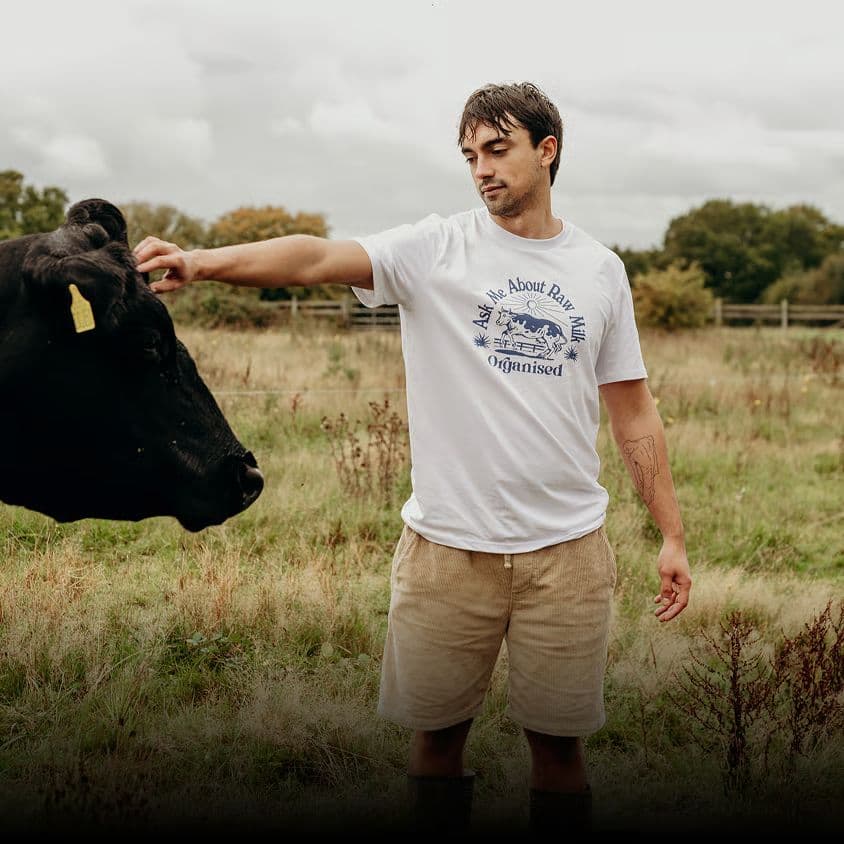
Pedro Rodrigues
Reviewer · Agronomist (farming and sourcing only)
Pedro is the agronomist Organised works with on farming and sourcing. His job on the guides is to keep the science honest: he reviews what we publish about soil health, regenerative agriculture, grazing and the way food is actually produced.
Areas of expertise: Regenerative agriculture, Agronomy, Soil health, Grass-fed farming, Food sourcing
Reviewed this guide on
Read Pedro's full profileMore on transparency
View all- Heavy Metals in Supplements: What You Need to Know
- How to Read a Supplement Label (And Spot the Red Flags)
- Our Blend Changelog: Why We Publish Every Formula Update
- Supplement Industry Secrets: What Most Brands Don't Tell You
- The Organised Code: Our Non-Negotiable Standards
- Why We Don't Use Proprietary Blends
Browse the guides library
All guidesKeep reading
Farming
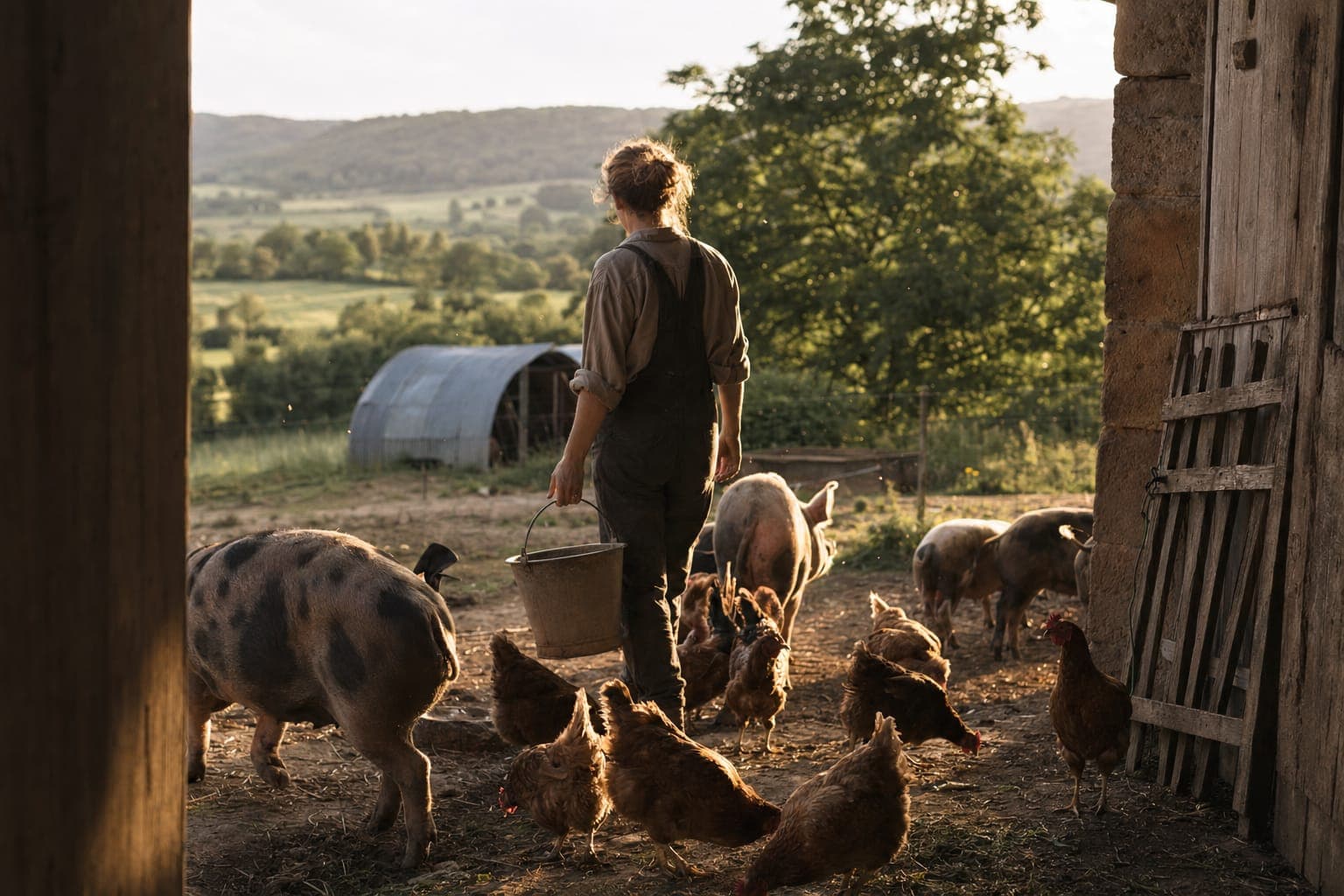
A Day on a Regenerative Farm
Step inside a regenerative farm and discover what actually happens daily. Meet the farmers and animals behind your food.
Farming
CLA in Grass-Fed Beef: What Is It and Why Does It Matter?
Conjugated linoleic acid (CLA) is a unique fat found in grass-fed beef. Here's what it is, why it matters, and how much you need.
Farming
Biodynamic Farming: What It Means and Why It Matters
Biodynamic farming goes beyond organic. Learn what Demeter certification means and why closed-loop regenerative systems matter for food quality.
Real food, made effortless
Shop the blendA few ways to use it
All recipes
Gut-Healing Marshmallows with Collagen and Raw Honey
Learn to make gut-healing marshmallows with collagen and raw honey. A shareable treat that sneaks nutrition into every bite. Easy recipe with video tips.
Organised Chia Pudding with Raw Honey and Berries
A no-cook chia seed pudding made with raw milk, collagen, berries, and raw honey. Prep it the night before and eat for breakfast.
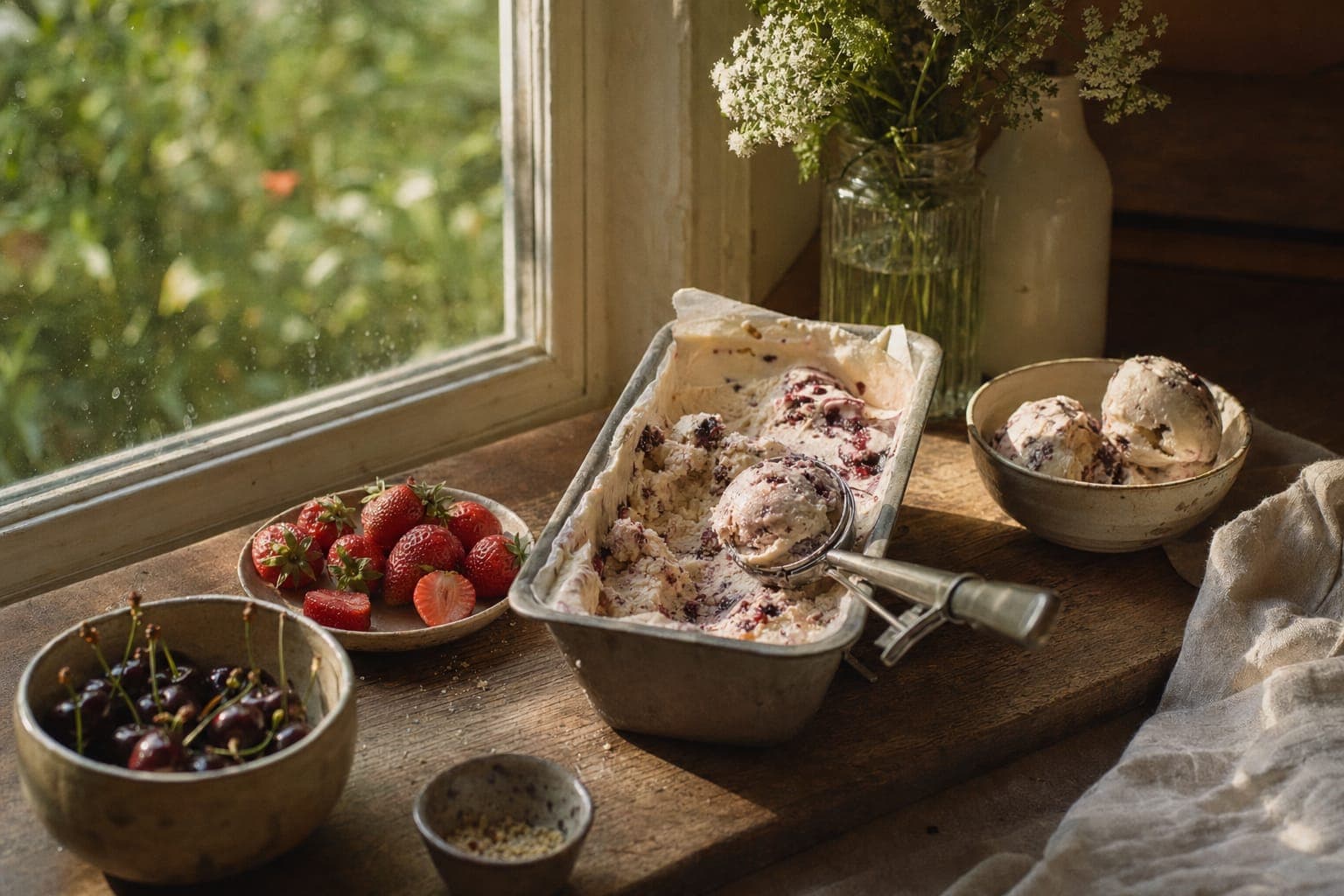
Raw Milk Ice Cream with Organised
Make raw milk ice cream at home with Organised for a seasonal, nutrient-dense treat. Three simple flavours to try whenever the craving strikes.


 Join over 100,000+ members
Build a better food system with us
The Organised community is thousands of people choosing real food and backing the farmers who grow it, all of us trying to leave the world a little better than we found it. If that is what you care about too, you belong here.