What Is Mob Grazing and How Does It Help the Soil?
Here's what most people don't realise: the way cows graze changes the entire biology of the soil beneath their hooves. Mob grazing isn't just a farming trend. It's land regeneration made visible.
By Niall Kiddle, Founder, Organised

Reviewed by Pedro Rodrigues, Agronomist (farming and sourcing only) ·
6 min read · Published · Updated · 3 cited sources
Makers of the Organised Daily blend, a grass-fed beef organ supplement from regenerative UK farms
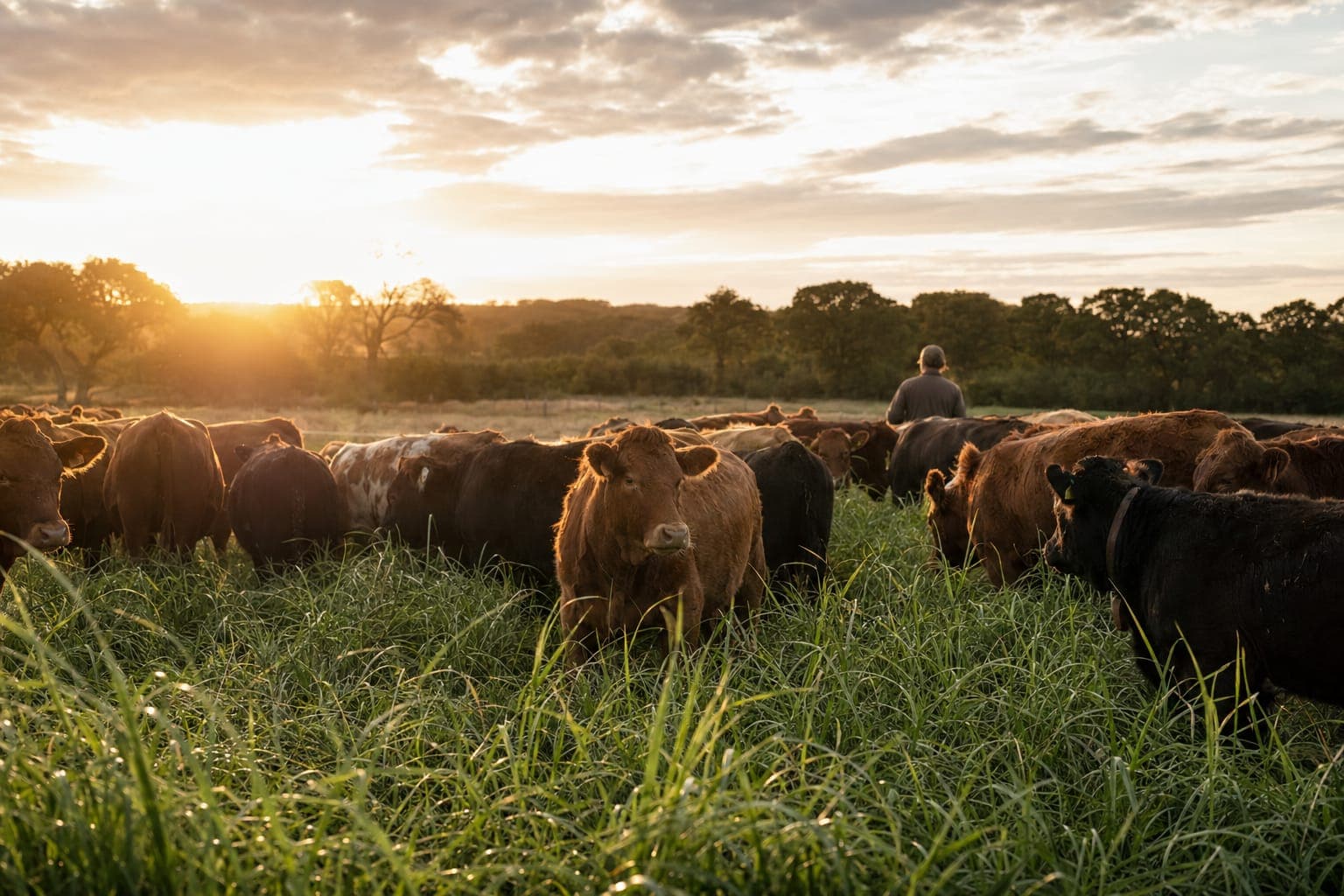
For decades, grassland management meant continuous grazing. Cows stayed in the same paddock for months. The grass got hammered. The soil got trampled. Biodiversity collapsed. Modern agriculture turned living land into a managed monoculture.
Mob grazing, sometimes called rotational grazing, is the opposite. Dense groups of animals, short bursts of intense grazing, then long recovery periods. It sounds chaotic. It's actually the way herds grazed before fences.
What mob grazing actually is
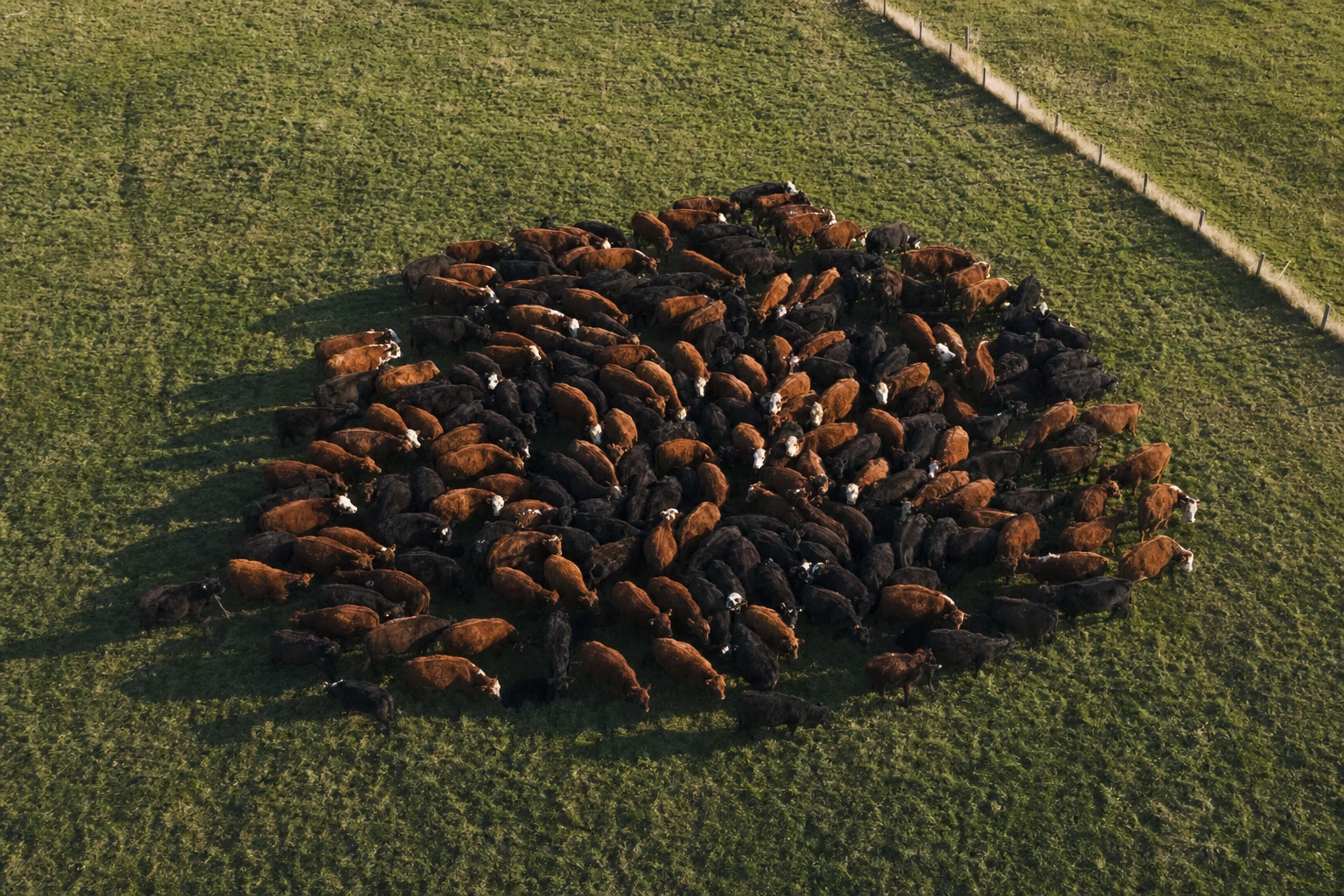
Imagine 200 cattle concentrated onto a small paddock, maybe 2 to 5 acres. They graze intensively for a single day or two. Then they're moved to the next paddock. The first paddock is left to rest and recover for 60, 90, sometimes 180 days.
This is mob grazing. High density, short duration, then long recovery. The intensity matters. The brief, concentrated impact of hundreds of hooves, all in one place at one time, triggers different soil responses than a few cows grazing the same paddock for months on end.
Most commercial beef comes from continuous grazing or feedlots. Mob grazing is still relatively rare, mostly practised by regenerative farmers and producers committed to soil health. But it's becoming the gold standard for understanding what healthy, resilient pasture actually looks like.
The pressure of 200 hooves on 5 acres for one day is not destructive. It's the beginning of restoration.
How it mimics nature
In nature, before humans fenced land, grazing animals moved in large herds. Wildebeest followed seasonal grass. Bison roamed the American plains in the millions. These herds were nomadic. They grazed an area intensively and then moved on because the grass was gone.
The grass didn't disappear forever. The intensity of the grazing and trampling actually stimulated new growth. The soil got impacted, seeds got pressed into contact with soil. Organic matter from dung and dead grass got worked into the earth. Then, crucially, the herd moved on and the land rested.
This cycle created the richest, most carbon-dense soils on Earth. The Great Plains, before farming, held more carbon in the soil than the entire atmosphere. Grasslands covered half the planet.
Mob grazing recreates that cycle. It's not trying to be pristine or untouched. It's trying to be dynamic and natural.
The soil beneath the hooves
Continuous grazing, where animals stay in the same field for months, wears the grass down to nothing. The soil gets exposed. Erosion increases. The organic matter that should be building up is instead washing away with rain or blowing away on the wind.
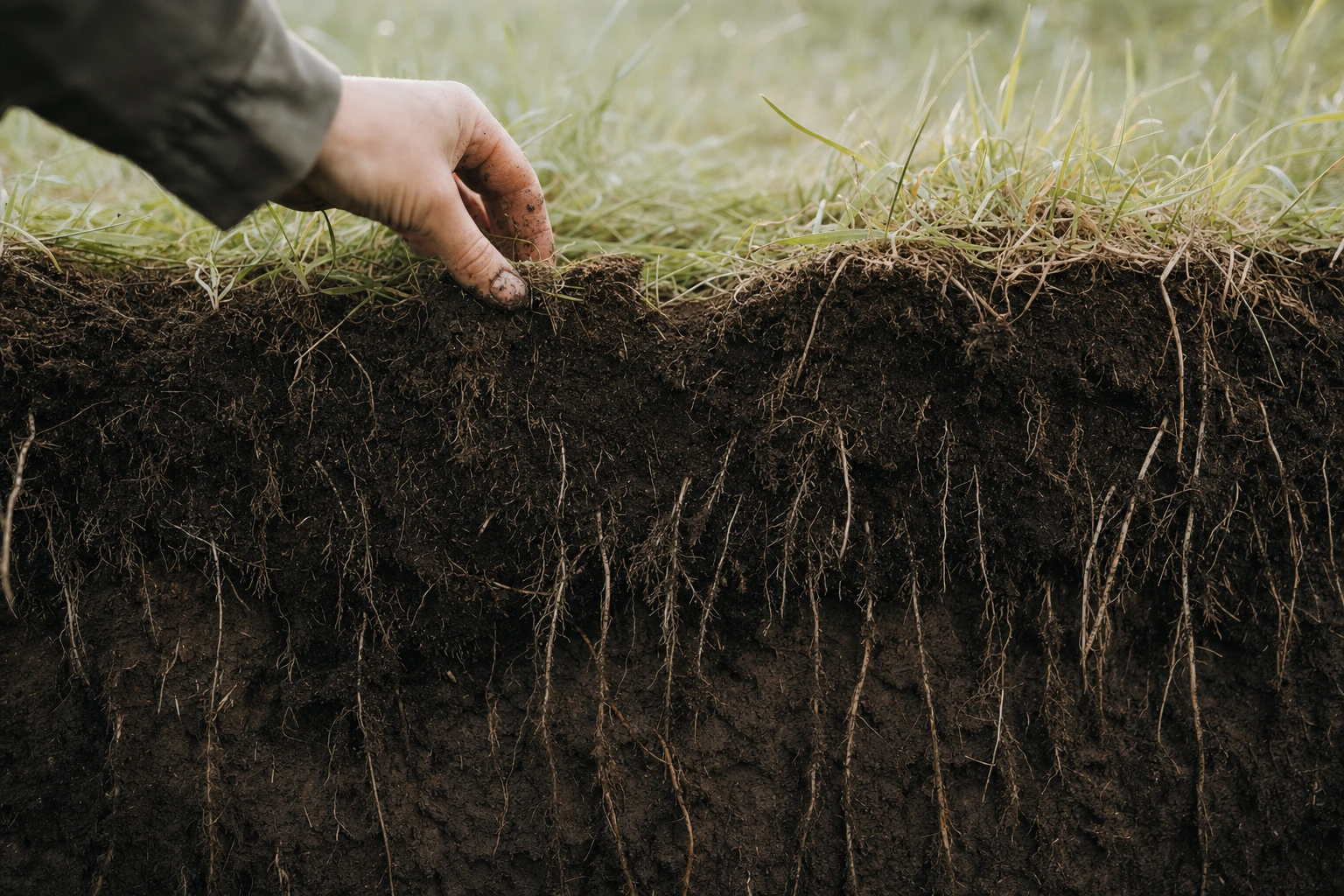
Mob grazing is different. The impact is intense but brief. Animals trample dead grass, dung, and plant material into the soil. They're not eating it all. They're creating a layer of organic matter that will decay and become soil.
This matters because soil carbon comes from dead plant material. When biomass dies, it either rots away into the air as CO2, or it gets incorporated into the soil where it stays. Mob grazing keeps organic matter in contact with soil, where it belongs.
The impact also breaks up compacted soil. If the ground has been continuously grazed or repeatedly tilled, it becomes hard and lifeless. A brief, intense hoof impact actually aerates it, creating space for air and water and root penetration.
Microbial life awakens
A handful of healthy soil contains more microorganisms than there are humans on Earth.2 Bacteria, fungi, protozoa, nematodes. These organisms are the soil's immune system, its nutrient cycling network, its living infrastructure.
Continuous grazing kills microbial diversity. The grass is constantly eaten down. The roots can't feed the microbes through exudates. The organic matter on the surface is exposed and oxidises away. The soil becomes biologically dead.
Mob grazing wakes the microbes up. The brief but intense grazing returns lots of organic matter to the surface. The extended rest period allows the grass to regrow deeply, sending roots deep into the soil. These roots exude sugars that feed the microbial network. Fungi establish relationships with the roots. The soil becomes alive again.
A biologically active soil is more resilient. It holds water better. It cycles nutrients more efficiently. It supports plants that are more nutritious because they're getting what the soil is designed to provide.
The microbes in the soil are what make a plant nutrient-dense. Dead soil makes weak plants. Living soil makes strong ones.
Get farming and sourcing guides, free
Two short reads a week on regenerative farming and where real food comes from.
By signing up you agree to receive emails from us. No spam, unsubscribe anytime.
Carbon moves into the ground
When grassland is continuously grazed or tilled, carbon leaves the soil. It oxidises into the air. Years of build-up can be lost in months. This is why farming has been a net carbon source, it's been releasing carbon from the soil faster than plants can rebuild it.
Mob grazing reverses this. The constant build-up of biomass, combined with the biological activity of restored soil microbes, means carbon is being sequestered back into the ground. Not just temporarily, but potentially for decades or centuries.
Research on mob-grazed pastures shows significant increases in soil carbon over time. Some studies show the amount of carbon stored in properly managed grazing land rivalling that of forests.1 This isn't marketing. It's measurable, real carbon storage happening because of the way the animals move across the land.
Biodiversity returns
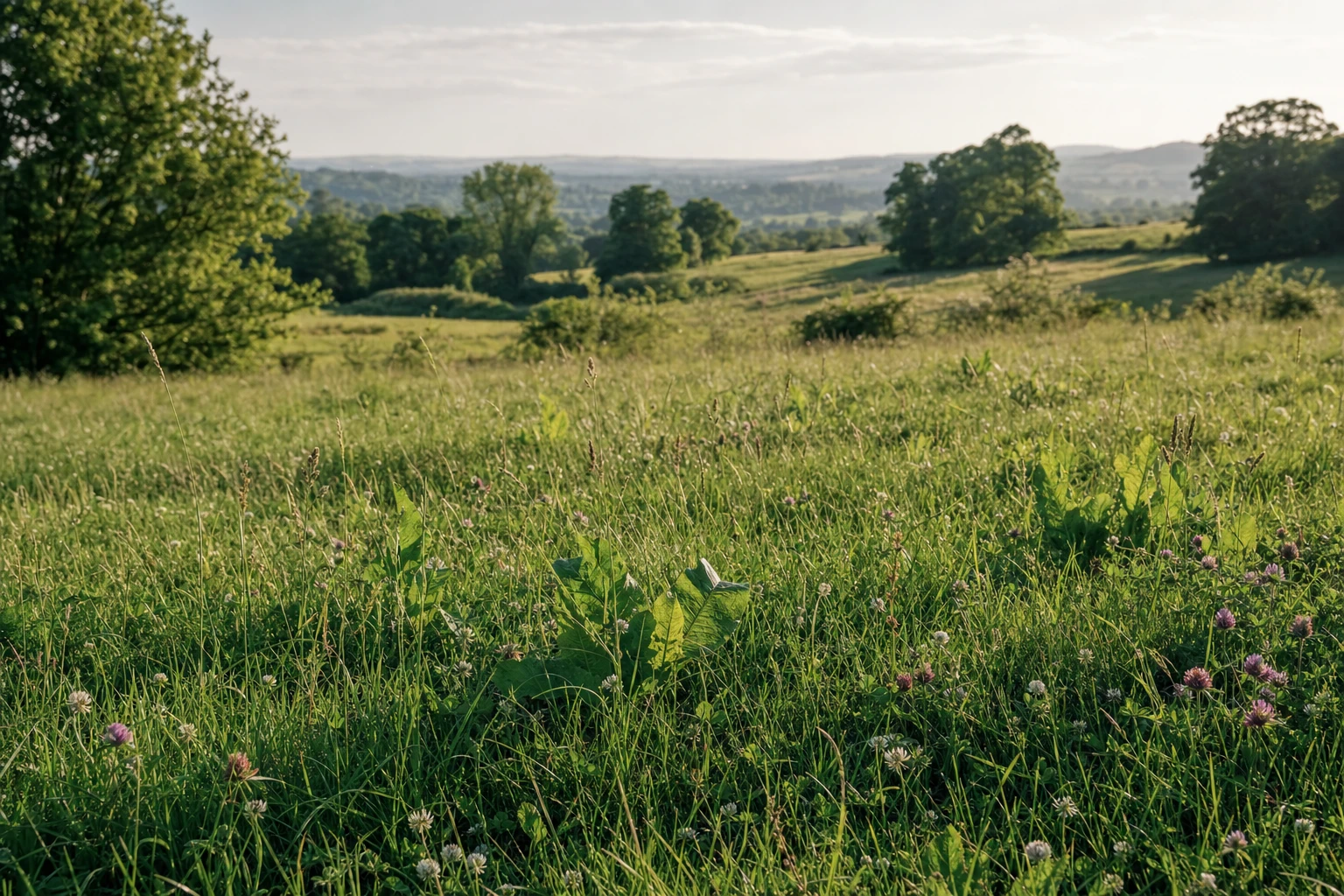
Monoculture pasture is green, but it's biologically empty. A field of ryegrass and clover is not the same as a pasture full of native grasses, clover, dandelion, plantain, chicory, and dozens of other species.
Mob grazing, especially over years, allows diversity to return. Different plants tolerate being grazed at different times. Some thrive immediately after intense pressure. Others establish in the recovery phase. Over time, the pasture becomes a polyculture again.
This diversity matters for the animals eating it. A cow grazing a diverse pasture gets a different nutrient profile than one in a monoculture.3 It gets a wider range of minerals, trace elements, and bioactive compounds. This translates to higher-quality milk and meat.
It also matters for insects, birds, and soil health. A diverse pasture supports a diverse ecosystem. The soil becomes richer. The entire system becomes more resilient to drought, to disease, to the stresses of climate.

1 of 9
Daily blend
100,000+ thriving families4.9 on Trustpilot
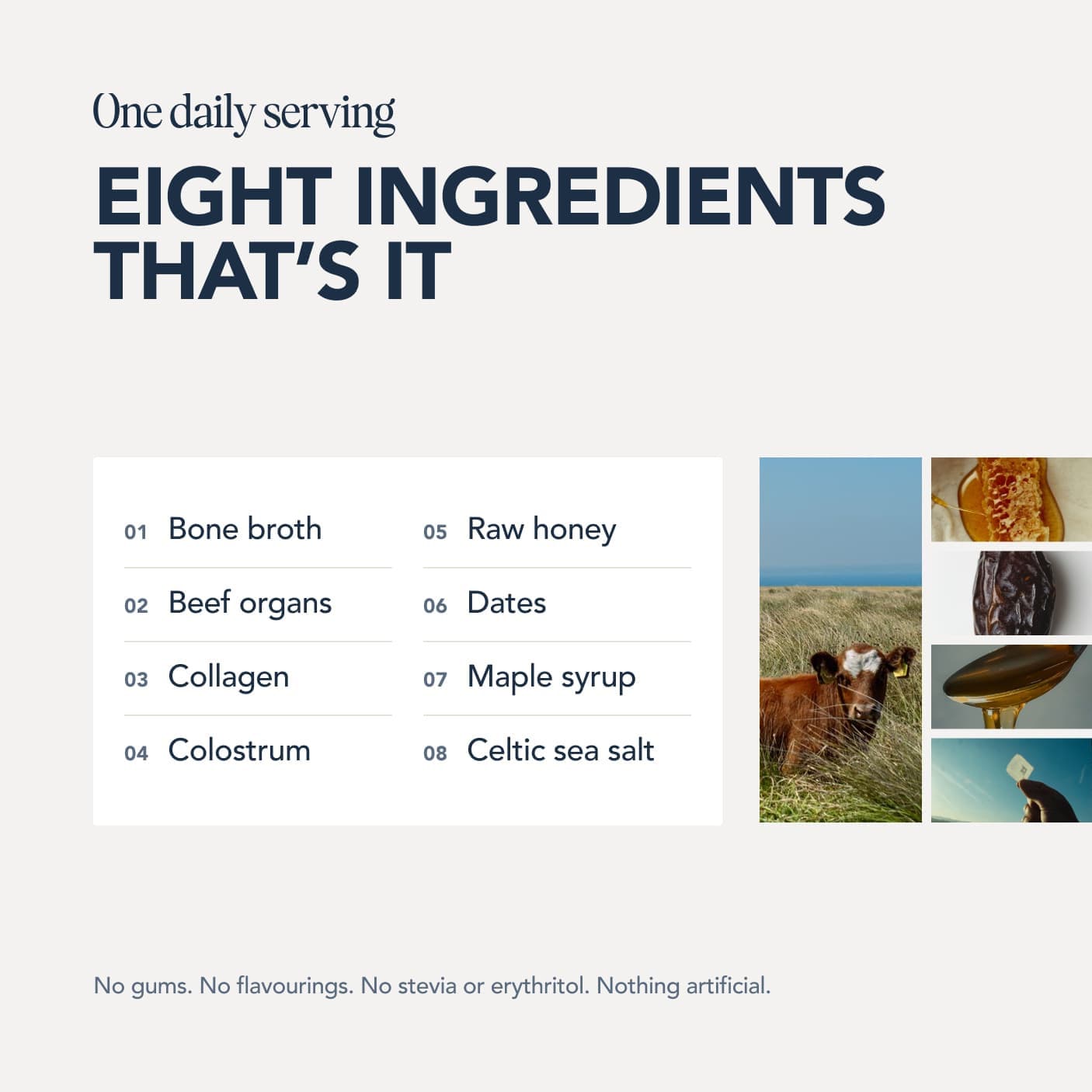
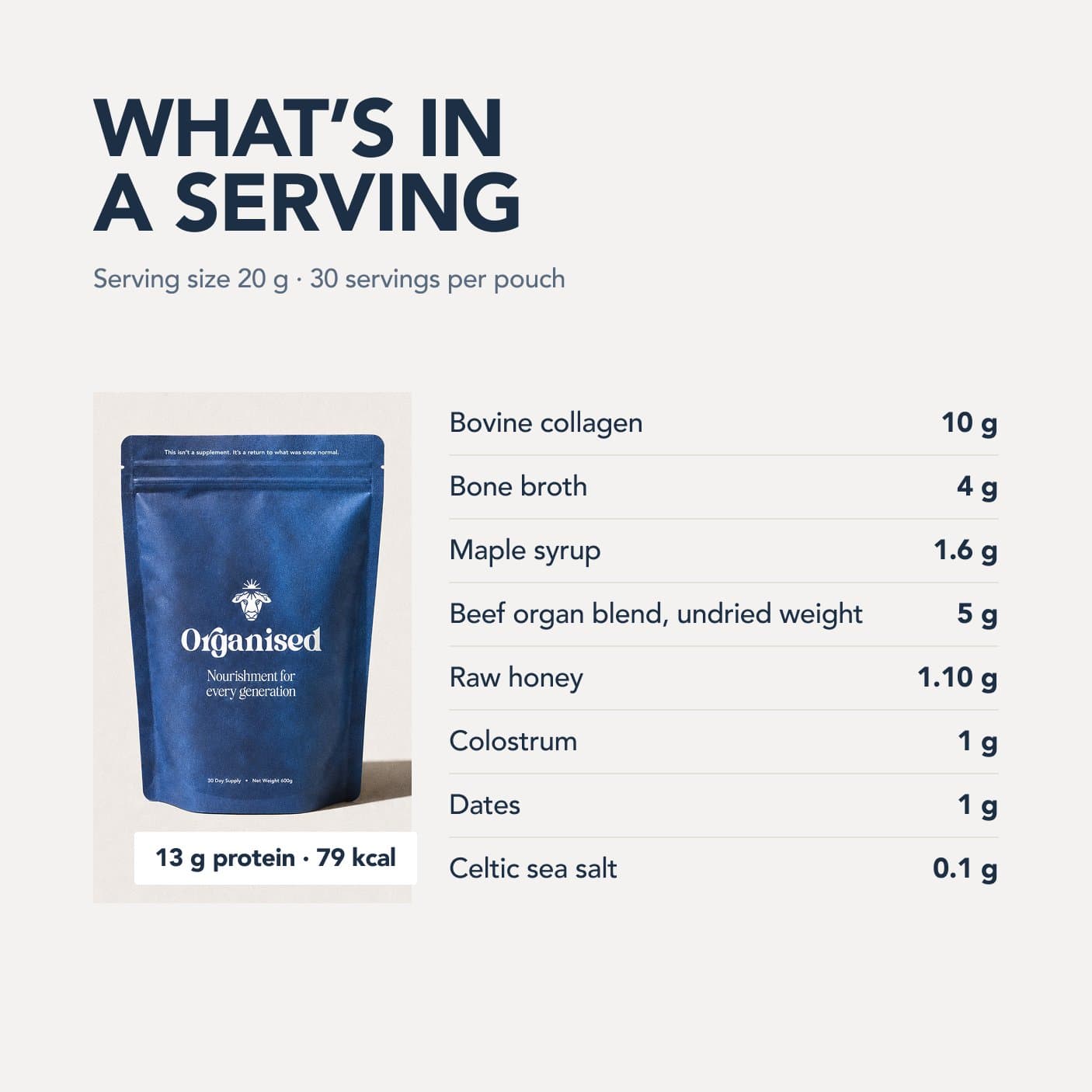
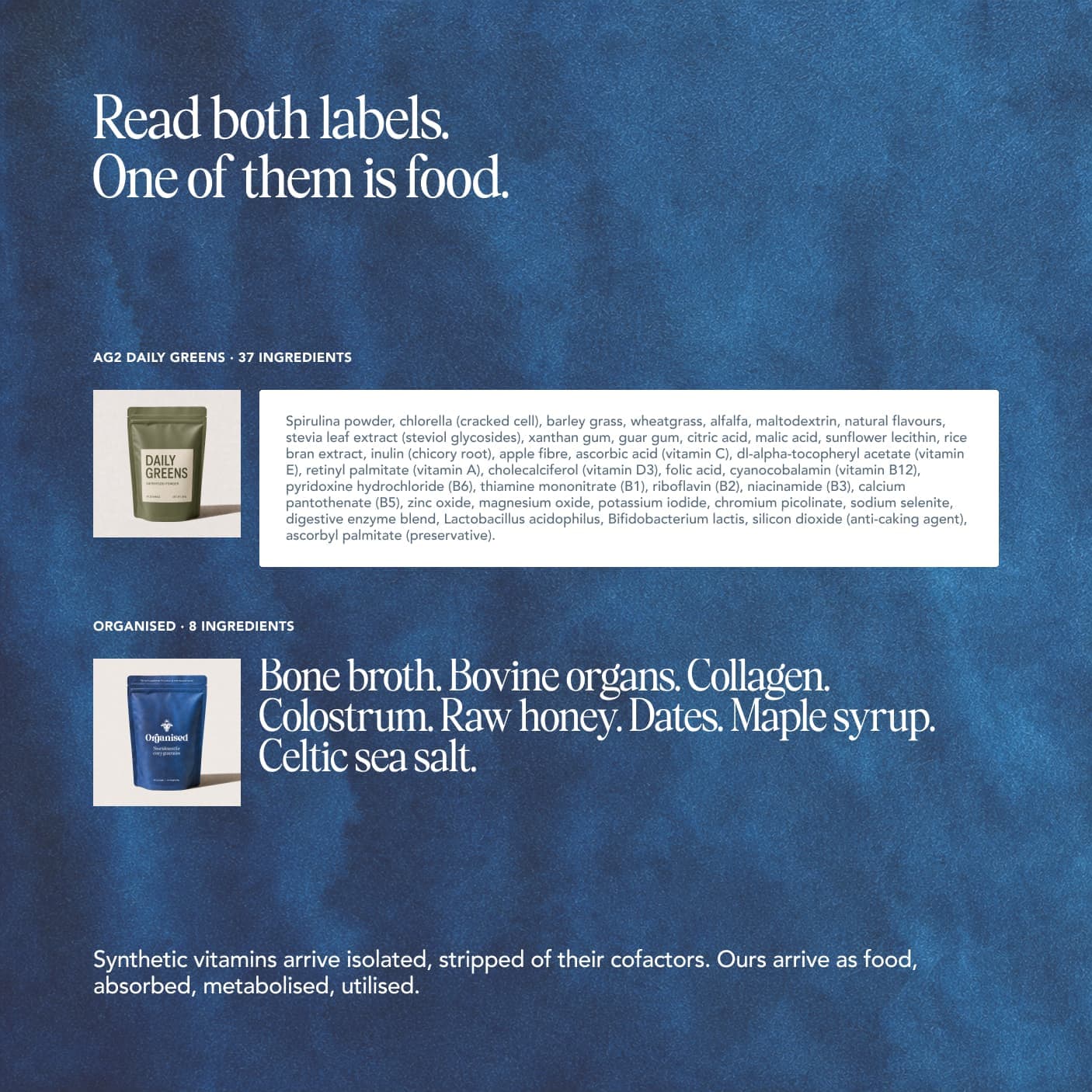
Eight real ingredients built around grass-fed beef organs, collagen and colostrum. Nothing synthetic added.
Free with your first order, worth £38. Plus £10 off the pouch with a subscription.

Free UK shipping · Made in England · 100 day money back guarantee on your first pouch · Skip, pause or cancel anytime
Why conventional grazing fails
Continuous grazing on the same paddock is simpler to manage. Less moving cattle around. Less subdivision of the land. But simplicity isn't always better. It's usually worse.
Continuous grazing means the grass never fully recovers. Animals are constantly eating new growth, so the roots never go deep. The soil never builds organic matter. The microbial community never establishes. Year after year, the land gets poorer, not richer.
Feedlots are the logical endpoint of this thinking. Why graze at all if you can just confine animals and deliver feed to them? But feedlots destroy the land they're built on, concentrate waste, and produce meat from animals eating grain in feedstalls instead of grass outdoors. The nutritional cost is enormous.
The bottom line
When you buy meat from a producer using mob grazing, you're buying from land that's being healed. You're supporting a method that rebuilds soil, increases carbon storage, and improves nutritional quality.
Mob grazing isn't perfect or without complexity. But it's the closest thing modern agriculture has to a regenerative cycle. If you care about where your food comes from and what it's doing to the land, ask your producer if they mob graze. It's a meaningful signal that they're thinking beyond this year's profit.
References
Every source below was checked on 27 August 2026. Each PubMed, PMC and DOI identifier was resolved against NCBI or Crossref, and what it opens is printed under the citation, so you can see the link goes where the citation says without leaving the page. Where a citation and its identifier disagreed, the citation was corrected to the record or the reference was deleted along with the sentence marker that pointed at it, and where the resolved paper turned out not to support the sentence, the sentence was cut back to what it does support. Borrowed authority is worse than none, because it looks like rigour.
- Teague WR, Apfelbaum S, Lal R, et al. The role of ruminants in reducing agriculture's carbon footprint in North America. Journal of Soil and Water Conservation. 2016;71(2):156-164. https://www.jswconline.org/content/71/2/156
- Roesch LFW, Fulthorpe RR, Riva A, et al. Pyrosequencing enumerates and contrasts soil microbial diversity. ISME Journal. 2007;1(4):283-290. https://pubmed.ncbi.nlm.nih.gov/18043639/Checked 27 August 2026: PMID 18043639 opens Roesch LF, Fulthorpe RR, Riva A et al, Pyrosequencing enumerates and contrasts soil microbial diversity. ISME J 2007;1(4):283-90. PubMed indexes it as: Comparative Study.
- Daley CA, Abbott A, Doyle PS, Nader GA, Larson S. A review of fatty acid profiles and antioxidant content in grass-fed and grain-fed beef. Nutrition Journal. 2010;9:10. https://pmc.ncbi.nlm.nih.gov/articles/PMC2846864/Checked 27 August 2026: PMC2846864 opens Daley CA, Abbott A, Doyle PS et al, A review of fatty acid profiles and antioxidant content in grass-fed and grain-fed beef. Nutr J 2010;9:10. PubMed indexes it as: Review.
Who wrote and reviewed this guide
Niall Kiddle
Author · Founder, Organised
Niall is the founder of Organised. He started the company in 2024 after fixing his own health the slow way: in 2022 he swapped a cupboard of synthetic supplements for real food, raw milk, organ meats, bone broth and honey, and felt the difference within months.
Areas of expertise: Ancestral nutrition, Organ meats, Whole-food supplementation, Gut health, Regenerative sourcing
Read Niall's full profile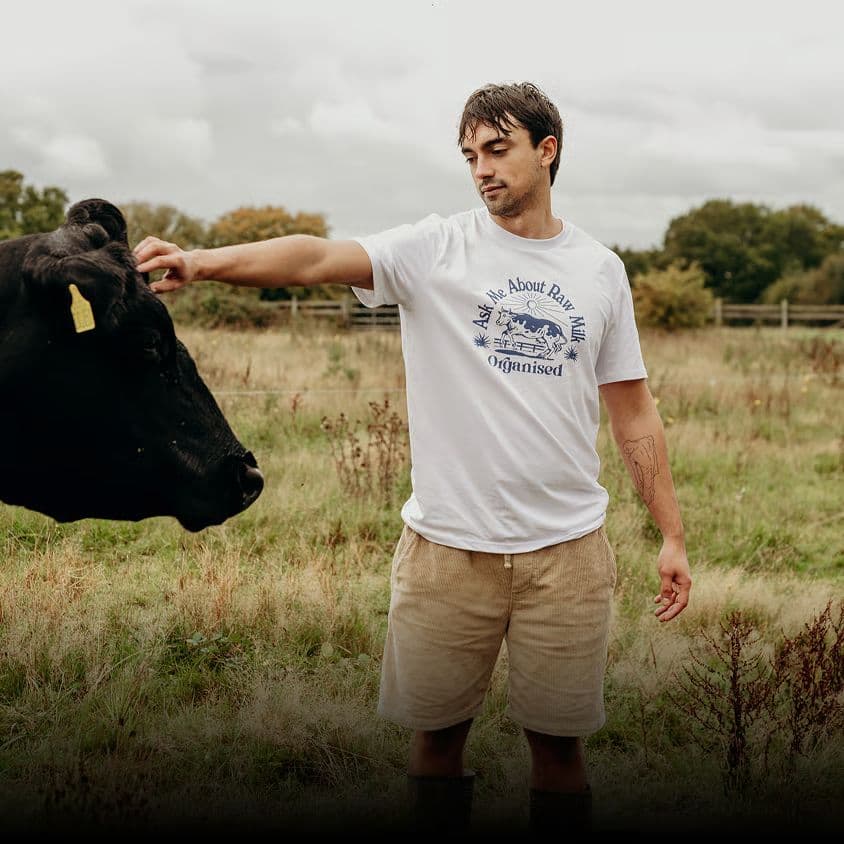
Pedro Rodrigues
Reviewer · Agronomist (farming and sourcing only)
Pedro is the agronomist Organised works with on farming and sourcing. His job on the guides is to keep the science honest: he reviews what we publish about soil health, regenerative agriculture, grazing and the way food is actually produced.
Areas of expertise: Regenerative agriculture, Agronomy, Soil health, Grass-fed farming, Food sourcing
Reviewed this guide on
Read Pedro's full profileMore on farming & transparency
View all- Biodynamic Farming: What It Means and Why It Matters
- British Beef: Why Quality Matters More Than Origin Alone
- Free Range, Organic, Pasture-Raised: A Quick Reference Guide
- How Stress in Cattle Affects the Quality of Their Organs
- What Is Third-Party Testing and Why Should You Care?
- Why Biodiversity on Farms Matters for Your Food
- Why Ingredient Traceability Matters More Than Marketing Claims
Browse the guides library
All guidesKeep reading
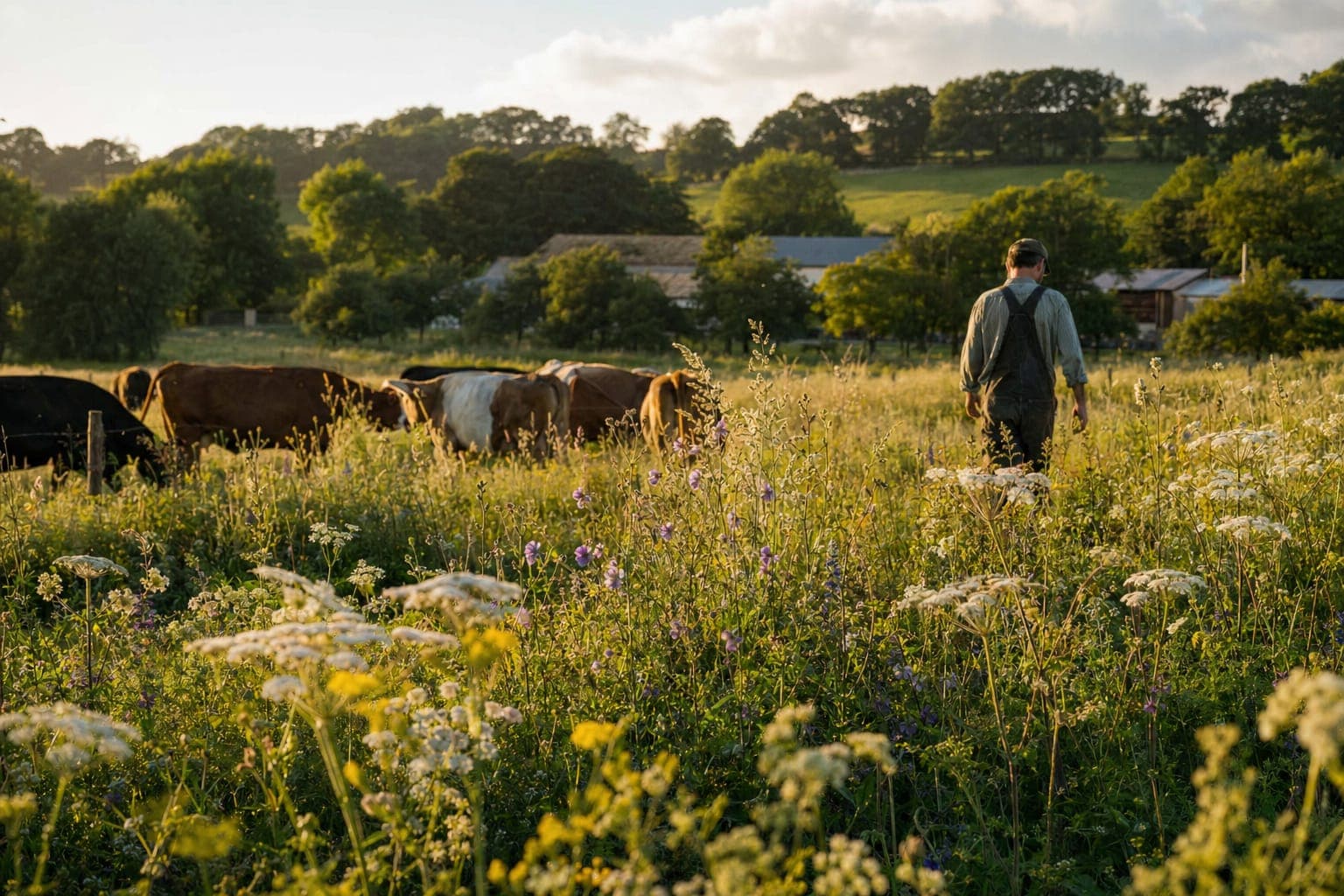
Farming
Why Biodiversity on Farms Matters for Your Food
Diverse farms produce more nutrient-dense food. Learn how native grasses, fungi, and insects directly impact the nutritional value of what you eat.
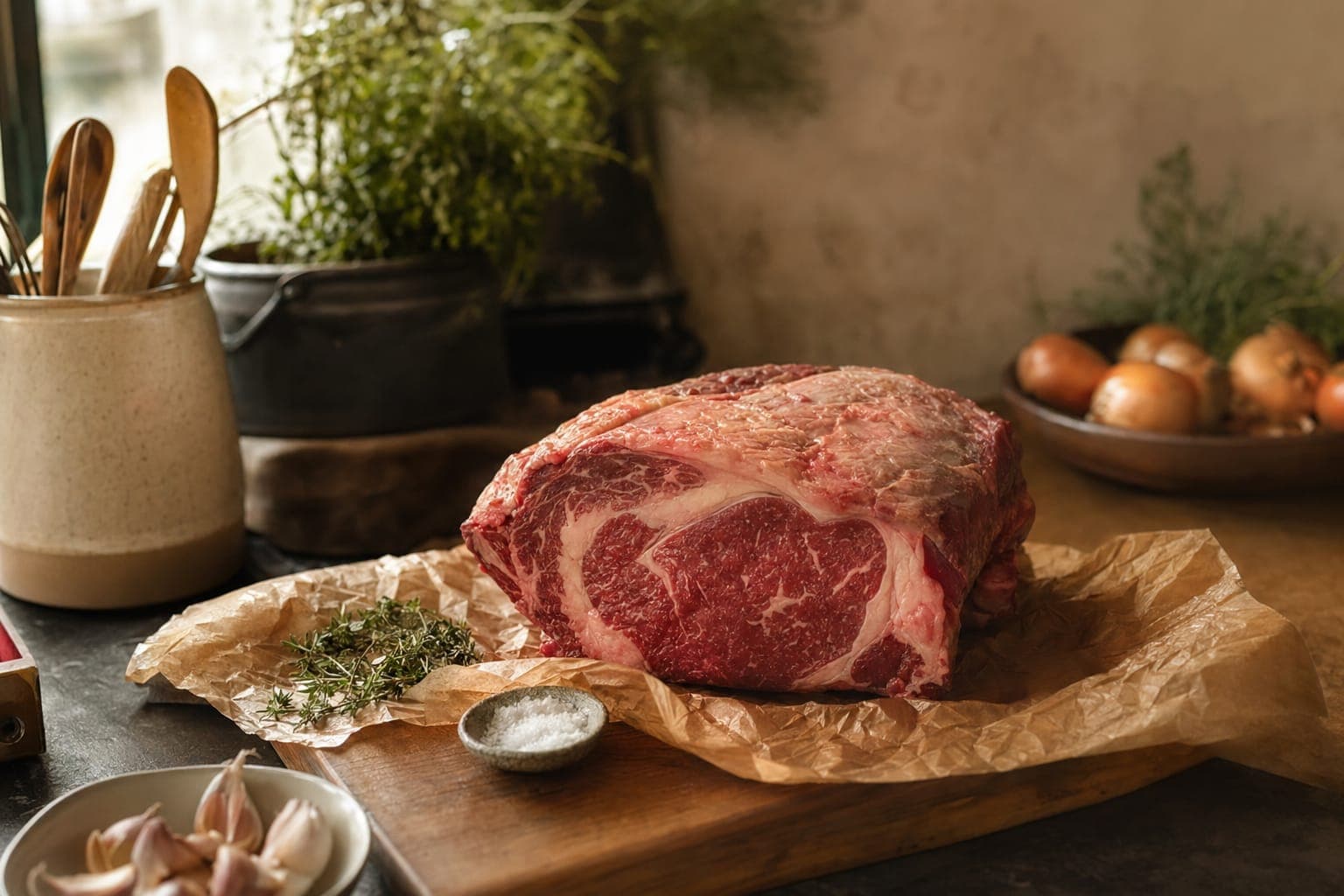
Farming
British Beef: Why Quality Matters More Than Origin Alone
British beef has a good climate for grass-fed cattle, but the label itself isn't a quality guarantee. Learn what to actually look for.
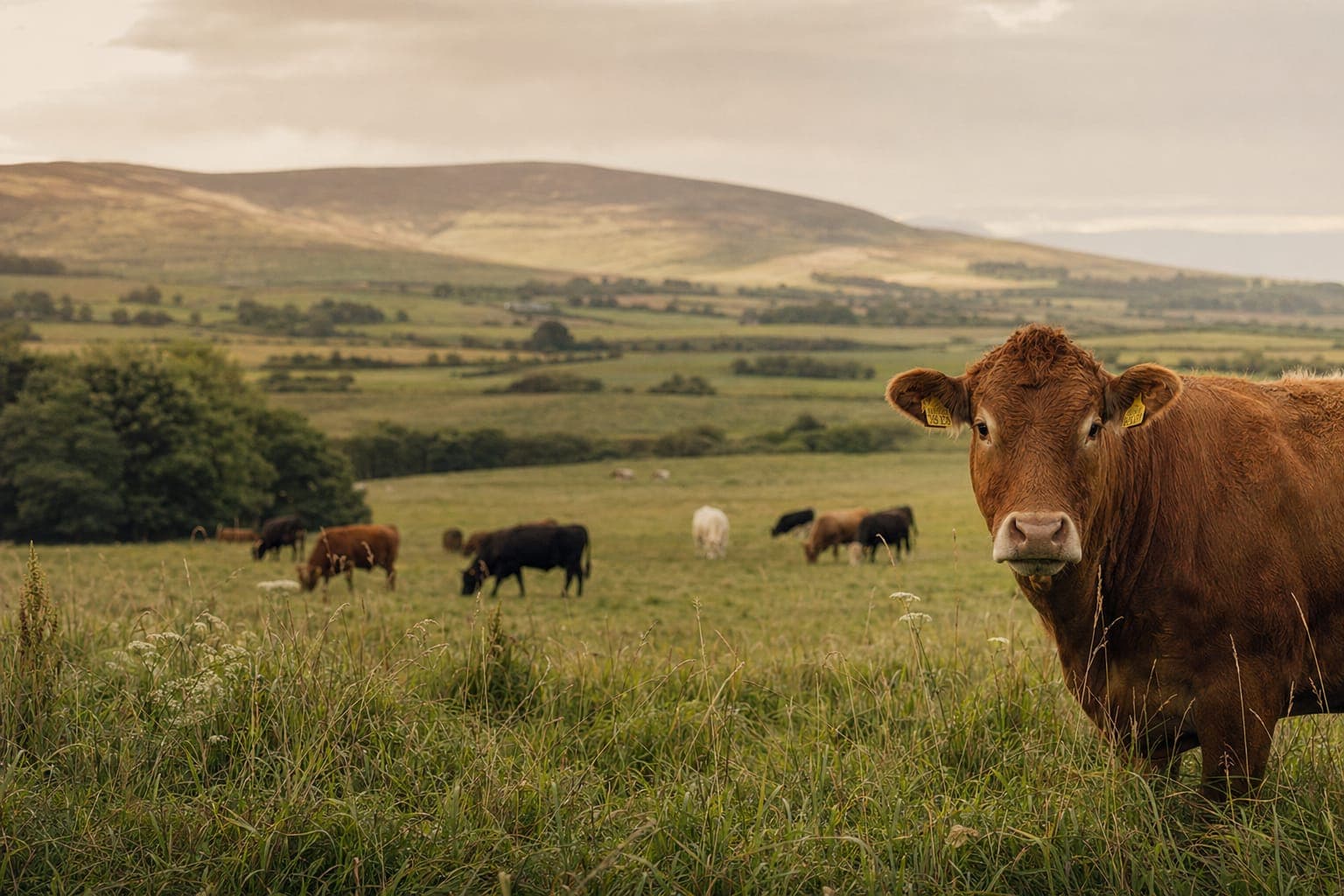
Farming
How Cattle Help Sequester Carbon
Properly managed cattle can actually sequester carbon in soil. Here's how holistic planned grazing rebuilds ecosystems and stores carbon for generations.
Real food, made effortless
Shop the blendA few ways to use it
All recipes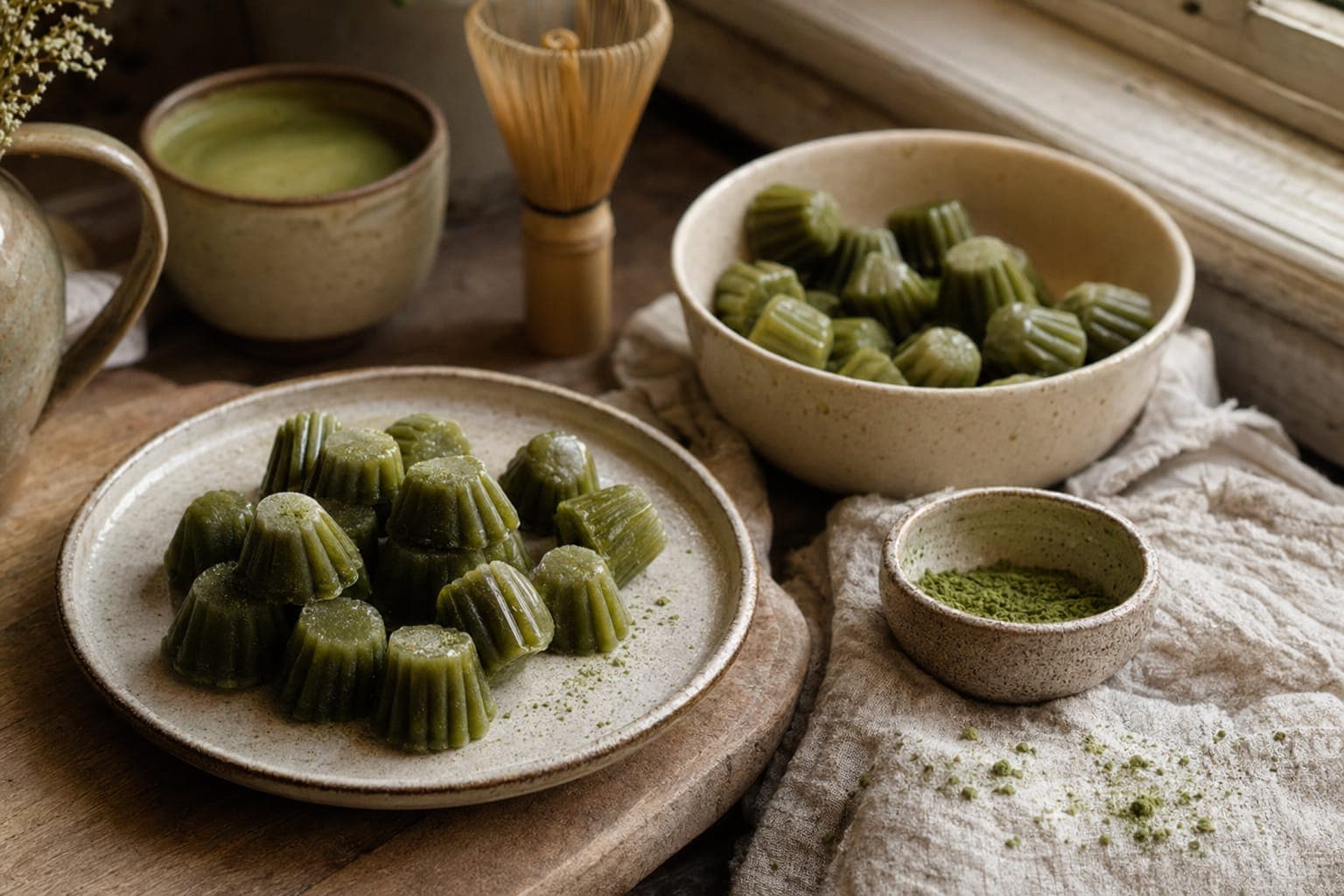
Matcha Latte Gummies with Collagen and Gelatine
Make visually stunning matcha latte gummies infused with collagen and gelatine. Simple recipe for gut-healing sweets you'll actually want to eat.

Organised Protein Pancakes: A Weekend Favourite
A high-protein pancake recipe using beef protein, eggs, and raw milk. Cooked in cast iron, naturally sweetened with banana and honey. Real food breakfast.

The Organised Recovery Smoothie for After Exercise
A recovery smoothie made with beef protein, raw milk, frozen berries, collagen, and honey. Optimal nutrition in the 30-minute window after exercise.


 Join over 100,000+ members
Build a better food system with us
The Organised community is thousands of people choosing real food and backing the farmers who grow it, all of us trying to leave the world a little better than we found it. If that is what you care about too, you belong here.