No mRNA Vaccines, No Bovaer, No Hormones: Our Sourcing Standards
Consumer concerns about what's really in our meat have never been louder. mRNA vaccines for cattle. Methane-reducing additives. Synthetic hormones. At Organised, we've made clear choices on each one. Here's why, and what we actually source instead.
By Niall Kiddle, Founder, Organised

Reviewed by Pedro Rodrigues, Agronomist (farming and sourcing only) ·
6 min read · Published · Updated · 4 cited sources
Makers of the Organised Daily blend, a grass-fed beef organ supplement from regenerative UK farms
The cattle industry has shifted dramatically in the last decade. New technologies are now routine on most farms. But which of these interventions actually belong in the animals we source? That question has shaped everything we do. When you eat beef from Organised, you're eating from an animal raised without three things most of the industry now considers standard. Those exclusions are deliberate, grounded in biology and food quality, not ideology.
Why we've excluded mRNA vaccines
mRNA vaccine technology for cattle is now being trialled and rolled out across industrial farming systems. The appeal to farmers is straightforward: faster development cycles, easier scaling, rapid response to emerging disease threats. The public health logic is sound in theory. But we've decided not to source from farms using them on their herds.
Here's our thinking. Traditional vaccination protocols have protected cattle herds for decades. They work reliably. A cow vaccinated with conventional immunology is fully protected. The end result, from a herd health perspective, is identical to mRNA vaccination. We have no biological reason to introduce a newer platform when the established method achieves the same outcome with a century of safety data behind it demonstrating its reliability.
mRNA vaccine technology is promising. We don't reject it on principle. But the principle we apply is simple: if the old way works perfectly and achieves the exact same endpoint, introducing the new way adds variables we cannot yet quantify. In a supplement containing organ meats from animals, those variables matter.
We're not rejecting innovation on principle. We're rejecting it when the old way works perfectly and the new way introduces variables we cannot yet quantify.
This is our filter for every sourcing decision: does the animal genuinely need this intervention? Will a traditional alternative achieve the same outcome? If the answer to both is yes, the newer technology doesn't make our cut. It's that simple and that deliberate. What matters is animal health. What doesn't matter is which vaccine platform delivers it. We've chosen to partner with farmers who deliver health through proven methods. The result is beef and organs sourced from animals raised without mRNA technology.
Bovaer: the additive we avoid and why
Bovaer is a feed additive approved in several countries, including the UK, designed to reduce methane emissions from cattle by up to 80 per cent.1 The mechanism is real and measurable: it inhibits enzymes in the animal's digestive tract, lowering the methane produced during rumination. The environmental case sounds airtight. Methane is a potent greenhouse gas. Cattle produce methane. Therefore reducing it is good for planetary climate. Simple logic. But it's not actually that simple.
We know surprisingly little about the long-term metabolic effects of chronic enzyme inhibition in a non-target organism. The safety data exists but is limited. The additive does what it claims: it changes the animal's digestion. What we genuinely don't know is whether that change carries knock-on effects, particularly across generations of use. Will consistent enzyme suppression select for unforeseen metabolic complications? Will the animal develop adaptive resistance over time? We're introducing a variable into a complex biological system and hoping the downstream effects sort themselves out over years and decades.
More fundamentally, methane from cattle is only a problem at industrial scale in degraded landscapes. On well-managed grassland using rotational grazing, cattle don't just produce meat and milk, they actively sequester carbon through soil building.4 The problem isn't cattle. The problem is how cattle are farmed. We source from farms using planned rotational systems where the animal's function is regenerative, not extractive. Those farms don't need Bovaer because the system is already working. The grass builds soil. The cattle graze and move. Carbon is sequestered. The ecosystem improves.
Using chemistry to fix a problem created by poor farming practice is treating the symptom, not the cause.
This is why we avoid Bovaer. Not because we fear the additive itself. Because it represents a philosophy of farming we disagree with: using chemicals to fix structural problems rather than fixing the structure itself.
Get farming and sourcing guides, free
Two short reads a week on regenerative farming and where real food comes from.
By signing up you agree to receive emails from us. No spam, unsubscribe anytime.
Synthetic hormones: the rejection that matters
This is the oldest story in industrial livestock farming. Since the 1950s, synthetic growth hormones, particularly implanted forms of trenbolone and oestradiol, have been used to accelerate muscle gain and feed efficiency in beef cattle.2 The economics are undeniable. An animal on hormones reaches market weight faster, on less feed. From a profit perspective, it's dramatically powerful. From a nutritional and biological perspective, the calculation is different and more complicated.
An animal forced into artificial hormonal states doesn't produce the same food as one allowed to grow at its natural pace. The nutrient profile shifts. The fatty acid composition changes. The mineral density alters. You're eating muscle tissue developed under hormonal duress, not under the animal's own endocrine blueprint. The meat is biochemically different at the molecular level. The biological meaning is different too.
Beyond the meat itself, synthetic hormones routinely enter water systems through waste streams and don't fully break down in conventional wastewater treatment facilities. They persist in aquatic ecosystems, affecting fish populations, amphibians, and downstream organisms.3 It's one of the quietest pollution problems nobody discusses in mainstream media. The animals don't just carry hormonal residues in their tissues. They export them into the environment with each waste stream.
Our sourcing standard is absolute: no synthetic growth hormones, no implants, no routine endocrine manipulation.
This choice has real costs. Cattle grow at their natural pace. Feed costs are higher. Farmer margins are tighter. That's the price of food that hasn't been biochemically modified for profit maximisation. We pay it willingly because the resulting meat is closer to what cattle actually are.
What we actually use instead
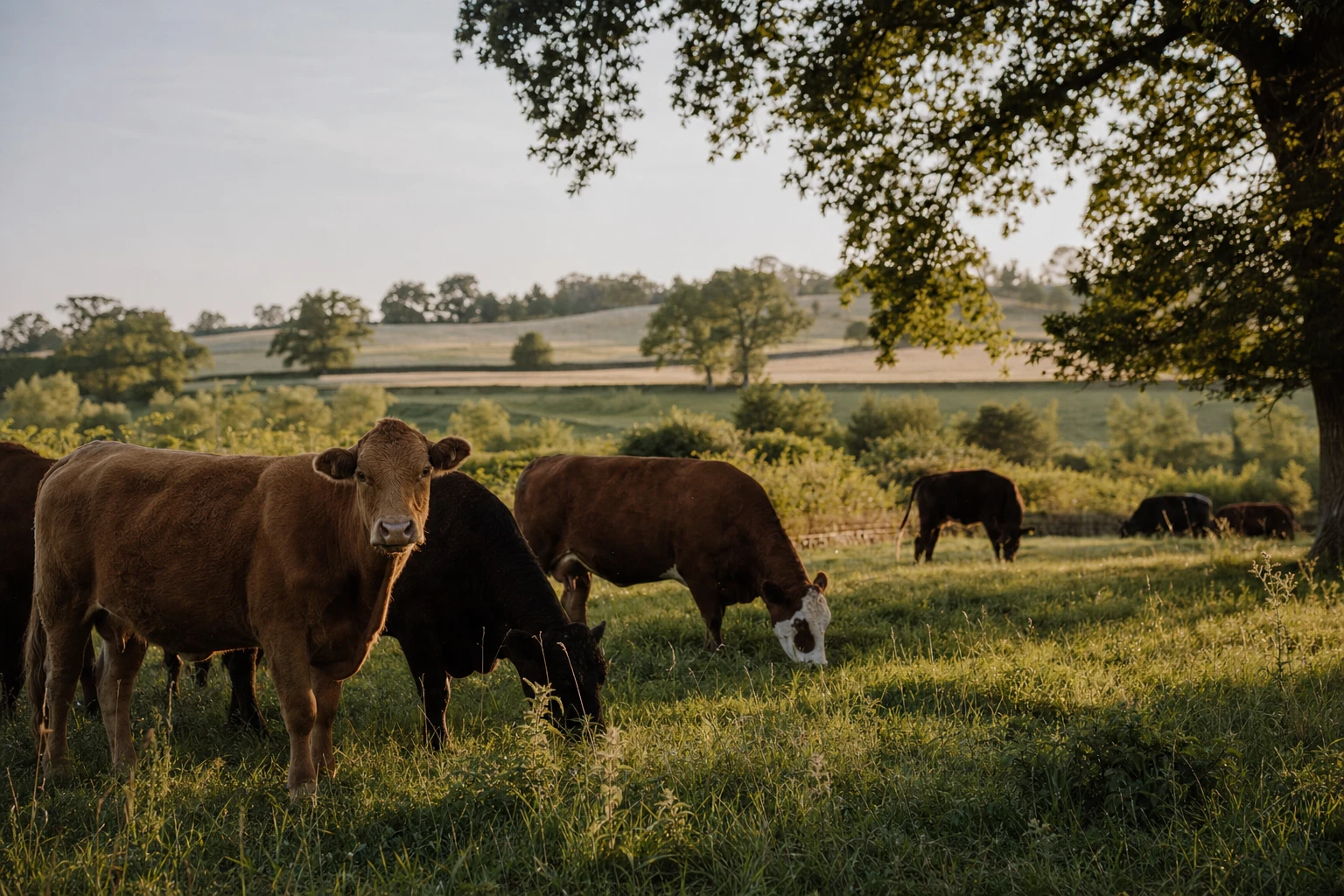
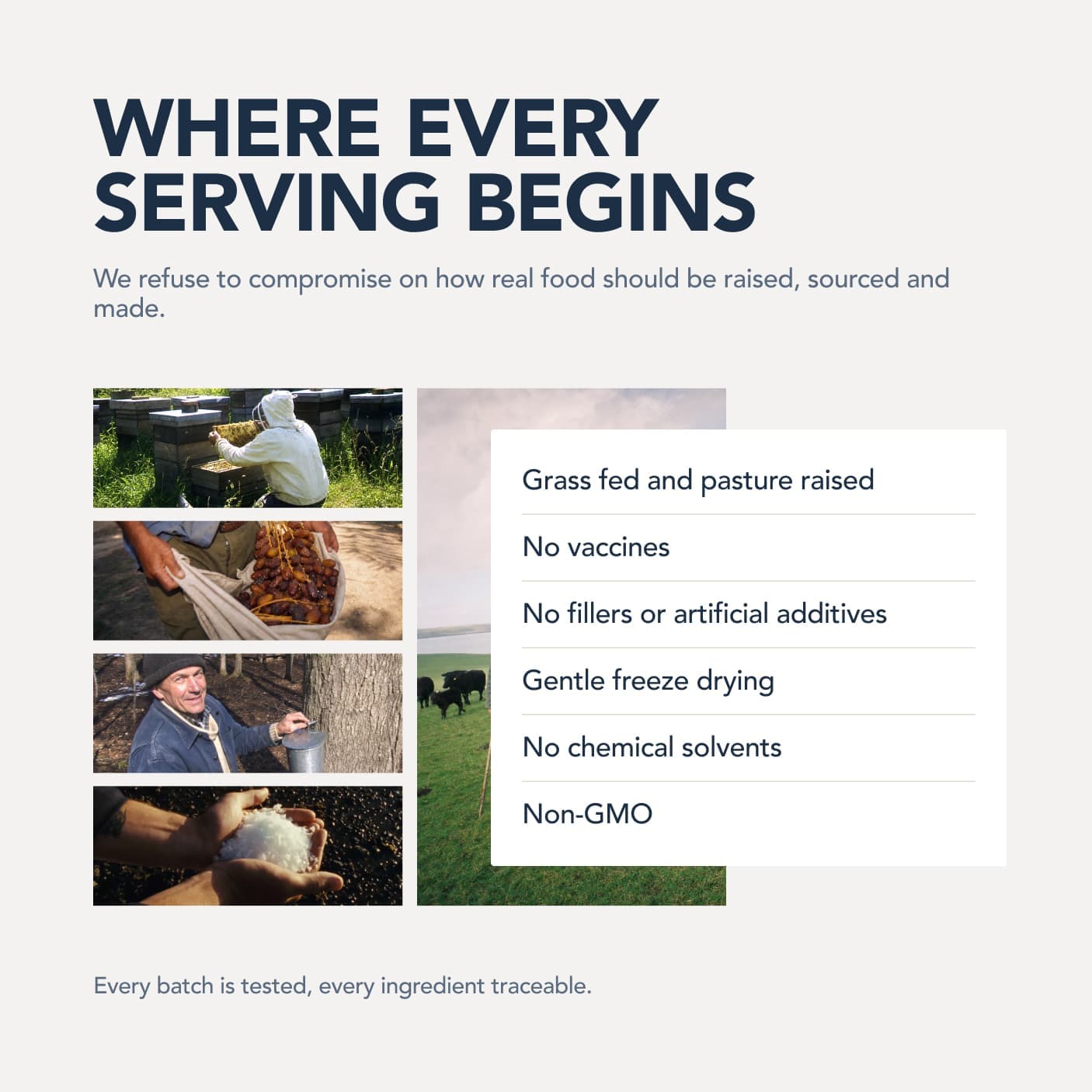
If we're excluding these interventions, what fills the void? Better management. Superior farming practices instead of chemical shortcuts. Our partner farms source exclusively from systems using rotational grazing, where herd health is maintained through movement, pasture diversity, and stress reduction, not chemical prophylaxis. Disease pressure is lower because animals aren't in high-density confinement. When veterinary intervention is needed, it uses traditional protocols with established safety records. The animals live lower-stress lives, which means their immune systems function better.
Growth happens at the animal's natural pace. We source from cattle breeds selected for their ability to thrive on pasture, to convert grass into nutrient-dense meat without external manipulation. They take longer to reach you. They spend more time on the farm. But they arrive having lived biologically congruent lives. When supplementation is used, it comes from whole-food sources. Mineral imbalances are corrected through pasture diversity and geology, not synthetic mineral mixes. If an animal needs treatment, a veterinarian is called. That's fundamentally different from routine chemical modification for production efficiency.

1 of 9
Daily blend
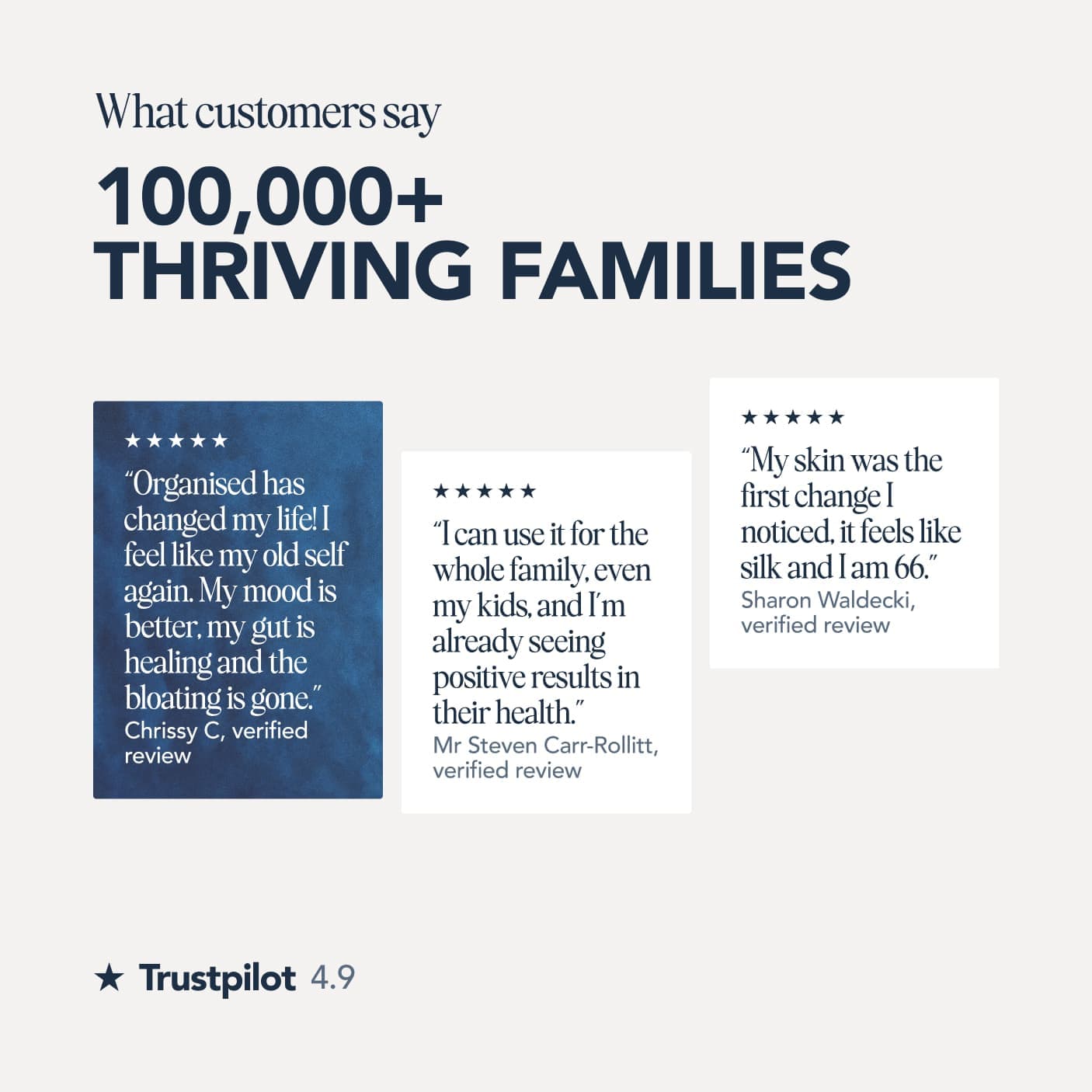
100,000+ thriving families4.9 on Trustpilot
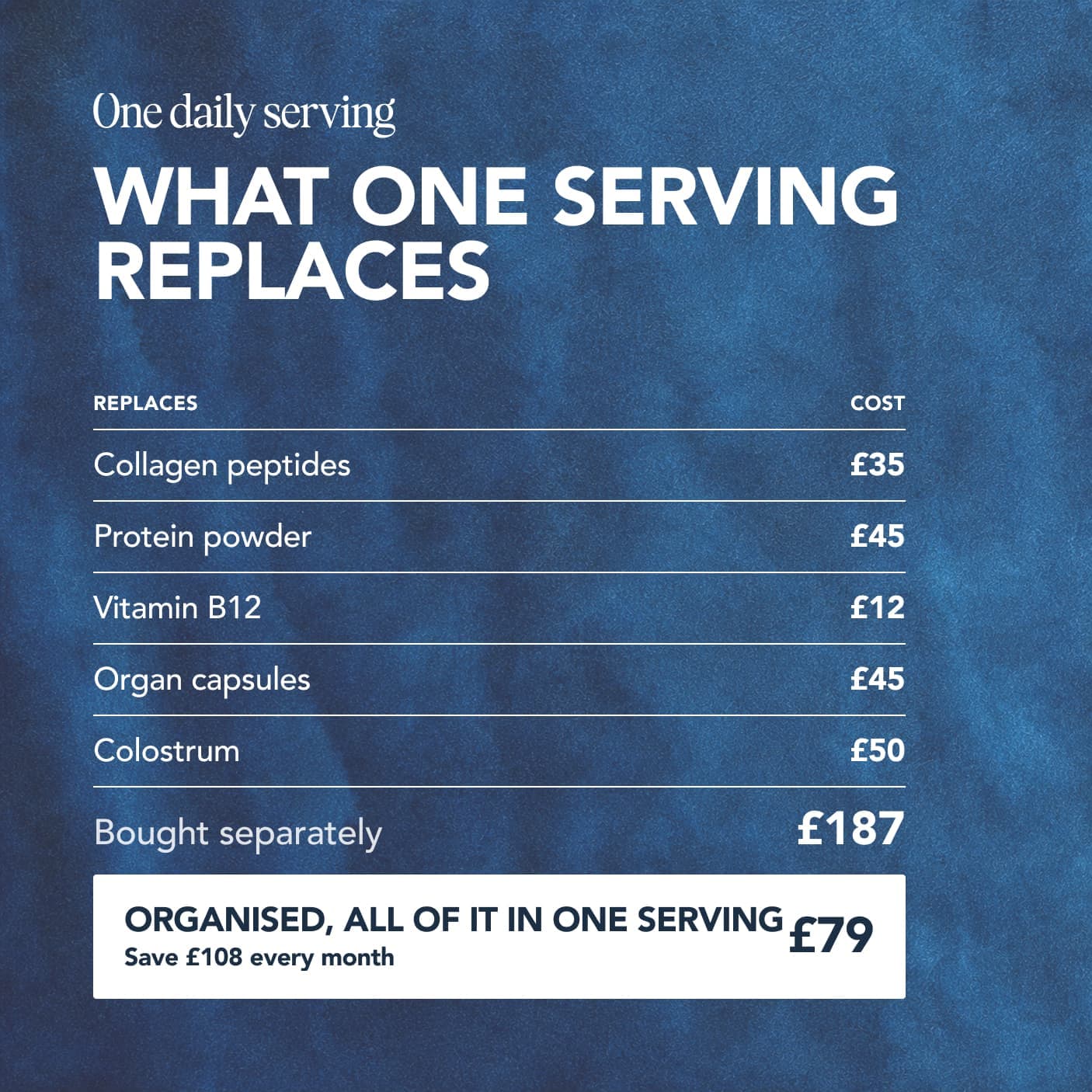
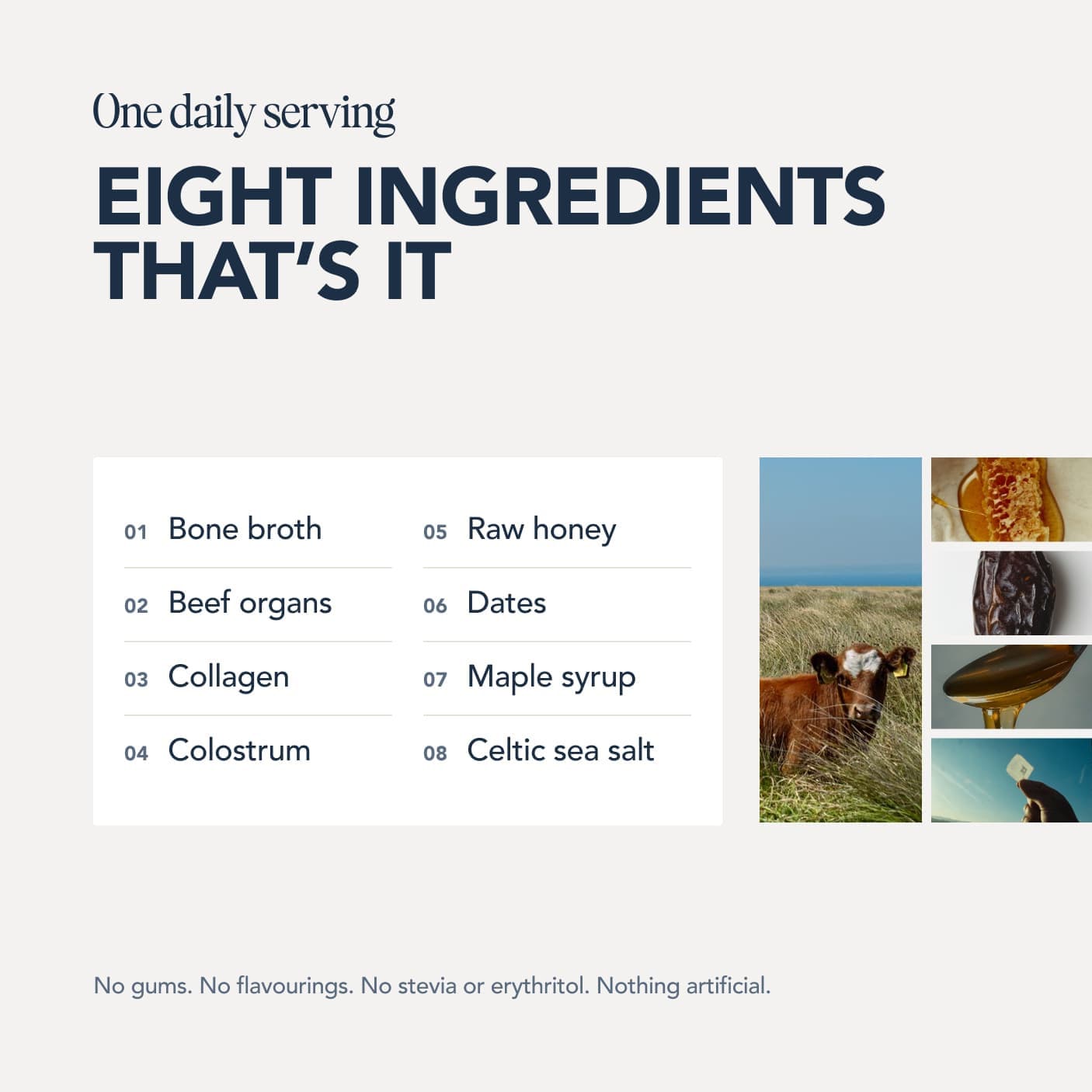
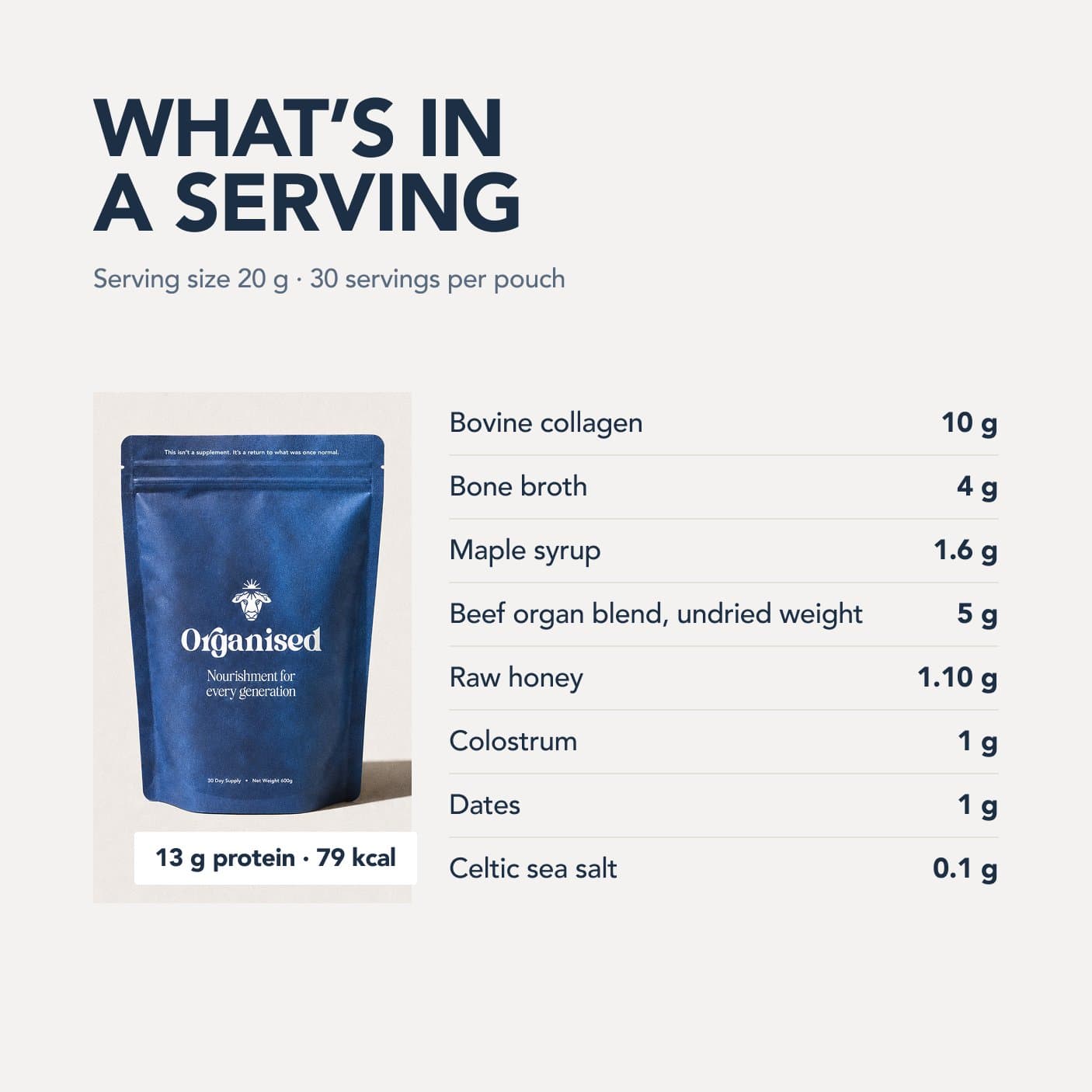
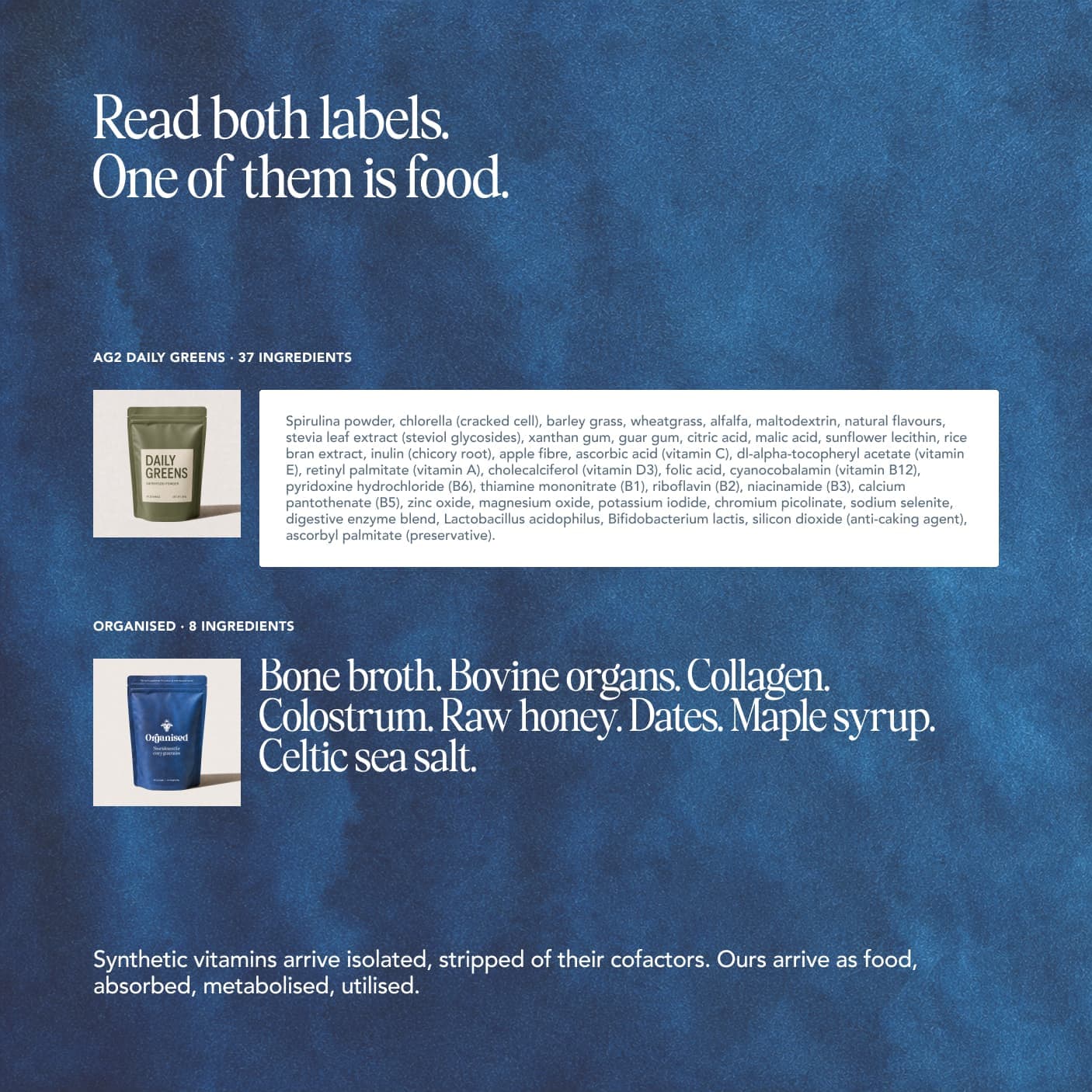
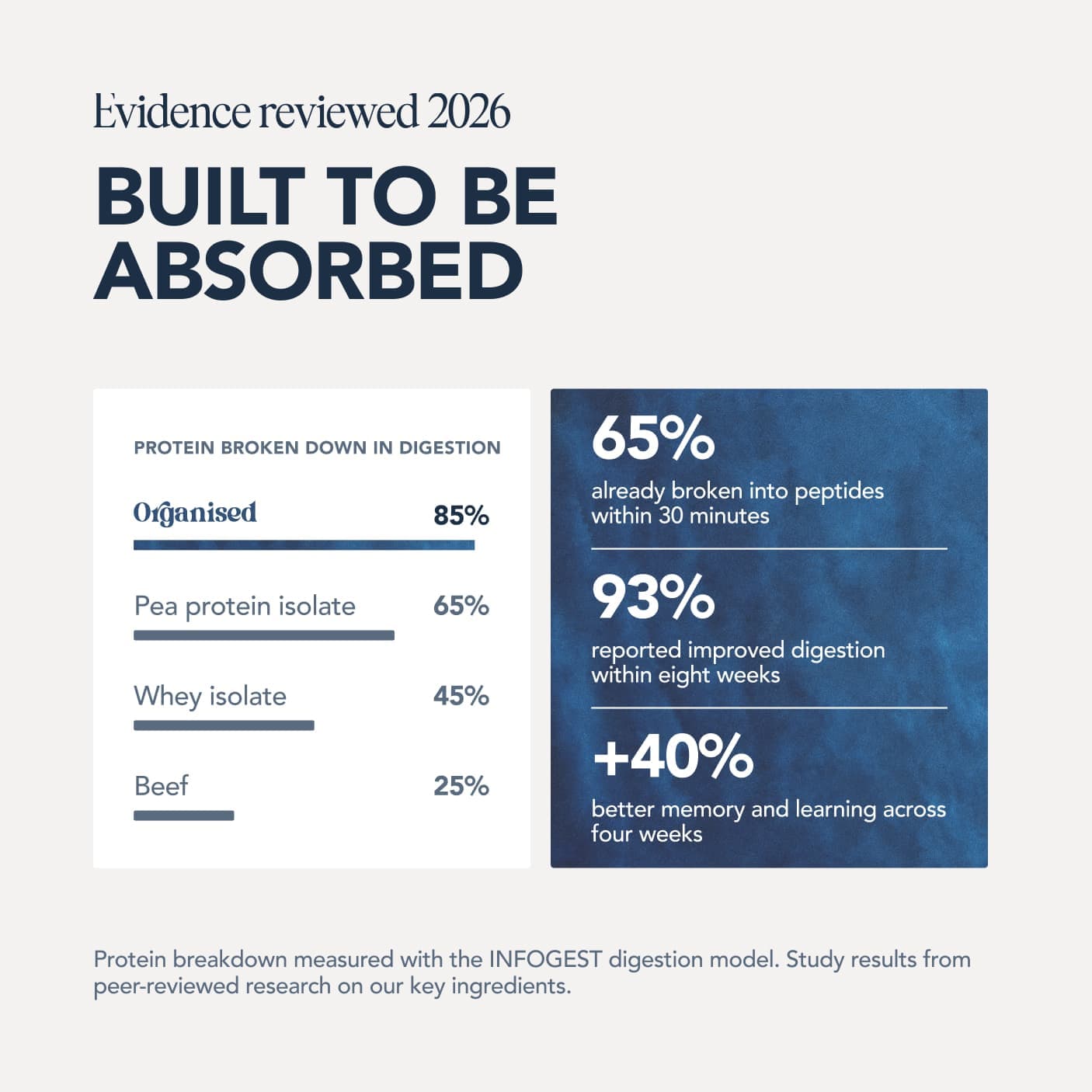
Eight real ingredients built around grass-fed beef organs, collagen and colostrum. Nothing synthetic added.
Free with your first order, worth £38. Plus £10 off the pouch with a subscription.
Free UK shipping · Made in England · 100 day money back guarantee on your first pouch · Skip, pause or cancel anytime
Supporting farms that share our standards
The harder question isn't what to reject. It's finding farmers willing to reject these things when doing so costs them money and reduces their yields. Cattle raised without mRNA vaccines, without Bovaer, without synthetic hormones grow slower and produce less per acre. That means higher costs and tighter margins. Yet a growing network of British farmers are choosing this path anyway because they believe it matters for their animals and for the food they're producing. We work with farms that have invested in selective breeding for natural robustness. We work with farms where pasture quality and rotational management are non-negotiable. Every purchase from us sends a signal to these farmers that their choices matter.
The bottom line
mRNA vaccines, Bovaer, and synthetic hormones might be industry standard. But standard isn't wise. These are deliberate exclusions we've made because we believe the long-term health of the animal, and the integrity of the product you consume, matters more than maximising yield. Supporting farmers who share these standards isn't cheaper. It's better.
References
Every source below was checked on 27 August 2026. Each PubMed, PMC and DOI identifier was resolved against NCBI or Crossref, and what it opens is printed under the citation, so you can see the link goes where the citation says without leaving the page. Where a citation and its identifier disagreed, the citation was corrected to the record or the reference was deleted along with the sentence marker that pointed at it, and where the resolved paper turned out not to support the sentence, the sentence was cut back to what it does support. Borrowed authority is worse than none, because it looks like rigour.
- European Food Safety Authority (EFSA). Safety and efficacy of a feed additive consisting of 3-nitrooxypropanol (Bovaer®). EFSA Journal. 2021;19(11):e06905.
- European Commission. Hormones in meat. EU Food Safety.
- Bartelt-Hunt SL et al. Effect of growth promotants on the occurrence of endogenous and synthetic steroid hormones on feedlot soils and in runoff. Environ Sci Technol. 2012;46(3):1352-60. PMID: 22242694.Checked 27 August 2026: PMID 22242694 opens Bartelt-Hunt SL, Snow DD, Kranz WL et al, Effect of growth promotants on the occurrence of endogenous and synthetic steroid hormones on feedlot soils and in runoff from beef cattle feeding operations. Environ Sci Technol 2012;46(3):1352-60.
- Teague WR et al. The role of ruminants in reducing agriculture's carbon footprint in North America. J Soil Water Conserv. 2016;71(2):156-164.Checked 27 August 2026: PMID 27091963 opens Qian G, Rao CR, Sun X et al, Boosting association rule mining in large datasets via Gibbs sampling. Proc Natl Acad Sci U S A 2016;113(18):4958-63.The authors' own declaration, from the record: The authors declare no conflict of interest.
Who wrote and reviewed this guide
Niall Kiddle
Author · Founder, Organised
Niall is the founder of Organised. He started the company in 2024 after fixing his own health the slow way: in 2022 he swapped a cupboard of synthetic supplements for real food, raw milk, organ meats, bone broth and honey, and felt the difference within months.
Areas of expertise: Ancestral nutrition, Organ meats, Whole-food supplementation, Gut health, Regenerative sourcing
Read Niall's full profile
Pedro Rodrigues
Reviewer · Agronomist (farming and sourcing only)
Pedro is the agronomist Organised works with on farming and sourcing. His job on the guides is to keep the science honest: he reviews what we publish about soil health, regenerative agriculture, grazing and the way food is actually produced.
Areas of expertise: Regenerative agriculture, Agronomy, Soil health, Grass-fed farming, Food sourcing
Reviewed this guide on
Read Pedro's full profileMore on animal welfare
View allBrowse the guides library
All guidesKeep reading
Farming
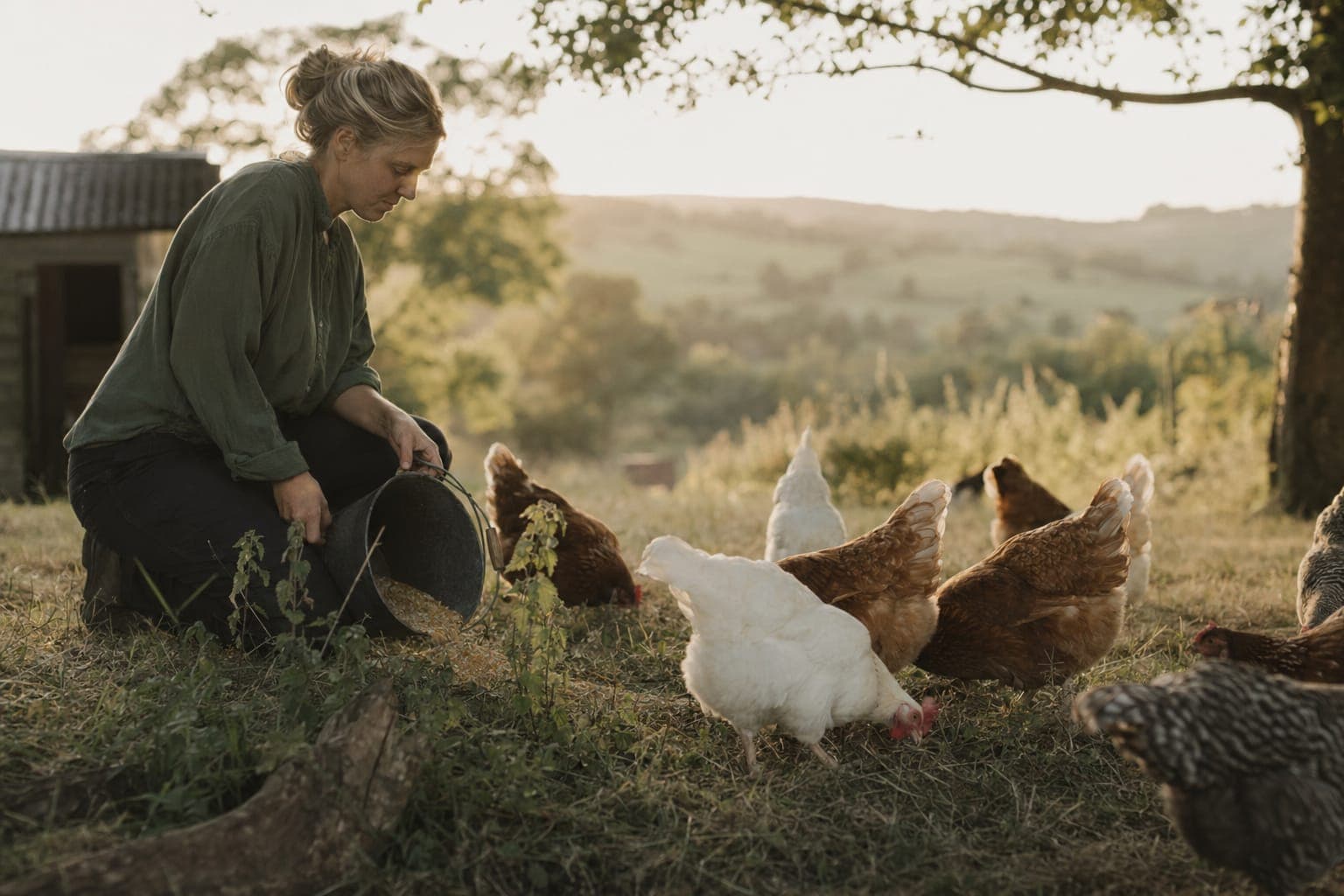
The Organised Code: Our Non-Negotiable Standards
Discover Organised's non-negotiable standards for sourcing, quality, and transparency. How we decide what makes it into the pouch.
Farming
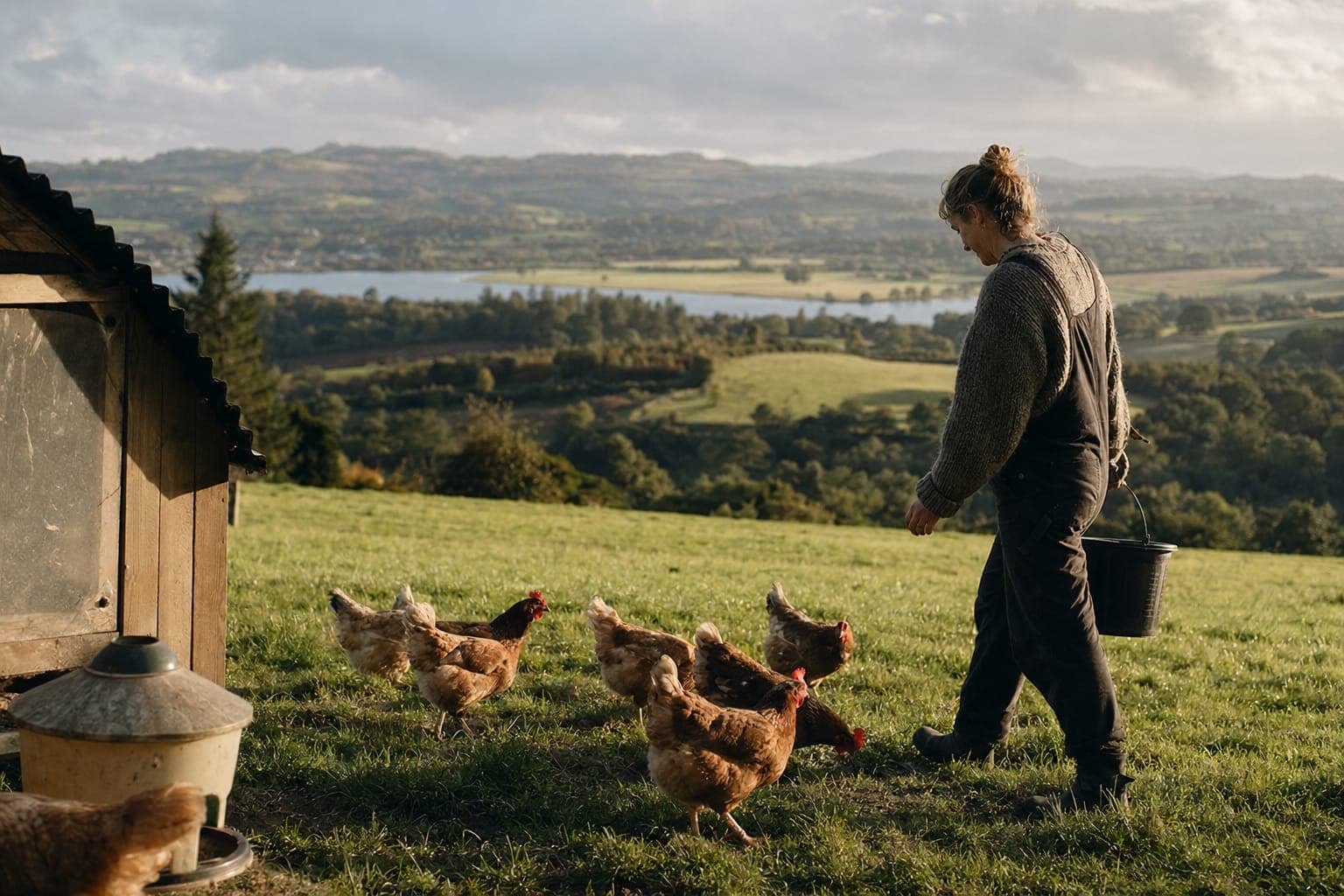
Why We Source Our Organs from UK Farms
We source all our organ products from UK farms. Here's why traceability, welfare, and local sourcing matter for ancestral nutrition.
Farming
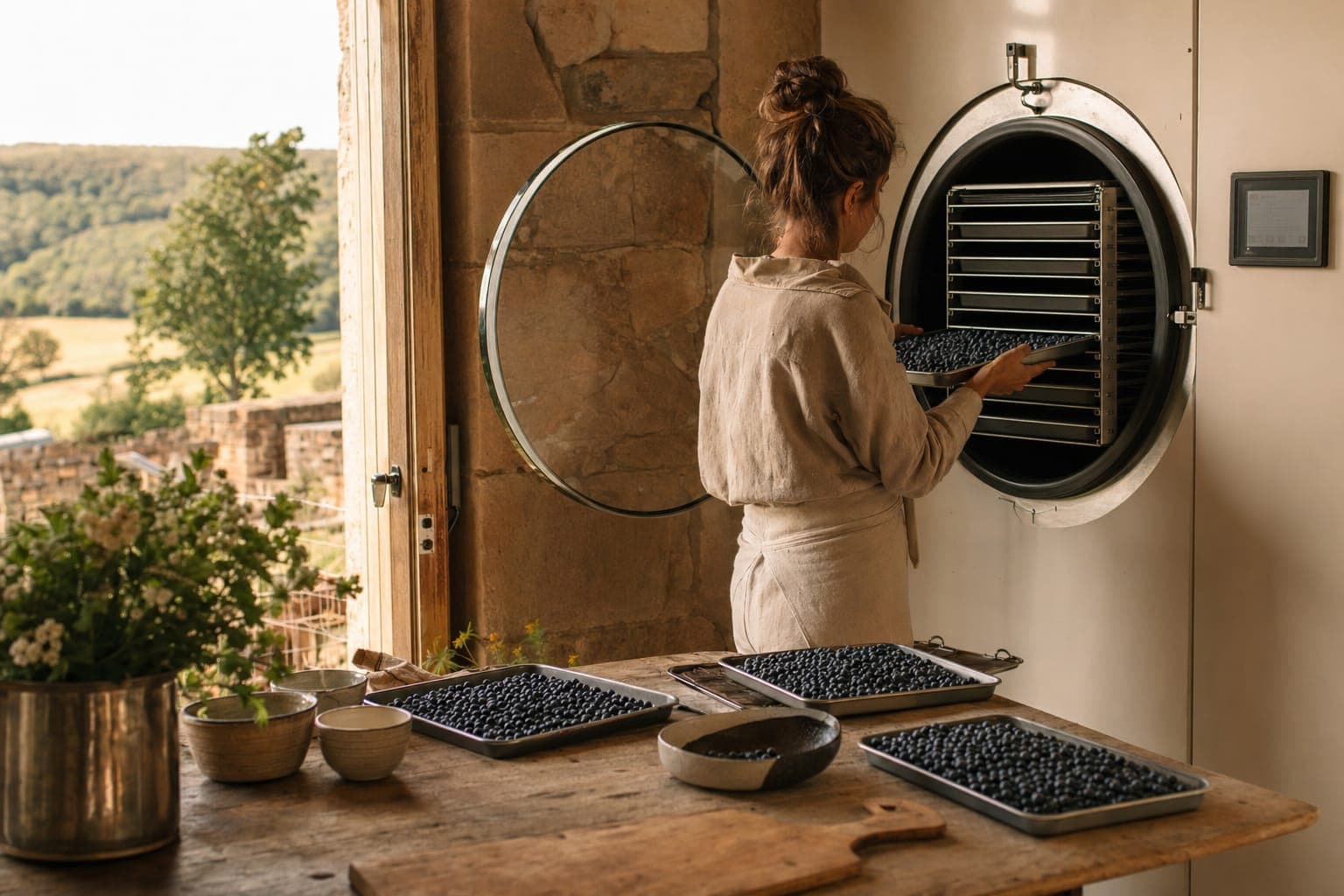
Why Freeze-Drying Preserves More Nutrients Than Other Methods
Learn why freeze-drying preserves vitamin and enzyme content better than spray-drying, heat-drying, or other processing methods used in supplements.
Real food, made effortless
Shop the blendA few ways to use it
All recipes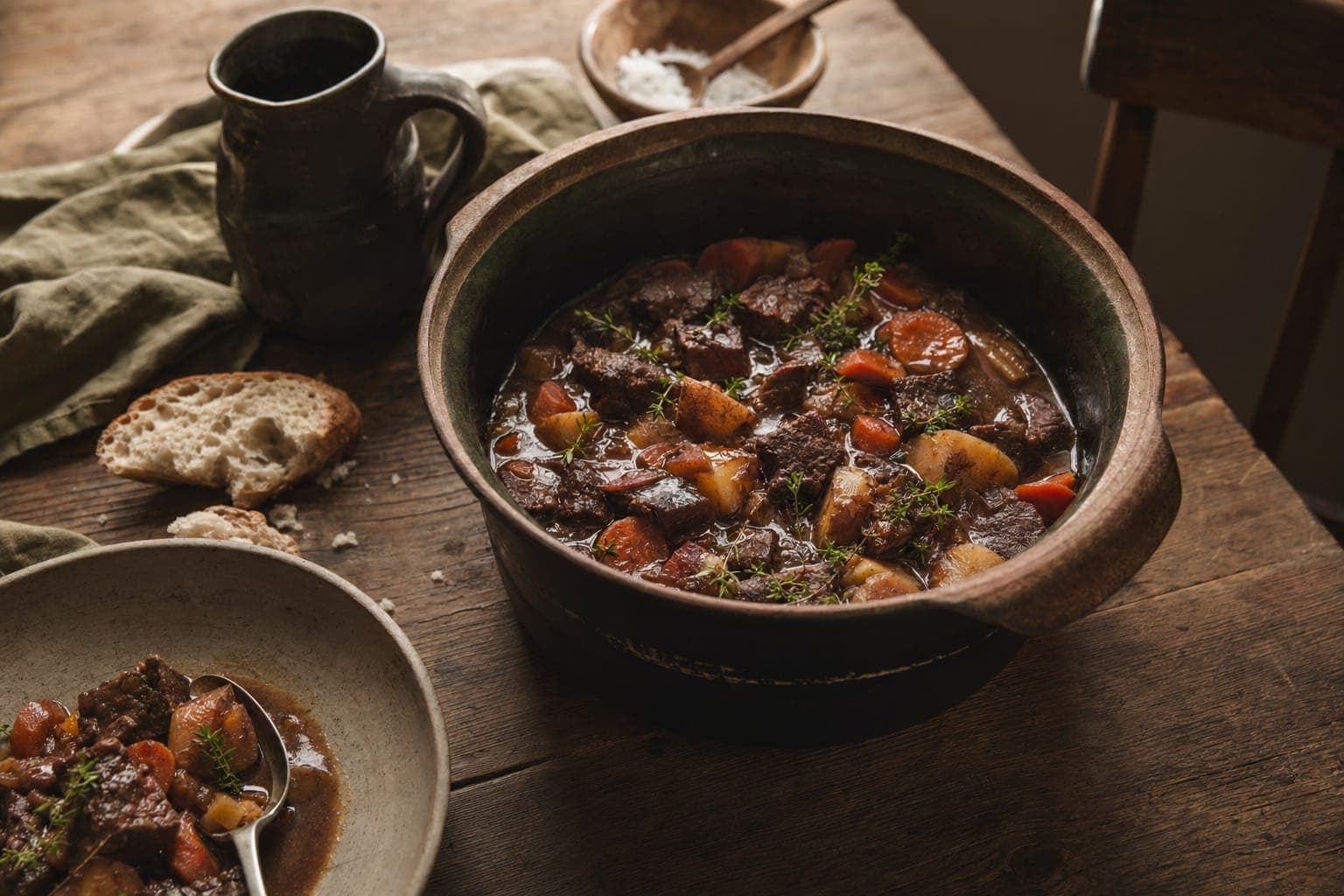
Collagen-Rich Beef Stew: Slow-Cooked Nourishment
Beef stew that delivers collagen from connective tissue and bone broth. Winter comfort food that actually nourishes. Simple slow cooker recipe.

Gut-Healing Marshmallows with Collagen and Raw Honey
Learn to make gut-healing marshmallows with collagen and raw honey. A shareable treat that sneaks nutrition into every bite. Easy recipe with video tips.

The Perfect Organised Morning Shake: Our Favourite Recipe
Our signature morning shake: Organised, raw milk, banana, honey. Simple, nourishing, and optimised for an empty stomach.


 Join over 100,000+ members
Build a better food system with us
The Organised community is thousands of people choosing real food and backing the farmers who grow it, all of us trying to leave the world a little better than we found it. If that is what you care about too, you belong here.