The Organised Code: Our Non-Negotiable Standards
Most brands publish a mission statement and then operate according to what's profitable. We've done the opposite. We wrote down the standards that actually matter to us, and then built the entire business around them.
By Niall Kiddle, Founder, Organised

Reviewed by Pedro Rodrigues, Agronomist (farming and sourcing only) ·
5 min read · Published · Updated · 2 cited sources
Makers of the Organised Daily blend, a grass-fed beef organ supplement from regenerative UK farms
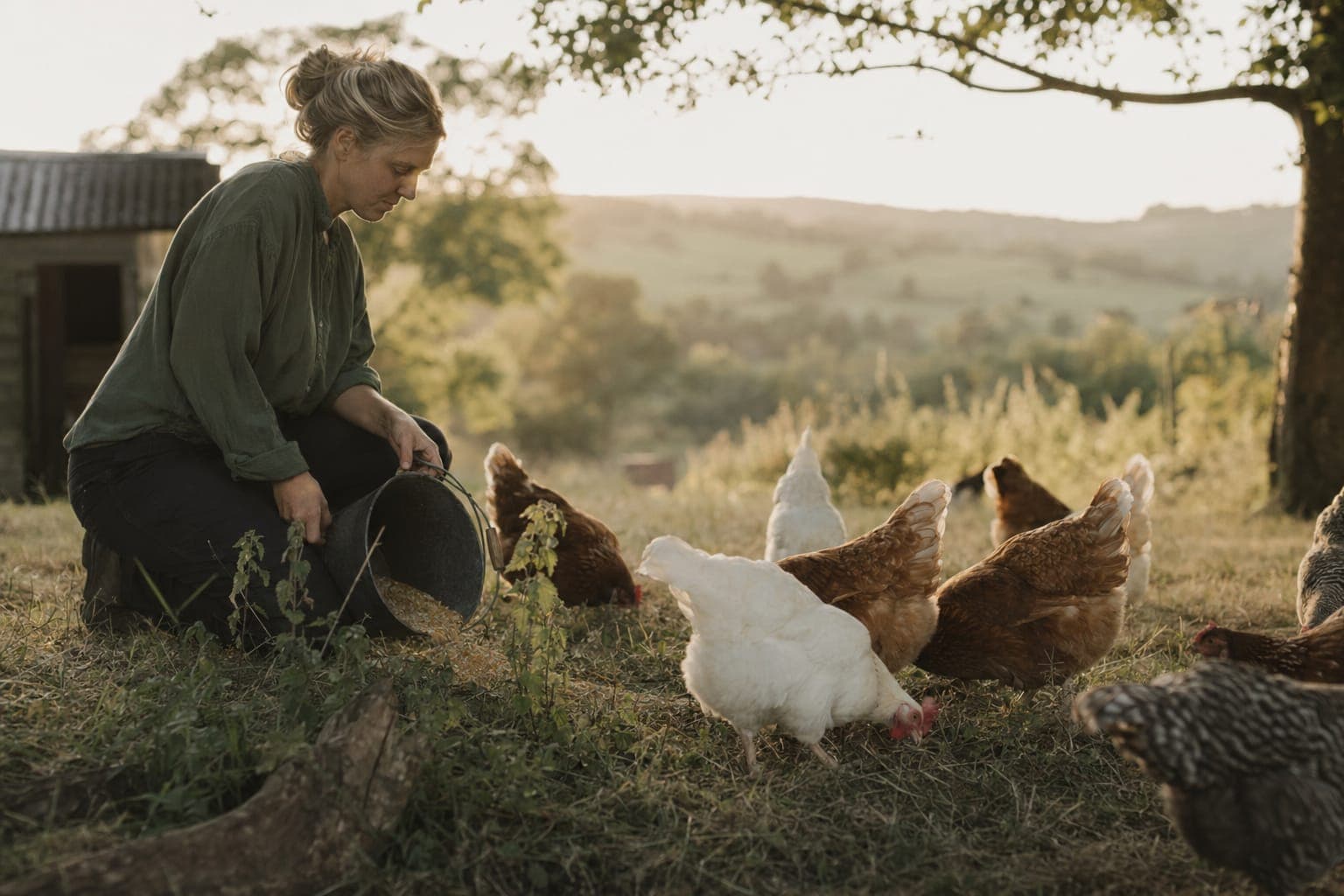
The code isn't a marketing document. It's a practical inventory of what we will and won't accept, why we accept it, and what we do when reality doesn't match our standards. It emerged from reading decades of nutritional research, farming practice, animal science, and biochemistry. We looked at what ancestral food systems actually prioritised. We talked to farmers. We tested products. We asked ourselves a simple question: if we were going to feed this to our own families, what would we actually require? The answer became the code.

How the code was written
The code didn't emerge from a boardroom brainstorm or a consultant's workshop. It emerged from reading. We absorbed decades of nutritional research, farming practice, animal science, and biochemistry. We looked at what ancestral food systems actually prioritised. We talked to farmers. We tested products. We asked ourselves a simple question: if we were going to feed this to our own families, what would we actually require? The answer became the code. It's not perfect. It evolves. But it's genuine.
Every standard in the code had to answer one question: does this actually matter, or are we just making ourselves sound better?
Our core sourcing standards
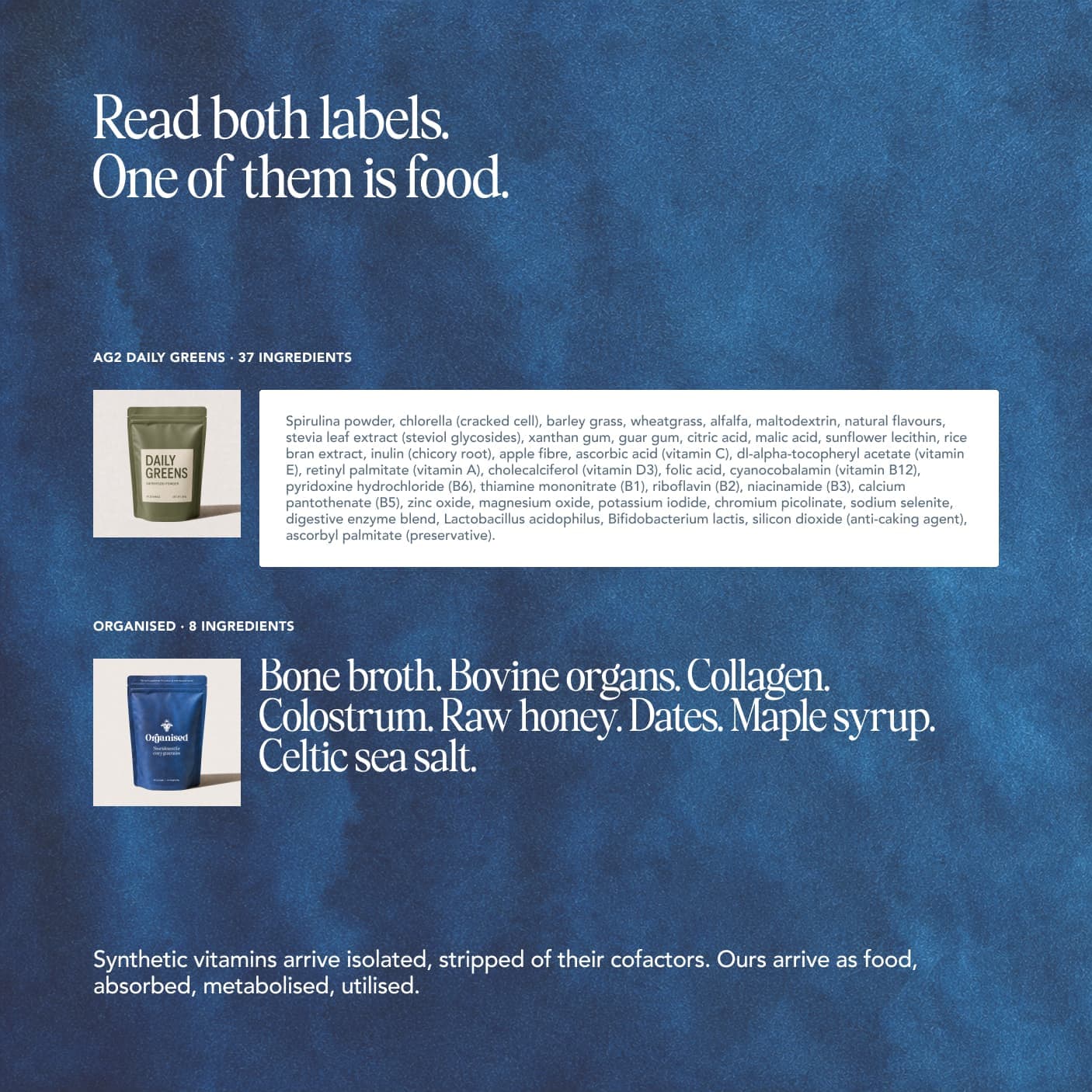
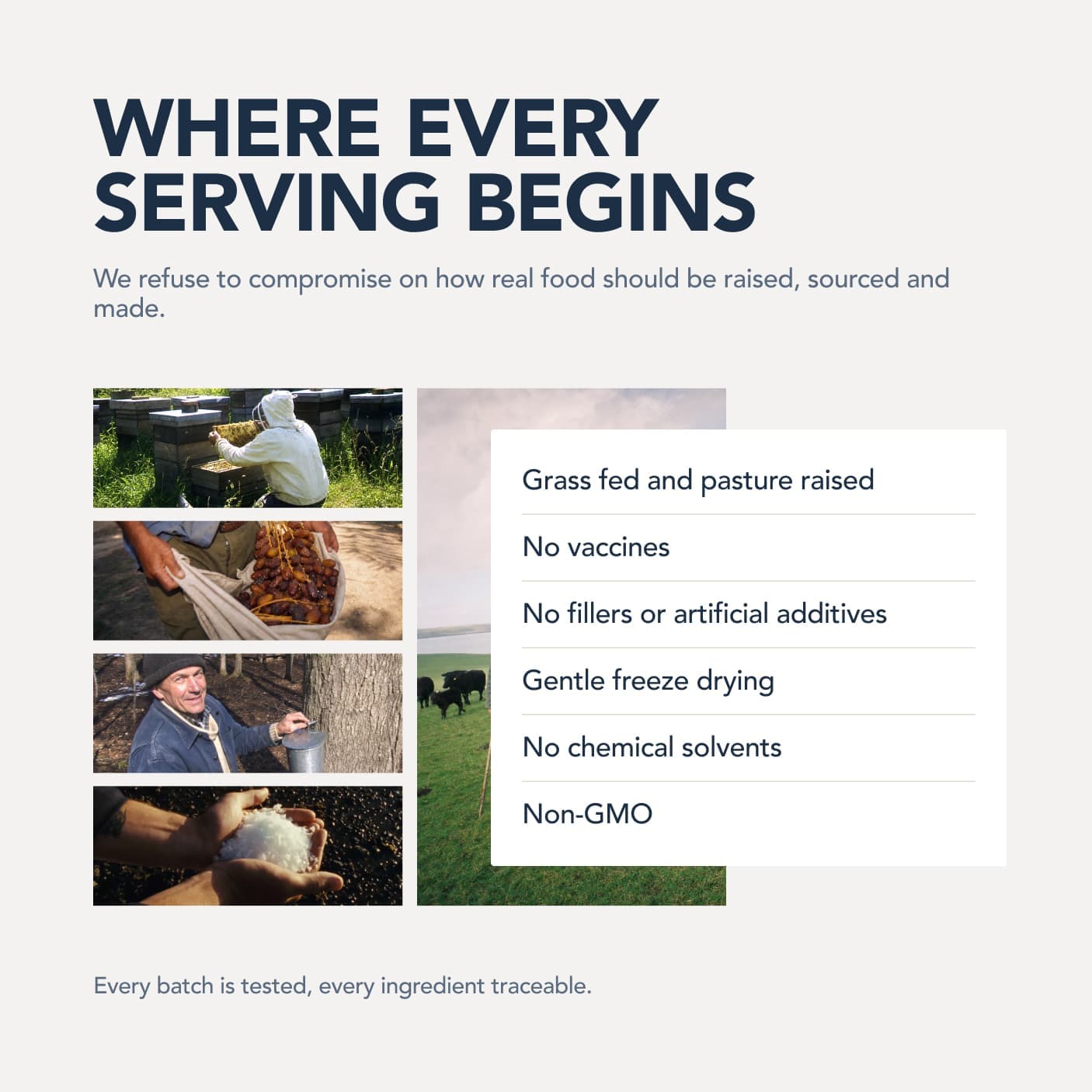
We source animals raised without synthetic growth hormones, without routine antibiotics, without mRNA vaccines. We work exclusively with farms using rotational grazing or pasture-based systems. The animals must be ruminants or omnivores allowed to express their natural feeding behaviour. They must spend the majority of their lives outdoors, not in confinement. For organ meats specifically, we trace the animal to a named farm wherever possible. We know the grazing protocol. We know the breed. We know the farmer's name. This level of specificity costs us money and limits our supply. We accept that constraint. We exclude seed oils and any processing that introduces oxidised cholesterol or damaged fats. If the product contains added vitamins, they must come from food sources, not synthetic isolates.
Why these specific standards matter
We don't source from animals raised with synthetic growth hormones like Bovaer (which suppresses methane but masks poor digestive health through the animal's life). We don't source from animals treated routinely with antibiotics used for growth promotion. Both practices are economically rational for feedlot operators. Neither is rational if you're actually trying to produce nutrient-dense food.
We exclude grain-finished beef even when it's labelled grass-fed, because those final months in a feedlot fundamentally change the fat composition. The omega-3 levels drop. The CLA (conjugated linoleic acid) content declines. The animal's stress hormones are elevated. You're buying a label that says grass-fed and getting tissue that's nutritionally closer to conventional grain-fed.
Standards are only meaningful if you're willing to leave money on the table to maintain them.
The animals we work with
Cattle must be grass-fed and grass-finished, or at minimum grazing-based for the majority of their lives. We don't source from feedlot operations, even if they claim grass feeding at the end. Once an animal has spent six months in grain feeding, its nutrient profile has changed fundamentally.2 Everything in Organised comes from cattle, and from their milk in the case of colostrum, so the bovine standard is the standard. All animals must have been slaughtered humanely. We don't source from facilities with documented welfare violations. This means sometimes we can't supply a product because we can't verify the chain. We accept those gaps rather than compromise.
Get farming and sourcing guides, free
Two short reads a week on regenerative farming and where real food comes from.
By signing up you agree to receive emails from us. No spam, unsubscribe anytime.
The processing we accept
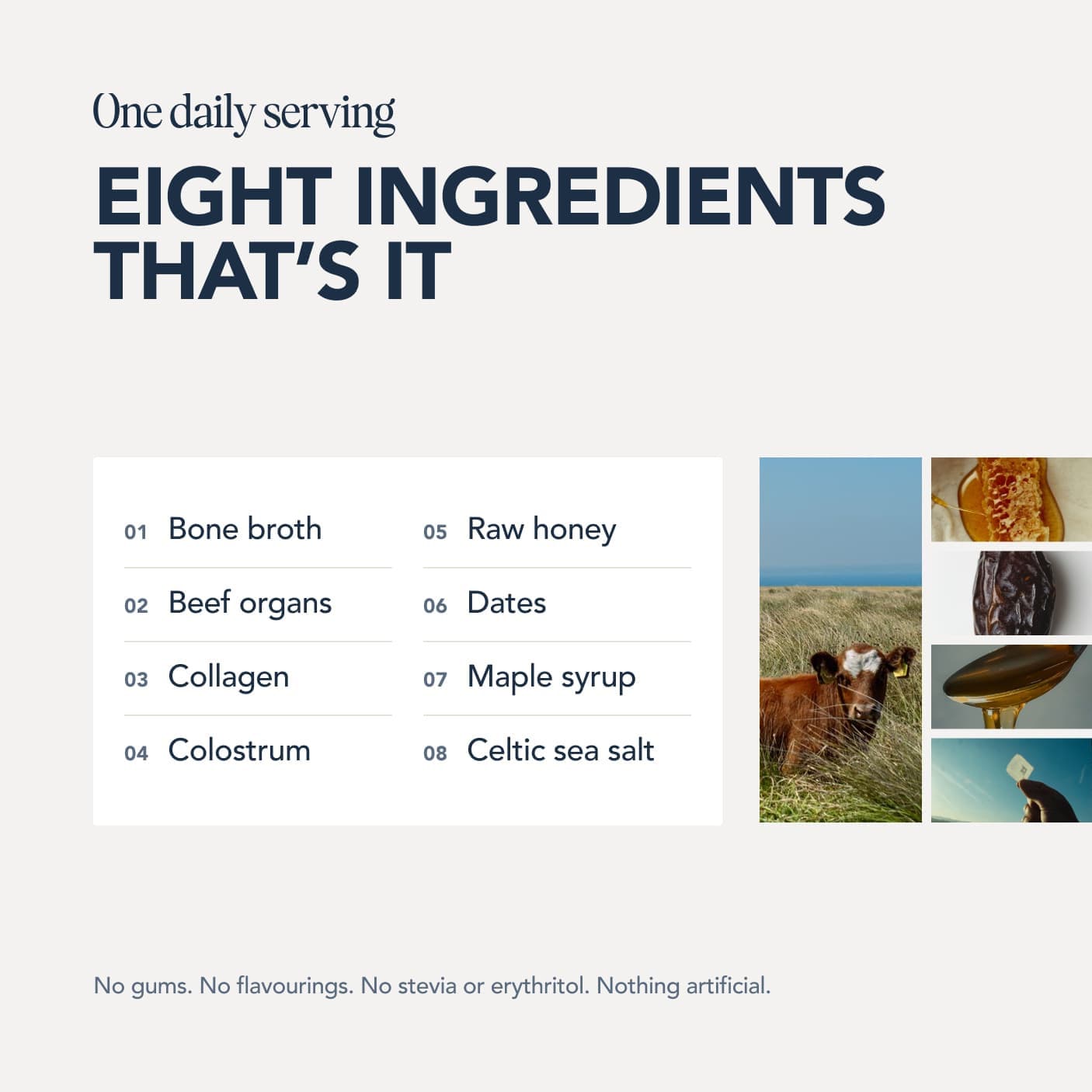
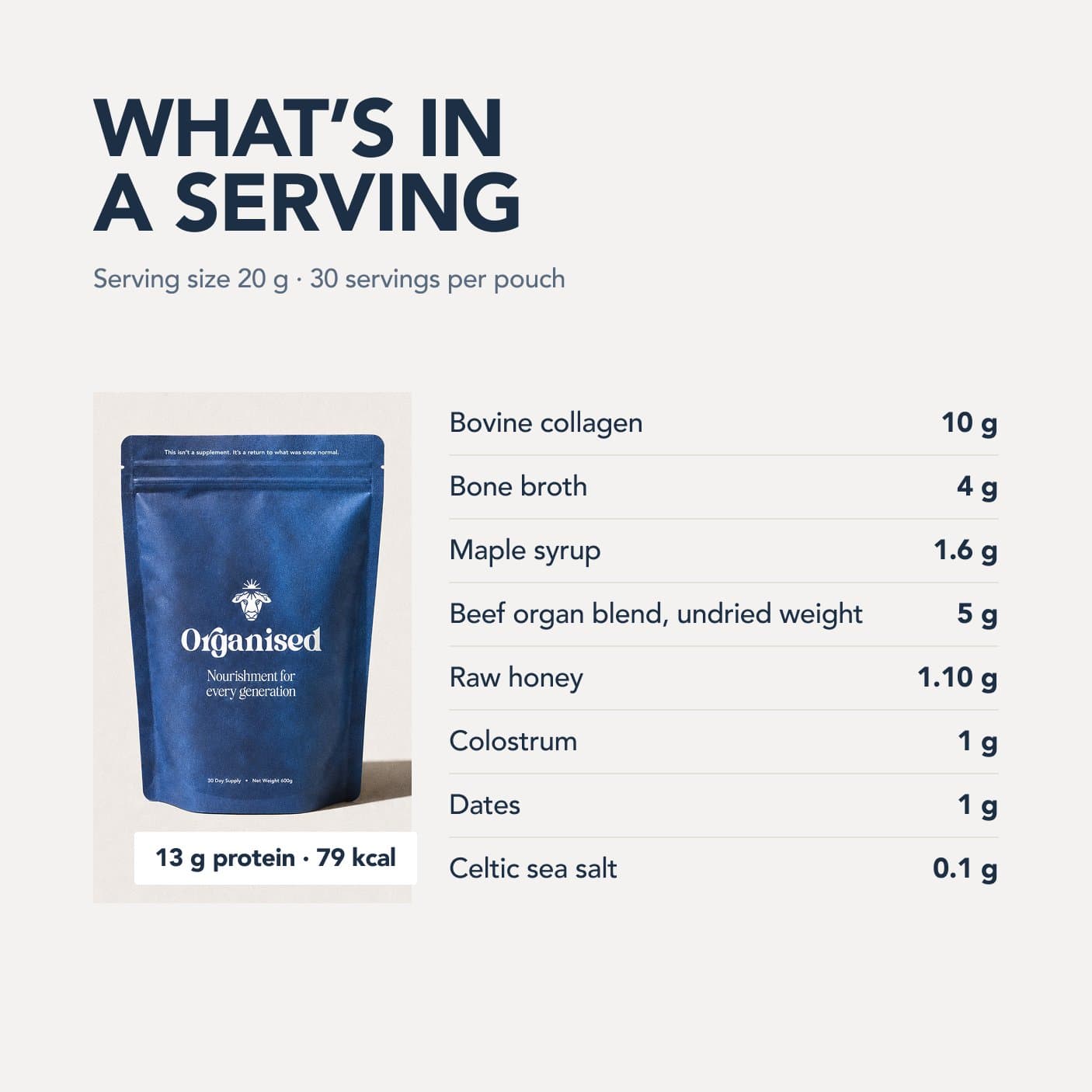
Freeze-drying is acceptable because it preserves nutrient1s without heat damage. Spray-drying we avoid due to oxidation risks. No high-pressure processing. No extrusion. No chemical processing to extract or concentrate. If it requires techniques that fundamentally alter the food, we don't do it. Processing should preserve. If it's destroying the food to make it shelf-stable, we're not interested. There are no capsules and no fillers to have a policy on: Organised is a powder in a pouch, and the eight ingredients are the whole label. We don't use magnesium stearate or silicon dioxide. If a product needs those things to stay shelf-stable, it wasn't ready.
Processing should preserve. If it's destroying the food to make it shelf-stable, we're not interested.
Testing and verification
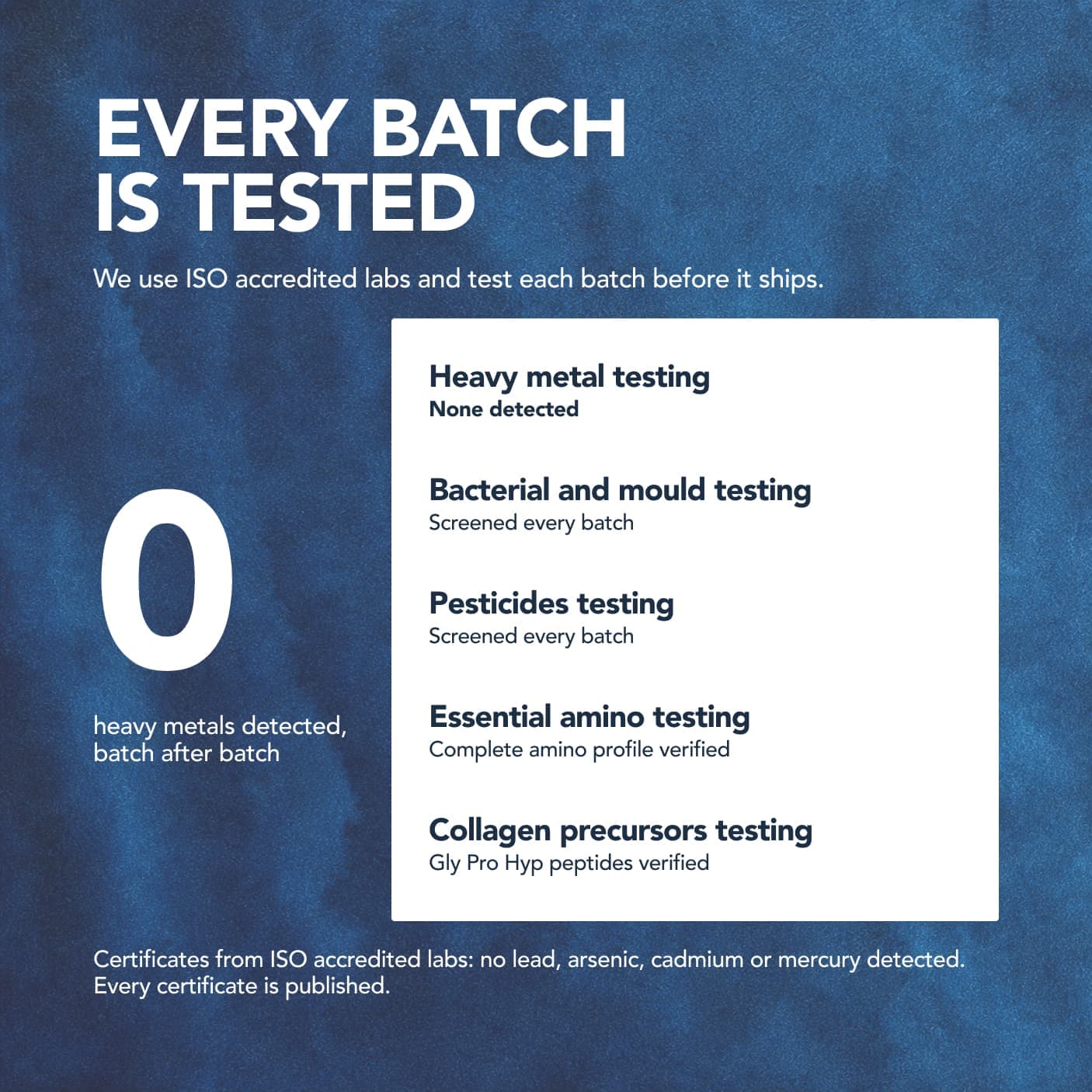
Every batch is tested for contaminants, pathogens, and heavy metals. We use third-party testing, not internal. We verify farming practices through farm visits and farmer interviews, not paperwork alone. We maintain relationships with the farms, not just contracts. If testing reveals a problem, we pull the batch. We've done this multiple times. It costs us. It's the cost of maintaining the code.
1 of 9
Daily blend
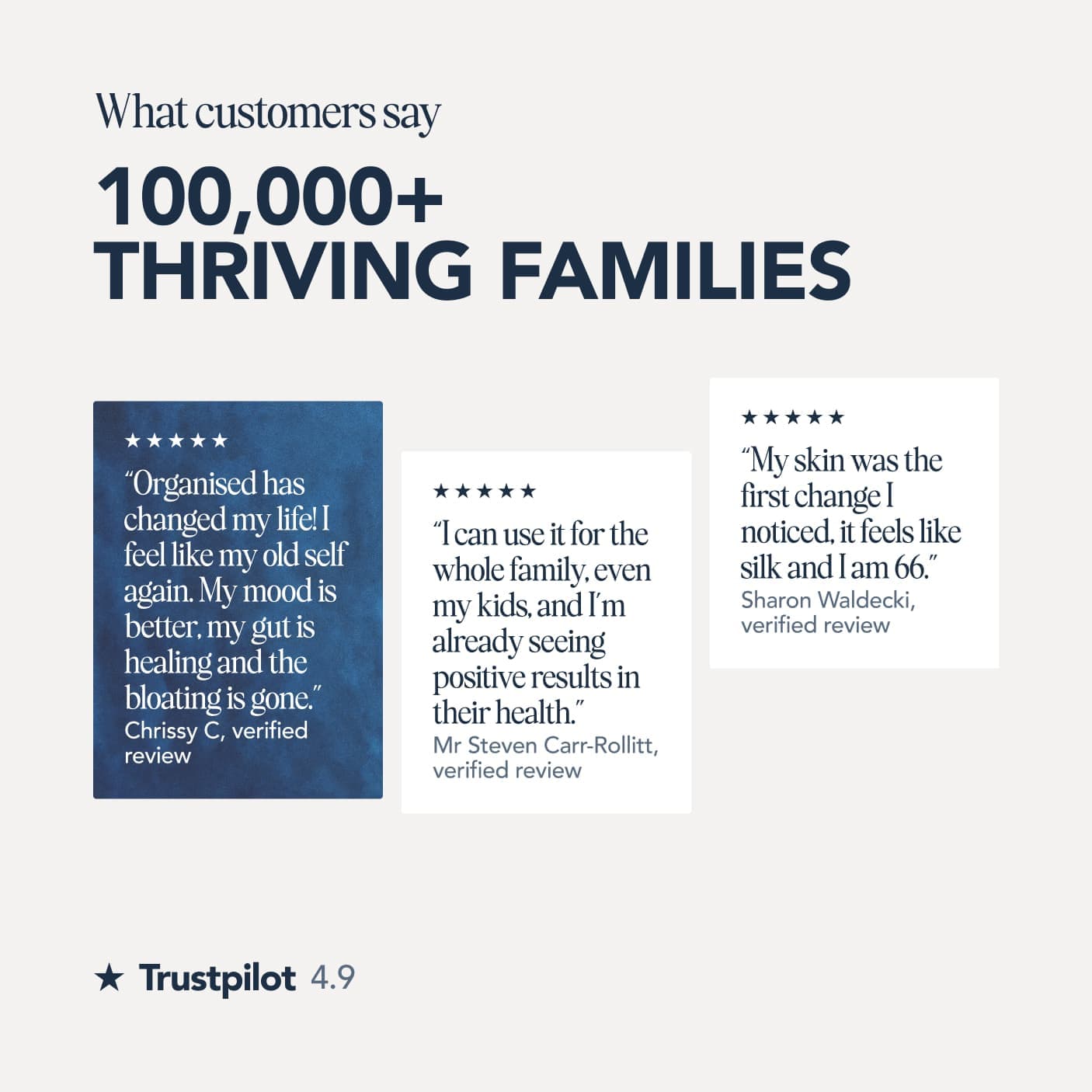
100,000+ thriving families4.9 on Trustpilot
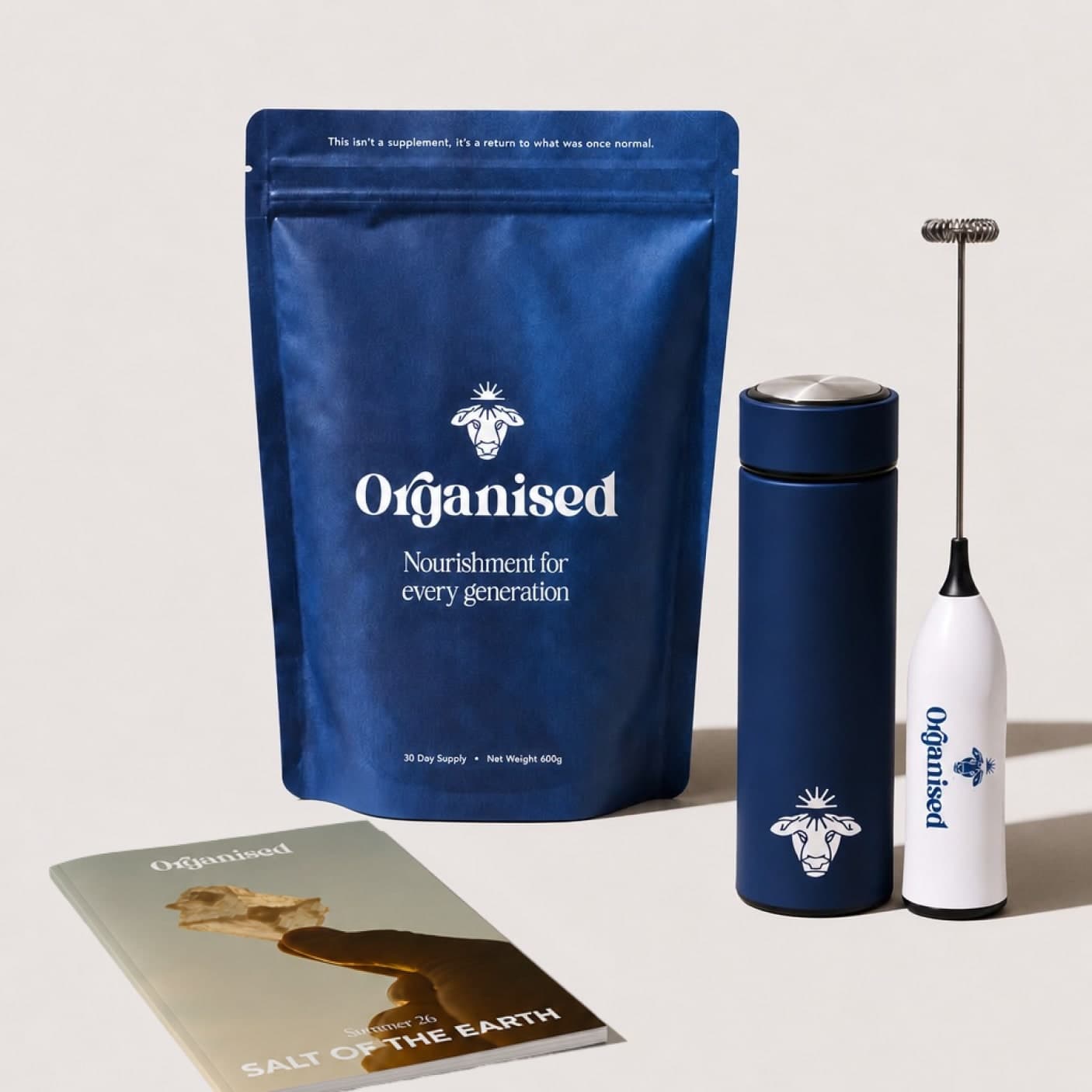
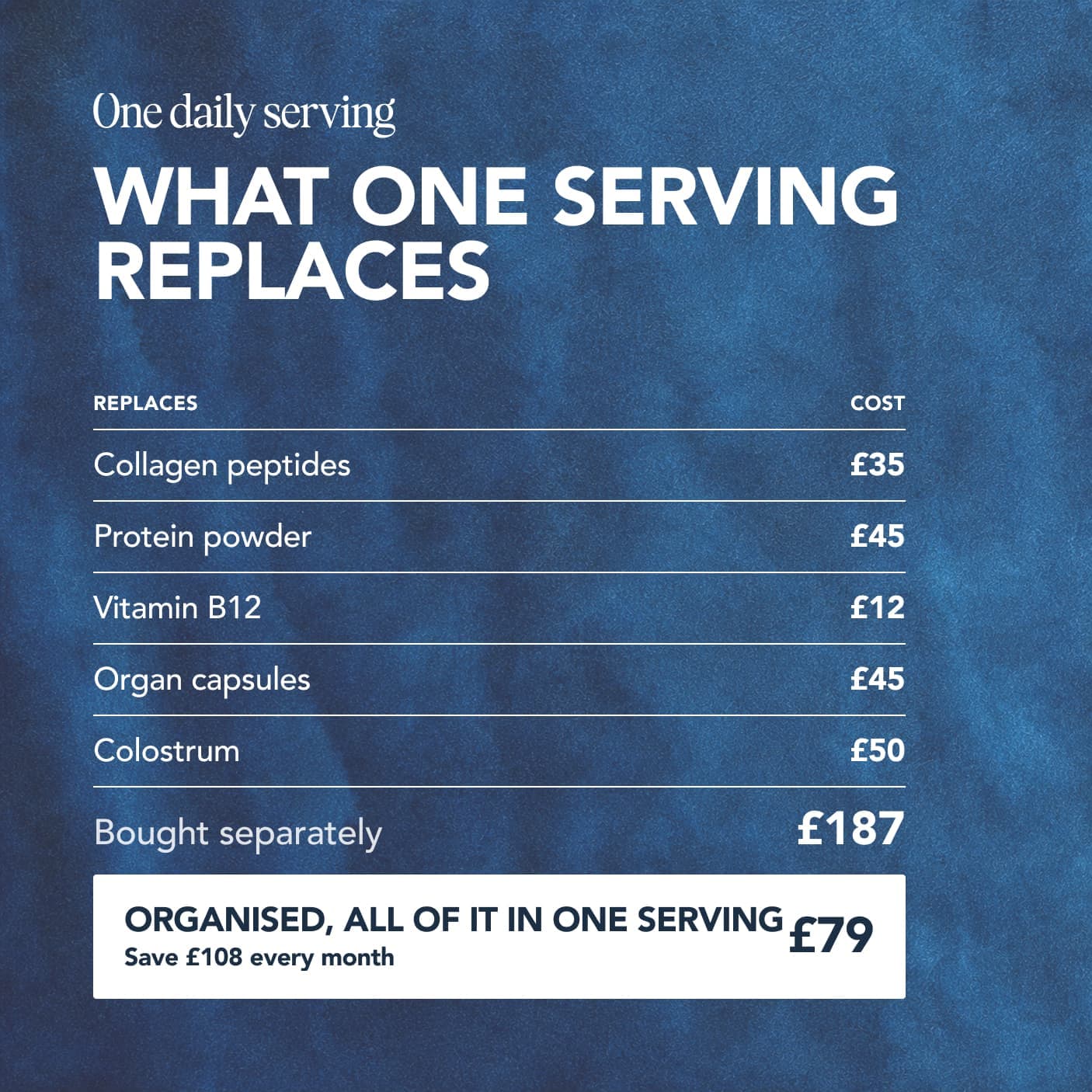
Eight real ingredients built around grass-fed beef organs, collagen and colostrum. Nothing synthetic added.
Free with your first order, worth £38. Plus £10 off the pouch with a subscription.
Free UK shipping · Made in England · 100 day money back guarantee on your first pouch · Skip, pause or cancel anytime
What happens when we can't find it
Sometimes we can't source an ingredient that meets our standards. When that happens, we don't lower the standard. We change supplier, or we wait. We hold out until we find a farm or producer that meets our actual requirements, not a version slightly adjusted for cost.
This is why we sell one product while competitors sell dozens. This is why we're not in every health food shop in the UK. This is why the pouch can occasionally sell out and come back based on seasonal availability and farm inventory. It's frustrating for us. It's sometimes inconvenient for you. But the code is the constant. Everything else adjusts around it.
We've turned down supply deals from farms in the English Midlands, Scottish Borders, and West Country that looked promising until testing revealed heavy metal accumulation in the tissue. We've walked away from suppliers because we couldn't find third-party testing rigorous enough to meet our standard. We've waited out a drought season because a farm partnership could no longer meet our specifications, rather than quietly switching to one that never could.
A standard you'll abandon when it costs money isn't a standard. It's a marketing line.
The bottom line
The Organised Code exists because we got tired of marketing language that meant nothing. We wanted to be able to tell you exactly why we chose what we chose, and why we rejected what we rejected. That code is here. It's public. It's what we actually do.
References
Every source below was checked on 27 August 2026. Each PubMed, PMC and DOI identifier was resolved against NCBI or Crossref, and what it opens is printed under the citation, so you can see the link goes where the citation says without leaving the page. Where a citation and its identifier disagreed, the citation was corrected to the record or the reference was deleted along with the sentence marker that pointed at it, and where the resolved paper turned out not to support the sentence, the sentence was cut back to what it does support. Borrowed authority is worse than none, because it looks like rigour.
- Ratti C. Hot air and freeze-drying of high-value foods: a review. J Food Eng. 2001. PMID 24025363.Checked 27 August 2026: PMID 24025363 opens Eapen ZJ, Hammill BG, Setoguchi S et al, Who enrolls in the Medicare Part D prescription drug benefit program? Medication use among patients with heart failure. J Am Heart Assoc 2013;2(5):e000242.
- Daley CA, et al. A review of fatty acid profiles and antioxidant content in grass-fed and grain-fed beef. Nutr J. 2010. PMC2846864.Checked 27 August 2026: PMC2846864 opens Daley CA, Abbott A, Doyle PS et al, A review of fatty acid profiles and antioxidant content in grass-fed and grain-fed beef. Nutr J 2010;9:10. PubMed indexes it as: Review.
Who wrote and reviewed this guide
Niall Kiddle
Author · Founder, Organised
Niall is the founder of Organised. He started the company in 2024 after fixing his own health the slow way: in 2022 he swapped a cupboard of synthetic supplements for real food, raw milk, organ meats, bone broth and honey, and felt the difference within months.
Areas of expertise: Ancestral nutrition, Organ meats, Whole-food supplementation, Gut health, Regenerative sourcing
Read Niall's full profile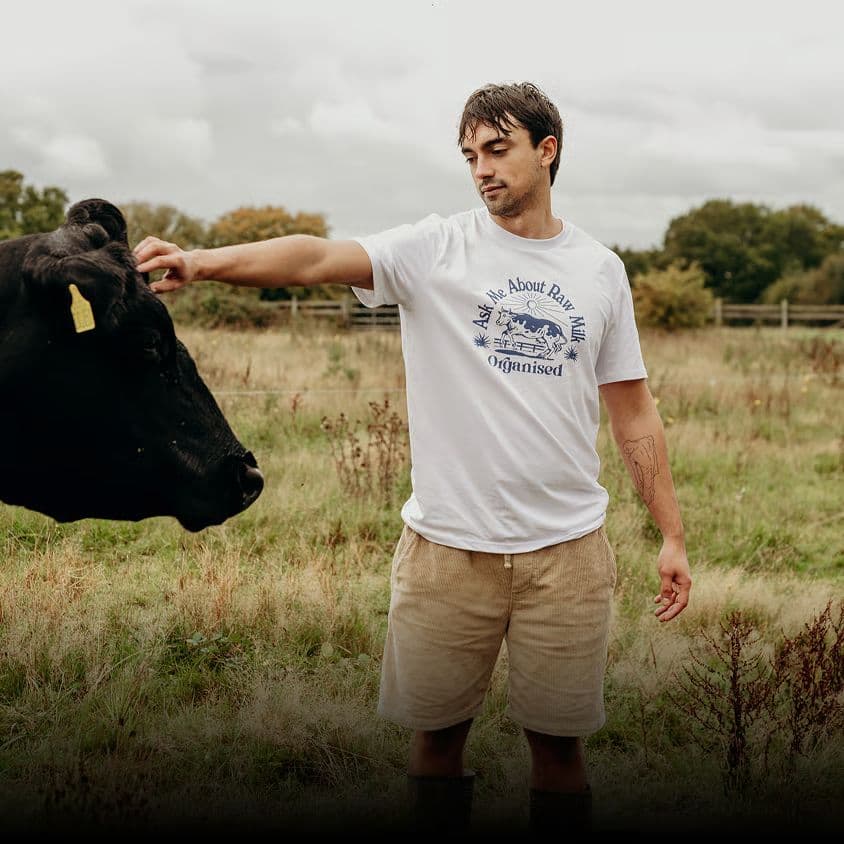
Pedro Rodrigues
Reviewer · Agronomist (farming and sourcing only)
Pedro is the agronomist Organised works with on farming and sourcing. His job on the guides is to keep the science honest: he reviews what we publish about soil health, regenerative agriculture, grazing and the way food is actually produced.
Areas of expertise: Regenerative agriculture, Agronomy, Soil health, Grass-fed farming, Food sourcing
Reviewed this guide on
Read Pedro's full profileMore on transparency
View all- Heavy Metals in Supplements: What You Need to Know
- How to Read a Supplement Label (And Spot the Red Flags)
- How We Test Every Batch: Our Quality Assurance Process
- Our Blend Changelog: Why We Publish Every Formula Update
- Supplement Industry Secrets: What Most Brands Don't Tell You
- Why We Don't Use Proprietary Blends
Browse the guides library
All guidesKeep reading
Farming
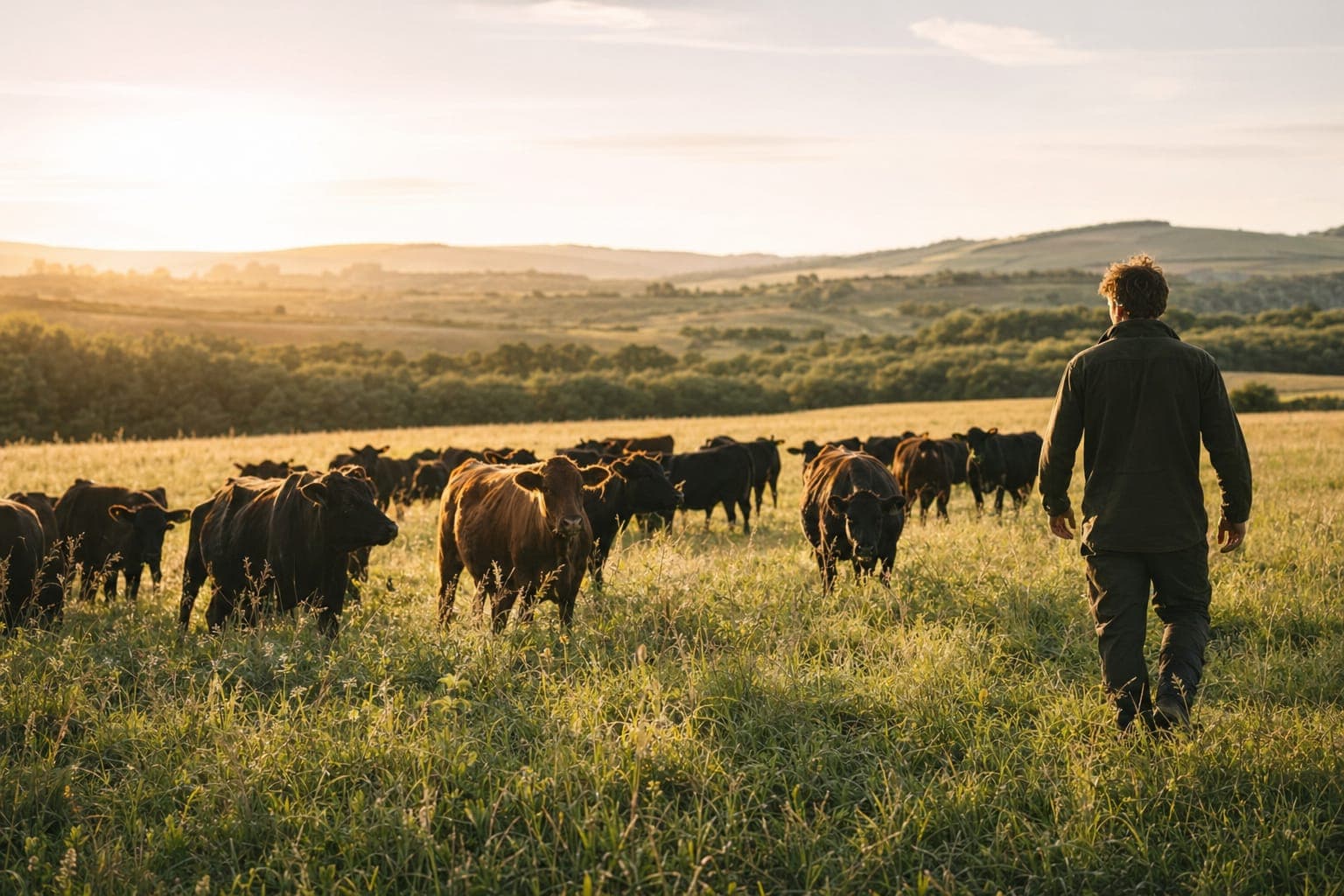
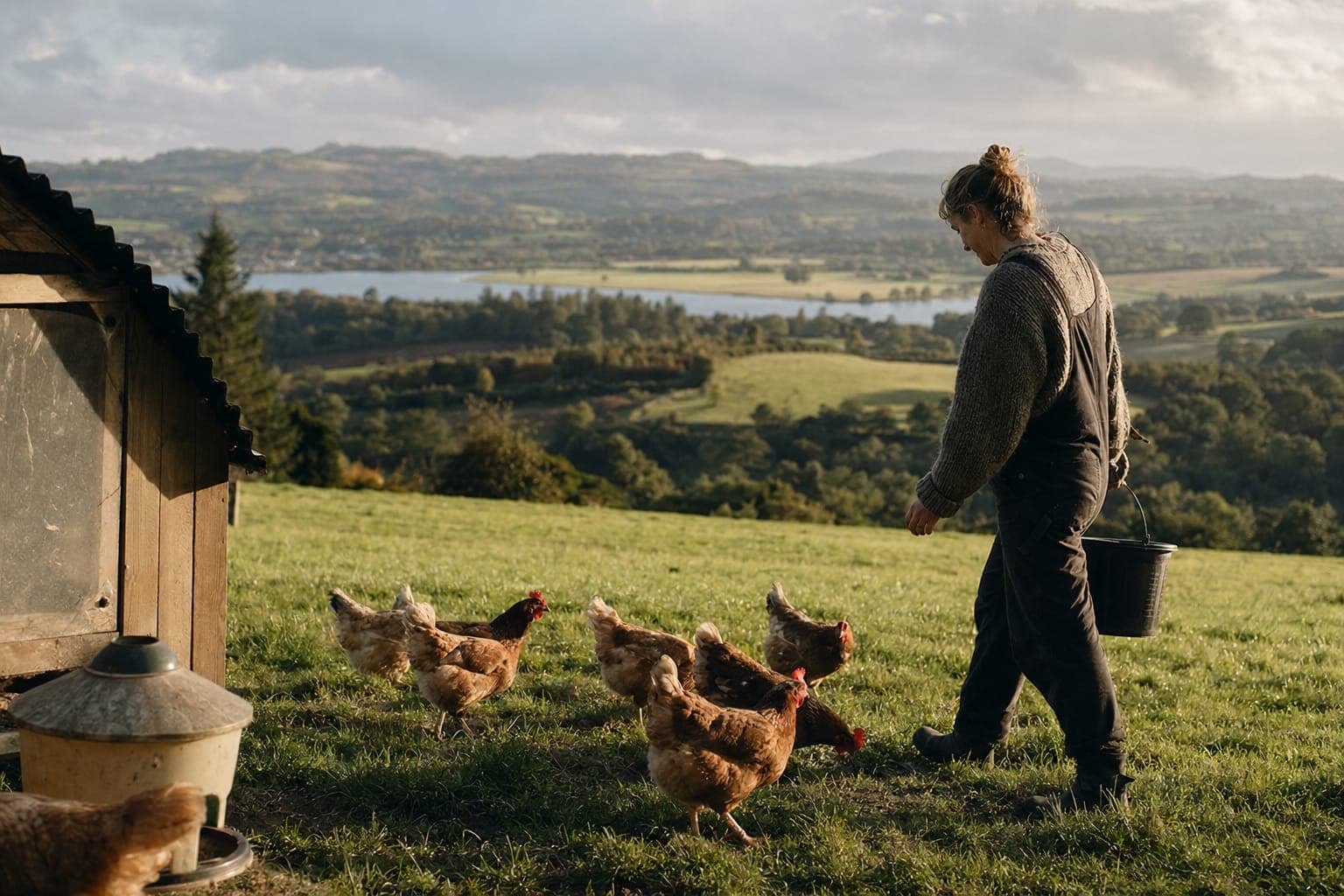
No mRNA Vaccines, No Bovaer, No Hormones: Our Sourcing Standards
We exclude mRNA vaccines, Bovaer, and hormones from our cattle sourcing. Here is our reasoning and what we choose instead.
Farming
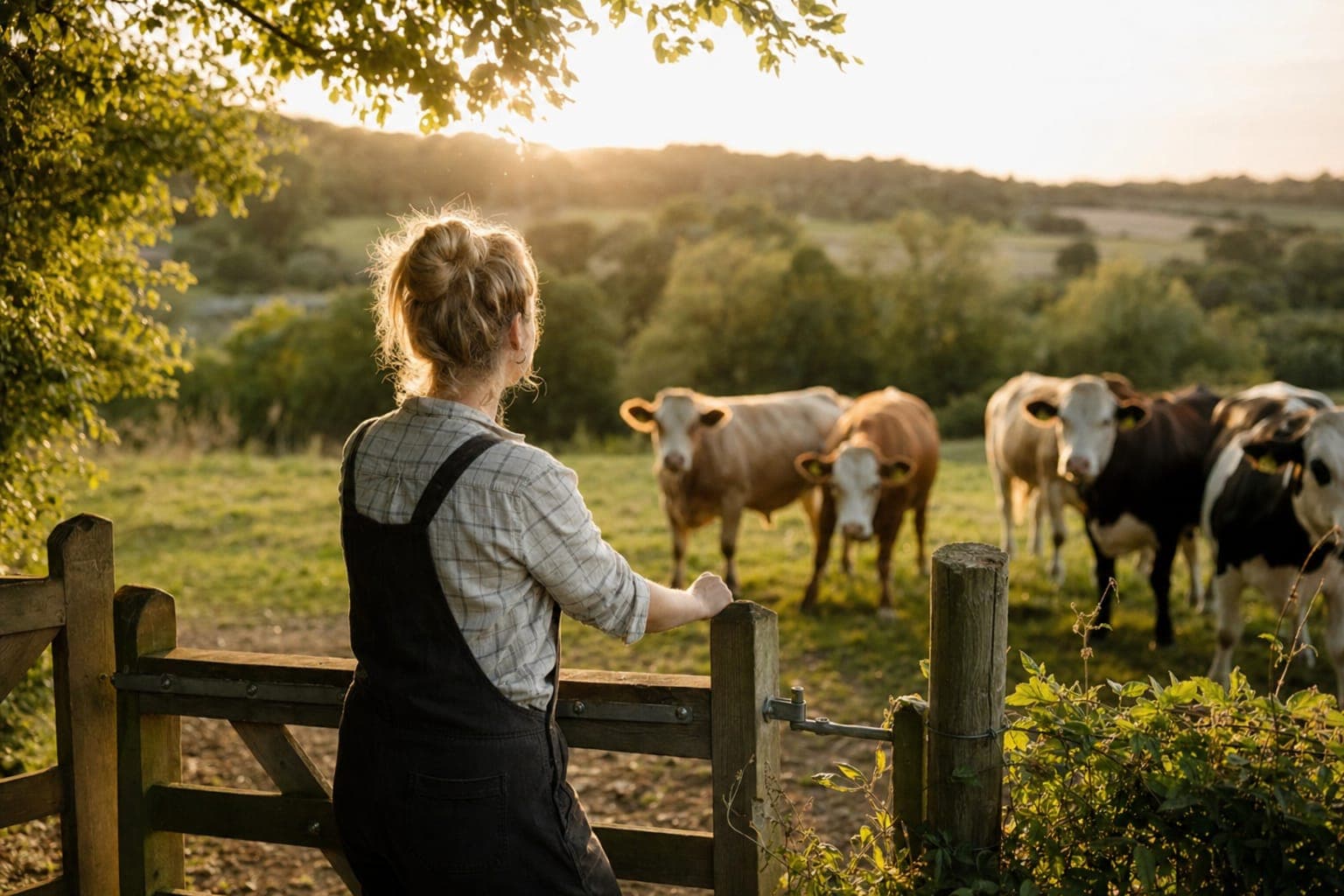
Why We Source Our Organs from UK Farms
We source all our organ products from UK farms. Here's why traceability, welfare, and local sourcing matter for ancestral nutrition.
Farming
Supporting British Farmers: Why Local Sourcing Matters
UK farming is under pressure. Here's why sourcing local matters, and how your food choices can support British farmers directly.
Real food, made effortless
Shop the blendA few ways to use it
All recipes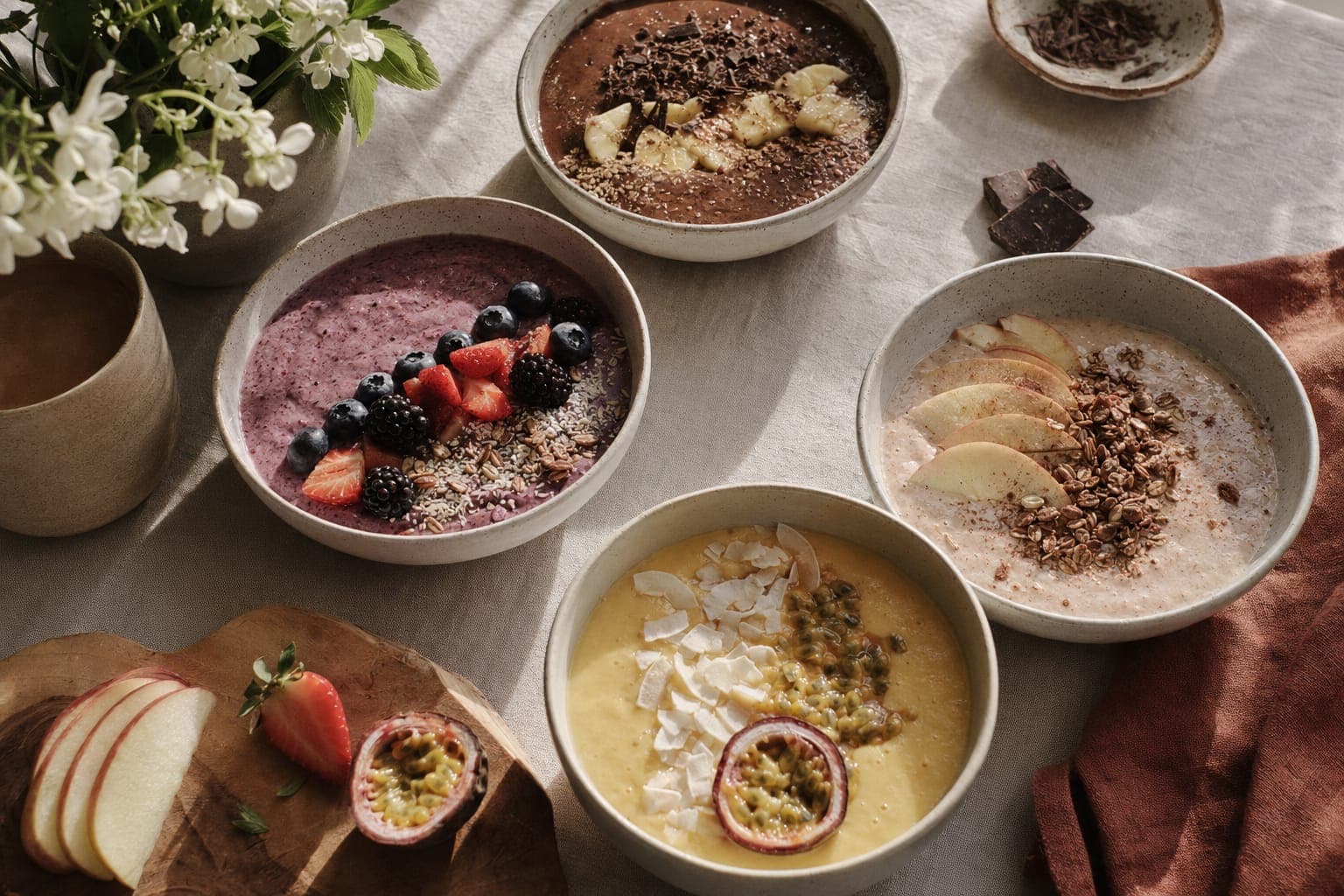
Organised Smoothie Bowl Recipes for Every Season
Four seasonal smoothie bowl recipes using Organised. Berry in summer, apple-cinnamon in autumn, tropical in spring, warming chocolate in winter.
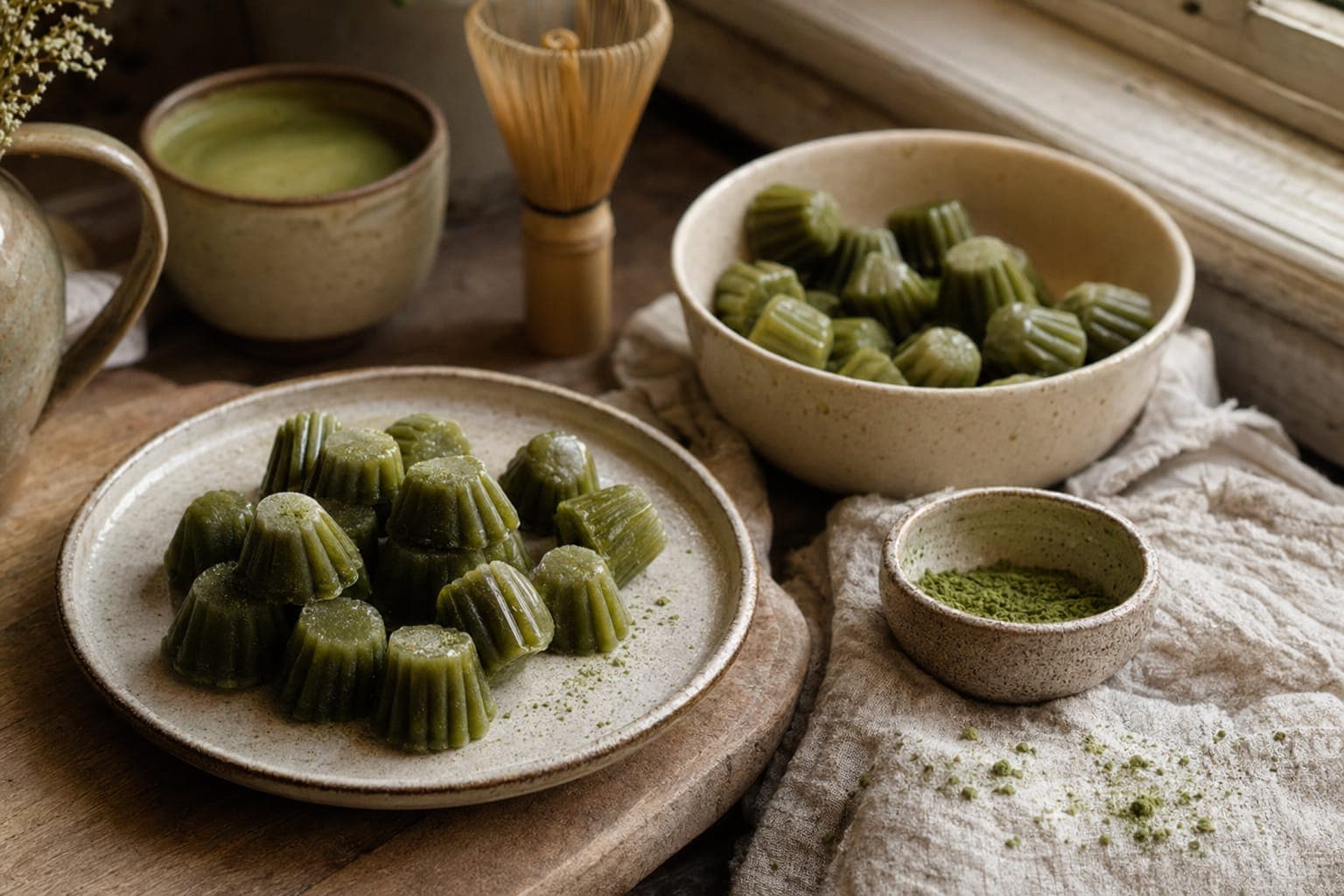
Matcha Latte Gummies with Collagen and Gelatine
Make visually stunning matcha latte gummies infused with collagen and gelatine. Simple recipe for gut-healing sweets you'll actually want to eat.
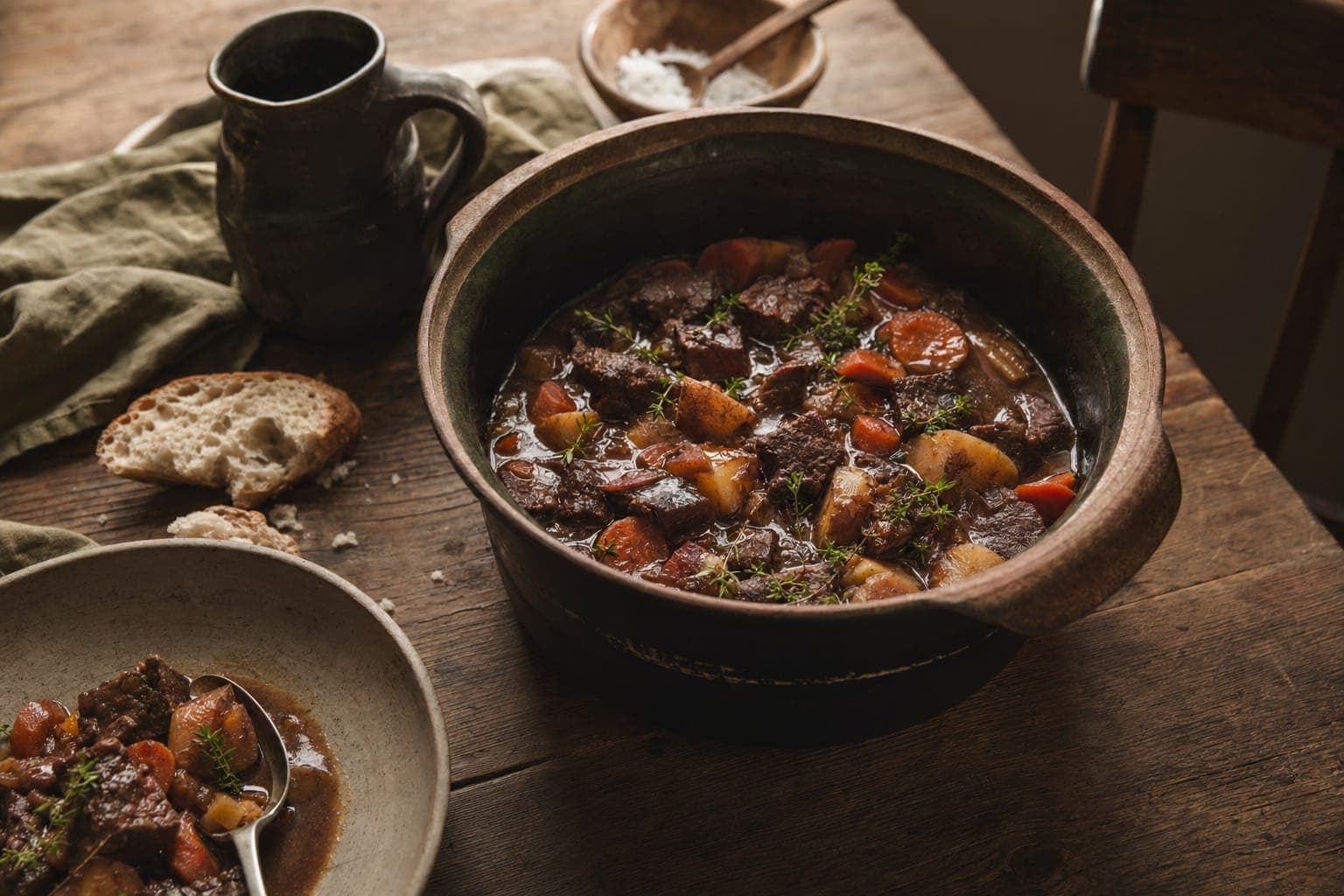
Collagen-Rich Beef Stew: Slow-Cooked Nourishment
Beef stew that delivers collagen from connective tissue and bone broth. Winter comfort food that actually nourishes. Simple slow cooker recipe.


 Join over 100,000+ members
Build a better food system with us
The Organised community is thousands of people choosing real food and backing the farmers who grow it, all of us trying to leave the world a little better than we found it. If that is what you care about too, you belong here.