Omega-3 to Omega-6 Ratio: Why Grass-Fed Matters
Your body depends on a delicate balance between two types of fat: omega-3 and omega-6. Modern food has tilted that balance so far that it's quietly driving inflammation. What you eat for meat can either worsen or help restore it.

By Niall Kiddle, Founder, Organised

Reviewed by Pedro Rodrigues, Agronomist (farming and sourcing only) ·
6 min read · Published · Updated · 3 cited sources
Makers of the Organised Daily blend, a grass-fed beef organ supplement from regenerative UK farms
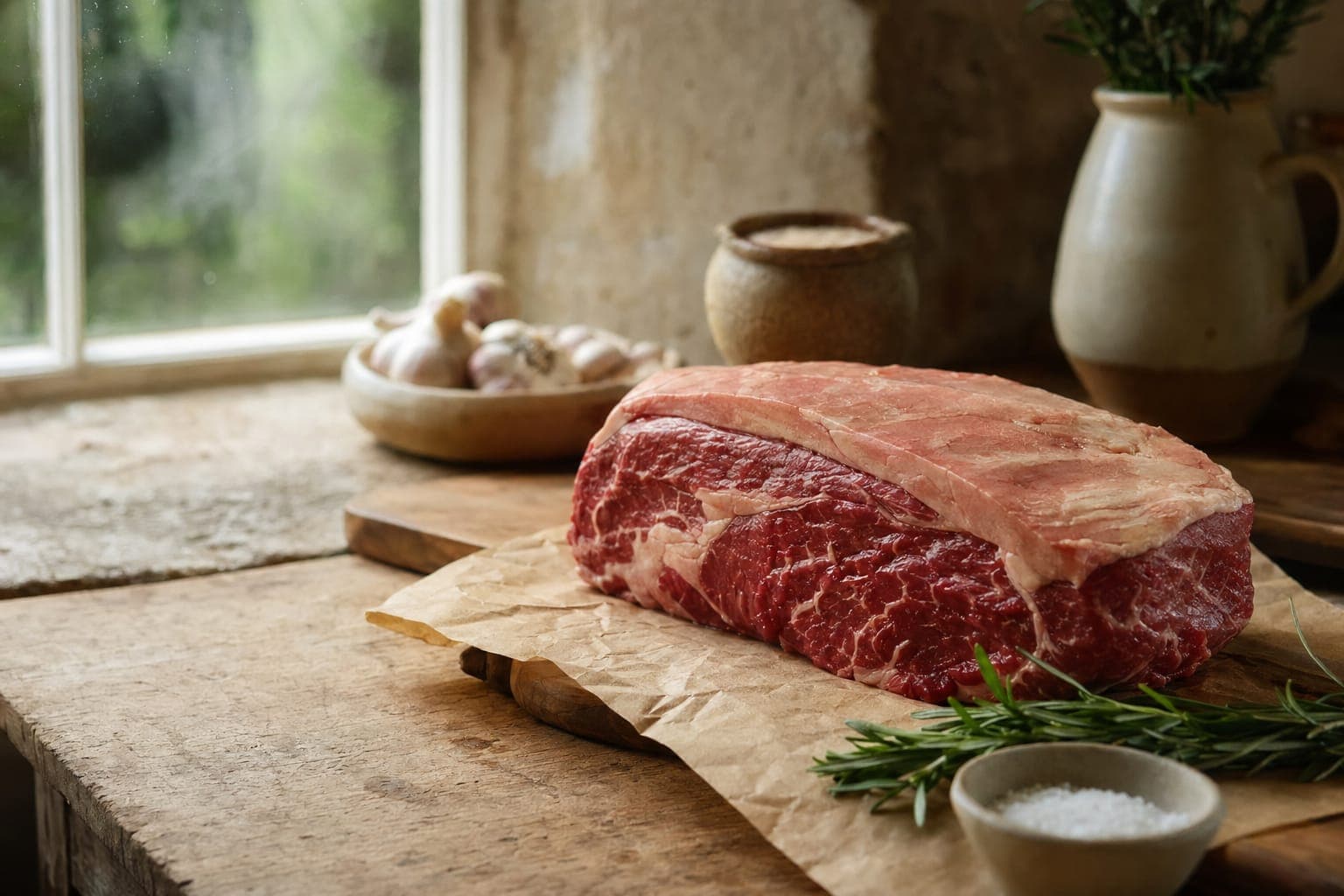
This isn't complicated chemistry. It's one of the clearest nutritional differences between grass-fed and grain-fed beef, and understanding it changes how you should be eating.
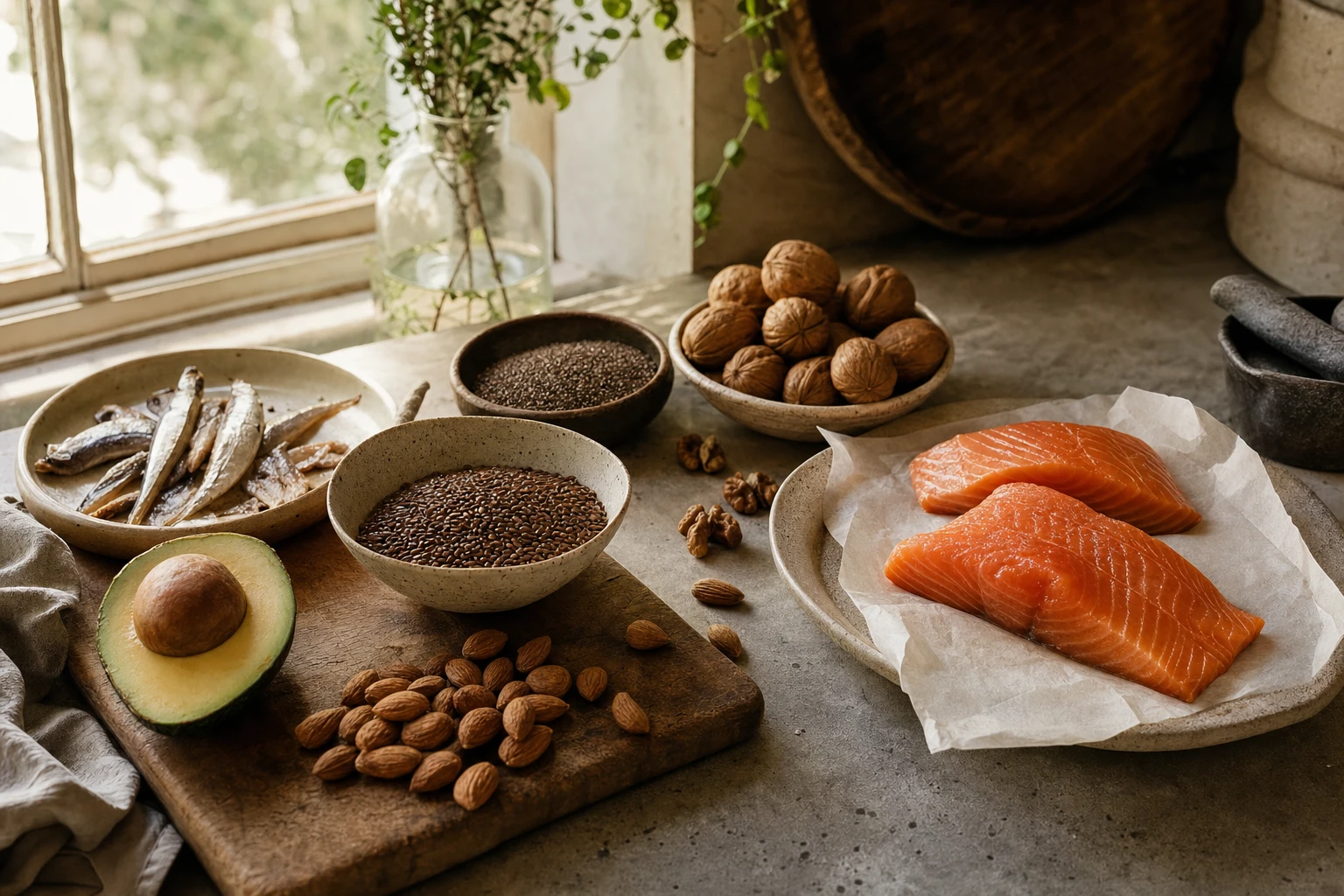
The ratio that matters
Both omega-3 and omega-6 are essential fatty acids. Your body can't synthesise them, so you have to eat them. Both are necessary. The problem isn't that omega-6 is bad. The problem is proportion.
Your ancestors ate a ratio of roughly 1:1 to 1:3 omega-3 to omega-6. Some estimates suggest hunter-gatherers achieved this through a diet of grass-fed meat, oily fish, leafy greens, and nuts.
Modern Western diets land at approximately 1:15 or 1:20 omega-3 to omega-6.1 Some estimates go as high as 1:30 in people eating heavily processed food.
That shift happened in the last eighty years, mostly because of seed oils (vegetable oil, canola, sunflower, soybean oil) and the shift from grass-fed to grain-fed livestock. Both are loaded with omega-6. Neither is balanced.
Grass-fed beef lands closer to the ancestral ratio. Not perfect, but a meaningful shift in the right direction.
Grass-fed beef has an omega-3 to omega-6 ratio of roughly 1:2 to 1:3. Grain-fed beef is closer to 1:10 or 1:15. This single change can rebalance your ratio if you're eating meat regularly.
How grain-fed beef skews the balance
When cattle eat grain (mostly corn and soy) instead of grass, their fat composition changes.2 Grain is high in omega-6 polyunsaturated fats. Corn oil is nearly 60 percent linoleic acid (an omega-6). When a cow eats corn, that ratio accumulates in its muscle and fat.
Grass-fed cattle eat plants that are relatively balanced, or even omega-3 dominant. Grass contains alpha-linolenic acid (an omega-3). When cattle eat grass, their tissue reflects that balance.
This isn't subtle. The difference is measurable and significant. A 100-gram serving of grain-fed beef contains roughly 5-10 grams of omega-6. The same cut from a grass-fed animal contains 1-2 grams, with higher omega-3 as well.
Add grain-fed beef to a diet already drowning in seed oil, and you've created a fat composition in your own body that's markedly skewed toward omega-6.
What grass-fed restores
Grass-fed beef (and pasture-raised pork, pasture-raised poultry, wild fish) help rebalance that ratio simply by shifting the input.
Regular consumption of grass-fed meat (2-3 times per week) can gradually move your tissue composition back toward something closer to ancestral. Not overnight, but over weeks and months, the ratio improves.
You can measure this through blood work. Omega-3 index tests are available (though not routine through NHS). They measure what percentage of your red blood cell membranes are made up of EPA and DHA (the active omega-3s). People eating grass-fed meat and oily fish regularly tend to score in the 6-8 percent range. People eating grain-fed and low fish typically score 4-5 percent.
The threshold for cardiovascular benefit is generally considered 8 percent or above.3 Grass-fed eating pushes you in that direction.
The inflammation story
Why does the ratio matter? Because omega-3 and omega-6 compete for the same enzymatic machinery in your body. They both want to be converted into signalling molecules that regulate inflammation, immune function, and vascular health.
Omega-3s tend to produce molecules that resolve inflammation. Omega-6s tend to produce molecules that promote it (though not all omega-6 metabolites are inflammatory, this is where it gets nuanced).
When your ratio is 1:20, omega-6 dominates that enzymatic pathway. Chronic, low-grade inflammation is the result. Elevated C-reactive protein. Stiff arteries. Autoimmune activation. Slow metabolic dysfunction.
When your ratio approaches 1:3, omega-3 has more access to those same pathways. Inflammation resolves more efficiently. Immune function becomes more targeted. Vascular health improves.
This is not reversible by eating one grass-fed steak. But if you're eating grass-fed beef and wild salmon regularly, avoiding seed oils, and keeping your grain intake in the whole-grain realm, your ratio can shift meaningfully within three to six months.

Get farming and sourcing guides, free
Two short reads a week on regenerative farming and where real food comes from.
By signing up you agree to receive emails from us. No spam, unsubscribe anytime.
Where else the ratio gets broken
Meat is just one source. The real damage comes from processed food and seed oils: vegetable oil, canola, sunflower, soybean oil, corn oil, and any product made with them.
Biscuits, baked goods, mayonnaise, salad dressings, fried food, margarines. These are where modern diets get trapped in the 1:20 ratio.
Even if you switch to grass-fed beef, if you're still eating shop-bought dressings, cakes, and processed food, you haven't rebalanced anything. You've just swapped one source of omega-6 for another.
Grains (bread, pasta, rice) are omega-6 dominant. Nuts and seeds are omega-6 dominant. These aren't toxic foods, but they're on the high end of the ratio spectrum. Pair them with grass-fed meat, fish, and leafy greens, and you balance. Pair them with processed food and seed oil, and you amplify the problem.
Vegetable oil is the biggest culprit. A single tablespoon is nearly 10 grams of omega-6. If you're cooking with it daily, you're consuming 70+ grams of omega-6 per week, just from oil. No amount of grass-fed beef will rebalance that.
Grass-fed beef is a meaningful input. But it's not the only input. You have to also remove or reduce seed oils and processed food to actually shift your ratio.
How to correct it
Start with what you can control: meat source. Switch to grass-fed beef where possible. The cost is higher, but if you're eating meat three times per week, grass-fed is more important than volume. Choose quality over quantity.
Add oily fish: sardines, mackerel, wild salmon, herring. These are direct sources of EPA and DHA (the active, pre-made omega-3s that don't require conversion). Twice weekly is a reasonable target.
Swap cooking fats: use butter, ghee, olive oil, or coconut oil instead of vegetable, canola, or sunflower oil. The fat profile is completely different.
Eat leafy greens, especially dark greens (spinach, kale, chard). These contain alpha-linolenic acid (omega-3) and help rebalance the ratio from the plant side.
Minimise processed food. This is where most of the hidden seed oil lives.
None of this requires supplementation. It requires source change and a modest amount of intentionality. But the return on that effort, in terms of inflammation reduction and cardiovascular resilience, is significant.
Your ancestors didn't think about ratios. They ate what was available: meat, fish, greens, roots. That diet naturally produced a 1:2 or 1:3 omega-3 to omega-6 ratio. You're not trying to be perfect. You're trying to eat like food was designed, before grain-fed animals and seed oils became the default.


1 of 9
Daily blend
100,000+ thriving families4.9 on Trustpilot
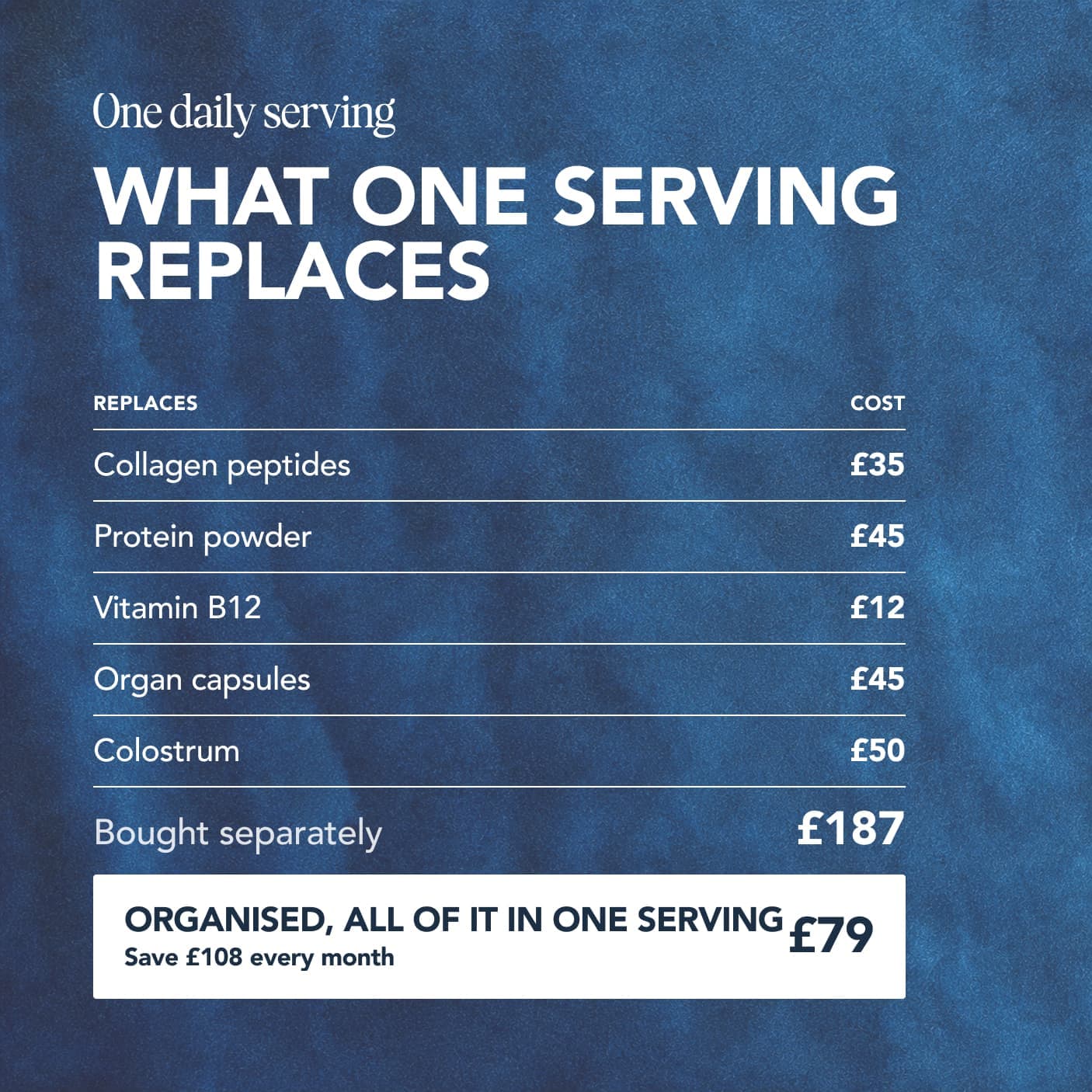
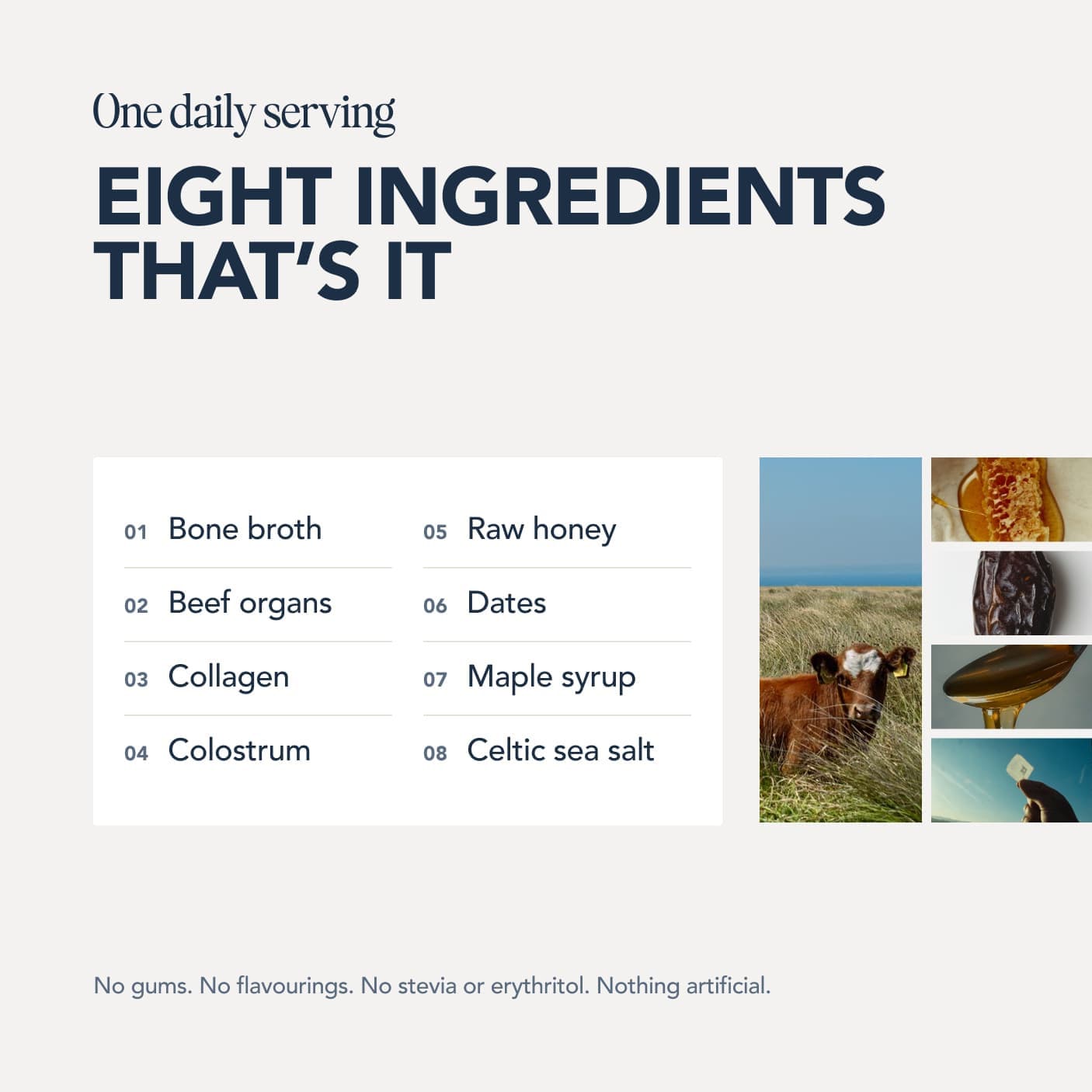
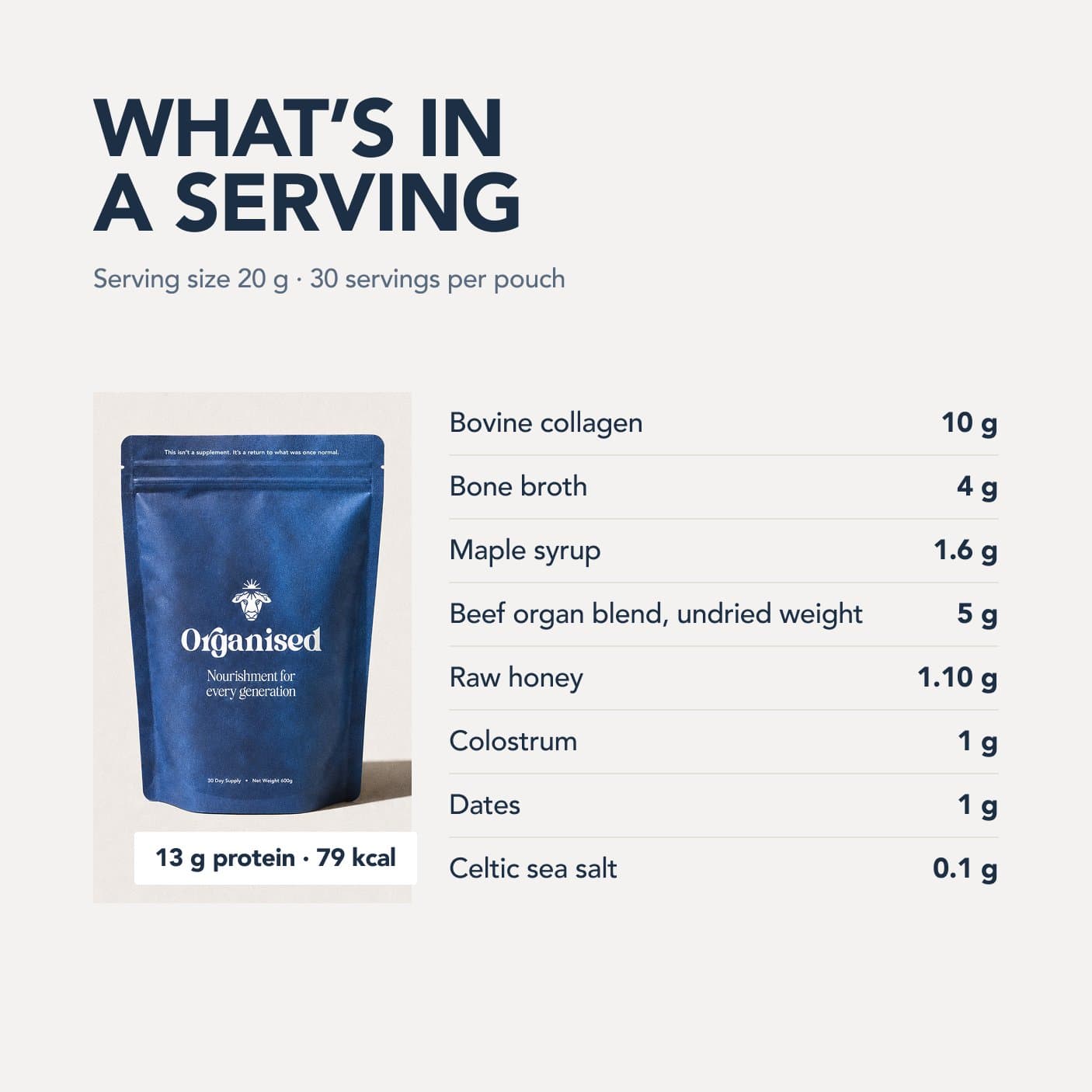
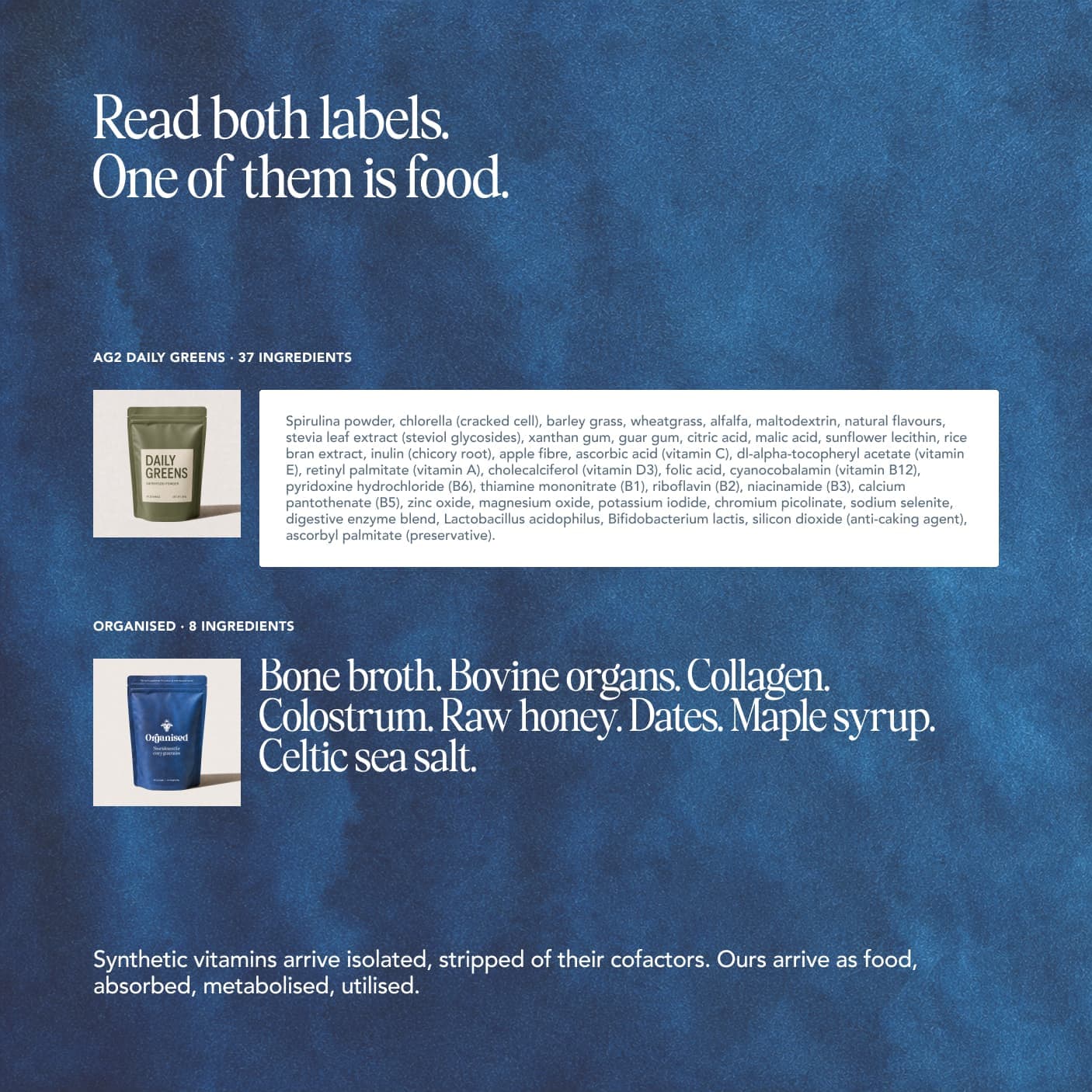
Eight real ingredients built around grass-fed beef organs, collagen and colostrum. Nothing synthetic added.
Free with your first order, worth £38. Plus £10 off the pouch with a subscription.



Free UK shipping · Made in England · 100 day money back guarantee on your first pouch · Skip, pause or cancel anytime
Practical application: sourcing and diet strategy
If you eat beef 2-3 times per week, grass-fed or grass-finished is worth prioritising. If you eat beef occasionally (once per month), the source matters less. If you eat mostly chicken and fish with occasional beef, focus first on diet structure, then on sourcing.
The ratio is one input into a multi-variable system. Get the obvious variables right first: minimise seed oils, eat real food, include fish regularly. Then optimise the details like beef sourcing.
Grass-fed beef matters most to people who eat beef regularly. For occasional beef eaters, the bigger gains come from overall diet pattern, not beef sourcing.
Your ancestral diet was probably lower in omega-6 than yours currently is, simply because grain-fed animals and seed oils did not exist then. Shifting toward grass-fed beef, wild fish, and no seed oils moves you back toward that ancestral pattern. That is the actual goal.
References
Every source below was checked on 27 August 2026. Each PubMed, PMC and DOI identifier was resolved against NCBI or Crossref, and what it opens is printed under the citation, so you can see the link goes where the citation says without leaving the page. Where a citation and its identifier disagreed, the citation was corrected to the record or the reference was deleted along with the sentence marker that pointed at it, and where the resolved paper turned out not to support the sentence, the sentence was cut back to what it does support. Borrowed authority is worse than none, because it looks like rigour.
- Simopoulos AP. The importance of the ratio of omega-6/omega-3 essential fatty acids. Biomed Pharmacother. https://pubmed.ncbi.nlm.nih.gov/12442909/ [accessed May 2026].Checked 27 August 2026: PMID 12442909 opens Simopoulos AP, The importance of the ratio of omega-6/omega-3 essential fatty acids. Biomed Pharmacother 2002;56(8):365-79. PubMed indexes it as: Comparative Study, Review.
- Daley CA, Abbott A, Doyle PS, et al. A review of fatty acid profiles and antioxidant content in grass-fed and grain-fed beef. Nutr J. https://pmc.ncbi.nlm.nih.gov/articles/PMC2846864/ [accessed May 2026].Checked 27 August 2026: PMC2846864 opens Daley CA, Abbott A, Doyle PS et al, A review of fatty acid profiles and antioxidant content in grass-fed and grain-fed beef. Nutr J 2010;9:10. PubMed indexes it as: Review.
- Harris WS, Von Schacky C. The Omega-3 Index: a new risk factor for death from coronary heart disease? Prev Med. https://pubmed.ncbi.nlm.nih.gov/15208005/ [accessed May 2026].Checked 27 August 2026: PMID 15208005 opens Harris WS, Von Schacky C, The Omega-3 Index: a new risk factor for death from coronary heart disease? Prev Med 2004;39(1):212-20. PubMed indexes it as: Clinical Trial, Randomized Controlled Trial.
Who wrote and reviewed this guide
Niall Kiddle
Author · Founder, Organised
Niall is the founder of Organised. He started the company in 2024 after fixing his own health the slow way: in 2022 he swapped a cupboard of synthetic supplements for real food, raw milk, organ meats, bone broth and honey, and felt the difference within months.
Areas of expertise: Ancestral nutrition, Organ meats, Whole-food supplementation, Gut health, Regenerative sourcing
Read Niall's full profile
Pedro Rodrigues
Reviewer · Agronomist (farming and sourcing only)
Pedro is the agronomist Organised works with on farming and sourcing. His job on the guides is to keep the science honest: he reviews what we publish about soil health, regenerative agriculture, grazing and the way food is actually produced.
Areas of expertise: Regenerative agriculture, Agronomy, Soil health, Grass-fed farming, Food sourcing
Reviewed this guide on
Read Pedro's full profileBrowse the guides library
All guidesKeep reading
Farming
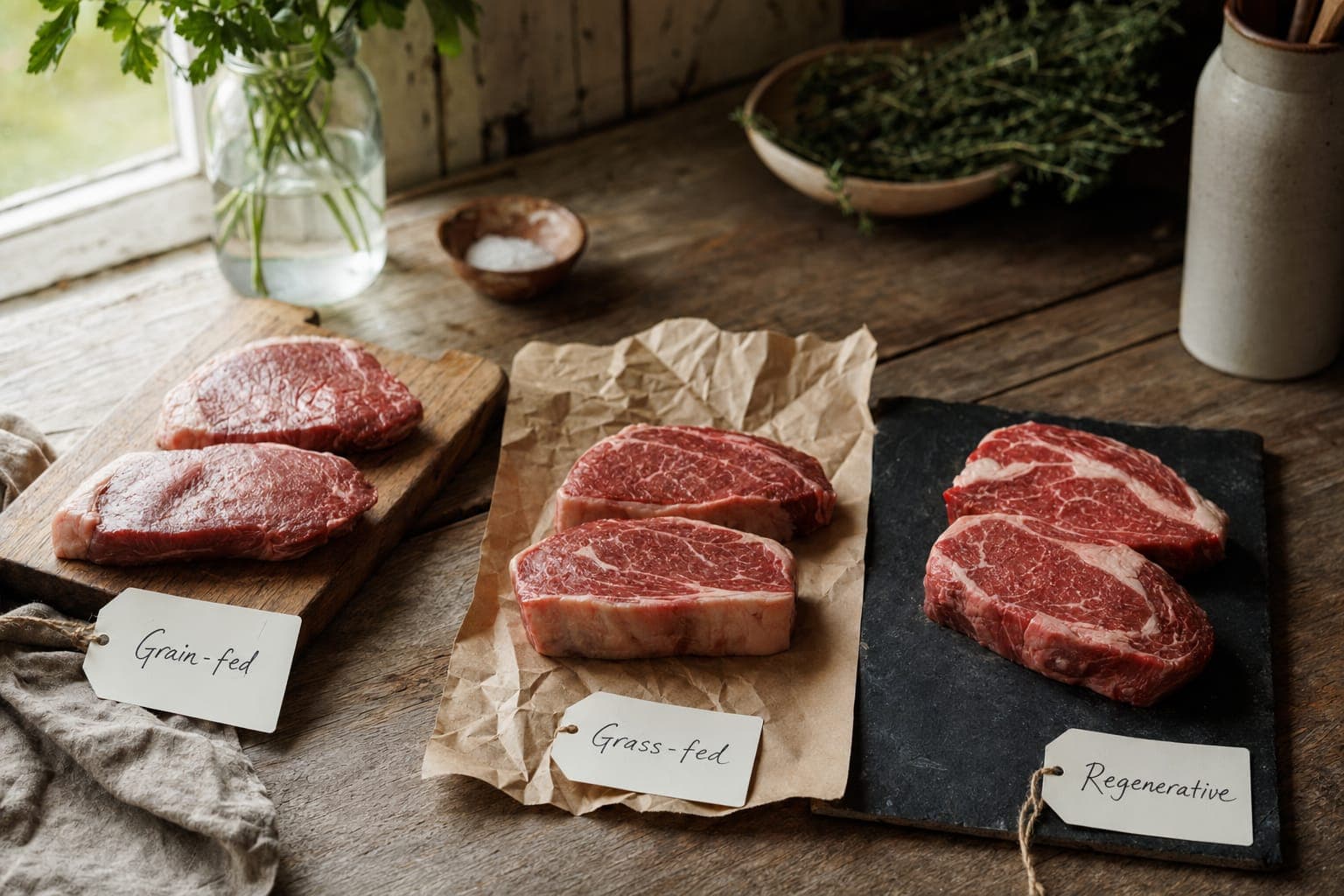
The Truth About Beef: Grain-Fed vs Grass-Fed vs Regenerative
Compare grass-fed vs grain-fed and regenerative beef on nutrition, welfare and environment. See how CLA, omega ratios and vitamins shift with how cattle live.
Farming
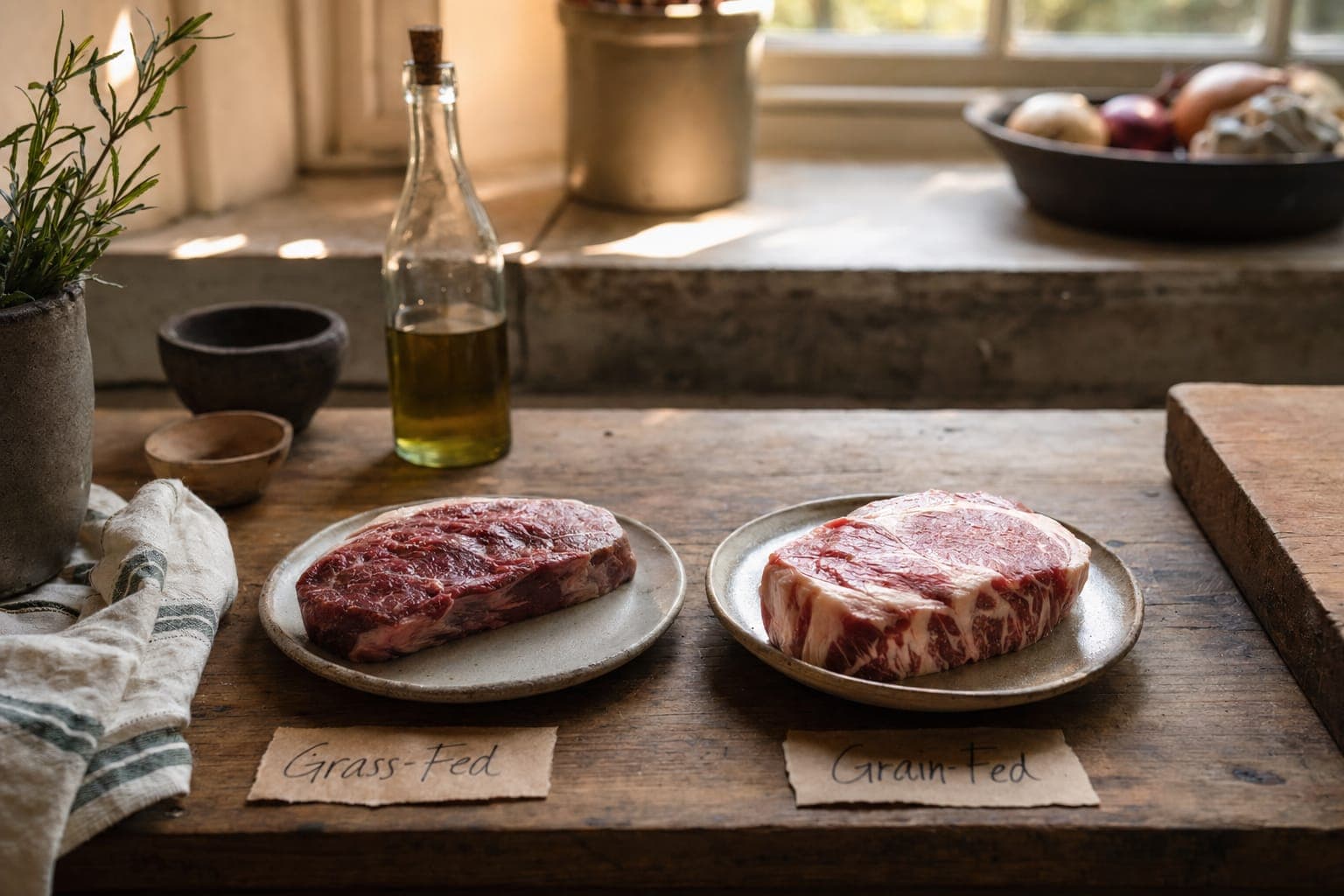
The Nutritional Difference Between Grass-Fed and Grain-Fed Beef
Grass-fed beef has 2-5x more CLA, 3x vitamin E, higher K2, and better omega-3 ratio. Here's the complete nutrient-by-nutrient comparison.

Farming
What Is Regenerative Agriculture? A Complete Guide
What is regenerative agriculture? Explore the five core principles, practices like cover crops and no-till, plus soil health and carbon, all explained simply.
Real food, made effortless
Shop the blendA few ways to use it
All recipes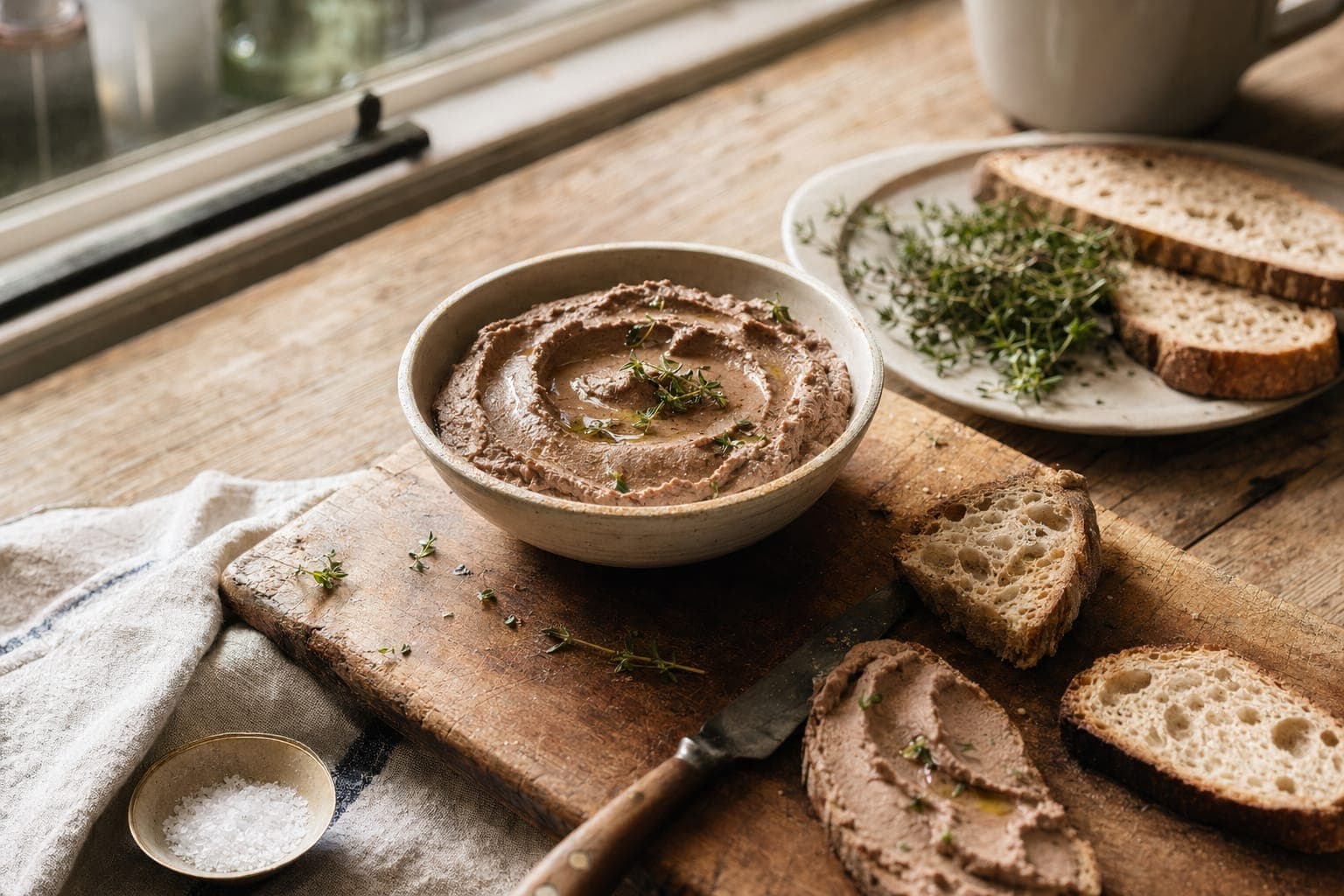
Liver Pate for Beginners: A Gentle Introduction to Organ Meats
Simple liver pate recipe to start eating organ meats. Chicken liver, butter, and herbs. Gentle introduction to nutrient-dense whole foods.

Energy Balls with Organised, Dates and Raw Honey
Make no-bake energy balls with Organised, dates, and raw honey. Perfect lunch box, pre-workout, or on-the-go snack. Simple recipe.

The Perfect Organised Morning Shake: Our Favourite Recipe
Our signature morning shake: Organised, raw milk, banana, honey. Simple, nourishing, and optimised for an empty stomach.


 Join over 100,000+ members
Build a better food system with us
The Organised community is thousands of people choosing real food and backing the farmers who grow it, all of us trying to leave the world a little better than we found it. If that is what you care about too, you belong here.