The Difference Between Organic and Regenerative Farming
You see the labels everywhere now: organic, regenerative, natural. They sound like the same thing. They're not. And the difference matters for what's actually on your plate.
By Niall Kiddle, Founder, Organised

Reviewed by Pedro Rodrigues, Agronomist (farming and sourcing only) ·
6 min read · Published · Updated · 2 cited sources
Makers of the Organised Daily blend, a grass-fed beef organ supplement from regenerative UK farms
Understanding the distinction is the first step toward eating food that's produced in a way that actually reflects your values.
What organic farming actually means
Organic has a legal definition. In the UK and EU, it's governed by strict standards set by certifying bodies. In the United States, it's certified by the USDA.1 In both cases, organic means: no synthetic pesticides, no synthetic fertilisers, no genetically modified organisms, and no routine antibiotics in livestock.
That's the core of it. Organic is defined by what you can't use, not by what you must do.
A farm can be certified organic and still be, in practice, fairly industrial. You can have a large organic monoculture field of, say, wheat or apples. You can use approved pesticides (and organic certification approves quite a few). You can till the soil repeatedly, killing the microbial life below. You can use only approved fertilisers, even if they're not building soil carbon or structure.
Organic certification requires a three-year transition period with no synthetic inputs, annual audits, and detailed record-keeping. This is genuinely protective. It rules out the worst industrial practices.
But it doesn't guarantee regeneration. It guarantees the absence of synthetic chemicals. That's an important difference.
Organic tells you what a farm didn't use. Regenerative tells you what it did to improve the land.
What regenerative farming actually means
Regenerative agriculture has no single legal definition (though several organisations are working on standards). Instead, it's defined by outcomes: does the soil have more carbon, more microbial life, better water retention, better structure than it did before?
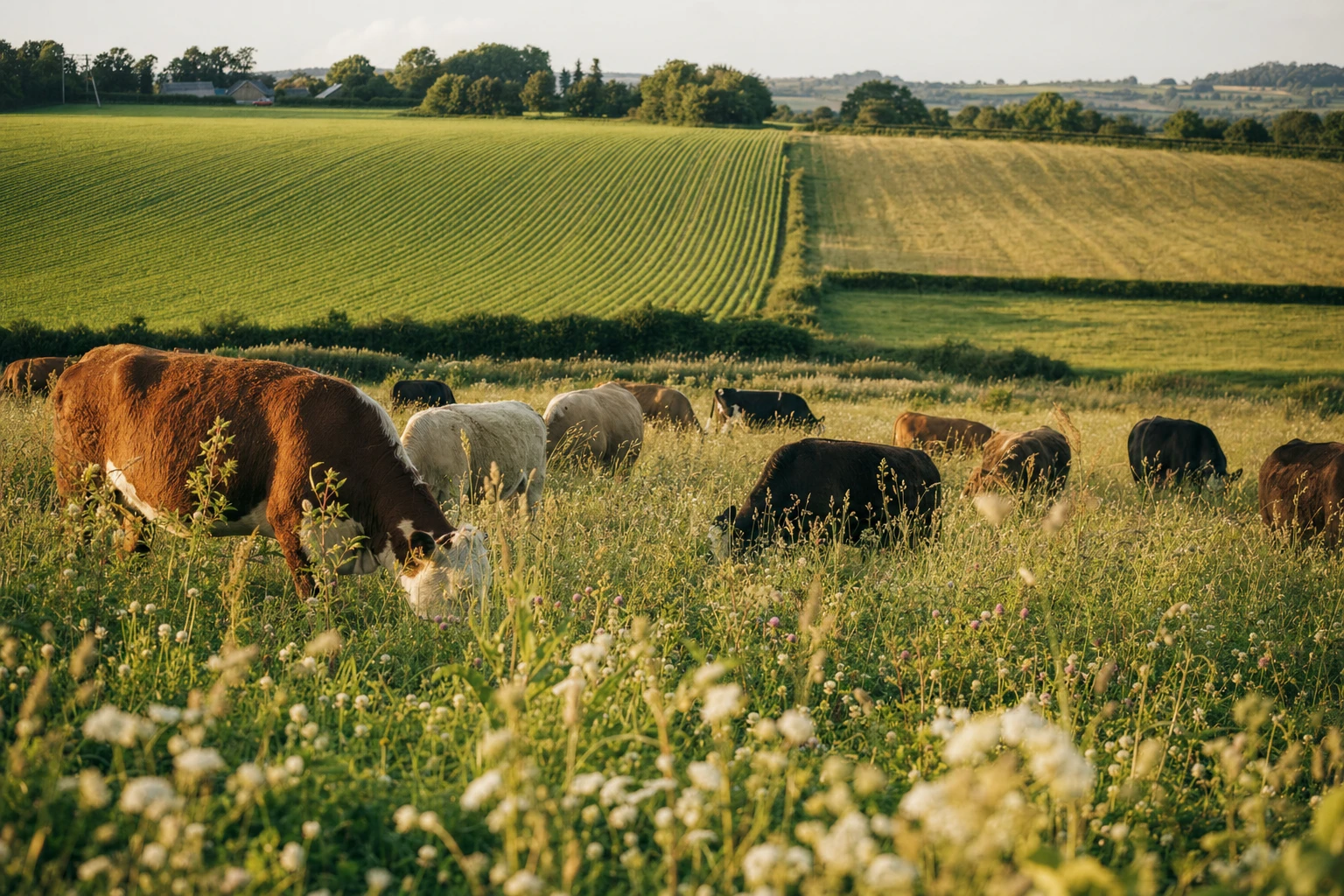
Common regenerative practices include: no-till or minimal-till farming, cover crops (planting off-season crops to protect and enrich soil), crop rotation, compost applications, integrated grazing (using animals to manage land), and agroforestry (growing trees alongside crops).
The focus is on building soil as an active, living system. Carbon cycling. Nutrient cycling. Water infiltration. Biodiversity below ground.
Theoretically, a regenerative farm could use synthetic inputs if it achieved those outcomes, though in practice most regenerative farms avoid them anyway.
The challenge: regenerative outcomes are harder to measure and certify than the presence or absence of a synthetic pesticide. You'd need soil carbon testing, microbial counts, infiltration studies. Most farms aren't doing this routinely. A few are.
Can a farm be both?
Absolutely. In fact, most well-managed organic farms incorporate regenerative practices. They're not mutually exclusive.
If an organic farm uses cover crops, minimal tilling, and rotational grazing, it's regenerative. The organic certification covers the no chemicals part. The regenerative practices make that certification meaningful at a soil level.
But you can be one without being the other. A large organic grain operation that monocrops and tills annually is organic but not particularly regenerative. Conversely, a regenerative grazing system might not be certified organic (though most are).
Where they differ in practice
On cost: organic certification is expensive (audits, paperwork, transition period). You might pay 20-40 percent more for certified organic produce or meat. Regenerative transparency varies widely. Some regenerative farms carry a premium, others don't charge extra because they're not certified.
On scale: many large industrial operations are now certified organic. Whole Foods carries organic products from massive farms. Regenerative tends to be smaller-scale, though not always. It's typically more labour-intensive and less standardised.
On verification: organic is audited annually. Someone from a certifying body comes and inspects. Regenerative verification is inconsistent. Some schemes (like Regenerative Organic Certification in the US) do soil testing. Many don't.
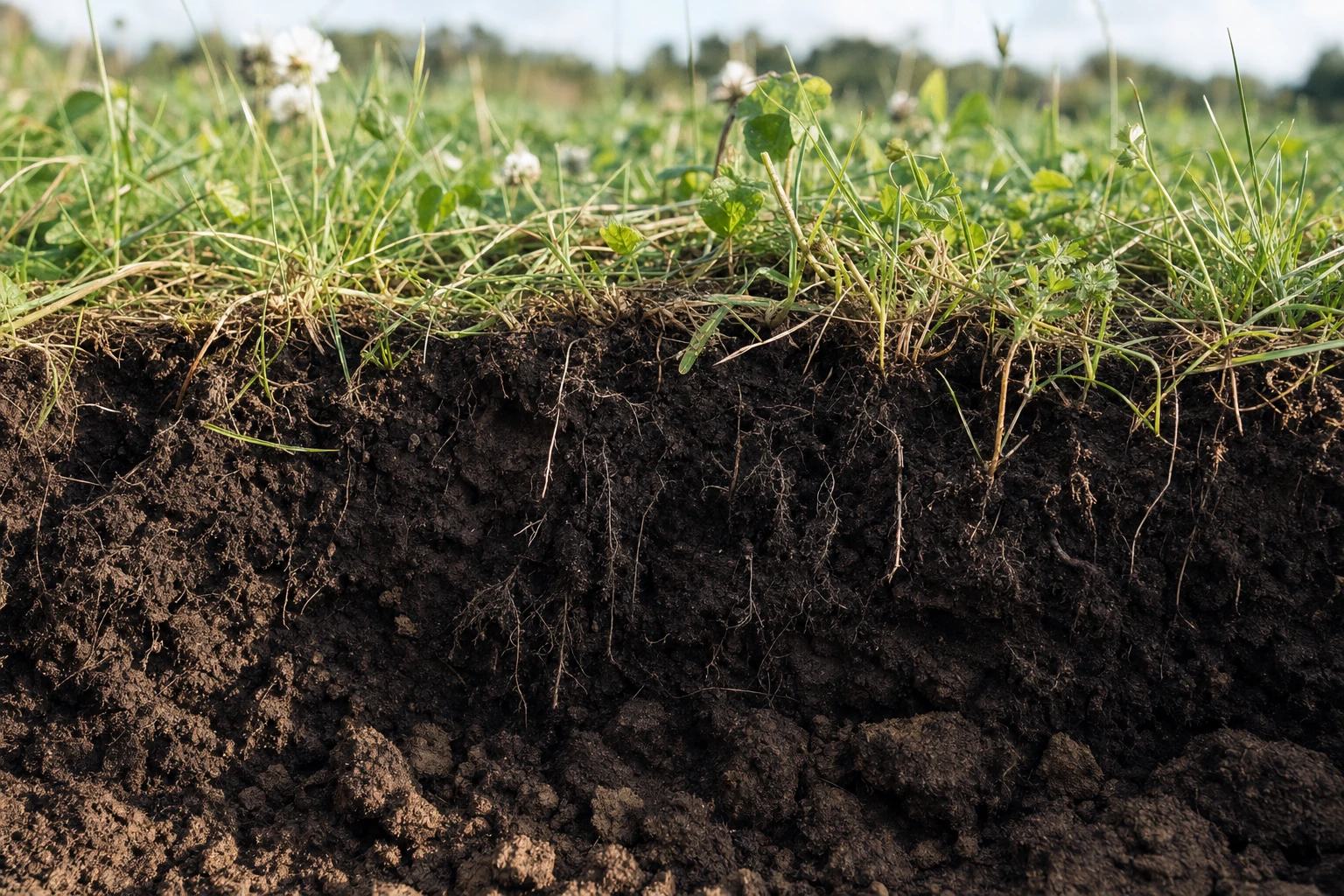
On soil health: organic requires you avoid the worst synthetic inputs. Regenerative requires you actively improve the land. Organic can maintain soil. Regenerative is meant to rebuild it.
On animal welfare: organic livestock standards set space requirements and require access to pasture (usually). Regenerative grazing prioritises land recovery and typically results in lower stocking density, which can mean better animal welfare, though it's not guaranteed.
On transparency: both organic and regenerative can be opaque. You can't always visit a farm or see the practices. Organic certification at least gives you paperwork. Regenerative often relies on farm marketing or third-party verification that may or may not be rigorous.
Look beyond the label. A farm's actual practices matter more than which certification checkbox it ticks.
Get farming and sourcing guides, free
Two short reads a week on regenerative farming and where real food comes from.
By signing up you agree to receive emails from us. No spam, unsubscribe anytime.
Which one should you care about?
If you're buying from a supermarket and you have to choose between conventional and certified organic, organic is a clear win. You're avoiding synthetic pesticides and the industrial system that subsidises their use.
If you can source directly from a farm (farmers market, farm visit, local delivery), ask what they actually do. Do they rotate crops? Do they avoid tilling? Are they building soil? These questions matter more than any label.
Ideally, you want regenerative practices inside an organic framework. That combination tells you the farm is avoiding synthetic chemicals and actively rebuilding the land at the same time.
In the UK, look for producers using standards like Pasture for Life (regenerative grazing certified) or those explicitly stating soil-building practices. In the US, Regenerative Organic Certification exists, though it's less common. Many smaller farms practice regeneratively without certification because certification is expensive and they sell locally through relationships instead.
The bottom line: organic is a floor. It rules out the worst. Regenerative is the direction you want agriculture to move. Don't confuse the two, but do know that most genuinely regenerative farms are also organic.
1 of 9
Daily blend
100,000+ thriving families4.9 on Trustpilot
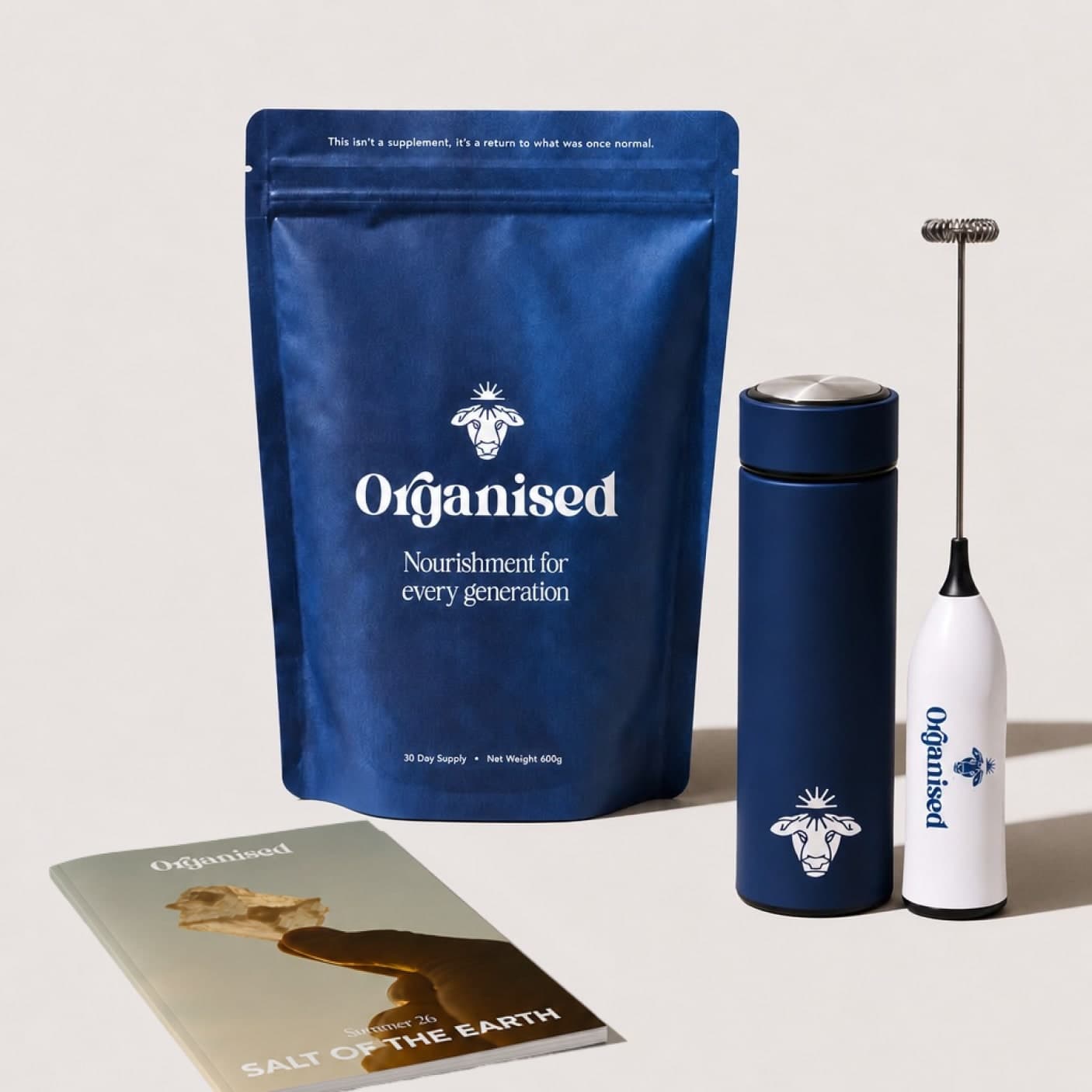
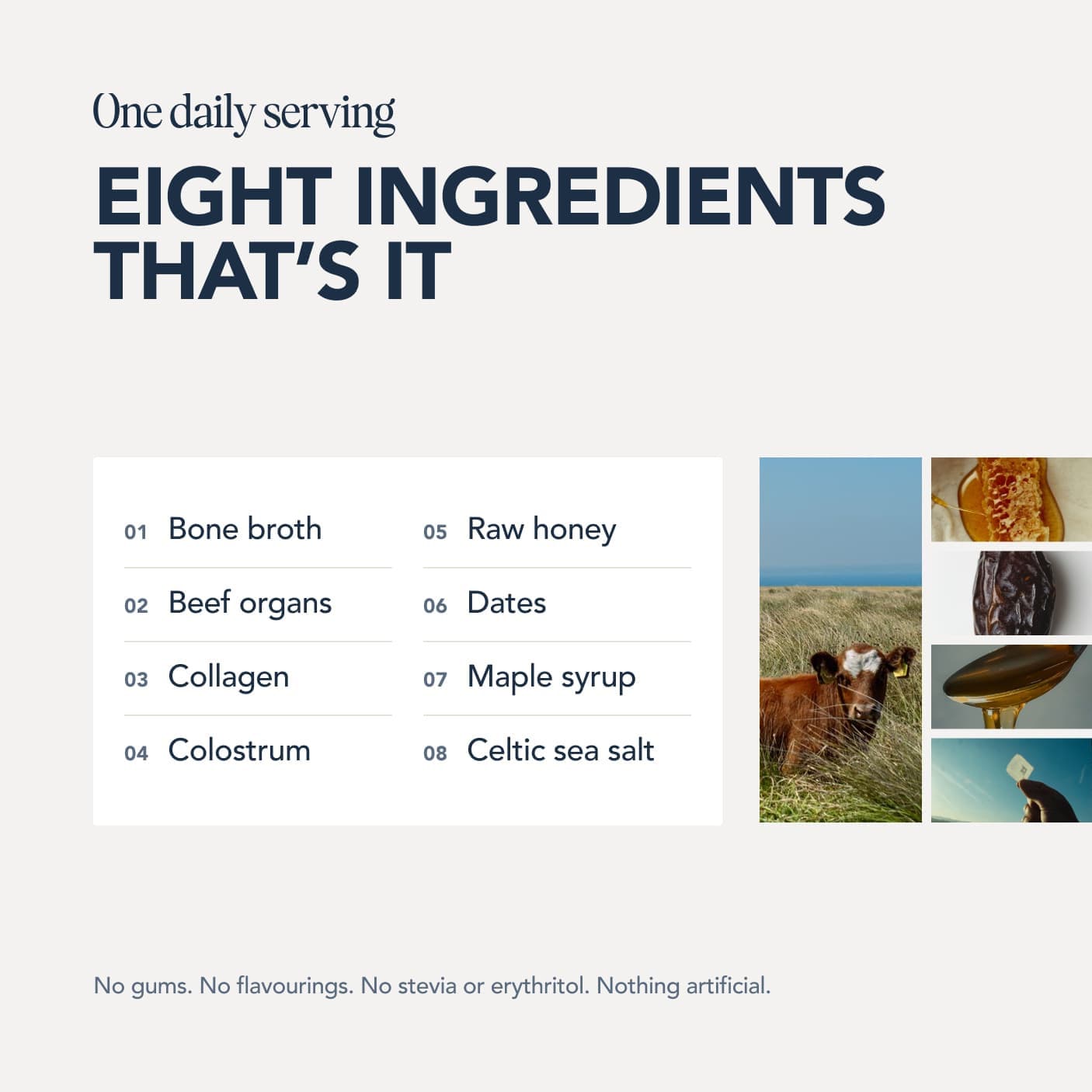
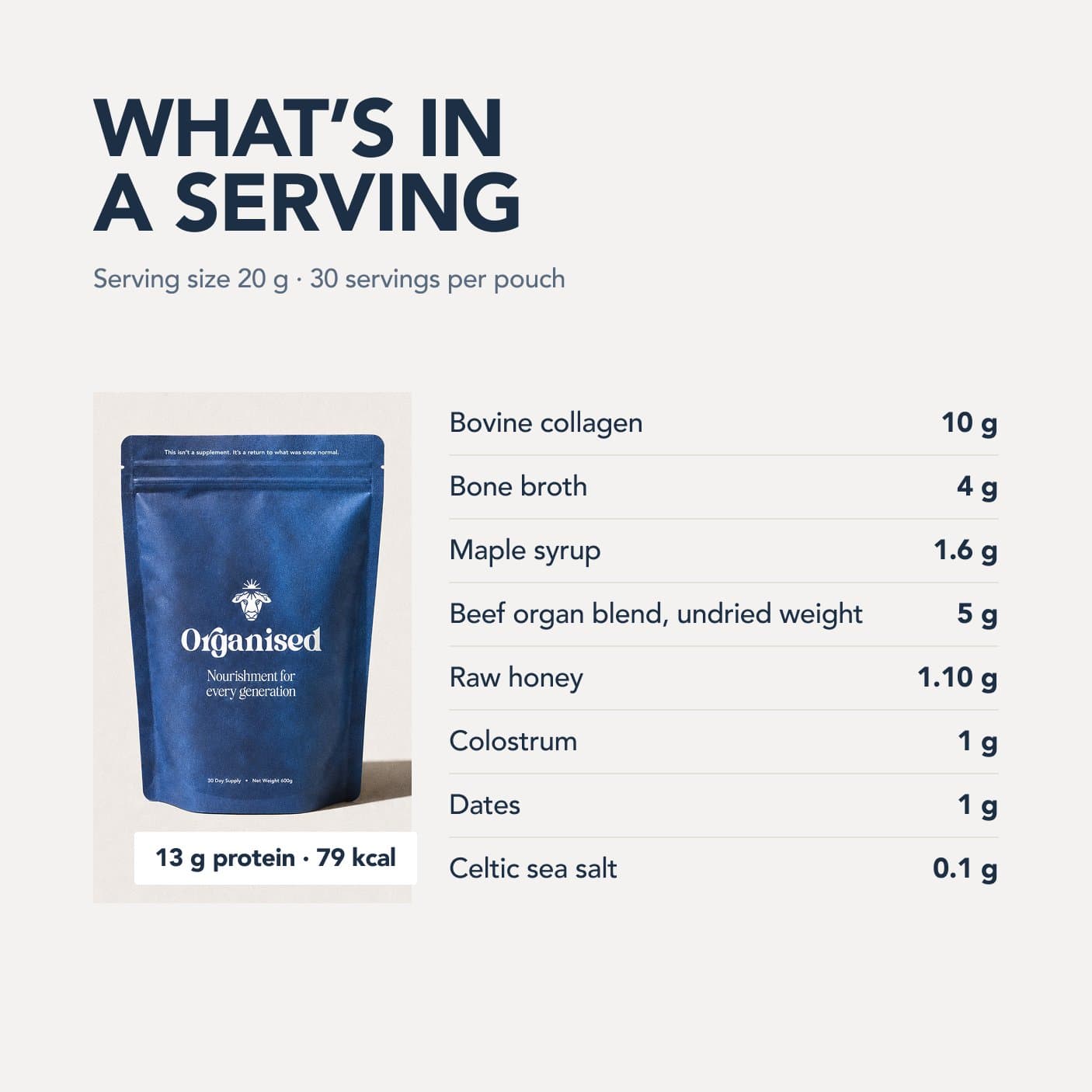
Eight real ingredients built around grass-fed beef organs, collagen and colostrum. Nothing synthetic added.
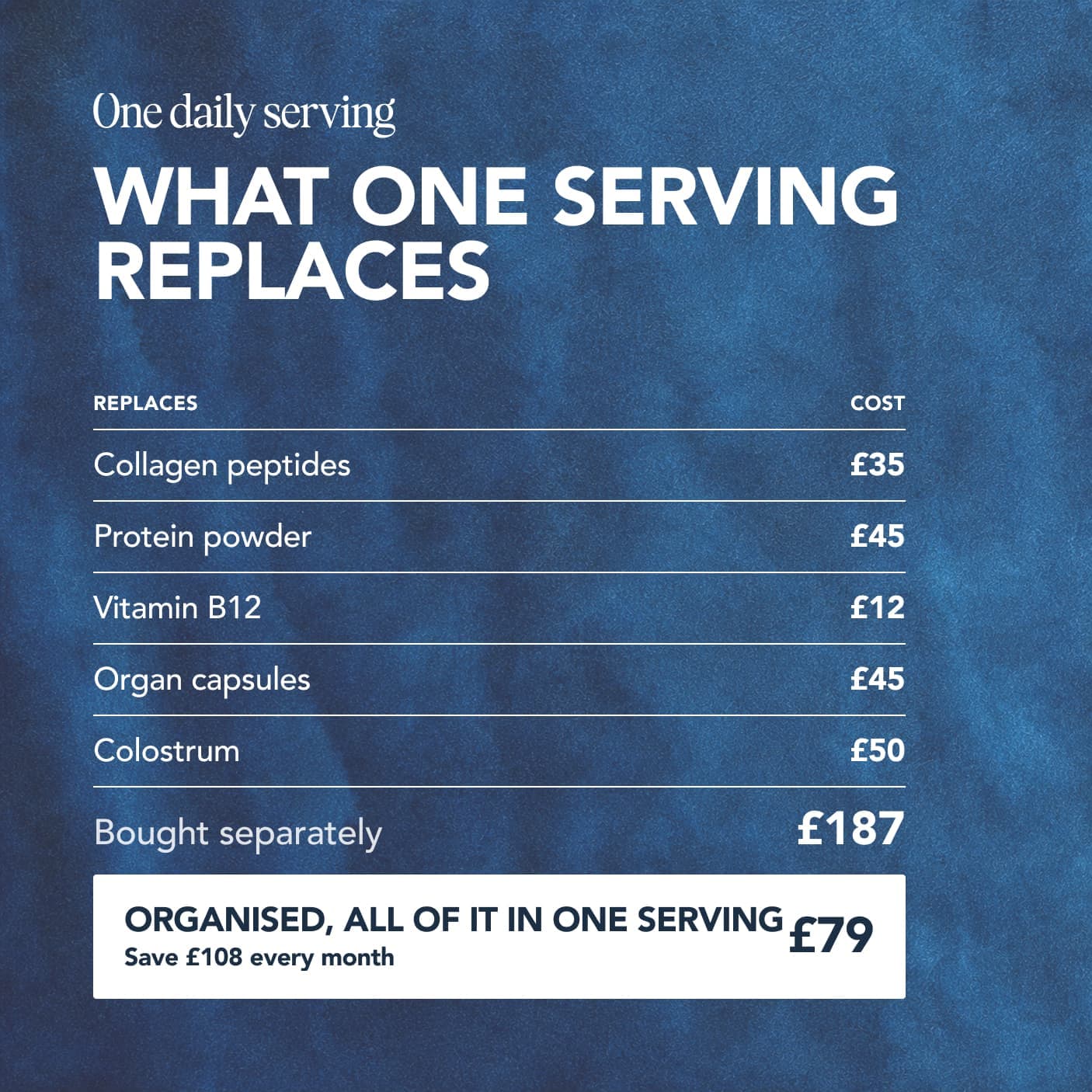
Free with your first order, worth £38. Plus £10 off the pouch with a subscription.



Free UK shipping · Made in England · 100 day money back guarantee on your first pouch · Skip, pause or cancel anytime
Which is better for consumers?
If you care about inputs and avoiding synthetic chemicals, choose organic. If you care about land outcomes and soil health, choose regenerative. Ideally, choose regenerative organic certified, which combines both standards.
For consumers, the practical guide: seek farms you can ask questions about. Certification is helpful as a baseline. But relationship is more informative than any label. Talk to the farmer. Ask how they manage soil, how often they rotate, whether soil carbon is improving.
The best farm is the one you can visit and ask questions about. The second-best is regenerative organic certified. Everything else is a compromise.
Certification matters. But the farmer's commitment to land health matters more.
Red flags in labelling
Be sceptical of any farm claiming to be fully regenerative without third-party certification. Regenerative is not a legal term, so anyone can claim it. Certification (from bodies like Regenerative Organic Certified or similar schemes) adds credibility.
Be sceptical of certification without specificity. A farm that is organic-certified but cannot tell you their soil carbon baseline or land health metrics is not regenerative, just organic.
Regenerative is a direction, not a destination. A genuine regenerative farm can show you the evidence of improvement over time.
For UK sourcing, Pasture for Life is a reliable indicator of both grass-finishing and land management standards.2 Red Tractor is a baseline for food safety and traceability, not necessarily for regeneration. Soil Association organic is good but does not guarantee regenerative management.
Making the choice as a consumer
Most consumers choose based on what is available locally. If your supermarket has organic beef, you might buy that. If your farmers market has a regenerative producer, buy from them. Neither is perfect, both are better than conventional commodity.
If you have a choice, regenerative is the direction agriculture needs to move. If you are choosing between conventional, organic, and regenerative at the same price point, regenerative is the single choice that addresses all concerns: inputs, outputs, soil health, and land improvement.
References
Every source below was checked on 27 August 2026. Each link was requested and read. Where a citation and its identifier disagreed, the citation was corrected to the record or the reference was deleted along with the sentence marker that pointed at it, and where the resolved paper turned out not to support the sentence, the sentence was cut back to what it does support. Borrowed authority is worse than none, because it looks like rigour.
- Soil Association. Organic standards. soilassociation.org/certification.
- Pasture for Life. About the Pasture for Life standard. pastureforlife.org.
Who wrote and reviewed this guide
Niall Kiddle
Author · Founder, Organised
Niall is the founder of Organised. He started the company in 2024 after fixing his own health the slow way: in 2022 he swapped a cupboard of synthetic supplements for real food, raw milk, organ meats, bone broth and honey, and felt the difference within months.
Areas of expertise: Ancestral nutrition, Organ meats, Whole-food supplementation, Gut health, Regenerative sourcing
Read Niall's full profile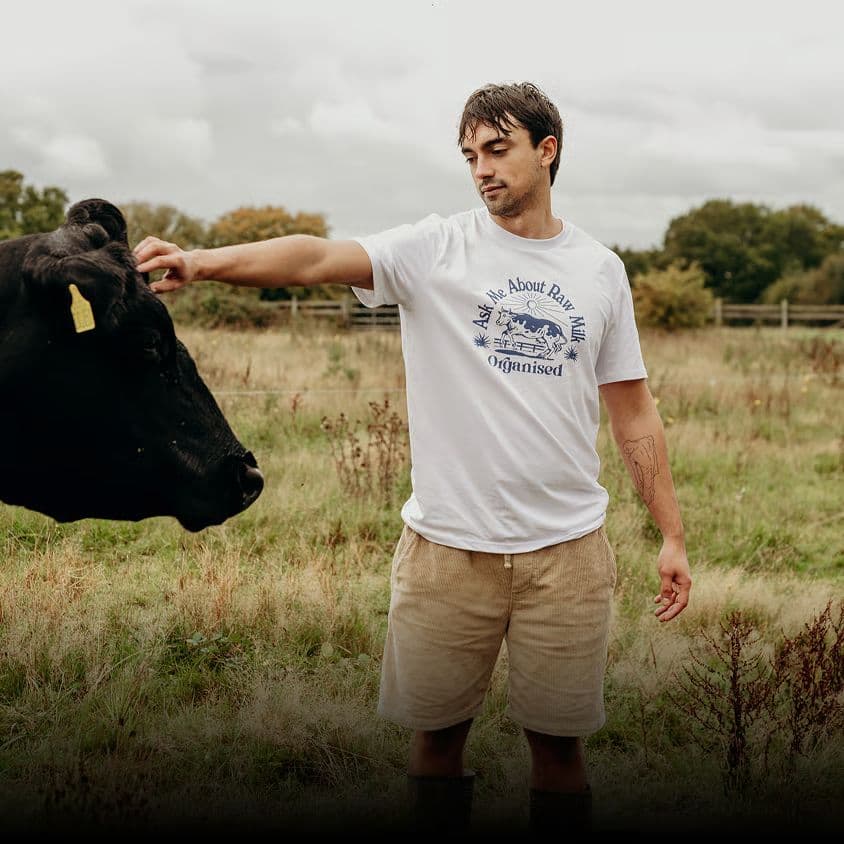
Pedro Rodrigues
Reviewer · Agronomist (farming and sourcing only)
Pedro is the agronomist Organised works with on farming and sourcing. His job on the guides is to keep the science honest: he reviews what we publish about soil health, regenerative agriculture, grazing and the way food is actually produced.
Areas of expertise: Regenerative agriculture, Agronomy, Soil health, Grass-fed farming, Food sourcing
Reviewed this guide on
Read Pedro's full profileBrowse the guides library
All guidesKeep reading
Farming
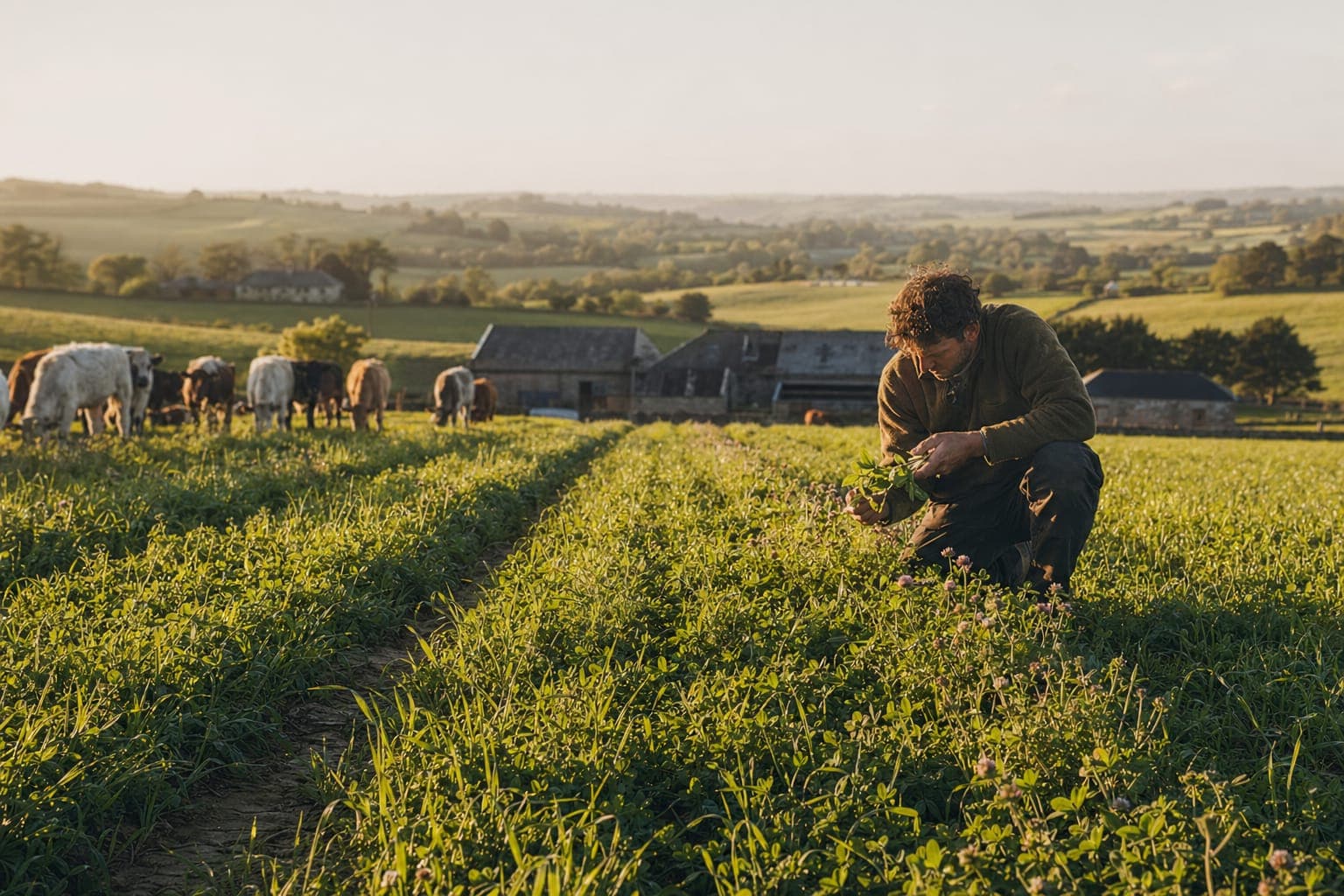
What Is Regenerative Agriculture? A Complete Guide
What is regenerative agriculture? Explore the five core principles, practices like cover crops and no-till, plus soil health and carbon, all explained simply.
Farming
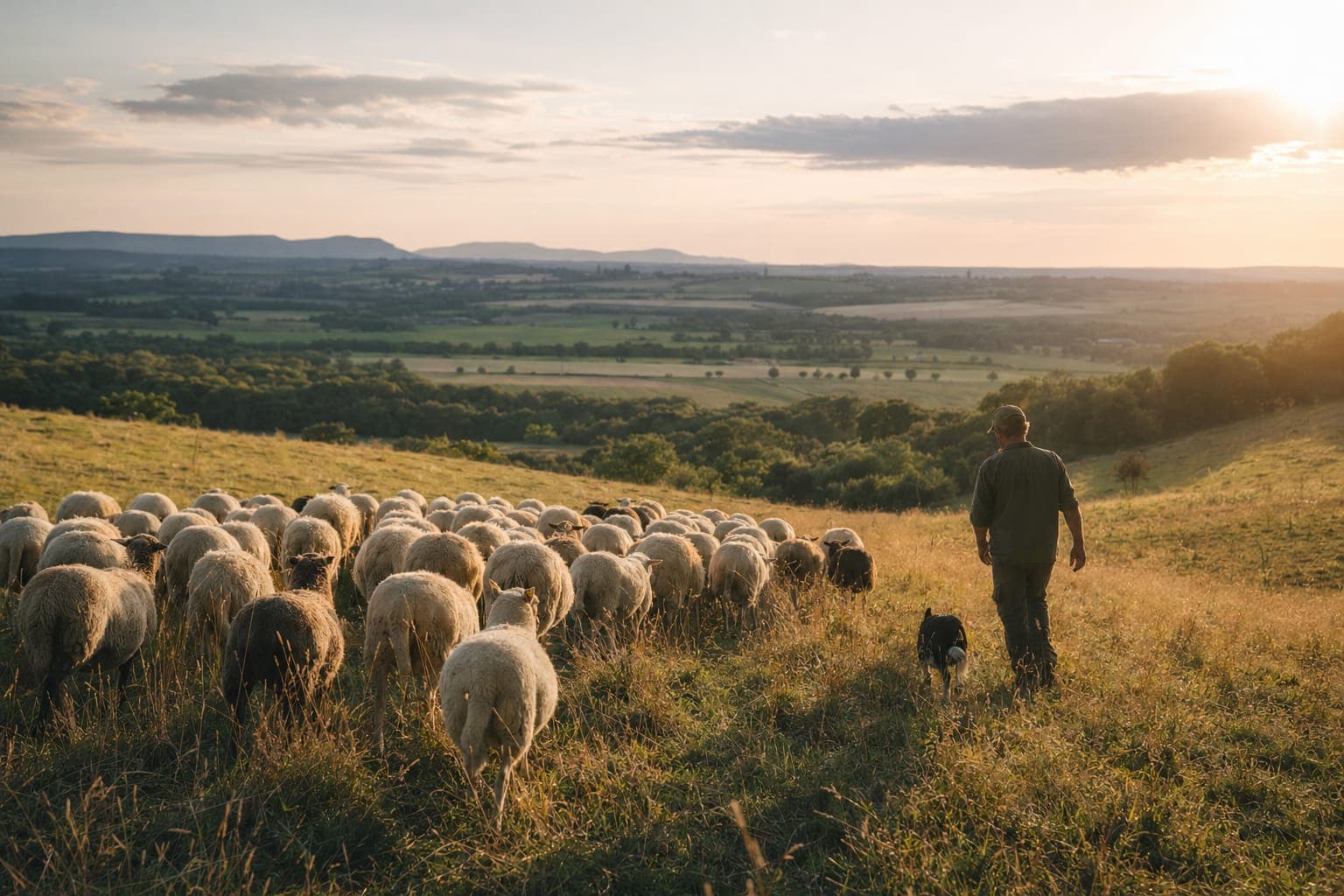
Can Regenerative Agriculture Feed the World?
Explores whether regenerative farming can scale to feed global populations. Examines yield data, Savory Institute research, and White Oak Pastures case study.
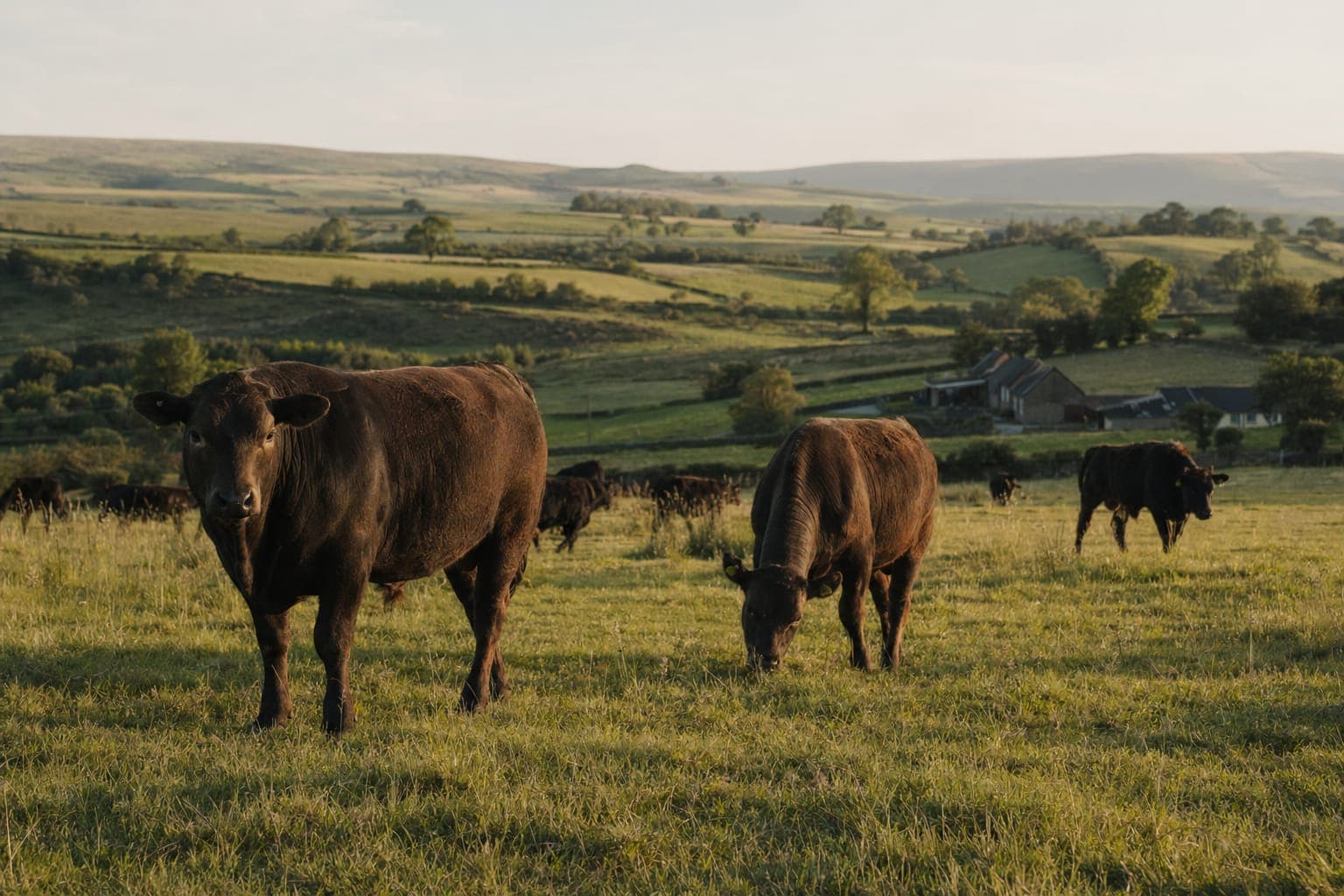
Farming
What 'Grass-Fed' Actually Means (And What It Doesn't)
Grass-fed has vague definitions. Some cattle are grass-fed then grain-finished. Learn UK vs US standards, Pasture for Life, and what labels actually promise.
Real food, made effortless
Shop the blendA few ways to use it
All recipes
Matcha Latte Gummies with Collagen and Gelatine
Make visually stunning matcha latte gummies infused with collagen and gelatine. Simple recipe for gut-healing sweets you'll actually want to eat.
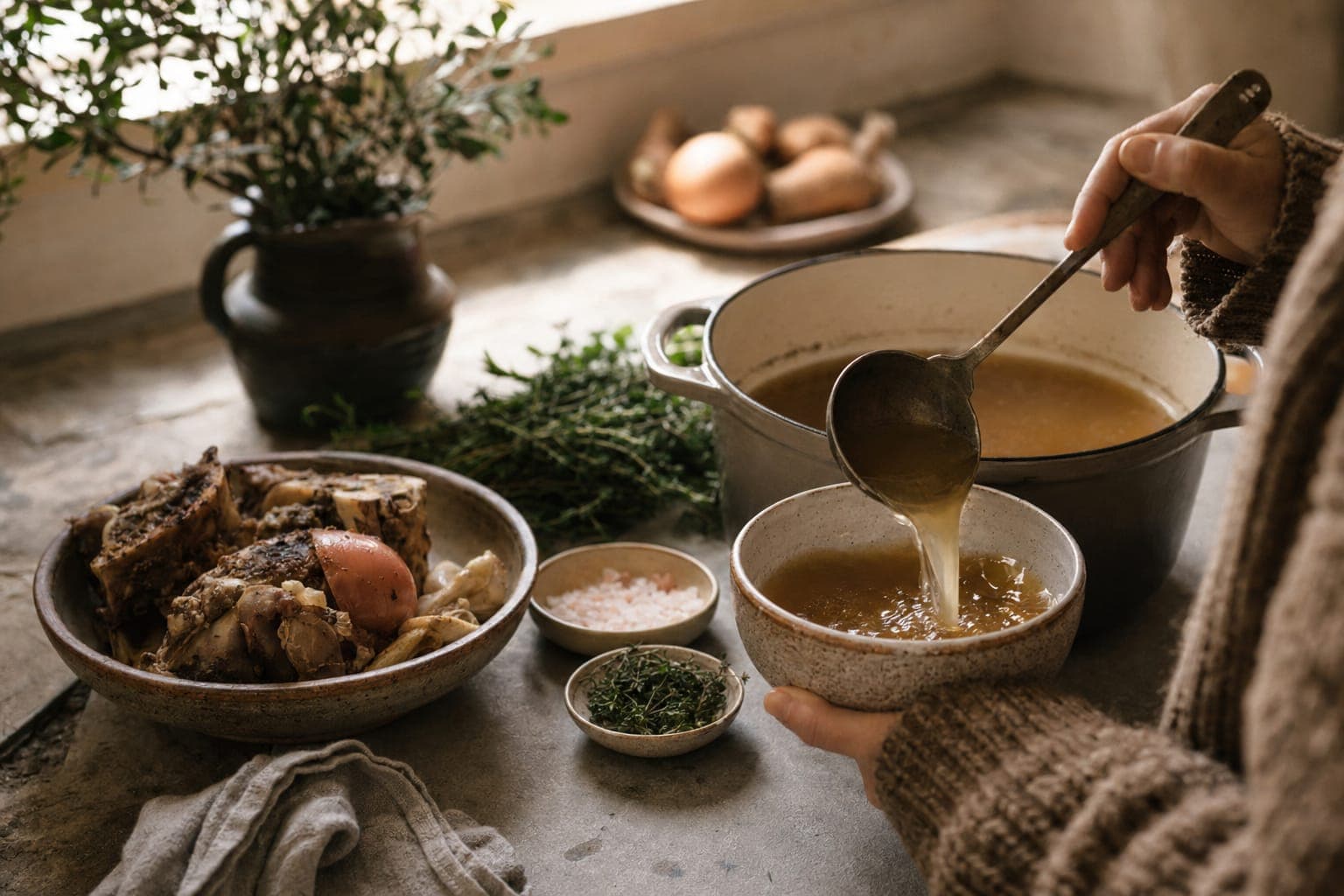
Bone Broth from Scratch: A Step-by-Step Guide
Step-by-step guide to making bone broth at home. Stovetop, slow cooker, and Instant Pot methods. Rich in collagen and gut-healing minerals.

The Organised Recovery Smoothie for After Exercise
A recovery smoothie made with beef protein, raw milk, frozen berries, collagen, and honey. Optimal nutrition in the 30-minute window after exercise.


 Join over 100,000+ members
Build a better food system with us
The Organised community is thousands of people choosing real food and backing the farmers who grow it, all of us trying to leave the world a little better than we found it. If that is what you care about too, you belong here.