Can Regenerative Agriculture Feed the World?
The conventional farming story is simple: you need chemicals, monoculture, and scale to feed eight billion people. Regenerative agriculture challenges that assumption. But can it actually work at the pace and size we'd need?
By Niall Kiddle, Founder, Organised

Reviewed by Pedro Rodrigues, Agronomist (farming and sourcing only) ·
6 min read · Published · Updated · 2 cited sources
Makers of the Organised Daily blend, a grass-fed beef organ supplement from regenerative UK farms
This is not an idle question. It sits at the intersection of soil science, economics, animal welfare, and political will. And the answer is more nuanced than either the regenerative movement or industrial agriculture would have you believe.
The yield debate
Start with the uncomfortable truth: regenerative farms, particularly those using holistic grazing, often produce less per acre than industrial systems in the short term. Not always, but commonly.
A 2019 study published in the Proceedings of the National Academy of Sciences looked at global crop data and found that organic (not regenerative, but similar principles) farms yield about 20-25 percent less than conventional ones.1 Regenerative systems can be more productive than organic, but the gap with industrial monoculture remains real.
This is where the conversation usually stalls. Industrial agriculture says: see, regenerative can't feed the world. Regenerative advocates say: but you're not counting the costs. Both miss the actual complexity.
Yield per acre is not the only measure of food security. Soil carbon, water retention, nutrient density, and long-term viability matter.
Allan Savory and the soil carbon argument
Allan Savory, founder of the Savory Institute, built his career on a compelling claim: properly managed grazing can sequester carbon in soil at scale, potentially offsetting greenhouse gas emissions from livestock entirely.
His method, called holistic planned grazing, involves moving livestock frequently across pasture in dense herds, mimicking the movement patterns of wild herbivore migrations. The theory is sound: dense grazing stimulates plant growth, increases soil carbon, and improves water infiltration.
The evidence is mixed. Some ranch data shows improvements in soil carbon and water retention. But rigorous, peer-reviewed studies on carbon sequestration from Savory-style grazing have been slow to arrive, and some recent analyses suggest his carbon-offset claims may be overstated.
This doesn't mean the approach is wrong. It means the climate story is more complicated than a single carbon fix. Regenerative grazing likely does improve soil health and water cycling. Whether it scales globally for carbon sequestration specifically is still an open question.
White Oak Pastures: regenerative at commercial scale
White Oak Pastures, a Georgia-based regenerative beef operation, is often held up as proof that regenerative can work at scale. They manage roughly 5,000 acres, regenerating severely degraded land through integrated grazing, and produce beef commercially.
Their model works. They produce nutrient-dense beef, improve soil carbon, restore native plants, and turn a profit. It's a real-world existence proof.
But here's what's rarely mentioned: they operate on land that is less marginally valuable than the corn belt. They use infrastructure, genetics, and management intensity that most small farms cannot replicate. They sell at premium prices (grass-fed beef costs more). And they're one operation, not a movement.
Scaling White Oak Pastures to feed a nation would require converting massive tracts of commodity cropland, changing animal genetics, retraining farmers, and building new supply chains. That's not impossible. It's just not a simple multiplication problem.
The scaling challenge
Here's where the yield gap becomes critical. The United States currently produces roughly 375 million tonnes of food annually (crops and animal products combined). Most of this depends on synthetic fertiliser, monoculture efficiency, and chemical pest control.
Regenerative systems typically require: more land, more labour, more management, and more time. Even if yield gap narrows with better practices, you're likely looking at needing 10-20 percent more agricultural land to produce the same calories.
In some regions, this land exists. In others, it doesn't. And using more land for food means less land for biodiversity, carbon sequestration, or other uses.
There's also the knowledge problem. Industrial agriculture is automated and standardised. A farmer in Iowa follows a playbook. Regenerative agriculture is site-specific, requires observation, and demands experience. Teaching this to millions of farmers in a decade is a different challenge than selling them more fertiliser.
Regenerative agriculture works brilliantly on a single farm. Scaling it globally involves solving problems of labour, economics, infrastructure, and political will that have nothing to do with soil science.
Where regenerative wins and where it struggles
Regenerative grazing on marginal land (semi-arid regions, degraded pasture, steep slopes) is a clear win. It improves productivity where industrial systems were never efficient anyway. Regenerative has strengths here.
Regenerative grain production is harder. You can grow regenerative wheat or corn, but you typically sacrifice yield, increase labour costs, and make harvest and storage more complex. For commodity grains feeding billions, this is a genuine problem.
Regenerative also shines in perennial systems: orchards, vineyards, grasslands. These produce food and fibre with minimal annual inputs and regenerate naturally. More of this is unambiguously good.
But here's the reality: the majority of global calories come from grain. Feeding eight billion people without grain at current yields requires either converting vastly more land to agriculture or accepting lower calories per capita. Neither is politically feasible in the next twenty years.
Get farming and sourcing guides, free
Two short reads a week on regenerative farming and where real food comes from.
By signing up you agree to receive emails from us. No spam, unsubscribe anytime.
The honest answer
Can regenerative agriculture feed the world? Not entirely. Not yet. Not at current scale and yield expectations.
Can it feed a world that eats less grain, more regeneratively-raised meat and dairy, more seasonal produce, and less ultra-processed food? Yes. It already does, regionally.
Can it improve soil health, water retention, and resilience in the farming systems we have? Absolutely.
Can it replace industrial agriculture entirely in the next decade? No. That's not how systems change.
The honest positioning: regenerative agriculture is a critical tool for improving food quality, soil health, and long-term farming viability. It works best on pasture, perennials, and smaller-scale mixed systems. Where possible, shift food production toward these systems. But do so knowing that you're trading yield efficiency for soil resilience, and that trade-off has real costs in a world of eight billion people.
The best path forward is not regenerative-only or industrial-only. It's a mixed system: regenerative where it scales well (pasture, perennials, regional production), industrial where efficiency is critical (staple grains), and a steady shift in diet toward foods that regenerative systems can produce well.
That's not as romantic as a story about healing the earth through grazing. But it's the one that might actually work.



1 of 9
Daily blend
100,000+ thriving families4.9 on Trustpilot
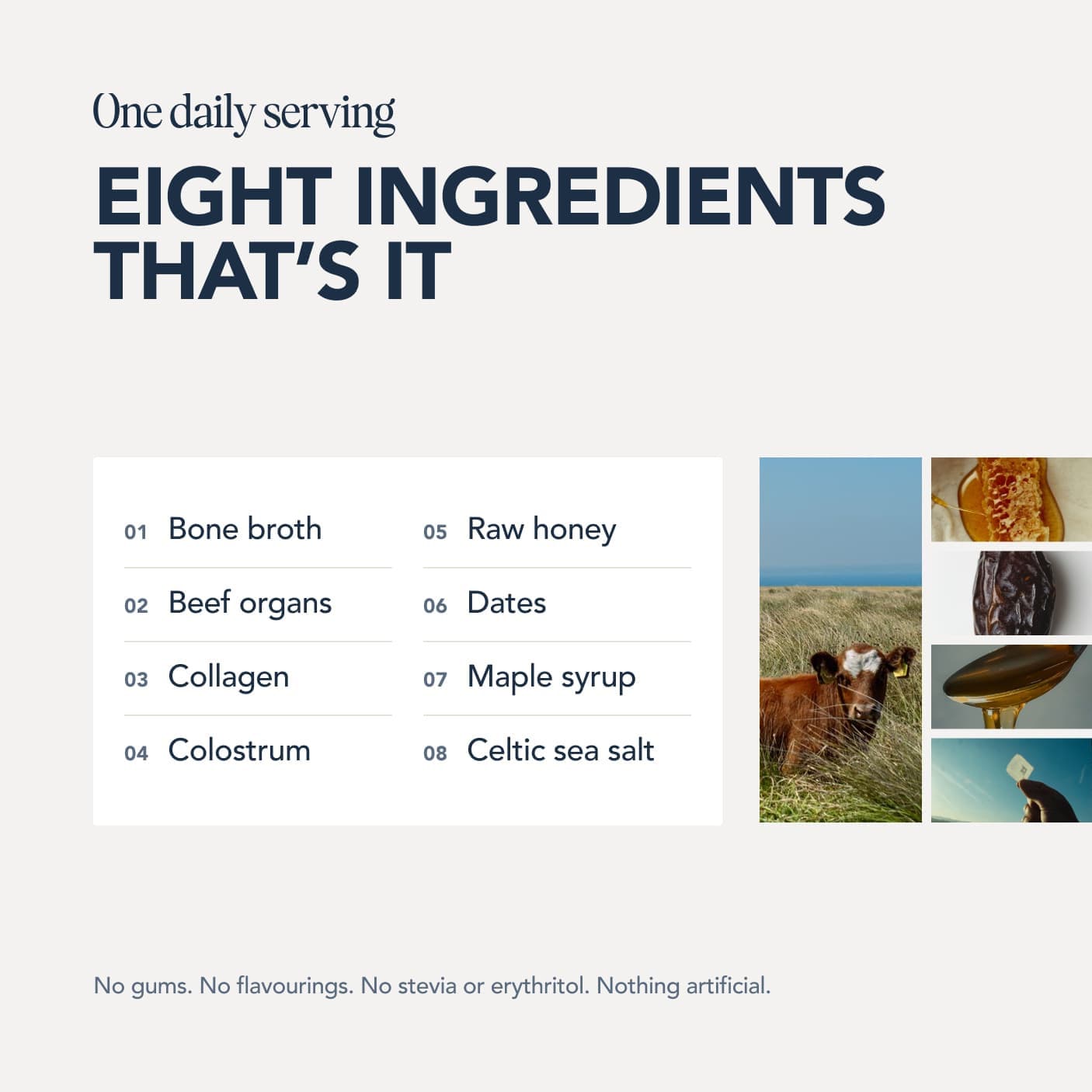
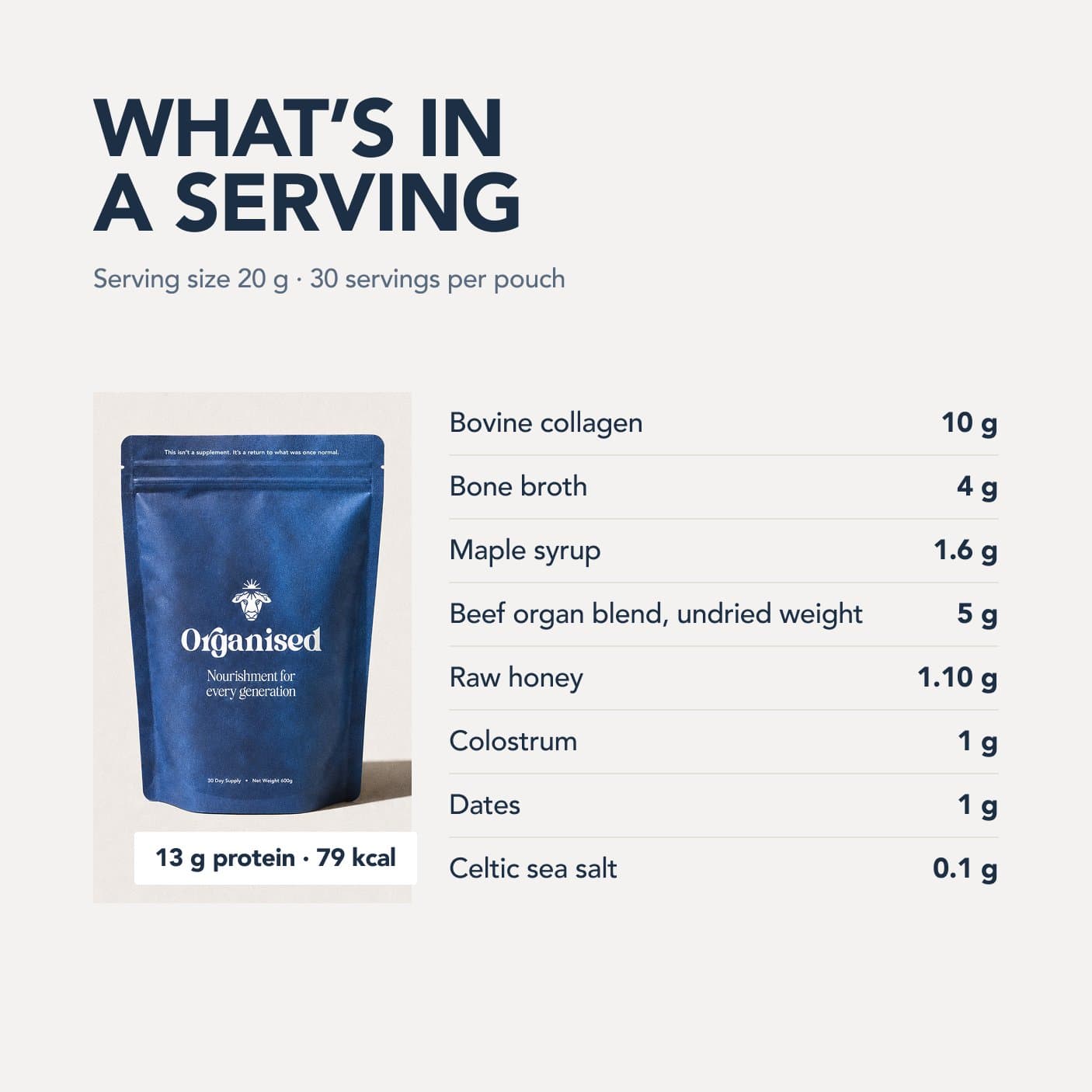
Eight real ingredients built around grass-fed beef organs, collagen and colostrum. Nothing synthetic added.
Free with your first order, worth £38. Plus £10 off the pouch with a subscription.



Free UK shipping · Made in England · 100 day money back guarantee on your first pouch · Skip, pause or cancel anytime
Case studies in scaling regenerative systems
White Oak Pastures in Georgia, USA, demonstrates that regenerative beef can be produced at scale. They manage over 40,000 acres with rotational grazing, sell direct to consumers and restaurants, and have become profitable whilst improving soil carbon. This proves the model works commercially, not just theoretically.
UK operations like various Pasture for Life certified farms are doing similar work at smaller scales. They are demonstrably profitable. They grow market share. They retain customers through transparency and quality.
The constraint is not viability. It is adoption rate. Shifting from industrial to regenerative requires capital investment, knowledge transfer, and consumer demand. All three are increasing. But the pace is slower than the urgency of soil depletion would suggest.
Regenerative agriculture can feed the world. The question is whether we will implement it fast enough to matter.
The economics question: can regenerative be affordable?
Regenerative food costs more to produce initially. Land recovery takes time. Labour is more intensive. But once systems are established (5-10 years), costs stabilise. Some regenerative operations become more profitable than industrial operations2 because they require fewer chemical inputs and build soil biology that reduces pest and disease pressure over time.
The affordability question is partly a supply problem. When 80% of agricultural production is industrial, regenerative food is expensive because it is rare. If regenerative became 30-40% of production (through policy incentives, subsidy shifts, and consumer demand), economics of scale would reduce costs significantly.
In the UK, some Pasture for Life operations are already demonstrating profitability. They are smaller than industrial operations, but they are profitable. This proves the financial model works. What it requires is market scale.
References
Every source below was checked on 27 August 2026. Each PubMed, PMC and DOI identifier was resolved against NCBI or Crossref, and what it opens is printed under the citation, so you can see the link goes where the citation says without leaving the page. Where a citation and its identifier disagreed, the citation was corrected to the record or the reference was deleted along with the sentence marker that pointed at it, and where the resolved paper turned out not to support the sentence, the sentence was cut back to what it does support. Borrowed authority is worse than none, because it looks like rigour.
- Seufert V, et al. Comparing the yields of organic and conventional agriculture. Nature. 2012. PMID 22535250.Checked 27 August 2026: PMID 22535250 opens Seufert V, Ramankutty N, Foley JA, Comparing the yields of organic and conventional agriculture. Nature 2012;485(7397):229-32. PubMed indexes it as: Comparative Study, Meta-Analysis.
- Teague WR, et al. The role of ruminants in reducing agriculture's carbon footprint in North America. J Soil Water Conserv. 2016. jswconline.org/71/2/156.
Who wrote and reviewed this guide
Niall Kiddle
Author · Founder, Organised
Niall is the founder of Organised. He started the company in 2024 after fixing his own health the slow way: in 2022 he swapped a cupboard of synthetic supplements for real food, raw milk, organ meats, bone broth and honey, and felt the difference within months.
Areas of expertise: Ancestral nutrition, Organ meats, Whole-food supplementation, Gut health, Regenerative sourcing
Read Niall's full profile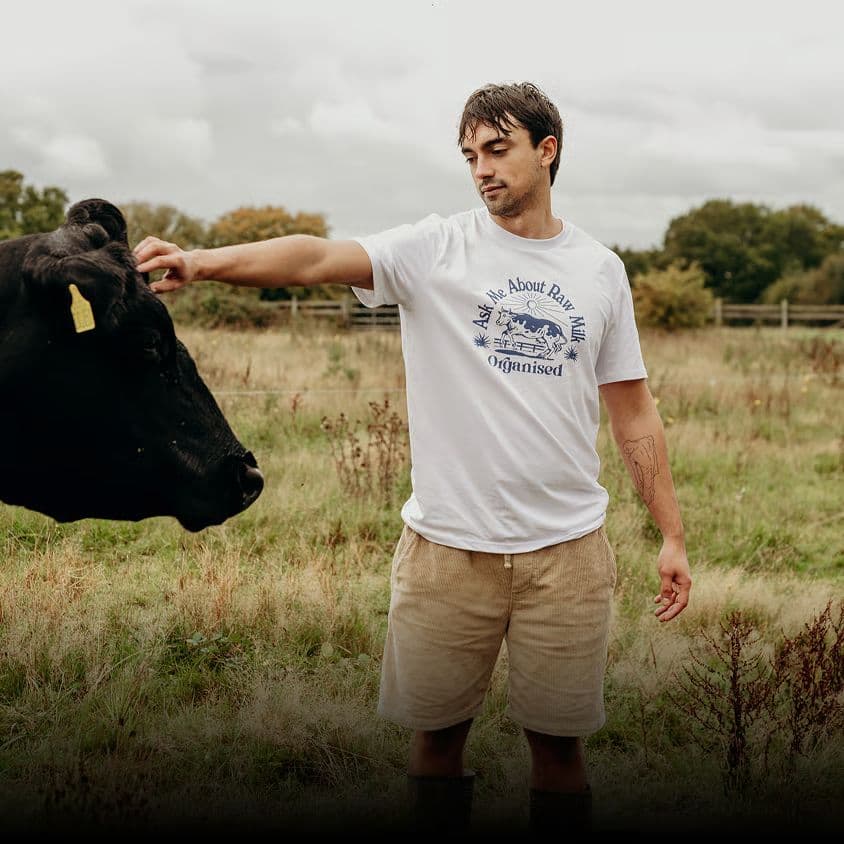
Pedro Rodrigues
Reviewer · Agronomist (farming and sourcing only)
Pedro is the agronomist Organised works with on farming and sourcing. His job on the guides is to keep the science honest: he reviews what we publish about soil health, regenerative agriculture, grazing and the way food is actually produced.
Areas of expertise: Regenerative agriculture, Agronomy, Soil health, Grass-fed farming, Food sourcing
Reviewed this guide on
Read Pedro's full profileBrowse the guides library
All guidesKeep reading
Farming
What Is Regenerative Agriculture? A Complete Guide
What is regenerative agriculture? Explore the five core principles, practices like cover crops and no-till, plus soil health and carbon, all explained simply.
Farming
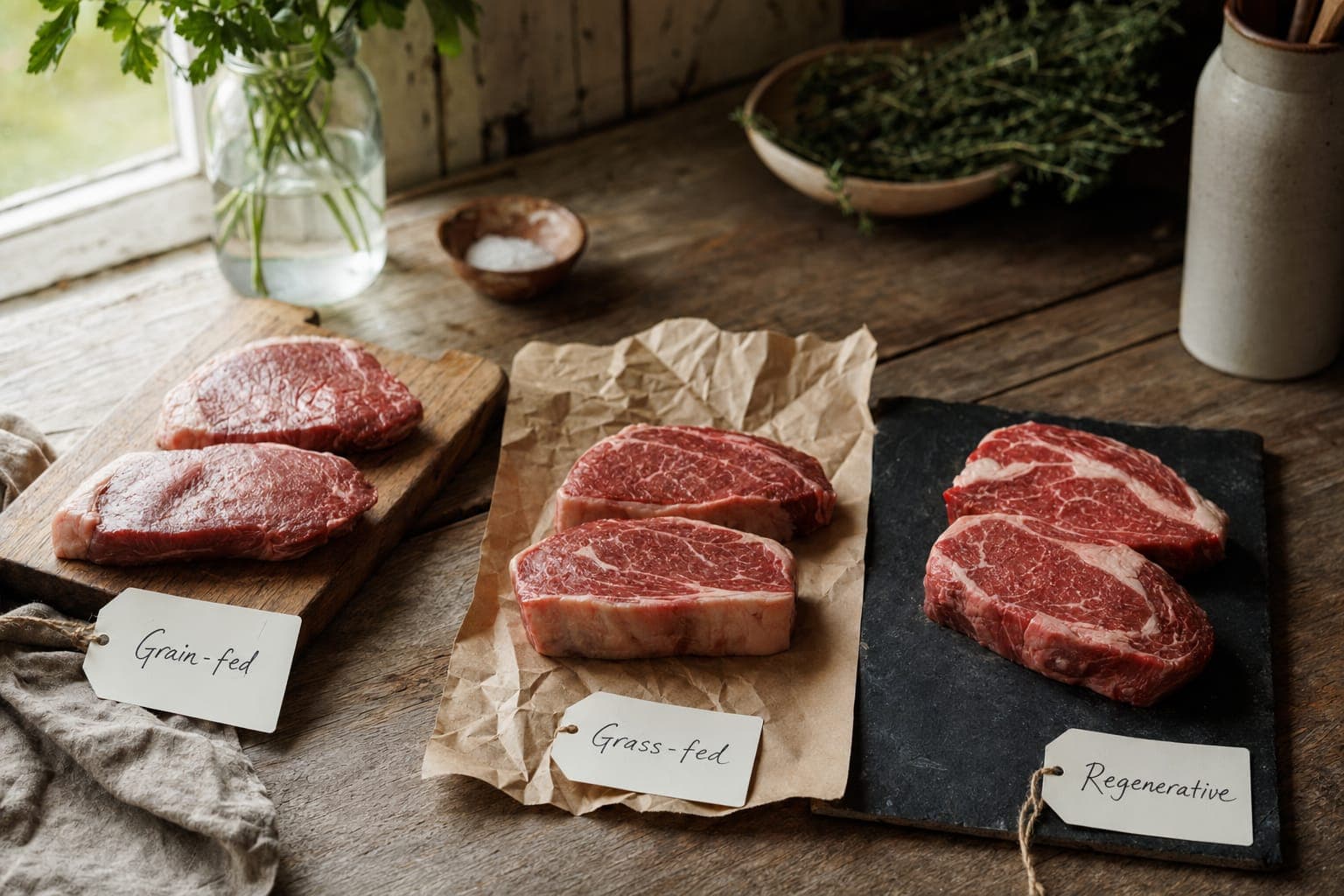
The Truth About Beef: Grain-Fed vs Grass-Fed vs Regenerative
Compare grass-fed vs grain-fed and regenerative beef on nutrition, welfare and environment. See how CLA, omega ratios and vitamins shift with how cattle live.
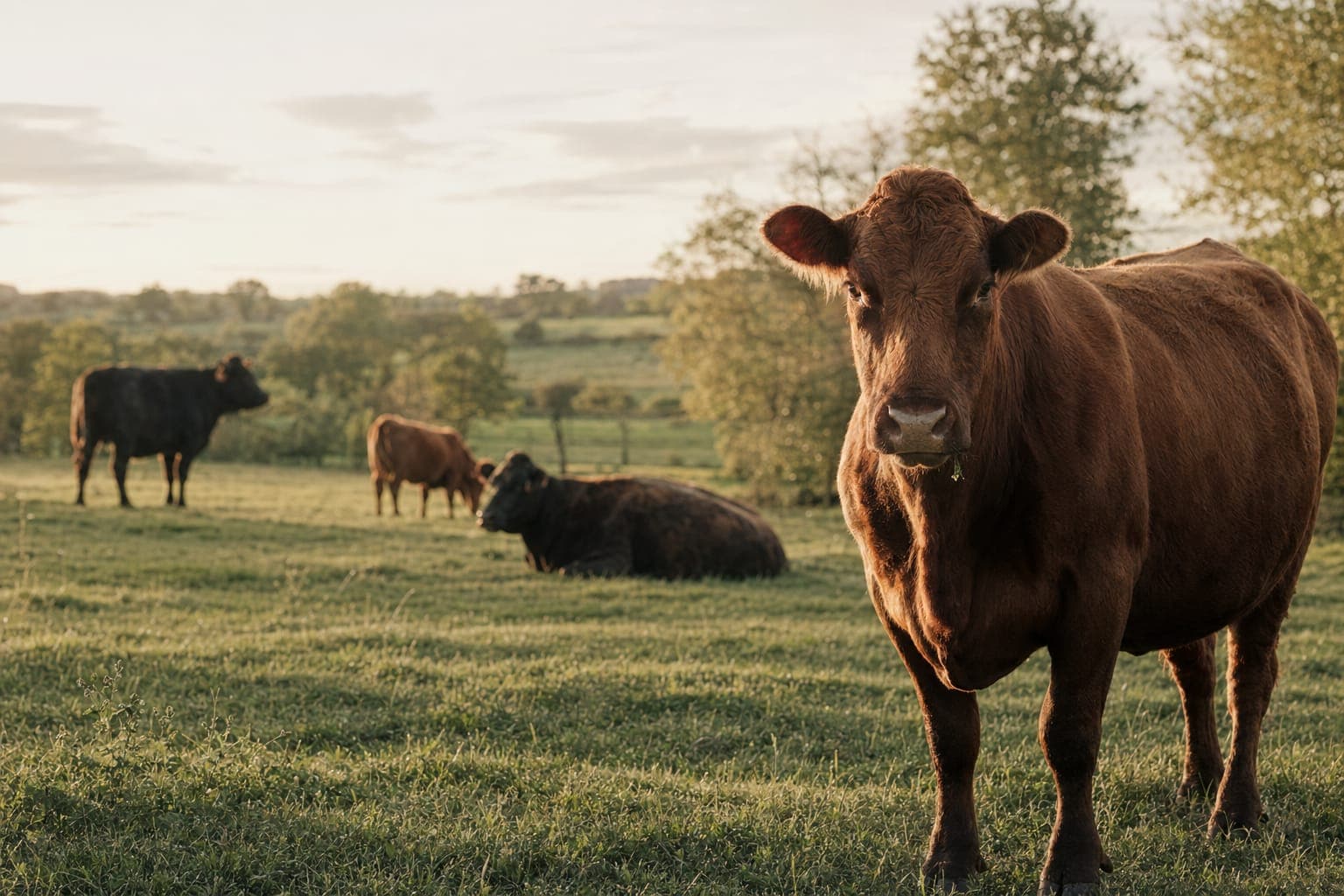
Farming
Grass-Fed vs Grass-Finished: Why the Distinction Matters
Grass-fed vs grass-finished beef is not the same. Learn what each term means, why most grass-fed cattle are grain-finished, and how it affects nutrients.
Real food, made effortless
Shop the blendA few ways to use it
All recipes
Organised Chia Pudding with Raw Honey and Berries
A no-cook chia seed pudding made with raw milk, collagen, berries, and raw honey. Prep it the night before and eat for breakfast.

How to Make Bone Marrow Butter
Roast grass-fed marrow bones, scoop the marrow, and mix with butter and herbs. A nutrient-dense spread with fat-soluble vitamins.

Bone Broth from Scratch: A Step-by-Step Guide
Step-by-step guide to making bone broth at home. Stovetop, slow cooker, and Instant Pot methods. Rich in collagen and gut-healing minerals.


 Join over 100,000+ members
Build a better food system with us
The Organised community is thousands of people choosing real food and backing the farmers who grow it, all of us trying to leave the world a little better than we found it. If that is what you care about too, you belong here.