Our Blend Changelog: Why We Publish Every Formula Update
In August 2024, we changed the source of zinc in our Multi formula. Not drastically. From zinc picolinate to zinc bisglycinate. Same amount, better absorption. But we didn't just slip it in. We published why, when, and exactly what changed.
By Niall Kiddle, Founder, Organised

Reviewed by Pedro Rodrigues, Agronomist (farming and sourcing only) ·
4 min read · Published · Updated · 1 cited source
Makers of the Organised Daily blend, a grass-fed beef organ supplement from regenerative UK farms

No other supplement brand does this. Not one. This isn't a regulatory requirement. It's not marketing genius. It's simply what transparency actually looks like when you stop treating your customers like they won't notice.

What a changelog actually is
A changelog is a record of every modification made to a product, with the date, the specific change, and the reasoning. In software, changelogs are standard. Developers publish them because users need to know what broke, what improved, and what might affect their workflow.
We apply the same logic to supplements. If you've been using a product for a year and we change an ingredient, you deserve to know. Not to apologise. Not to hide it in fine print. To state clearly what was different before, what it is now, and why we made the shift.
A changelog isn't a marketing document. It's not selling you anything. It's saying "Here is what we did. Here is why. You can decide if this still matches what you want." That's radical in supplement marketing. Most brands assume you won't notice. Most assume you won't care. And most would be horrified if you asked them why their formula changed between 2023 and 2024.
Real transparency isn't optional extras and marketing stories. It's the unglamorous work of admitting when something changed and why.
Why no one else does this
The supplement industry doesn't publish changelogs because formula stability is treated as a feature, not a reality. Brands want you to believe their formula is perfect and unchanging. In practice, ingredient costs fluctuate, suppliers shift, sourcing becomes unavailable, and margins get squeezed.
Every supplement company changes formulas. All of them. They do it secretly, hoping customers won't notice. If you're buying the same product in 2024 that you bought in 2022, the ingredient profile has almost certainly shifted. The brand just didn't tell you because there's no regulation requiring it.
By not publishing changes, brands protect their ability to make cost-cutting substitutions without losing customers. If they admitted the zinc source changed, you might ask why. If you ask why, they have to choose between honesty ("we're trying a different source that we think is better") or admitting a cost-saving decision ("we switched to cheaper zinc").
A changelog forces accountability. It means you can't slip in an inferior ingredient without your customer base knowing. It means you have to be willing to stand behind every change and explain it. Most brands would rather operate in opacity.

What changes, and what doesn't
Our Multi formula has undergone six documented changes since launch. The core philosophy hasn't changed. Every modification was made because we learned something new about absorption, bioavailability, or sourcing, or because a supplier discontinued a particular ingredient.
Some changes are invisible to you. When we switched from zinc picolinate to zinc bisglycinate, the dose stayed the same. The form improved. Your body absorbs it more effectively. This is a pure upgrade. The label doesn't scream about it, but the changelog records it.
Other changes matter more. In 2023, we extended the harvest window for our organ blend. This meant adjusting the proportions slightly because fresher organs carry slightly higher moisture content. The freeze-dried quantity changed marginally. The changelog documented it because consistency matters.
We won't change the fundamental nutrients. We won't pretend something is included when it isn't. We won't reduce quantities to chase margin. What we will do is optimise sources, adjust ratios slightly if sourcing demands it, and document every single alteration so you have complete visibility.
A product that never changes either isn't responding to new information or is lying about what's inside it.
Get farming and sourcing guides, free
Two short reads a week on regenerative farming and where real food comes from.
By signing up you agree to receive emails from us. No spam, unsubscribe anytime.
Staying in control of your choices
If you take our Multi and then notice a change in your digestion or energy, the changelog lets you investigate. You can see exactly what shifted and make an informed decision. Does the new zinc source work better for you? Worse? You now have information to decide.
This also protects you from silent reformulations by competitors. If you've switched brands and the new product isn't working the same way, you can at least compare what was in each. Most brands won't give you that information. They'll assume you're imagining the difference.
The changelog is your evidence. We've published it because we trust you to understand that improvement is iterative. Transparency isn't about claiming perfection. It's about admitting that we're always learning and inviting you to stay informed as we do.

1 of 9
Daily blend
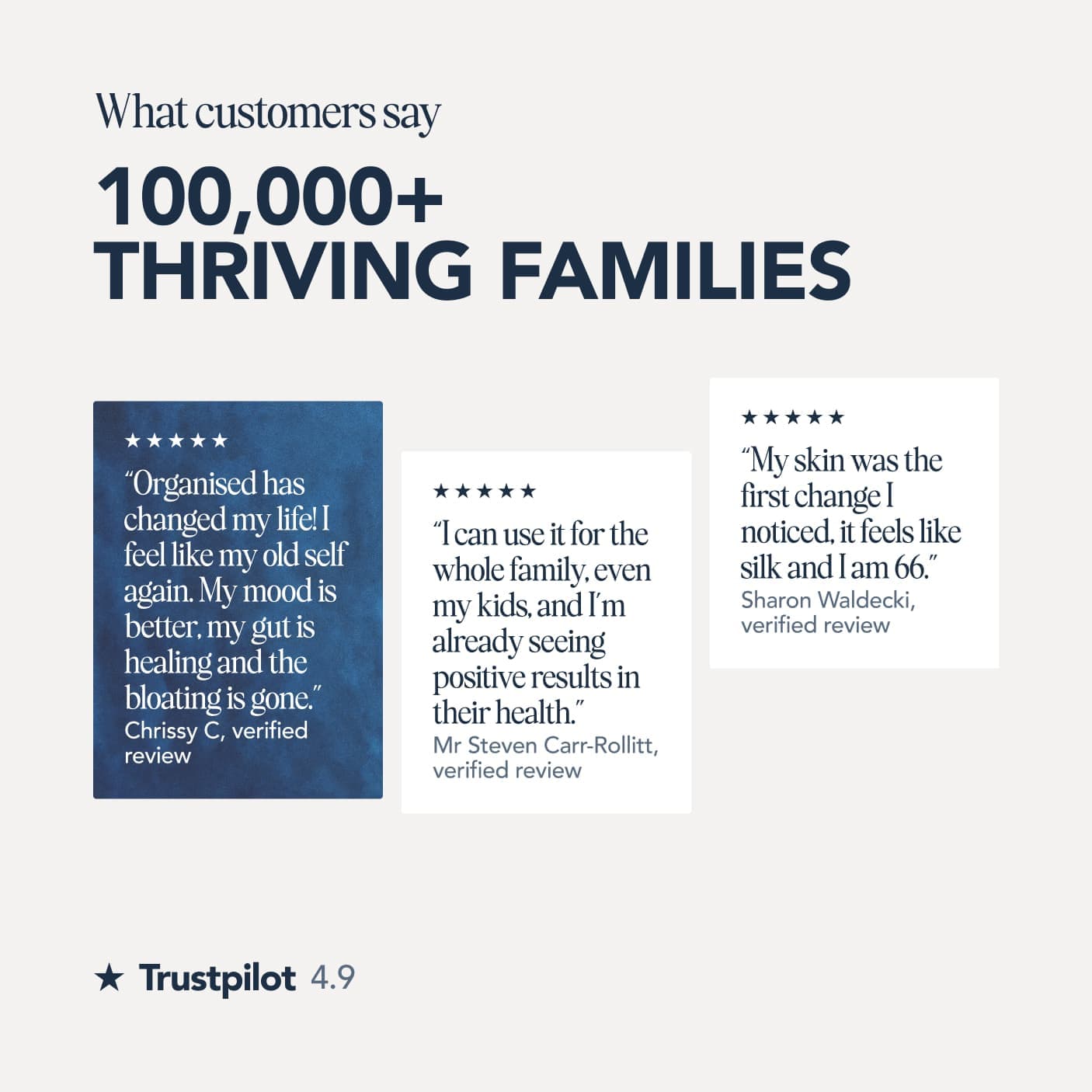
100,000+ thriving families4.9 on Trustpilot
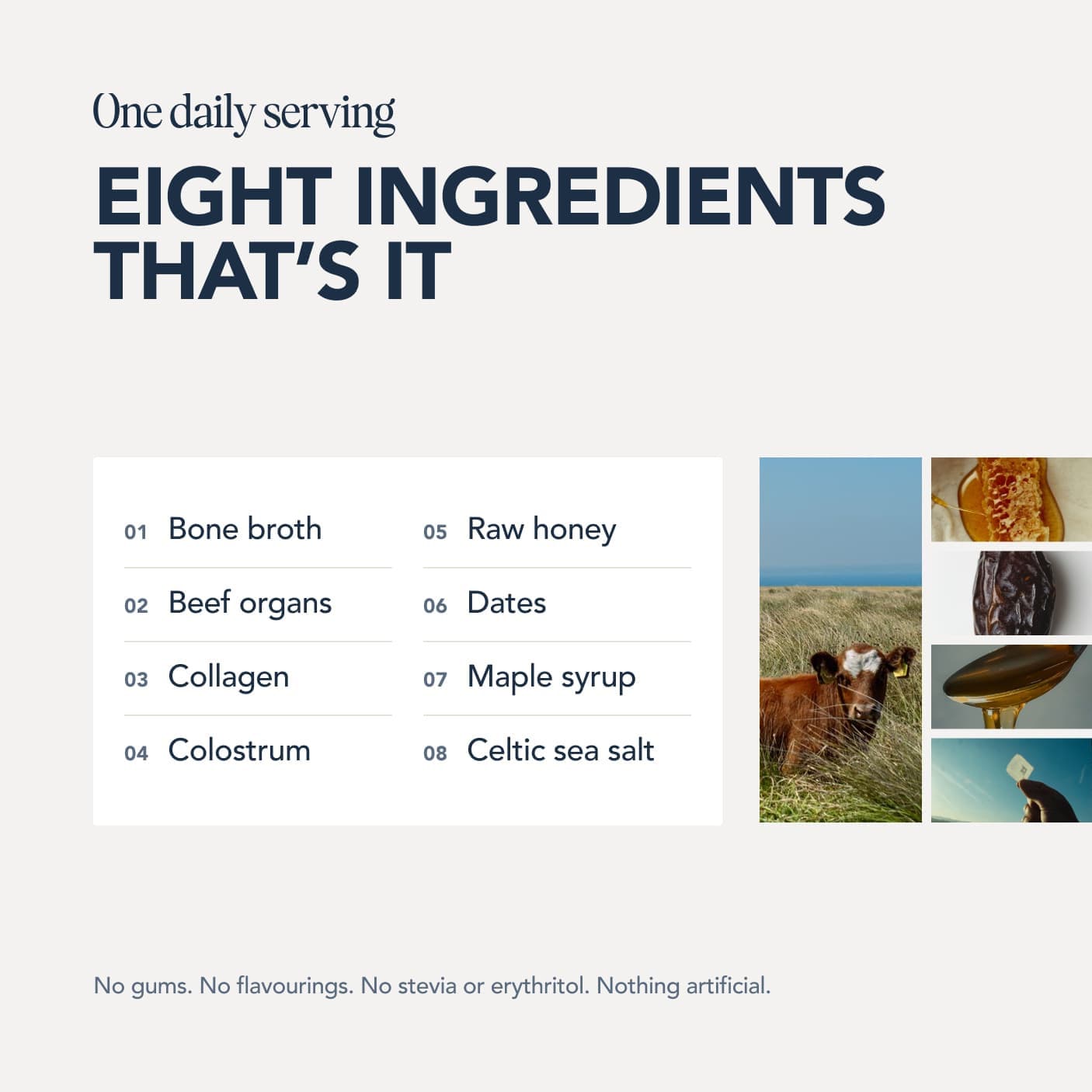
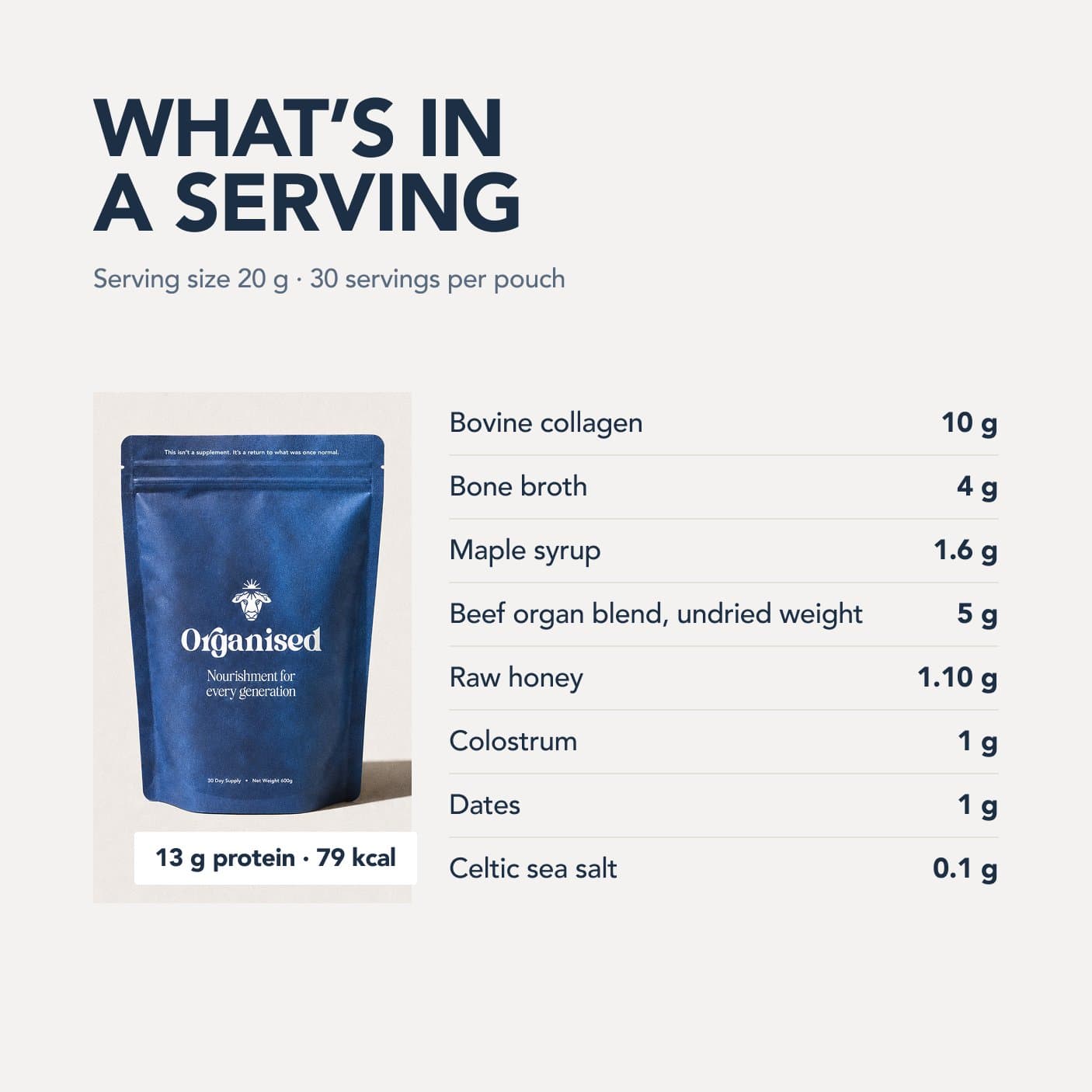
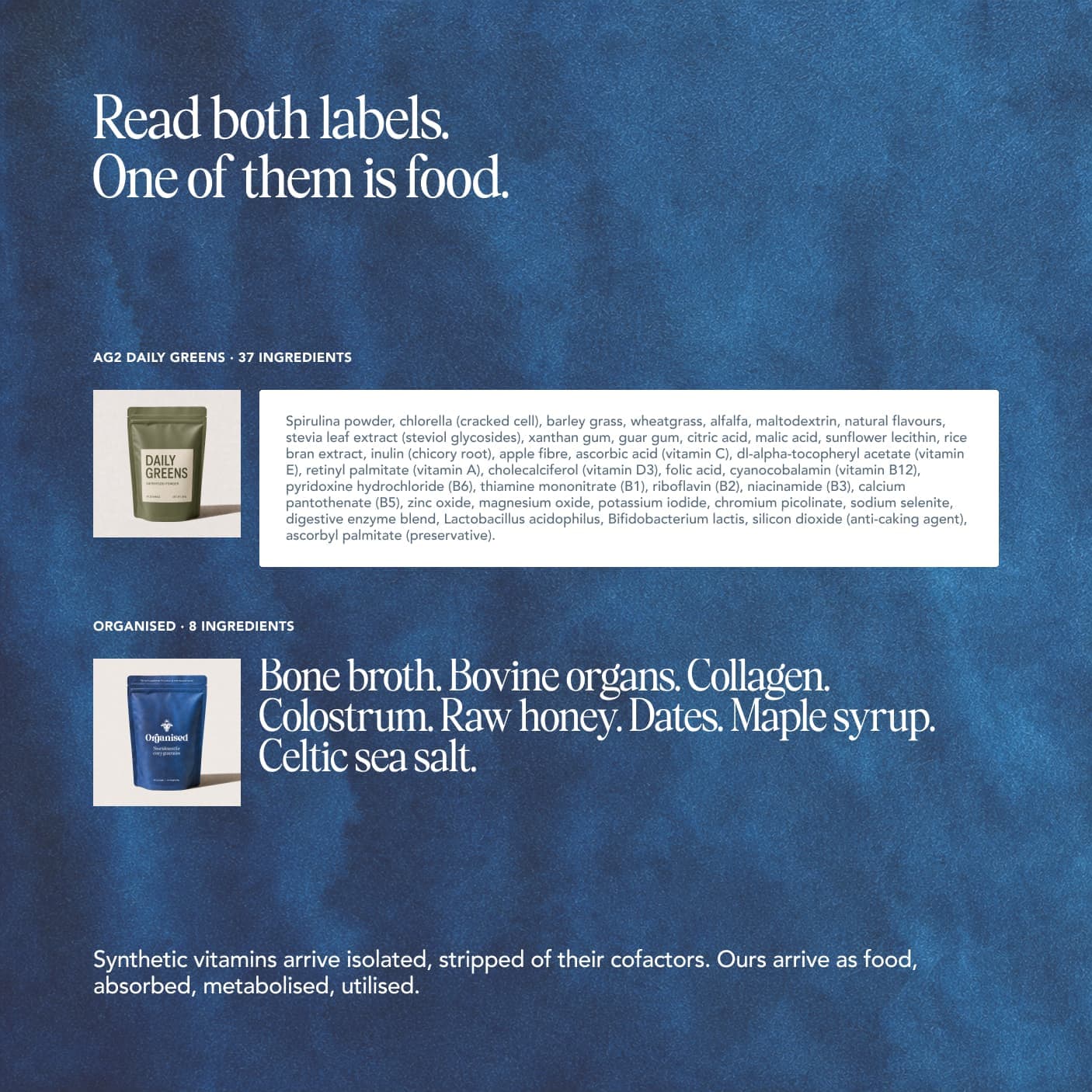
Eight real ingredients built around grass-fed beef organs, collagen and colostrum. Nothing synthetic added.
Free with your first order, worth £38. Plus £10 off the pouch with a subscription.
Free UK shipping · Made in England · 100 day money back guarantee on your first pouch · Skip, pause or cancel anytime
The practice of real accountability
Publishing a changelog takes time that serves no business purpose. No customer has ever chosen a product because it maintains transparent version history. It costs nothing for us to omit this information, and almost no one would ever realise.
We do it because accountability is a practice, not a marketing claim. You can't say you're transparent and then refuse to show what's changed. You can't claim to care about informed choice and simultaneously hide ingredient modifications. The two things are incompatible.
The changelog is boring, granular, and occasionally embarrassing when we have to admit we sourced something differently because of cost. But it's how trust actually works. You don't trust because of promises. You trust because of information.
The bottom line
Every supplement company changes formulas. We simply chose to make ours visible. Not because it's good marketing. Because you deserve to know what's in the bottle you're paying for, and what shifted between the formula you started and the one you're taking now. That's the real difference between transparency as a slogan and transparency as a practice.
References
Every source below was checked on 27 August 2026. Each PubMed, PMC and DOI identifier was resolved against NCBI or Crossref, and what it opens is printed under the citation, so you can see the link goes where the citation says without leaving the page. Where a citation and its identifier disagreed, the citation was corrected to the record or the reference was deleted along with the sentence marker that pointed at it, and where the resolved paper turned out not to support the sentence, the sentence was cut back to what it does support. Borrowed authority is worse than none, because it looks like rigour.
- Gandia P et al. A bioavailability study comparing two oral formulations containing zinc (zinc bisglycinate vs zinc gluconate). International Journal for Vitamin and Nutrition Research, 2007. PMID 18271278.Checked 27 August 2026: PMID 18271278 opens Gandia P, Bour D, Maurette JM et al, A bioavailability study comparing two oral formulations containing zinc (Zn bis-glycinate vs. Zn gluconate) after a single administration to twelve healthy female volunteers. Int J Vitam Nutr Res 2007;77(4):243-8. PubMed indexes it as: Comparative Study, Randomized Controlled Trial.
Who wrote and reviewed this guide
Niall Kiddle
Author · Founder, Organised
Niall is the founder of Organised. He started the company in 2024 after fixing his own health the slow way: in 2022 he swapped a cupboard of synthetic supplements for real food, raw milk, organ meats, bone broth and honey, and felt the difference within months.
Areas of expertise: Ancestral nutrition, Organ meats, Whole-food supplementation, Gut health, Regenerative sourcing
Read Niall's full profile
Pedro Rodrigues
Reviewer · Agronomist (farming and sourcing only)
Pedro is the agronomist Organised works with on farming and sourcing. His job on the guides is to keep the science honest: he reviews what we publish about soil health, regenerative agriculture, grazing and the way food is actually produced.
Areas of expertise: Regenerative agriculture, Agronomy, Soil health, Grass-fed farming, Food sourcing
Reviewed this guide on
Read Pedro's full profileMore on transparency
View all- Heavy Metals in Supplements: What You Need to Know
- How to Read a Supplement Label (And Spot the Red Flags)
- How We Test Every Batch: Our Quality Assurance Process
- Supplement Industry Secrets: What Most Brands Don't Tell You
- The Organised Code: Our Non-Negotiable Standards
- Why We Don't Use Proprietary Blends
Browse the guides library
All guidesKeep reading

Farming
Why We Don't Use Proprietary Blends
Proprietary blends hide how much of each ingredient you get. See why we publish exact amounts and why this transparency matters for what you take.
Farming
What 'Pasture-Raised' Really Means for Animal Welfare
Wondering what pasture-raised really means? Learn what the label actually guarantees for animal welfare in the UK and US, and how to spot meaningful claims.

Farming
How Organised Is Made: From Farm to Pouch
See how Organised is made, from farm to pouch. We walk through sourcing, freezing, testing, and freeze-drying so you know exactly what you are eating.
Real food, made effortless
Shop the blendA few ways to use it
All recipes
The Perfect Organised Morning Shake: Our Favourite Recipe
Our signature morning shake: Organised, raw milk, banana, honey. Simple, nourishing, and optimised for an empty stomach.
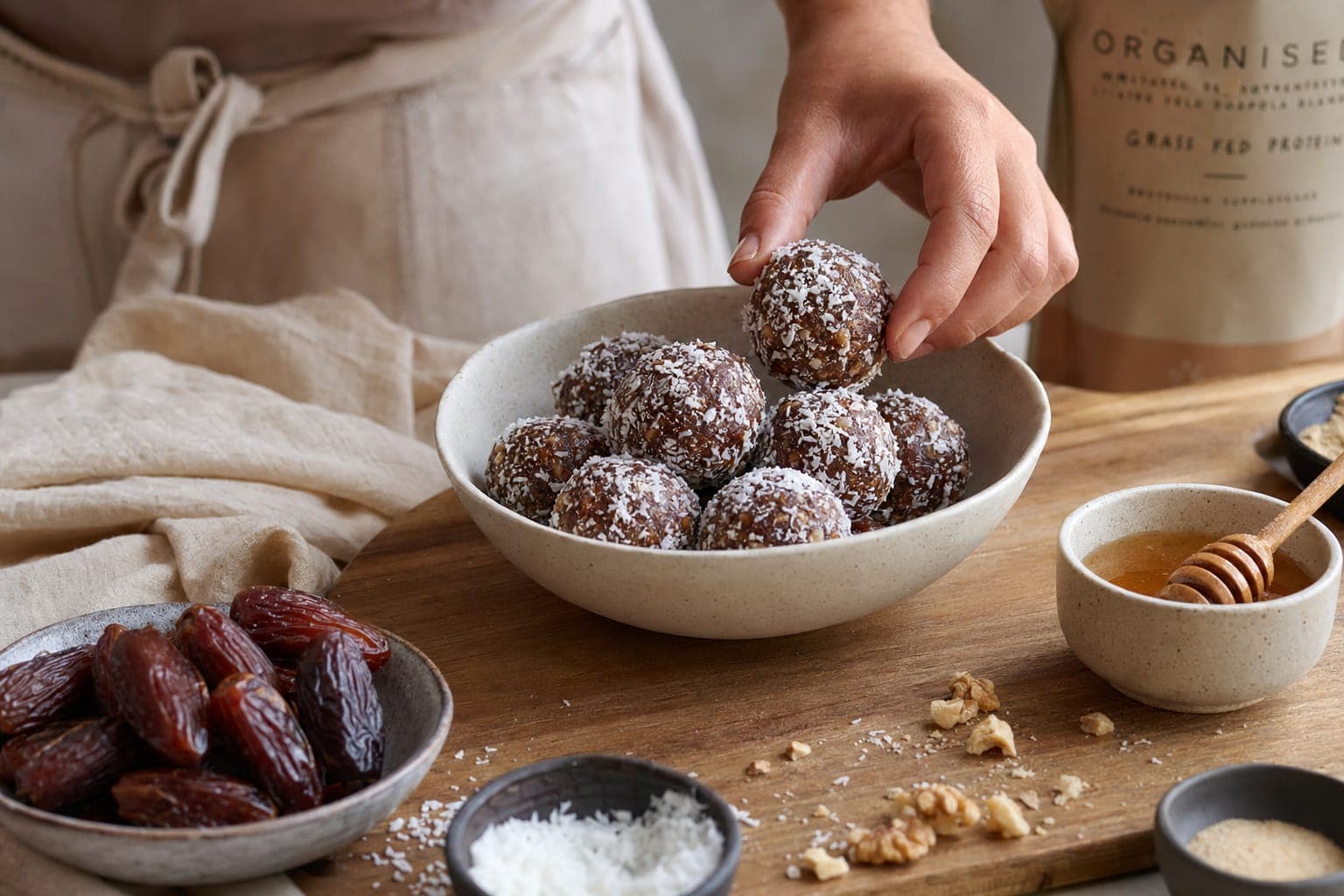
Energy Balls with Organised, Dates and Raw Honey
Make no-bake energy balls with Organised, dates, and raw honey. Perfect lunch box, pre-workout, or on-the-go snack. Simple recipe.
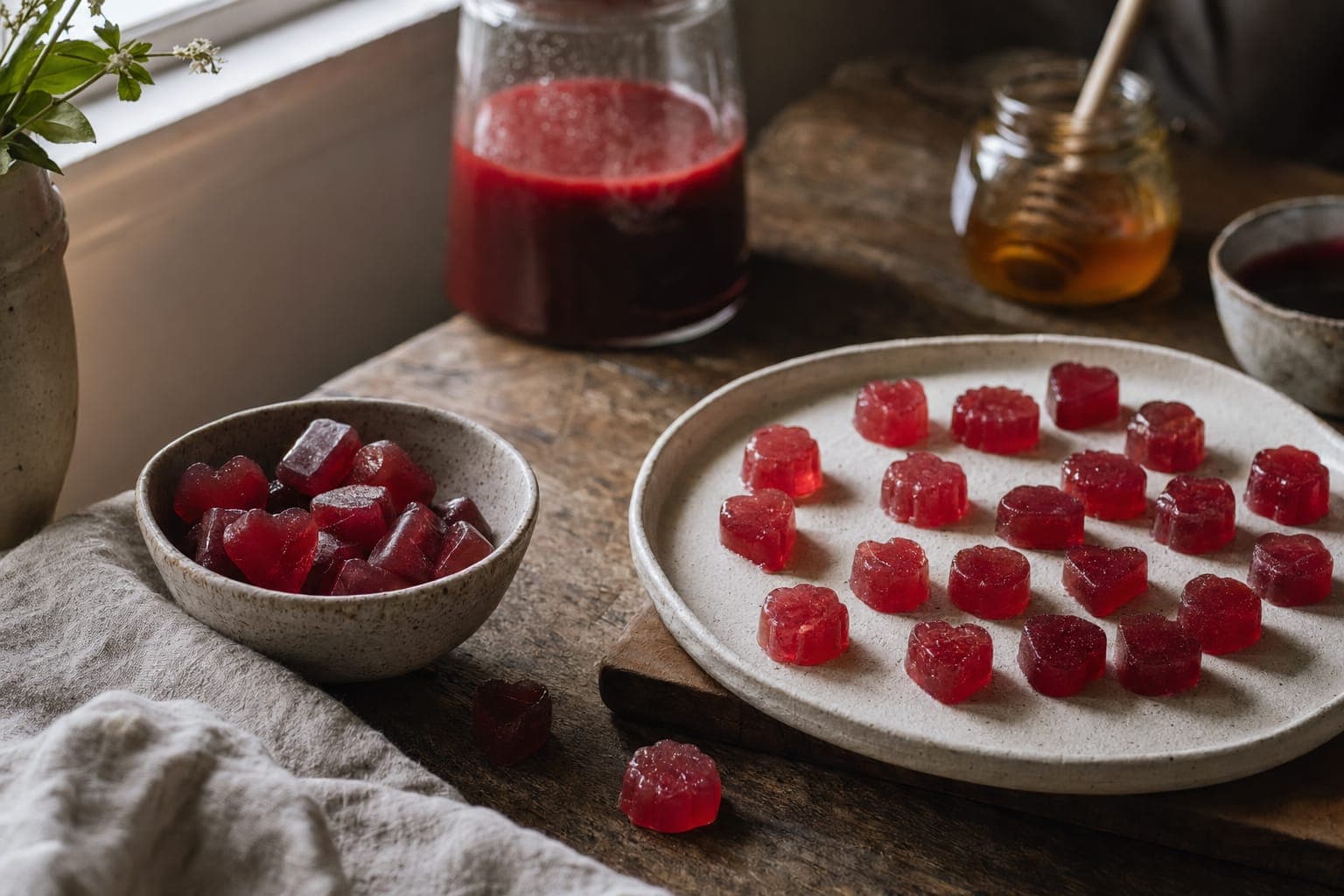
How to Make Your Own Gelatine Gummies
A simple recipe for homemade gelatine gummies using grass-fed gelatine, fresh juice, and raw honey. Better than shop-bought, kids love them.


 Join over 100,000+ members
Build a better food system with us
The Organised community is thousands of people choosing real food and backing the farmers who grow it, all of us trying to leave the world a little better than we found it. If that is what you care about too, you belong here.