What 'Pasture-Raised' Really Means for Animal Welfare
The package says pasture-raised. You imagine cows on rolling hills, grazing freely. Sometimes that's exactly what it means. Sometimes it means something so vague that any farmer with a small outdoor pen can claim it.
By Niall Kiddle, Founder, Organised

Reviewed by Pedro Rodrigues, Agronomist (farming and sourcing only) ·
5 min read · Published · Updated · 4 cited sources
Makers of the Organised Daily blend, a grass-fed beef organ supplement from regenerative UK farms
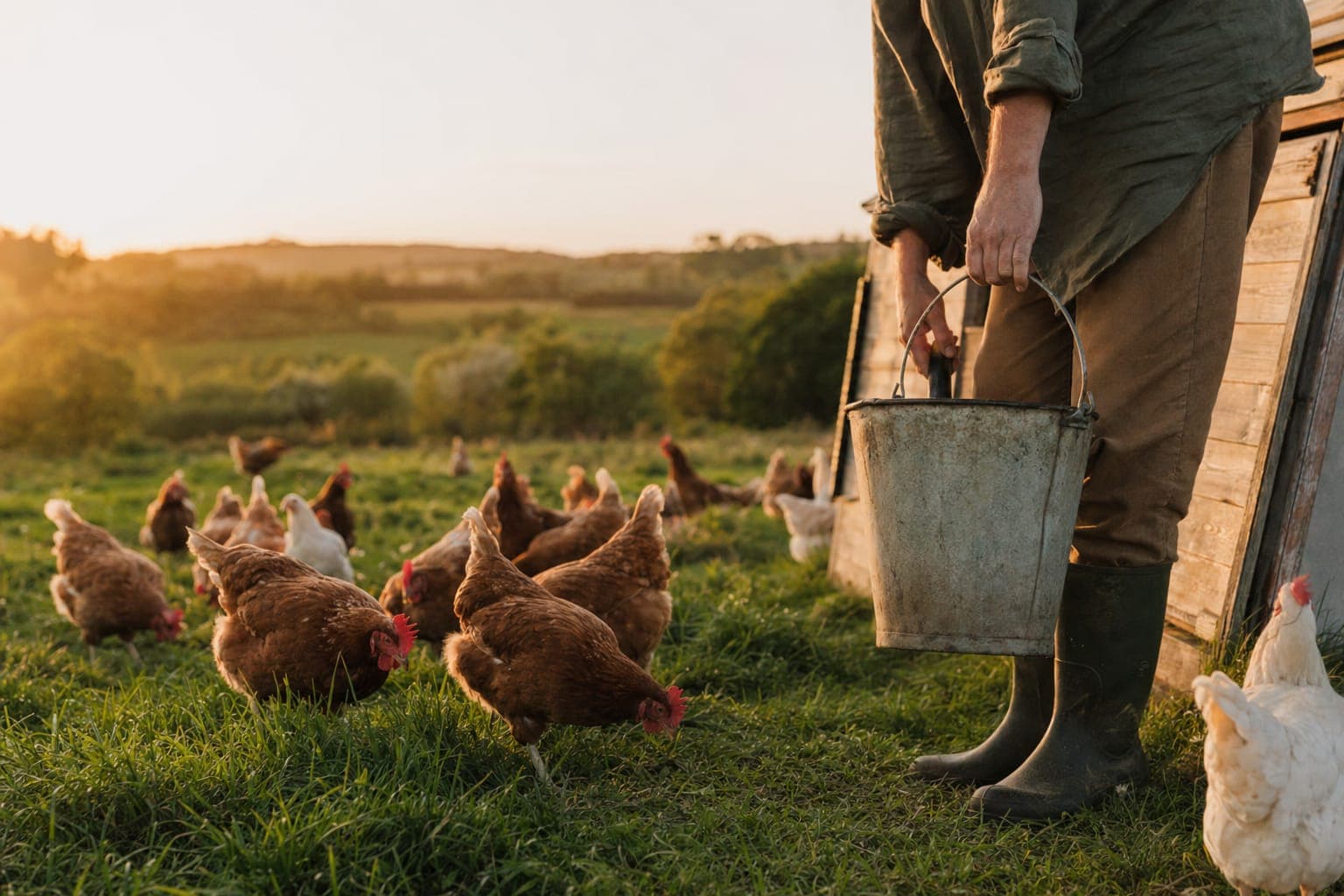
Pasture-raised is not a protected term. It's not legally defined in most places. You cannot trust it the way you trust organic certification. You cannot look it up and know for certain that an animal spent its life on pasture. The term itself is honest, but the way it's used is not.
The label that means almost nothing
In the United States, there is no federal definition of pasture-raised. The USDA doesn't regulate it.1 Technically, a cow that spends 30 days on pasture in its life could be labelled pasture-raised. A chicken with access to a 4x4 metre concrete pad can be marked pasture-raised. The term is so loose that it communicates almost nothing about the animal's actual living conditions.
This is different from organic certification, which requires third-party audit and compliance with specific standards. You can disagree with those standards, but they're measurable. Pasture-raised, by contrast, is whatever a brand wants it to mean.
The worst part is that pasture-raising as a practice is genuinely better for animal welfare and nutrient density. Real pasture-raised animals live better lives and produce more nutritious meat. The problem is that the word has been hollowed out by brands using it to mean "this animal saw sunlight once."
A term that means everything means nothing. If pasture-raised could refer to anything, it tells you nothing about what you're buying.
What regulations actually say
The UK has slightly more structure, though still not perfect. The Red Tractor scheme, which covers most conventional UK farming, has standards for stocking density and outdoor access.2 Cows must have access to outdoor grazing for a defined portion of the year. It's more prescriptive than the US label.
But those standards are the minimum. And they're the minimum for a reason. A farmer can satisfy Red Tractor requirements and still be running a system that would horrify most people who buy pasture-raised meat.
The Food Standards Agency (FSA) doesn't specifically define pasture-raised, either. What they define are things like outdoor access, stocking density, and feed types for organic certification. But pasture-raised without the organic label is unregulated.
In Europe, the standards are marginally better. Some countries legally define grass-fed and pasture-raised with specific requirements about grazing time, supplementary feed limits, and pasture quality. But even those standards vary widely by country.
The difference between pasture-raised and grass-fed
This is where most people get confused. Pasture-raised means the animal had access to pasture. Grass-fed means the animal ate predominantly grass, not grain. These are not the same thing.
A pasture-raised cow could have been on pasture but also fed supplementary grain during certain seasons. A grass-fed cow ate grass but might have lived in a feedlot with a small dirt pasture. The labels describe different things.
From a welfare perspective, pasture-raised matters because the animal has space to move, express natural behaviour, and experience varying forage. Grass-fed matters because the diet matches what the ruminant's digestive system evolved to process, reducing digestive stress and inflammation.3
The ideal is both. Grass-fed and pasture-raised simultaneously. The animal lives on pasture year-round or for the vast majority of the year, and it eats grass, not grain supplements. But many animals are one or the other, not both.
Pasture-raised answers 'where did the animal live'. Grass-fed answers 'what did the animal eat'. You need both questions answered to understand what you're buying.
UK standards vs American labels
If you're buying in the UK, look for meat carrying the Red Tractor logo combined with specific mention of grazing period. Red Tractor requires defined outdoor access, but knowing the grazing window matters. Summer grazing only is different from year-round grazing.
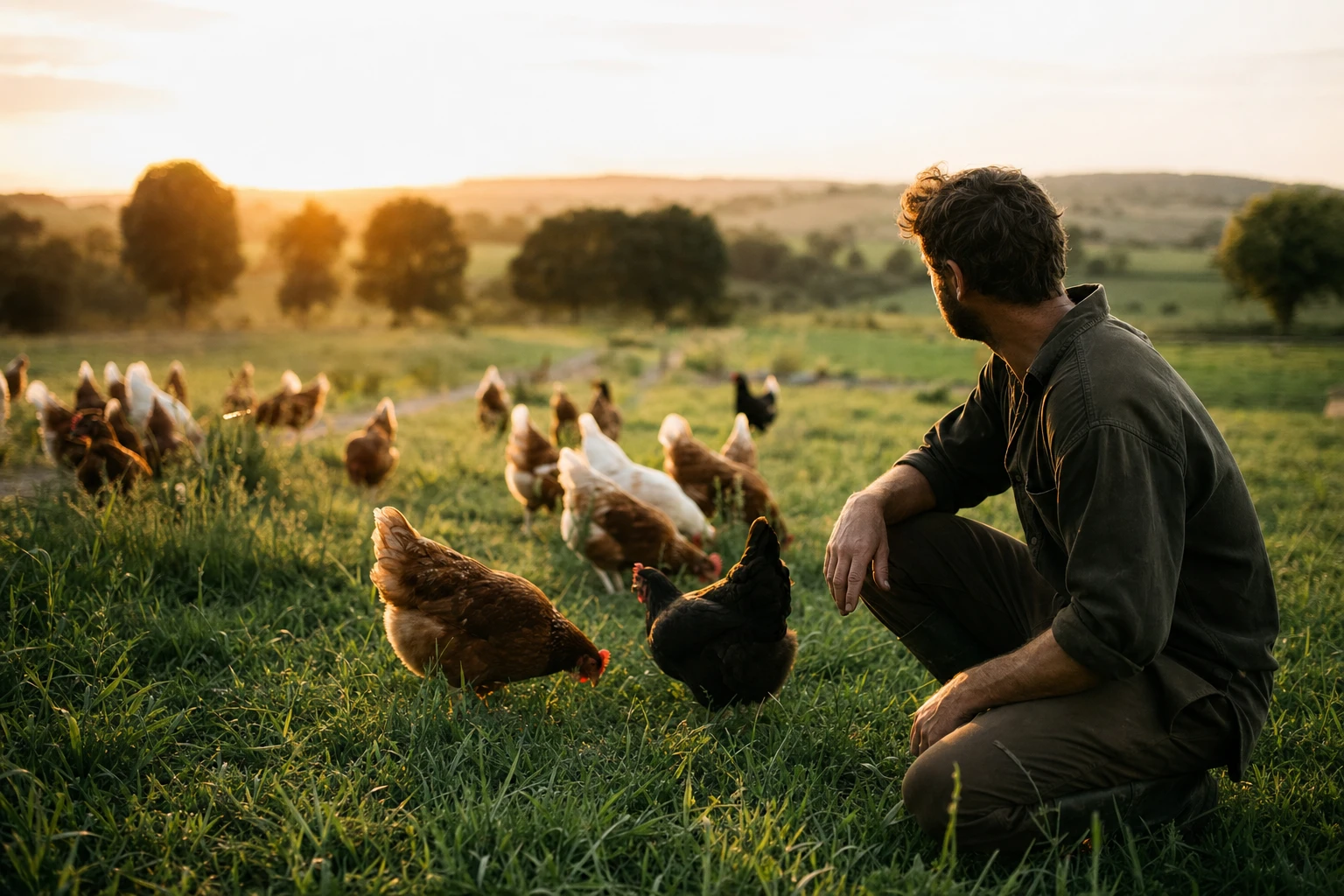
Better still, look for meat from farms that publish their specific practices. Farmers doing genuine pasture-raising usually talk about it specifically because they've incurred the cost of doing it properly. They want credit for the practice.
In the United States, the standards vary by state and by retailer. Whole Foods has a pasture-raised requirement for their store brand that's stricter than most. Some brands like White Oak Pastures and Regenerative Organic Certification go beyond regulatory minimums. But without specific certification, the label means very little.
The American Grassfed Association has stricter standards than USDA and requires third-party audit.4 If you see their logo, you know the animal ate grass. But not all grass-fed meat carries that label.
Get farming and sourcing guides, free
Two short reads a week on regenerative farming and where real food comes from.
By signing up you agree to receive emails from us. No spam, unsubscribe anytime.
How to know what you're actually buying
Stop relying on labels. Ask the farmer directly. If you're buying at a farmers market or farm shop, you can ask how long the animal grazed, what it ate, how it was rotated, what land it lived on. A farmer doing it properly can describe this in detail. A farmer doing it improperly will dodge the question or give vague answers.
If you're buying in a supermarket, the label is usually not giving you the information you need. But the provenance might be listed. Look for specific farms rather than generic country labels. UK beef is traceable to farms. You can ask the butcher which specific farm supplied the meat.
Some genuinely helpful certifications: Organic certification requires pasture access. Regenerative Organic requires specific rotational grazing practices. The Animal Welfare Approved scheme has third-party auditing and genuinely strict standards. These mean something.
Ask specific questions. How many months per year does the animal graze on pasture? What does it eat during housing periods? How many animals per hectare? These questions sort the genuinely pasture-raised from the merely labelled.
Any farmer doing genuine pasture-raising wants to tell you about it. If they're vague, they're not doing it properly, and the label is doing the work that their practice should.
The quality of the outdoor access matters as much as the quantity. An outdoor run with bare earth and no shelter is technically outdoor access. An outdoor run with grass, shade structures, dust-bathing areas, and space to move is qualitatively different. One improves welfare. One barely changes it.
1 of 9
Daily blend
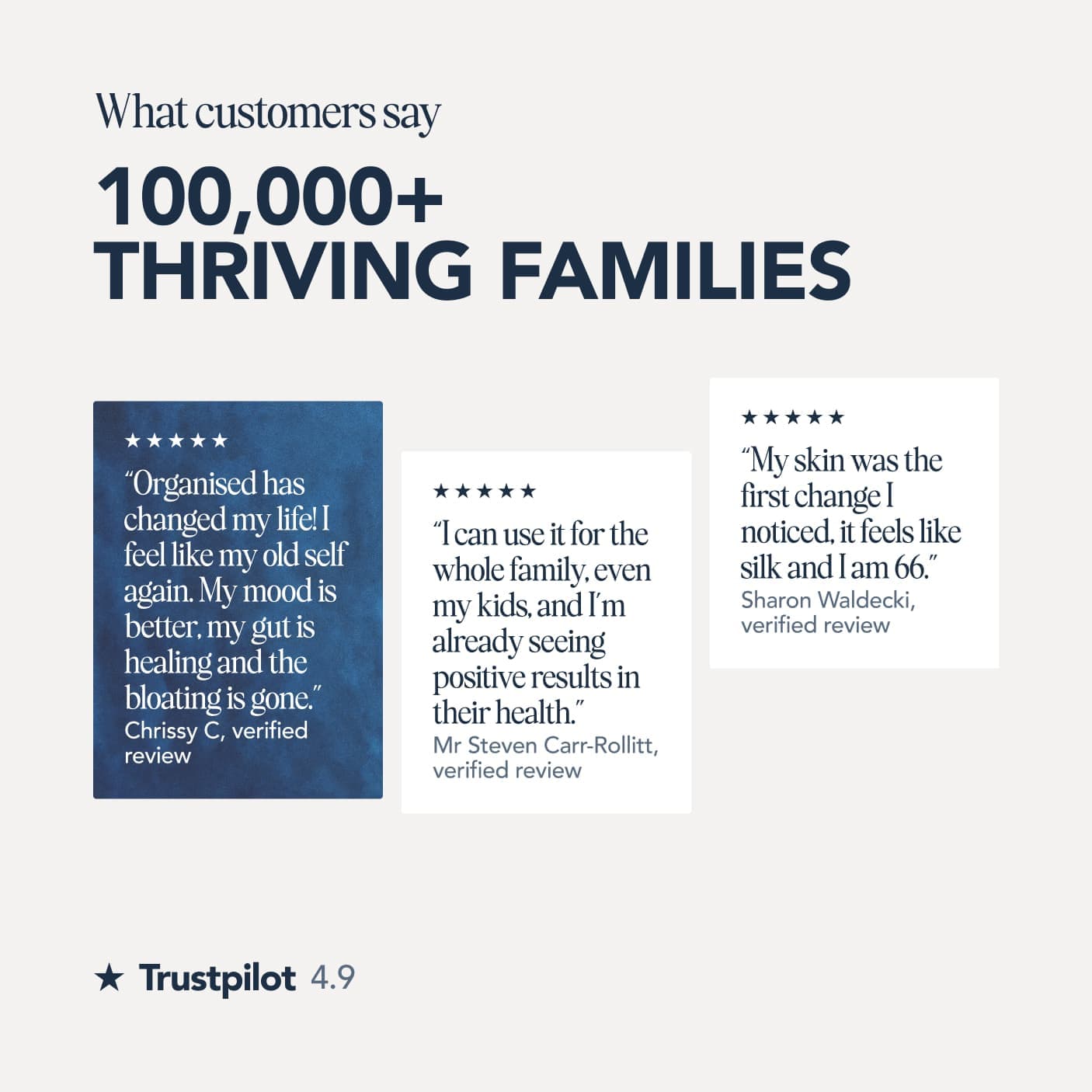
100,000+ thriving families4.9 on Trustpilot
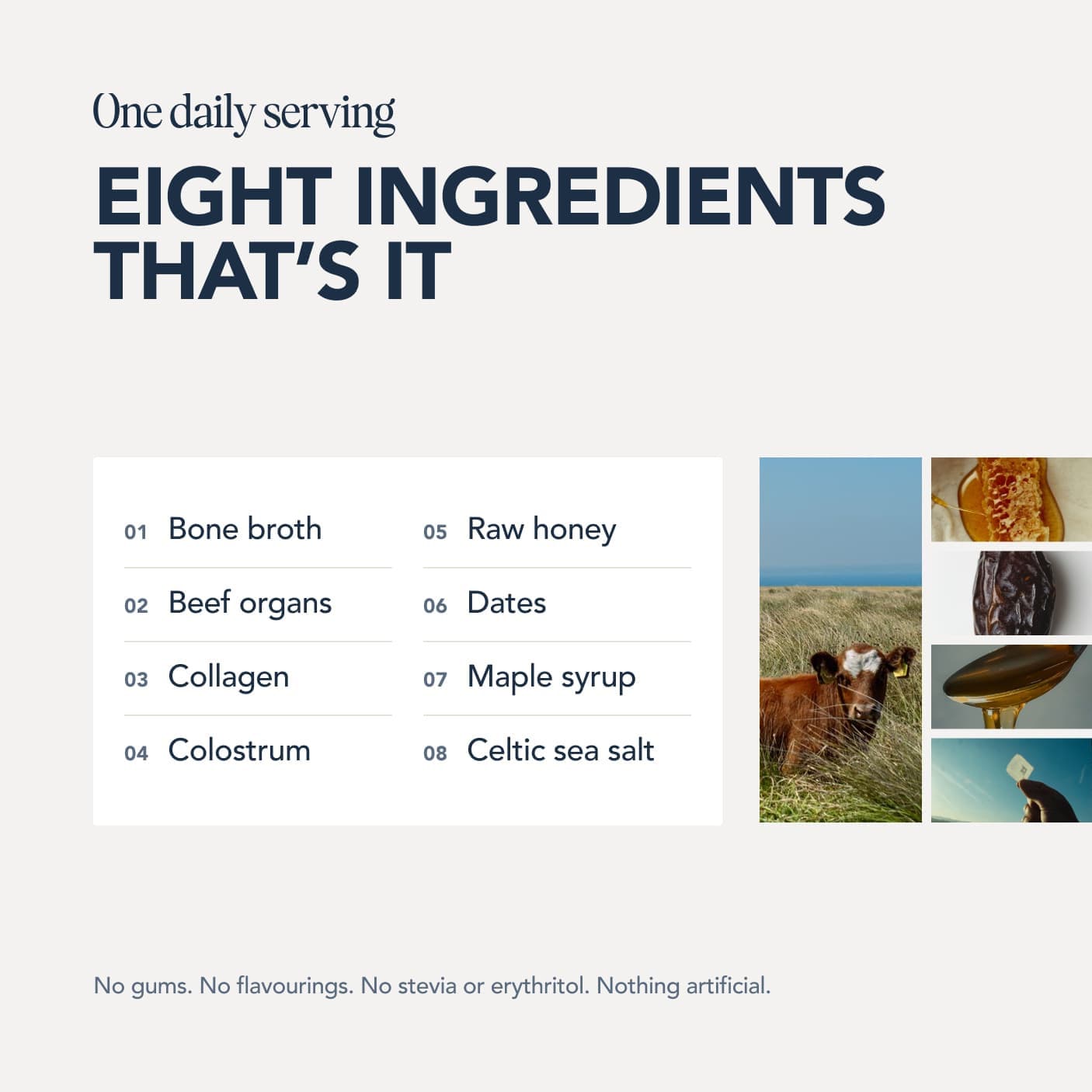
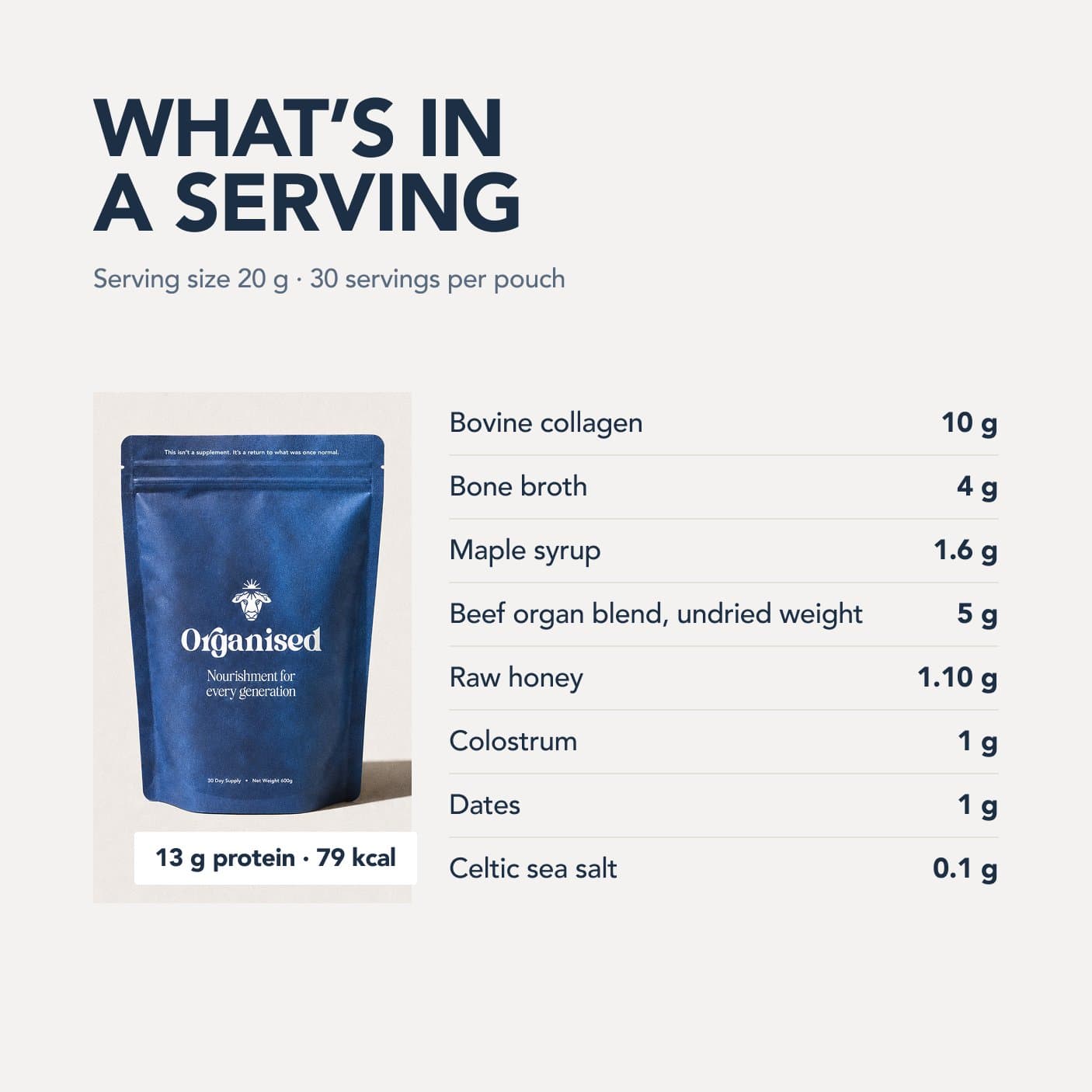
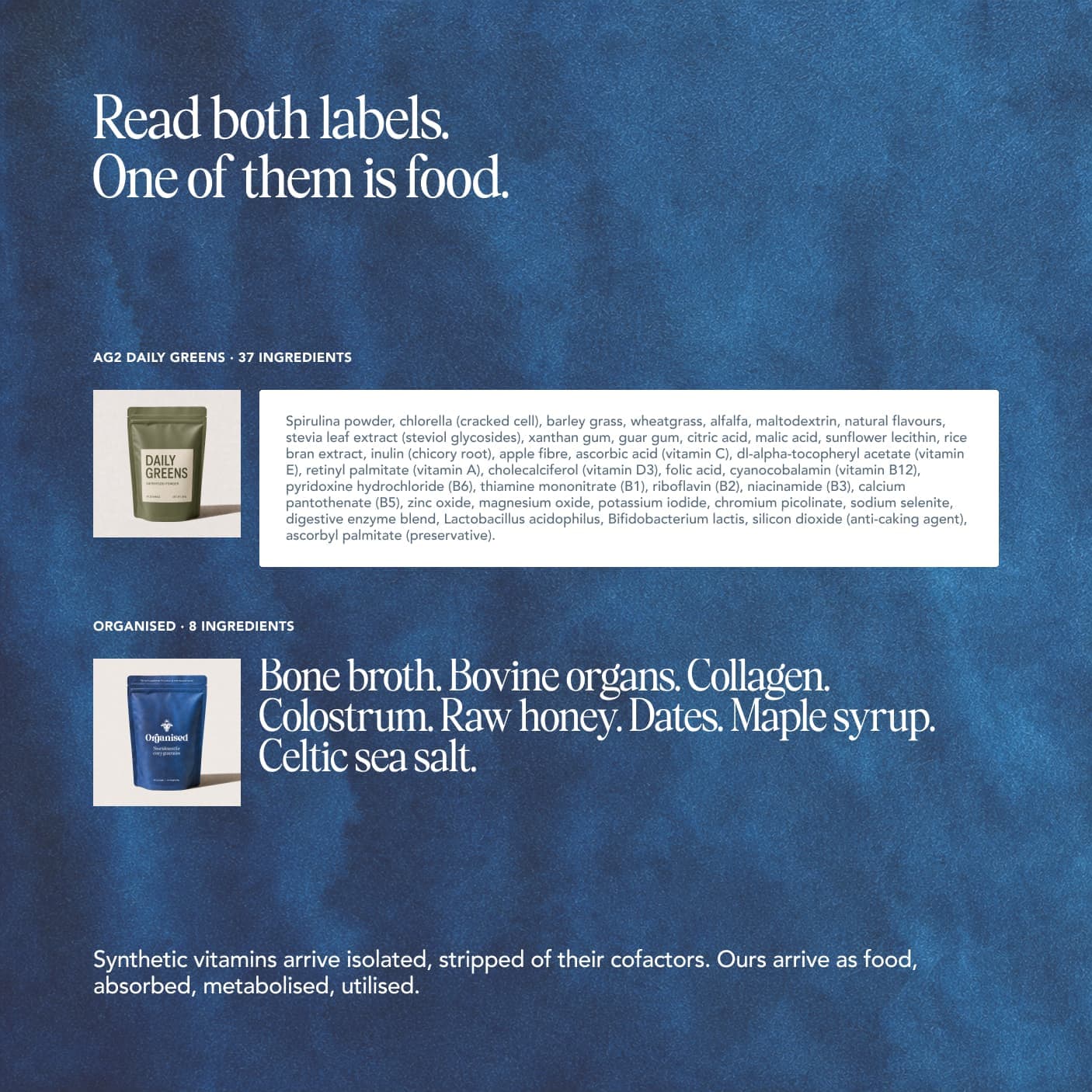
Eight real ingredients built around grass-fed beef organs, collagen and colostrum. Nothing synthetic added.
Free with your first order, worth £38. Plus £10 off the pouch with a subscription.

Free UK shipping · Made in England · 100 day money back guarantee on your first pouch · Skip, pause or cancel anytime
Beyond the label: farm size and stocking density
A pasture-raised label does not tell you the stocking density: how many animals per hectare. Higher density (more animals on the same space) means less grass per animal, more competition for resources, and higher stress. Lower density means more space per animal and better welfare.
A small farm with 50 cattle on 20 hectares has very different welfare outcomes than a large operation with 500 cattle on the same space. Both can claim pasture-raised. The animal experiences are completely different.
Stocking density is the hidden welfare metric. The label does not disclose it.
The bottom line
Pasture-raised matters for animal welfare, nutrient density, and meat quality. But the label matters less than the specifics. Spend time asking questions, reading provenance, and seeking out farmers who are transparent about their practices. The price will be higher. The quality will be worth it. And you'll have actually earned the right to use the word pasture-raised.
References
Every source below was checked on 27 August 2026. Each PubMed, PMC and DOI identifier was resolved against NCBI or Crossref, and what it opens is printed under the citation, so you can see the link goes where the citation says without leaving the page. Where a citation and its identifier disagreed, the citation was corrected to the record or the reference was deleted along with the sentence marker that pointed at it, and where the resolved paper turned out not to support the sentence, the sentence was cut back to what it does support. Borrowed authority is worse than none, because it looks like rigour.
- U.S. Department of Agriculture Food Safety and Inspection Service. Meat and Poultry Labeling Terms. USDA FSIS Labeling Terms.
- Red Tractor Assurance Standards. Red Tractor Standards.
- Daley CA et al. A review of fatty acid profiles and antioxidant content in grass-fed and grain-fed beef. Nutr J. PMC2846864.Checked 27 August 2026: PMC2846864 opens Daley CA, Abbott A, Doyle PS et al, A review of fatty acid profiles and antioxidant content in grass-fed and grain-fed beef. Nutr J 2010;9:10. PubMed indexes it as: Review.
- American Grassfed Association. Grassfed Ruminant Standards. AGA Standards.
Who wrote and reviewed this guide
Niall Kiddle
Author · Founder, Organised
Niall is the founder of Organised. He started the company in 2024 after fixing his own health the slow way: in 2022 he swapped a cupboard of synthetic supplements for real food, raw milk, organ meats, bone broth and honey, and felt the difference within months.
Areas of expertise: Ancestral nutrition, Organ meats, Whole-food supplementation, Gut health, Regenerative sourcing
Read Niall's full profile
Pedro Rodrigues
Reviewer · Agronomist (farming and sourcing only)
Pedro is the agronomist Organised works with on farming and sourcing. His job on the guides is to keep the science honest: he reviews what we publish about soil health, regenerative agriculture, grazing and the way food is actually produced.
Areas of expertise: Regenerative agriculture, Agronomy, Soil health, Grass-fed farming, Food sourcing
Reviewed this guide on
Read Pedro's full profileMore on animal welfare
View allBrowse the guides library
All guidesKeep reading
Farming
A Day on a Regenerative Farm
Step inside a regenerative farm and discover what actually happens daily. Meet the farmers and animals behind your food.
Farming
The State of British Beef Farming in 2026
UK beef farming is under pressure. Here are the real challenges facing British farmers and why whole-animal use matters.
Farming
Why Biodiversity on Farms Matters for Your Food
Diverse farms produce more nutrient-dense food. Learn how native grasses, fungi, and insects directly impact the nutritional value of what you eat.
Real food, made effortless
Shop the blendA few ways to use it
All recipes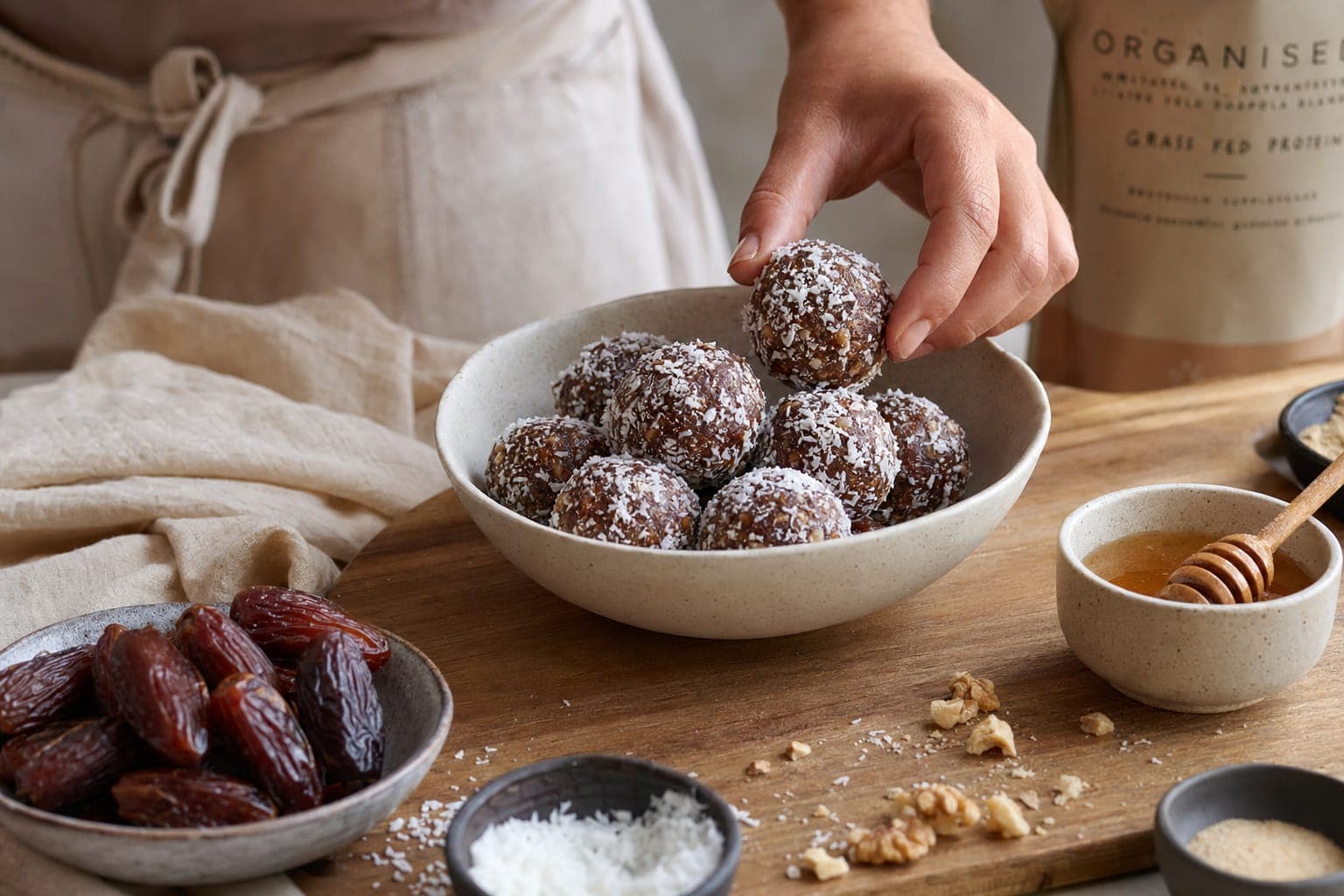
Energy Balls with Organised, Dates and Raw Honey
Make no-bake energy balls with Organised, dates, and raw honey. Perfect lunch box, pre-workout, or on-the-go snack. Simple recipe.
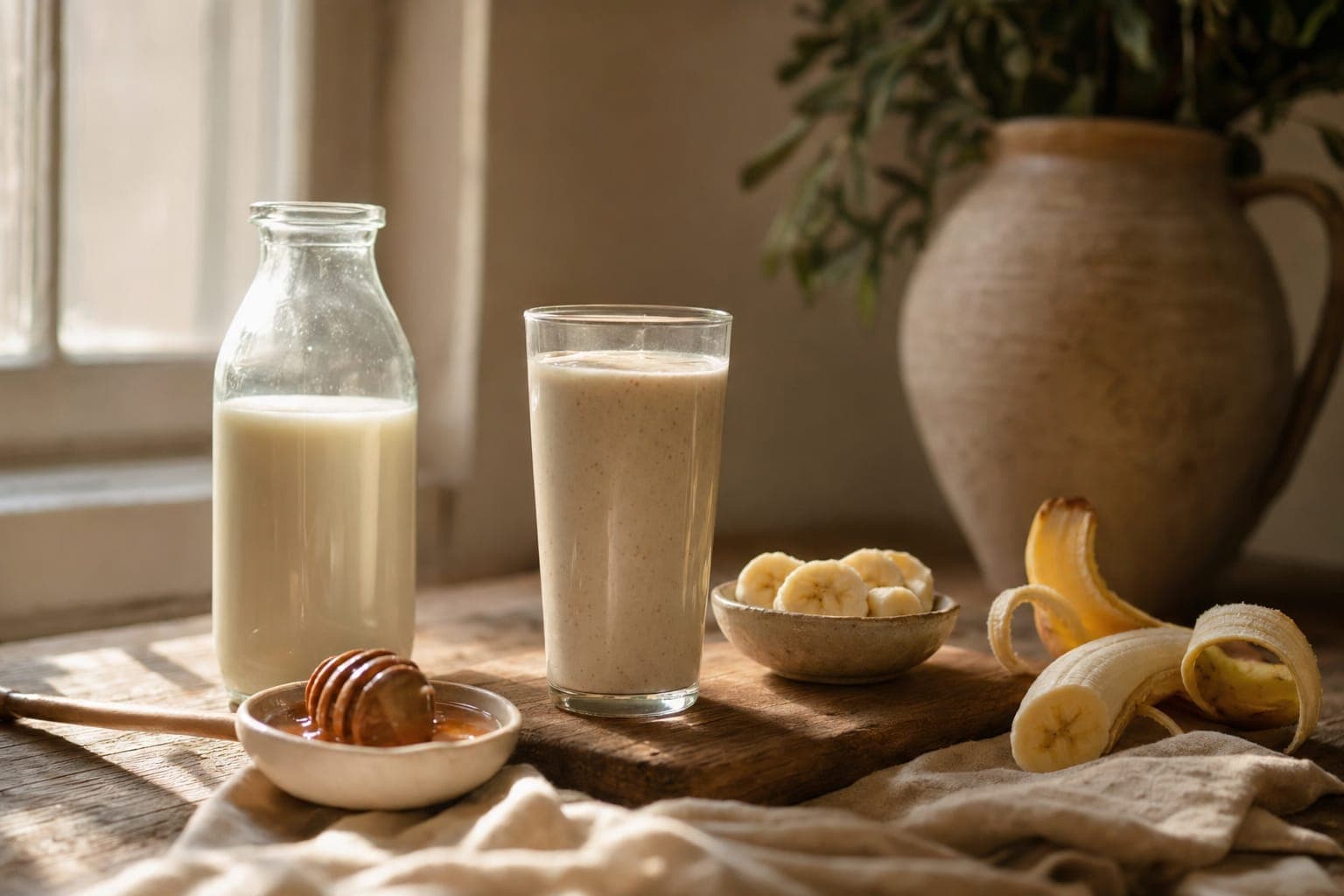
The Perfect Organised Morning Shake: Our Favourite Recipe
Our signature morning shake: Organised, raw milk, banana, honey. Simple, nourishing, and optimised for an empty stomach.
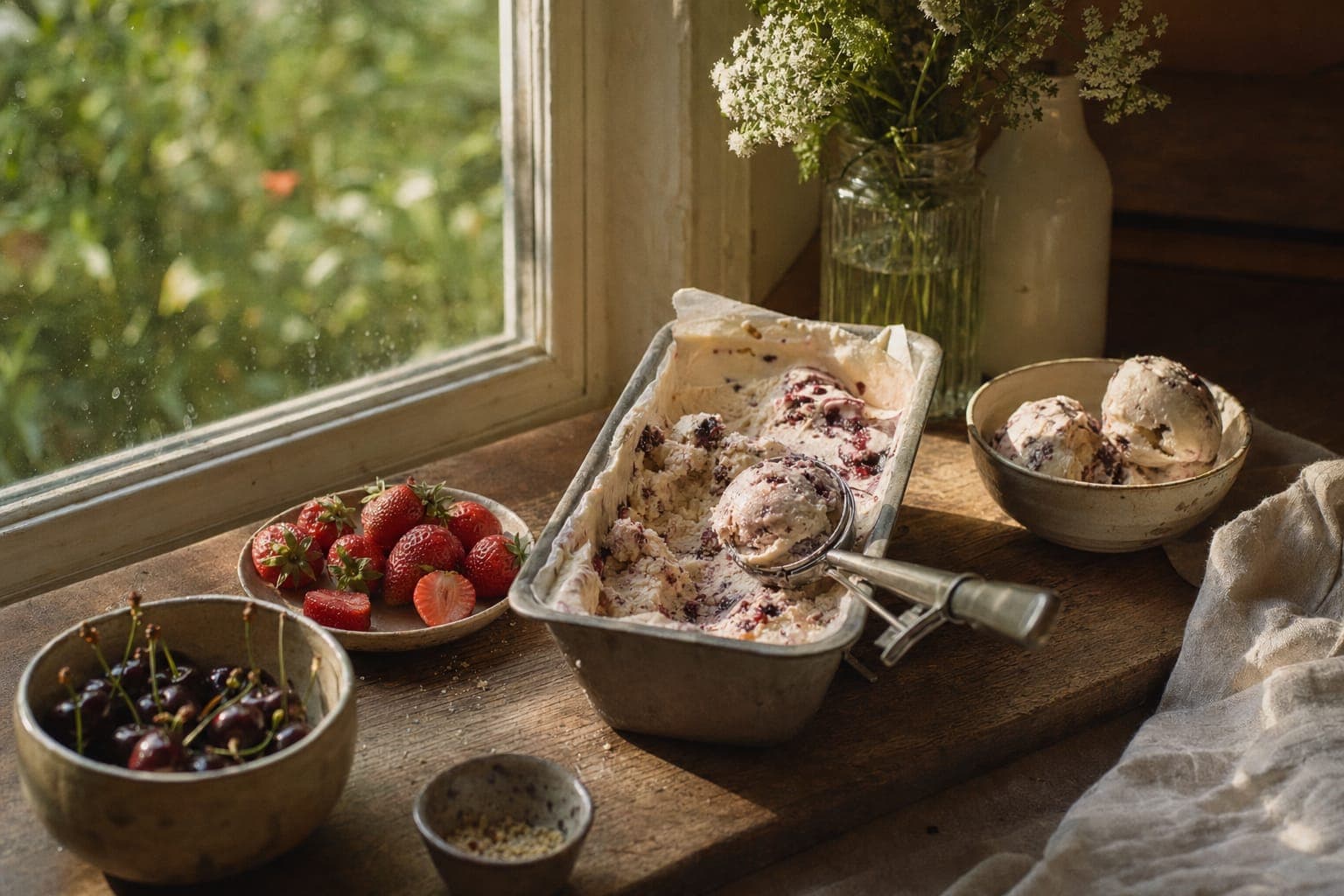
Raw Milk Ice Cream with Organised
Make raw milk ice cream at home with Organised for a seasonal, nutrient-dense treat. Three simple flavours to try whenever the craving strikes.


 Join over 100,000+ members
Build a better food system with us
The Organised community is thousands of people choosing real food and backing the farmers who grow it, all of us trying to leave the world a little better than we found it. If that is what you care about too, you belong here.