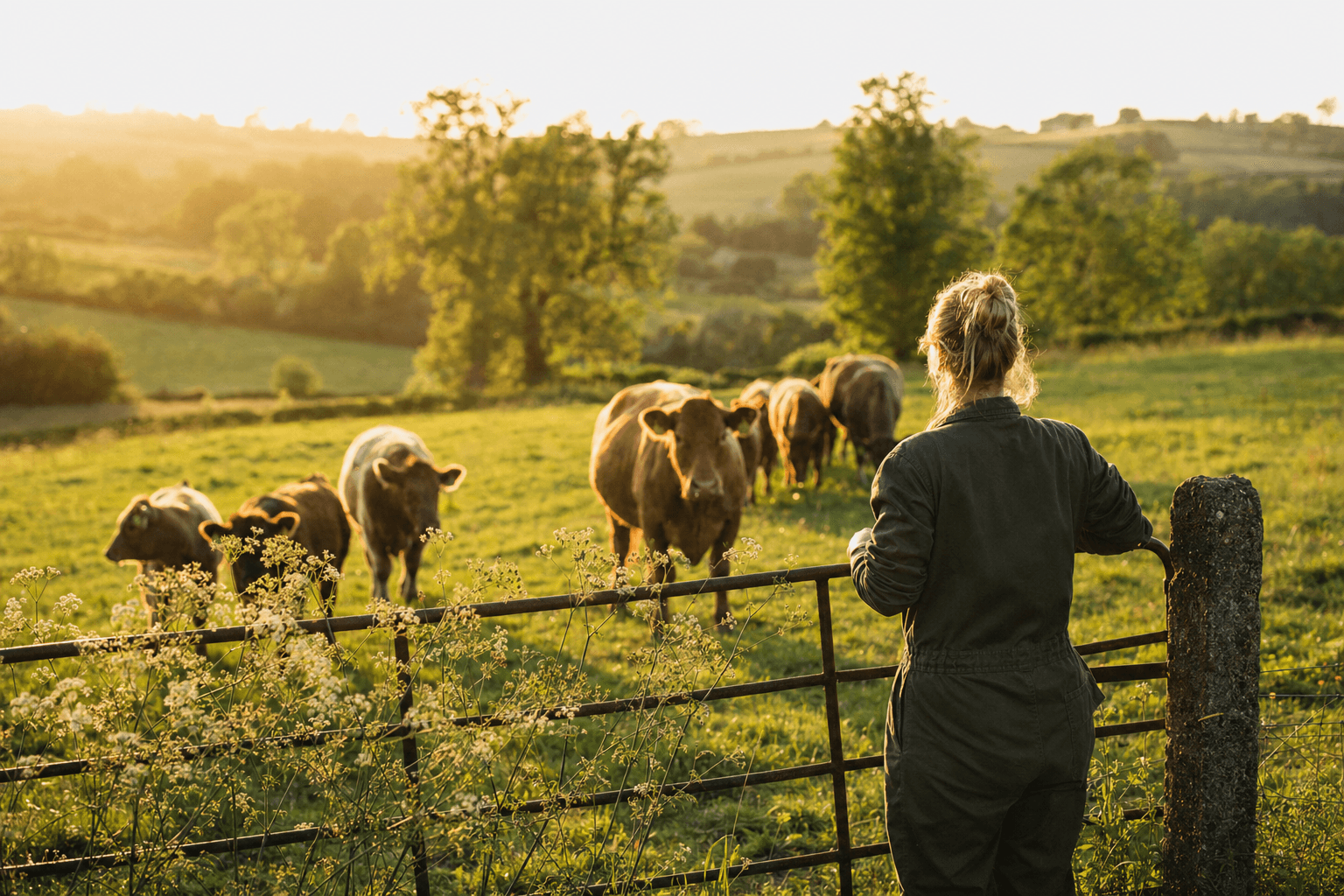

The confusion is understandable. Both sound good. But they're measuring different things.
Organic certification: what it means
Organic means the farm doesn't use synthetic pesticides, synthetic fertilisers, or growth hormones. The animal was raised without antibiotics (except in genuine emergencies). Organic animal feed was organic. That's it.
Organic can mean the animal lived its entire life in a barn, eating organic hay, never seeing grass. Organic can mean a crop is rotated but soil biology is still being depleted. Organic can mean the input is controlled but the outcome (soil health, biodiversity) isn't improving.
Organic is a certification. It's enforceable. Farms are audited. But the audit checks inputs, not soil biology. An organic farm can have poor soil and still pass certification. An organic farm can have low biodiversity, poor animal welfare, and depleted microbial communities and still be certified organic.
Soil Association organic certification (UK standard) is stricter than many global organic standards. It includes biodiversity requirements and welfare standards beyond input restrictions. But even Soil Association certified farms can be conventional in their outcomes if they're not actively regenerating.
Organic certifies what you don't put on the land. It doesn't certify what you're getting out of it.
Regenerative farming: what it does
Regenerative is a set of practices designed to improve soil health, increase biodiversity, and sequester carbon. It's not a certification (though some exist). It's a philosophy of farming that measurably leaves the land better than it was found.
A regenerative farm measures outcomes: soil carbon content (trending up), water infiltration (improving), microbial diversity (increasing), plant diversity (expanding), animal health (improving). The goal is to leave the land better than you found it.
Regenerative doesn't specify inputs. A regenerative farm might use organic fertiliser (compost) or conventional fertiliser if it serves the goal of improving soil health. But regenerative farms almost never use synthetic pesticides because they're incompatible with the soil biology being built. The practice drives the input choice, not certification requirements.
Common regenerative practices include mob grazing (moving animals frequently across pasture), cover cropping, minimal tillage, diverse crop rotation, and establishing perennial polycultures.2 Each practice is selected because it improves measured outcomes: soil carbon, water infiltration, plant diversity, microbial diversity.
Regenerative measures what's actually happening to the soil, not what's on the label.
Soil outcomes: the key difference
After 10 years, an organic farm might have the same soil organic matter as when it started. The farm is sustainable. It's not degrading. But it's not improving.
After 10 years, a regenerative farm will have measurably higher soil organic matter, deeper topsoil, better water-holding capacity, and more biodiversity. The soil is genuinely better. Microbial counts are higher. Fungi presence is stronger. The ecosystem is more resilient.
The reason: regenerative practices (rotational grazing, cover crops, minimal tillage, diverse plantings) actively rebuild soil biology and structure. Organic practices avoid the worst inputs but don't necessarily rebuild what industrial farming stripped away.
This is measurable. UK farms tracked over 10 years show that organic alone typically maintains soil carbon. Regenerative practices (within or outside organic certification) increase soil carbon by 0.5 to 2 tonnes per hectare per year.1 That compounds.
Animal welfare: another distinction
Organic certification includes space and welfare requirements. An organic cow has minimum space requirements. Organic poultry must have outdoor access. These standards are better than conventional, but they're minimums.
Regenerative farms optimise for animal welfare because healthy animals are essential to the system. Cattle are moved frequently (mob grazing). They eat diverse forage. Stress and disease are low. The welfare standard is higher than organic because it's integral to the farming practice, not just a certification requirement.
An organic animal can be in poor condition if the certification is met. A regenerative animal is almost always in excellent condition because poor health would indicate a failing system. The two approaches align differently with animal welfare outcomes.
Pasture for Life (UK standard) combines grass-fed finishing with regenerative principles. Animals are outdoors on pasture year-round, moved frequently, never grain-fed. The welfare and regenerative outcomes align.
Why they're often confused
Both avoid synthetic pesticides. Both avoid growth hormones. Both sound good. Marketing uses "organic" and "regenerative" almost interchangeably.
But they're answering different questions. Organic asks: what's not in this food? Regenerative asks: how is the land that produced this food doing?
Organic is easier to certify and market. You check a box: no synthetics? Yes, organic. Regenerative requires measurement and evidence. It's harder to fake and harder to market. A company using regenerative language has to back it up with data (soil carbon tests, microbial counts, biodiversity surveys).
Can you have both?
Yes. Some regenerative farms are also organic certified. They've chosen to meet both standards. But the regenerative standard is stricter in outcome measures. A farm can be certified organic without being regenerative, but a truly regenerative farm will almost certainly meet organic standards (or exceed them in practice).
In UK sourcing, Pasture for Life certified farms are often regenerative in practice and organic in inputs. Soil Association organic farms with regenerative practices deliver both certification and outcomes. It's the combination that delivers the best result.
Organic is a floor. Regenerative is a direction.
The certification debate in practice
In real UK farms, you see this distinction clearly. A Soil Association organic farm operating without regenerative practices will look clean on inspection (no synthetics, welfare standards met). The soil might be adequate but not improving. Ten years in, it's sustainable but not regenerative.
A regenerative farm (Pasture for Life certified, or organic with regenerative practices noted) will show measurable soil improvement. Soil carbon increases. Biodiversity increases. Water infiltration improves. These outcomes are documented and verifiable.
Marketing vs reality
The market doesn't always reward the better choice. Organic products are easier to market because certification is familiar. Regenerative requires explanation. A marketing claim of "regenerative" is harder to verify than "certified organic."
This creates a perverse incentive: the easier-to-market (organic) becomes more common than the better-outcome (regenerative). Consumers assuming organic means regenerative are mistaken. Farmers optimizing for certification rather than outcomes become incentivized to pursue organic more than regenerative.
This is why asking the farmer directly matters more than reading labels. A truly regenerative farmer can show you soil carbon data, biodiversity records, and grazing rotations. An organic farmer can show you a certificate. The documentation tells the story.
Ask the farmer directly what practices they use. The answer reveals everything you need to know about their approach and commitment to real outcomes rather than just certification.
The bottom line
If you're choosing between organic and regenerative, regenerative is the stronger signal. An organic product from a regenerative farm is ideal. An organic product from a conventional farm (which is rare) is better than conventional but weaker than regenerative.
Ask the farmer: are you regenerative? Are you measuring soil health? Are you using mob grazing? The answers tell you what's actually happening on the land. Check for Pasture for Life or Soil Association organic certification with regenerative practices noted. That's the combination that delivers both certification security and genuine land improvement.
References
- 1. Lal R. Soil carbon sequestration to mitigate climate change. Geoderma, 2004. ScienceDirect.
- 2. LaCanne CE, Lundgren JG. Regenerative agriculture: merging farming and natural resource conservation profitably. PeerJ, 2018. PMID 29456894.
- Organised Farming & TransparencyWhat Is Regenerative Agriculture? A Complete GuideWhat is regenerative agriculture? Explore the five core principles, practices like cover crops and no-till, soil health metrics, carbon sequestration, and animal integration.
- OrganisedBritish Beef: Why Quality Matters More Than Origin AloneBritish beef has a good climate for grass-fed cattle, but the label itself isn't a quality guarantee. Learn what to actually look for.
- OrganisedWhat Is Mob Grazing and How Does It Help the Soil?Mob grazing mimics natural herd behaviour and rebuilds soil. Learn how high-density, short-duration grazing regenerates the land your food comes from.
Nourishment, without the taste.
Check whether your food is organic, regenerative, or both. It tells you what the farmer prioritised.