How Stress in Cattle Affects the Quality of Their Organs
You know meat quality matters. You probably check for grass-fed labels. But here's what most people miss: the stress the animal experienced before slaughter quietly rewrites the entire nutritional profile of what's on your plate.
By Niall Kiddle, Founder, Organised

Reviewed by Pedro Rodrigues, Agronomist (farming and sourcing only) ·
6 min read · Published · Updated · 2 cited sources
Makers of the Organised Daily blend, a grass-fed beef organ supplement from regenerative UK farms
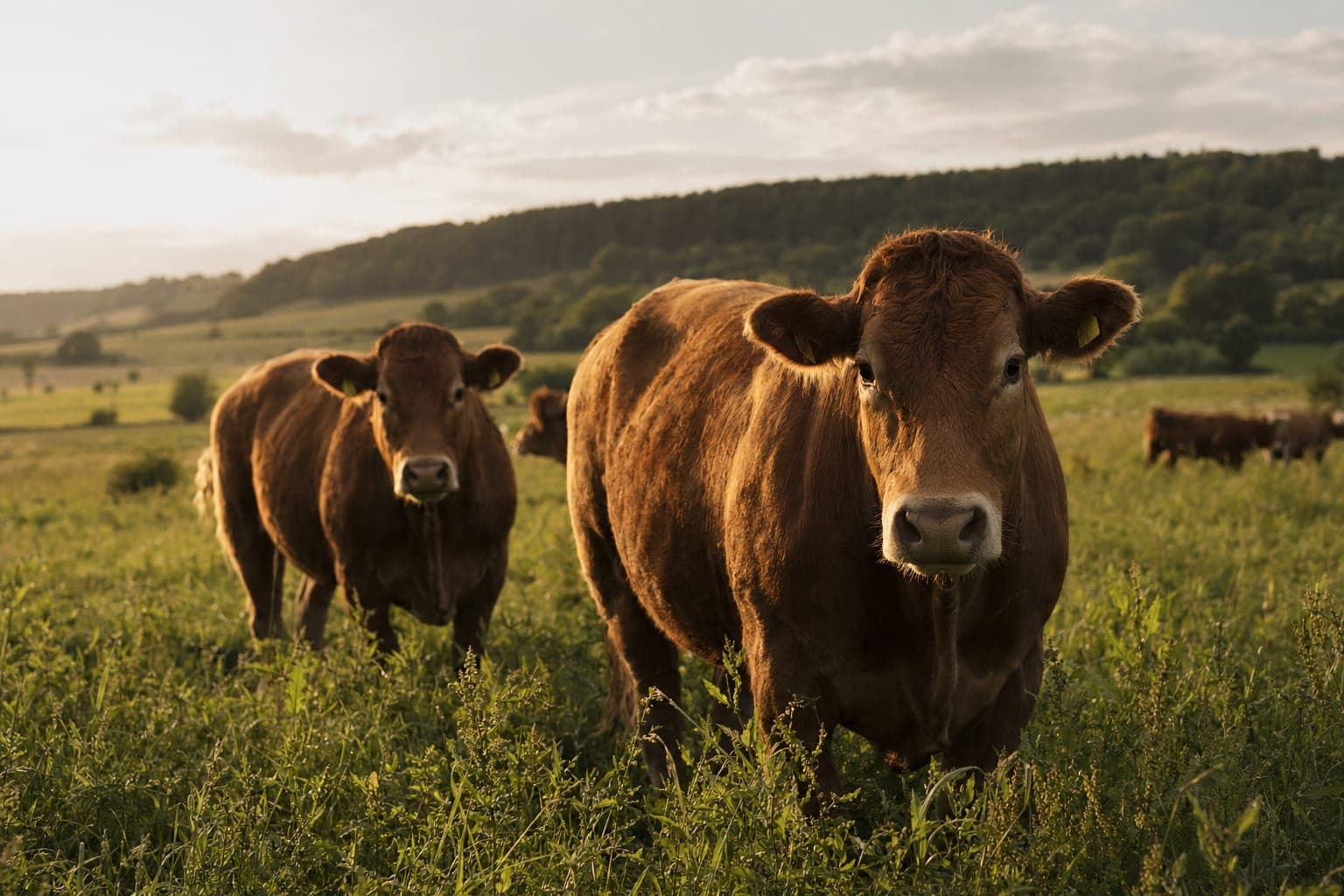
Grass-fed is a start. But an animal raised on pasture then hauled to a feedlot, crammed into a transport truck, and slaughtered in an industrial facility is biologically very different from one that lived calmly on grass and was brought to the abattoir with minimal distress.
Stress rewires the animal from the inside
Cattle experience stress the same way you do. When a cow is threatened, crowded, or transported, its nervous system lights up. The adrenal glands flood the bloodstream with cortisol. The sympathetic nervous system kicks in. Blood vessels constrict. Digestion stops. The body shifts into survival mode.
This is useful for a short burst. But when an animal is chronically stressed, its entire physiology shifts. The immune system becomes dysregulated. Inflammation rises. The gut integrity suffers. Blood chemistry changes. And all of this happens before the animal ever reaches slaughter.
A calm animal is a nourished animal. A stressed animal is an inflamed one, and that inflammation is baked into the tissues you eventually eat.
Cortisol floods the system and changes everything
When a cow is calm, grazing on pasture, living with a stable herd, cortisol stays low. The body prioritises recovery, tissue repair, and nutrient storage. Meat develops properly. Organs fill with nutrient density.
But in the weeks and days before slaughter, stress spikes cortisol acutely. This has cascading effects. Cortisol breaks down muscle protein. It shifts the body into catabolic mode. It redirects energy away from the organs that make beef nutritionally valuable.
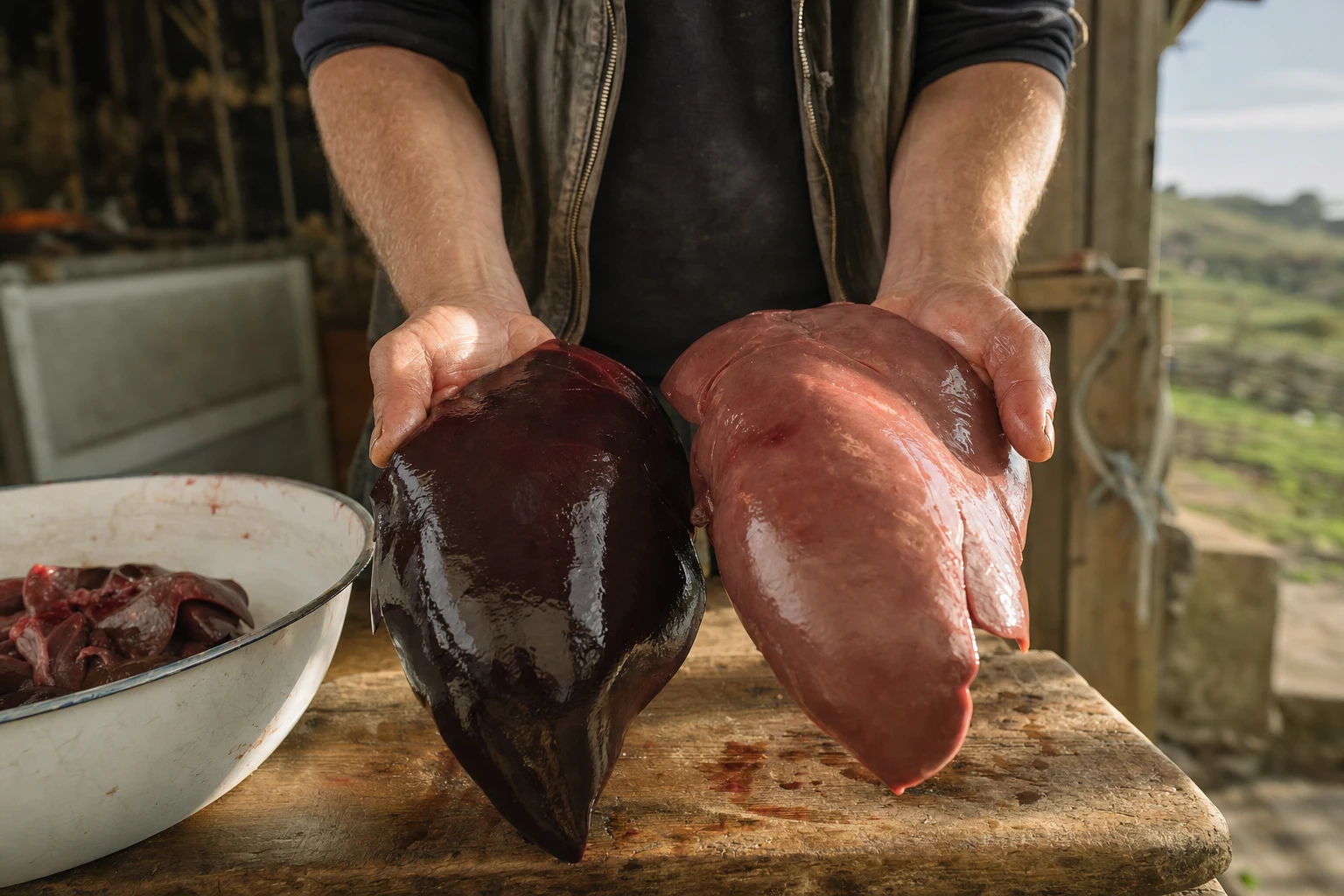
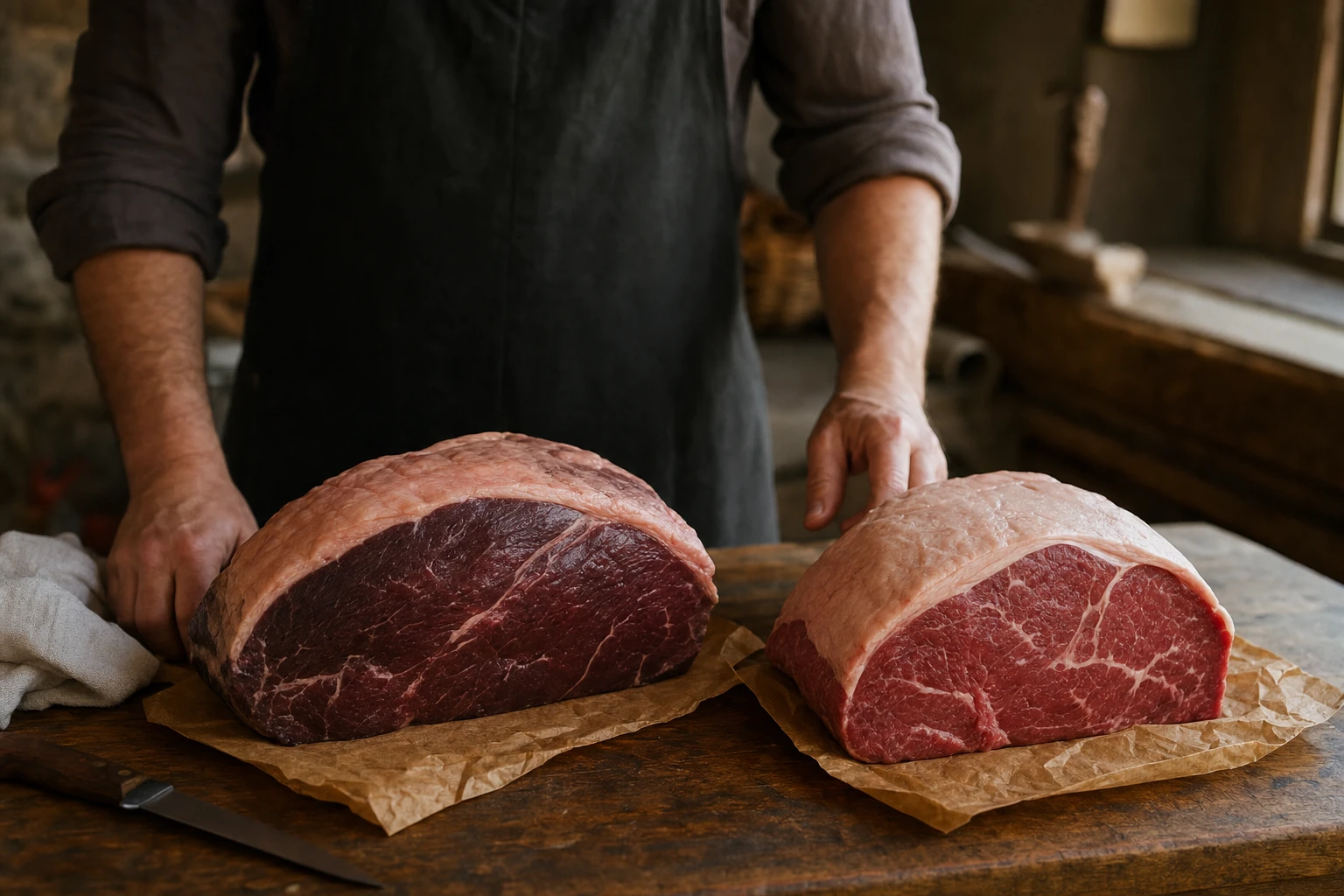
An animal's organs are the most nutrient-dense part of its body. Liver, heart, kidney, spleen. These are where the animal stores and processes micronutrients. A calm animal raises calves in that tissue. A stressed animal depletes it.
What happens to the meat itself
Meat quality has a name in the industry: pH drop. After slaughter, the muscle begins to acidify as remaining glycogen breaks down to lactate. This process is normal. But in a stressed animal, it goes wrong.
A calm animal has adequate glycogen in its muscles. After slaughter, this glycogen breaks down slowly and predictably, bringing the pH to the right level for proper ageing, colour, and flavour development.
A stressed animal has depleted glycogen. Its muscles were burned through in the stress response. So when it's slaughtered, there's almost no glycogen left to break down. The pH doesn't drop far enough. The meat stays pale, watery, and tough. It doesn't age well. It doesn't develop flavour. The texture suffers.
Pre-slaughter stress that depletes muscle glycogen produces dark, firm, dry (DFD) meat with elevated ultimate pH; in pigs and poultry, acute stress at slaughter produces pale, soft, exudative (PSE) meat. Both are well-documented meat-quality defects associated with poor handling.1
The pH shift that reduces nutrient availability
pH matters because it affects how your body can actually absorb and use the minerals and proteins in the meat. A properly pH-balanced beef can deliver its minerals, iron, zinc, magnesium, copper, in forms your digestive system can readily absorb.
Meat from a stressed animal, with its disrupted pH profile, can contain the same minerals on paper. But bioavailability drops. The minerals are there, but your body has a harder time breaking them down and absorbing them.
You're not just buying a nutritional profile on a label. You're buying the animal's ability to have developed and retained that nutrition. A stressed animal simply cannot do that as effectively.
Glycogen depletion and meat quality
Glycogen is the stored carbohydrate the animal uses for energy. In a calm, grazing animal, muscle glycogen is steadily replenished and maintained. The animal is in a state of abundance.
But here's where it gets critical: stress burns through glycogen. A cow being transported, crowded, or threatened is using its glycogen reserves frantically as fuel for the stress response. By the time it reaches the abattoir, that glycogen is largely gone.
This matters for flavour, colour, and shelf stability. It also matters for your own insulin response when you eat the meat. Meat from a well-nourished, calm animal carries residual micronutrients and a better amino acid profile. Meat from a stressed animal is nutritionally depleted.
Get farming and sourcing guides, free
Two short reads a week on regenerative farming and where real food comes from.
By signing up you agree to receive emails from us. No spam, unsubscribe anytime.
The role of transport and handling
Transport is one of the most stressful events in a cattle's life. The journey to the abattoir can last hours or even days. The animal is loaded into a truck with dozens of others, crowded, unable to lie down, with no food or water. The journey itself is a cascade of cortisol spikes.
How the animal is handled during this time matters enormously. A driver who handles cattle gently, who doesn't rush them, who keeps the truck at a steady temperature and stops to let the animals rest, produces beef that is noticeably better. A handler who whips cattle, who crowds them violently onto the truck, who keeps them in extreme conditions produces meat that is biochemically compromised.
Temple Grandin's widely cited research on livestock handling has shown that gentle, low-stress handling protocols reduce stress markers, injuries and meat-quality defects. Many of her recommendations have been incorporated into industry handling guidelines.2
The distance from farm to abattoir matters too. A cow transported 500 kilometres is more stressed than one transported 50 kilometres. A small local abattoir is usually better than a massive industrial facility. The animal spends less time in the system, experiences fewer transitions, and is less likely to be processed as a number rather than an individual.
Why pasture-raised still matters
This isn't an argument against grass-fed. It's an argument for understanding what grass-fed actually means on the farm where you're buying.
Some grass-fed producers take pride in minimising stress at every stage. Animals live on open pasture, are moved with care, and are brought to slaughter with quiet, low-stress protocols. These farms produce beef that is genuinely superior.
Other producers treat grass-fed as just a feed label. Grass in the summer, but then crammed into winter housing, transported long distances, and subjected to the same high-stress slaughter as industrial beef.
The farms worth buying from are the ones that take animal welfare as seriously as feed type. Ask about handling practices. Ask about transport distance. Ask if they work with a local abattoir that uses low-stress protocols. A good producer will answer confidently.

1 of 9
Daily blend
100,000+ thriving families4.9 on Trustpilot
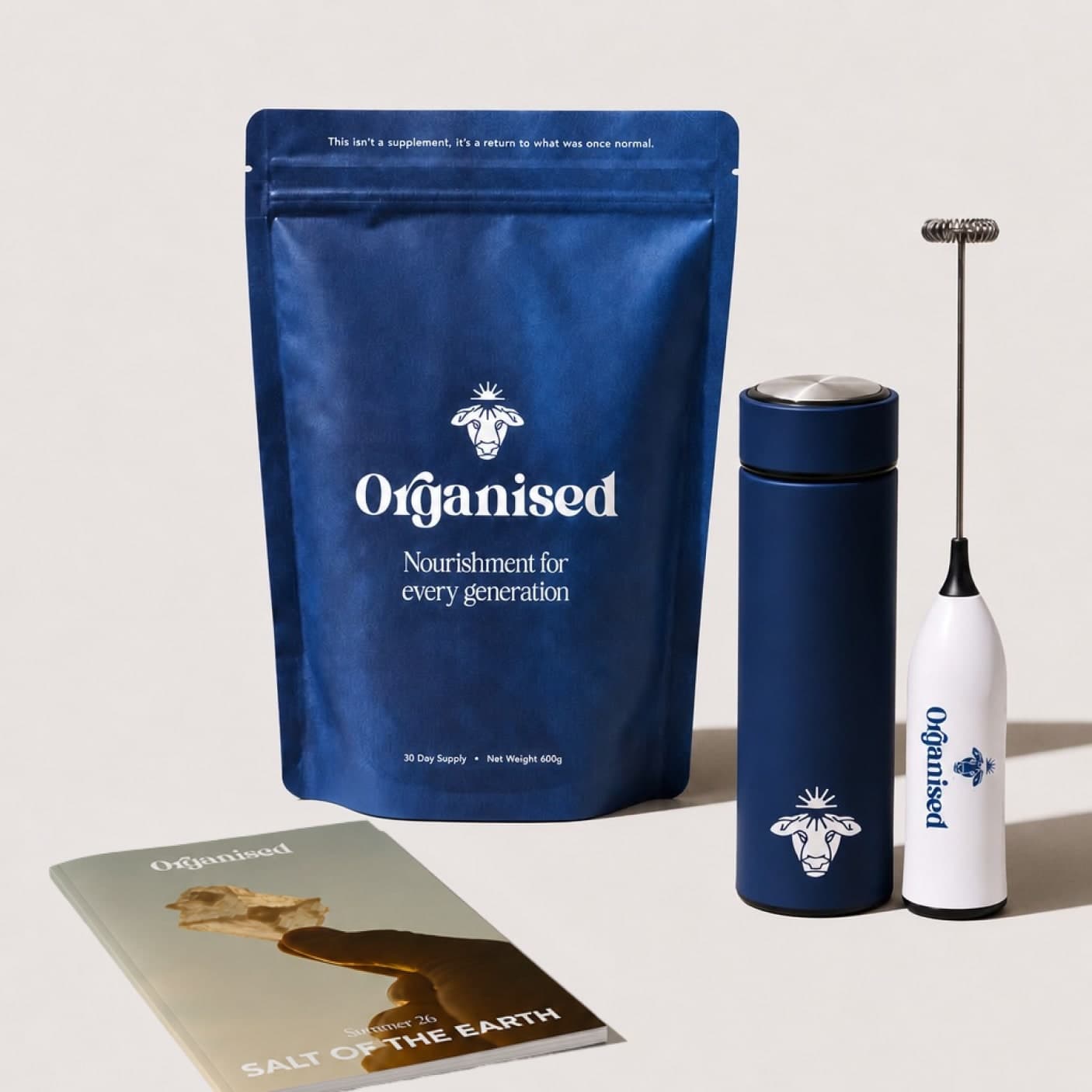
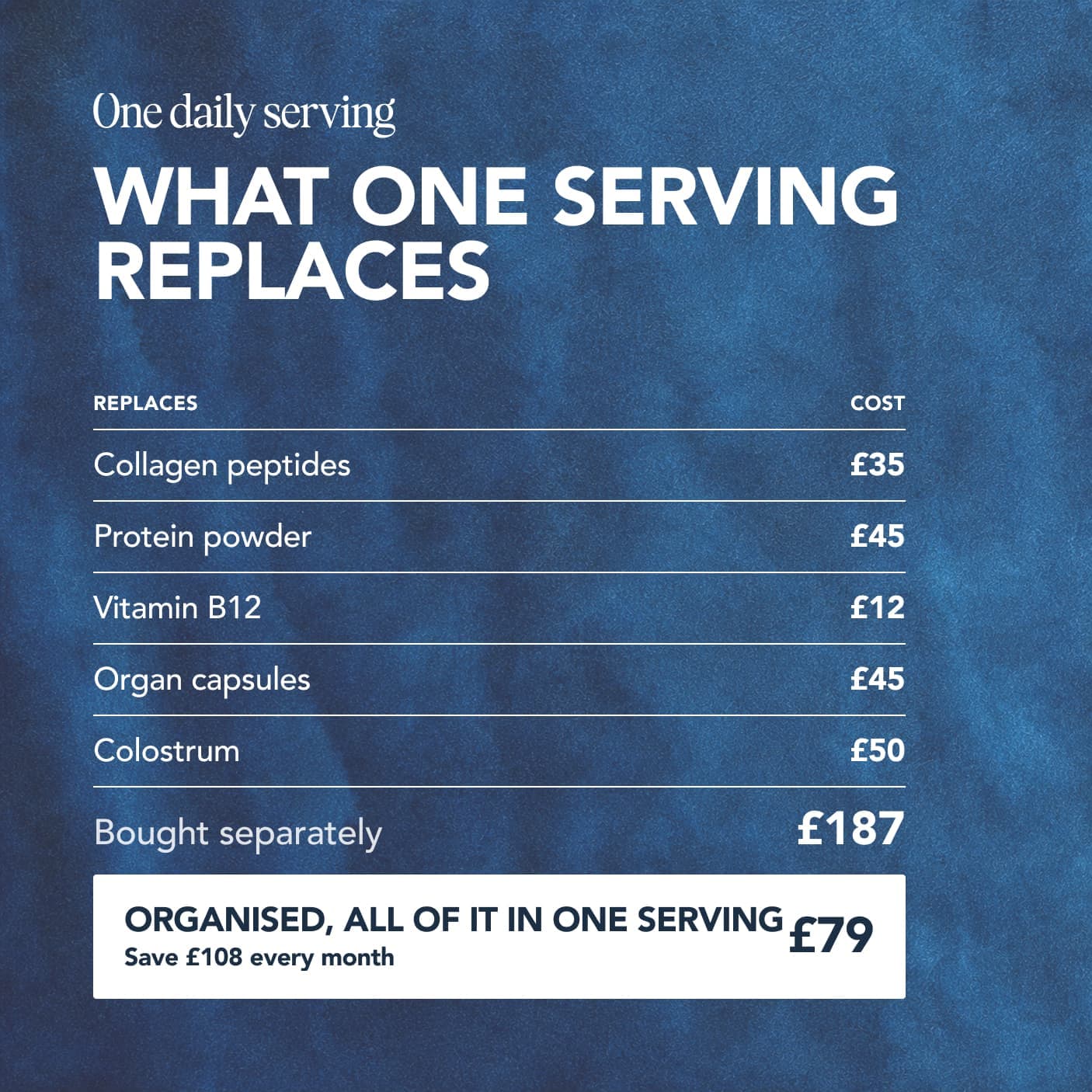
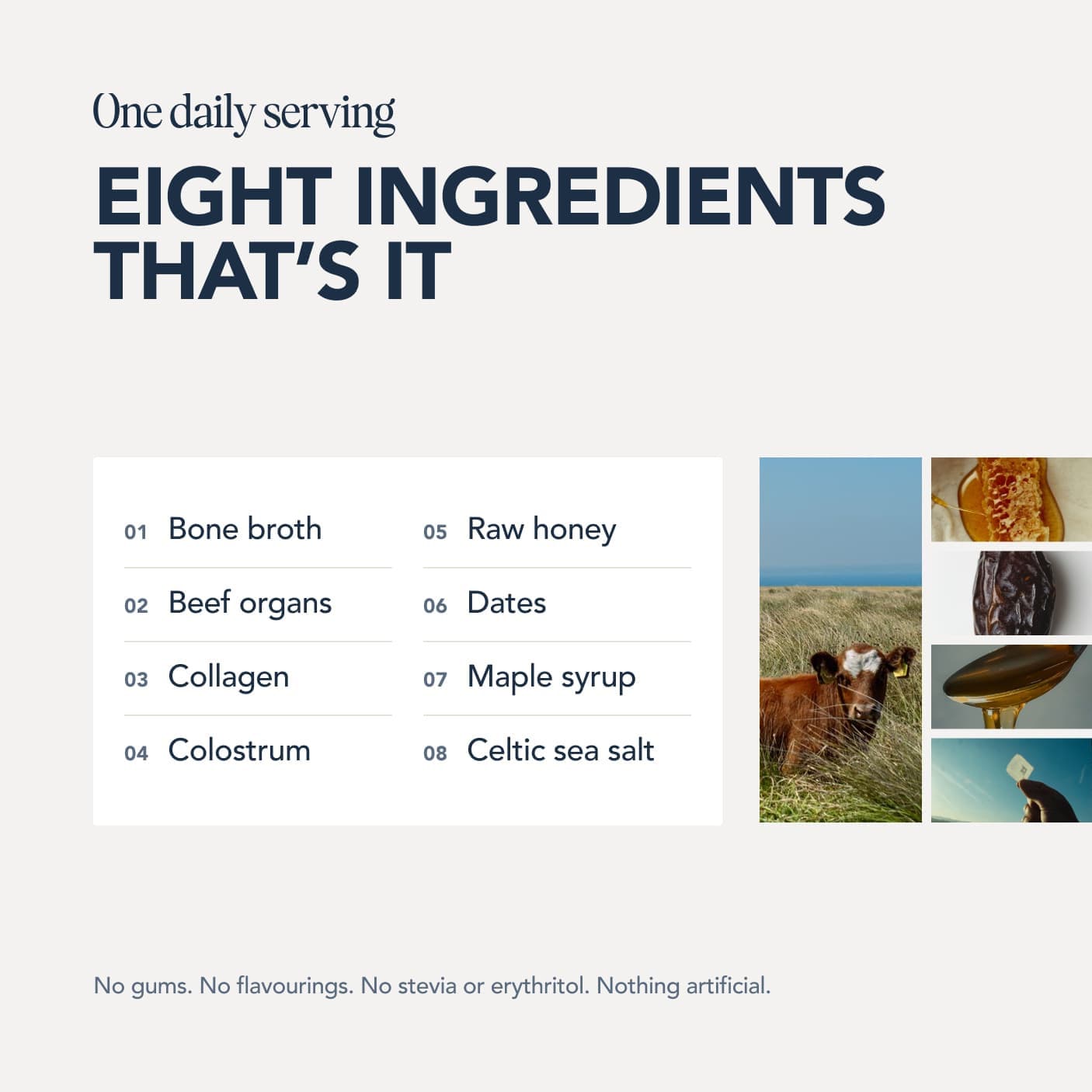
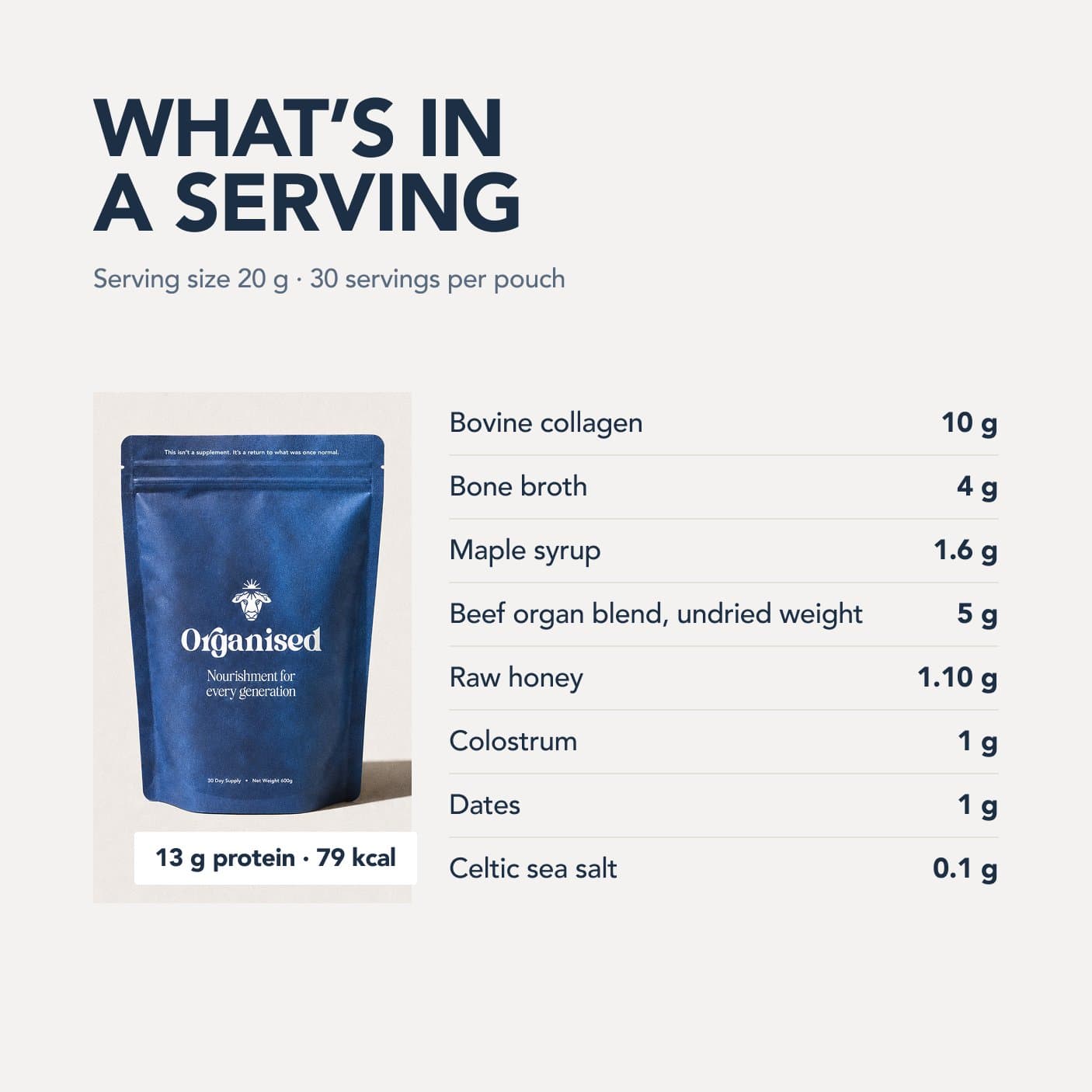
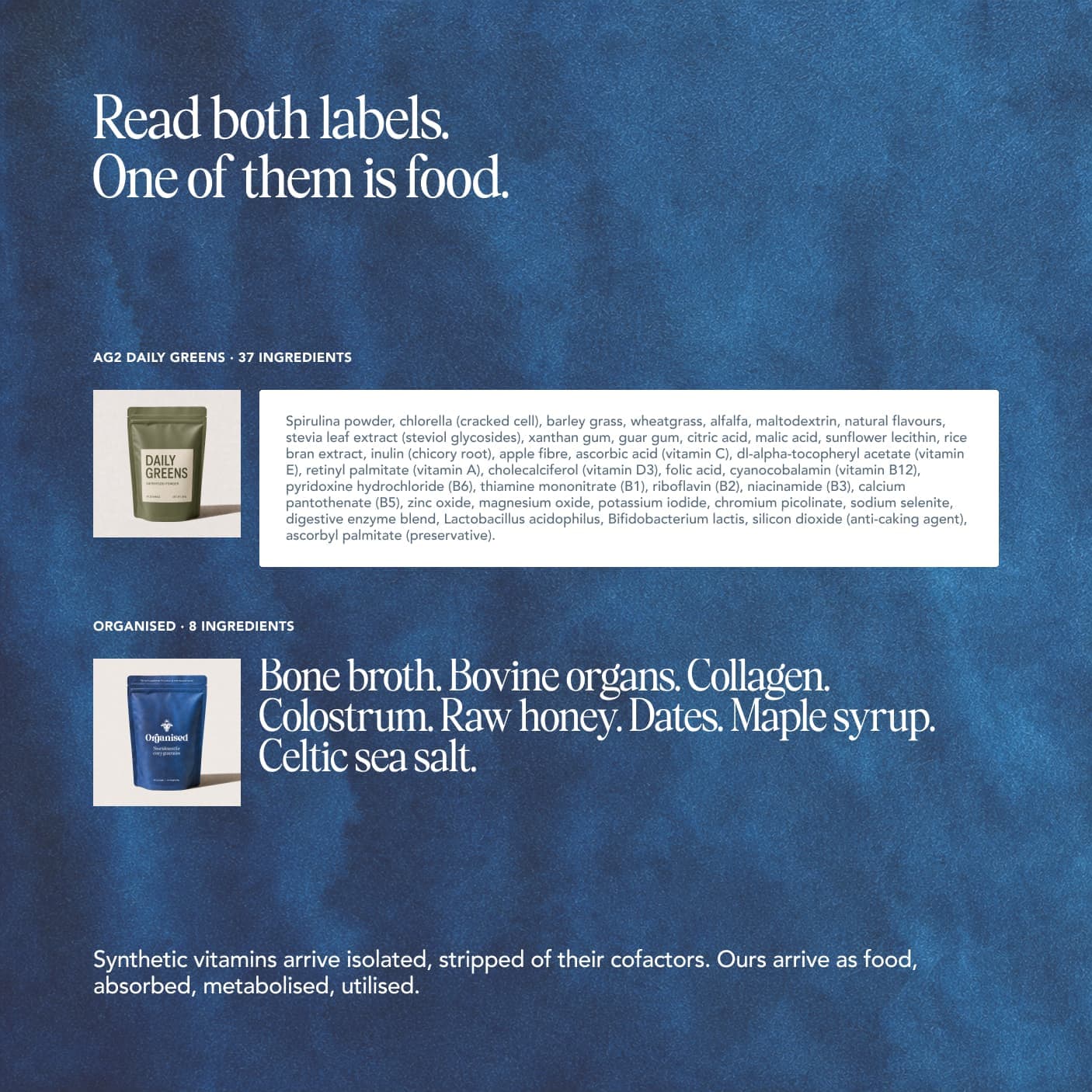
Eight real ingredients built around grass-fed beef organs, collagen and colostrum. Nothing synthetic added.
Free with your first order, worth £38. Plus £10 off the pouch with a subscription.

Free UK shipping · Made in England · 100 day money back guarantee on your first pouch · Skip, pause or cancel anytime
Where to find genuinely calm-raised beef
Looking for calm-raised beef means going direct to producers whenever possible. Farmers markets, farm shops, and direct-to-consumer meat delivery services are better bets than supermarkets. A producer selling directly has built reputation with their customers. They're accountable in a way that a supermarket never is.
Ask specific questions. How many animals are in the herd? Are they moved to fresh pasture daily or weekly? What happens in winter? How are they transported to slaughter? How far away is the abattoir? Do you use a local facility or a large industrial one? Which abattoir specifically?
A producer who can answer these questions and sounds genuinely proud of their practices is the one worth buying from. A producer who gets defensive or evasive is probably not prioritising animal calm.
You might pay more for calm-raised beef. You should. The quality is genuinely higher. Your body will recognise the difference in how the meat makes you feel after eating. You'll notice better digestion, clearer energy, less inflammation. The stress that was in the animal's tissues isn't transferred to yours.
The bottom line
Grass-fed is a legitimate starting point. But it's incomplete. An animal's stress level in its final weeks, and especially in its final hours, shapes the meat you eat more than many people realise.
Seek out producers who prioritise calm. Look for animals raised on pasture from start to finish, moved with purpose and care, and brought to slaughter with minimal stress. These animals produce meat and organs of genuinely higher quality. Your body will feel the difference.
References
Every source below was checked on 27 August 2026. Each PubMed, PMC and DOI identifier was resolved against NCBI or Crossref, and what it opens is printed under the citation, so you can see the link goes where the citation says without leaving the page. Where a citation and its identifier disagreed, the citation was corrected to the record or the reference was deleted along with the sentence marker that pointed at it, and where the resolved paper turned out not to support the sentence, the sentence was cut back to what it does support. Borrowed authority is worse than none, because it looks like rigour.
- Ferguson DM, Warner RD. Have we underestimated the impact of pre-slaughter stress on meat quality in ruminants? Meat Science. 2008. https://pubmed.ncbi.nlm.nih.gov/22063165/Checked 27 August 2026: PMID 22063165 opens Ferguson DM, Warner RD, Have we underestimated the impact of pre-slaughter stress on meat quality in ruminants? Meat Sci 2008;80(1):12-9.
- Grandin T. Assessment of stress during handling and transport. Journal of Animal Science. 1997. https://pubmed.ncbi.nlm.nih.gov/9027573/Checked 27 August 2026: PMID 9027573 opens Grandin T, Assessment of stress during handling and transport. J Anim Sci 1997;75(1):249-57. PubMed indexes it as: Review.
Who wrote and reviewed this guide
Niall Kiddle
Author · Founder, Organised
Niall is the founder of Organised. He started the company in 2024 after fixing his own health the slow way: in 2022 he swapped a cupboard of synthetic supplements for real food, raw milk, organ meats, bone broth and honey, and felt the difference within months.
Areas of expertise: Ancestral nutrition, Organ meats, Whole-food supplementation, Gut health, Regenerative sourcing
Read Niall's full profile
Pedro Rodrigues
Reviewer · Agronomist (farming and sourcing only)
Pedro is the agronomist Organised works with on farming and sourcing. His job on the guides is to keep the science honest: he reviews what we publish about soil health, regenerative agriculture, grazing and the way food is actually produced.
Areas of expertise: Regenerative agriculture, Agronomy, Soil health, Grass-fed farming, Food sourcing
Reviewed this guide on
Read Pedro's full profileMore on farming & transparency
View all- Biodynamic Farming: What It Means and Why It Matters
- British Beef: Why Quality Matters More Than Origin Alone
- Free Range, Organic, Pasture-Raised: A Quick Reference Guide
- What Is Mob Grazing and How Does It Help the Soil?
- What Is Third-Party Testing and Why Should You Care?
- Why Biodiversity on Farms Matters for Your Food
- Why Ingredient Traceability Matters More Than Marketing Claims
Browse the guides library
All guidesKeep reading
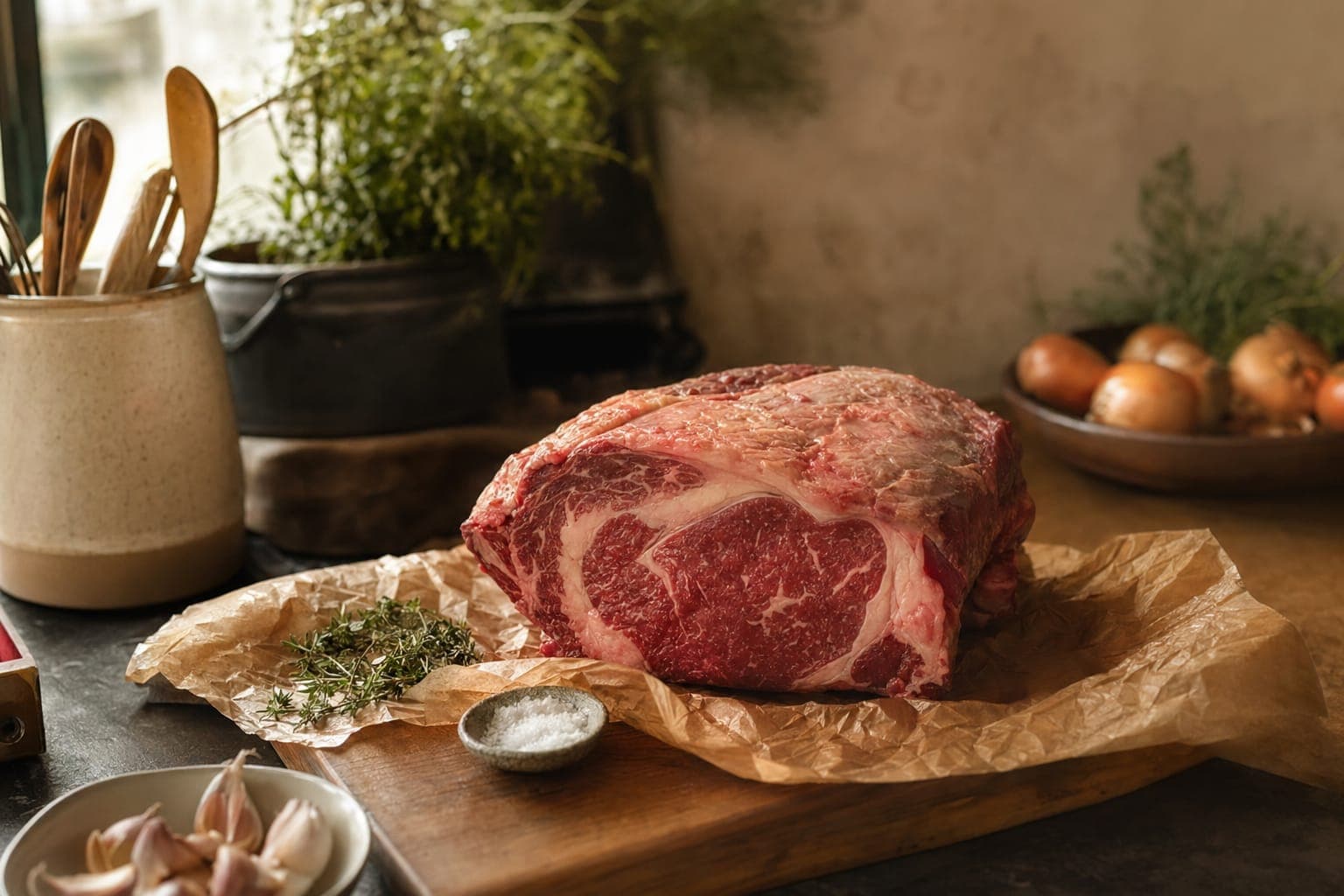
Farming
British Beef: Why Quality Matters More Than Origin Alone
British beef has a good climate for grass-fed cattle, but the label itself isn't a quality guarantee. Learn what to actually look for.
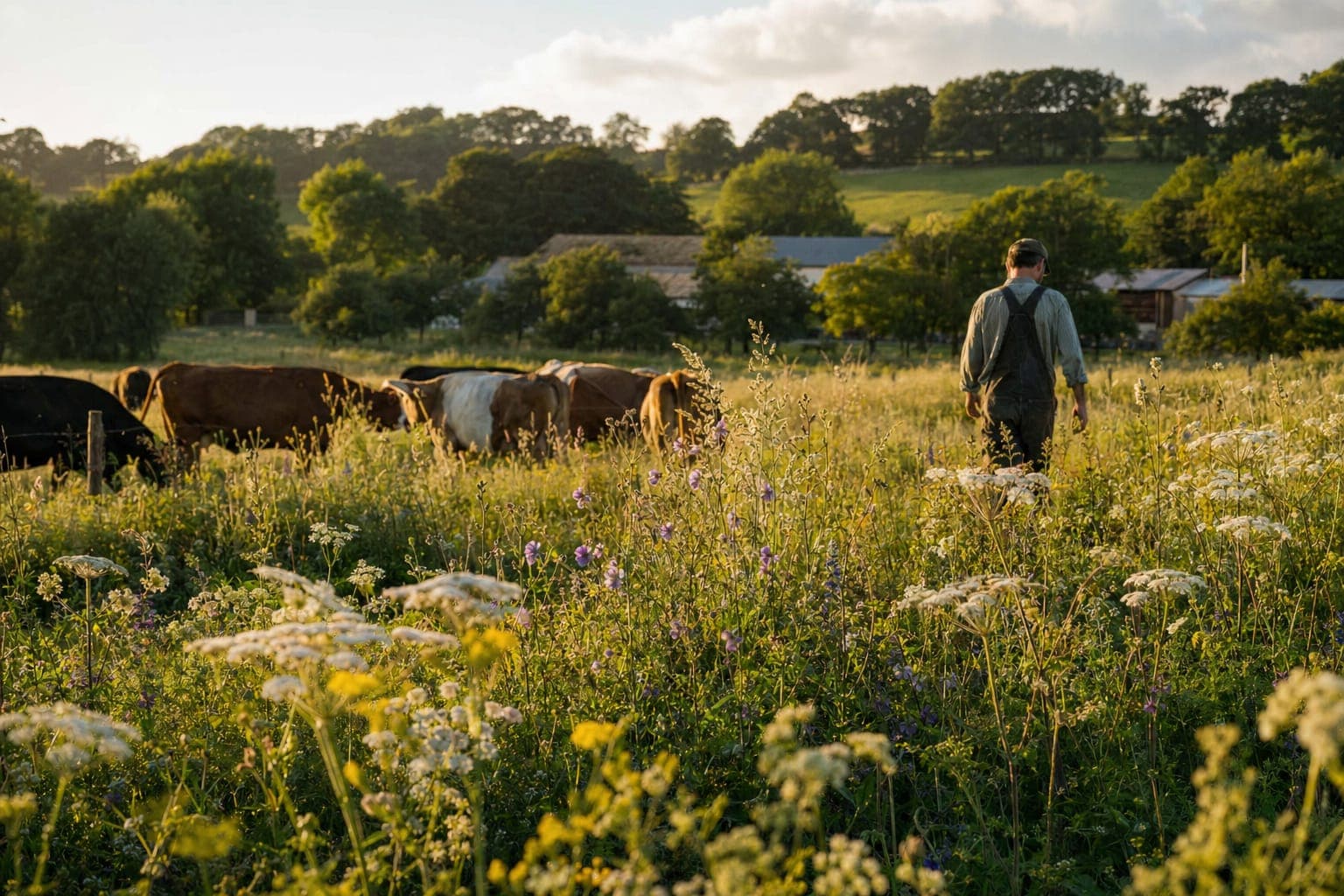
Farming
Why Biodiversity on Farms Matters for Your Food
Diverse farms produce more nutrient-dense food. Learn how native grasses, fungi, and insects directly impact the nutritional value of what you eat.
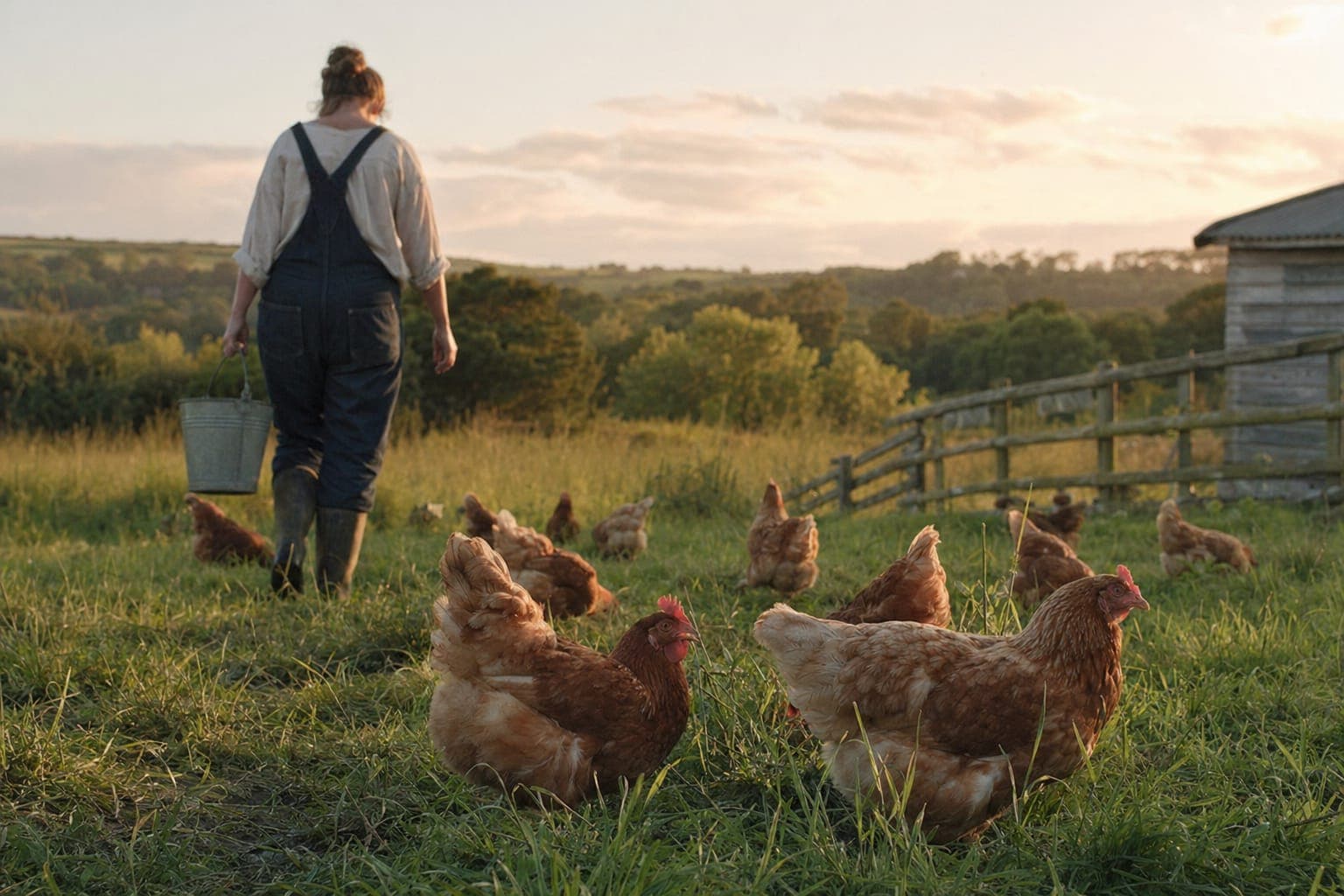
Farming
Free Range, Organic, Pasture-Raised: A Quick Reference Guide
UK food labels are confusing. Here's what free range, organic, and pasture-raised actually guarantee. A practical decoding guide.
Real food, made effortless
Shop the blendA few ways to use it
All recipes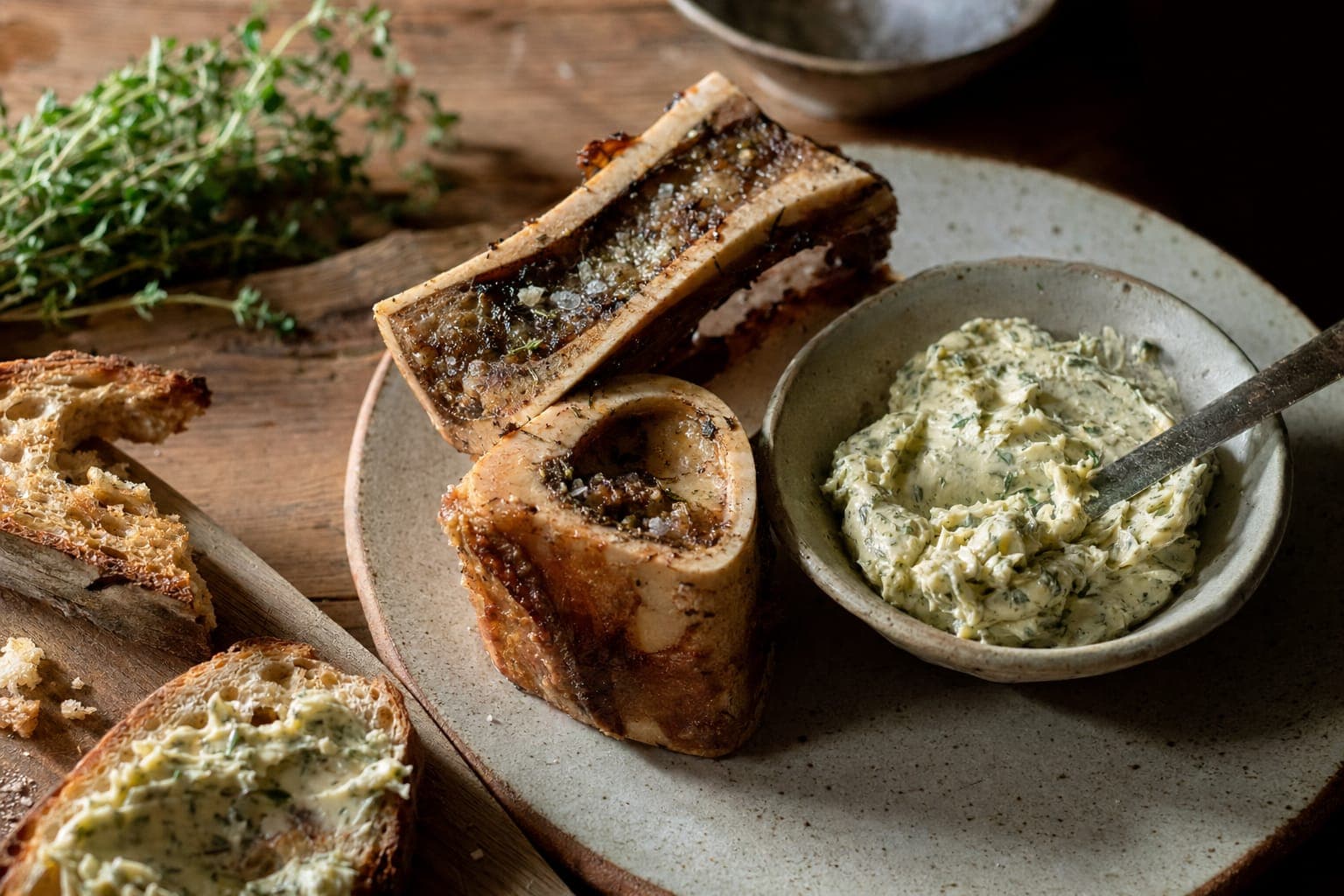
How to Make Bone Marrow Butter
Roast grass-fed marrow bones, scoop the marrow, and mix with butter and herbs. A nutrient-dense spread with fat-soluble vitamins.
Bone Broth from Scratch: A Step-by-Step Guide
Step-by-step guide to making bone broth at home. Stovetop, slow cooker, and Instant Pot methods. Rich in collagen and gut-healing minerals.
Organised Overnight Oats: 3 Variations
Three delicious overnight oats variations with Organised. Chocolate, berry, tropical flavours. Make them Sunday, eat them all week.


 Join over 100,000+ members
Build a better food system with us
The Organised community is thousands of people choosing real food and backing the farmers who grow it, all of us trying to leave the world a little better than we found it. If that is what you care about too, you belong here.