The Future of Food: Why Regenerative, Not Lab-Grown, Is the Answer
Lab-grown meat is coming. Silicon Valley has convinced the world that the future of protein is bioreactors and undefined growth media. But this isn't a problem that needs to be solved in a lab.
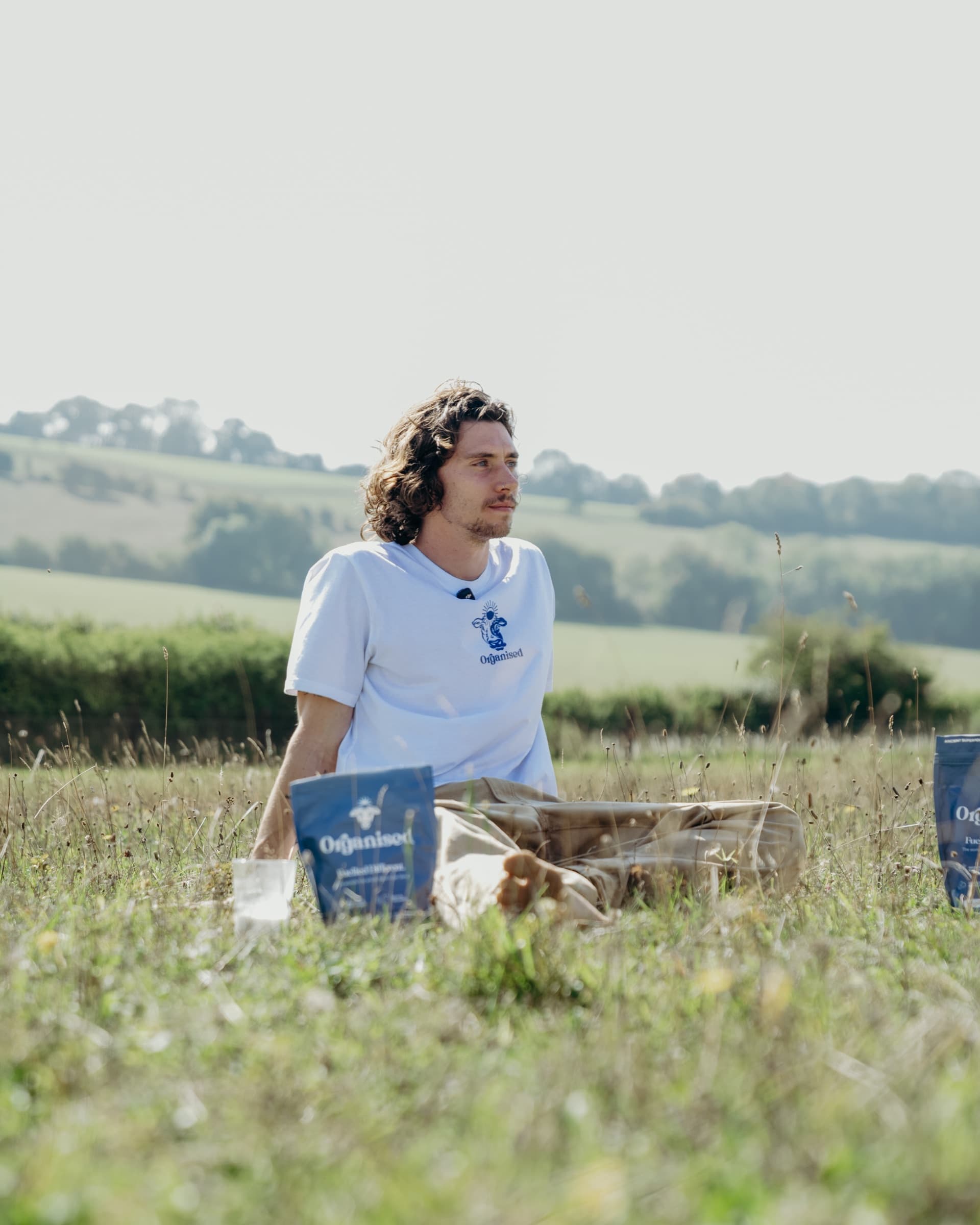
By Niall Kiddle, Founder, Organised

Reviewed by Pedro Rodrigues, Agronomist (farming and sourcing only) ·
6 min read · Published · Updated · 2 cited sources
Makers of the Organised Daily blend, a grass-fed beef organ supplement from regenerative UK farms
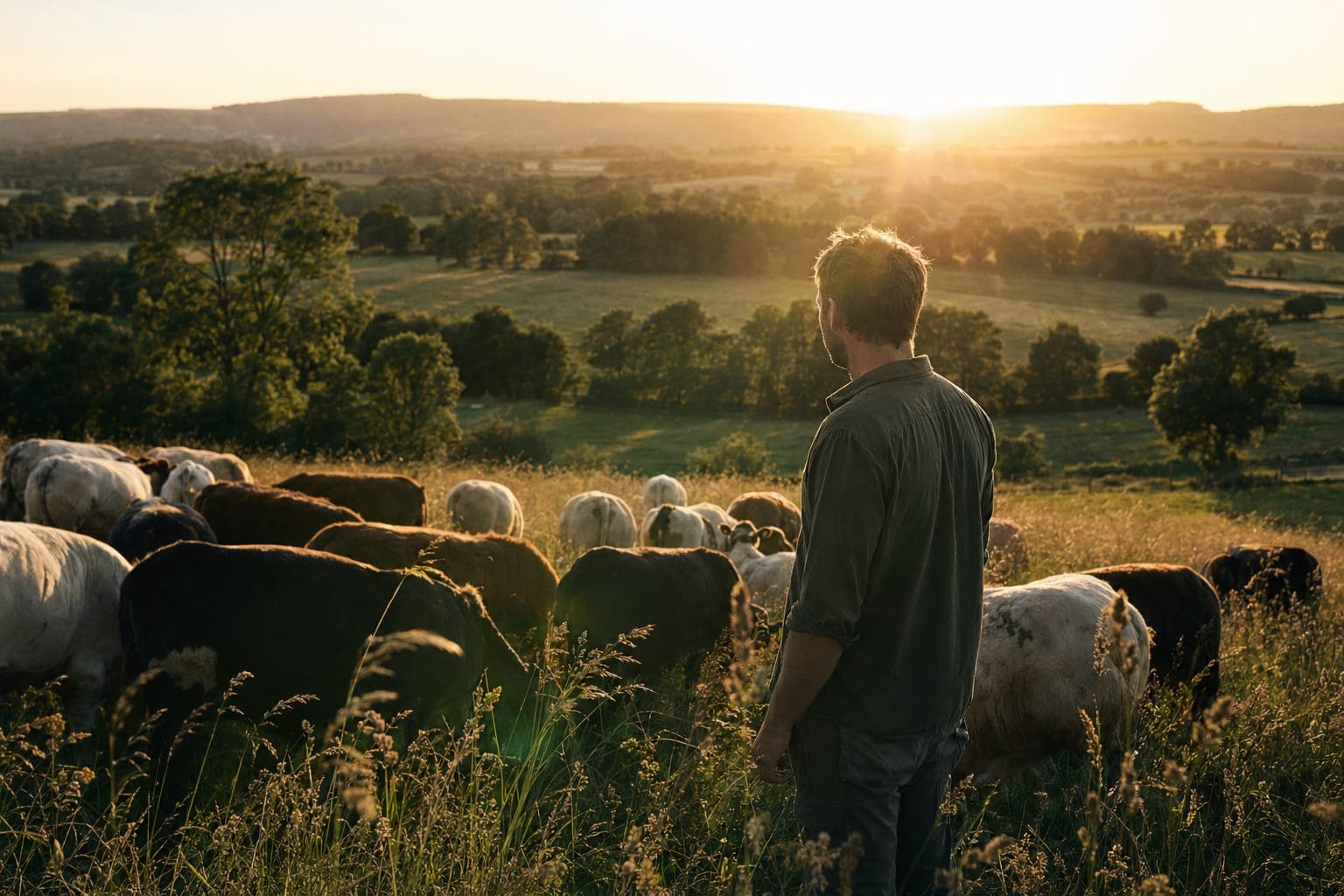
The pitch is compelling. Climate change is partly driven by agriculture. Livestock farming uses land and water. Lab-grown meat uses less of both. Therefore, lab-grown is the answer. The logic feels airtight. The conclusion is wrong.
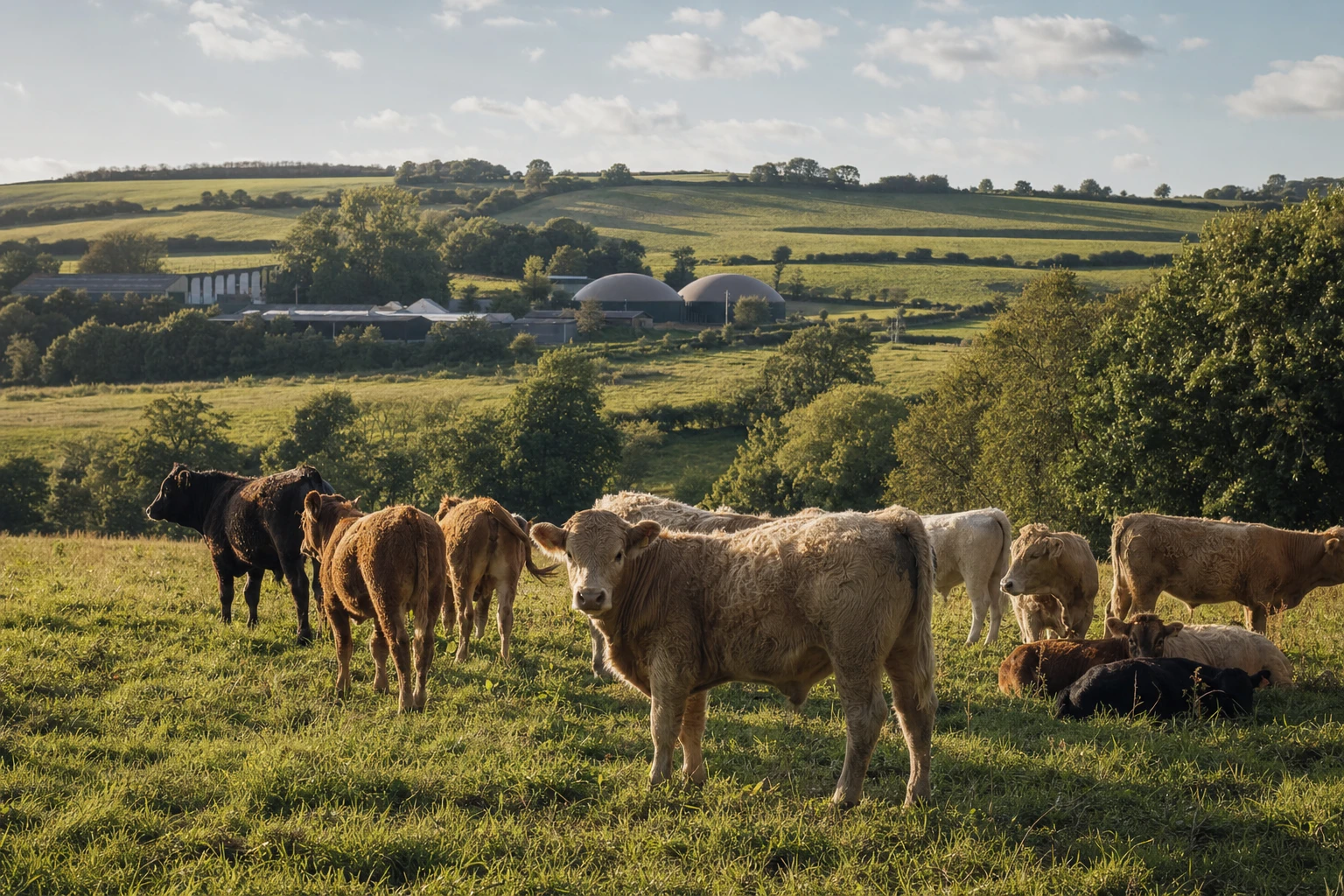
The lab-grown promise
Cultured meat, also called lab-grown or cell-based meat, is produced by taking animal cells and growing them in bioreactors with growth media. The process is accelerated and controlled. No animal needs to live. No pasture needs to be used. Just cells, nutrient broth, and factory conditions.
The pitch to environmentalists is climate impact reduction. The pitch to consumers is ethical meat without the ethical costs. The pitch to investors is massive addressable market and inevitable technological improvement bringing costs down.
On all three pitches, there's either incomplete information or marketing distortion. The climate argument assumes regenerative beef farming is the baseline. The ethical argument ignores what growth media actually contains. The economic argument assumes manufacturing scale improvements that may never materialise.
The nutritional reality
A cultured meat cell, grown in a bioreactor, contains the same DNA and basic structure as a cell from a living animal. But it didn't develop under the same conditions. It didn't integrate nutrients from diverse forage. It didn't live in a body that used those nutrients to build complex systems.
The nutrient profile of cultured meat is largely determined by the formulation of the growth medium and supplements added during production. Independent peer-reviewed nutritional analyses of commercially relevant cultured meat products are still limited.1
More fundamentally, cultured meat is not the full animal. You're eating muscle cells. You're missing organs, bones, fat. The ancestral diet included the entire animal precisely because different tissues provided different nutritional signatures. A bioreactor can produce muscle. It cannot produce a liver, or marrow, or the complex fat profiles from grass-fed beef.
From a nutritional standpoint, cultured meat is closer to commodity chicken breast than to whole animal food. It's protein, mostly. The ancillary nutritional complexity is either missing or must be fortified in after the fact.
A lab cannot replicate the nutrient complexity of an animal that lived on regenerative pasture. It can produce a protein product that looks superficially similar.
Why food systems matter more than food
The argument for cultured meat is almost always made at the level of individual food products. This food is grown here in this way. That food is made in a lab. Which is more sustainable? At that level, lab-grown often wins. It uses less land. Less water. Less feed conversion.
But food doesn't exist as isolated products. It exists within systems. Regenerative farming isn't just about producing beef. It's about rebuilding soil, sequestering carbon, managing water, creating employment, building supply chains, establishing relationships between producer and consumer.
Industrial agriculture has been solving the "food product" problem for seventy years. We can produce calories cheaply. What we've lost is the system that connects land management, food quality, regional economies, and consumer health.
Cultured meat solves the "how do we produce protein molecules most efficiently" question. It completely ignores the "how do we rebuild land, employ people, create resilient regional food systems, and produce nutritionally complex food" questions.
A shift to cultured meat wouldn't heal agricultural land. It would abandon it. The pasture isn't being used to grow cattle, so it becomes either unused or it's used for bioreactor electricity generation or lab facilities. The land is still not regenerating. The regional food economy is still centralised.
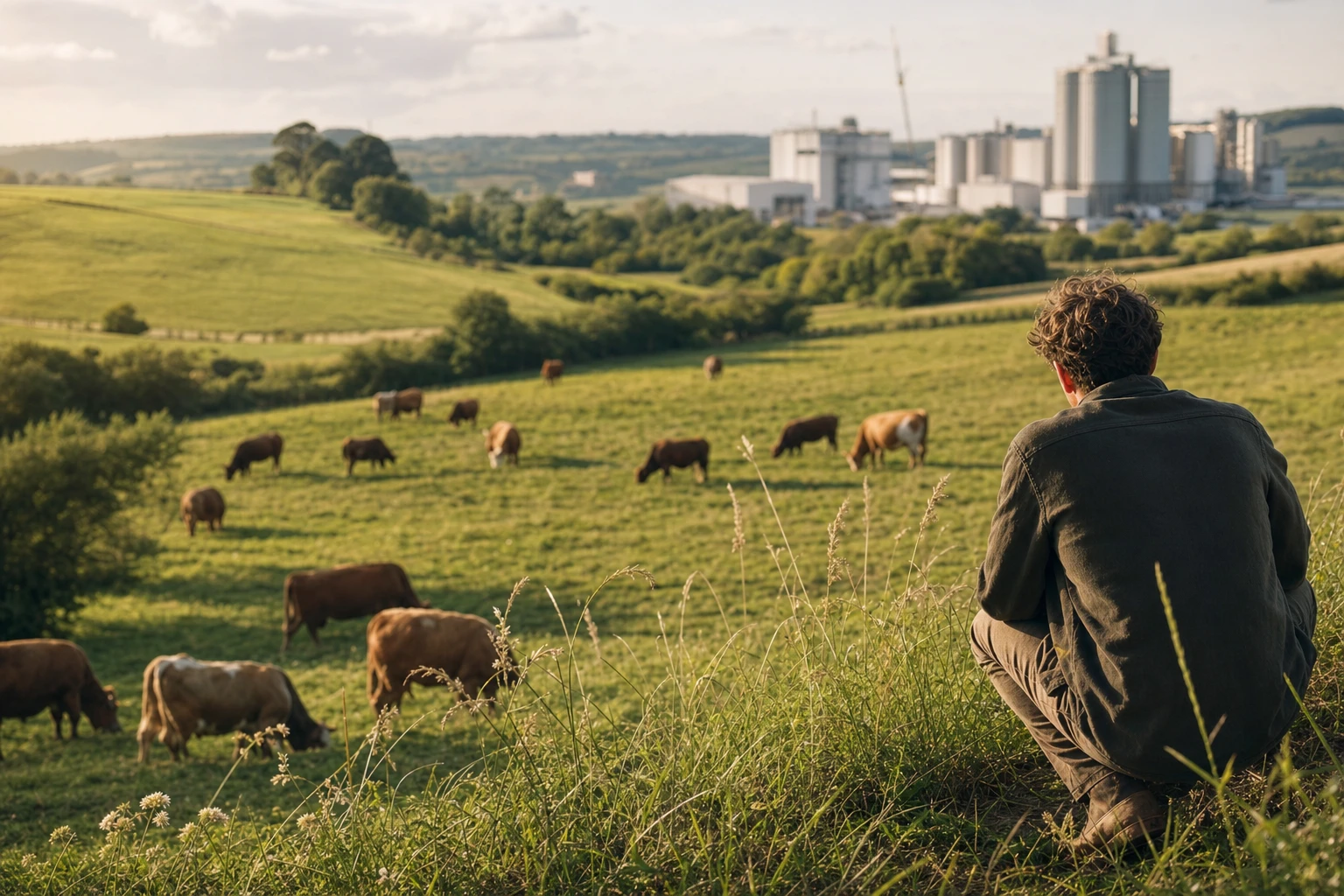
Ecology, not just efficiency
Regenerative farming, at its best, heals ecosystems. Rotational grazing rebuilds soil. Diverse pasture supports biodiversity. The surrounding land becomes richer, more resilient, more capable of supporting life.
A lab-grown meat facility is ecologically neutral at best. It's a manufacturing plant. It produces protein. It does nothing for the land, the soil, the ecosystem. And the energy powering those bioreactors has to come from somewhere. If it's renewable energy, great. If it's not, you've shifted emissions from the farm to the power plant.
Lifecycle assessments of cultured meat depend heavily on assumptions about energy sources and growth-medium production; some recent studies suggest near-term cultured meat could have a higher global warming potential than conventional beef if powered by current grid electricity, although the literature is contested.2
More problematically, cultured meat doesn't solve the agricultural system problem. It abandons it. Industrial monoculture would still exist for soy and corn for bioreactor feed, for glucose syrups for growth media, for all the inputs that keep cells alive. You've just moved the problematic food system out of sight.
Lab-grown meat is an escape hatch from solving the food system. Regenerative farming is the solution itself.
Get farming and sourcing guides, free
Two short reads a week on regenerative farming and where real food comes from.
By signing up you agree to receive emails from us. No spam, unsubscribe anytime.
Sovereignty vs innovation
Cultured meat production requires significant technical infrastructure, biotechnology expertise, and capital investment. It's centralised, patented, and controlled. A handful of companies will own the cultured meat supply chain. Farmers become unnecessary.
Regenerative farming can be practised at any scale. A farmer with knowledge, animals, and land can do it. It can be taught. It can be adapted to local conditions. It's decentralised and resilient.
Food sovereignty isn't an abstract concept. It's the ability of a community to feed itself from local resources, with knowledge held locally, with supply chains controlled locally. Cultured meat centralises that power. Every region becomes dependent on the same handful of bioreactor companies for protein.
This matters when systems fail. If a bioreactor facility has a contamination issue, an entire region loses protein supply. If a local regenerative farm has a bad year, the region adapts. If the bioreactor company decides to withdraw from a market, that region is left without protein infrastructure. A local farm system is resilient by nature.
Cultured meat is being sold as the future of food. But the future it creates is one where food security depends on technology companies and their chosen infrastructure. Regenerative farming creates a future where food security depends on people, knowledge, and land.



1 of 9
Daily blend
100,000+ thriving families4.9 on Trustpilot
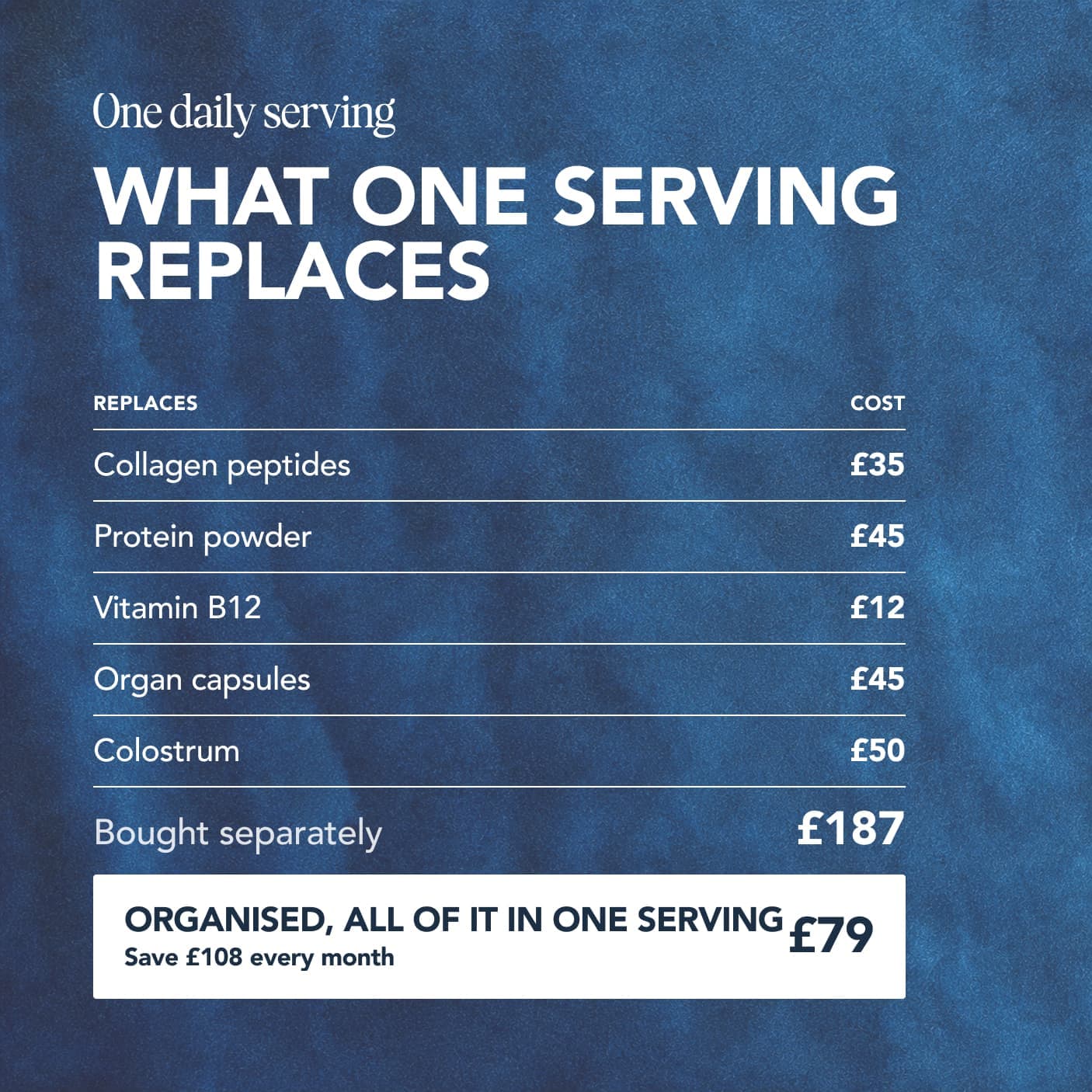
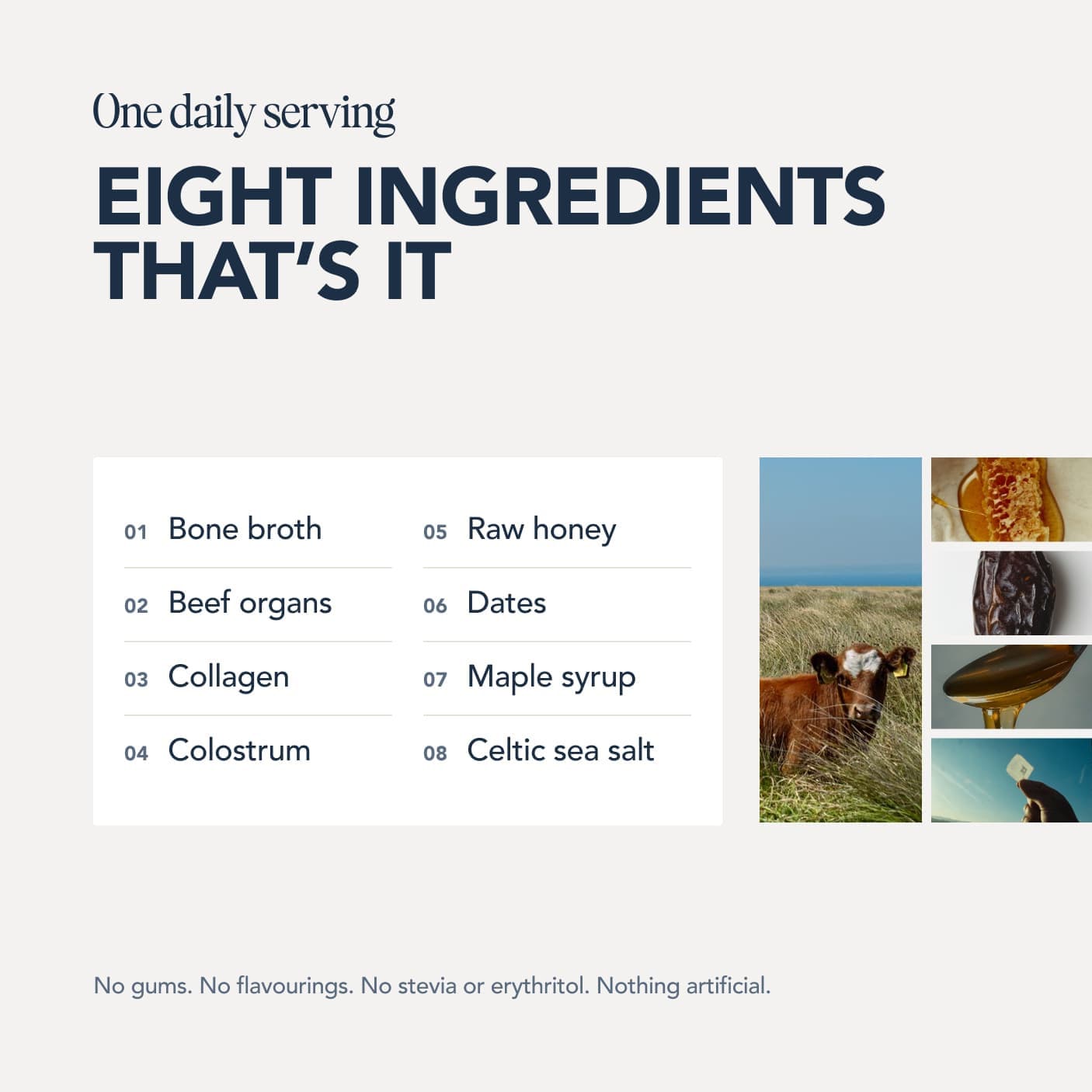
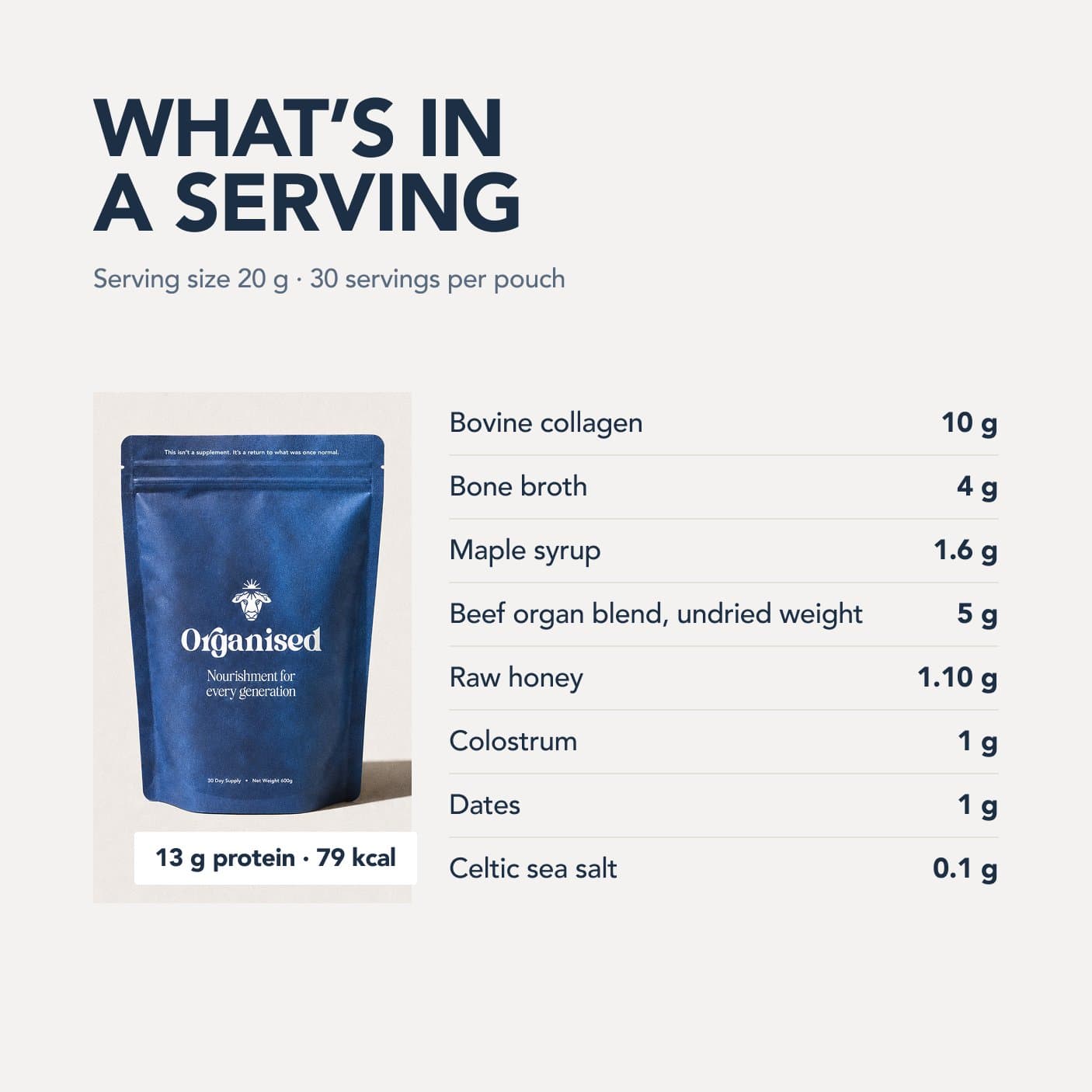
Eight real ingredients built around grass-fed beef organs, collagen and colostrum. Nothing synthetic added.
Free with your first order, worth £38. Plus £10 off the pouch with a subscription.



Free UK shipping · Made in England · 100 day money back guarantee on your first pouch · Skip, pause or cancel anytime
The actual future
Cultured meat might exist as a technology. It might become a niche product. But it's not going to replace whole animal food any more than processed cheese replaced real cheese. It will exist as an industrial food product for people with no access to better options and corporations with vested interests in central control.
The actual future of food, the one that produces healthy humans from healthy ecosystems, is regenerative. It's local. It's based on the principle that healing land and producing nutritious food are the same activity, not competing goals.
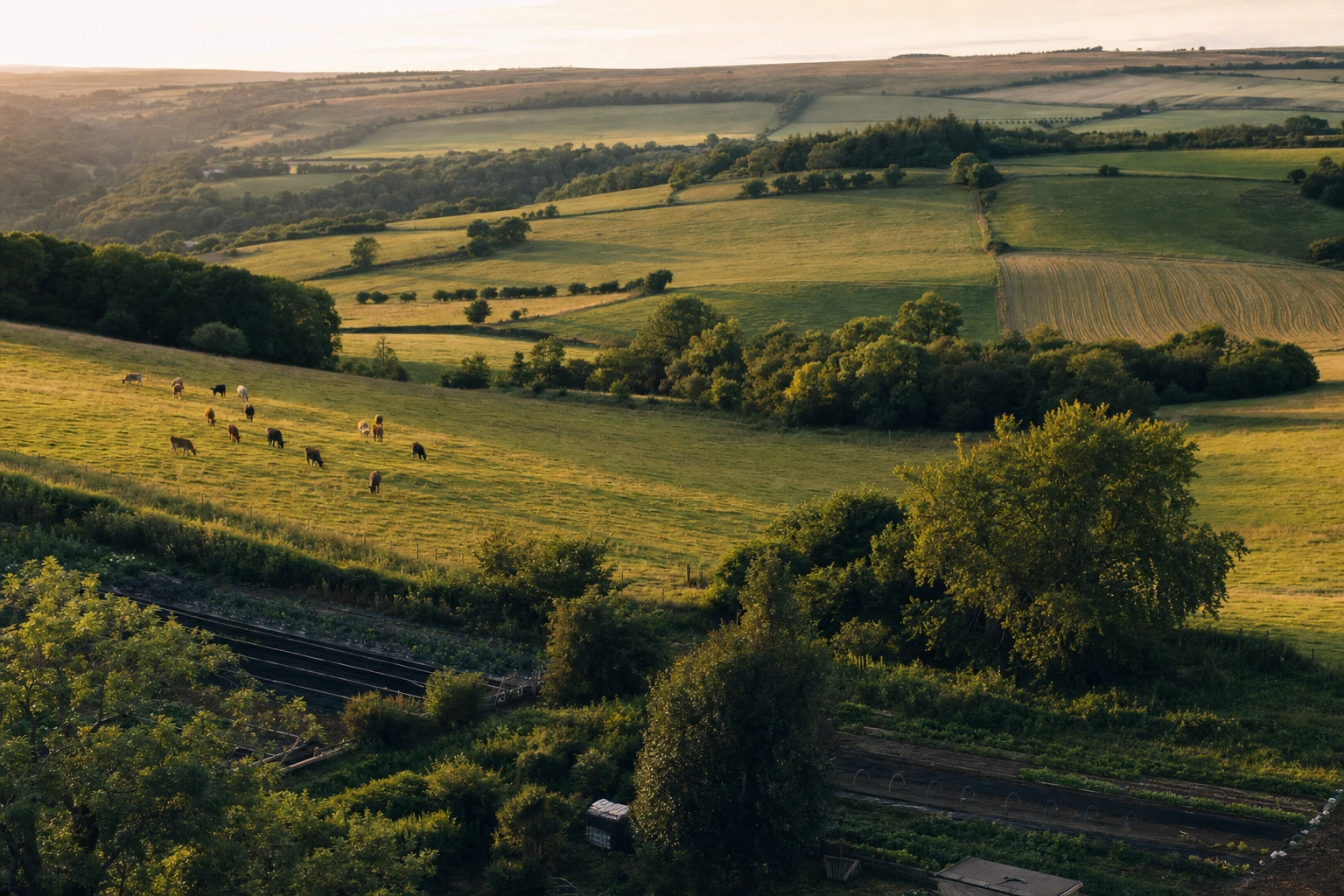
This future is already being built by farmers all over the world who rejected industrial agriculture and returned to principles that actually work. Pasture-based cattle operations. Rotational grazing. Diverse polycultures. Soil-building practices.
These systems are harder than industrial agriculture. They require knowledge, presence, and attention. They cannot be automated the way commodity farms are. They produce less total tonnage of food per unit of land. But they produce more nutrition per calorie. They rebuild rather than deplete. They employ people rather than replace them.
The future is not a choice between industrial agriculture and cultured meat. It's a choice between those two and regeneration. And regeneration is the only option that actually solves the problem.
The bottom line
Don't let technological inevitability distract you from a simpler truth. We already know how to produce nutritious food at scale. We've known for most of human history. Regenerative farming is that knowledge applied with modern understanding of ecology and nutrition.
Lab-grown meat is a technological solution to a problem that doesn't actually need technology. It's an escape hatch for people who want to keep using the land destructively, but feel bad about it. But you can't simultaneously wreck agriculture and fix food by inventing a new food product.
The choice isn't between beef and cultured meat. It's between supporting regenerative farms and supporting laboratory production systems. One heals the land and produces nutrition. The other is industrial agriculture with a different name.
References
Every source below was checked on 27 August 2026. Each PubMed, PMC and DOI identifier was resolved against NCBI or Crossref, and what it opens is printed under the citation, so you can see the link goes where the citation says without leaving the page. Where a citation and its identifier disagreed, the citation was corrected to the record or the reference was deleted along with the sentence marker that pointed at it, and where the resolved paper turned out not to support the sentence, the sentence was cut back to what it does support. Borrowed authority is worse than none, because it looks like rigour.
- Chriki S, Hocquette JF. The Myth of Cultured Meat: A Review. Frontiers in Nutrition. 2020. https://pmc.ncbi.nlm.nih.gov/articles/PMC7020248/Checked 27 August 2026: PMC7020248 opens Chriki S, Hocquette JF, The Myth of Cultured Meat: A Review. Front Nutr 2020;7:7. PubMed indexes it as: Review.
- Risner D, Kim Y, Nguyen C, Siegel JB, Spang E. Environmental impacts of cultured meat: A cradle-to-gate life cycle assessment. 2023 (UC Davis preprint). https://www.biorxiv.org/content/10.1101/2023.04.21.537778v2Checked 27 August 2026: doi:10.1101/2023.04.21.537778 opens Risner D, Kim Y, Nguyen C et al, Environmental impacts of cultured meat: A cradle-to-gate life cycle assessment 2023.
Corrections
What this page used to say, and why it no longer says it. Corrections are dated and are never removed, because deleting the record of an error is a second error. Every guide we have corrected is listed at our corrections log.
- 27 August 2026. Reference 1 listed an author, Negulescu, who is not on the record Crossref returns for that preprint. The byline was corrected and the entry now says plainly that it is a preprint.
Who wrote and reviewed this guide
Niall Kiddle
Author · Founder, Organised
Niall is the founder of Organised. He started the company in 2024 after fixing his own health the slow way: in 2022 he swapped a cupboard of synthetic supplements for real food, raw milk, organ meats, bone broth and honey, and felt the difference within months.
Areas of expertise: Ancestral nutrition, Organ meats, Whole-food supplementation, Gut health, Regenerative sourcing
Read Niall's full profile
Pedro Rodrigues
Reviewer · Agronomist (farming and sourcing only)
Pedro is the agronomist Organised works with on farming and sourcing. His job on the guides is to keep the science honest: he reviews what we publish about soil health, regenerative agriculture, grazing and the way food is actually produced.
Areas of expertise: Regenerative agriculture, Agronomy, Soil health, Grass-fed farming, Food sourcing
Reviewed this guide on
Read Pedro's full profileBrowse the guides library
All guidesKeep reading
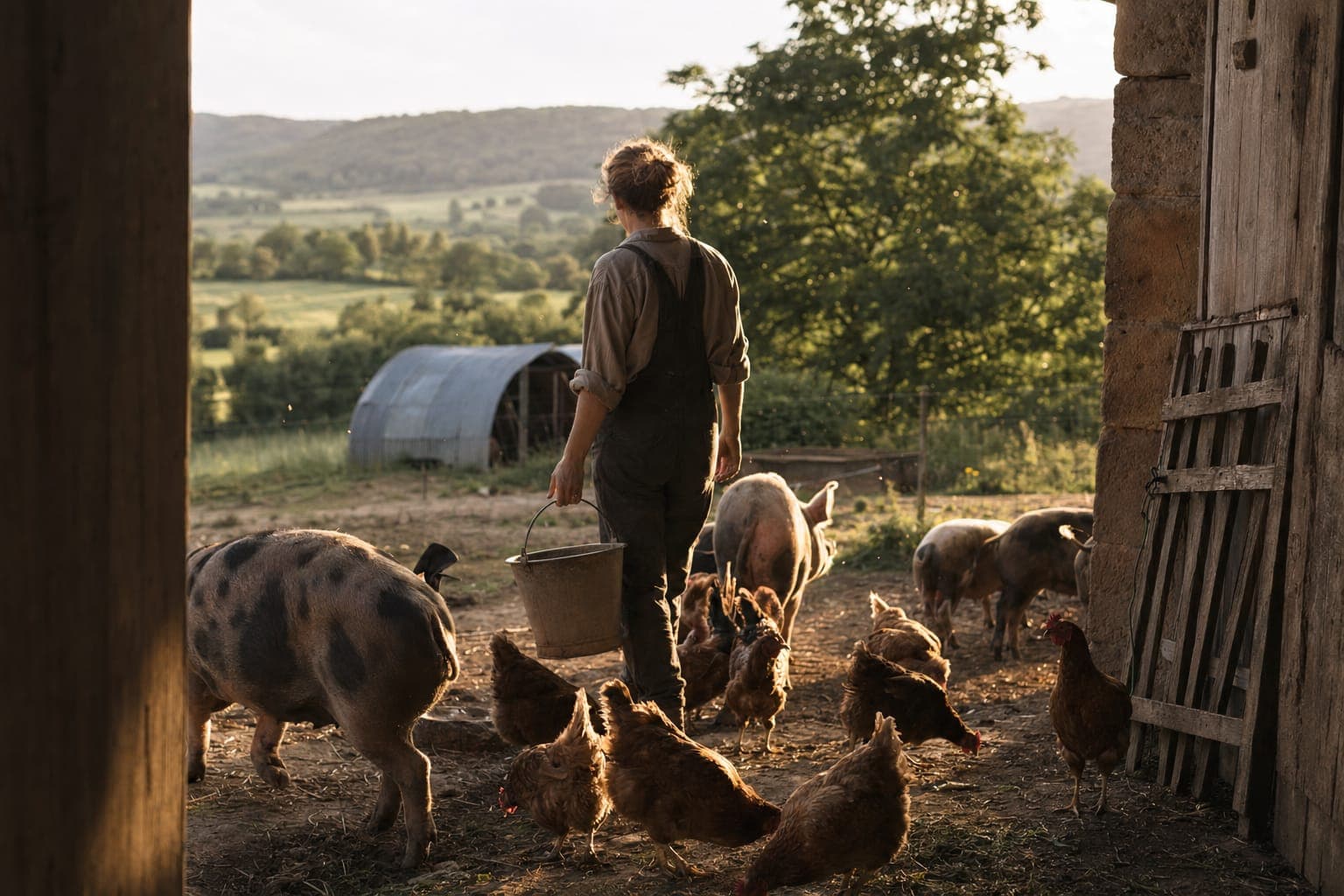
Farming
A Day on a Regenerative Farm
Step inside a regenerative farm and discover what actually happens daily. Meet the farmers and animals behind your food.
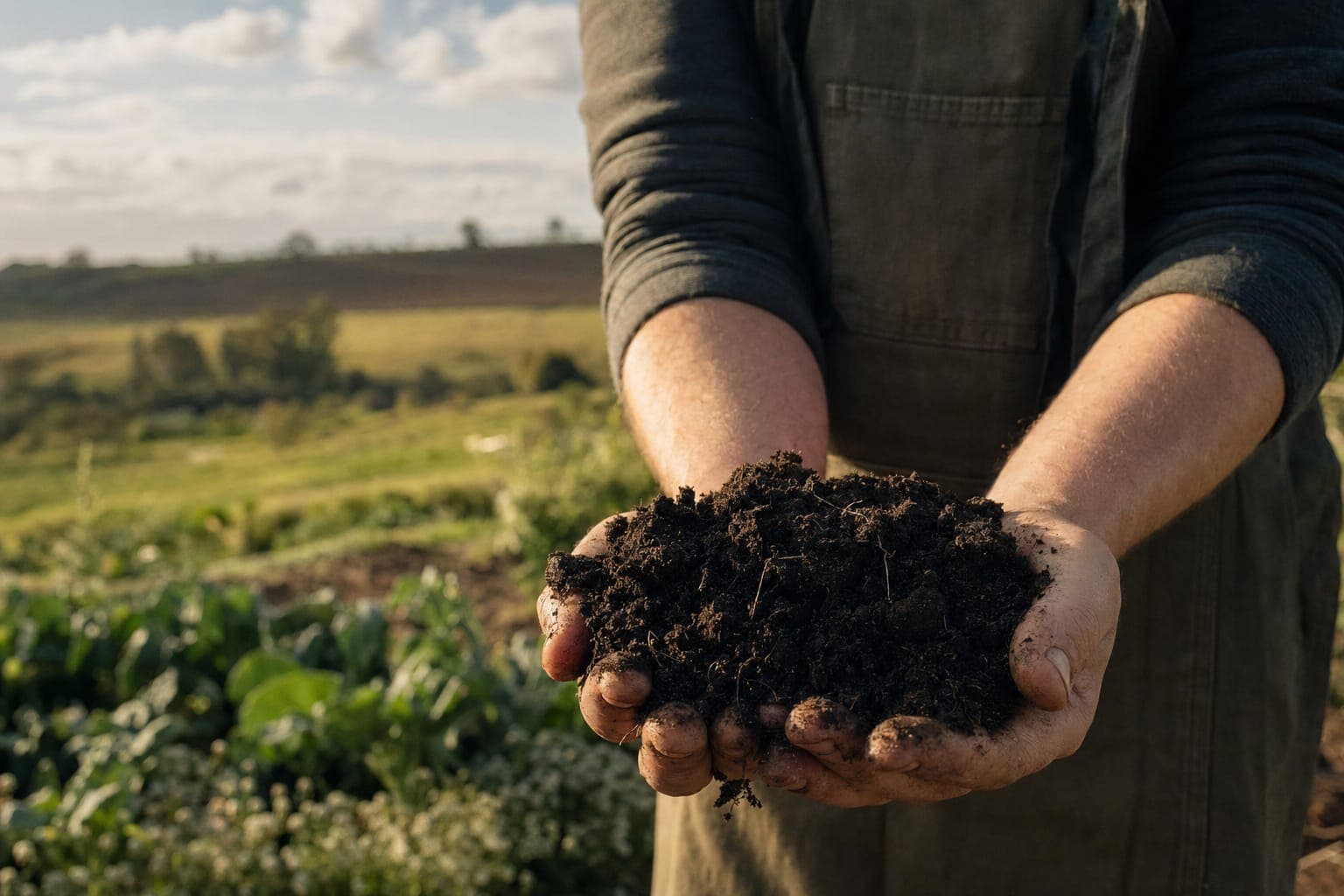
Farming
Soil Health: Why It Matters for Your Health Too
Depleted soil grows mineral-depleted food, which shapes what ends up on your plate. See how soil health directly affects your nutrition and your wellbeing.
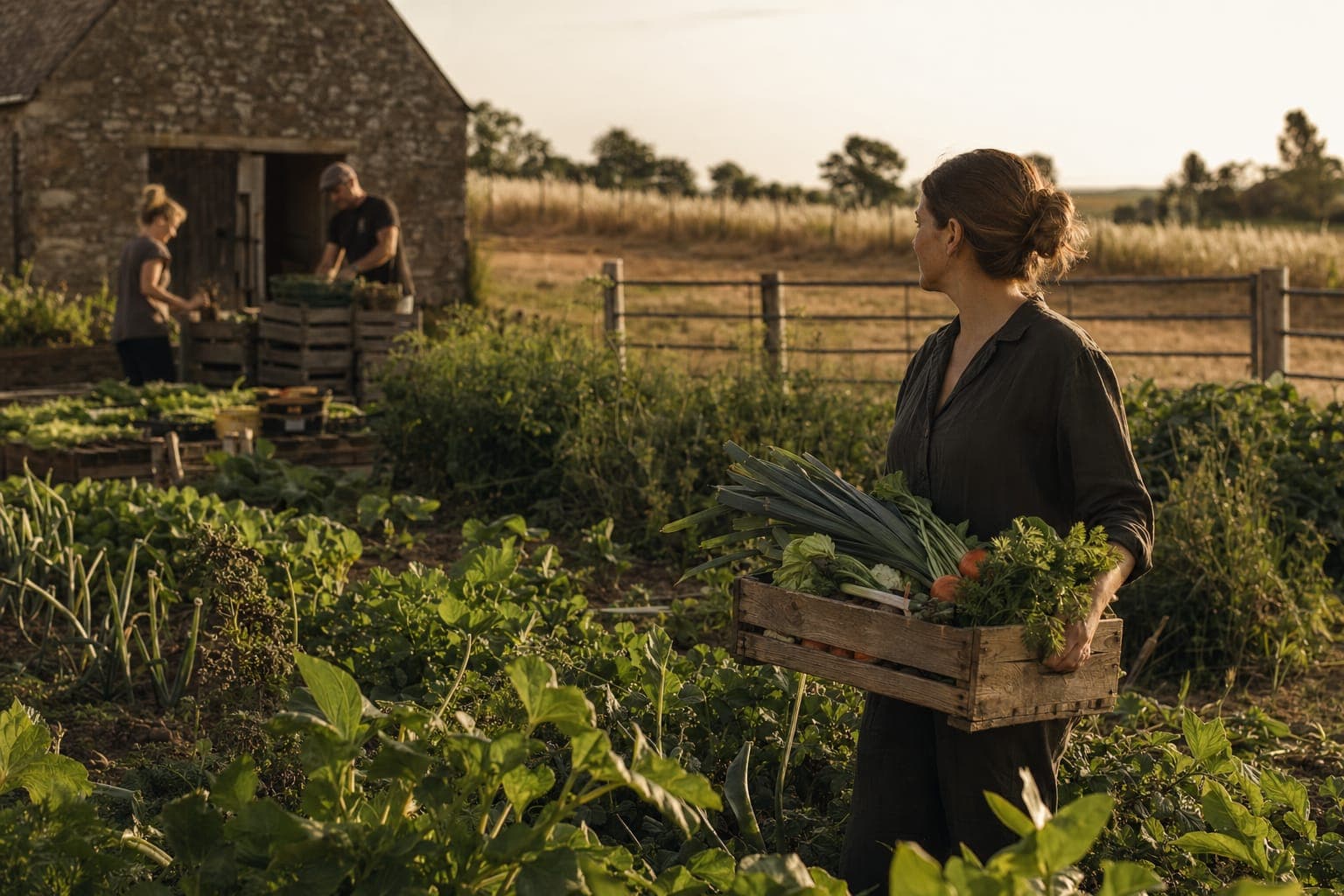
Culture & community
Food Sovereignty: Taking Back Control of What You Eat
Understanding food sovereignty, why knowing your food sources matters, and how to resist industrial food systems through local and regenerative choices.
Real food, made effortless
Shop the blendA few ways to use it
All recipes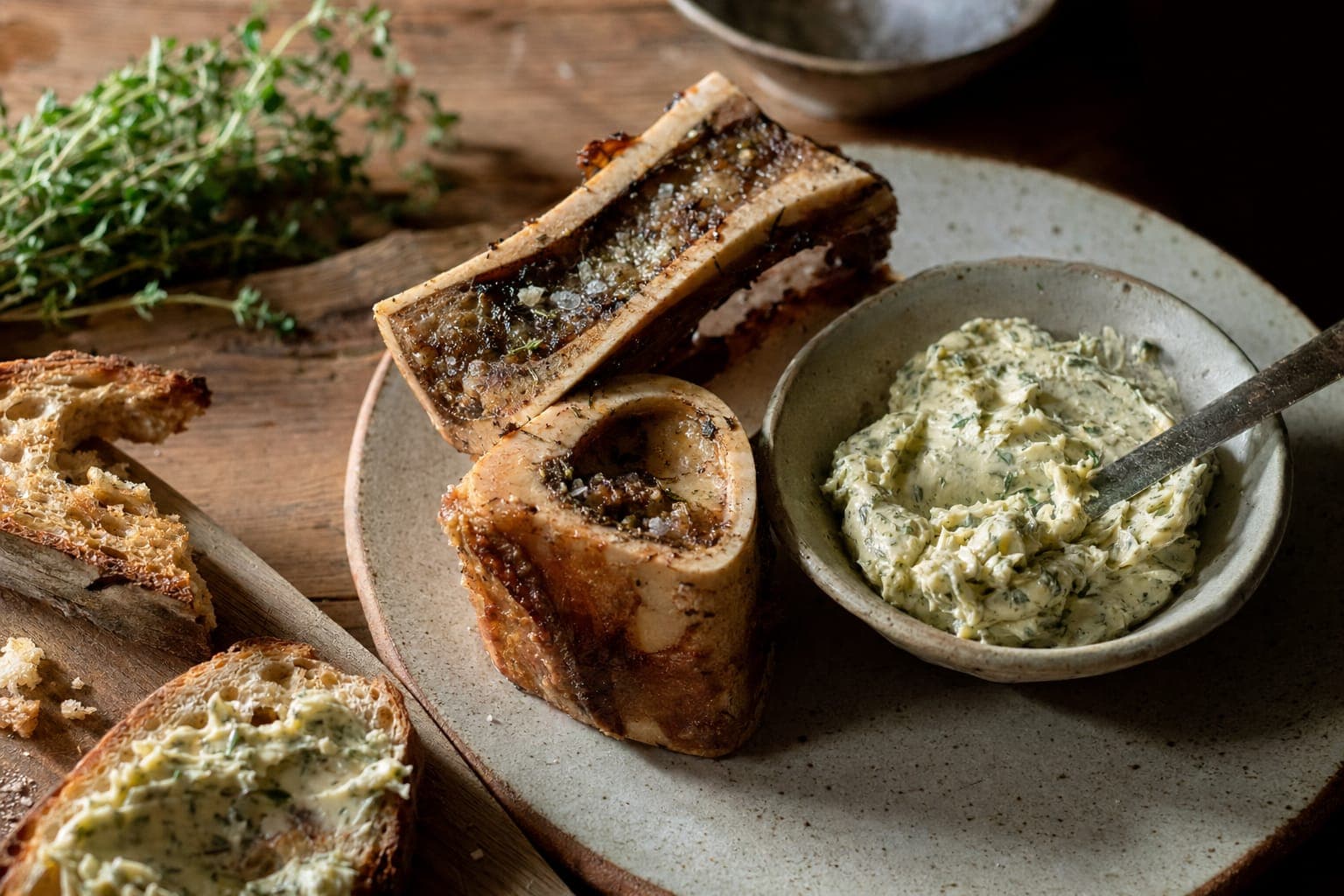
How to Make Bone Marrow Butter
Roast grass-fed marrow bones, scoop the marrow, and mix with butter and herbs. A nutrient-dense spread with fat-soluble vitamins.

The Organised Recovery Smoothie for After Exercise
A recovery smoothie made with beef protein, raw milk, frozen berries, collagen, and honey. Optimal nutrition in the 30-minute window after exercise.

Ancestral Breakfast Ideas from Around the World
Traditional breakfast recipes from cultures that got nutrition right. Japanese, Turkish, Scottish, and more. Whole-food breakfast inspiration.


 Join over 100,000+ members
Build a better food system with us
The Organised community is thousands of people choosing real food and backing the farmers who grow it, all of us trying to leave the world a little better than we found it. If that is what you care about too, you belong here.