The State of British Beef Farming in 2026
British beef farming in 2026 is operating on margins that would horrify anyone outside agriculture. Feed costs have trebled since 2020. Labour is scarce. Government support is tightening. And supermarkets want cheaper meat than ever.
By Niall Kiddle, Founder, Organised

Reviewed by Pedro Rodrigues, Agronomist (farming and sourcing only) ·
5 min read · Published · Updated · 3 cited sources
Makers of the Organised Daily blend, a grass-fed beef organ supplement from regenerative UK farms
This isn't dramatic storytelling. This is the straightforward position facing tens of thousands of UK farmers right now. And the choices they make about how to respond will determine whether regenerative British beef remains a possibility or becomes a niche luxury item.
The economics are brutal
A beef farmer's income depends almost entirely on two numbers: the weight of meat produced and the price per kilo. Both are being squeezed simultaneously. Supermarkets are importing cheaper beef from Ireland, South America, and the EU, then using British producers as a baseline, pushing domestic prices down.
Feed costs are the farmer's largest variable expense. Winter feeding can cost 20 pounds per animal per day in harsh winters. If you're running 200 head of cattle, that's 4,000 pounds per day during the housing period. For a six-month winter, you're looking at over 720,000 pounds in feed costs before you sell a single animal.
Against that, the supermarket is offering a price per kilo that's barely shifted since 2010. The farmer's costs have doubled. The price has stagnated. The farm's survival depends on either dramatically improving efficiency or accepting a declining standard of living.
Many farms have chosen a third option. They've exited beef production entirely. Land that supported beef cattle twenty years ago is now either sheep, wheat, or leased out to other operations. The number of beef farms in the UK has declined substantially since the year 2000.1
A farmer selling beef at a loss isn't virtuous or noble. They're bankrupt walking slowly to the end. The economics have to work or the farm dies.
Pressure from cheap imports
After Brexit, the UK negotiated its own trade agreements. The result has been relatively cheap beef imports, particularly from South America.2 Brazilian beef, grass-fed by default, can be produced at lower labour costs and sold into the UK market below what British farmers can produce it for.
This is comparative economics. Brazil has advantages British farms don't have. Larger land areas, lower labour costs, longer growing seasons. Some of Brazilian beef farming is genuinely good regenerative practice. Much of it has other complications around land use and deforestation, but from the UK farmer's perspective, the price competition is real.
Supermarkets will always buy the cheapest product that meets basic quality standards. They're legally obligated to shareholders to minimise costs. So if Brazilian beef is 15 percent cheaper and meets the same specifications, the British farmer is simply out of luck.
The irony is that UK grass-fed beef is often superior in mineral density and health properties to imported beef.3 But supermarkets don't market it that way. Beef is beef in their model. Price is the tiebreaker.
Why regenerative farming costs more
Regenerative beef production is more expensive than conventional beef per unit of output. This is simple fact. A regenerative farm running 80 head on carefully rotated pasture cannot produce beef as cheaply as a 500-head feedlot on grain.
The regenerative farm incurs costs that commodity operations don't face. More labour for daily animal movement. More expensive forage management. Higher land costs because productive regenerative land is rented at premium rates. Slower turnover on cattle because they're not pushed with growth promoters.
Against that cost, the regenerative farm produces a better animal. Higher mineral density. Lower stress hormones. Better meat quality. But most supermarket customers shopping by price can't taste the difference. They see a price tag and make a decision based on that.
So the regenerative farmer faces a choice. Compete on price and go out of business. Or find customers willing to pay for what they've produced. For most British regenerative beef farms, they've chosen the second option. They sell direct to consumers, to high-end restaurants, or to specialist retailers who understand quality.
Regenerative farming works economically only if customers understand why it costs more and choose to pay for it anyway.
Get farming and sourcing guides, free
Two short reads a week on regenerative farming and where real food comes from.
By signing up you agree to receive emails from us. No spam, unsubscribe anytime.
The whole-animal solution
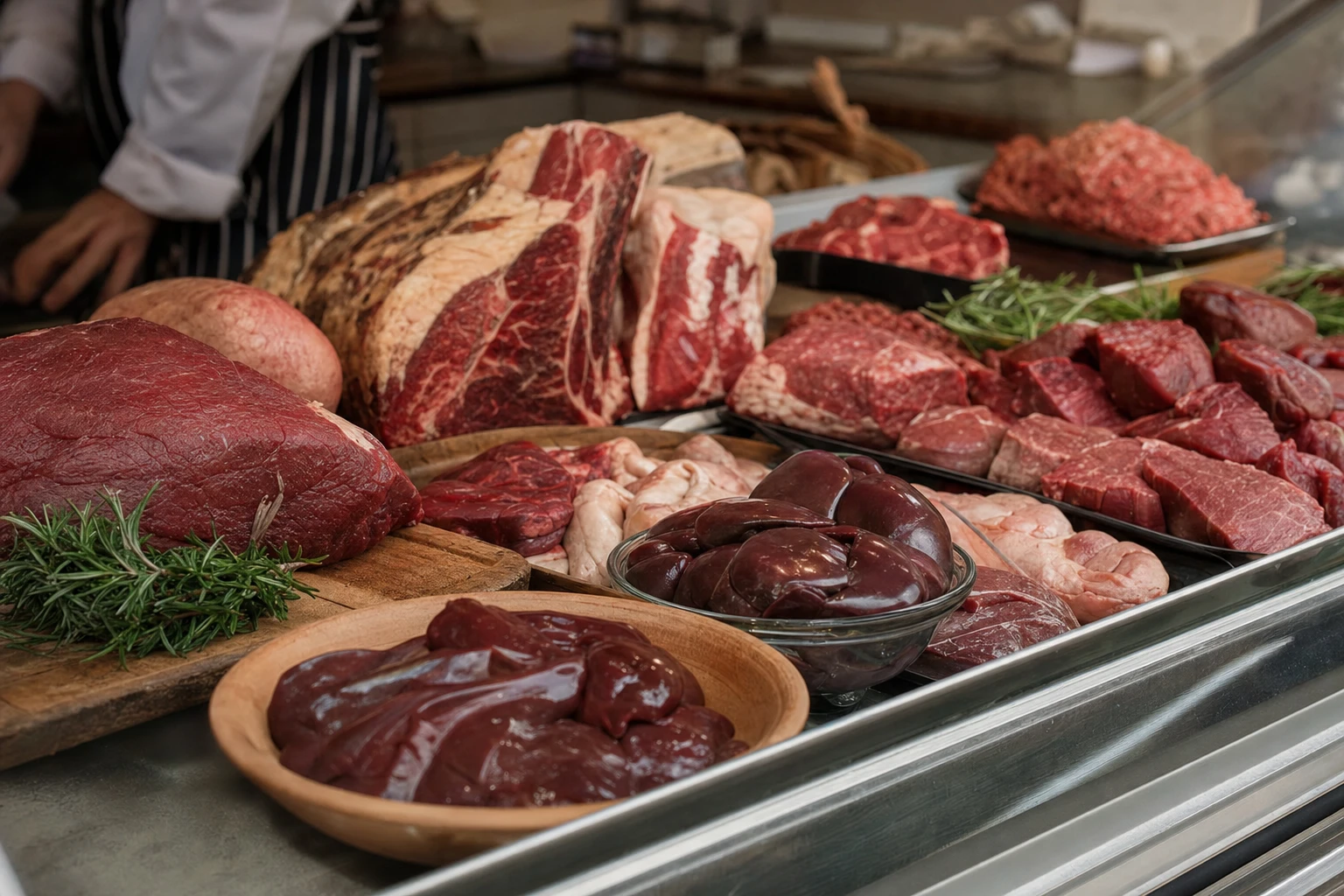
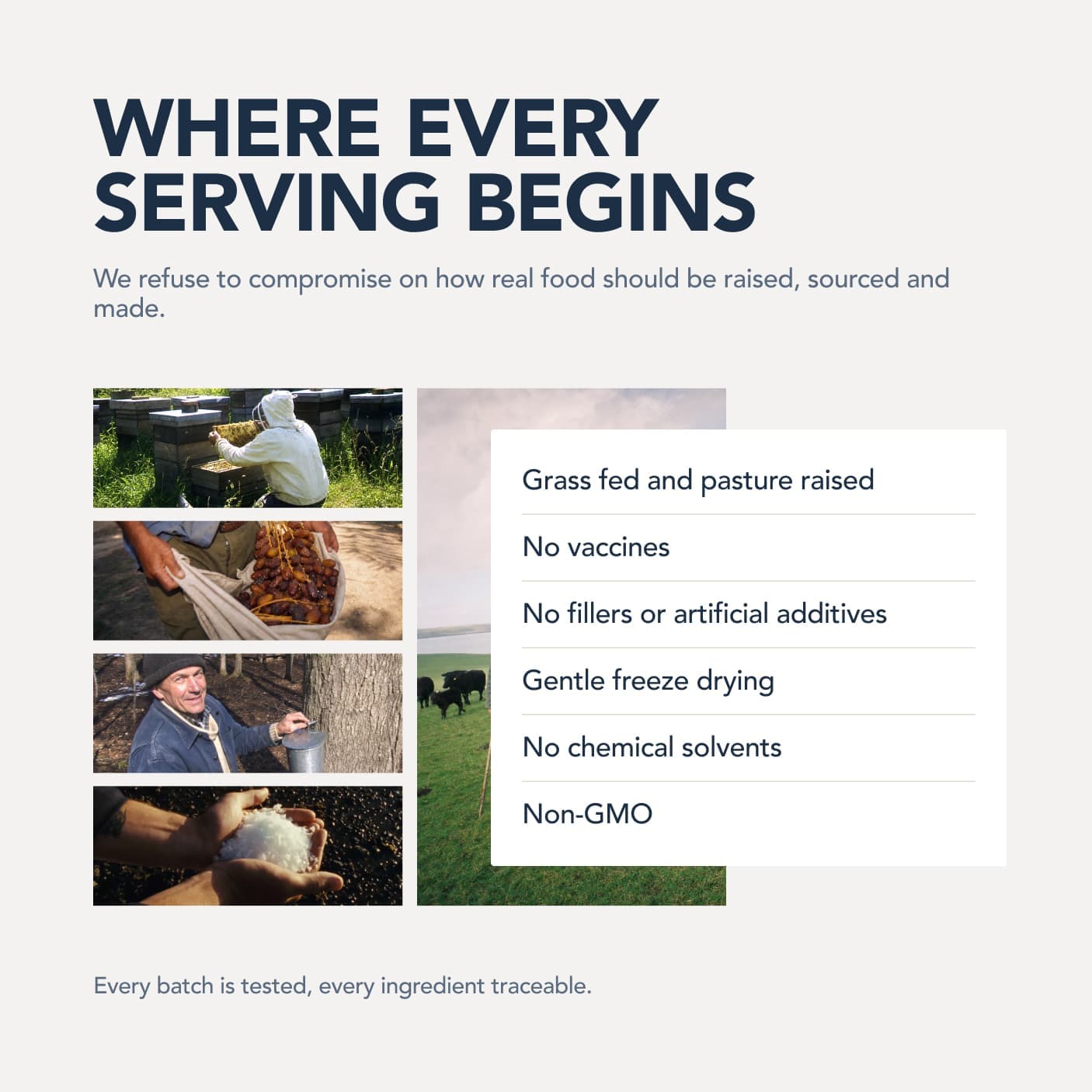
One of the ways a regenerative beef farm stays viable is through whole-animal sales. Rather than selling just the premium cuts (steak, roasting joints) and struggling to move the rest, they sell the entire animal. The nose, the organs, the bones, the tallow.
Organ meats are extraordinarily nutrient-dense. Liver, kidney, heart, spleen. In ancestral diets, these were valued above muscle meat. In modern supermarket culture, they're treated as waste. An animal sold to the supermarket system leaves most of its nutrition in the bin.
A farm that can sell the entire animal gets premium prices for the organs and uses, proper values for the bones (for broth, for gelatin) and tallow (for cooking, for soap). Nothing is wasted. The economics shift dramatically.
This requires customers who understand the value of these products and are willing to buy them. It requires education. It requires distribution channels that aren't supermarkets. But it's how regenerative farms actually survive economically.

1 of 9
Daily blend
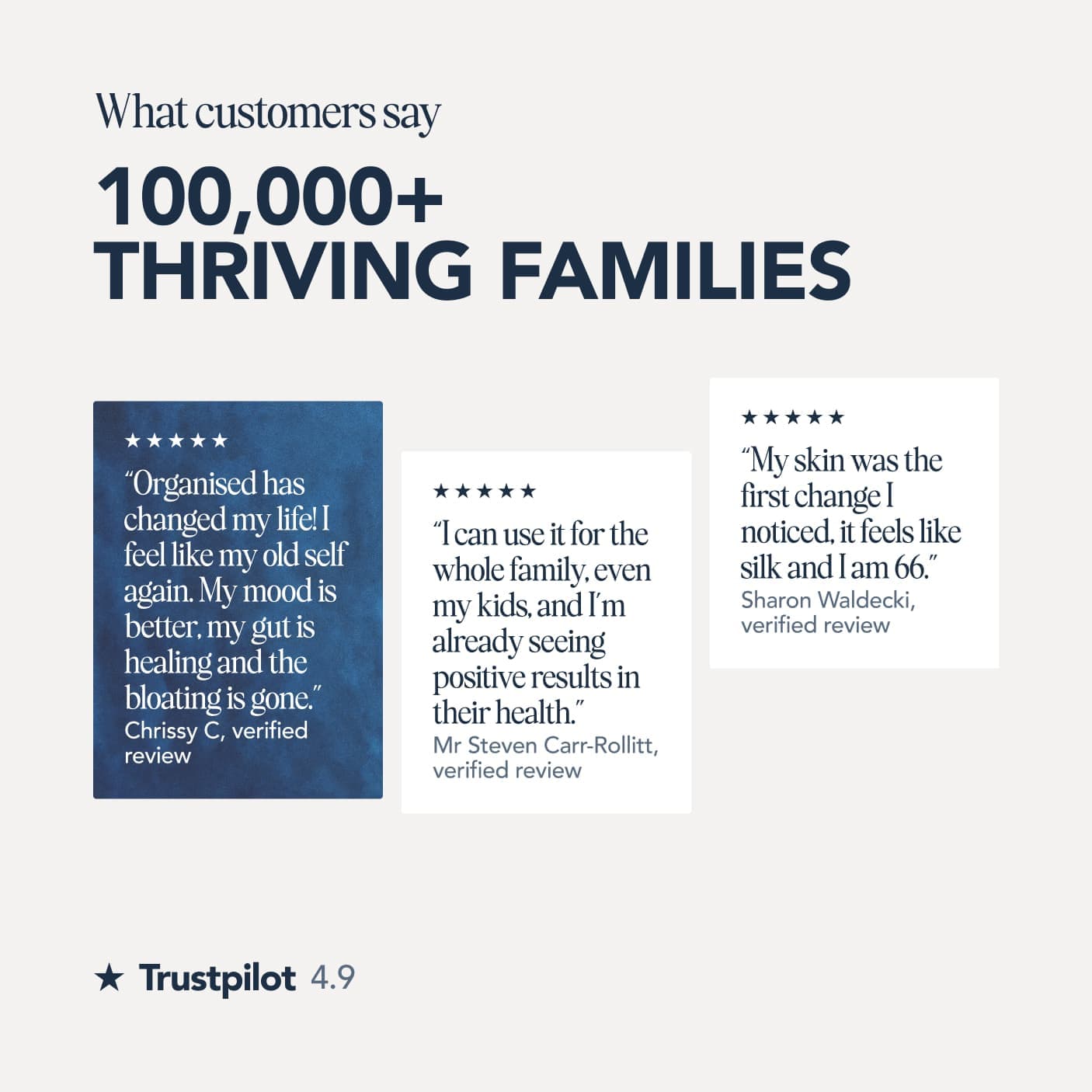
100,000+ thriving families4.9 on Trustpilot
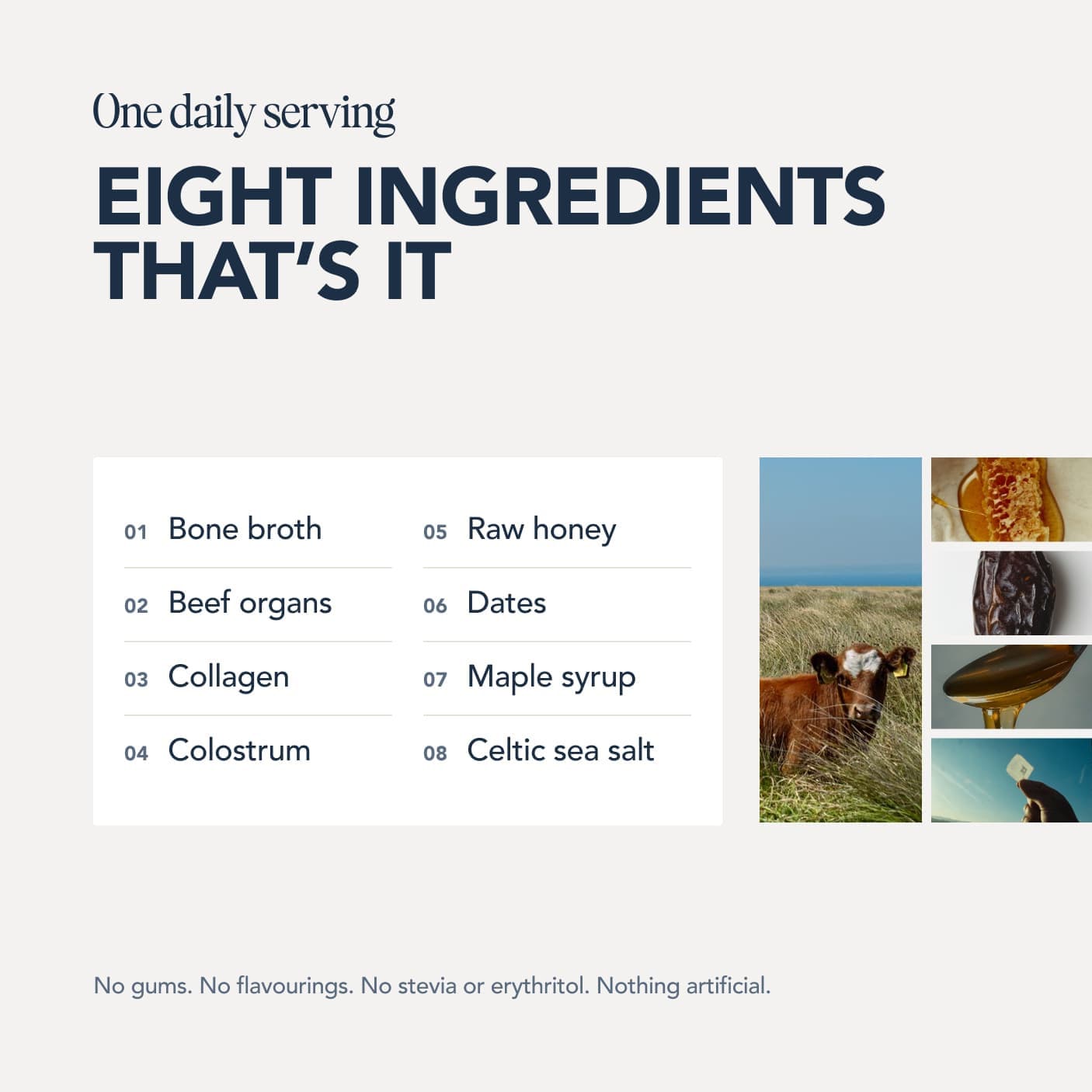
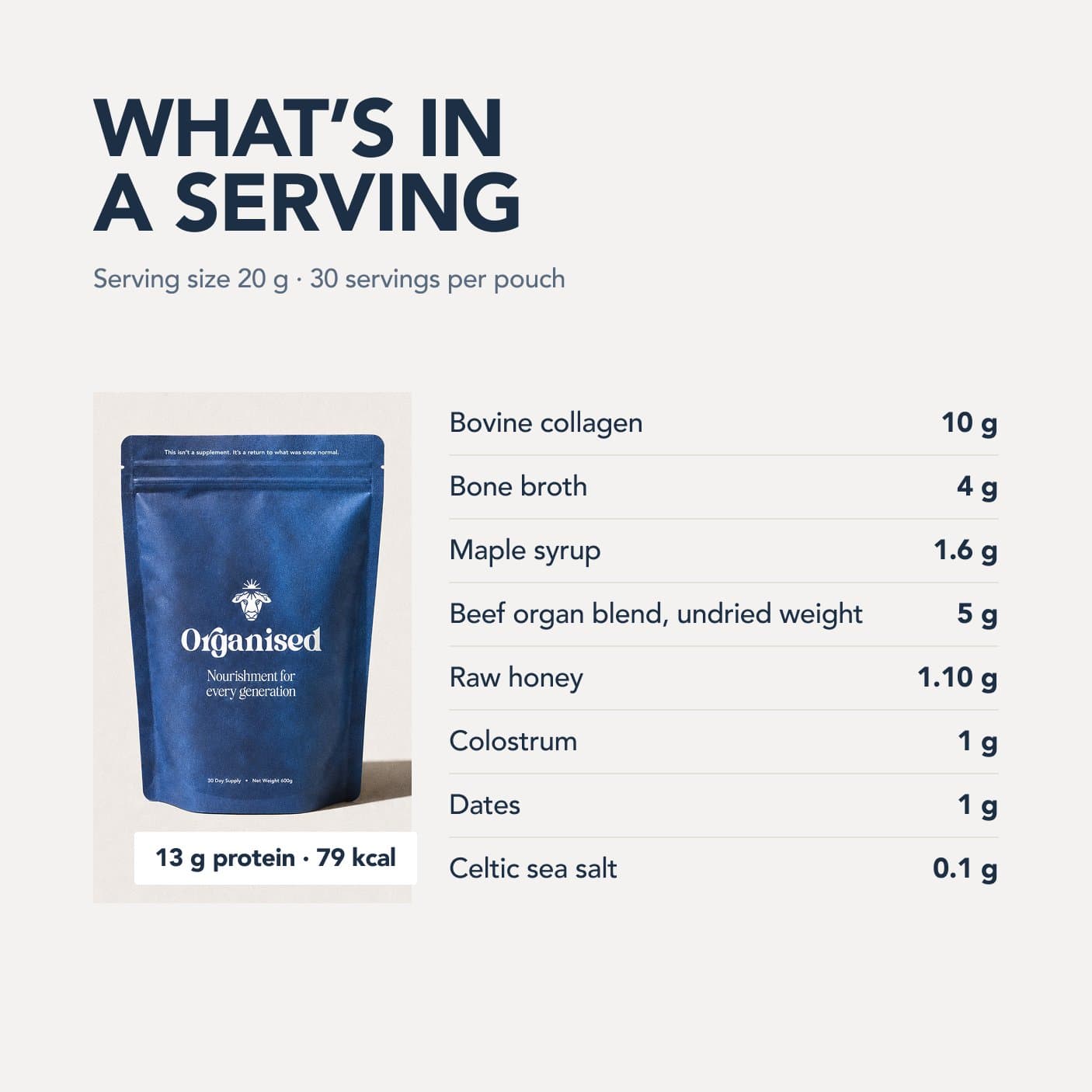
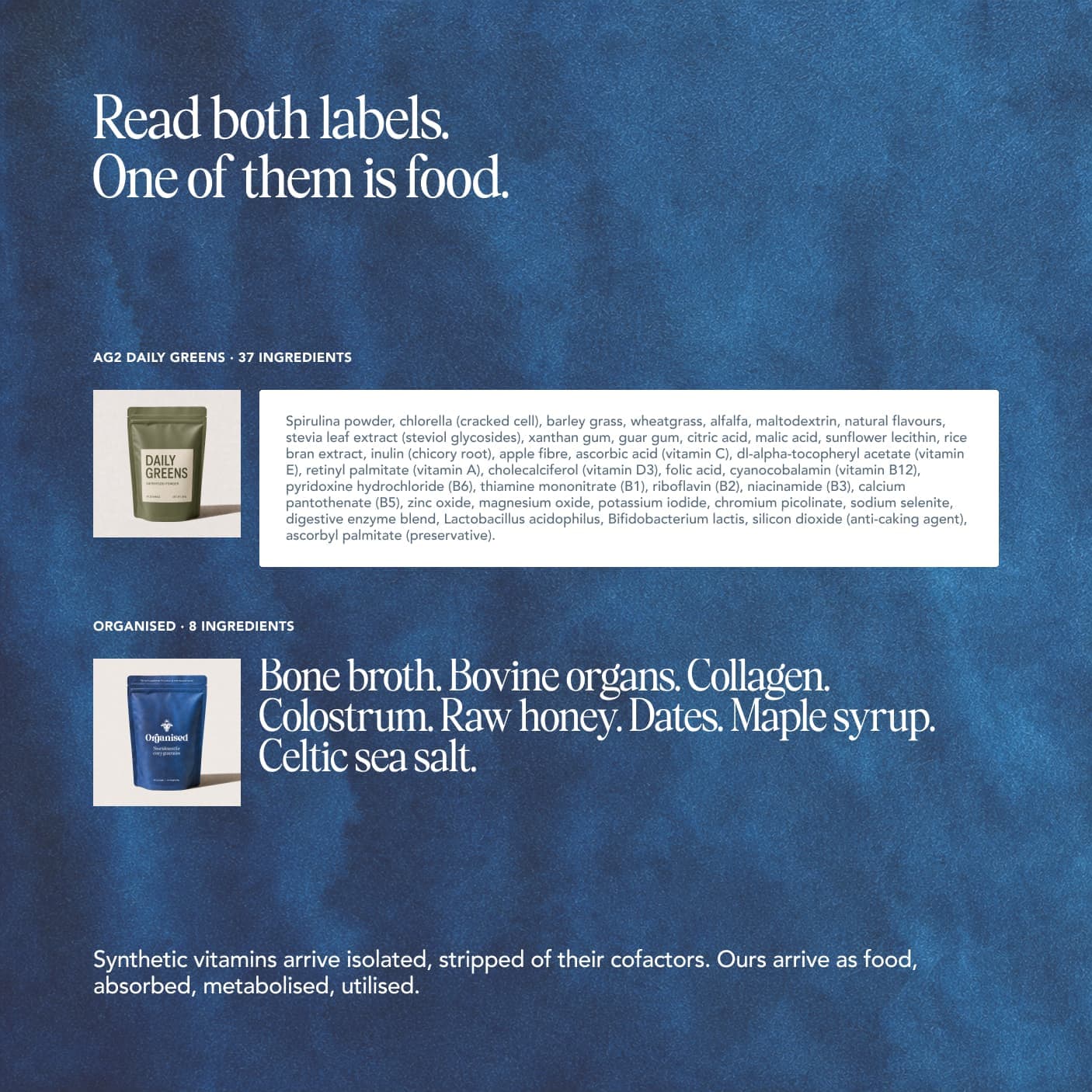
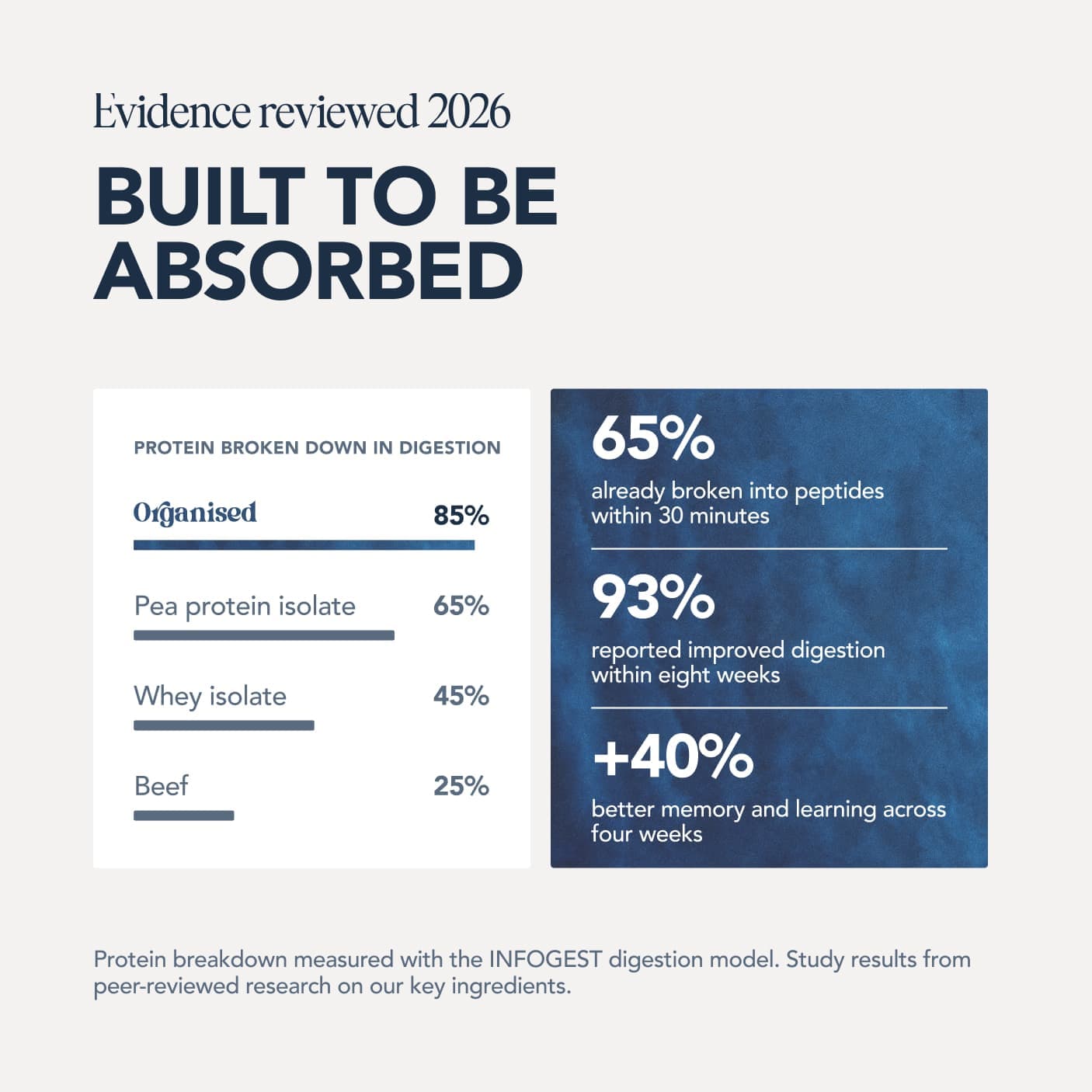
Eight real ingredients built around grass-fed beef organs, collagen and colostrum. Nothing synthetic added.
Free with your first order, worth £38. Plus £10 off the pouch with a subscription.



Free UK shipping · Made in England · 100 day money back guarantee on your first pouch · Skip, pause or cancel anytime
What consumer support looks like
Supporting British beef farming doesn't mean paying more for mediocre supermarket beef. It means seeking out farms doing it properly and paying what the product is actually worth. It means buying organs. It means using bones for broth. It means understanding that whole-animal use is the only way regenerative farming economics work.
It also means accepting that regenerative beef isn't abundant. A farm doing it properly can't scale production without compromising the practice. So you can't buy it at the supermarket in volume. You buy from the farm, or from a butcher they supply, in limited quantities.
When you pay a farm directly for regenerative beef, you're not paying a markup. You're funding the daily work. The observation. The land management. The decision to reject shortcuts. The slow, careful system that produces better animals and heals the land.
There are other ways consumer choice can matter. Supermarkets will shift if they see customer preference. If enough people ask specifically for British regenerative beef, if they're willing to pay for it, the price signal eventually reaches the buyer. Some supermarkets are beginning to recognise this. Most haven't yet.
Consumer support for British farming means buying direct when you can, paying fairly, and understanding that the price reflects the real cost of doing it right.
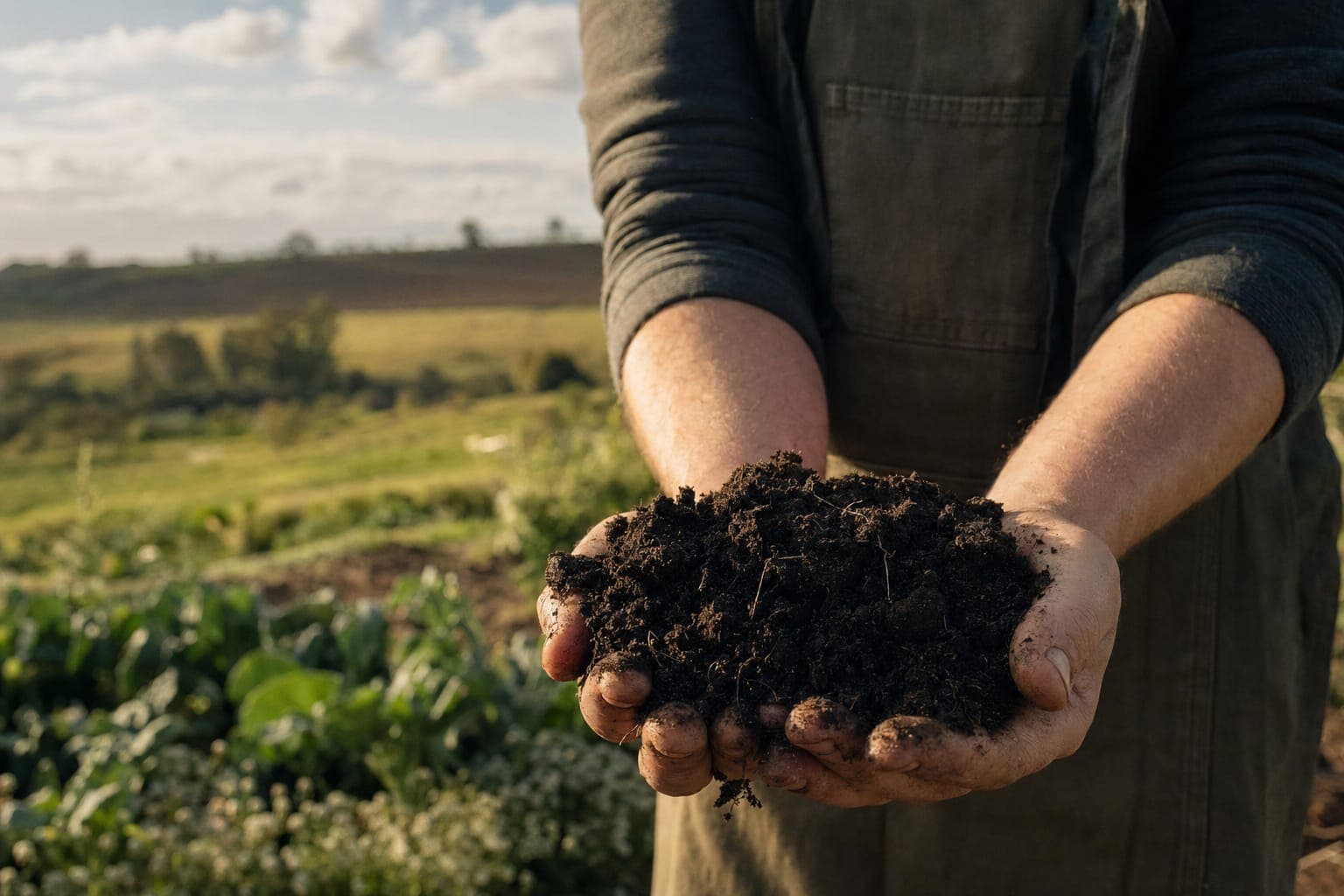
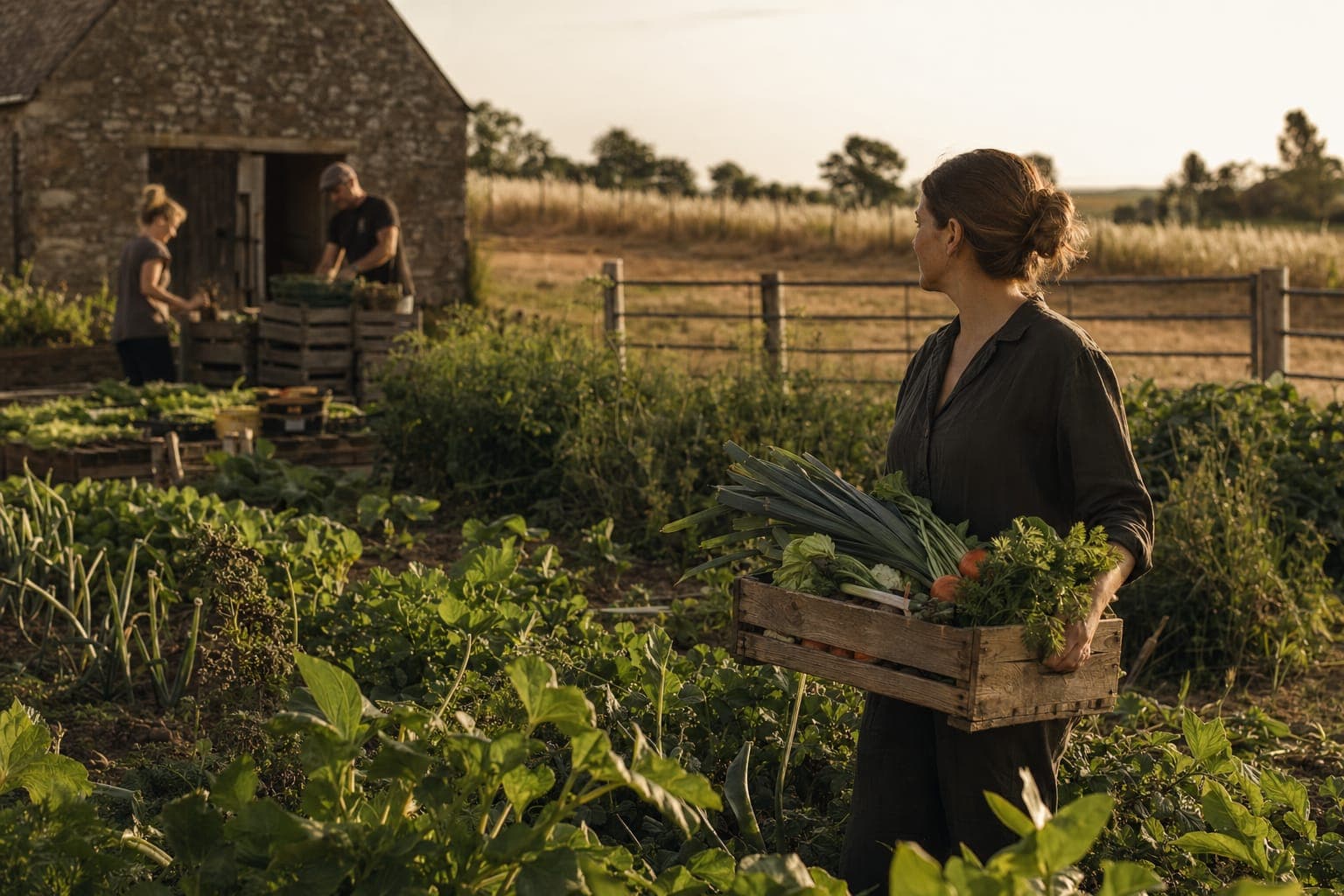
This rhythm, repeated across thousands of UK farms practising regenerative management, is the foundation of soil health and sustainable food production.
The bottom line
The state of British beef farming in 2026 is precarious. Not because British farmers are bad at what they do. Because the economics of commodity production have moved against them. The farms that are surviving and thriving are the ones that have found direct customers willing to pay for quality, that use the entire animal, and that've built their model on regenerative practice rather than commodity volume.
When you choose British regenerative beef, you're not making a sentimental choice. You're making an economic one. You're telling farms they can stay viable by doing it right. Without that signal, they won't. They'll either exit the business or intensify their production to compete on price, which means the regenerative approach disappears.
References
Every source below was checked on 27 August 2026. Each PubMed, PMC and DOI identifier was resolved against NCBI or Crossref, and what it opens is printed under the citation, so you can see the link goes where the citation says without leaving the page. Where a citation and its identifier disagreed, the citation was corrected to the record or the reference was deleted along with the sentence marker that pointed at it, and where the resolved paper turned out not to support the sentence, the sentence was cut back to what it does support. Borrowed authority is worse than none, because it looks like rigour.
- Department for Environment, Food & Rural Affairs (DEFRA). Agriculture in the United Kingdom.
- Agriculture and Horticulture Development Board (AHDB). UK beef trade and cattle market reports.
- Daley CA et al. A review of fatty acid profiles and antioxidant content in grass-fed and grain-fed beef. Nutr J. 2010;9:10.Checked 27 August 2026: PMC2846864 opens Daley CA, Abbott A, Doyle PS et al, A review of fatty acid profiles and antioxidant content in grass-fed and grain-fed beef. Nutr J 2010;9:10. PubMed indexes it as: Review.
Who wrote and reviewed this guide
Niall Kiddle
Author · Founder, Organised
Niall is the founder of Organised. He started the company in 2024 after fixing his own health the slow way: in 2022 he swapped a cupboard of synthetic supplements for real food, raw milk, organ meats, bone broth and honey, and felt the difference within months.
Areas of expertise: Ancestral nutrition, Organ meats, Whole-food supplementation, Gut health, Regenerative sourcing
Read Niall's full profile
Pedro Rodrigues
Reviewer · Agronomist (farming and sourcing only)
Pedro is the agronomist Organised works with on farming and sourcing. His job on the guides is to keep the science honest: he reviews what we publish about soil health, regenerative agriculture, grazing and the way food is actually produced.
Areas of expertise: Regenerative agriculture, Agronomy, Soil health, Grass-fed farming, Food sourcing
Reviewed this guide on
Read Pedro's full profileMore on uk sourcing
View allBrowse the guides library
All guidesKeep reading
Farming
What 'Pasture-Raised' Really Means for Animal Welfare
Wondering what pasture-raised really means? Learn what the label actually guarantees for animal welfare in the UK and US, and how to spot meaningful claims.
Farming
Soil Health: Why It Matters for Your Health Too
Depleted soil grows mineral-depleted food, which shapes what ends up on your plate. See how soil health directly affects your nutrition and your wellbeing.
Culture & community
Food Sovereignty: Taking Back Control of What You Eat
Understanding food sovereignty, why knowing your food sources matters, and how to resist industrial food systems through local and regenerative choices.
Real food, made effortless
Shop the blendA few ways to use it
All recipes
Organised Chia Pudding with Raw Honey and Berries
A no-cook chia seed pudding made with raw milk, collagen, berries, and raw honey. Prep it the night before and eat for breakfast.
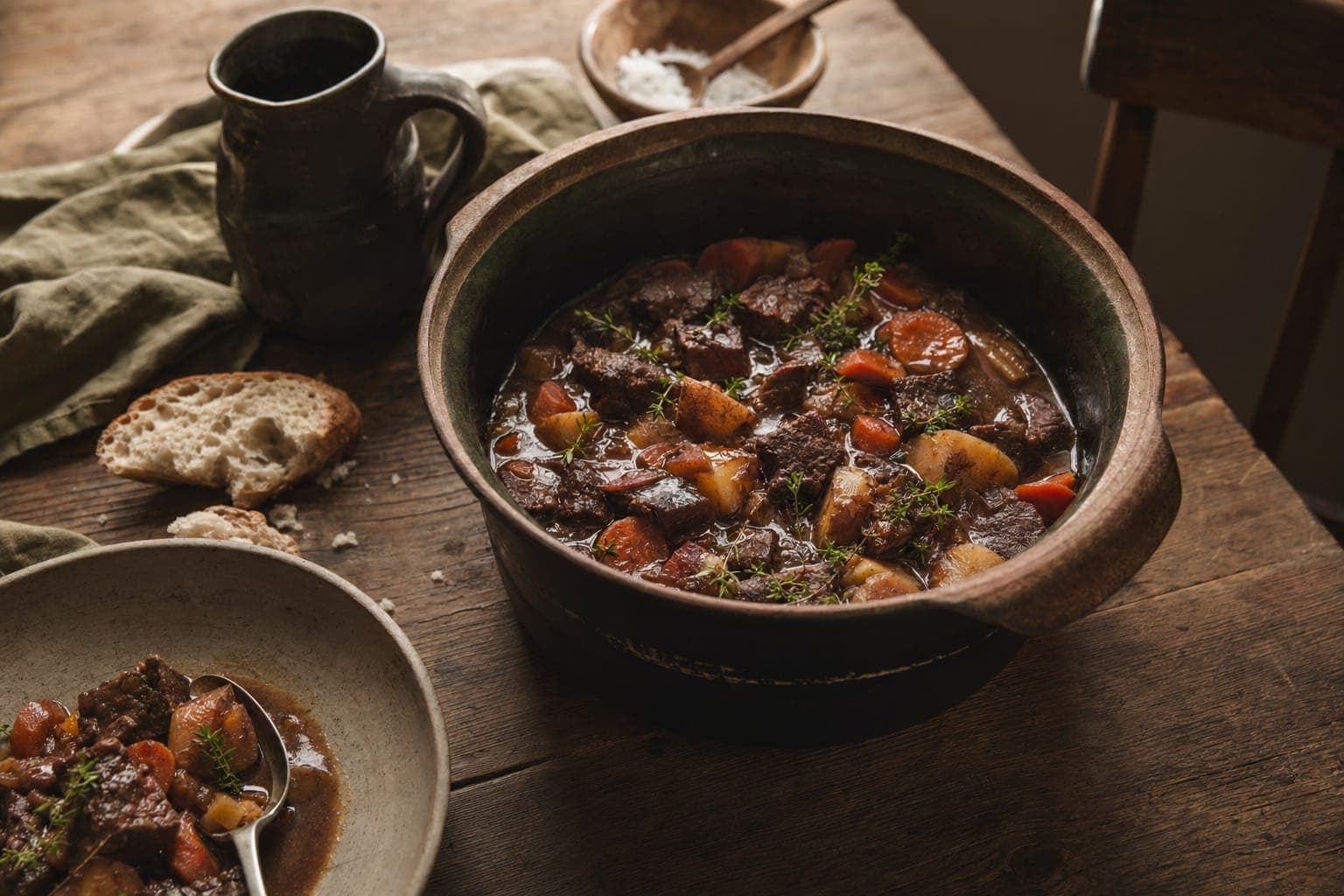
Collagen-Rich Beef Stew: Slow-Cooked Nourishment
Beef stew that delivers collagen from connective tissue and bone broth. Winter comfort food that actually nourishes. Simple slow cooker recipe.

How to Make Your Own Gelatine Gummies
A simple recipe for homemade gelatine gummies using grass-fed gelatine, fresh juice, and raw honey. Better than shop-bought, kids love them.


 Join over 100,000+ members
Build a better food system with us
The Organised community is thousands of people choosing real food and backing the farmers who grow it, all of us trying to leave the world a little better than we found it. If that is what you care about too, you belong here.