Beef Protein and Muscle Gain: What the Research Actually Shows
For decades, the fitness world has treated all protein as interchangeable. Muscle is muscle, the thinking goes. Protein is protein. But the evidence on beef as a protein source suggests beef carries something other isolated proteins don't: a package of bioactive compounds, micronutrients and amino acids that together support training adaptations. Here's what the published research actually shows.
By Niall Kiddle, Founder, Organised

Reviewed by Pedro Rodrigues, Agronomist (farming and sourcing only) ·
5 min read · Published · Updated · 9 cited sources
Makers of the Organised Daily blend, a grass-fed beef organ supplement from regenerative UK farms
What the published trials on beef protein show
The cleanest randomised trial on beef protein and resistance training is Negro and colleagues, published in the Journal of the International Society of Sports Nutrition in 2014. The trial compared beef protein hydrolysate against carbohydrate placebo in resistance-trained men and reported significant improvements in lean mass and body composition over the supplementation period.1
The 2019 systematic review and meta-analysis by Valenzuela and colleagues in the European Journal of Nutrition looked across the available trials on beef protein supplementation in resistance-trained adults. The review concluded that beef protein supplementation produced lean-mass and strength outcomes comparable to whey, with an overall positive effect on body composition vs control.2
Honest framing of the literature: beef protein performs roughly on par with whey for hypertrophy and strength when total daily protein and training are matched. The argument for beef isn't that beef-the-isolated-protein outperforms whey-the-isolated-protein. The argument is that beef-the-whole-food carries things isolated proteins don't.
Why beef carries more than protein
Standard protein-quality scoring (PDCAAS, DIAAS) measures amino-acid completeness and digestibility. By those measures, beef and whey both score very high, and a clean head-to-head on amino-acid delivery alone shows them as broadly equivalent for muscle-protein synthesis.3
What those scoring systems miss is the bioactive matrix that comes with whole-food beef but not with isolated whey. Beef arrives with creatine, carnitine, taurine, heme iron, vitamin B12, zinc, selenium, and CoQ10 in their natural ratios. Whey isolate doesn't. Whether or not those micronutrients change short-term hypertrophy in a 12-week trial, they are doing real work on cellular energy production, oxygen transport and recovery, and they show up in long-term training adaptations rather than the post-workout window.
Creatine, carnitine and taurine: the bioactive package
Creatine is the most-studied legal performance compound in sports science. Beef contains roughly 200 to 500 milligrams of creatine per 100 grams of cooked muscle, varying by cut.4 A 200 g serving therefore delivers about 0.4 to 1 g of creatine. That is real but well short of the typical supplemental dose used in trials (3 to 5 g per day), which is why most strength athletes who want creatine's full effect supplement on top of dietary intake.
L-carnitine, concentrated in red meat, is involved in transporting fatty acids into mitochondria for oxidation. Beef is among the densest dietary sources, with cooked beef typically providing 60 to 90 milligrams of carnitine per 100 grams.5 Carnitine has been studied for its role in skeletal-muscle metabolism and, in some trials, for recovery from resistance training.
Taurine, a conditionally essential amino acid found at high levels in meat and seafood, supports cellular hydration, calcium handling in muscle, and antioxidant defence. Beef provides taurine that plant proteins simply do not contain.
The argument for beef as a training protein isn't that the isolated protein outperforms whey. It's that the whole food delivers a package of bioactive compounds and micronutrients that isolated proteins can't replicate.
Get the science, plainly, free
Two short reads a week on what the research actually says about nutrition.
By signing up you agree to receive emails from us. No spam, unsubscribe anytime.
Iron, B12 and the recovery picture
Heme iron from red meat is absorbed at roughly 15 to 35% in healthy adults, compared with 2 to 20% for non-heme iron from plant sources, with the lower end typical when consumed without ascorbic acid or in the presence of phytate.6 For training adaptations, that matters: iron carries oxygen, and oxygen delivery to working muscle is one of the most basic constraints on exercise capacity. Iron-deficient training is unproductive training, and iron deficiency is more common in athletes (particularly female endurance athletes) than the general population.7
Vitamin B12 is found almost exclusively in animal foods. The NIH Office of Dietary Supplements lists beef liver as the most concentrated source, with cooked beef muscle providing meaningful amounts as well.8 B12 is required for red-cell formation and nervous-system function, both of which sit underneath training capacity.
How beef compares with other proteins in the literature
Whey and beef perform roughly equivalently for muscle protein synthesis when total daily protein is matched.2 Plant proteins (pea, soy, rice) are slower to digest, lower in leucine per gram, and typically require higher doses to match the muscle-protein-synthesis response of animal proteins.3
The honest framing: total daily protein, distribution across meals, training stimulus and sleep dominate hypertrophy outcomes far more than which protein source you choose. Beef vs whey vs pea is a small lever compared with hitting around 1.6 to 2.2 g of protein per kg of body weight, lifting hard, and recovering well.9 Where beef earns its place in the diet of someone who trains is in the bioactive package the isolated proteins don't carry.

1 of 9
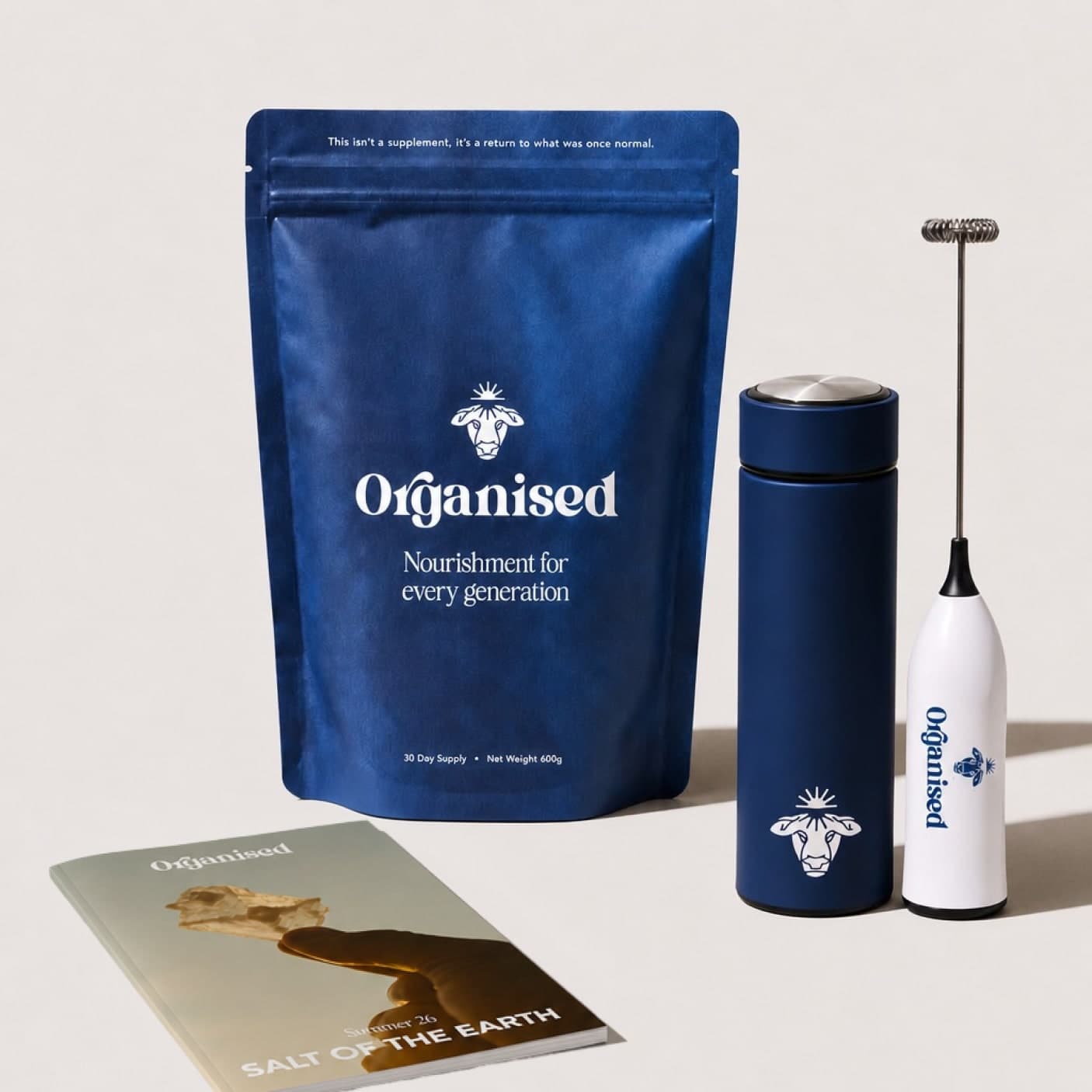
Daily blend
100,000+ thriving families4.9 on Trustpilot
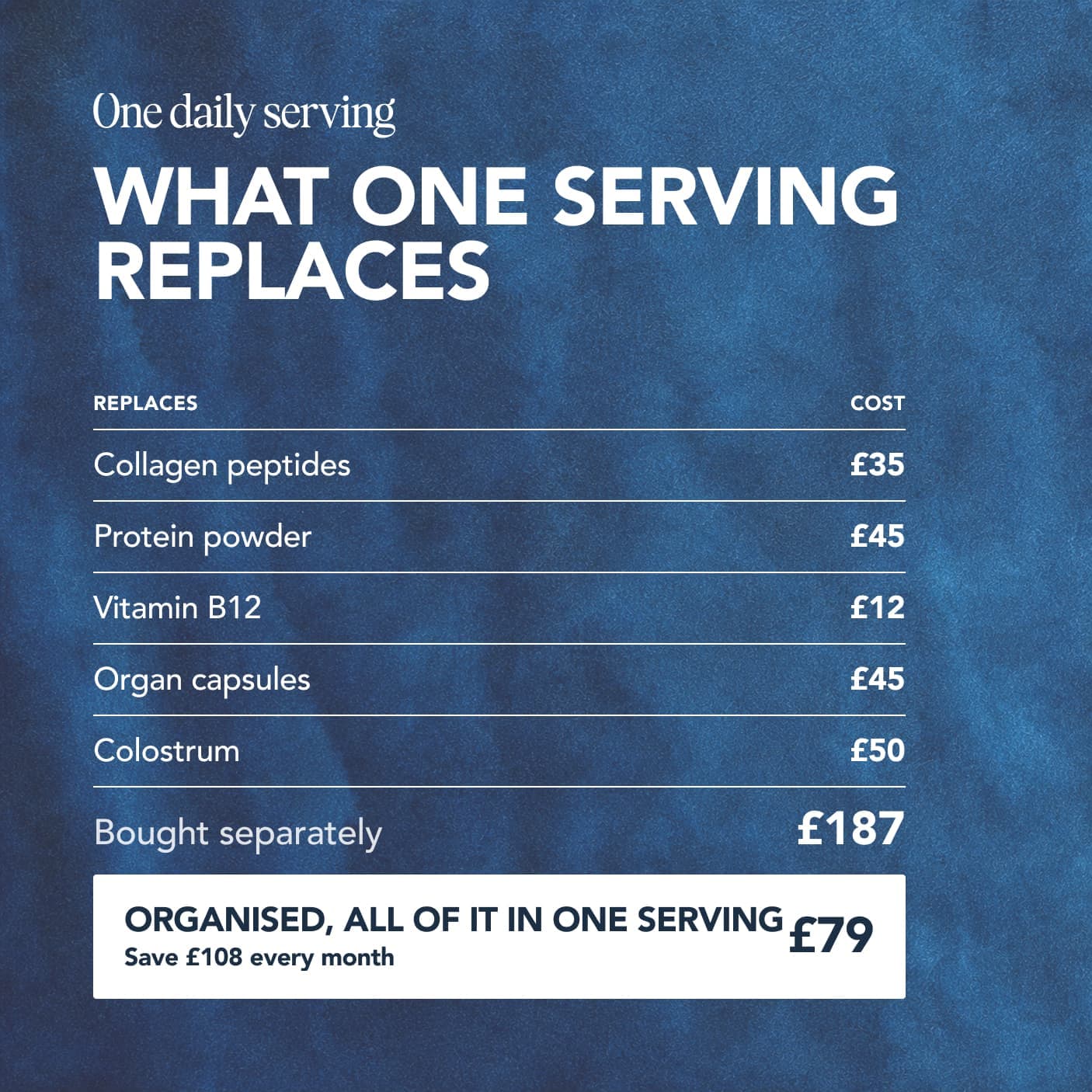
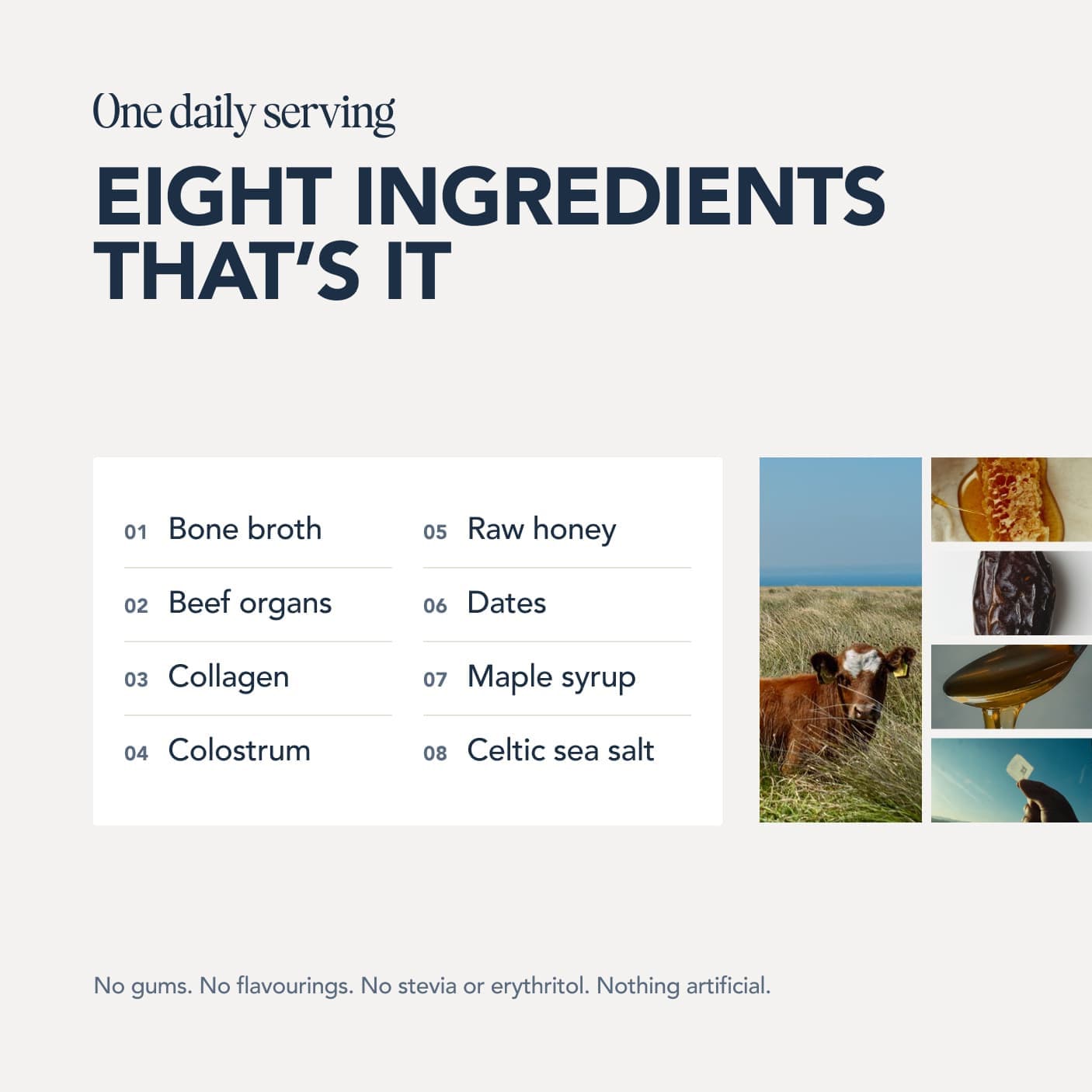
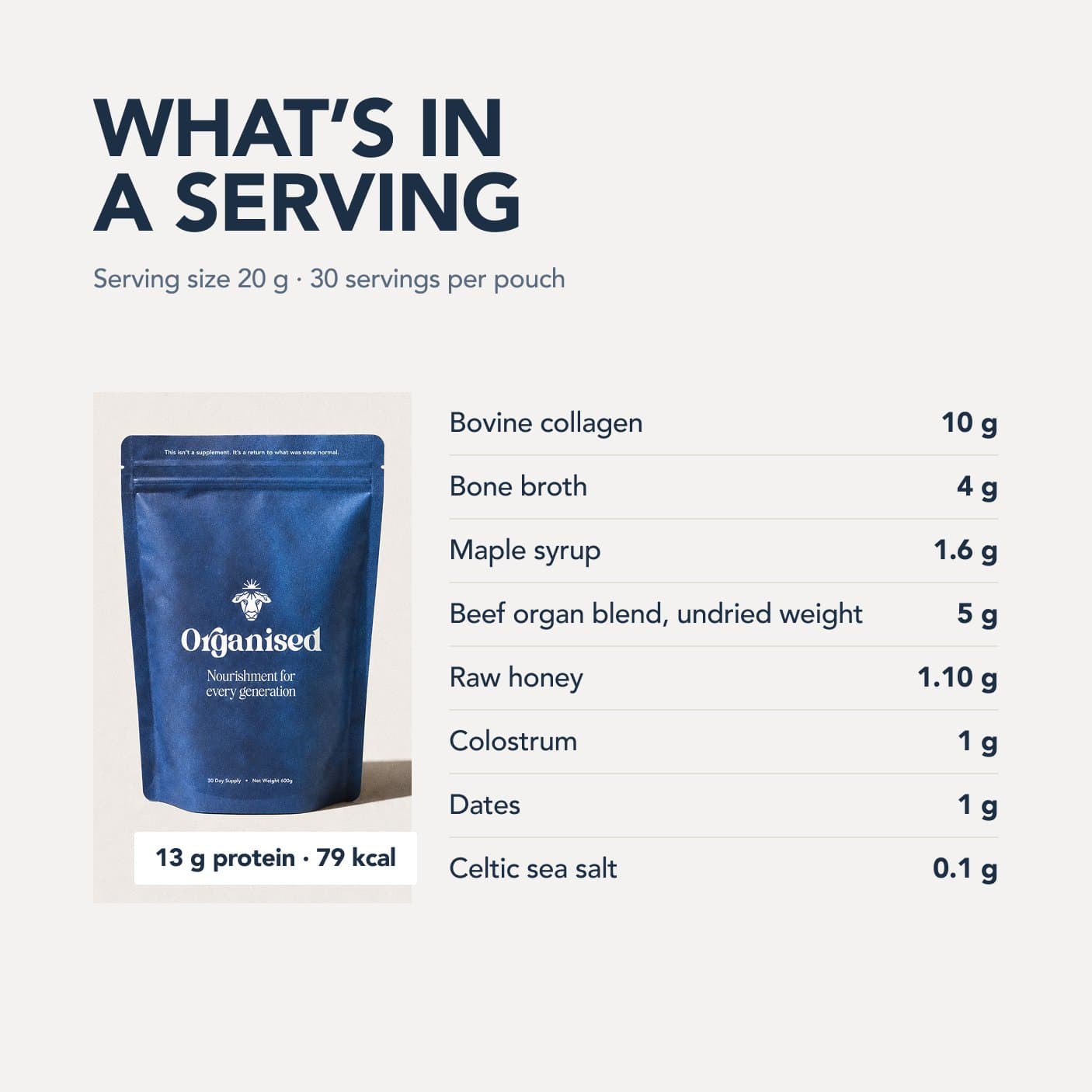
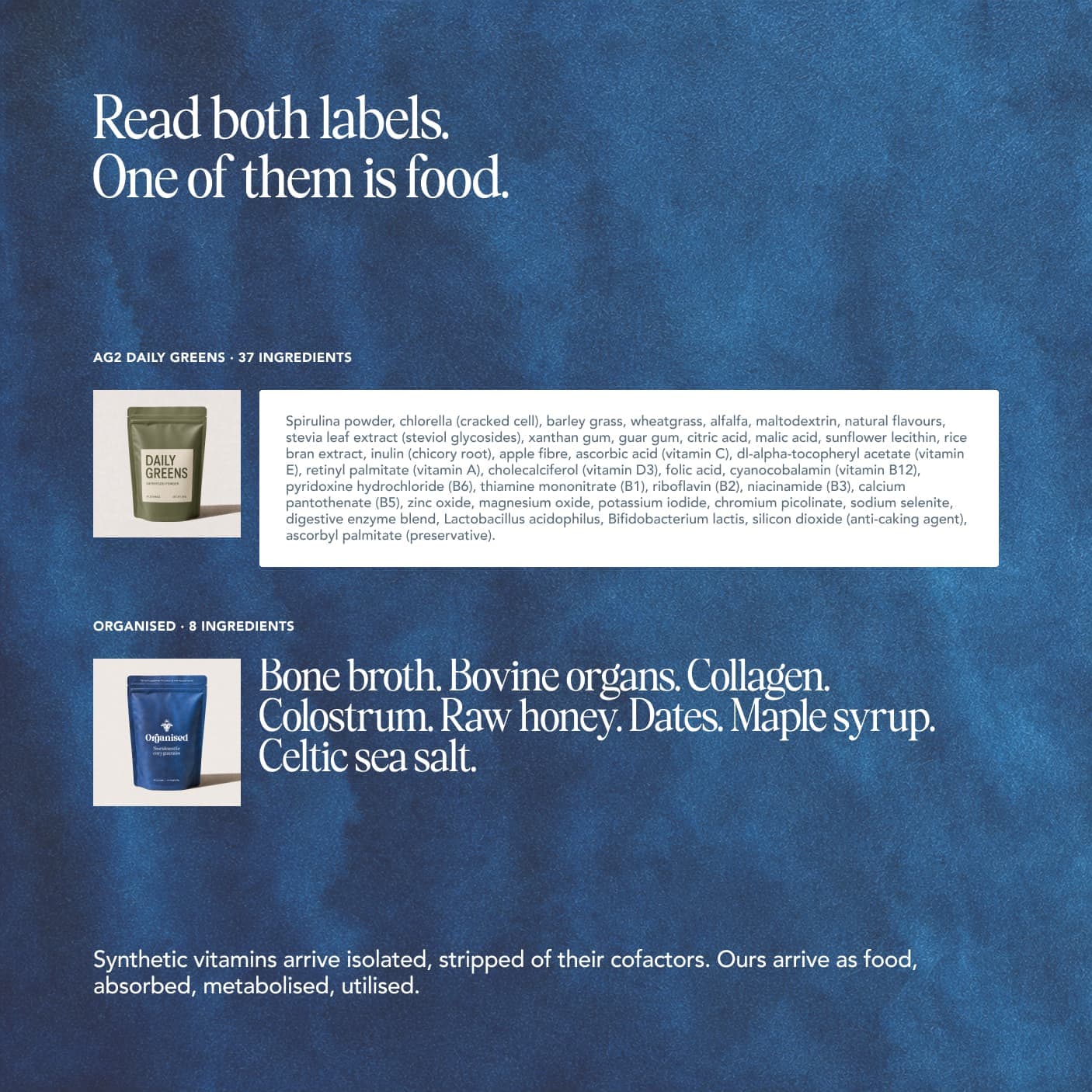
Eight real ingredients built around grass-fed beef organs, collagen and colostrum. Nothing synthetic added.
Free with your first order, worth £38. Plus £10 off the pouch with a subscription.
Free UK shipping · Made in England · 100 day money back guarantee on your first pouch · Skip, pause or cancel anytime
What this means for your training
Eat beef, especially grass-fed, 3 to 5 times per week if you train regularly. Aim for total daily protein in the 1.6 to 2.2 g per kg range across all sources. If you're vegetarian, get heme-iron-equivalent through other means and accept that you may need somewhat higher total protein to hit the same MPS response. If you supplement, creatine is the highest-evidence add-on; everything else is downstream of total protein and training stimulus.
The exaggerated claims that float around online about beef protein producing dramatically better outcomes than other proteins are not what the published evidence actually says. The reasonable claim is that beef-the-whole-food delivers a package of compounds that isolated proteins don't, that this matters across years of training and recovery rather than within a single 12-week trial, and that the protein quality is at least as good as the alternatives.
References
Every source below was checked on 27 August 2026. Each PubMed, PMC and DOI identifier was resolved against NCBI or Crossref, and what it opens is printed under the citation, so you can see the link goes where the citation says without leaving the page. Where a citation and its identifier disagreed, the citation was corrected to the record or the reference was deleted along with the sentence marker that pointed at it, and where the resolved paper turned out not to support the sentence, the sentence was cut back to what it does support. Borrowed authority is worse than none, because it looks like rigour.
- Negro M, Vandoni M, Ottobrini S, Codrons E, Correale L, Buonocore D, Marzatico F. Protein supplementation with low fat meat after resistance training: effects on body composition and strength. Nutrients. 2014;6(8):3040-3049. https://pubmed.ncbi.nlm.nih.gov/25093275/Checked 27 August 2026: PMID 25093275 opens Negro M, Vandoni M, Ottobrini S et al, Protein supplementation with low fat meat after resistance training: effects on body composition and strength. Nutrients 2014;6(8):3040-9. PubMed indexes it as: Randomized Controlled Trial.
- Valenzuela PL, Mata F, Morales JS, Castillo-Garcia A, Lucia A. Does beef protein supplementation improve body composition and exercise performance? A systematic review and meta-analysis of randomized controlled trials. Nutrients. 2019;11(6):1429. https://pubmed.ncbi.nlm.nih.gov/31242624/Checked 27 August 2026: PMID 31242624 opens Valenzuela PL, Mata F, Morales JS et al, Does Beef Protein Supplementation Improve Body Composition and Exercise Performance? A Systematic Review and Meta-Analysis of Randomized Controlled Trials. Nutrients 2019;11(6). PubMed indexes it as: Meta-Analysis, Systematic Review.The authors' own declaration, from the record: The authors declare no conflict of interest.
- Phillips SM. The impact of protein quality on the promotion of resistance exercise-induced changes in muscle mass. Nutrition & Metabolism. 2016;13:64. https://pmc.ncbi.nlm.nih.gov/articles/PMC5041535/Checked 27 August 2026: PMC5041535 opens Phillips SM, The impact of protein quality on the promotion of resistance exercise-induced changes in muscle mass. Nutr Metab (Lond) 2016;13:64. PubMed indexes it as: Review.
- Kreider RB, Kalman DS, Antonio J, et al. International Society of Sports Nutrition position stand: safety and efficacy of creatine supplementation in exercise, sport, and medicine. Journal of the International Society of Sports Nutrition. 2017;14:18. https://pmc.ncbi.nlm.nih.gov/articles/PMC5469049/Checked 27 August 2026: PMC5469049 opens Kreider RB, Kalman DS, Antonio J et al, International Society of Sports Nutrition position stand: safety and efficacy of creatine supplementation in exercise, sport, and medicine. J Int Soc Sports Nutr 2017;14:18. PubMed indexes it as: Review.
- Demarquoy J, Georges B, Rigault C, Royer MC, Clairet A, Soty M, Lekounoungou S, Le Borgne F. Radioisotopic determination of L-carnitine content in foods commonly eaten in Western countries. Food Chemistry. 2004;86(1):137-142. https://pubmed.ncbi.nlm.nih.gov/?term=carnitine+content+foods+Demarquoy
- National Institutes of Health, Office of Dietary Supplements. Iron: fact sheet for health professionals. https://ods.od.nih.gov/factsheets/Iron-HealthProfessional/ [accessed May 2026].
- Sim M, Garvican-Lewis LA, Cox GR, Govus A, McKay AKA, Stellingwerff T, Peeling P. Iron considerations for the athlete: a narrative review. European Journal of Applied Physiology. 2019;119(7):1463-1478. https://pubmed.ncbi.nlm.nih.gov/31055680/Checked 27 August 2026: PMID 31055680 opens Sim M, Garvican-Lewis LA, Cox GR et al, Iron considerations for the athlete: a narrative review. Eur J Appl Physiol 2019;119(7):1463-1478. PubMed indexes it as: Review.
- National Institutes of Health, Office of Dietary Supplements. Vitamin B12: fact sheet for health professionals. https://ods.od.nih.gov/factsheets/VitaminB12-HealthProfessional/ [accessed May 2026].
- Morton RW, Murphy KT, McKellar SR, Schoenfeld BJ, Henselmans M, Helms E, Aragon AA, Devries MC, Banfield L, Krieger JW, Phillips SM. A systematic review, meta-analysis and meta-regression of the effect of protein supplementation on resistance training-induced gains in muscle mass and strength in healthy adults. British Journal of Sports Medicine. 2018;52(6):376-384. https://pubmed.ncbi.nlm.nih.gov/28698222/Checked 27 August 2026: PMID 28698222 opens Morton RW, Murphy KT, McKellar SR et al, A systematic review, meta-analysis and meta-regression of the effect of protein supplementation on resistance training-induced gains in muscle mass and strength in healthy adults. Br J Sports Med 2018;52(6):376-384. PubMed indexes it as: Meta-Analysis, Systematic Review.The authors' own declaration, from the record: Competing interests: SMP has received grant support, travel expenses, and honoraria for presentations from the US National Dairy Council. This agency has supported trials reviewed in this analysis.
Who wrote and reviewed this guide
Niall Kiddle
Author · Founder, Organised
Niall is the founder of Organised. He started the company in 2024 after fixing his own health the slow way: in 2022 he swapped a cupboard of synthetic supplements for real food, raw milk, organ meats, bone broth and honey, and felt the difference within months.
Areas of expertise: Ancestral nutrition, Organ meats, Whole-food supplementation, Gut health, Regenerative sourcing
Read Niall's full profile
Pedro Rodrigues
Reviewer · Agronomist (farming and sourcing only)
Pedro is the agronomist Organised works with on farming and sourcing. His job on the guides is to keep the science honest: he reviews what we publish about soil health, regenerative agriculture, grazing and the way food is actually produced.
Areas of expertise: Regenerative agriculture, Agronomy, Soil health, Grass-fed farming, Food sourcing
Reviewed this guide on
Read Pedro's full profileMore on clinical evidence
View allBrowse the guides library
All guidesKeep reading
Science
Methylation: What It Is and Why It Matters
Understand methylation, the chemical process fundamental to every cell. Learn how B12, folate, and choline support it, and why organs are key sources.

Science
Colostrum Research: What's New and What's Coming
What the latest colostrum research shows about immune function, gut health, and athletic recovery. Plus, where the field is heading next.

Science
Colostrum and Bloating: What the Research Actually Shows
See what the research really says about bovine colostrum and bloating, from gut-lining and intestinal permeability to growth factors, and what to expect.
Real food, made effortless
See the blendA few ways to use it
All recipes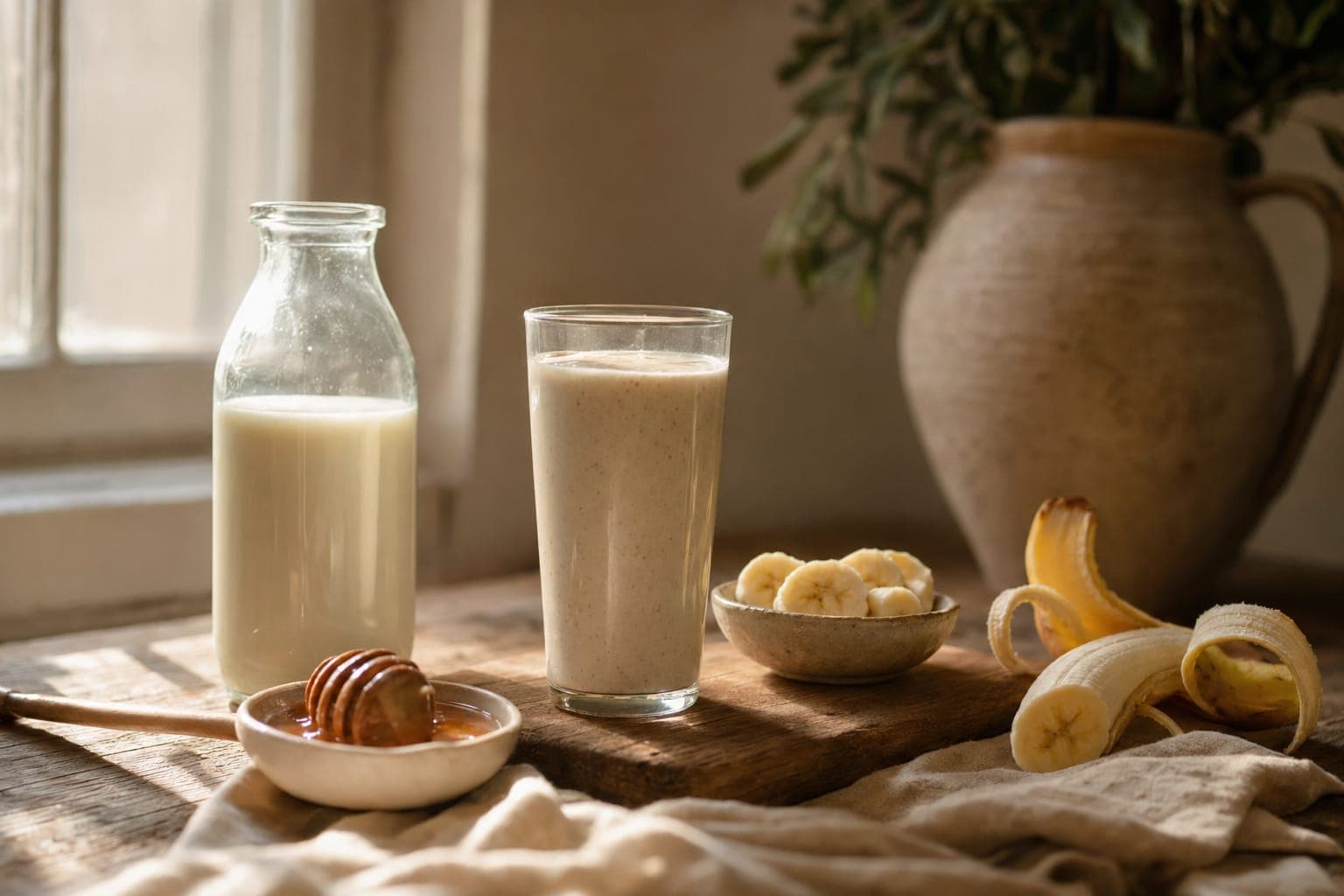
The Perfect Organised Morning Shake: Our Favourite Recipe
Our signature morning shake: Organised, raw milk, banana, honey. Simple, nourishing, and optimised for an empty stomach.
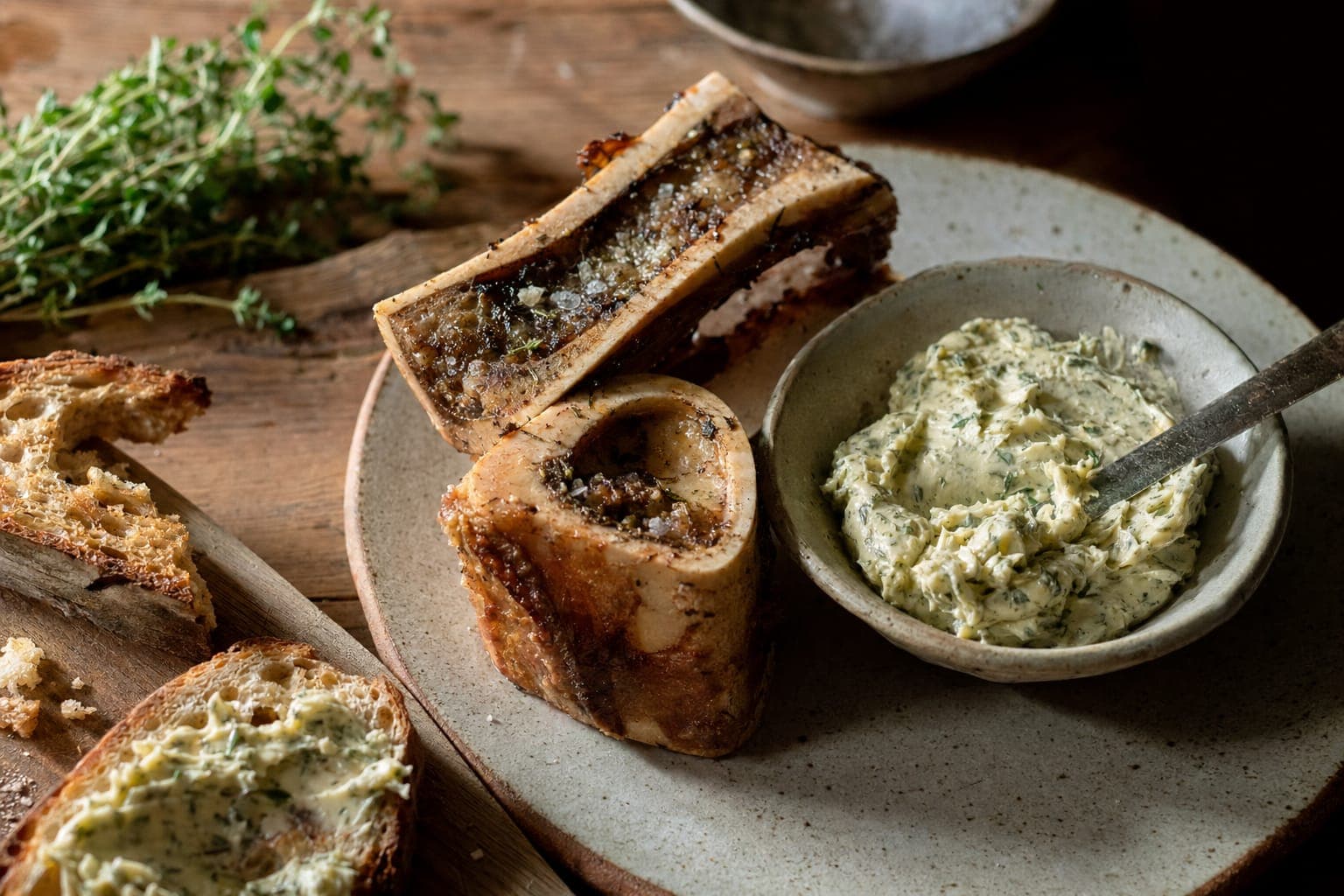
How to Make Bone Marrow Butter
Roast grass-fed marrow bones, scoop the marrow, and mix with butter and herbs. A nutrient-dense spread with fat-soluble vitamins.
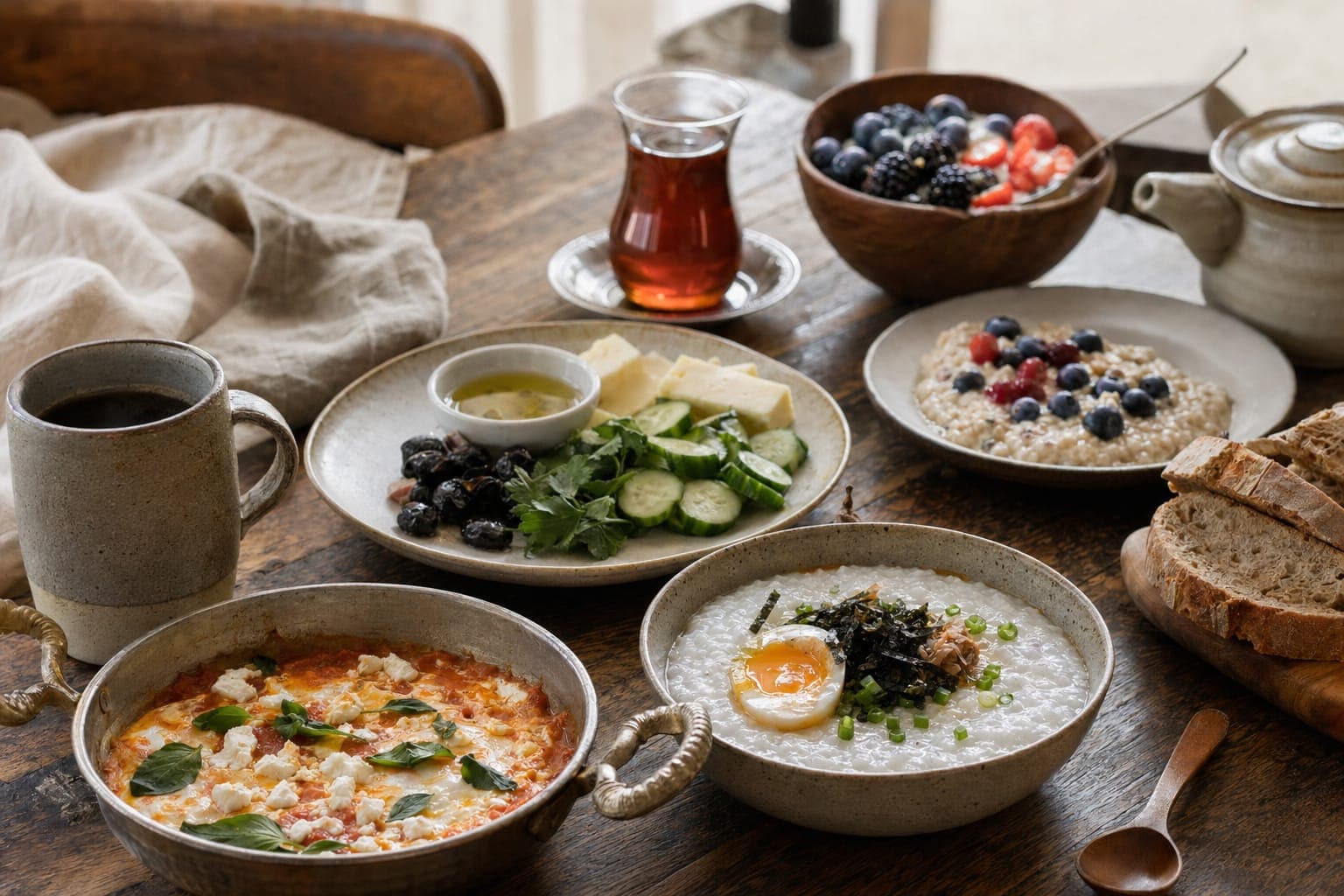
Ancestral Breakfast Ideas from Around the World
Traditional breakfast recipes from cultures that got nutrition right. Japanese, Turkish, Scottish, and more. Whole-food breakfast inspiration.


 Join over 100,000+ members
Build a better food system with us
The Organised community is thousands of people choosing real food and backing the farmers who grow it, all of us trying to leave the world a little better than we found it. If that is what you care about too, you belong here.