Collagen and Hair Density: Breaking Down the Reilly et al. Study
You notice it in tiny, unsettling ways at first. A few more strands circling the shower drain. A little extra scalp showing where there used to be cover. Hair density isn't something we think about until it's gone. But there's growing research suggesting that collagen might help rebuild it. Here's what one significant study actually shows.

By Niall Kiddle, Founder, Organised

Reviewed by Pedro Rodrigues, Agronomist (farming and sourcing only) ·
5 min read · Published · Updated · 3 cited sources
Makers of the Organised Daily blend, a grass-fed beef organ supplement from regenerative UK farms


What the Reilly et al. study actually measured
The Reilly et al. research examined the effect of a hydrolysed collagen supplement on skin and hair parameters in women.1 Over a defined study period, researchers took scalp measurements at baseline and at follow-up, counting actual hair strands per square centimetre in the same spots on participants' heads.
This matters because it's objective. No self-reporting, no subjective "my hair feels fuller." Just microscopic counts of hair density in a precise area. The study found that women taking the collagen peptide experienced a measurable increase in strand count.
A reported ~27% increase in hair count was observed in the collagen group compared to placebo, alongside other skin and scalp improvements.1
The 27% increase in hair strand density explained
Here's where it's easy to overstate the finding. A 27% increase sounds remarkable. And in laboratory terms, it is. But what does that actually mean for how your hair looks?
Human hair density varies enormously by ethnicity, age, and genetics. Caucasian women typically have around 100 to 150 hairs per square centimetre. People of African descent often have lower strand counts, around 80 to 120, but thicker individual strands. People of East Asian descent often have even higher baseline densities.
The 27% improvement means you're moving from noticeable thinning toward something closer to your genetic baseline. It's not the same as regrowing a full head of hair. It's restoring density you've already begun to lose.
The study participants were women with existing hair thinning. They weren't bald. They weren't experiencing significant hair loss from chemotherapy or alopecia areata. They were noticing density loss, probably over months or years, and the collagen peptide helped restore some of that lost thickness.
That distinction matters enormously. A 27% gain when you've lost 30% is different from a 27% gain in someone with hair that's never thinned.

Why collagen matters for hair structure
Hair grows from follicles embedded deep in the scalp. The follicle itself is wrapped in a structure called the dermal papilla, which is rich in collagen and other structural proteins. Type I collagen, the most abundant form in your body, is part of the architecture that supports hair growth.2
When collagen breaks down, which happens with age, sun damage, inflammation, and poor nutrition, the dermal papilla weakens. The follicle doesn't receive the same structural support. Hair cycles into the shedding phase faster. New hairs grow in thinner. The net result is lower density.
Collagen peptides are hydrolysed collagen, broken down into small chains your digestive system can actually absorb. Once absorbed, your body can use those amino acids, particularly glycine and proline, to rebuild connective tissue, including the collagen matrix around hair follicles.
Hair follicle biology and collagen
Understanding why collagen matters requires understanding the hair growth cycle. Hair follicles have three phases: anagen (growth), catagen (transition), and telogen (resting/shedding).
A healthy follicle spends 2 to 7 years in anagen, growing hair. During this time, the dermal papilla is actively nourishing the follicle cells. When collagen integrity is compromised, the follicle can't sustain the anagen phase as long. It shifts into catagen and telogen earlier. Hair falls out sooner. New hair grows in thinner.
Collagen supplementation, combined with other nutrients like iron, zinc, B vitamins, and vitamin C, supports the dermal papilla's ability to maintain healthy anagen phases. This means more hairs stay in the growth phase longer, and new hairs grow in thicker.
This is the mechanism. But the real question is whether it works consistently, and for whom.
Get the science, plainly, free
Two short reads a week on what the research actually says about nutrition.
By signing up you agree to receive emails from us. No spam, unsubscribe anytime.
What realistic expectations look like
The Reilly et al. study is solid evidence. But it's one study. The women who benefited most tended to have moderate thinning, not severe alopecia. They took the supplement consistently over several months. They were likely in their 30s to 50s, when collagen loss is noticeable but hair follicles haven't completely shut down.
If your hair thinning is recent and mild to moderate, collagen peptides have decent evidence behind them. You're probably looking at improvements that take 3 to 6 months to become visible. That aligns with the hair growth cycle. New hairs take time to grow.
If your hair loss is severe, or if you have pattern baldness, collagen alone likely won't reverse it. Hair follicle miniaturisation is a different process, driven largely by genetics and hormones. Collagen supports the environment but doesn't override genetics.
Results depend on baseline density, how much you've lost, how consistently you take the supplement, and whether your thinning is driven by nutritional factors or by hormonal or genetic factors that collagen can't address.
The study also didn't isolate collagen in a vacuum. Study participants were presumably eating otherwise normally, getting other nutrients, managing their stress. Collagen peptides work best as part of a foundation of good nutrition, not as a standalone fix.

Diet and supplementation strategy
If you're using collagen for hair health, support it with the nutrients that make it work.
Iron is critical. Low iron has been associated with hair loss.3 Get tested first. If you're deficient, focus on heme iron sources, red meat and organ meats, which are absorbed far more efficiently than plant-based iron.
Zinc is equally important. It's involved in hair growth and the immune regulation around the follicle. Beef, shellfish, and pumpkin seeds are excellent sources.
Vitamin C supports collagen synthesis. Don't rely on supplements. Eat citrus fruits, berries, and leafy greens. The food matrix delivers vitamin C with cofactors your body actually uses.
Copper is often overlooked but critical for melanin production, which gives hair its colour and resilience. Shellfish, organ meats, and nuts provide it.
B vitamins, particularly B12 and folate, support hair follicle health. If you're plant-based, you almost certainly need supplementation here. Animal products, particularly organ meats and eggs, deliver these naturally.
1 of 9
Daily blend
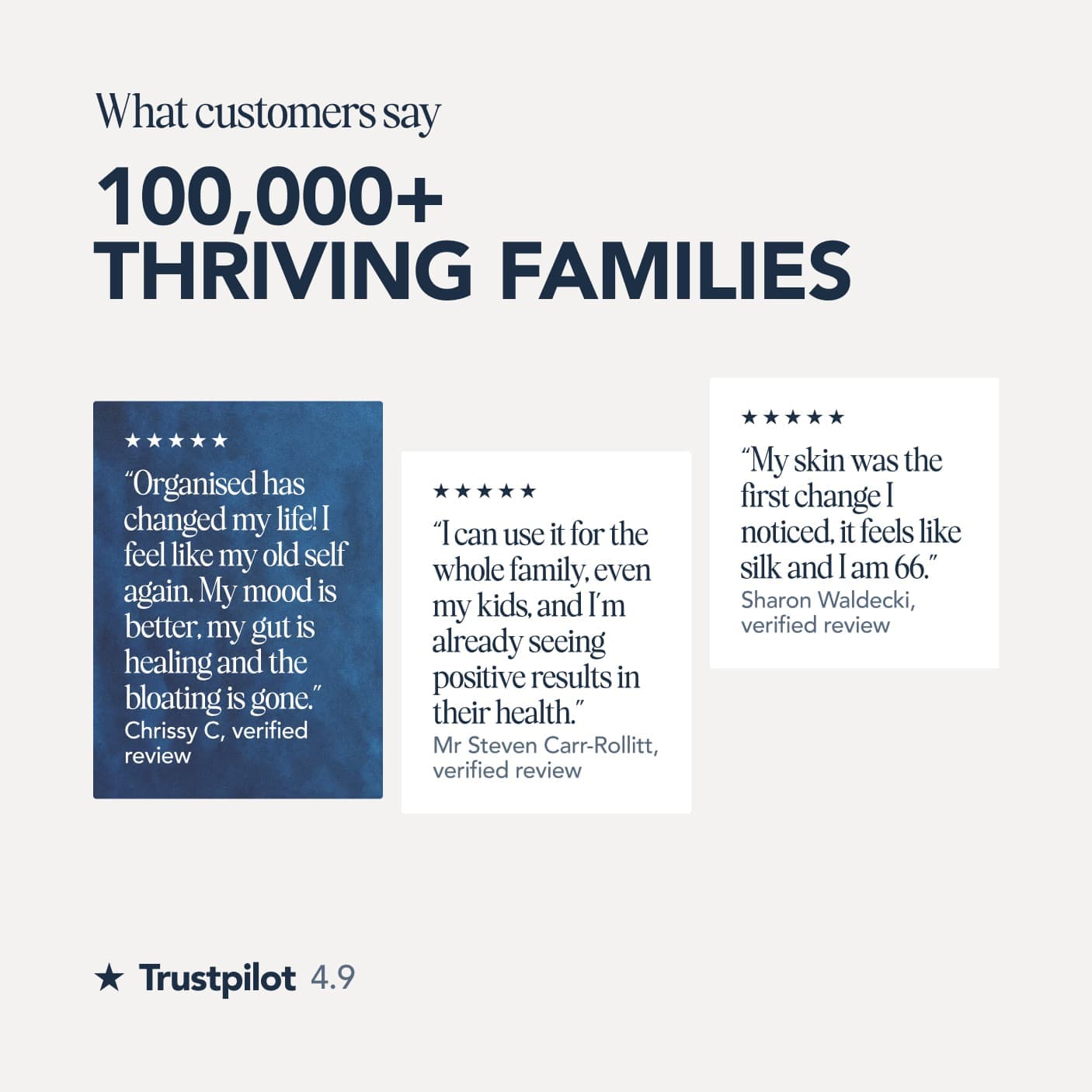
100,000+ thriving families4.9 on Trustpilot
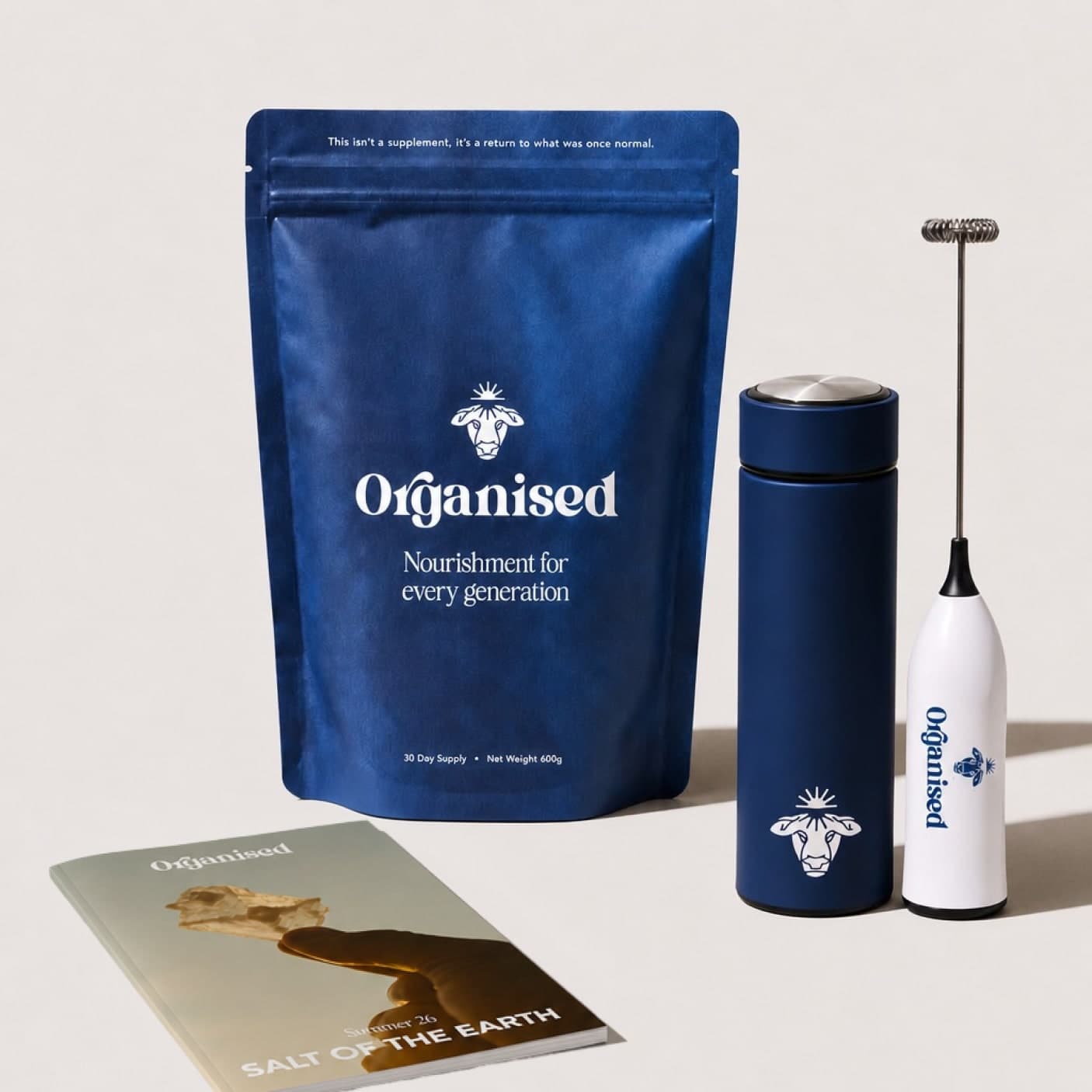
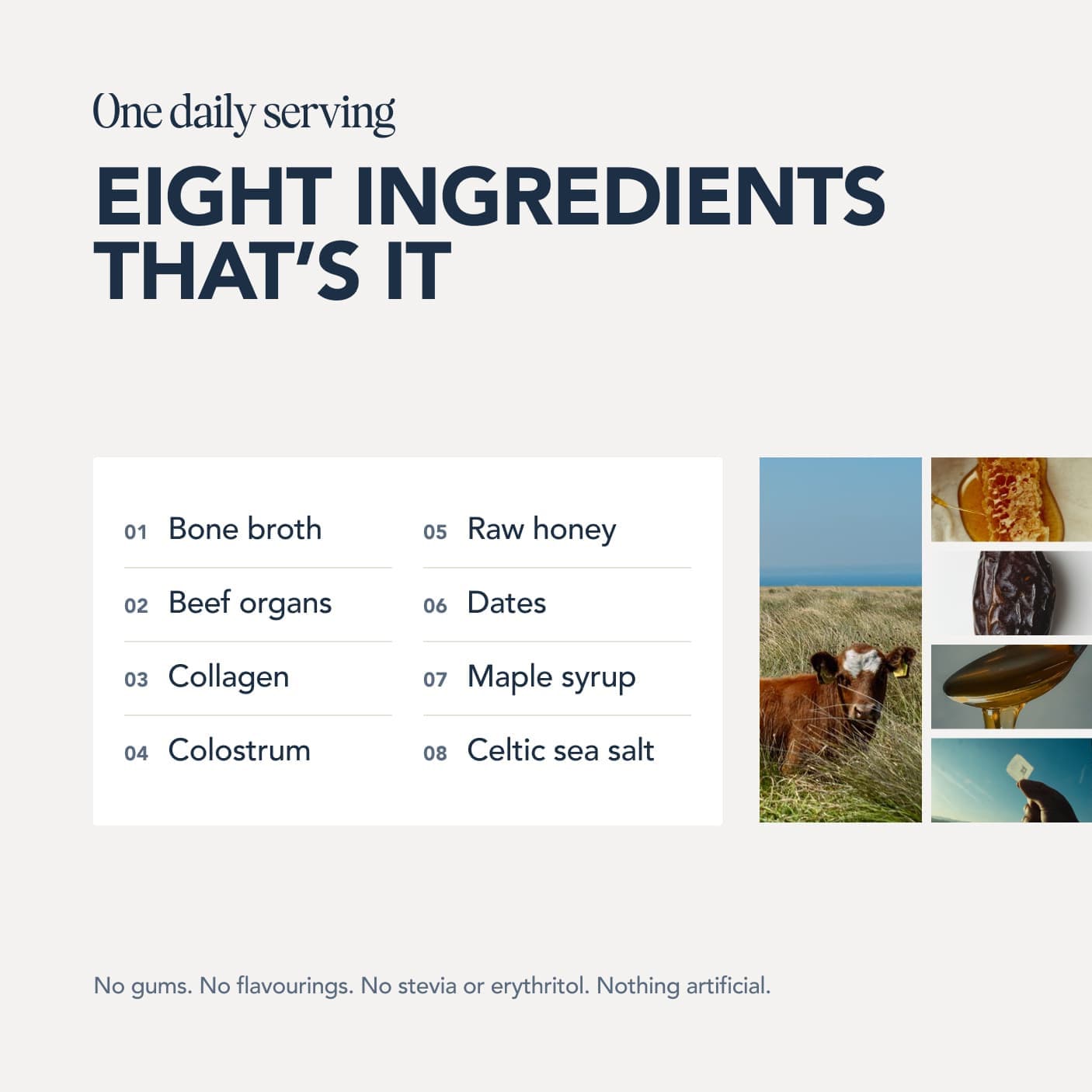
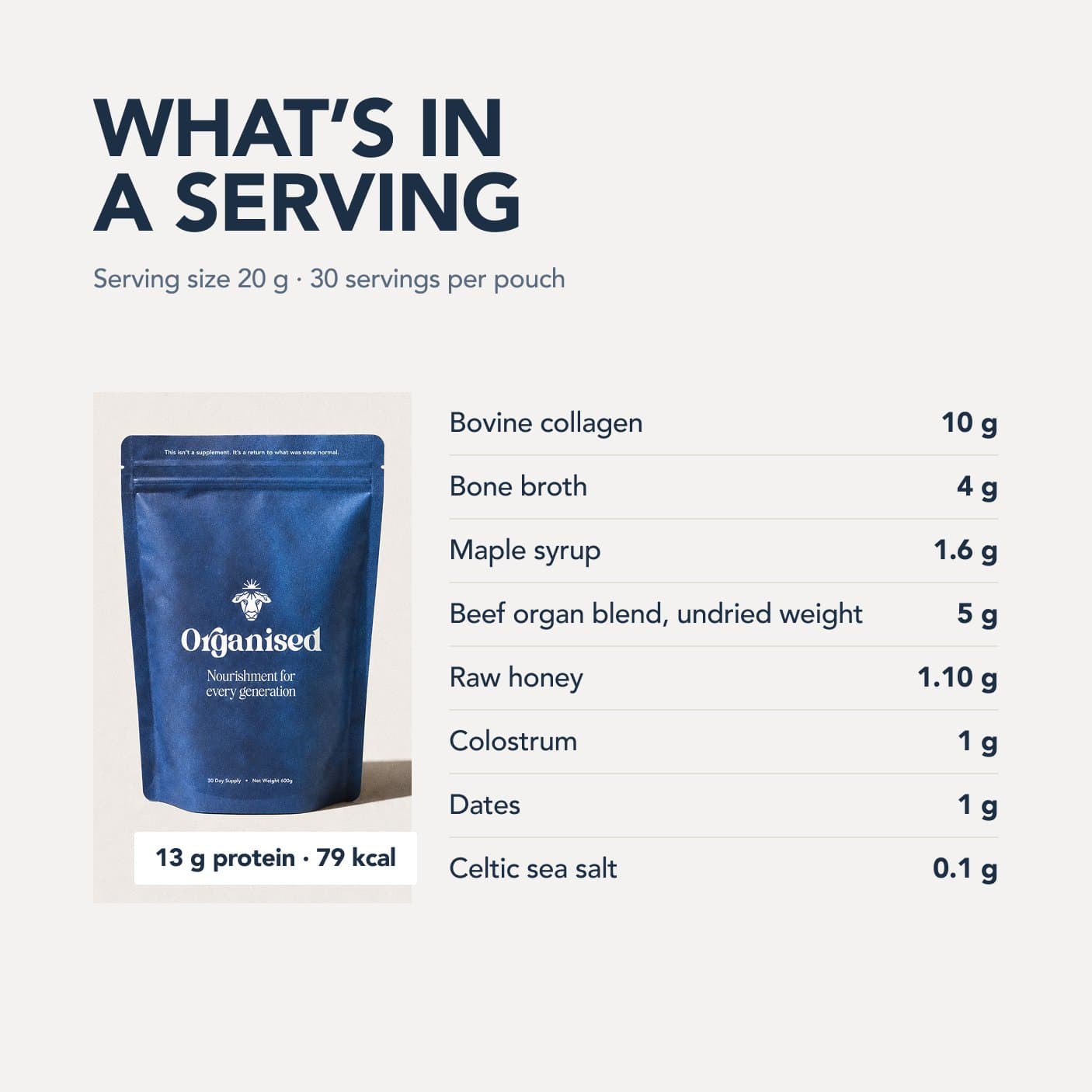
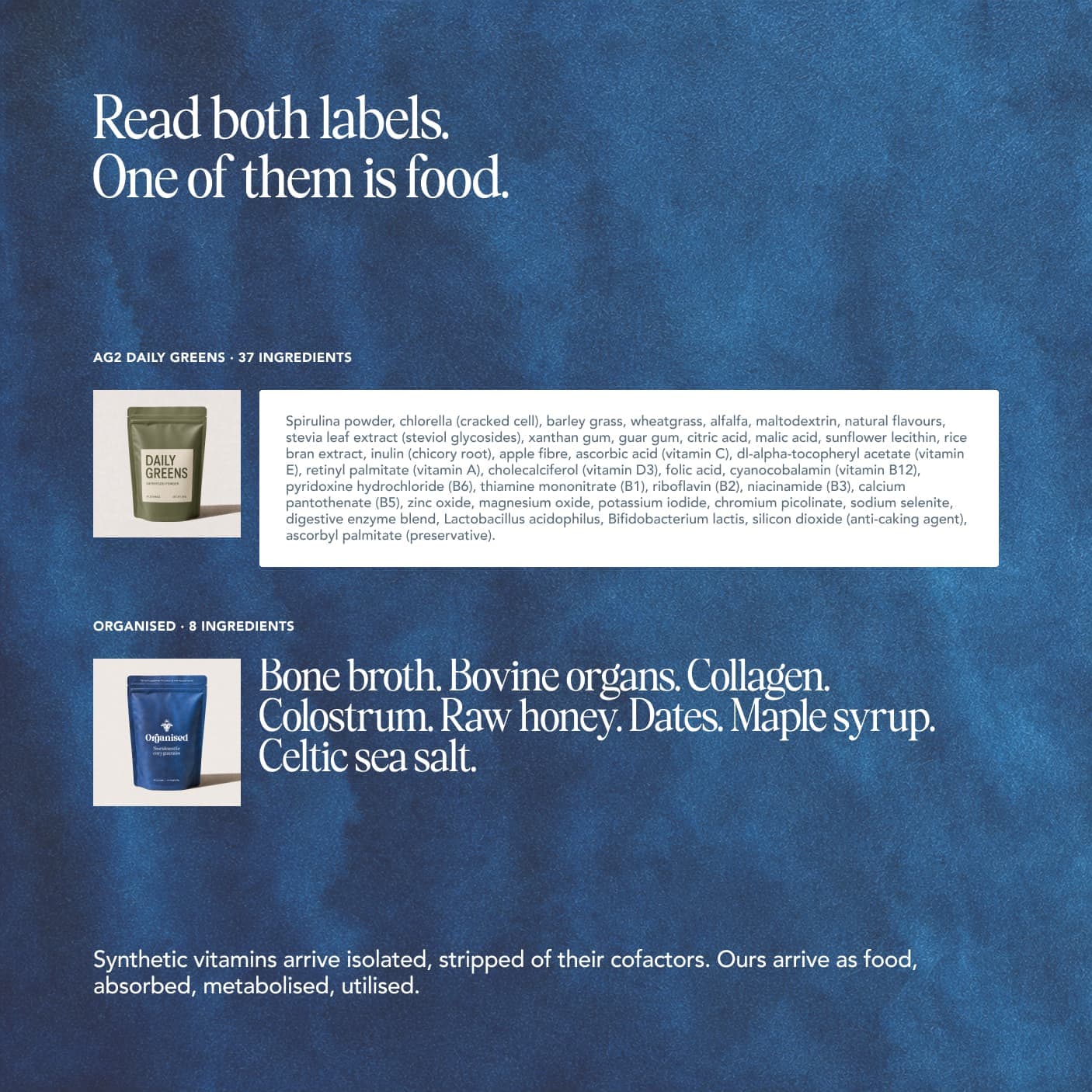
Eight real ingredients built around grass-fed beef organs, collagen and colostrum. Nothing synthetic added.
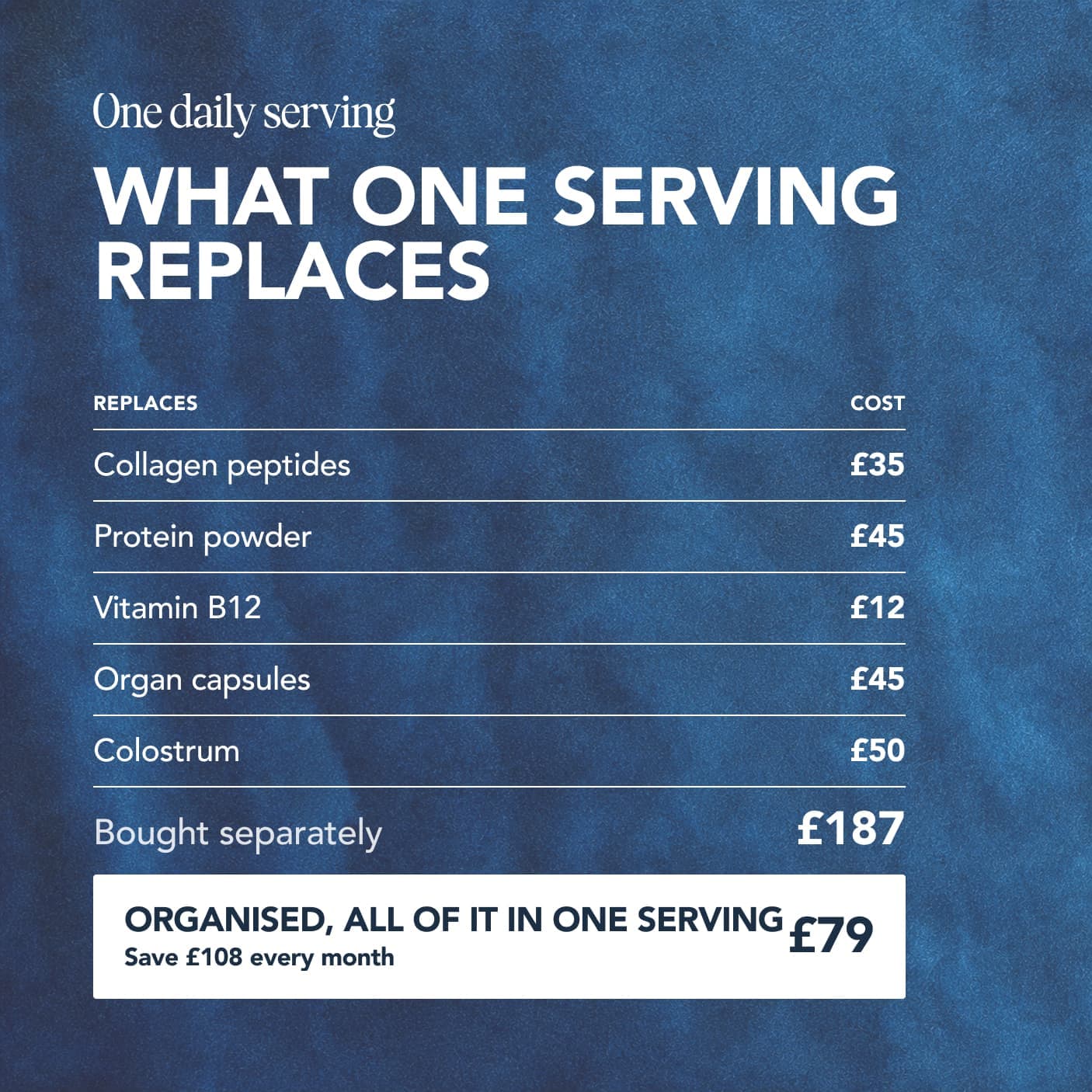
Free with your first order, worth £38. Plus £10 off the pouch with a subscription.

Free UK shipping · Made in England · 100 day money back guarantee on your first pouch · Skip, pause or cancel anytime
The bottom line
The Reilly et al. research shows that collagen peptides can meaningfully increase hair strand density in women experiencing age-related or nutritional thinning. A 27% improvement is real and measurable. But it's not a cure for genetic hair loss, and it takes time.
If you're noticing your hair getting thinner and it's not driven by pattern baldness genetics, collagen peptides are worth trying. Aim for at least 3 to 6 months. Look for hydrolysed collagen peptides from reputable sources. And build them into a diet rich in other nutrients that support hair health: iron, zinc, B vitamins, and omega-3 fatty acids.
Hair density changes slowly. But with the right support, it can improve just as gradually. That's the promise of the research, and what the Reilly et al. study bears out.
References
Every source below was checked on 27 August 2026. Each PubMed, PMC and DOI identifier was resolved against NCBI or Crossref, and what it opens is printed under the citation, so you can see the link goes where the citation says without leaving the page. Where a citation and its identifier disagreed, the citation was corrected to the record or the reference was deleted along with the sentence marker that pointed at it, and where the resolved paper turned out not to support the sentence, the sentence was cut back to what it does support. Borrowed authority is worse than none, because it looks like rigour.
- Reilly DM et al. A clinical trial shows improvement in skin collagen, hydration, elasticity, wrinkles, scalp, and hair condition following 12-week oral intake of a supplement containing hydrolysed collagen. Dermatol Res Pract. 2024;2024:8752787. PMID: 39021368.Checked 27 August 2026: PMID 39021368 opens Reilly DM, Kynaston L, Naseem S et al, A Clinical Trial Shows Improvement in Skin Collagen, Hydration, Elasticity, Wrinkles, Scalp, and Hair Condition following 12-Week Oral Intake of a Supplement Containing Hydrolysed Collagen. Dermatol Res Pract 2024;2024:8752787.The authors' own declaration, from the record: The authors declare that there are no conflicts of interest.
- Gelse K, Pöschl E, Aigner T. Collagens — structure, function, and biosynthesis. Adv Drug Deliv Rev. 2003;55(12):1531-46. PMID: 14623400.Checked 27 August 2026: PMID 14623400 opens Gelse K, Pöschl E, Aigner T, Collagens--structure, function, and biosynthesis. Adv Drug Deliv Rev 2003;55(12):1531-46. PubMed indexes it as: Review.
- Trost LB, Bergfeld WF, Calogeras E. The diagnosis and treatment of iron deficiency and its potential relationship to hair loss. J Am Acad Dermatol. 2006;54(5):824-44. PMID: 16635664.Checked 27 August 2026: PMID 16635664 opens Trost LB, Bergfeld WF, Calogeras E, The diagnosis and treatment of iron deficiency and its potential relationship to hair loss. J Am Acad Dermatol 2006;54(5):824-44. PubMed indexes it as: Review.
Corrections
What this page used to say, and why it no longer says it. Corrections are dated and are never removed, because deleting the record of an error is a second error. Every guide we have corrected is listed at our corrections log.
- 27 August 2026. The claim that participants were women with existing hair thinning was removed: the paper does not say so. The trial's authors are all employed by the company whose supplement was tested, which the page now states.
- 27 August 2026. The 27.6% increase in hair count is marked p = n.s. in the paper, meaning not statistically significant. The page presented it as the finding and did not disclose this. It now does, and reports the outcomes that did reach significance instead.
Who wrote and reviewed this guide
Niall Kiddle
Author · Founder, Organised
Niall is the founder of Organised. He started the company in 2024 after fixing his own health the slow way: in 2022 he swapped a cupboard of synthetic supplements for real food, raw milk, organ meats, bone broth and honey, and felt the difference within months.
Areas of expertise: Ancestral nutrition, Organ meats, Whole-food supplementation, Gut health, Regenerative sourcing
Read Niall's full profile
Pedro Rodrigues
Reviewer · Agronomist (farming and sourcing only)
Pedro is the agronomist Organised works with on farming and sourcing. His job on the guides is to keep the science honest: he reviews what we publish about soil health, regenerative agriculture, grazing and the way food is actually produced.
Areas of expertise: Regenerative agriculture, Agronomy, Soil health, Grass-fed farming, Food sourcing
Reviewed this guide on
Read Pedro's full profileMore on clinical evidence
View allBrowse the guides library
All guidesKeep reading

Science
The Science Behind Organised: Every Claim, Every Study
Transparency on every study cited in Organised's marketing. How we choose what to claim, and what the evidence actually shows.

Science
How Your Gut Health Affects Nutrient Absorption
See how gut health drives nutrient absorption, with intestinal integrity, microbiome balance, and bile all shaping how much of your food you actually use.

Science
The Saturated Fat Myth: What Modern Research Actually Shows
The saturated fat myth was built on selective data. See what modern meta-analyses and the wider evidence really show about fat and heart health. A fair look.
Real food, made effortless
See the blendA few ways to use it
All recipes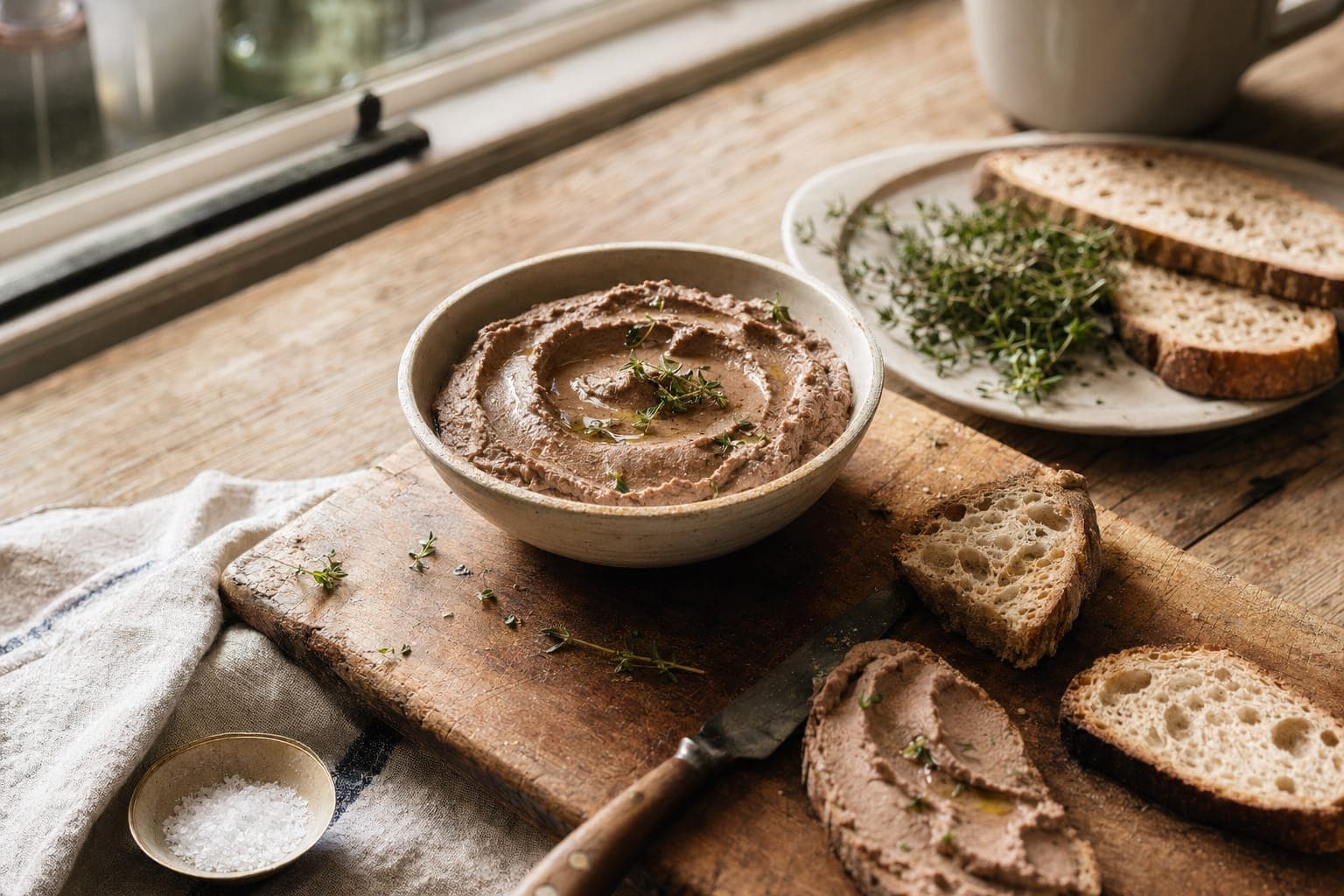
Liver Pate for Beginners: A Gentle Introduction to Organ Meats
Simple liver pate recipe to start eating organ meats. Chicken liver, butter, and herbs. Gentle introduction to nutrient-dense whole foods.

Organised Chia Pudding with Raw Honey and Berries
A no-cook chia seed pudding made with raw milk, collagen, berries, and raw honey. Prep it the night before and eat for breakfast.

Organised Protein Pancakes: A Weekend Favourite
A high-protein pancake recipe using beef protein, eggs, and raw milk. Cooked in cast iron, naturally sweetened with banana and honey. Real food breakfast.


 Join over 100,000+ members
Build a better food system with us
The Organised community is thousands of people choosing real food and backing the farmers who grow it, all of us trying to leave the world a little better than we found it. If that is what you care about too, you belong here.