Are Organ Meats High in Purines? What Gout Sufferers Need to Know
The advice to avoid organ meats if you have gout is so common it's become gospel. Organ meats, the thinking goes, are packed with purines. Purines break down into uric acid. Uric acid triggers gout attacks. Therefore avoid organs. But the science is messier than that. Some organs are actually fine. Others genuinely do push purine levels high. Here's what you actually need to know.
By Niall Kiddle, Founder, Organised

Reviewed by Pedro Rodrigues, Agronomist (farming and sourcing only) ·
5 min read · Published · Updated · 3 cited sources
Makers of the Organised Daily blend, a grass-fed beef organ supplement from regenerative UK farms
What purines actually are and why they matter
Purines are nucleotide bases found in all cells, plant and animal. They're part of the DNA and RNA in every living thing. When you digest foods containing purines, your body breaks them down through a metabolic pathway that produces uric acid as a byproduct.1 Most uric acid is filtered through your kidneys and excreted in urine.
In people with gout, either the kidneys aren't filtering uric acid efficiently, or the body is producing too much of it, or both. Uric acid builds up in the blood and crystallises in joints, particularly the big toe, triggering the intensely painful inflammatory response everyone associates with gout.
The foods that trigger gout are high-purine foods. But here's where the blanket advice breaks down: not all animal foods have the same purine content. Beef has less than a salmon steak. Chicken has less than tuna. And organs vary wildly, sometimes by more than tenfold depending on which organ.
Which organs are genuinely high in purines
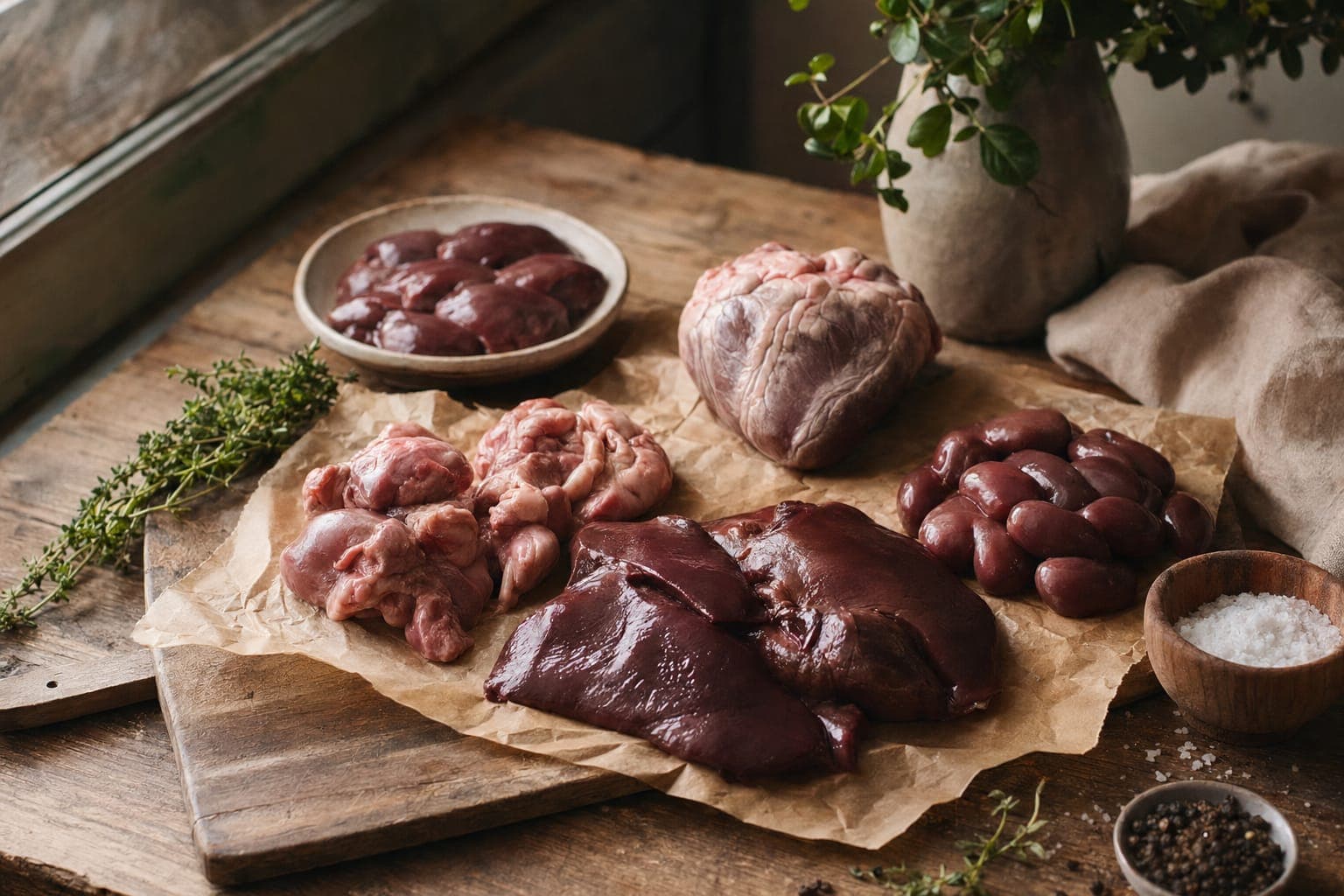
Some organs are indeed very high in purines and should be avoided or strictly limited if you have gout. The main offenders are liver and kidneys, particularly beef liver and goose liver. These organs are metabolically active and purine-dense.
Beef liver contains a high concentration of purines per 100 grams compared to muscle meat.2 For comparison, beef muscle meat contains around 50 to 100 milligrams per 100 grams. Kidney is even worse, with some sources listing it as high as 300 milligrams per 100 grams. Organ meats from poultry (chicken liver, turkey liver) are similarly high, in the range of 200 to 250 milligrams per 100 grams.
If you suffer from gout, liver and kidneys are reasonable foods to restrict or avoid entirely, especially during acute flare periods. The purine load is simply too high to ignore, particularly if your kidneys already struggle to clear uric acid.
Beef liver is three to four times higher in purines than the muscle meat from the same animal. If you have gout, liver is the organ to eliminate first.
Which organs are surprisingly low
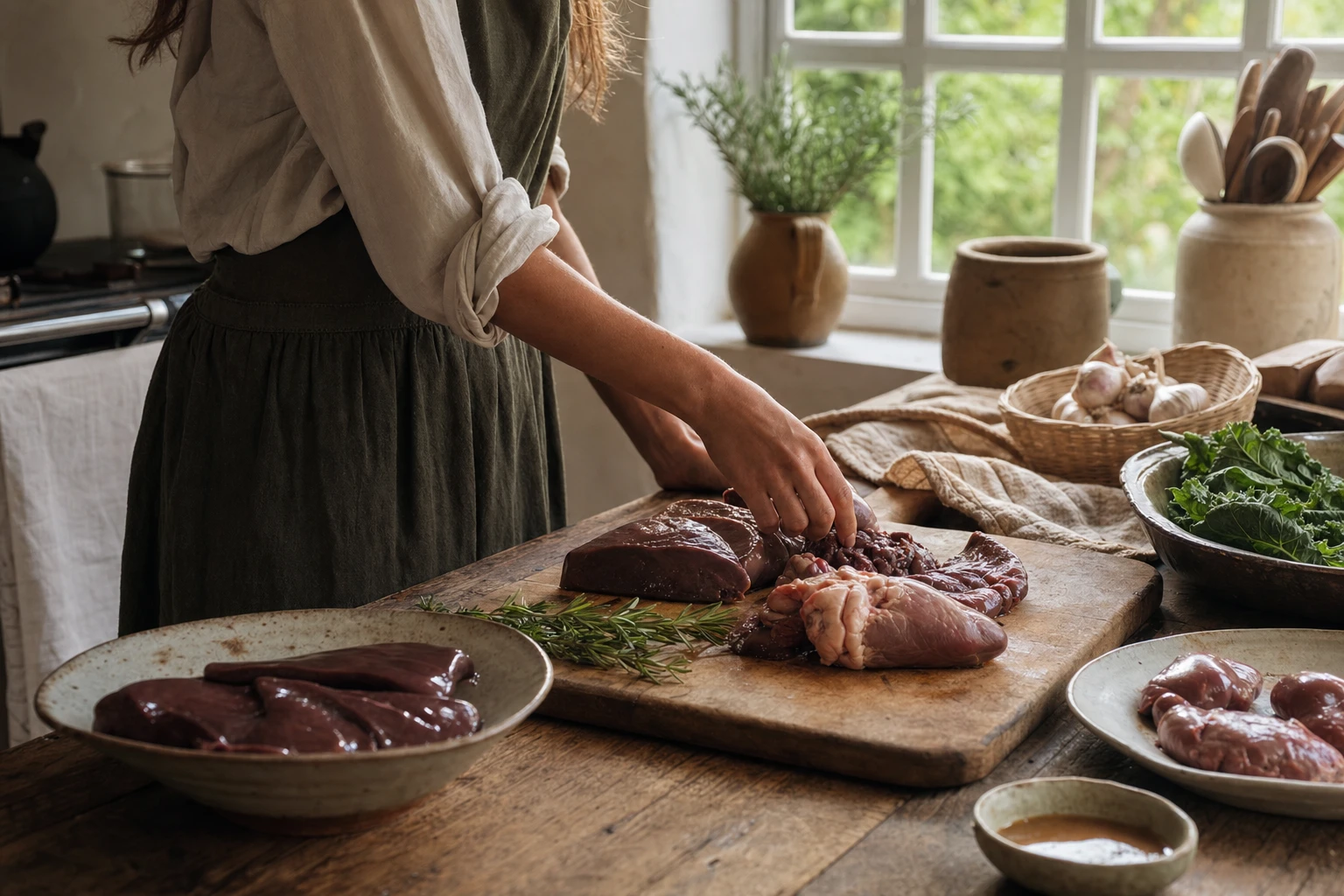
This is where the conversation gets interesting and where most dietary advice fails gout sufferers. Not all organs are purine-dense. Many are actually quite low compared to other animal foods.
Heart, for instance, is relatively low in purines compared to liver.2 Beef heart contains around 80 to 120 milligrams per 100 grams. That's actually in the range of muscle meat, not liver. It's barely above chicken. Tongue is similar, roughly 100 to 130 milligrams per 100 grams. These organs are metabolically less active and therefore don't accumulate purines at high levels.
Bone marrow is very low, maybe 20 to 50 milligrams per 100 grams depending on the preparation. It's actually one of the lowest-purine animal foods available. Oxtail is comparable to muscle meat, around 70 to 110 milligrams per 100 grams. Brain is moderate, around 100 to 150 milligrams per 100 grams.
Sweetbreads (thymus gland) do have moderate to high purines, around 200 milligrams per 100 grams, and should probably be limited if you're sensitive. Tripe (stomach lining) is actually quite low, around 50 to 80 milligrams per 100 grams, making it safer than many people assume.
The pattern is clear. Metabolically active organs like liver and kidney are purine-dense. Structural organs and tissues like heart, tongue, and bone marrow are not. If you love organ meats and you have gout, heart and bone marrow are reasonable options. Liver is the one to carefully manage.
Other high-purine foods to worry about first
Before you eliminate organ meats entirely, consider what else you're eating. Some common foods are far higher in purines than many organs.
Seafood, particularly shellfish and oily fish, is notoriously high-purine. Anchovies, sardines, herring, and organ meats from fish are among the highest-purine foods available, often exceeding 300mg per 100g. Shellfish like mussels and scallops are similarly problematic. If you have gout and you're eating seafood regularly, that's far more concerning than moderate organ meat consumption.
Processed meats, the ones made with offal (mechanically separated meat products, some sausages), can be surprisingly high in purines. Yeast-based products and yeast extracts are extremely high. Certain mushrooms, particularly dried shiitake, are surprisingly purine-dense for a vegetable.
Get the science, plainly, free
Two short reads a week on what the research actually says about nutrition.
By signing up you agree to receive emails from us. No spam, unsubscribe anytime.
Practical guidance for gout sufferers
If you have gout and you want to include organ meats in your diet, here's the practical hierarchy. Heart and tongue are safe to eat regularly, as regularly as you'd eat muscle meat. Bone marrow is excellent for mineral content and extremely low in purines, making it probably your best organ option. Tripe is fine. Sweetbreads should be limited or avoided.
Liver and kidney should be restricted. That doesn't mean never eat them. It means not regularly, and not in large portions. A small 30-50 gram serving of beef liver once per month is unlikely to trigger a gout attack in someone with mild gout. Regular consumption is riskier.
Context also matters enormously. A 100-gram serving of liver combined with adequate hydration, normal carbohydrate intake, and low alcohol consumption is lower-risk than the same serving combined with dehydration and a pint of beer. Gout is multifactorial, and purine content is just one factor among several.
For gout sufferers, organ meats aren't universally problematic. Heart, tongue, bone marrow, and tripe are reasonable choices. Liver and kidneys require caution. The purine difference between them is dramatic and worth knowing.
Context and other gout triggers
It's also worth noting that other foods and lifestyle factors are bigger gout triggers than even liver. Beer and high-fructose beverages are particularly strongly associated with gout risk.3
Dehydration is massive. Gout attacks are far more common in dehydrated individuals. Body weight and insulin resistance matter. Excess alcohol, particularly beer, matters more than any food except seafood. If you're managing gout, optimising those categories first yields more benefit than avoiding all organs blanket-style.
1 of 9
Daily blend
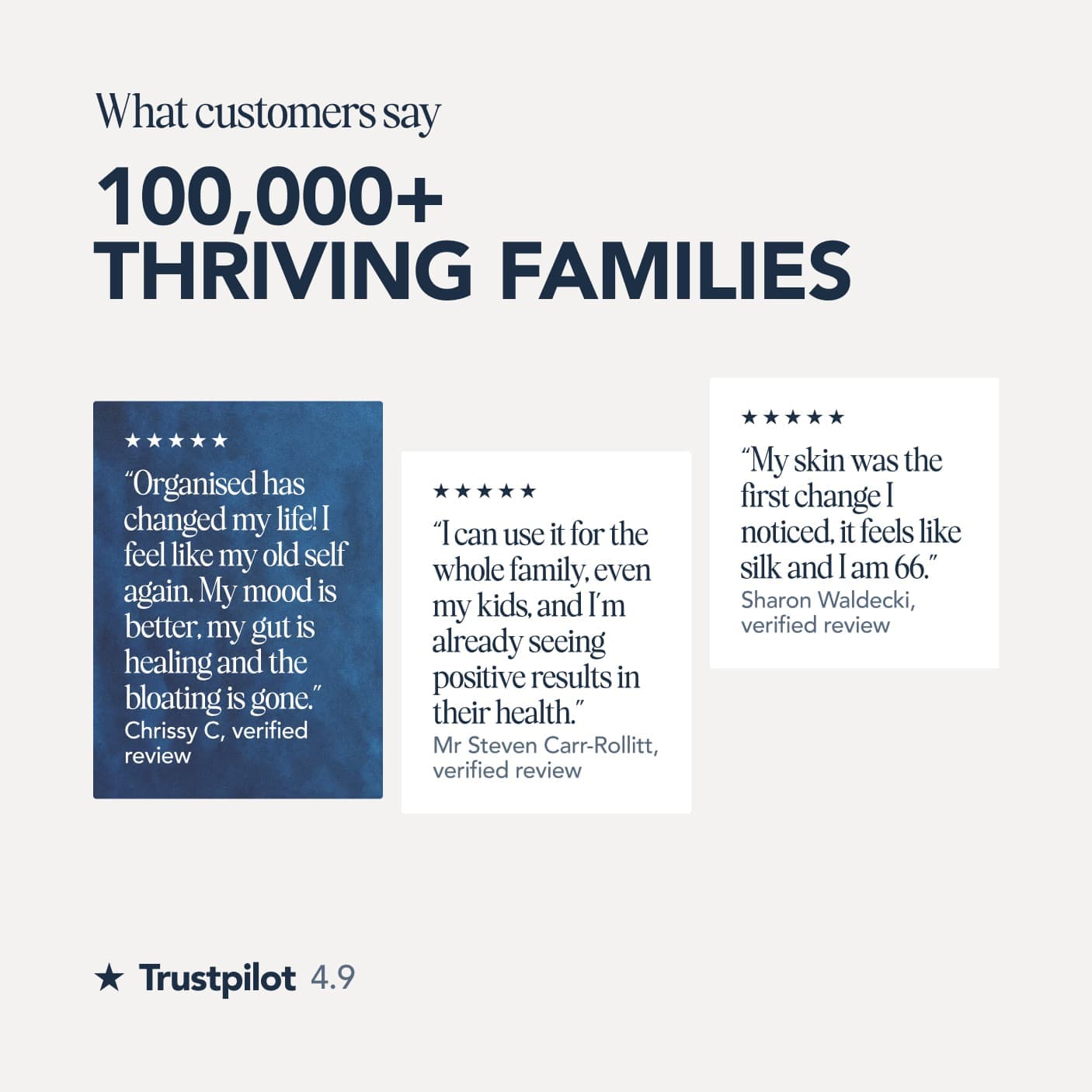
100,000+ thriving families4.9 on Trustpilot
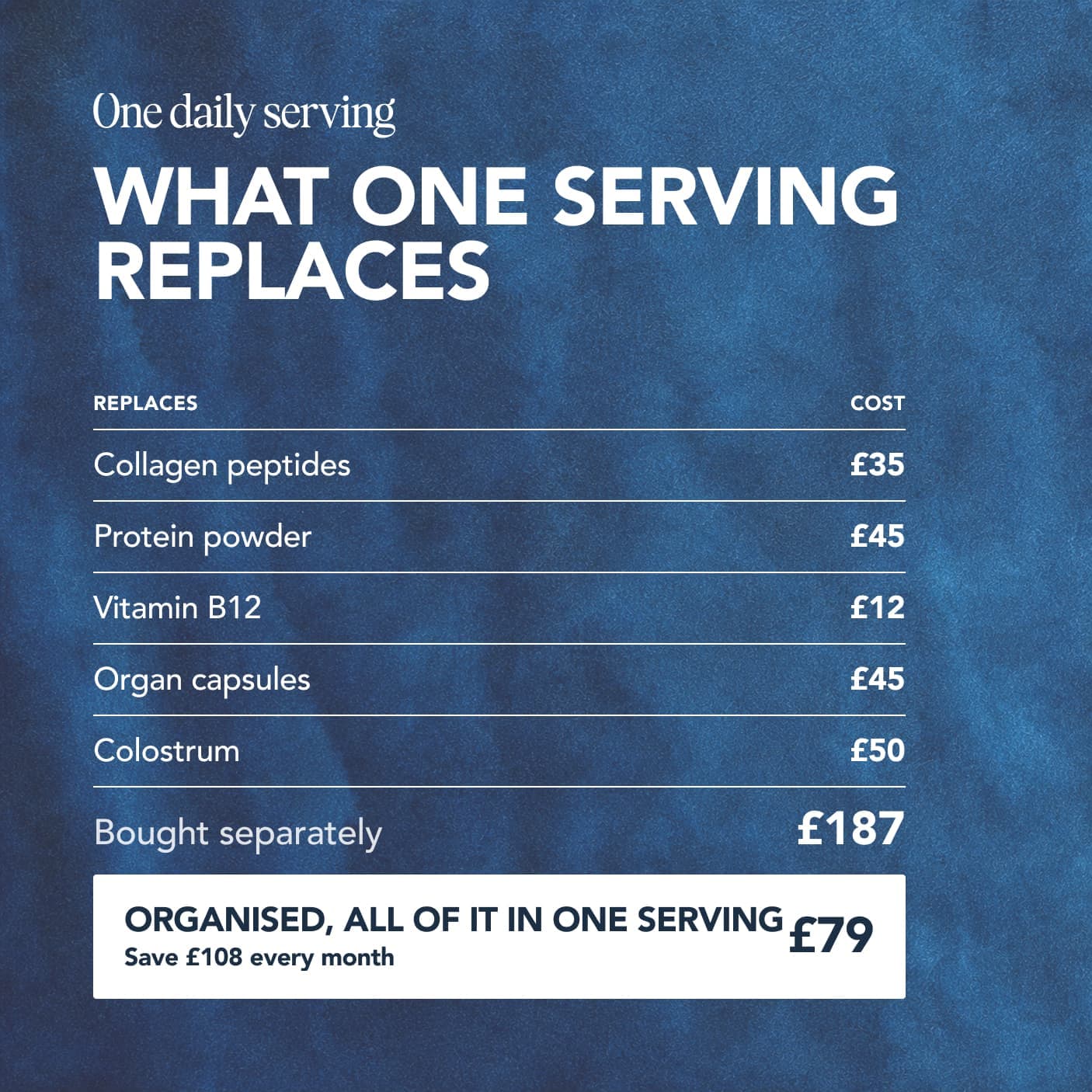
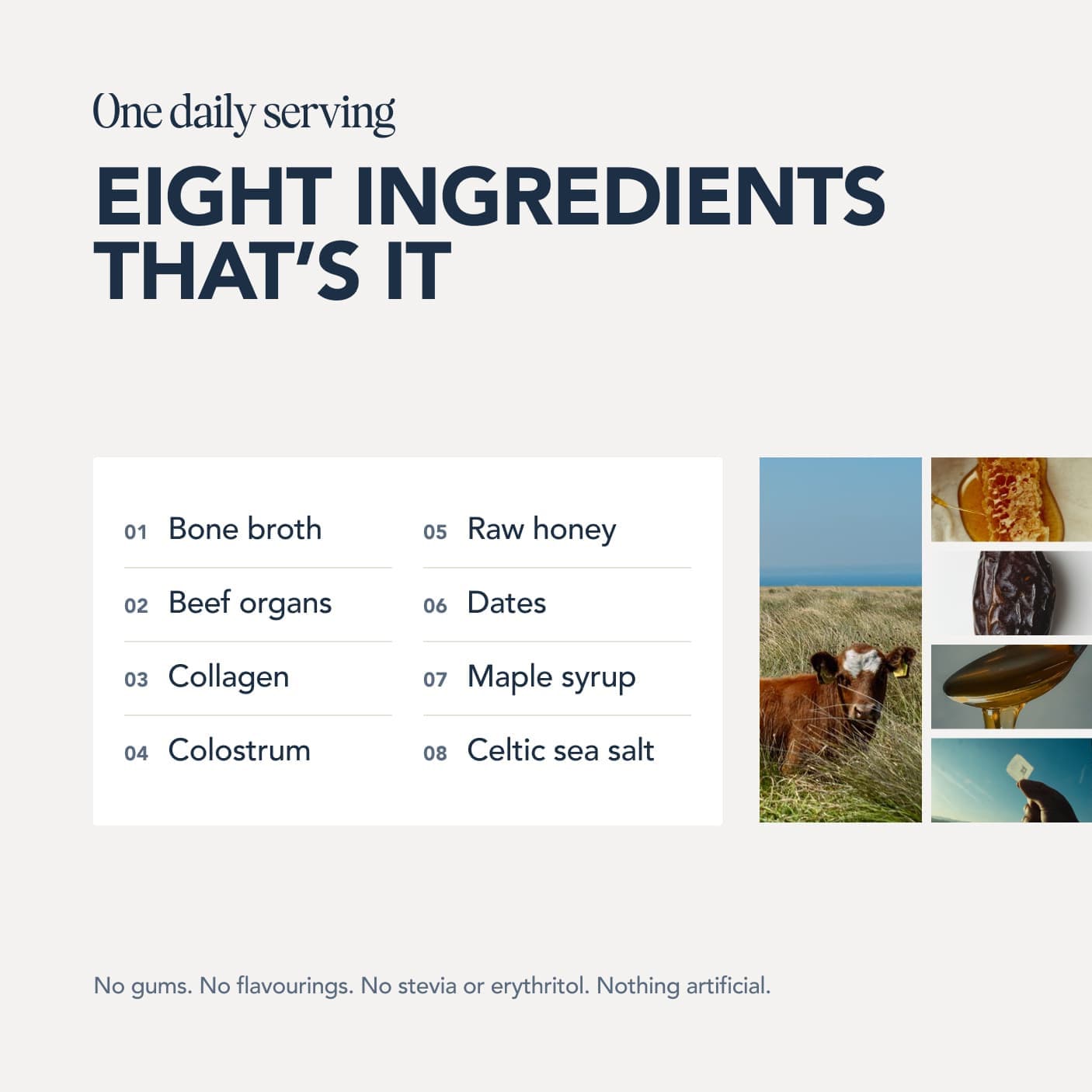
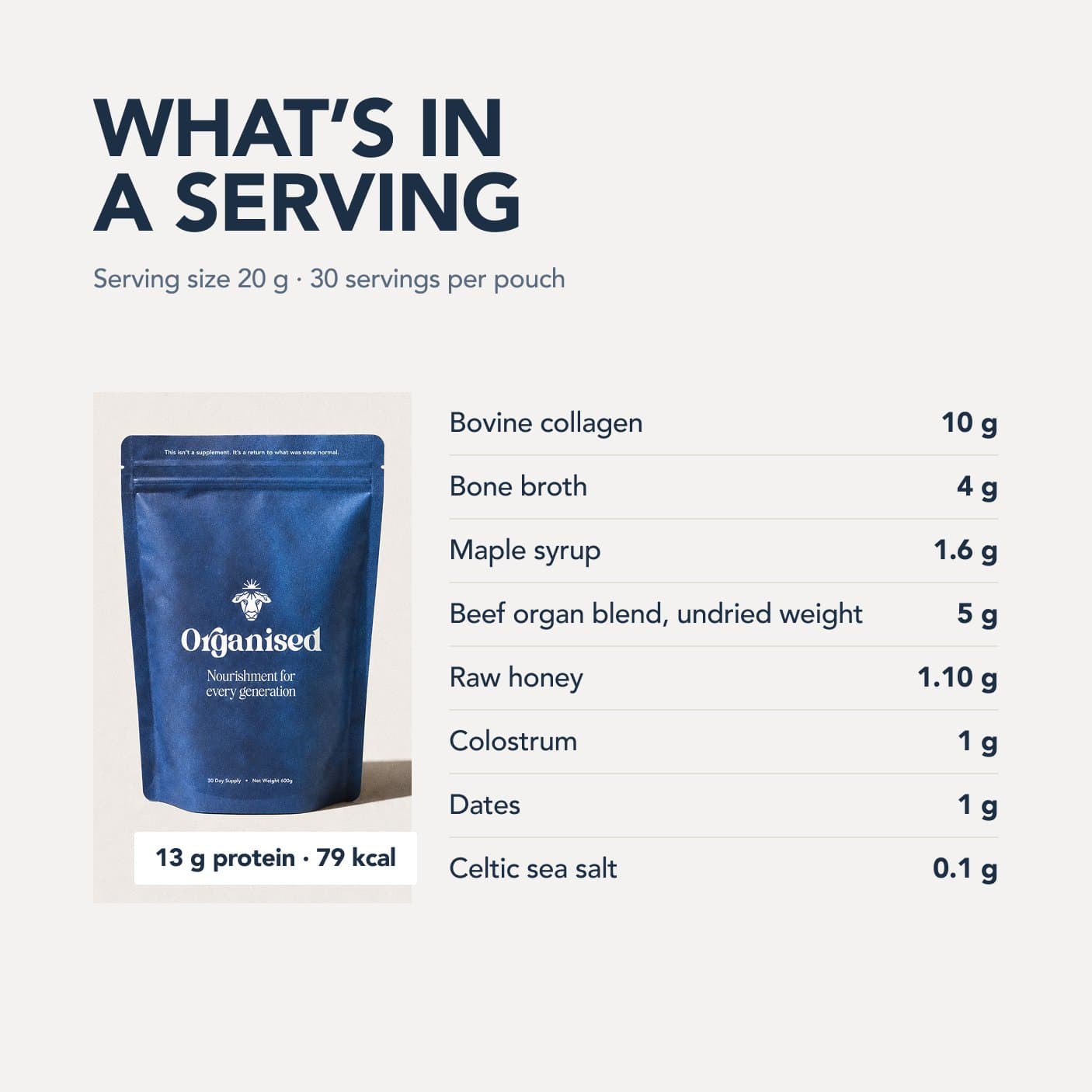
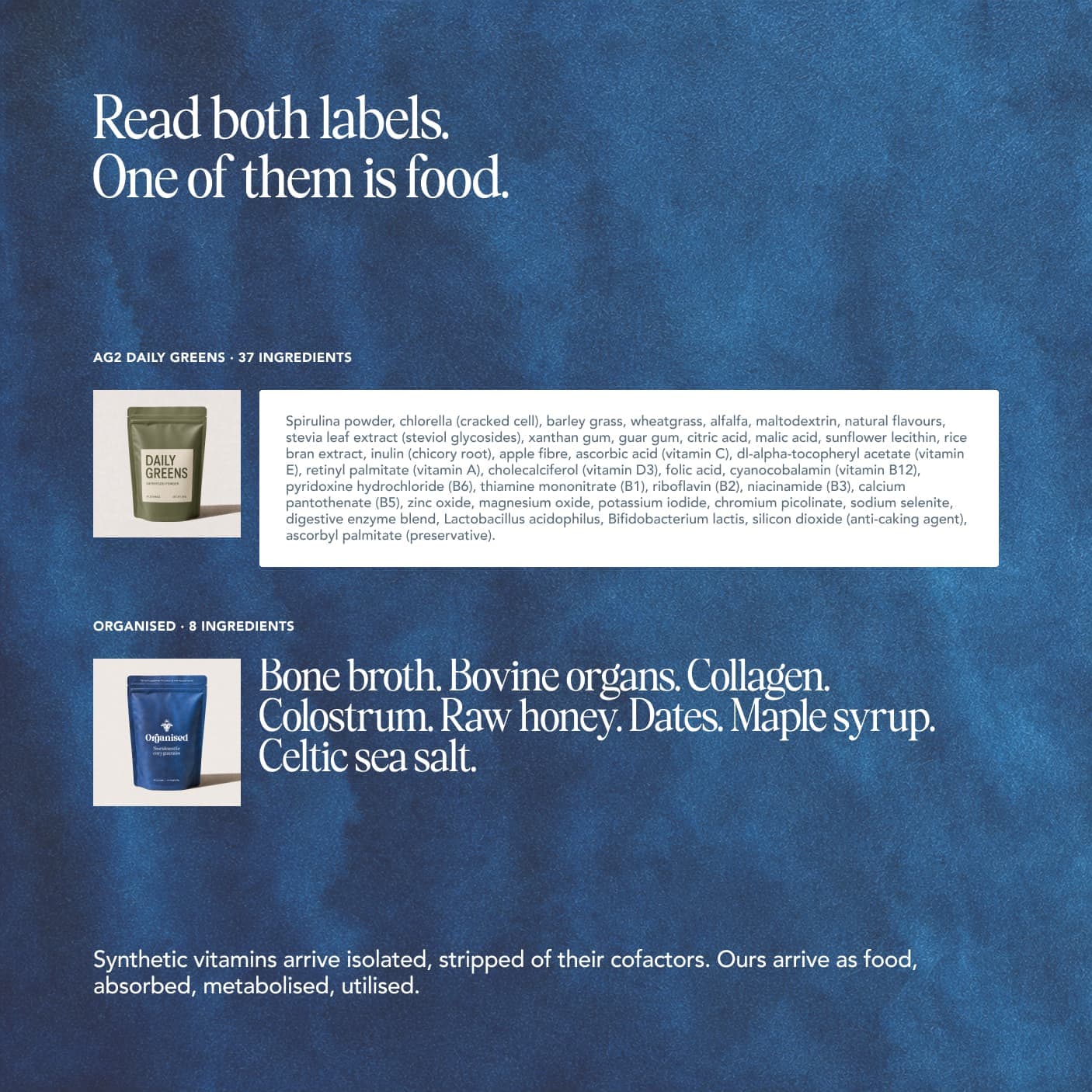
Eight real ingredients built around grass-fed beef organs, collagen and colostrum. Nothing synthetic added.
Free with your first order, worth £38. Plus £10 off the pouch with a subscription.
Free UK shipping · Made in England · 100 day money back guarantee on your first pouch · Skip, pause or cancel anytime
The bottom line
The blanket advice to avoid organ meats with gout is overly simplistic. Some organs are genuinely high in purines and worth limiting. Liver and kidney fall into this category. But heart, tongue, bone marrow, and tripe are actually lower in purines than many other animal foods and are perfectly reasonable to eat regularly.
If you have gout and you love organ meats, prioritise heart and bone marrow. Enjoy liver occasionally in small portions. Skip the kidneys and sweetbreads, or limit them severely. And remember that purine content is just one piece of the gout puzzle. Hydration, body weight, alcohol intake, and overall metabolic health matter just as much.
You don't have to sacrifice the nutrient density of organ meats to manage gout. You just need to know which ones are actually problematic.
References
Every source below was checked on 27 August 2026. Each PubMed, PMC and DOI identifier was resolved against NCBI or Crossref, and what it opens is printed under the citation, so you can see the link goes where the citation says without leaving the page. Where a citation and its identifier disagreed, the citation was corrected to the record or the reference was deleted along with the sentence marker that pointed at it, and where the resolved paper turned out not to support the sentence, the sentence was cut back to what it does support. Borrowed authority is worse than none, because it looks like rigour.
- Choi HK et al. Pathogenesis of gout. Ann Intern Med. 2005;143(7):499-516. PMID: 16204163.Checked 27 August 2026: PMID 16204163 opens Choi HK, Mount DB, Reginato AM et al, Pathogenesis of gout. Ann Intern Med 2005;143(7):499-516. PubMed indexes it as: Review.
- Kaneko K, Aoyagi Y, Fukuuchi T, Inazawa K, Yamaoka N. Total purine and purine base content of common foodstuffs for facile estimation of purine intake. Biol Pharm Bull. 2014;37(5):709-21. PMID: 24553148.Checked 27 August 2026: PMID 24553148 opens Kaneko K, Aoyagi Y, Fukuuchi T et al, Total purine and purine base content of common foodstuffs for facilitating nutritional therapy for gout and hyperuricemia. Biol Pharm Bull 2014;37(5):709-21. PubMed indexes it as: Review.
- Choi HK, Curhan G. Soft drinks, fructose consumption, and the risk of gout in men: prospective cohort study. BMJ. 2008;336(7639):309-12. PMID: 18244959.Checked 27 August 2026: PMID 18244959 opens Choi HK, Curhan G, Soft drinks, fructose consumption, and the risk of gout in men: prospective cohort study. BMJ 2008;336(7639):309-12.The authors' own declaration, from the record: Competing interests: None declared.
Who wrote and reviewed this guide
Niall Kiddle
Author · Founder, Organised
Niall is the founder of Organised. He started the company in 2024 after fixing his own health the slow way: in 2022 he swapped a cupboard of synthetic supplements for real food, raw milk, organ meats, bone broth and honey, and felt the difference within months.
Areas of expertise: Ancestral nutrition, Organ meats, Whole-food supplementation, Gut health, Regenerative sourcing
Read Niall's full profile
Pedro Rodrigues
Reviewer · Agronomist (farming and sourcing only)
Pedro is the agronomist Organised works with on farming and sourcing. His job on the guides is to keep the science honest: he reviews what we publish about soil health, regenerative agriculture, grazing and the way food is actually produced.
Areas of expertise: Regenerative agriculture, Agronomy, Soil health, Grass-fed farming, Food sourcing
Reviewed this guide on
Read Pedro's full profileMore on debunking
View all- Cholesterol in Organ Meats: Should You Be Worried?
- Do You Really Need 5 a Day? What the Evidence Says
- Does Red Meat Cause Cancer? A Nuanced Look at the Evidence
- Is Too Much Protein Bad for Your Kidneys? Separating Fact from Fear
- Liver Doesn't Store Toxins: Debunking the Biggest Organ Meat Myth
- The Real Reason Your Doctor Says 'Eat Less Red Meat'
- The Saturated Fat Myth: What Modern Research Actually Shows
Browse the guides library
All guidesKeep reading
Science
Epigenetics and Nutrition: How Food Shapes Gene Expression
Your genes aren't destiny. Nutrients like B12, folate, and choline control epigenetic switches that turn genes on or off. Learn how food shapes your biology.
Science
The Protein Leverage Hypothesis: Why We Overeat
The protein leverage hypothesis from Simpson and Raubenheimer explains how appetite chases a protein target and drives overeating of low-protein foods.
Science
6 Mineral Deficiencies You Probably Have Without Realising
Spot common mineral deficiencies like magnesium, zinc, iodine and selenium. Learn the warning signs, how to test, and the real food sources that replete them.
Real food, made effortless
See the blendA few ways to use it
All recipes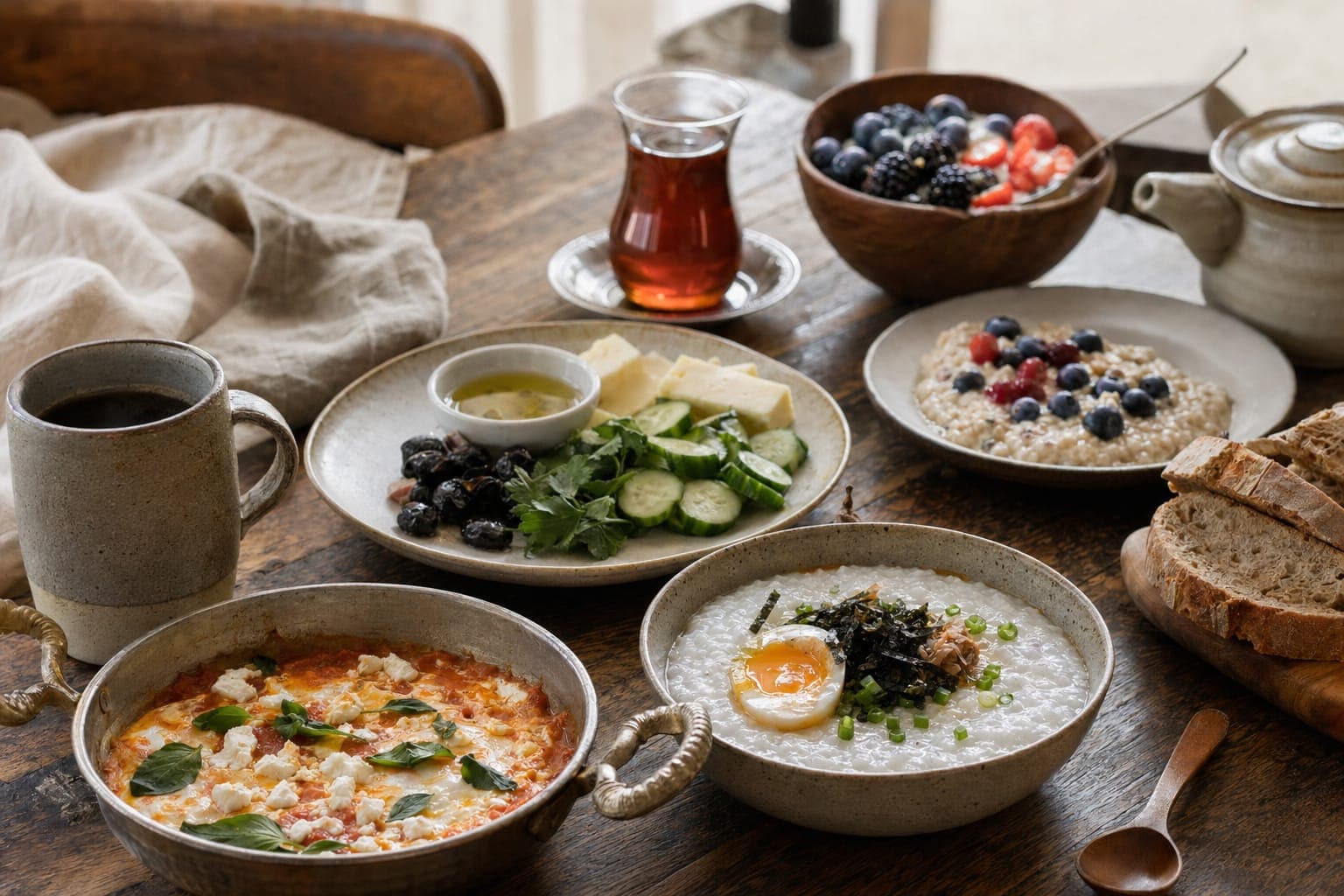
Ancestral Breakfast Ideas from Around the World
Traditional breakfast recipes from cultures that got nutrition right. Japanese, Turkish, Scottish, and more. Whole-food breakfast inspiration.
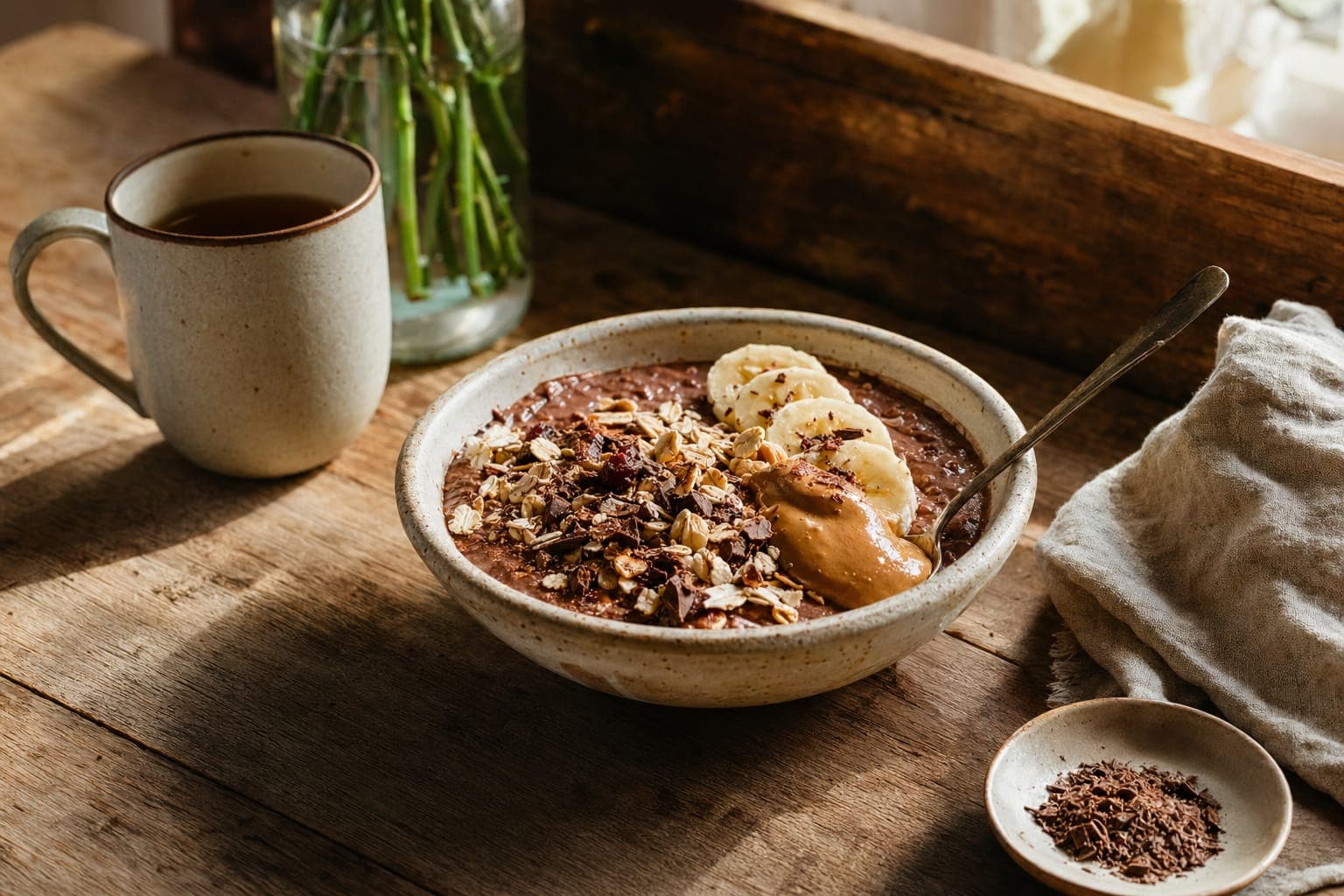
10 Ways to Use Organised That Aren't Just a Shake
Move beyond the basic shake. Discover 10 creative ways to use Organised in smoothie bowls, oats, yoghurt, baking, and more.
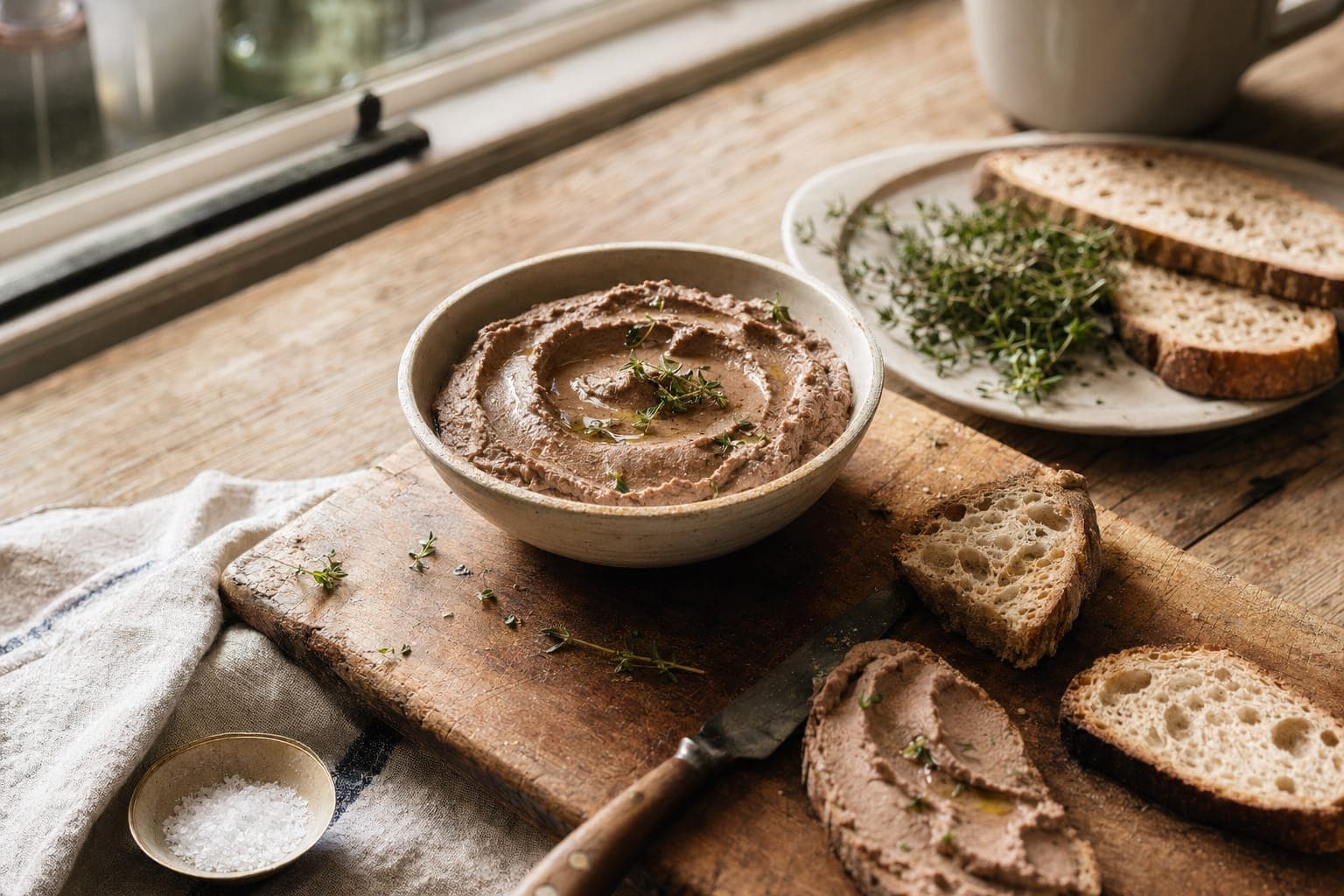
Liver Pate for Beginners: A Gentle Introduction to Organ Meats
Simple liver pate recipe to start eating organ meats. Chicken liver, butter, and herbs. Gentle introduction to nutrient-dense whole foods.


 Join over 100,000+ members
Build a better food system with us
The Organised community is thousands of people choosing real food and backing the farmers who grow it, all of us trying to leave the world a little better than we found it. If that is what you care about too, you belong here.