The Saturated Fat Myth: What Modern Research Actually Shows
Here's an uncomfortable truth that a lot of nutrition authorities won't say: the case against saturated fat was built on a foundation of cherry-picked data and institutional inertia. The scientist who started it all, Ancel Keys, was brilliant, but he was also selectively publishing results. Since then, larger and better-designed studies have painted a very different picture. One that most people have never seen.

By Niall Kiddle, Founder, Organised

Reviewed by Pedro Rodrigues, Agronomist (farming and sourcing only) ·
7 min read · Published · Updated · 6 cited sources
Makers of the Organised Daily blend, a grass-fed beef organ supplement from regenerative UK farms
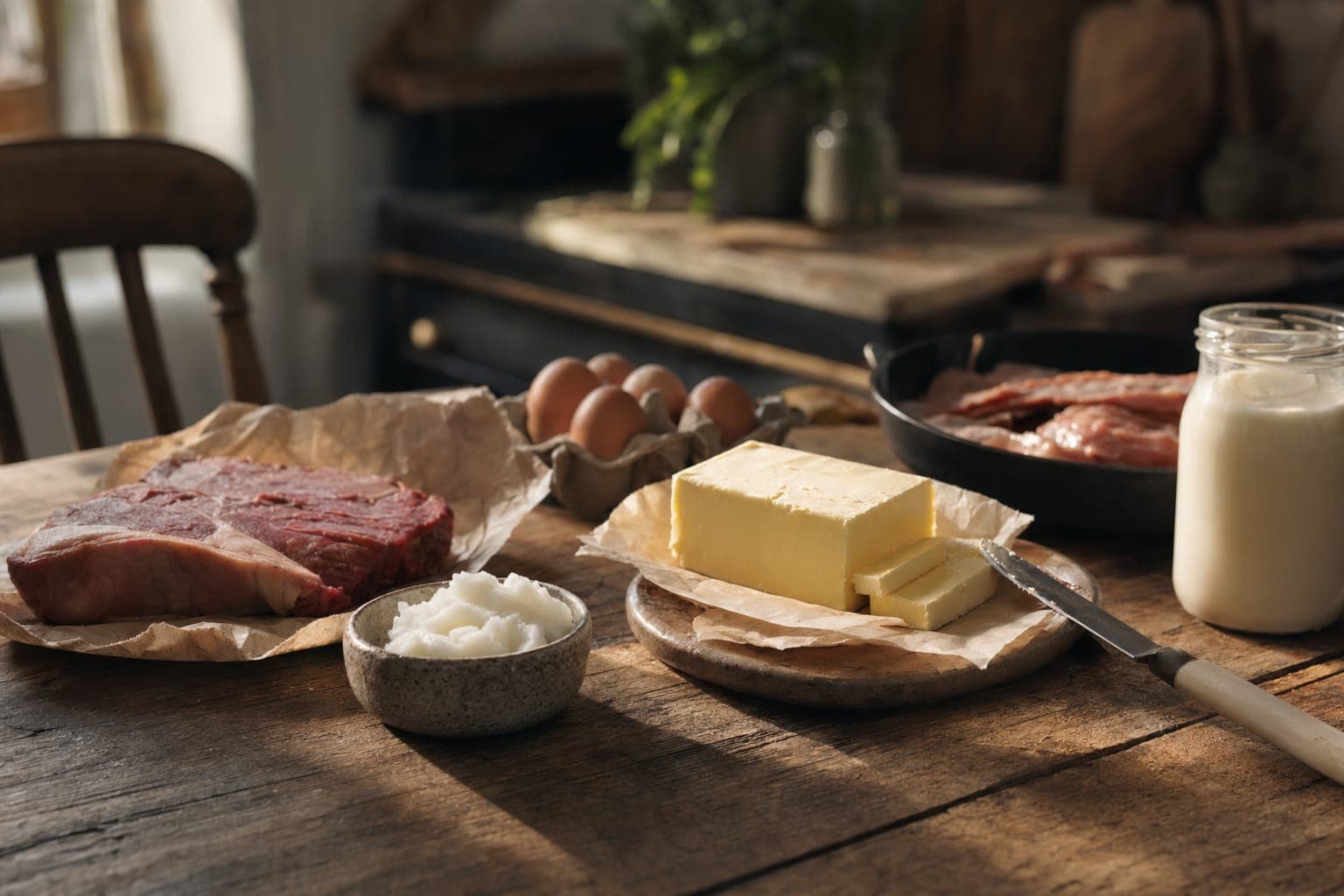
Understanding this history is crucial. Because the dietary guidance you've been following for decades wasn't based on the best evidence. It was based on one man's hypothesis and the tendency of institutions to defend positions even after evidence has shifted underneath them.

The Ancel Keys controversy
In the 1950s, Ancel Keys began the work that became known as the Seven Countries Study.1 He surveyed dietary patterns and heart disease rates across seven nations, finding a correlation between saturated fat intake and heart disease. The relationship looked remarkably clean: more saturated fat intake equalled more heart disease mortality.
The problem: Keys had access to data from 22 countries, not seven. He selected only the seven that fit his hypothesis. The other 15 countries showed no such correlation. In fact, some populations with high saturated fat intake had excellent cardiovascular health. Greece, particularly Crete, had high fat intake but low heart disease. But Keys didn't publish those findings. Nor did he emphasise them.
This isn't a conspiracy theory. It's documented history. Keys' selection bias was examined by nutritional epidemiologists decades later. His bias wasn't intentional malice. It was confirmation bias. He had a hypothesis and he published the data that supported it.
But Keys was influential, well-liked in medical circles, and his hypothesis became the foundation of dietary guidelines that billions of people followed for the next 70 years. Once an idea takes institutional weight, it's incredibly difficult to dislodge, even when evidence contradicts it.
The Seven Countries Study was built on selective data. Keys ignored 15 countries whose data contradicted his saturated fat hypothesis.
Why the myth persisted for so long
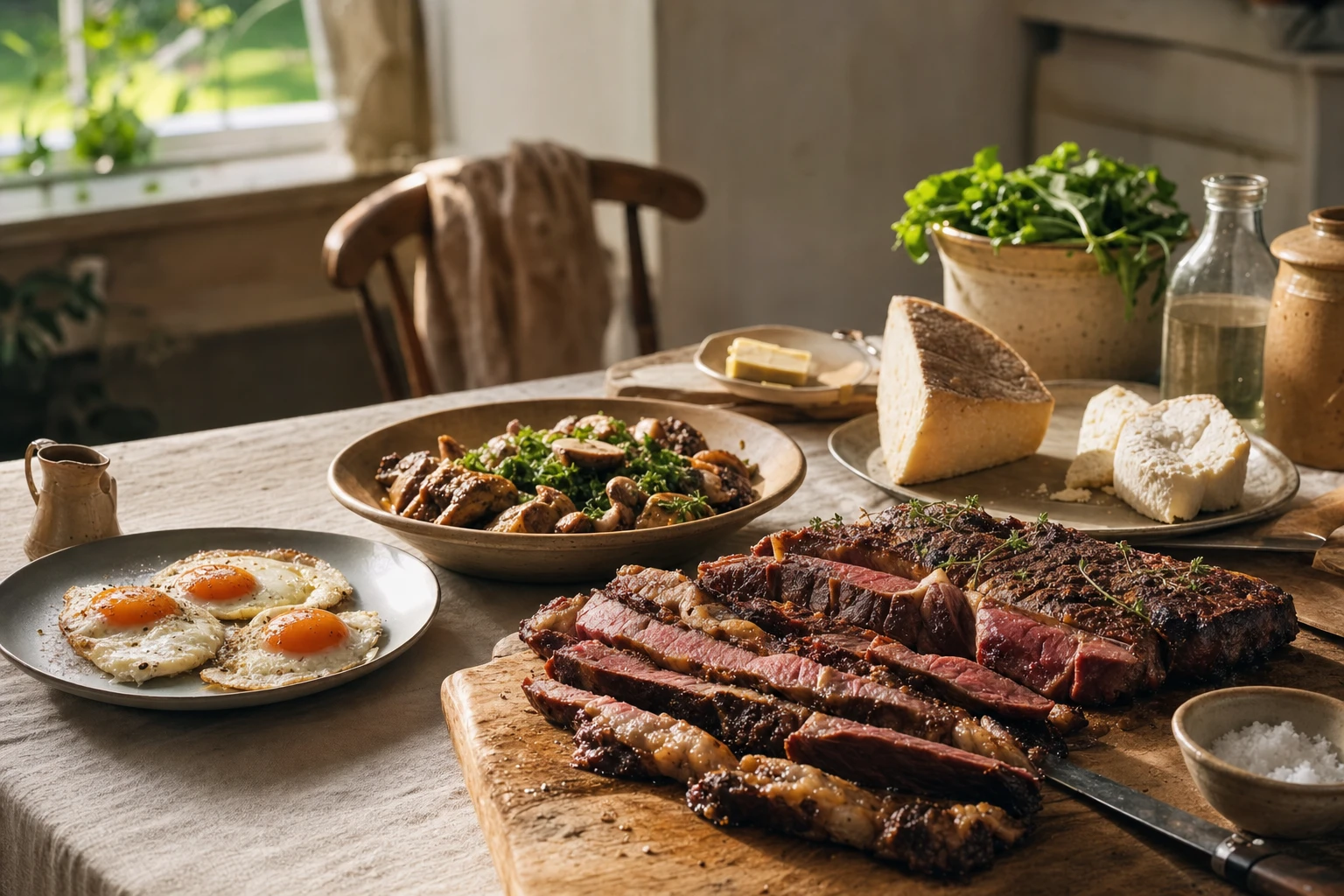
Once the idea took hold, it became self-reinforcing. Government agencies built dietary guidelines around it. The pharmaceutical industry had a clear financial interest in promoting the idea that dietary saturated fat causes disease (because statins treat high cholesterol and became enormously profitable). Cereal manufacturers and seed oil producers had enormous financial incentives to popularise low-fat, high-carbohydrate diets, which meant selling more grain-based products and industrial seed oils.
When research started contradicting the hypothesis in the 1980s and 1990s, it was often quietly ignored or criticised on methodological grounds. When large prospective cohort studies found no association between saturated fat and cardiovascular disease, they weren't front-page news. Instead, institutions doubled down, promoting the low-fat diet even as evidence accumulated that it wasn't working.
It's not that scientists were lying. It's that cognitive bias and massive financial incentives created a system where inconvenient findings got suppressed, reinterpreted, or simply ignored. Researchers who questioned the saturated fat hypothesis were marginalised. The consensus became almost dogmatic.
What the 2010 meta-analyses actually found
By 2010, enough high-quality research had accumulated that meta-analyses became possible. Siri-Tarino, Krauss, and colleagues published a meta-analysis in the American Journal of Clinical Nutrition examining the relationship between saturated fat intake and cardiovascular disease.2 They reviewed decades of prospective cohort studies and randomised controlled trials.
The finding: no significant independent relationship. Saturated fat intake was not independently associated with increased cardiovascular disease risk when they examined the totality of evidence. Similar findings emerged from later meta-analyses.3 The PURE study, a large multinational cohort of over 135,000 people, found that higher fat intake was associated with lower total mortality in that population.4
What these meta-analyses did find was that the type of carbohydrate matters enormously. When people reduced saturated fat but replaced it with refined carbohydrates and sugar, cardiovascular markers worsened. When saturated fat was replaced with whole grains and fibre, markers improved. But this had nothing to do with the saturated fat being removed. It had to do with the carbohydrate quality being added.
In other words, the studies that appeared to show saturated fat was bad were actually showing that refined carbohydrates were bad. The saturated fat reduction was merely part of that transition.
The 2010 Siri-Tarino meta-analysis found no significant independent association between saturated fat and cardiovascular disease when examining the totality of prospective evidence.

The type of saturated fat matters
Modern research has revealed nuance that the original hypothesis completely missed. Not all saturated fats behave the same way in the body. This shouldn't surprise you. Lauric acid (found in coconut oil) raises both LDL and HDL cholesterol, a neutral-to-slightly-positive lipid profile. Myristic acid (found in beef and dairy) raises LDL somewhat but also raises HDL, and the ratio effects are often neutral or slightly positive. Stearic acid (found in beef, chocolate, shea butter) has a comparatively neutral effect on LDL cholesterol relative to other saturated fatty acids.6
Meanwhile, trans fats (artificially created during hydrogenation of vegetable oils) clearly increase cardiovascular risk.5 Oxidised polyunsaturated fats from deep-frying or industrial processing create harmful compounds like lipid peroxides. High-heat cooking of seed oils generates oxidised compounds that are inflammatory.
But these aren't the natural saturated fats found in meat, dairy, and coconut. The fats that are problematic are the industrially processed ones, not the naturally occurring saturated fats.
Get the science, plainly, free
Two short reads a week on what the research actually says about nutrition.
By signing up you agree to receive emails from us. No spam, unsubscribe anytime.
The saturated fat replacement matters more
One crucial finding from the research that gets overlooked: what you replace saturated fat with matters far more than removing the saturated fat itself. Replace saturated fat with refined carbohydrates and sugar, and your cardiovascular risk worsens. Your triglycerides increase. Your blood pressure worsens. Your LDL particle size becomes more atherogenic (more likely to cause atherosclerosis).
Replace saturated fat with whole grains, legumes, and vegetables, and your markers improve. But again, that improvement has nothing to do with the removal of saturated fat. It's the addition of whole plant foods that's driving the benefit.
Why cardiovascular markers depend on context
Here's what actually predicts cardiovascular disease risk: triglyceride levels, LDL particle size and number, HDL levels, inflammatory markers like CRP, blood pressure, glucose control, and arterial function measured by flow-mediated dilation. Saturated fat influences some of these. But so do sleep quality, chronic stress, exercise frequency, processed food intake, and overall metabolic health.
A person eating saturated fat in the context of whole foods, adequate sleep (7 to 9 hours nightly), regular movement (150+ minutes weekly), low chronic stress, and good metabolic health will have a completely different cardiovascular profile than someone eating saturated fat whilst under chronic stress, sedentary, chronically sleep-deprived, and eating processed food regularly.
The research on saturated fat always shows the same thing when examined carefully: context is everything. Isolated saturated fat in the laboratory might raise some markers in some people. But saturated fat in the context of real life, real food, and real health behaviour shows minimal or no cardiovascular risk in most people. In fact, populations eating butter, beef, and whole milk often have better cardiovascular markers than populations eating margarine, chicken breast, and low-fat yoghurt, particularly when you control for overall lifestyle factors including exercise, sleep, and stress.
What the current evidence tells us
Modern research consistently shows that saturated fat doesn't independently predict cardiovascular disease when you look at populations eating whole foods. But there are important caveats. The type of saturated fat matters somewhat. The food matrix matters enormously. A slice of butter with whole grain bread and vegetables is metabolically different from butter on refined white bread. Beef with a salad is different from beef in a processed burger.
Additionally, people vary genetically in how they respond to saturated fat. Some genetic variations make you less sensitive to saturated fat's effect on cholesterol. Others make you more sensitive. A small subset of people genuinely do have lipid profiles that worsen with saturated fat intake. For those people, reducing saturated fat might help. For most people, it doesn't matter much.


1 of 9
Daily blend
100,000+ thriving families4.9 on Trustpilot
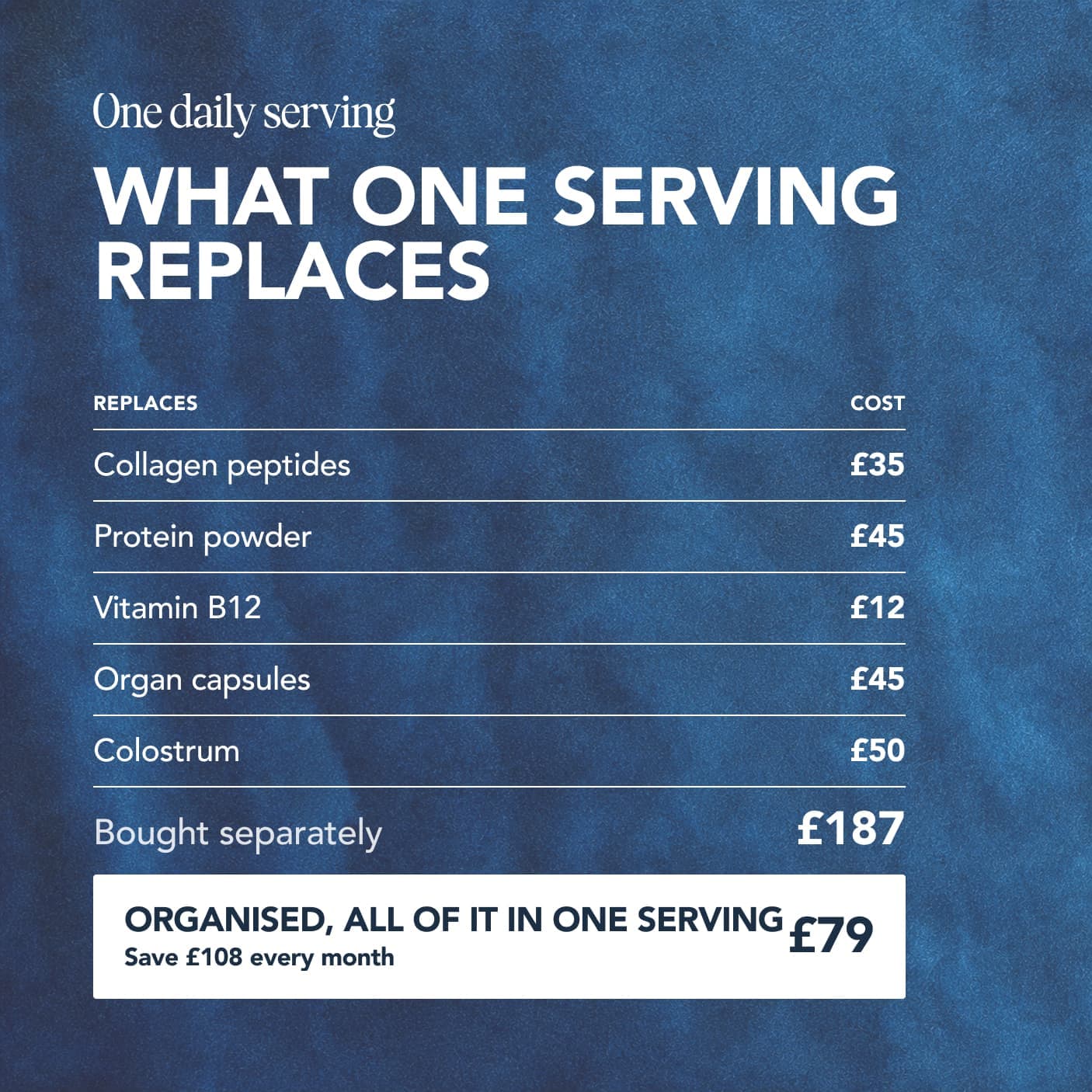
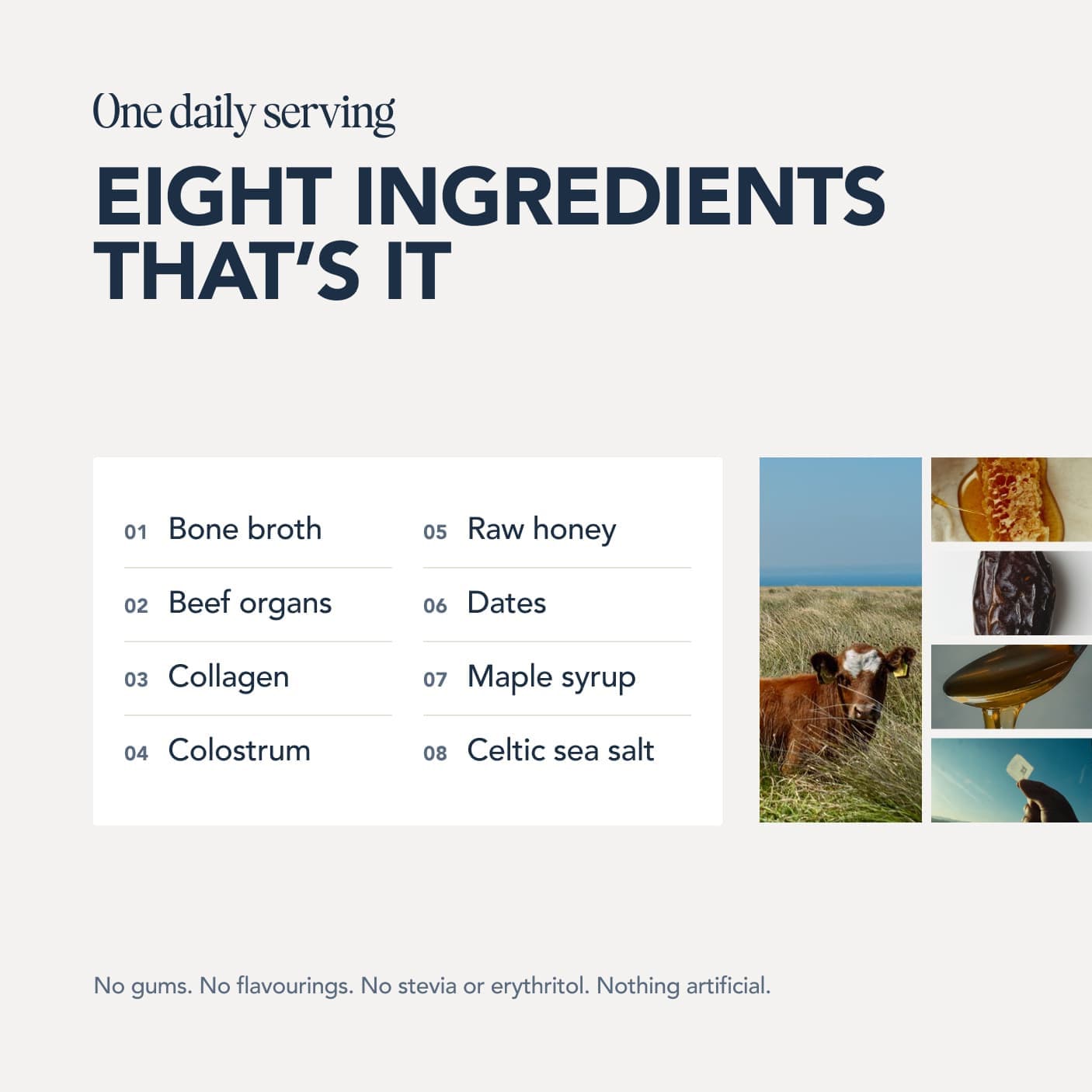
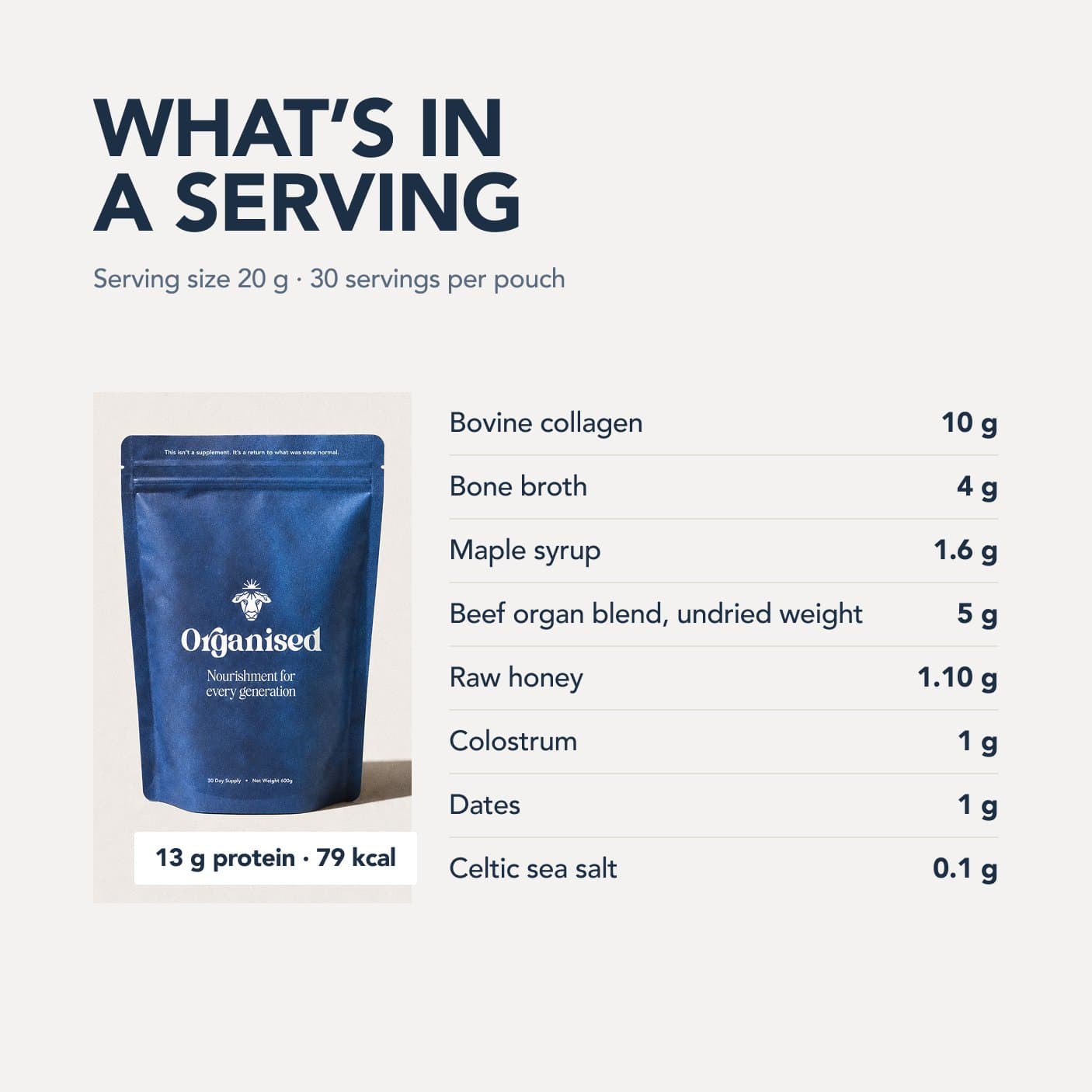
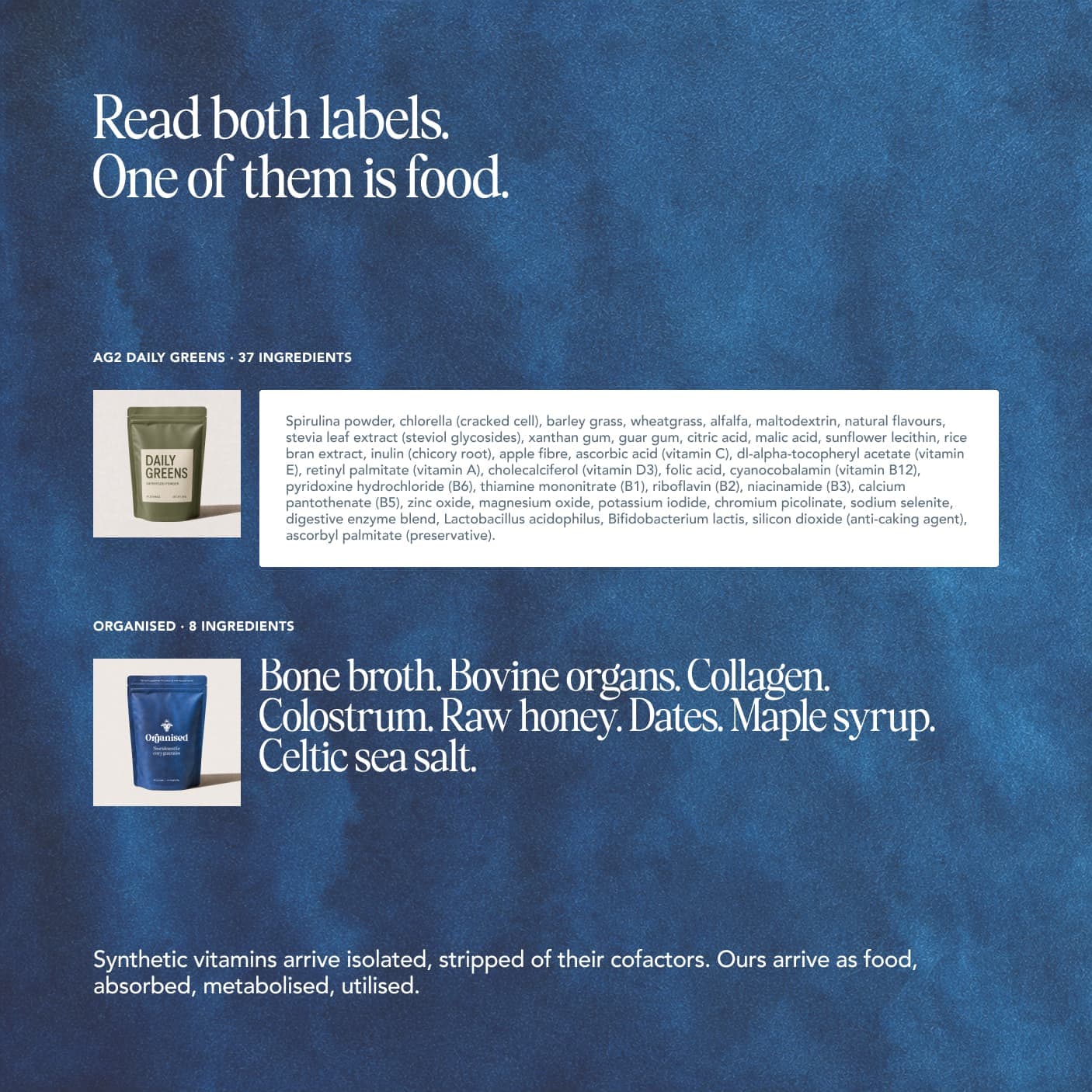
Eight real ingredients built around grass-fed beef organs, collagen and colostrum. Nothing synthetic added.
Free with your first order, worth £38. Plus £10 off the pouch with a subscription.



Free UK shipping · Made in England · 100 day money back guarantee on your first pouch · Skip, pause or cancel anytime
The bottom line
The case against saturated fat was built on selective data, institutional inertia, and financial incentives. When you examine the actual research carefully, the relationship between saturated fat and cardiovascular disease is weak or non-existent in people eating whole foods and living reasonably healthy lifestyles. The evidence has shifted, but the guidelines haven't caught up.
This doesn't mean eat unlimited butter and beef without regard to overall health or individual context. It means you can eat them without fear or guilt. A slice of butter on your vegetables. Red meat several times a week. Full-fat dairy if it suits your digestion and metabolism. Coconut oil in your cooking. These foods aren't enemies. They're nutrient-dense sources of vitamins, minerals, fat-soluble antioxidants, and satiety that your body recognises and processes efficiently.
What you should actually avoid: processed seed oils high in polyunsaturated fat and oxidised compounds, refined sugar and flour, ultra-processed food laden with additives, chronic stress without outlets, sedentary living without movement, and chronic sleep deprivation. Those are the actual cardiovascular risk factors. Saturated fat from whole foods is not.
References
Every source below was checked on 27 August 2026. Each PubMed, PMC and DOI identifier was resolved against NCBI or Crossref, and what it opens is printed under the citation, so you can see the link goes where the citation says without leaving the page. Where a citation and its identifier disagreed, the citation was corrected to the record or the reference was deleted along with the sentence marker that pointed at it, and where the resolved paper turned out not to support the sentence, the sentence was cut back to what it does support. Borrowed authority is worse than none, because it looks like rigour.
- Keys A. Coronary heart disease in seven countries. Circulation. 1970;41(4 Suppl):I1-I211.Checked 27 August 2026: PMID 14296839 opens GAULT FP, COUSTAN DR, NASAL AIR FLOW AND RHINENECEPHALIC ACTIVITY. Electroencephalogr Clin Neurophysiol 1965;18:617-24.
- Siri-Tarino PW et al. Meta-analysis of prospective cohort studies evaluating the association of saturated fat with cardiovascular disease. Am J Clin Nutr. 2010;91(3):535-46. PMID: 20071648.Checked 27 August 2026: PMID 20071648 opens Siri-Tarino PW, Sun Q, Hu FB et al, Meta-analysis of prospective cohort studies evaluating the association of saturated fat with cardiovascular disease. Am J Clin Nutr 2010;91(3):535-46. PubMed indexes it as: Meta-Analysis.
- Chowdhury R et al. Association of dietary, circulating, and supplement fatty acids with coronary risk: a systematic review and meta-analysis. Ann Intern Med. 2014;160(6):398-406. PMID: 24723079.Checked 27 August 2026: PMID 24723079 opens Chowdhury R, Warnakula S, Kunutsor S et al, Association of dietary, circulating, and supplement fatty acids with coronary risk: a systematic review and meta-analysis. Ann Intern Med 2014;160(6):398-406. PubMed indexes it as: Meta-Analysis, Systematic Review.
- Dehghan M et al. Associations of fats and carbohydrate intake with cardiovascular disease and mortality in 18 countries from five continents (PURE): a prospective cohort study. Lancet. 2017;390(10107):2050-2062. PMID: 28864332.Checked 27 August 2026: PMID 28864332 opens Dehghan M, Mente A, Zhang X et al, Associations of fats and carbohydrate intake with cardiovascular disease and mortality in 18 countries from five continents (PURE): a prospective cohort study. Lancet 2017;390(10107):2050-2062. PubMed indexes it as: Comparative Study, Multicenter Study.
- Mozaffarian D et al. Trans fatty acids and cardiovascular disease. N Engl J Med. 2006;354(15):1601-13. PMID: 16611951.Checked 27 August 2026: PMID 16611951 opens Mozaffarian D, Katan MB, Ascherio A et al, Trans fatty acids and cardiovascular disease. N Engl J Med 2006;354(15):1601-13. PubMed indexes it as: Review.
- Hunter JE et al. Cardiovascular disease risk of dietary stearic acid compared with trans, other saturated, and unsaturated fatty acids: a systematic review. Am J Clin Nutr. 2010;91(1):46-63. PMID: 20089734.Checked 27 August 2026: PMID 20089734 opens Siri-Tarino PW, Sun Q, Hu FB et al, Saturated fat, carbohydrate, and cardiovascular disease. Am J Clin Nutr 2010;91(3):502-9. PubMed indexes it as: Review.
Who wrote and reviewed this guide
Niall Kiddle
Author · Founder, Organised
Niall is the founder of Organised. He started the company in 2024 after fixing his own health the slow way: in 2022 he swapped a cupboard of synthetic supplements for real food, raw milk, organ meats, bone broth and honey, and felt the difference within months.
Areas of expertise: Ancestral nutrition, Organ meats, Whole-food supplementation, Gut health, Regenerative sourcing
Read Niall's full profile
Pedro Rodrigues
Reviewer · Agronomist (farming and sourcing only)
Pedro is the agronomist Organised works with on farming and sourcing. His job on the guides is to keep the science honest: he reviews what we publish about soil health, regenerative agriculture, grazing and the way food is actually produced.
Areas of expertise: Regenerative agriculture, Agronomy, Soil health, Grass-fed farming, Food sourcing
Reviewed this guide on
Read Pedro's full profileMore on debunking
View all- Are Organ Meats High in Purines? What Gout Sufferers Need to Know
- Cholesterol in Organ Meats: Should You Be Worried?
- Do You Really Need 5 a Day? What the Evidence Says
- Does Red Meat Cause Cancer? A Nuanced Look at the Evidence
- Is Too Much Protein Bad for Your Kidneys? Separating Fact from Fear
- Liver Doesn't Store Toxins: Debunking the Biggest Organ Meat Myth
- The Real Reason Your Doctor Says 'Eat Less Red Meat'
Browse the guides library
All guidesKeep reading

Science
Collagen and Hair Density: Breaking Down the Reilly et al. Study
What the Reilly et al. research really shows about collagen and hair density. Why the 27% increase matters, and what to realistically expect.
Science
Epigenetics and Nutrition: How Food Shapes Gene Expression
Your genes aren't destiny. Nutrients like B12, folate, and choline control epigenetic switches that turn genes on or off. Learn how food shapes your biology.
Science
Amino Acids 101: Essential, Non-Essential and Conditional
There are nine essential amino acids you must eat. But four conditionally essential amino acids matter more than most people realise.
Real food, made effortless
See the blendA few ways to use it
All recipes
Bone Broth from Scratch: A Step-by-Step Guide
Step-by-step guide to making bone broth at home. Stovetop, slow cooker, and Instant Pot methods. Rich in collagen and gut-healing minerals.

5-Minute High-Protein Breakfasts Using Organised
Quick, high-protein breakfast ideas using Organised. Five recipes you can make in minutes with real food. No fussing around.

Raw Milk Hot Chocolate with Collagen
A nourishing evening hot chocolate made with raw milk, grass-fed collagen, raw cacao, and honey. A nighttime ritual that supports sleep and gut health.


 Join over 100,000+ members
Build a better food system with us
The Organised community is thousands of people choosing real food and backing the farmers who grow it, all of us trying to leave the world a little better than we found it. If that is what you care about too, you belong here.