Does Red Meat Cause Cancer? A Nuanced Look at the Evidence
In 2015, the WHO classified red meat as a Group 2A carcinogen. The headlines screamed: eating meat causes cancer. But headlines aren't science. Here's what the data actually shows, and why the story is far more complex than the warning made it sound.
By Niall Kiddle, Founder, Organised

Reviewed by Pedro Rodrigues, Agronomist (farming and sourcing only) ·
8 min read · Published · Updated · 3 cited sources
Makers of the Organised Daily blend, a grass-fed beef organ supplement from regenerative UK farms
In 2015, the WHO classified red meat as a Group 2A carcinogen.1 The headlines screamed: eating meat causes cancer. But headlines aren't science. Here's what the data actually shows, and why the story is far more complex than the warning made it sound.
The red meat question matters because it touches real health fears. Cancer is terrifying. And if eating the foods that humans have thrived on for millennia actually causes cancer, that's a legitimate concern worth understanding.
The WHO classification and what it means
First, let's be clear about what the WHO actually said. Red meat was classified as Group 2A, which means "probably carcinogenic to humans." Processed meat was classified as Group 1, the same category as tobacco and asbestos.1
This classification terrified people. But it's crucial to understand what the classification system actually means, because the categories are far wider in scope than most headlines suggested.
Group 1 means there's sufficient evidence that the agent causes cancer in humans. This is based on studies showing a clear, reproducible causal link. Tobacco and asbestos were put here because decades of research and millions of cases showed an unambiguous, dose-dependent relationship between exposure and cancer risk. The evidence is overwhelming.
Group 2A means something quite different. It means there's limited evidence in humans but sufficient evidence in animals, or the human evidence is suggestive but not conclusive. It's a broader, more uncertain category. The WHO was saying the evidence for red meat is weaker and less certain than for tobacco, not that the risk is comparable.
The distinction matters enormously. A Group 2A classification sits in a category with hundreds of other substances. It includes things with genuine but modest risk signals, alongside things where the mechanism is plausible but the real-world human evidence is weak. Red meat gets lumped together with things completely different from it.
A Group 2A classification is not the same as "red meat causes cancer." It's the same as "the evidence suggests red meat might increase cancer risk, but we're not certain how strong that effect is."
Processed meat vs unprocessed meat
Here's where the nuance becomes crucial. The evidence for processed meat and unprocessed meat is categorically different, yet the WHO warnings lumped them together in public discourse.
Processed meat, bacon, sausage, deli meat, cured and smoked meats, has stronger epidemiological associations with colorectal cancer specifically. A large meta-analysis found that each 50g daily serving of processed meat was associated with roughly a 16% increase in colorectal cancer risk.1 This effect is consistent across multiple studies and appears to have a dose-response relationship. For processed meat, the evidence is moderately strong.
But unprocessed red meat? The evidence is much weaker. The same meta-analysis found no clear causal association between unprocessed red meat and colorectal cancer when confounders were adequately controlled. Other cancers (breast, prostate) showed even weaker associations, and many weren't statistically significant at all.
The mechanisms are different too. Processed meat contains added nitrates and nitrites, which can form carcinogenic compounds (nitrosamines) in the digestive tract during digestion. It contains products of high-temperature preservation methods. Unprocessed meat contains none of this intentional chemical modification. What unprocessed meat does contain is haem iron, and there's a theory that excess haem iron oxidises to produce damaging compounds in the colon. But this theory is far less well-established than the processed meat mechanisms, and the evidence for harm at dietary intake levels remains speculative.
So when we talk about red meat and cancer, we need to separate these two entirely different categories. Processed meat has a clearer risk signal and should probably be limited. Unprocessed beef? The evidence is genuinely controversial and far weaker than the WHO classification suggests.
Confounders in the epidemiology
Most of the data on red meat and cancer comes from observational epidemiological studies. People report what they eat, and researchers follow them over time to see who gets cancer. This is the best data we have for studying diet and disease, but it has serious limitations.
The problem with observational studies is confounding. People who eat a lot of red meat also tend to have other characteristics. They're more likely to be overweight. They're more likely to smoke. They're more likely to be sedentary. They're more likely to eat processed foods generally. They're less likely to eat vegetables. They're more likely to have metabolic dysfunction.
Is the increased cancer risk from the red meat itself, or from the overall lifestyle pattern? This is genuinely difficult to untangle, and most observational studies do a poor job of it.
When researchers try to control for these confounders statistically, the associations get weaker. When they look at meat consumption in isolation from other factors, the risk signal shrinks dramatically. Some analyses, when adjusted rigorously for confounders, show no significant association at all between unprocessed red meat and most cancers.2 The confounder problem is massive.
This doesn't prove red meat is safe. It proves that confounding is a massive problem in this research, and that the true risk signal, if one exists, is far smaller than the raw data suggests. It also suggests that many of the associations found in crude analyses might be entirely explained by confounders rather than by meat consumption itself.
The mechanistic evidence
So what's the actual mechanism by which red meat could increase cancer risk?
The main theory centres on haem iron and the oxidative compounds it can generate in the colon. Haem iron, unlike non-haem iron from plant sources, is absorbed very efficiently and can be oxidised to compounds that damage DNA. If this happens chronically in the colon, it could theoretically increase cancer risk. The biochemistry is real.
But this is one possible mechanism, and the evidence that it actually causes cancer in humans at dietary levels is still preliminary. We see the biochemistry. We see the cell-level effects. We haven't yet proven the population-level disease outcome. There's a leap between "this can damage DNA in a petri dish" and "eating steak causes cancer."
There are also theories about heterocyclic amines (HCAs) and polycyclic aromatic hydrocarbons (PAHs) formed when meat is cooked at high temperature, especially when charred. These compounds are certainly present in cooked meat and are certainly mutagenic in cell cultures. But again, the evidence that they cause cancer in humans at the exposure levels from food is not conclusive. Dose matters enormously, and we don't know the threshold at which dietary exposure becomes harmful.
Contrast this with tobacco. The mechanism is clear. The dose-response is clear. The population-level outcomes are overwhelming and consistent. That's why tobacco is Group 1 and red meat is Group 2A.
We understand the theoretical mechanisms. But understanding the theory isn't the same as proving the real-world effect is significant at dietary levels of consumption.
Get the science, plainly, free
Two short reads a week on what the research actually says about nutrition.
By signing up you agree to receive emails from us. No spam, unsubscribe anytime.
Cooking methods and the real risk
If you're concerned about HCAs and PAHs from cooking, here's what actually reduces them: lower cooking temperatures, shorter cooking times, marinades (especially those with antioxidant-rich ingredients), and gentler cooking methods.
Grilling and charring at very high temperatures generates the most HCAs and PAHs. Slow cooking at lower temperatures (like a stew), steaming, or gentle braising generates far less. You can reduce HCA formation by 90% or more just by adjusting cooking method.3
This is an important point that rarely makes it into the red meat discussion: if the risk is real, it's not red meat per se, it's high-temperature cooking methods. The same compounds form when you char vegetables. The mechanism might apply more broadly than the conversations suggest.
How much red meat is risky?
Even if we accept that there's some cancer risk from red meat, the question becomes: at what level of consumption?
The associations in the epidemiological literature are generally found when consumption is very high, multiple servings per day, several days per week. A typical recommendation would be to limit red meat to 2-3 servings per week. At those consumption levels, the increased cancer risk, if it exists, is tiny.
For context, a person eating unprocessed red meat 2-3 times per week has a baseline colorectal cancer risk of maybe 4-5% over their lifetime in modern populations. If red meat increases that risk by 10-15%, they're at 4.5-5.75%. This is a real increase, but it's not the massive risk that someone reading the WHO warning might assume.
And this is just one form of cancer. For other cancers, the associations are even weaker or inconsistent. Breast cancer showed no clear association in many studies. Prostate cancer associations disappeared when confounders were controlled.
1 of 9
Daily blend
100,000+ thriving families4.9 on Trustpilot
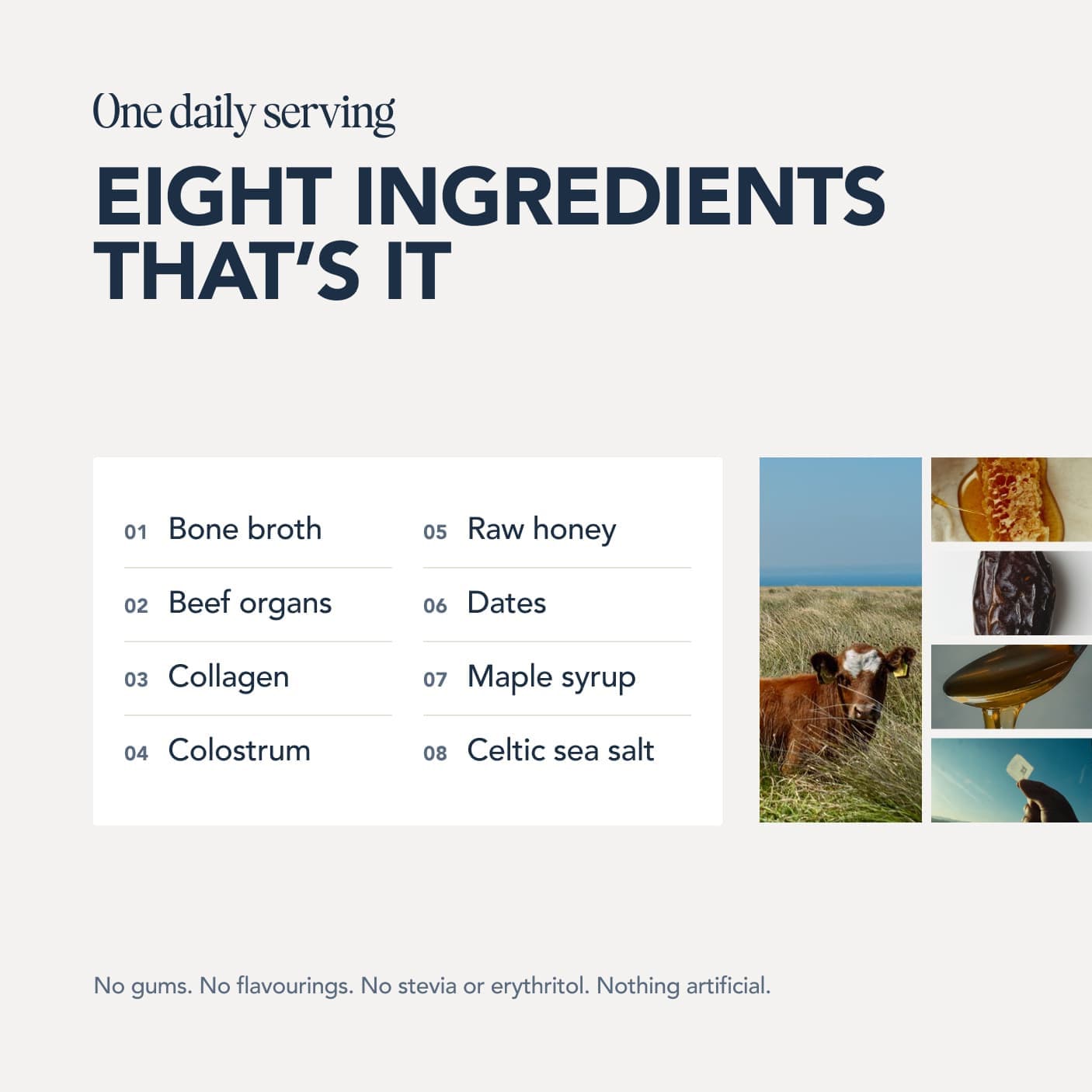
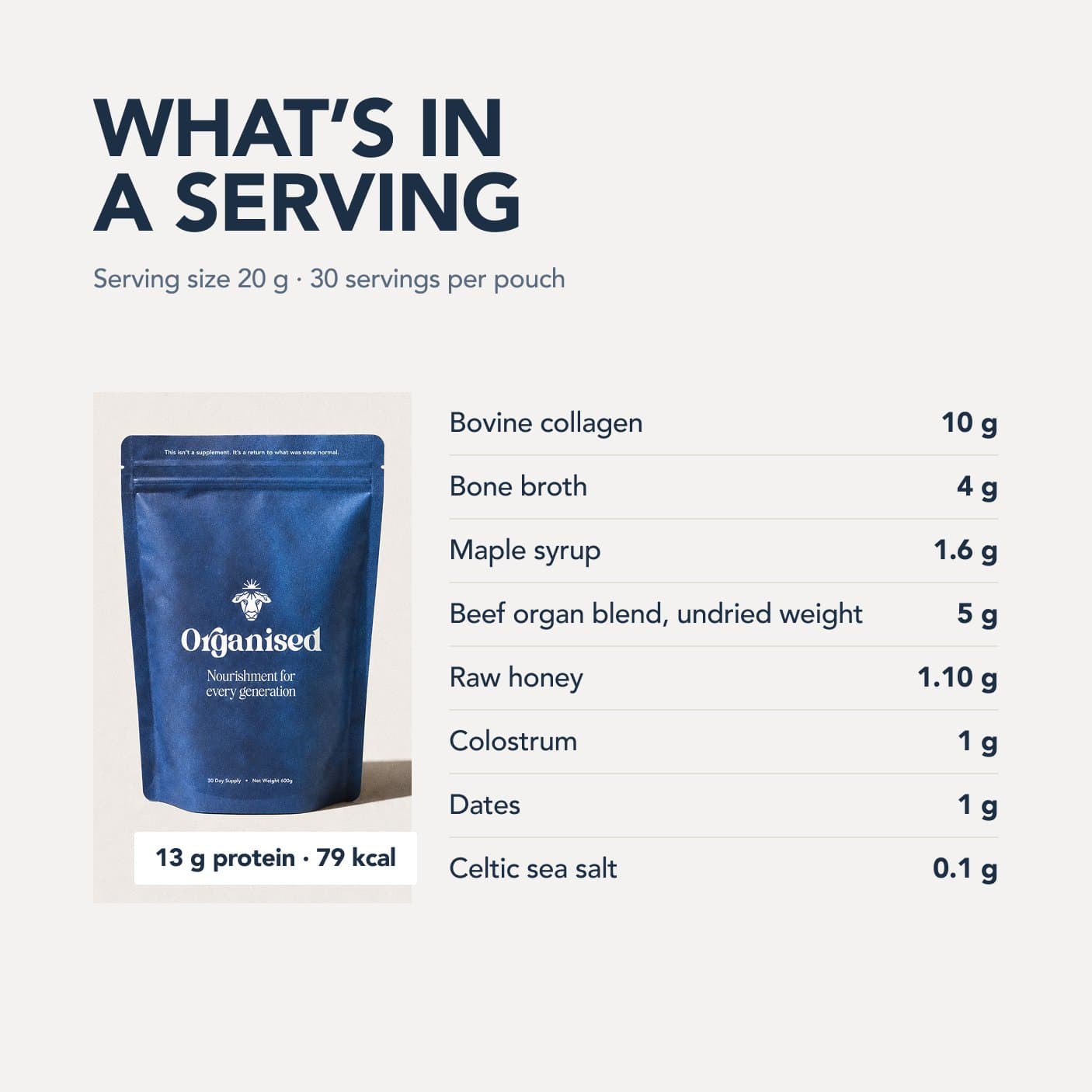
Eight real ingredients built around grass-fed beef organs, collagen and colostrum. Nothing synthetic added.
Free with your first order, worth £38. Plus £10 off the pouch with a subscription.

Free UK shipping · Made in England · 100 day money back guarantee on your first pouch · Skip, pause or cancel anytime
Red meat in the context of a whole diet
Here's what almost never gets discussed: cancer risk is determined by the entire dietary pattern, not by any single food.
Someone eating unprocessed red meat 2-3 times per week as part of a diet rich in vegetables, whole foods, adequate fibre, and healthy fats is in a very different risk category than someone eating red meat every day as part of a diet of processed foods, seed oils, and refined carbohydrates.
The vegetables, the whole foods, the nutrients in organ meats, all of these are antioxidant and anti-inflammatory. They support the body's own detoxification and repair systems. In this dietary context, the theoretical cancer risk from haem iron oxidation is offset by a hundred other dietary factors working to prevent cancer.
Most of the epidemiological studies don't account for dietary quality adequately. They count servings of red meat without measuring whether those servings were part of a healthy or unhealthy overall diet. This bias pushes the risk signal higher than it probably is, because the high meat consumers often also consume poor quality foods overall.
The bottom line
The evidence is nuanced. Processed meat appears to increase colorectal cancer risk, and this signal is consistent and relatively strong enough to warrant limiting consumption. Unprocessed red meat shows much weaker associations, heavily confounded by other lifestyle factors, with uncertain mechanisms at realistic consumption levels.
Is unprocessed red meat from well-raised animals a perfect food? No. Is it a carcinogenic risk equivalent to tobacco? Absolutely not.
The honest approach is this: if you're eating processed meat regularly, cut back. If you're eating unprocessed red meat 2-3 times per week as part of an otherwise healthy, whole-food diet, the cancer risk is probably not significant. And the nutrients you're getting from that meat, iron, zinc, B vitamins, carnitine, creatine, are supporting your health in ways that statistically lower cancer risk from other causes.
The WHO warning was technically defensible but extraordinarily misleading in how it was communicated to the public. The real research shows a much more complicated picture, where food quality, dietary pattern, and lifestyle factors matter far more than red meat consumption in isolation.
References
Every source below was checked on 27 August 2026. Each PubMed, PMC and DOI identifier was resolved against NCBI or Crossref, and what it opens is printed under the citation, so you can see the link goes where the citation says without leaving the page. Where a citation and its identifier disagreed, the citation was corrected to the record or the reference was deleted along with the sentence marker that pointed at it, and where the resolved paper turned out not to support the sentence, the sentence was cut back to what it does support. Borrowed authority is worse than none, because it looks like rigour.
- Bouvard V et al. Carcinogenicity of consumption of red and processed meat. The Lancet Oncology (IARC Working Group), 2015. PMID 26514947.Checked 27 August 2026: PMID 26514947 opens Bouvard V, Loomis D, Guyton KZ et al, Carcinogenicity of consumption of red and processed meat. Lancet Oncol 2015;16(16):1599-600. PubMed indexes it as: News.
- Johnston BC et al. Unprocessed Red Meat and Processed Meat Consumption: Dietary Guideline Recommendations From the Nutritional Recommendations (NutriRECS) Consortium. Annals of Internal Medicine, 2019. PMID 31569235.Checked 27 August 2026: PMID 31569235 opens Johnston BC, Zeraatkar D, Han MA et al, Unprocessed Red Meat and Processed Meat Consumption: Dietary Guideline Recommendations From the Nutritional Recommendations (NutriRECS) Consortium. Ann Intern Med 2019;171(10):756-764. PubMed indexes it as: Practice Guideline, Systematic Review.
- National Cancer Institute. Chemicals in Meat Cooked at High Temperatures and Cancer Risk.
Who wrote and reviewed this guide
Niall Kiddle
Author · Founder, Organised
Niall is the founder of Organised. He started the company in 2024 after fixing his own health the slow way: in 2022 he swapped a cupboard of synthetic supplements for real food, raw milk, organ meats, bone broth and honey, and felt the difference within months.
Areas of expertise: Ancestral nutrition, Organ meats, Whole-food supplementation, Gut health, Regenerative sourcing
Read Niall's full profile
Pedro Rodrigues
Reviewer · Agronomist (farming and sourcing only)
Pedro is the agronomist Organised works with on farming and sourcing. His job on the guides is to keep the science honest: he reviews what we publish about soil health, regenerative agriculture, grazing and the way food is actually produced.
Areas of expertise: Regenerative agriculture, Agronomy, Soil health, Grass-fed farming, Food sourcing
Reviewed this guide on
Read Pedro's full profileMore on debunking
View all- Are Organ Meats High in Purines? What Gout Sufferers Need to Know
- Cholesterol in Organ Meats: Should You Be Worried?
- Do You Really Need 5 a Day? What the Evidence Says
- Is Too Much Protein Bad for Your Kidneys? Separating Fact from Fear
- Liver Doesn't Store Toxins: Debunking the Biggest Organ Meat Myth
- The Real Reason Your Doctor Says 'Eat Less Red Meat'
- The Saturated Fat Myth: What Modern Research Actually Shows
Browse the guides library
All guidesKeep reading

Science
Collagen and Hair Density: Breaking Down the Reilly et al. Study
What the Reilly et al. research really shows about collagen and hair density. Why the 27% increase matters, and what to realistically expect.
Science
The Connection Between Nutrition and Autoimmune Disease
Autoimmune disease is not just genetic. Nutrition affects gut barrier integrity, molecular mimicry, and immune tolerance. Learn the mechanisms.
Science
Is Collagen Just Expensive Protein? What the Science Says
Collagen is not just protein. Its unique amino acid profile, rich in glycine and lacking tryptophan, makes it metabolically distinct.
Real food, made effortless
See the blendA few ways to use it
All recipes
Whole Food Snacks for Busy Days
Practical whole food snacks that travel well and sustain energy. No refined carbs, no seed oils. Real food options for when you're busy.
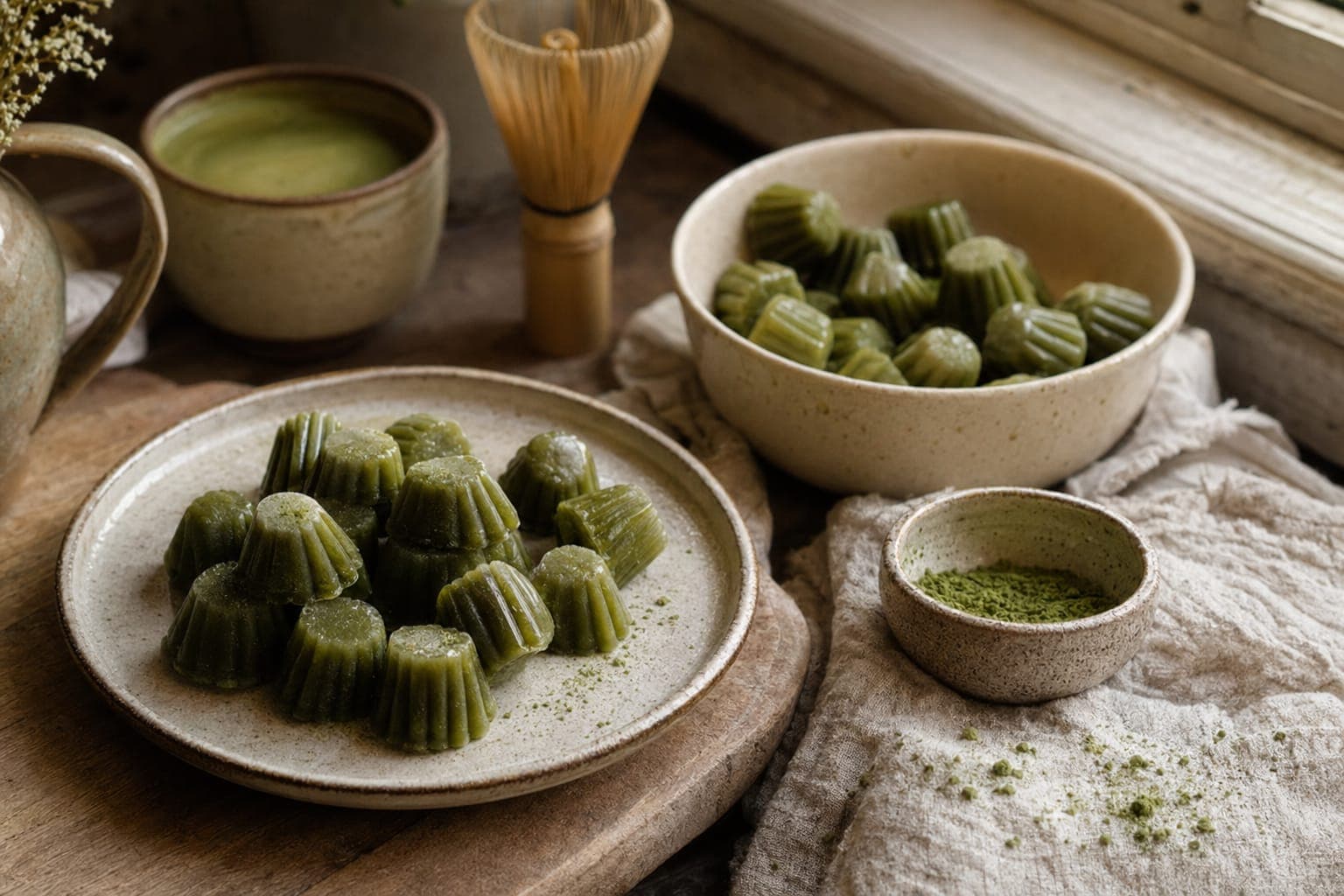
Matcha Latte Gummies with Collagen and Gelatine
Make visually stunning matcha latte gummies infused with collagen and gelatine. Simple recipe for gut-healing sweets you'll actually want to eat.
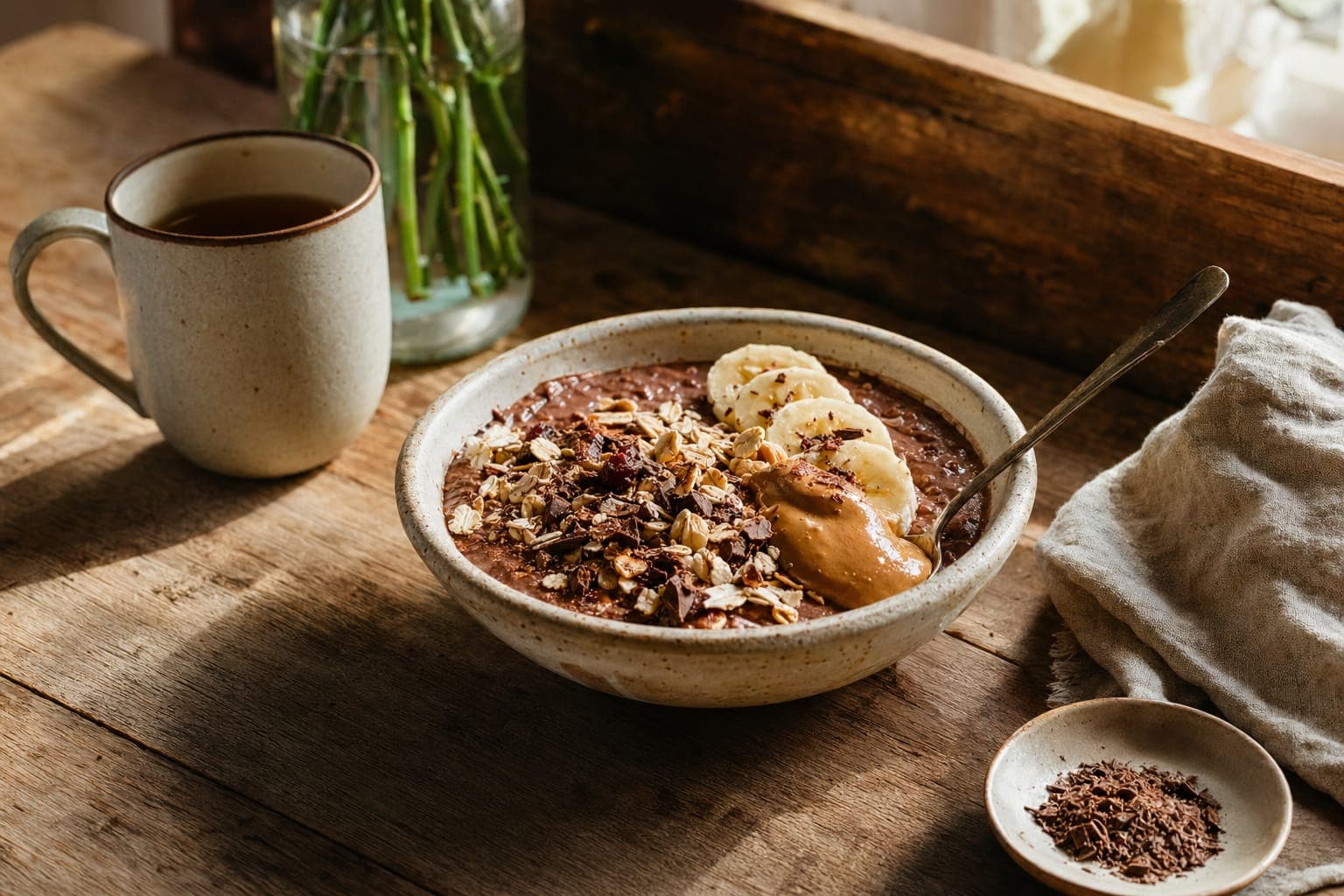
10 Ways to Use Organised That Aren't Just a Shake
Move beyond the basic shake. Discover 10 creative ways to use Organised in smoothie bowls, oats, yoghurt, baking, and more.


 Join over 100,000+ members
Build a better food system with us
The Organised community is thousands of people choosing real food and backing the farmers who grow it, all of us trying to leave the world a little better than we found it. If that is what you care about too, you belong here.