Glycine and Longevity: The Latest Research
Glycine is one of the simplest amino acids your body uses, made up of just three atoms. It's abundant in bone broth, gelatinous cuts of meat, and skin. Yet over the past few years, longevity researchers have become increasingly interested in glycine, not for muscle building but for the potential to extend lifespan itself. Here's what the emerging research shows.

By Niall Kiddle, Founder, Organised

Reviewed by Pedro Rodrigues, Agronomist (farming and sourcing only) ·
5 min read · Published · Updated · 3 cited sources
Makers of the Organised Daily blend, a grass-fed beef organ supplement from regenerative UK farms


What glycine does in the body
Glycine has several critical roles.2 It's the smallest amino acid and can penetrate tissues that larger amino acids cannot. It's a primary component of collagen, the structural protein in skin, bone, cartilage, and connective tissue. It's also a neurotransmitter in the central nervous system and a precursor to creatine, which muscles and the brain use for energy.
But the role that interests longevity researchers most is glycine's effect on methylation and redox balance. Glycine is part of glutathione synthesis, one of your body's most potent antioxidants.1 Low glycine availability can limit glutathione production, which compromises the body's ability to manage oxidative stress and maintain cellular function.
Glycine also plays a role in the balance between methionine and homocysteine metabolism. This balance is critical to aging processes. Excessive methionine restriction (which can happen on certain trendy diets) without adequate glycine can actually accelerate aging rather than slow it. Glycine maintains metabolic balance.
The glycine deficit problem
Here's where the aging story gets interesting. Your body produces some glycine from other amino acids, but the amount produced decreases with age. Meanwhile, demands for glycine increase as collagen breaks down and must be replaced, as cellular antioxidant demands increase, and as the body faces accumulated oxidative stress.
This creates a widening gap between glycine supply and glycine demand, particularly in people over 40. Modern diets, which favour muscle meat over bones, skin, and connective tissue, don't help. People are eating less glycine-rich foods than ancestral diets contained.
Additionally, some amino acid imbalances in modern diets (high leucine, high methionine) may actually increase glycine demands. Glycine is needed to balance these other amino acids metabolically. So not only is intake lower, but demand may be higher.

Glycine and longevity in animal models
Animal studies using rodents have shown intriguing results. When glycine is supplemented in the diet of aging mice, several markers of longevity improve. Lifespan extension has been observed in some studies, typically in the range of 10 to 15 percent. That's meaningful in animal models.
More interestingly, the mechanism appears partly independent of calorie restriction. Glycine seems to enhance the body's own antioxidant defences, improve mitochondrial function, and support autophagy (cellular self-cleaning). These are the same pathways targeted by calorie restriction, but glycine achieves them through a different route.
Studies also show glycine improves glucose tolerance and metabolic flexibility in aging mice, meaning their bodies can shift more easily between using glucose and fat for fuel. This metabolic adaptability is a hallmark of longevity and healthspan. Mice treated with glycine not only lived longer but also aged more slowly.
In animal models, glycine supplementation extends lifespan by roughly 10 to 15 percent and improves key markers of metabolic health and oxidative stress resistance. The effects appear mediated through improved antioxidant defence and mitochondrial function.
Human studies on glycine and ageing
Human studies are less numerous, but the picture emerging is promising. A 2020 study found that people with higher circulating glycine levels had lower all-cause mortality over a 12-year follow-up period. The correlation was substantial and held even after controlling for other factors. In other words, people with higher glycine, independent of diet quality or exercise, had longer lifespans.
Another study examined glycine in the context of cardiovascular health. People with higher glycine levels had lower rates of heart disease and stroke. This suggests glycine's effects on vascular function and inflammation may contribute to its longevity association. Vascular function is central to aging.
A smaller trial examined glycine supplementation in people over 65. Over several months, supplementation improved markers of oxidative stress, reduced fasting glucose, and improved sleep quality. These are proxy markers of biological ageing, not lifespan itself, but they point toward the same mechanisms observed in animal models. Sleep quality is increasingly recognised as central to longevity.
One important caveat: most human data is observational or from small trials. Large, long-term randomised trials on glycine supplementation and human longevity don't exist yet. The evidence is sufficient to take the research seriously but not yet conclusive.

Get the science, plainly, free
Two short reads a week on what the research actually says about nutrition.
By signing up you agree to receive emails from us. No spam, unsubscribe anytime.
Mechanisms linking glycine to lifespan
The theoretical pathway is becoming clearer. Glycine supports glutathione synthesis, which directly reduces oxidative stress in cells. This allows mitochondria to function more efficiently and allows the body to invest energy in repair processes like autophagy rather than constant damage control.
Glycine also appears to enhance NAD+ biosynthesis and improve mitochondrial ATP production. NAD+ is a cofactor central to cellular energy metabolism and to sirtuins, proteins closely linked to longevity. Higher NAD+ correlates with better metabolic health and longer lifespan in animal models. Aging involves declining NAD+ levels, so anything that supports it may slow aging.
Additionally, glycine has anti-inflammatory effects. It binds to glycine receptors on immune cells and reduces the production of pro-inflammatory cytokines. Chronic low-grade inflammation is a hallmark of ageing. Anything that reduces it may slow ageing processes and extend healthspan.
Lastly, glycine supports collagen synthesis and tissue repair. As collagen breaks down with age, it contributes to vascular dysfunction, joint deterioration, and skin thinning. By supporting collagen repair, glycine may preserve structural and functional integrity longer into life, which translates to better function during aging.
The glycine-longevity connection is built on multiple mechanisms: glutathione synthesis, mitochondrial function, NAD+ support, anti-inflammatory effects, and collagen repair. Together, these could contribute to slower biological ageing and longer healthspan.

1 of 9
Daily blend
100,000+ thriving families4.9 on Trustpilot
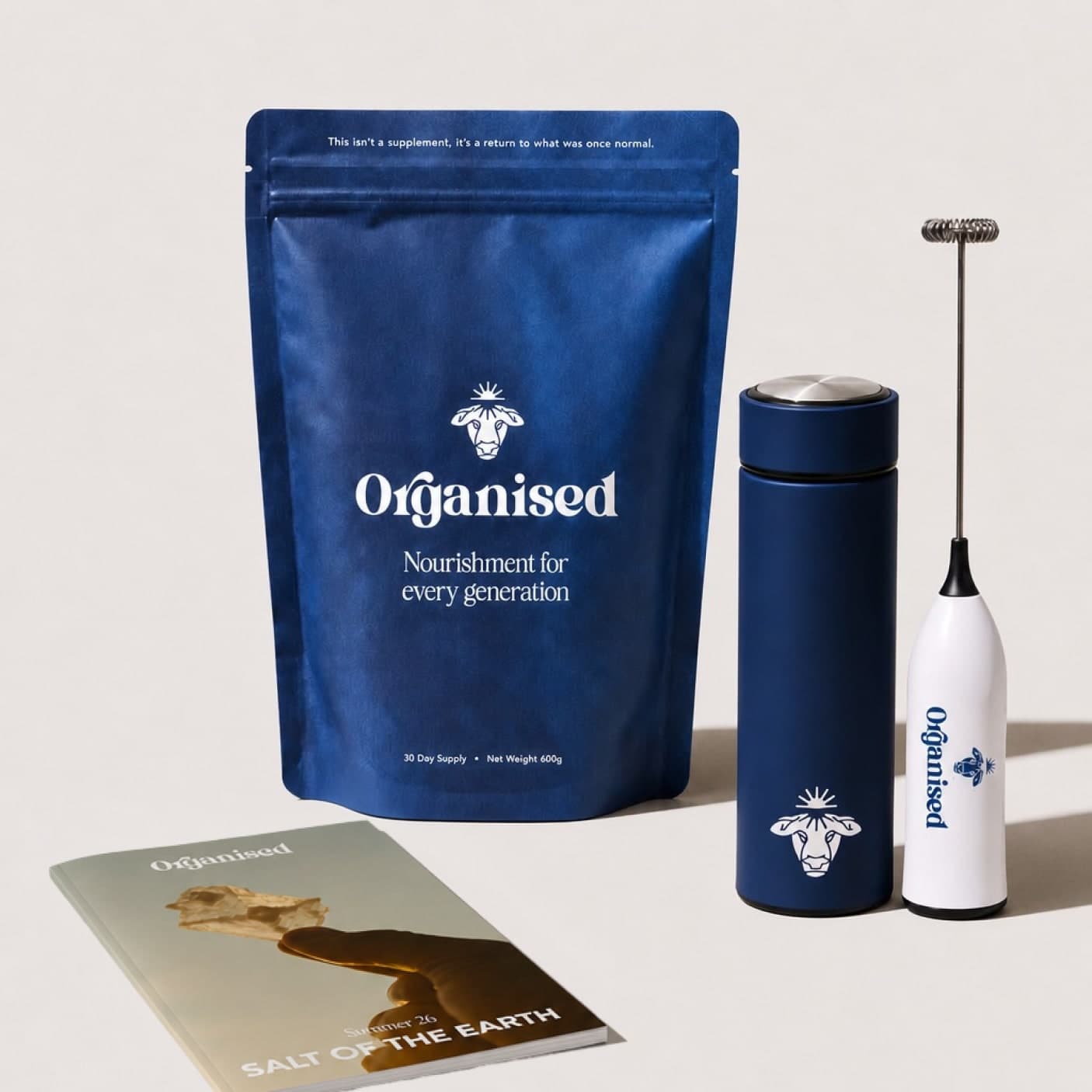
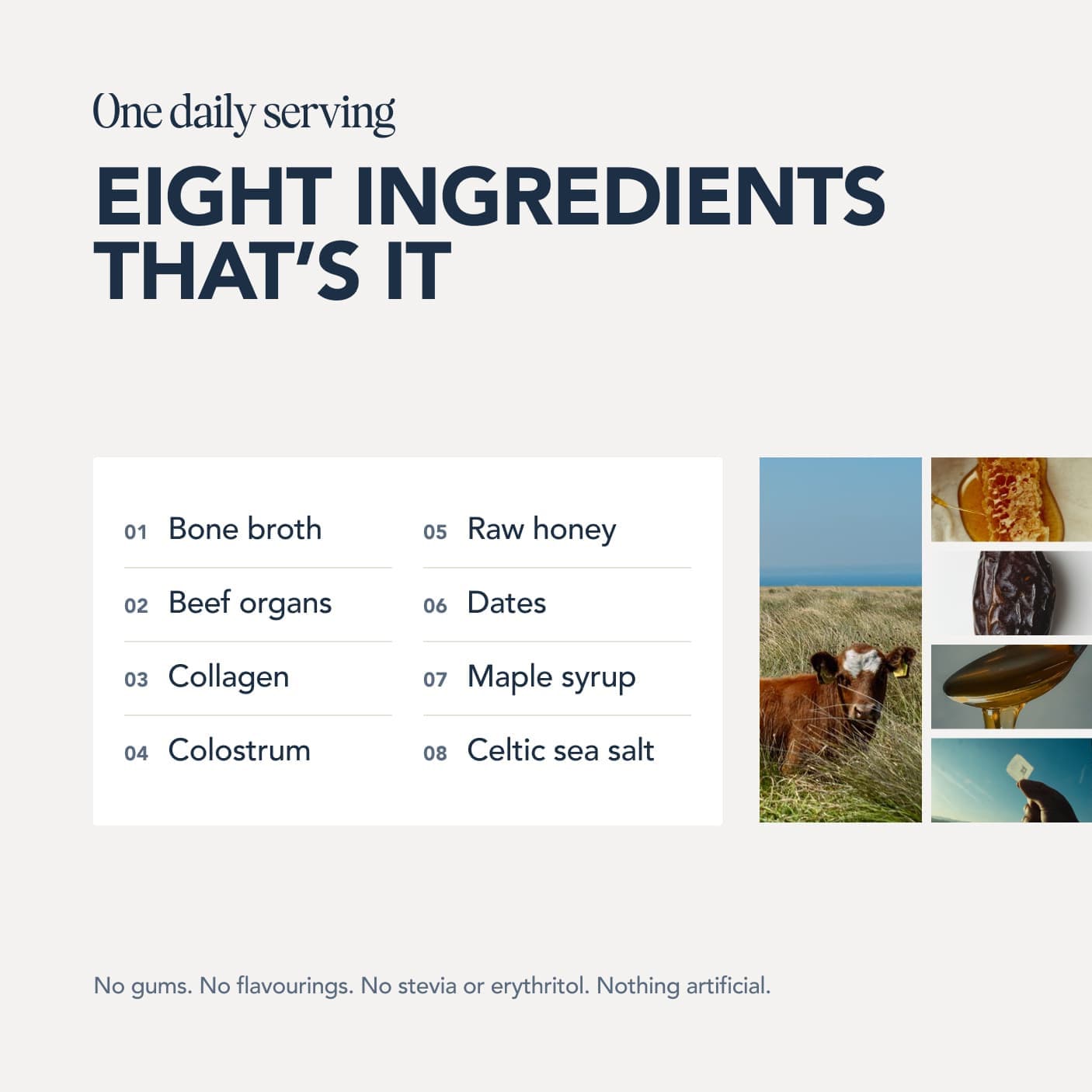
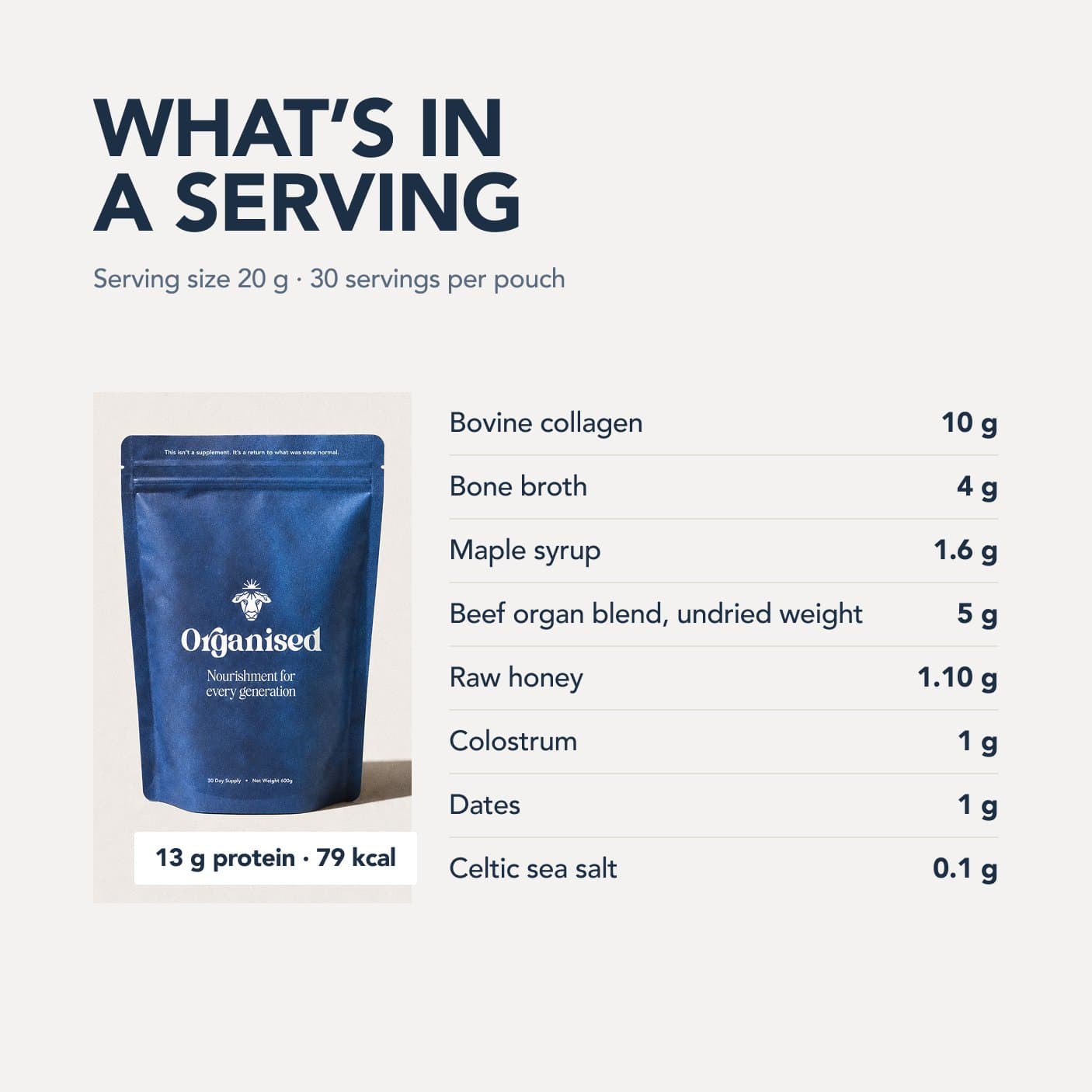
Eight real ingredients built around grass-fed beef organs, collagen and colostrum. Nothing synthetic added.
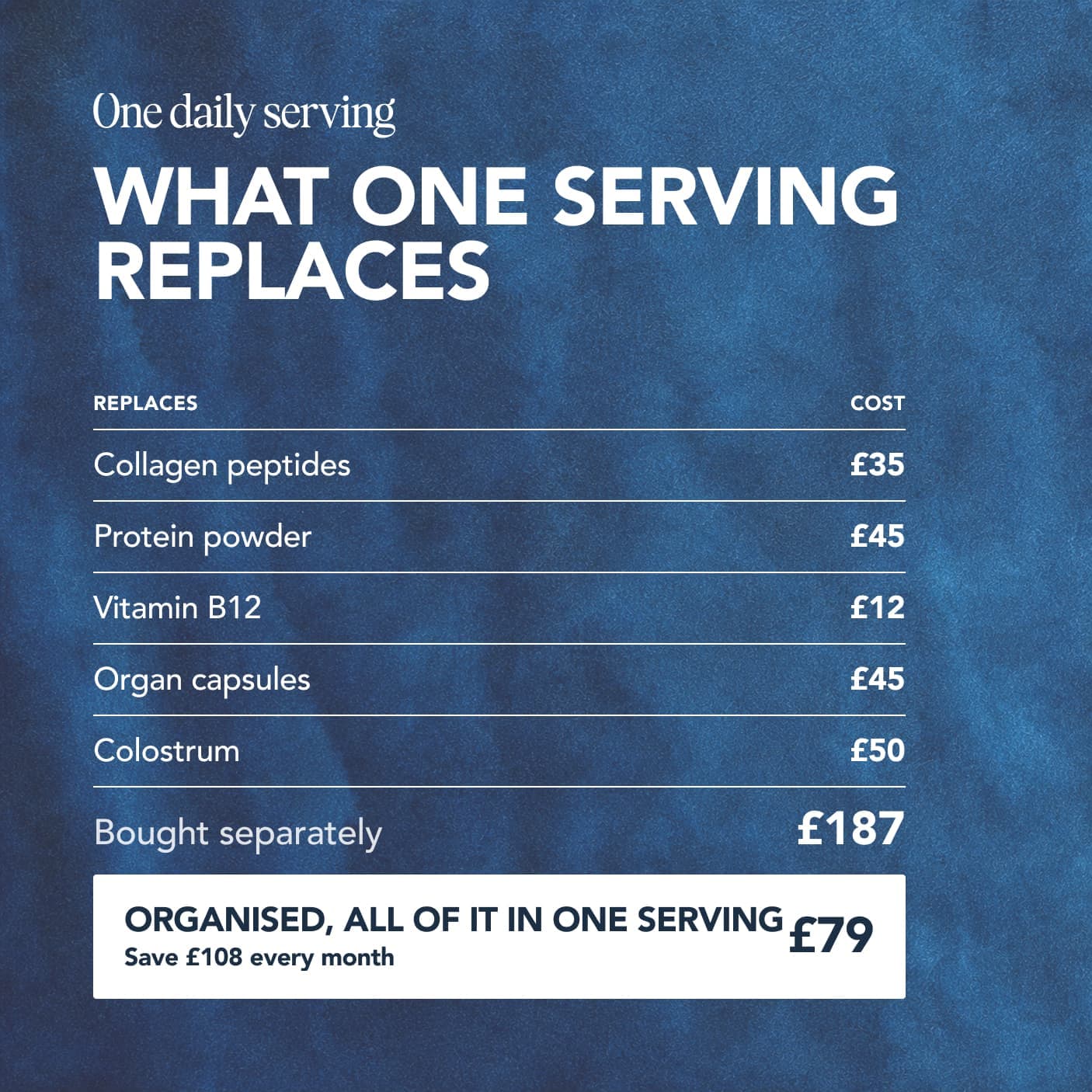
Free with your first order, worth £38. Plus £10 off the pouch with a subscription.



Free UK shipping · Made in England · 100 day money back guarantee on your first pouch · Skip, pause or cancel anytime
The bottom line
Glycine has emerged as an intriguing longevity target. Animal studies show lifespan extension in the range of 10 to 15 percent. Human observational data links higher glycine with lower mortality. Mechanistically, the story is coherent: glycine supports antioxidant defence, mitochondrial function, and structural tissue repair, all critical to ageing processes.
Practically, this suggests prioritising glycine-rich foods, particularly bone broth, gelatinous cuts of meat like oxtail and shank, and skin-on fish. These foods are abundant in glycine and fit well into an ancestral-health approach anyway. They're also economical and nutrient-dense.
Glycine supplementation (typically 3 to 15 grams daily) is also increasingly common among longevity enthusiasts3, though human evidence for supplementation specifically is still limited. If you're interested in longevity strategies, glycine is worth understanding. The research trajectory suggests it may become increasingly central to anti-ageing nutrition.
This is early-stage research. But the signal is consistent, and it's grounded in solid biological mechanisms. Glycine is not a pharmaceutical intervention, but as a nutritional strategy for extending healthspan and lifespan, the evidence is worth taking seriously.
References
Every source below was checked on 27 August 2026. Each PubMed, PMC and DOI identifier was resolved against NCBI or Crossref, and what it opens is printed under the citation, so you can see the link goes where the citation says without leaving the page. Where a citation and its identifier disagreed, the citation was corrected to the record or the reference was deleted along with the sentence marker that pointed at it, and where the resolved paper turned out not to support the sentence, the sentence was cut back to what it does support. Borrowed authority is worse than none, because it looks like rigour.
- Kumar P, et al. Glycine and N-acetylcysteine (GlyNAC) supplementation in older adults improves glutathione deficiency, oxidative stress, mitochondrial dysfunction. J Gerontol. 2021. PMID 33783984.Checked 27 August 2026: PMID 33783984 opens Kumar P, Liu C, Hsu JW et al, Glycine and N-acetylcysteine (GlyNAC) supplementation in older adults improves glutathione deficiency, oxidative stress, mitochondrial dysfunction, inflammation, insulin resistance, endothelial dysfunction, genotoxicity, muscle strength, and cognition: Results of a pilot clinical trial. Clin Transl Med 2021;11(3):e372.The authors' own declaration, from the record: None of the authors have any conflicts of interest to disclose.
- Wang W, et al. Glycine metabolism in animals and humans: implications for nutrition and health. Amino Acids. 2013. PMID 23615880.Checked 27 August 2026: PMID 23615880 opens Wang W, Wu Z, Dai Z et al, Glycine metabolism in animals and humans: implications for nutrition and health. Amino Acids 2013;45(3):463-77. PubMed indexes it as: Review.
- Johnson AA, Cuellar TL. Glycine and aging: evidence and mechanisms. Ageing Res Rev. 2023. PMID 37004845.Checked 27 August 2026: PMID 37004845 opens Johnson AA, Cuellar TL, Glycine and aging: Evidence and mechanisms. Ageing Res Rev 2023;87:101922. PubMed indexes it as: Review.The authors' own declaration, from the record: Declaration of Competing Interest All authors are full-time employees of the biotechnology company Tally Health, Inc. The authors have no other conflicts of interest to declare.
Who wrote and reviewed this guide
Niall Kiddle
Author · Founder, Organised
Niall is the founder of Organised. He started the company in 2024 after fixing his own health the slow way: in 2022 he swapped a cupboard of synthetic supplements for real food, raw milk, organ meats, bone broth and honey, and felt the difference within months.
Areas of expertise: Ancestral nutrition, Organ meats, Whole-food supplementation, Gut health, Regenerative sourcing
Read Niall's full profile
Pedro Rodrigues
Reviewer · Agronomist (farming and sourcing only)
Pedro is the agronomist Organised works with on farming and sourcing. His job on the guides is to keep the science honest: he reviews what we publish about soil health, regenerative agriculture, grazing and the way food is actually produced.
Areas of expertise: Regenerative agriculture, Agronomy, Soil health, Grass-fed farming, Food sourcing
Reviewed this guide on
Read Pedro's full profileMore on emerging research
View allBrowse the guides library
All guidesKeep reading
Science
Why Nutrient Density Should Replace Calorie Counting
Why calories aren't the whole story. How nutrient density changes your body composition and health without restricting calories.

Science
Understanding Your Blood Work: A Nutritional Perspective
Your blood work tells a nutritional story. Here's how to interpret key markers like ferritin, B12, vitamin D, and zinc to assess micronutrient status.
Science
Do Supplements Actually Get Absorbed? What Reddit and the Science Say
Reddit loves the 'expensive urine' line. Here is what it gets right about supplement absorption and bioavailability, checked against the science.
Real food, made effortless
See the blendA few ways to use it
All recipes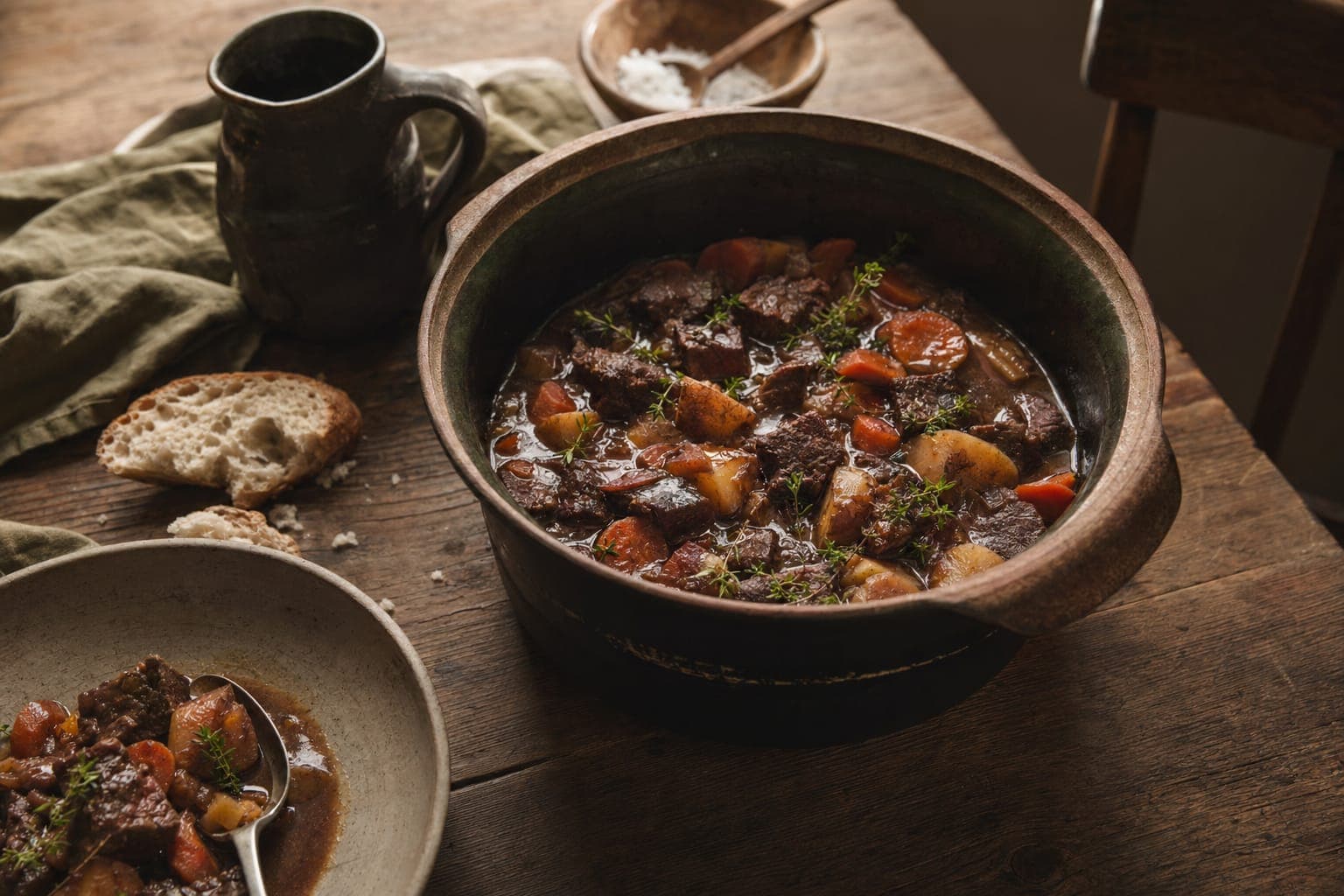
Collagen-Rich Beef Stew: Slow-Cooked Nourishment
Beef stew that delivers collagen from connective tissue and bone broth. Winter comfort food that actually nourishes. Simple slow cooker recipe.

Raw Milk Ice Cream with Organised
Make raw milk ice cream at home with Organised for a seasonal, nutrient-dense treat. Three simple flavours to try whenever the craving strikes.

Energy Balls with Organised, Dates and Raw Honey
Make no-bake energy balls with Organised, dates, and raw honey. Perfect lunch box, pre-workout, or on-the-go snack. Simple recipe.


 Join over 100,000+ members
Build a better food system with us
The Organised community is thousands of people choosing real food and backing the farmers who grow it, all of us trying to leave the world a little better than we found it. If that is what you care about too, you belong here.