The Difference Between Heme and Non-Heme Iron (And Why It Matters)
Two people can be iron deficient for entirely different reasons. One is eating plenty of food containing iron, but their body can't absorb it. The other is eating very little iron, but absorbing almost all of it. The difference often comes down to a single thing: the form of iron they're consuming.
By Niall Kiddle, Founder, Organised

Reviewed by Pedro Rodrigues, Agronomist (farming and sourcing only) ·
6 min read · Published · Updated · 4 cited sources
Makers of the Organised Daily blend, a grass-fed beef organ supplement from regenerative UK farms
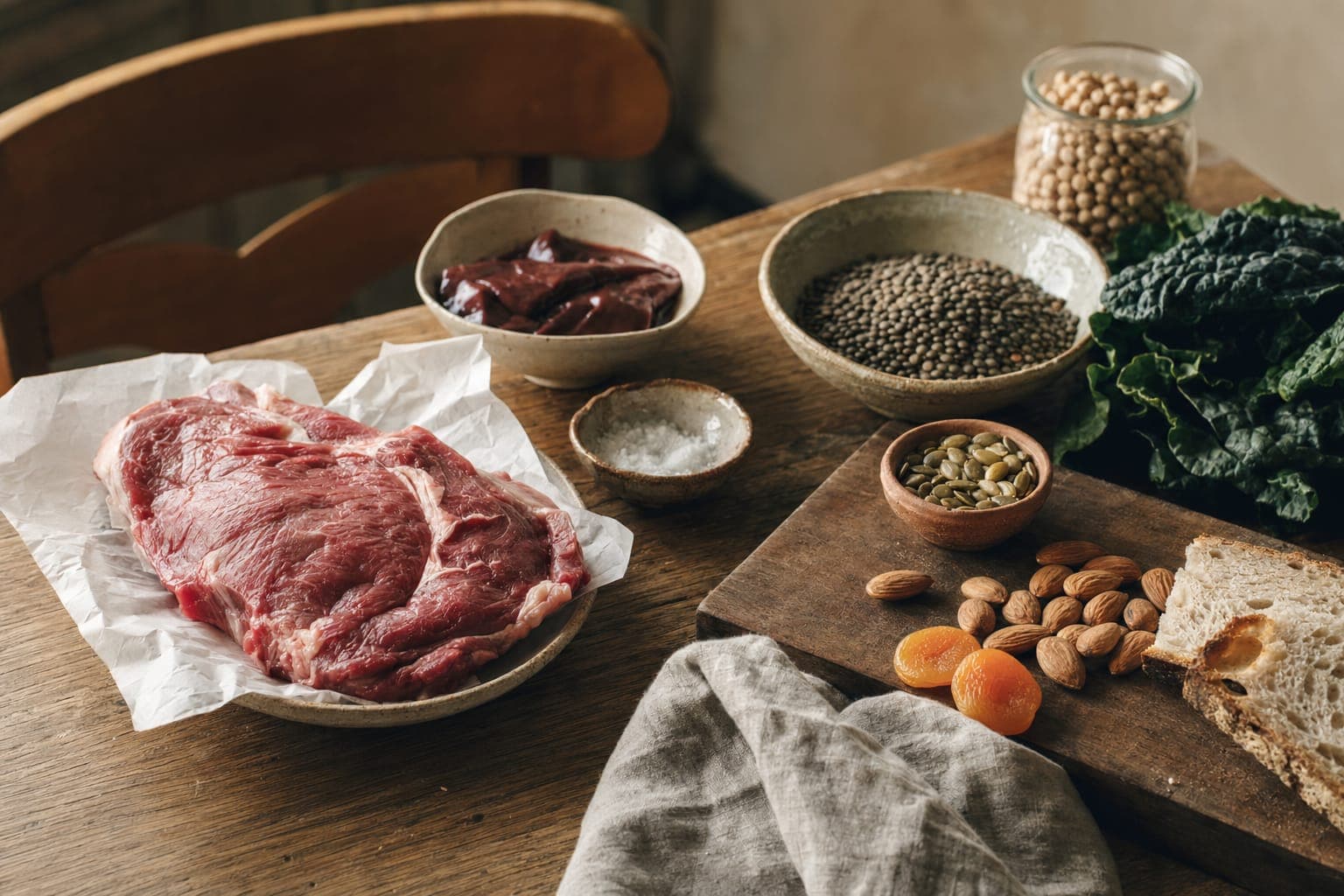
Understanding the difference between heme and non-heme iron changes everything about how you approach iron nutrition. It's not just about eating enough iron. It's about eating iron in a form your body can actually use.
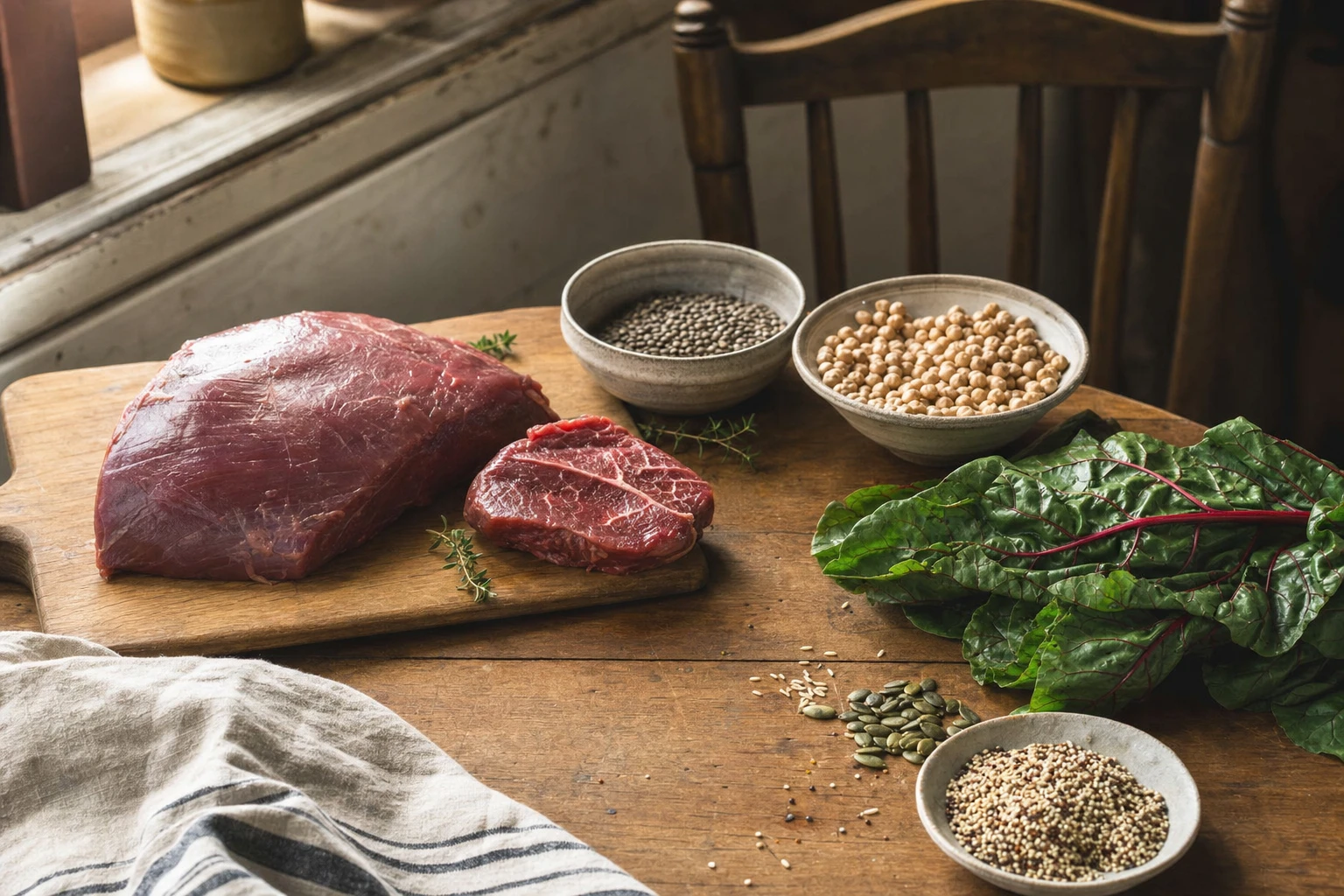
What heme and non-heme iron are
Heme iron is the iron found in animal tissues, meat, poultry, fish, organ meats. It's part of the haemoglobin and myoglobin molecules that carry oxygen. Structurally, it's an iron atom bound to a porphyrin ring.
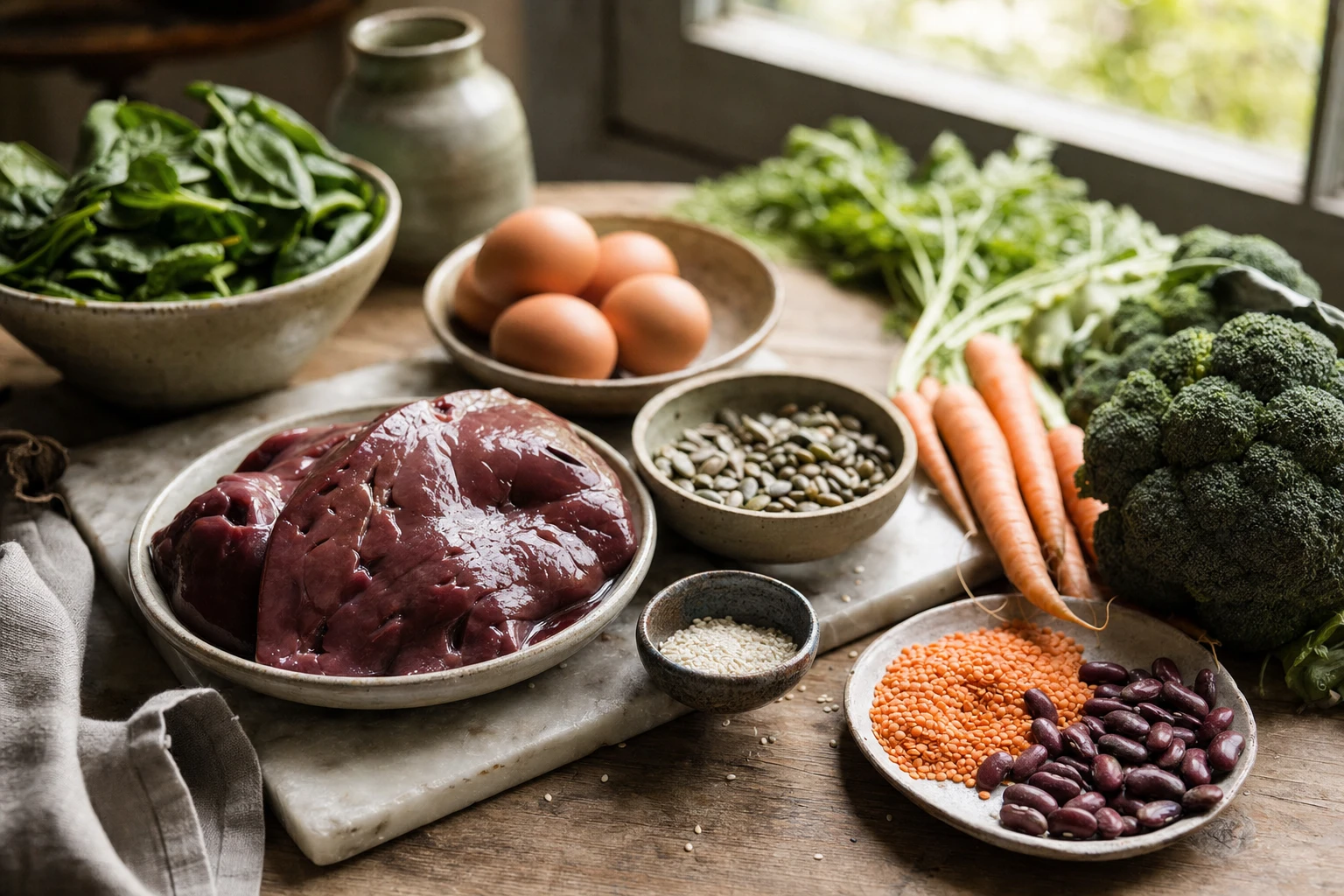
Non-heme iron is the iron found in plants, fortified grains, and supplements. It's often in the ferric (Fe3+) or ferrous (Fe2+) form, but it's not attached to a porphyrin. Spinach, beans, lentils, fortified cereals, all contain non-heme iron.
Same nutrient, completely different chemistry. And that chemistry changes everything about how your body handles it.
Absorption mechanisms are completely different
Your gut doesn't treat heme and non-heme iron the same way at all.
Heme iron enters your digestive tract and, because of its porphyrin structure, your gut cells recognise it as a specific nutrient. There's a transporter in the intestinal lining (heme carrier protein 1, HCP1) whose role is to capture heme iron and move it across the gut wall.1 This process is efficient and not particularly affected by what else you're eating.
The absorption rate for heme iron is roughly 15-35%, depending on iron stores.2 If you're deficient, you absorb more. If your iron is already adequate, you absorb less. Your body has feedback mechanisms that adjust heme iron absorption based on your actual needs.
Non-heme iron has to be reduced from ferric to ferrous form before absorption and is taken up by the divalent metal transporter DMT1.1 This transporter doesn't distinguish between iron and other minerals like copper or zinc, so absorption of non-heme iron is heavily affected by what else is present in the meal.
The absorption rate for non-heme iron is roughly 2, 20%, and it varies enormously depending on the presence of enhancers and inhibitors in the meal.
Heme iron absorption is active, efficient, and reliable. Non-heme iron absorption is passive, variable, and easily blocked. This single difference accounts for most iron deficiency problems.
Inhibitors that block non-heme iron
Certain compounds in food bind to non-heme iron and prevent your gut from absorbing it.
Phytates (in whole grains, legumes, nuts, and seeds) bind iron strongly and substantially reduce non-heme iron absorption.3
Tannins (found in tea, coffee, red wine, dark chocolate) also bind iron and inhibit absorption.
Calcium (from dairy or supplements) can interfere with non-heme iron absorption through competitive mechanisms.
Polyphenols in various foods can form complexes with iron that aren't absorbable.
If you're eating a diet that's plant-heavy with lots of whole grains, legumes, and tea, your non-heme iron absorption might be in the low single digits. You could be eating 15 mg of iron daily and absorbing less than 1 mg of it.
Heme iron doesn't have this problem. These inhibitors barely affect it. Drink tea with a steak, and your heme iron absorption remains largely unaffected. The same cup of tea can cut your non-heme iron absorption in half.
Enhancers that improve iron absorption
You can improve non-heme iron absorption, but it requires deliberate strategy.
Vitamin C is a powerful enhancer of non-heme iron absorption.2 It keeps iron in the ferrous form and is a substrate for the iron transporter. Eating plant-based iron with vitamin C (citrus, berries, peppers) can increase absorption from 2-20% to potentially 20-30%.
Meat, ironically, also enhances non-heme iron absorption. A compound sometimes called the "meat factor" helps non-heme iron absorption, even when eaten with the same meal. But you have to eat actual meat for this benefit.
Fermented foods like sourdough or miso can reduce phytate content and improve non-heme iron bioavailability.
Cooking in cast iron adds dietary iron, though this iron is still non-heme and subject to the same absorption rules.
Even with perfect enhancer strategy, non-heme iron absorption rarely reaches heme iron levels. You can get close, but you can't exceed the physical limitations of the system.
Get the science, plainly, free
Two short reads a week on what the research actually says about nutrition.
By signing up you agree to receive emails from us. No spam, unsubscribe anytime.
Why heme iron is absorbed more reliably
The combination of dedicated absorption mechanisms and freedom from inhibitors makes heme iron dramatically more reliable.
If you eat a 100g steak containing roughly 3mg of heme iron, you absorb 0.5, 1 mg depending on your iron stores. Predictable. Efficient. Affected by your actual iron status but not by other components of the meal.
If you eat a cup of lentils containing roughly 7mg of non-heme iron (more total iron than the steak), but also containing phytates and accompanied by tea, you might absorb 0.1, 0.3 mg.
The lentils have more than double the iron. But the steak delivers more absorbable iron. And this is before considering that the body has feedback mechanisms that prevent excessive iron absorption. If your iron stores are adequate, your heme iron absorption will dial down. Your non-heme iron absorption will try to but often still isn't enough.
This is why most iron-deficiency anaemia in developed countries occurs in vegetarians and people eating predominantly plant-based diets. Not because they're eating no iron, but because they're eating iron their bodies can't absorb efficiently.
Population implications
This has real public-health consequences.
Studies on iron-deficiency anaemia show that women and populations relying on plant-based diets have dramatically higher rates than those consuming regular meat. Even in women eating a decent overall diet, iron deficiency is common if meat intake is low.
Strategies to address this include:
- Eating meat, especially red meat and organ meats, which are iron-rich and heme iron
- Pairing plant-based iron with vitamin C at every meal
- Using fermented grain products like sourdough instead of regular bread
- Avoiding tea and coffee with meals containing iron
- Regular blood testing to catch deficiency early
For most people, the simplest approach is including regular servings of animal foods. Beef liver provides approximately 6-7 mg of iron per 100 g serving (much of it in heme form).4 Even a small serving delivers meaningful, absorbable iron.
1 of 9
Daily blend
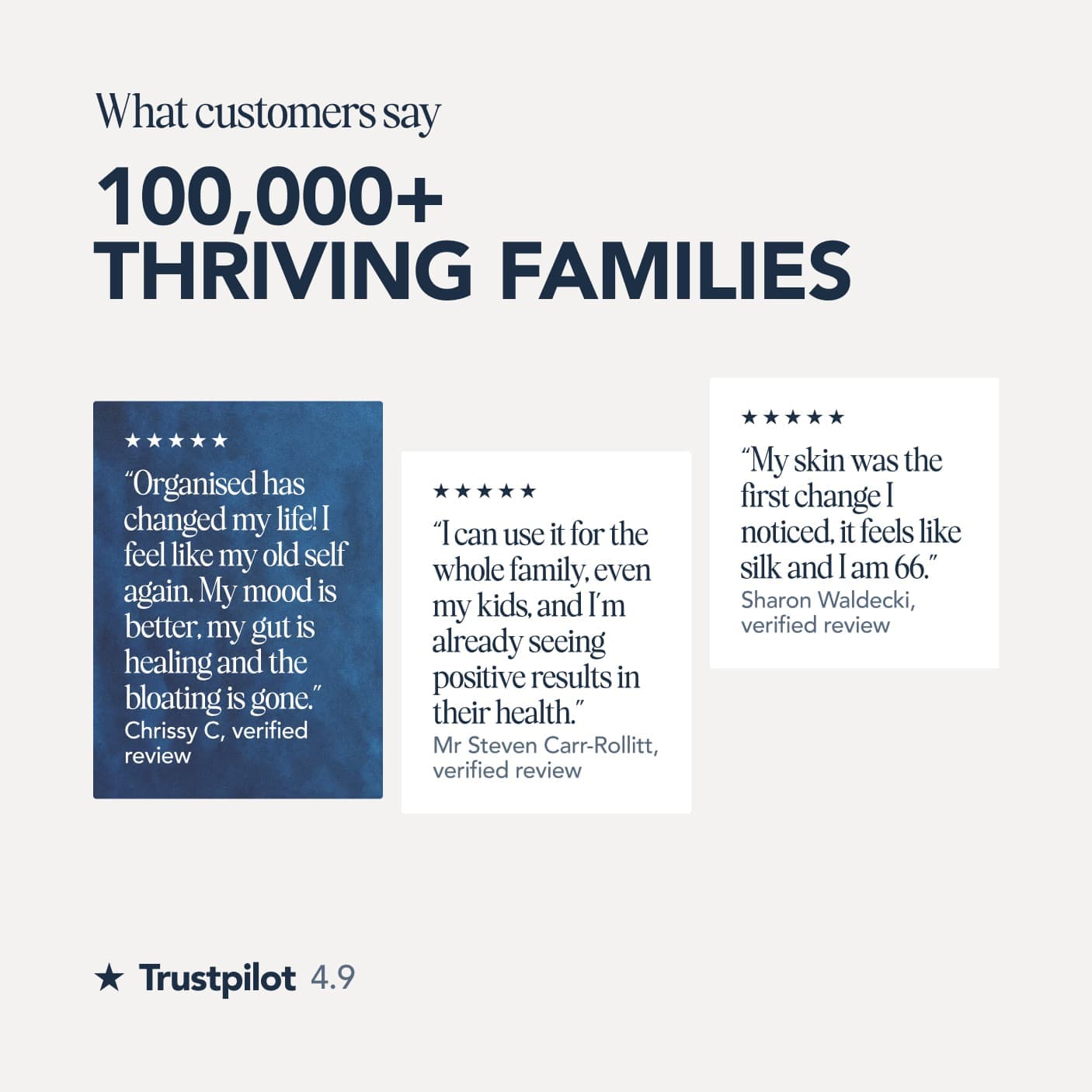
100,000+ thriving families4.9 on Trustpilot
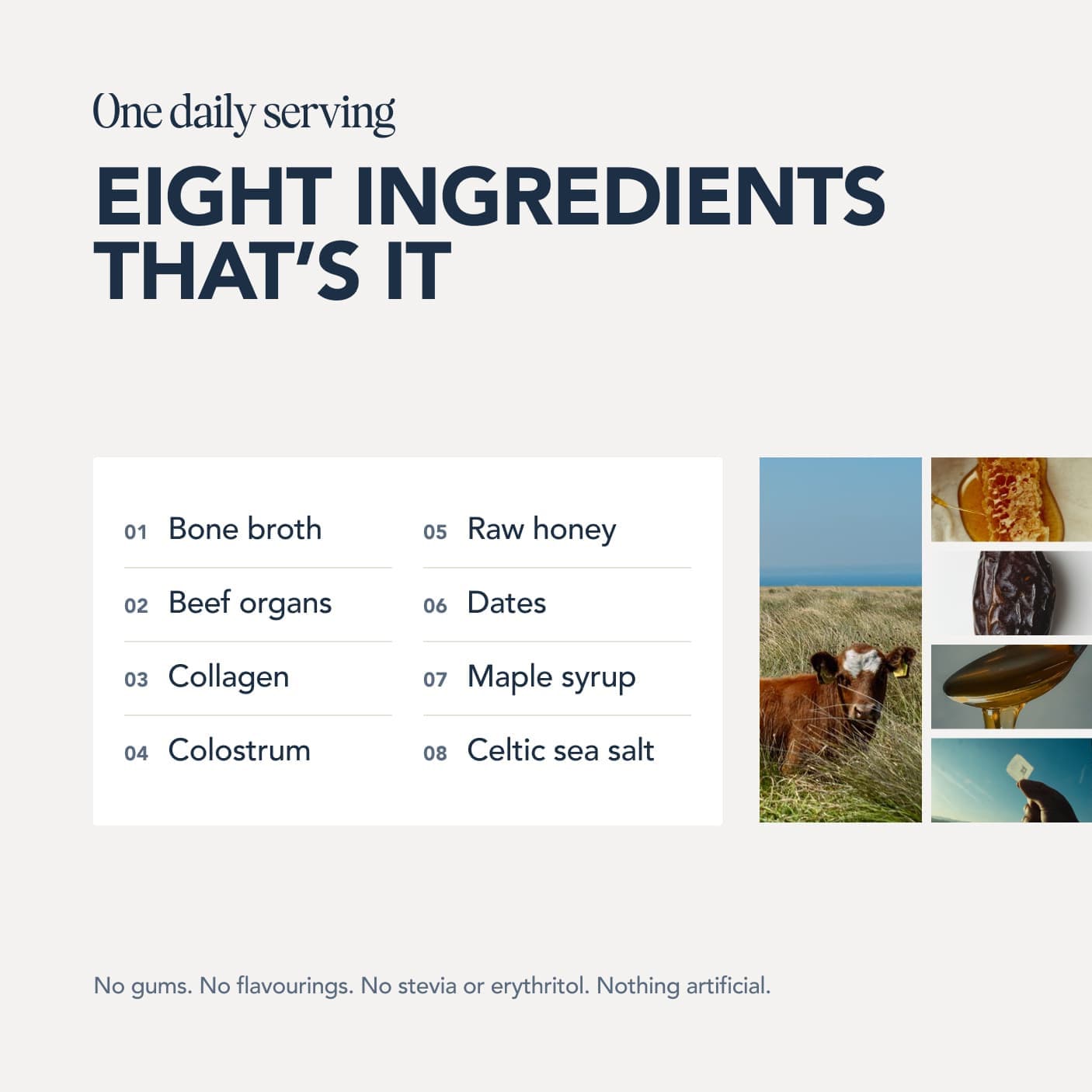
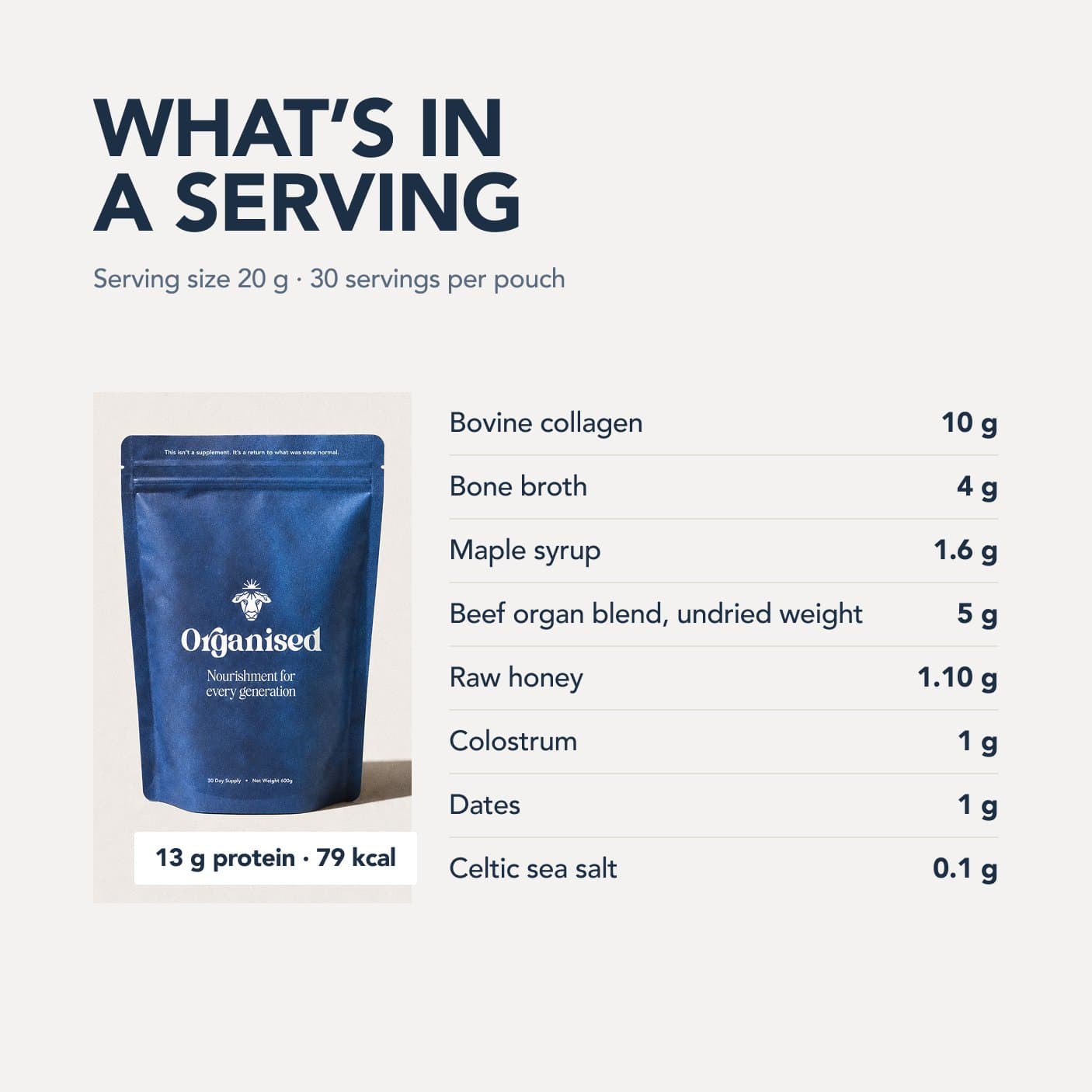
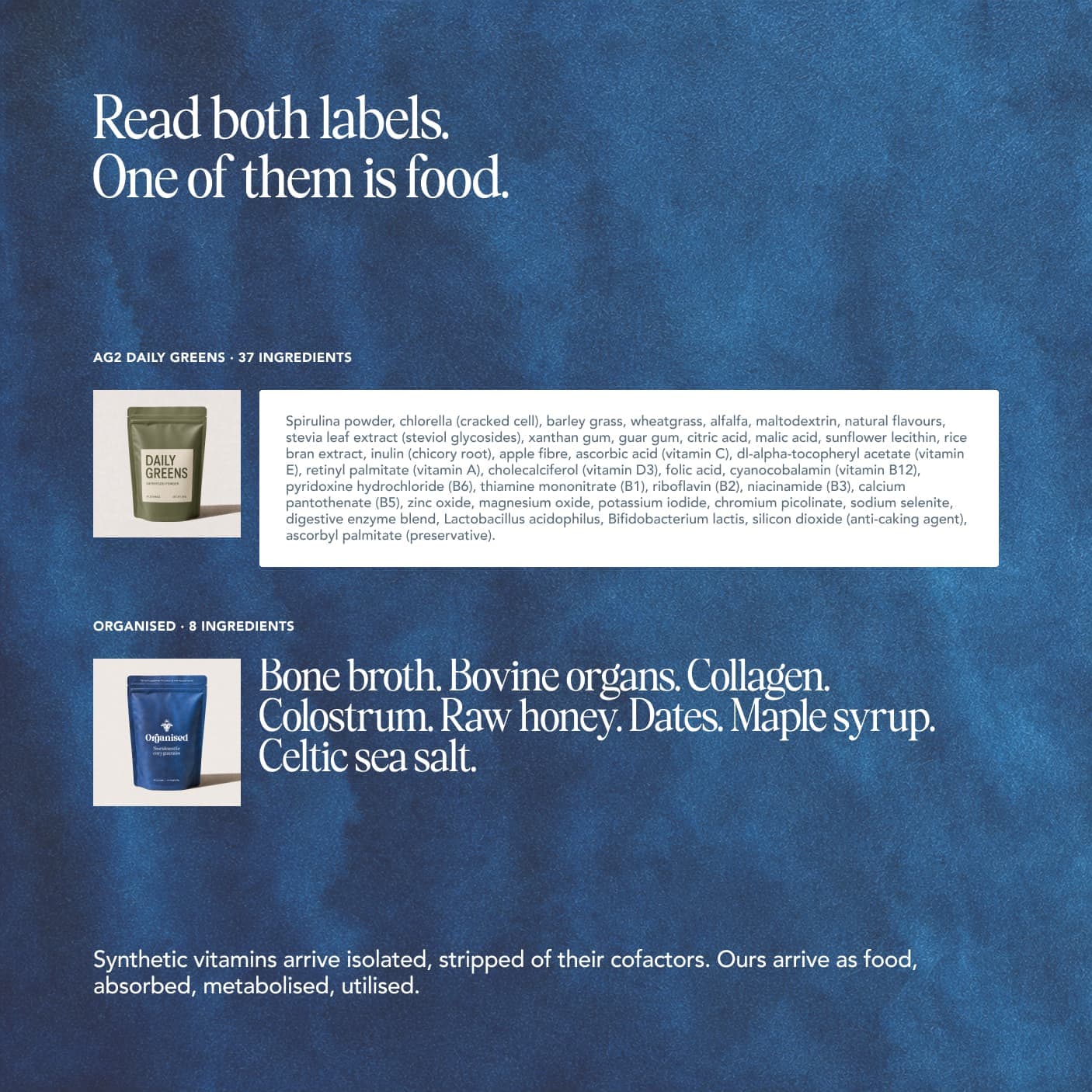
Eight real ingredients built around grass-fed beef organs, collagen and colostrum. Nothing synthetic added.
Free with your first order, worth £38. Plus £10 off the pouch with a subscription.
Free UK shipping · Made in England · 100 day money back guarantee on your first pouch · Skip, pause or cancel anytime
Testing your iron status
If you think you might be iron deficient, blood tests are essential. Not all iron deficiency looks the same, and supplementation without knowing your actual status can cause problems (excess iron can be harmful).
A complete iron panel includes serum iron, ferritin, and transferrin saturation. Ferritin is probably the most useful marker, it reflects your body's iron stores. If it's low (typically below 30 ng/mL, though optimal is probably 50+), you're depleted.
If you're deficient, the approach depends on the cause. If it's dietary insufficiency, increasing heme iron sources is often the most effective solution. If it's malabsorption or ongoing blood loss, you might need supplementation or other interventions.
Heme iron isn't more important because it's animal-based. It's more important because your body can actually use it.
The bottom line
Iron deficiency is incredibly common, but it's not always because people aren't eating enough iron. Often it's because they're eating iron in a form their bodies can't absorb well. Understanding the difference between heme and non-heme iron is the first step toward actually solving the problem.
If you're chronically tired, struggling with exercise tolerance, or your blood work shows low iron, look first at whether you're eating regular servings of animal foods. Beef, liver, organ meats, these are the most reliably absorbable sources of iron. They've solved iron deficiency for millennia. They probably will for you too.
References
Every source below was checked on 27 August 2026. Each PubMed, PMC and DOI identifier was resolved against NCBI or Crossref, and what it opens is printed under the citation, so you can see the link goes where the citation says without leaving the page. Where a citation and its identifier disagreed, the citation was corrected to the record or the reference was deleted along with the sentence marker that pointed at it, and where the resolved paper turned out not to support the sentence, the sentence was cut back to what it does support. Borrowed authority is worse than none, because it looks like rigour.
- Latunde-Dada GO et al. Recent advances in mammalian haem transport. Trends Biochem Sci. 2006;31(4):182-8. PMID: 16487711.Checked 27 August 2026: PMID 16487711 opens Latunde-Dada GO, Simpson RJ, McKie AT, Recent advances in mammalian haem transport. Trends Biochem Sci 2006;31(3):182-8. PubMed indexes it as: Review.
- National Institutes of Health, Office of Dietary Supplements. Iron: Fact Sheet for Health Professionals.
- Hurrell R, Egli I. Iron bioavailability and dietary reference values. Am J Clin Nutr. 2010;91(5):1461S-1467S. PMID: 20200263.Checked 27 August 2026: PMID 20200263 opens Hurrell R, Egli I, Iron bioavailability and dietary reference values. Am J Clin Nutr 2010;91(5):1461S-1467S.
- U.S. Department of Agriculture, FoodData Central. Beef, liver — nutrient profile.
Who wrote and reviewed this guide
Niall Kiddle
Author · Founder, Organised
Niall is the founder of Organised. He started the company in 2024 after fixing his own health the slow way: in 2022 he swapped a cupboard of synthetic supplements for real food, raw milk, organ meats, bone broth and honey, and felt the difference within months.
Areas of expertise: Ancestral nutrition, Organ meats, Whole-food supplementation, Gut health, Regenerative sourcing
Read Niall's full profile
Pedro Rodrigues
Reviewer · Agronomist (farming and sourcing only)
Pedro is the agronomist Organised works with on farming and sourcing. His job on the guides is to keep the science honest: he reviews what we publish about soil health, regenerative agriculture, grazing and the way food is actually produced.
Areas of expertise: Regenerative agriculture, Agronomy, Soil health, Grass-fed farming, Food sourcing
Reviewed this guide on
Read Pedro's full profileMore on nutritional science
View all- 6 Mineral Deficiencies You Probably Have Without Realising
- Glutathione: Your Body's Master Antioxidant
- Methylation: What It Is and Why It Matters
- The Micronutrient Gap: Why Even 'Healthy' Diets Fall Short
- The Role of Fat-Soluble Vitamins: A, D, E and K
- Understanding Your Blood Work: A Nutritional Perspective
- What Is Oxidative Stress and How Does Nutrition Help?
- Why Nutrient Density Should Replace Calorie Counting
Browse the guides library
All guidesKeep reading
Science
The Role of Fat-Soluble Vitamins: A, D, E and K
A clear guide to fat-soluble vitamins A, D, E and K2, how they work together, the best food sources and why organ meats are the richest source of them all.
Science
What Is Oxidative Stress and How Does Nutrition Help?
Understand oxidative stress and how your body's antioxidant systems work. Learn which nutrients support glutathione and SOD, and where to find them in food.
Science
Why Nutrient Density Should Replace Calorie Counting
Why calories aren't the whole story. How nutrient density changes your body composition and health without restricting calories.
Real food, made effortless
See the blendA few ways to use it
All recipes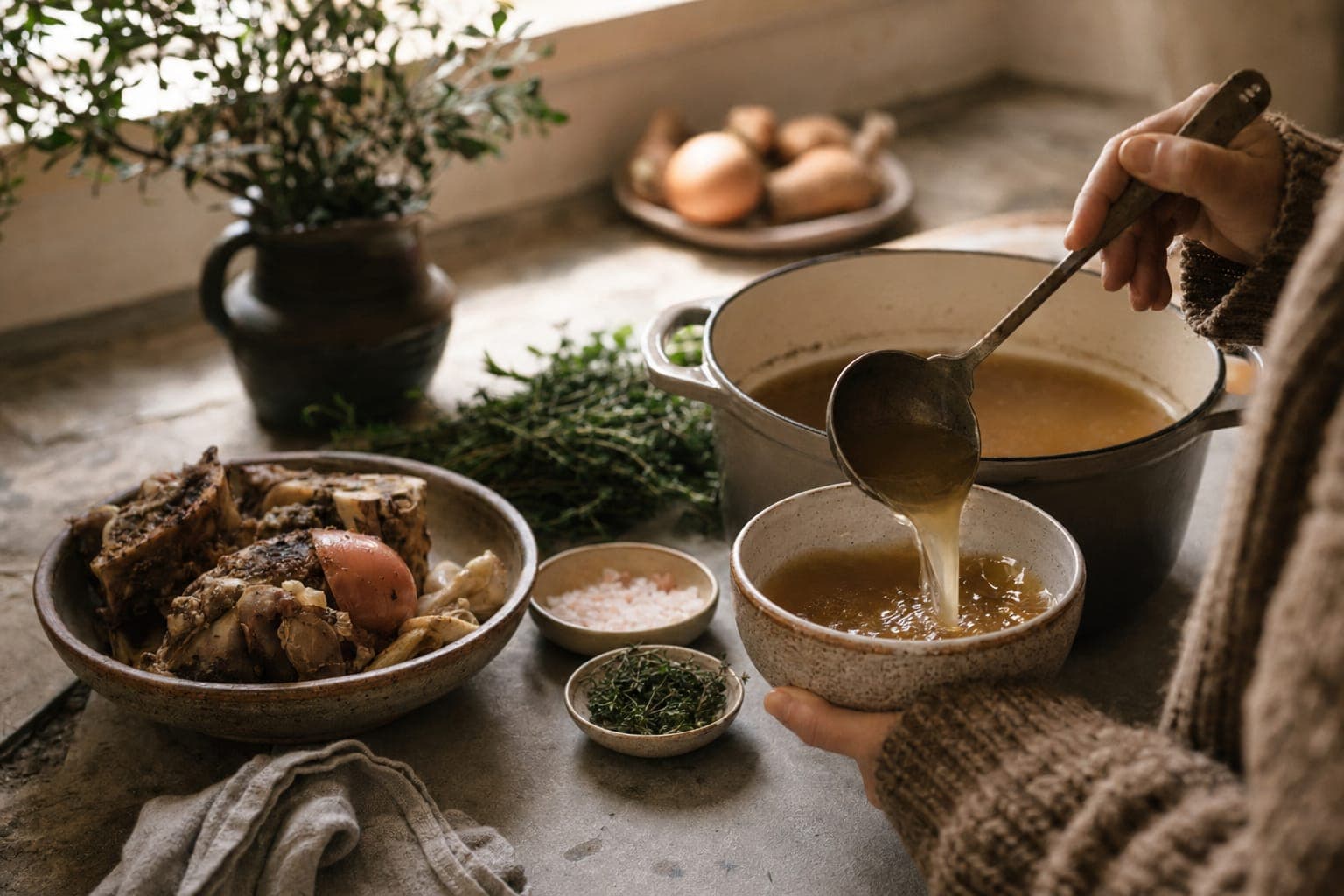
Bone Broth from Scratch: A Step-by-Step Guide
Step-by-step guide to making bone broth at home. Stovetop, slow cooker, and Instant Pot methods. Rich in collagen and gut-healing minerals.
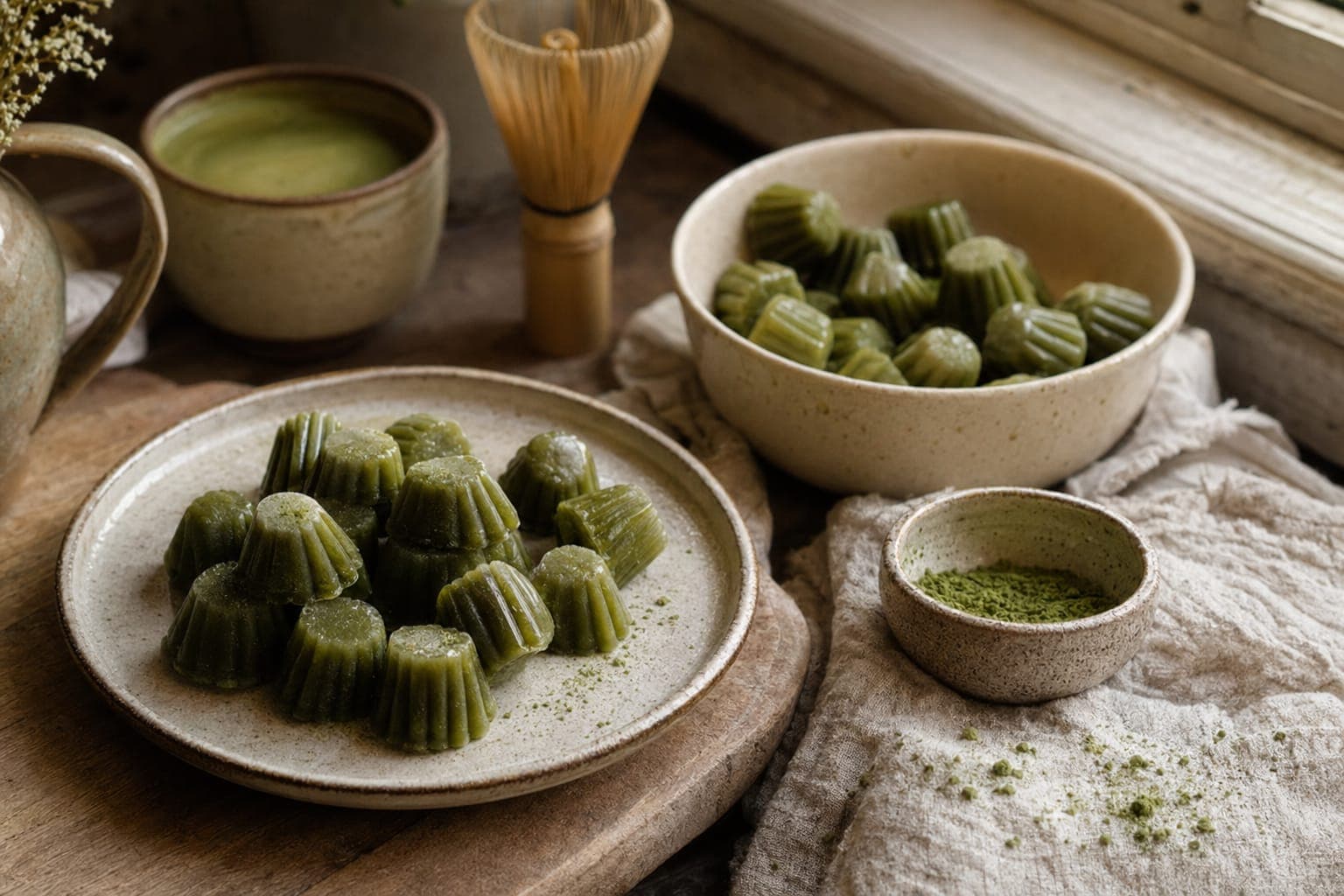
Matcha Latte Gummies with Collagen and Gelatine
Make visually stunning matcha latte gummies infused with collagen and gelatine. Simple recipe for gut-healing sweets you'll actually want to eat.
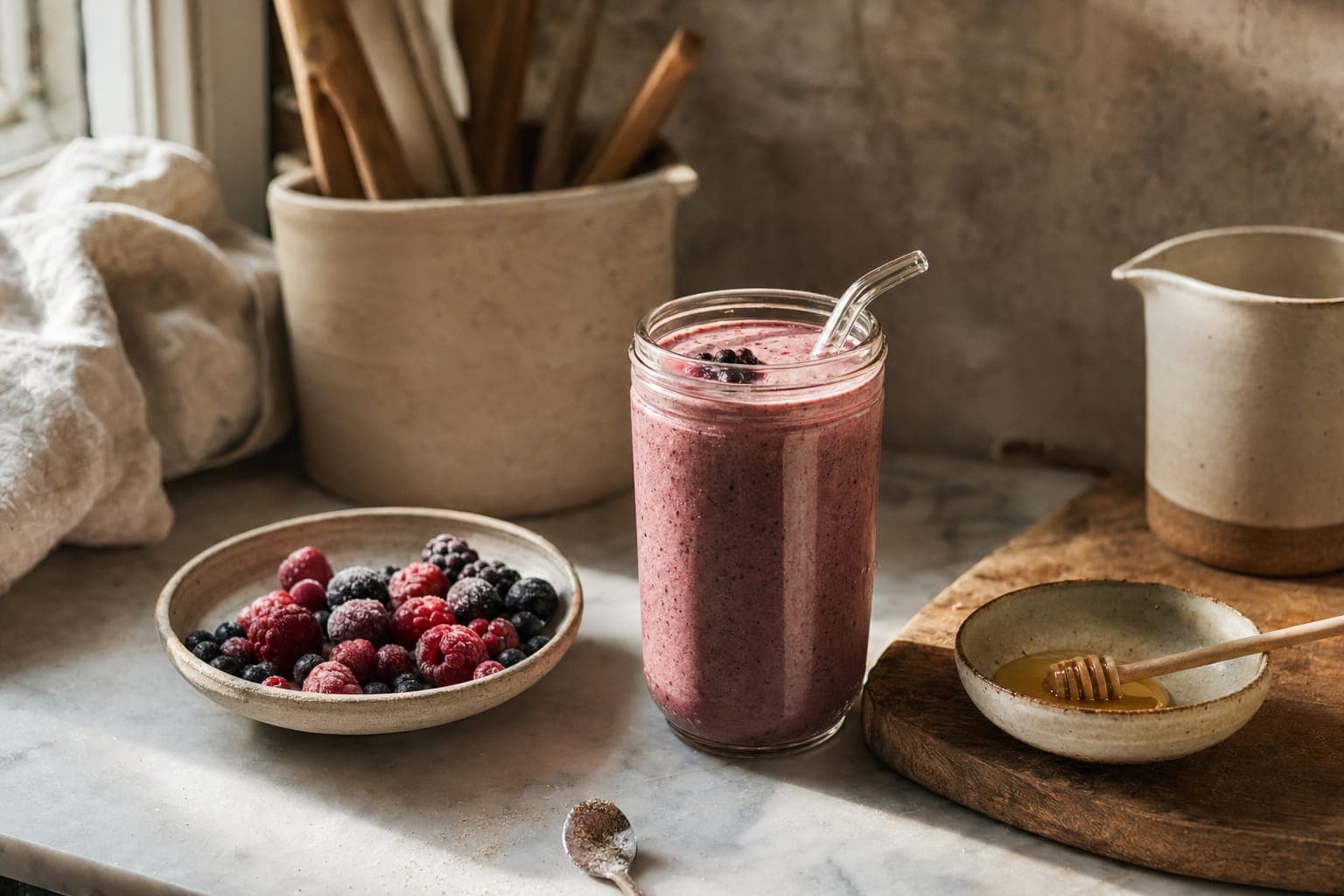
The Organised Recovery Smoothie for After Exercise
A recovery smoothie made with beef protein, raw milk, frozen berries, collagen, and honey. Optimal nutrition in the 30-minute window after exercise.


 Join over 100,000+ members
Build a better food system with us
The Organised community is thousands of people choosing real food and backing the farmers who grow it, all of us trying to leave the world a little better than we found it. If that is what you care about too, you belong here.