Liver Doesn't Store Toxins: Debunking the Biggest Organ Meat Myth
There's a myth that won't die. The liver is a filter, so surely it traps toxins and holds onto them. If you eat liver, you're eating a toxic sponge. This is wrong. The liver is not a warehouse. It's a processing plant. And if you understand how it works, you'll realise it's one of the safest foods you can possibly eat.
By Niall Kiddle, Founder, Organised

Reviewed by Pedro Rodrigues, Agronomist (farming and sourcing only) ·
6 min read · Published · Updated · 4 cited sources
Makers of the Organised Daily blend, a grass-fed beef organ supplement from regenerative UK farms
The fear is understandable. Filters accumulate things. Your air filter collects dust. Your water filter catches sediment. So it makes intuitive sense that your liver catches toxins and stores them. But this is precisely where intuition misleads you. Your liver doesn't work like a mechanical filter.
What your liver actually does
Your liver sits in the right side of your abdomen, weighing about 1.5 kilograms. It's the largest internal organ and the most metabolically active.1 It receives blood from two sources: the hepatic artery, carrying fresh oxygenated blood, and the portal vein, which brings all the nutrients and compounds you've absorbed from your gut directly to the liver before they circulate anywhere else in your body.
This is important. Every single thing you eat passes through your liver first. Your body has essentially set up a checkpoint. Before anything enters general circulation, the liver gets to process it.
The liver's job is processing, not storage. This processing happens through three phases of metabolism, each with a specific purpose. Phase 1, called oxidation, uses enzymes called cytochrome P450 to break down compounds into smaller pieces.2 This makes them reactive and often easier to eliminate, but it can also create intermediate compounds that need further processing.
Phase 2, conjugation, attaches water-soluble molecules to these breakdown products. This is the crucial step. Phase 2 makes compounds polar and water-soluble, which means they can now be dissolved in your bloodstream and transported to your kidneys and bowel for elimination. Phase 3 actively transports these water-soluble metabolites out of the hepatocyte and into circulation.
Then they leave. Via your urine, via your stool, via bile. The liver doesn't hoard. It processes and ships out.
The liver transforms harmful compounds into water-soluble metabolites and actively ships them out of the body within hours or days, not months or years.

The myth of toxic storage
The myth likely comes from a fundamental misunderstanding of the word 'filter'. A mechanical filter traps and holds. But a biological filter processes and moves. Your lungs filter air. They don't trap oxygen in your lungs permanently. They extract it and send it into your bloodstream. Your kidneys filter blood. They don't store the waste. They concentrate it and send it to the bladder for elimination.
The liver is the same. It's a processing organ, not a storage organ. If it actually stored toxins, it would poison itself. Hepatocytes would accumulate these compounds over time and die. Your liver function would deteriorate progressively with every meal. But this doesn't happen.
Instead, a healthy liver regenerates constantly. You can remove up to 70 per cent of it surgically, and it will rebuild to full size within weeks.3 Hepatocytes have a lifespan of about 300 to 500 days. Your entire liver tissue turns over approximately every 300 to 400 days. This is incompatible with toxic accumulation.
If your liver were genuinely storing toxins, it would show up in your blood work. Hepatic function tests would be abnormal. Liver enzymes would be elevated. Bilirubin would rise. But millions of people eating conventional diets have completely normal liver function tests despite constant exposure to environmental contaminants. This tells you something important: the liver is handling what it encounters.
How the liver truly handles chemicals
When you eat liver from a modern animal, you're eating an organ that's processed and filtered the animal's food and environment continuously for the animal's entire life. Modern industrial-raised animals have been exposed to pesticides in grain, mycotoxins in stored feed, antibiotics, and other chemical exposures. That's legitimate.
But here's the key: exposure isn't accumulation. The animal's liver processed those compounds. The ones the liver couldn't safely metabolise were either excreted or accumulated in fat tissue, not specifically in the liver. The ones the liver could process were converted to water-soluble metabolites and sent out in urine and bile.
When you eat that liver, you're eating the product of active processing, not a warehouse of stored toxins. The heavy metals, pesticides, and other contaminants that the animal encountered have largely been eliminated or are stored in the animal's fat, not in the liver tissue itself.
Research on heavy metals illustrates this clearly. Lead, mercury, cadmium. These are genuine concerns in conventional food. Yet studies consistently show that liver concentration of these metals is typically lower than in kidney tissue.4 If you're genuinely worried about metal accumulation, you should be more concerned about muscle meat than liver.
Heavy metals preferentially accumulate in fat tissue and kidney, not in liver. Liver contains less, not more, of these contaminants than muscle meat.
Get the science, plainly, free
Two short reads a week on what the research actually says about nutrition.
By signing up you agree to receive emails from us. No spam, unsubscribe anytime.
Why liver is actually safer than muscle
Here's the uncomfortable truth that most people miss: if you're eating conventional meat and you're worried about toxin accumulation, muscle tissue should concern you far more than liver. Here's why.
Many toxins are lipophilic, meaning they're fat-loving and water-fearing. They don't dissolve easily in water and therefore don't get excreted readily. Instead, they accumulate in fat tissue. Muscle meat, depending on the cut, contains significant intramuscular fat. This fat preferentially stores lipophilic compounds. Pesticides, environmental toxins, and other fat-soluble substances preferentially accumulate in muscle fat, not in liver.
Liver, by contrast, is actively processing and eliminating these compounds every single day. Its entire function is to take in compounds and move them out. It's the organ that's supposed to be exposed to contaminants and handle them. And it does. The liver doesn't accumulate lipophilic toxins because it's constantly conjugating them and moving them along. The portal blood brings potentially harmful compounds to the liver. The liver processes them. They leave via bile and urine.
If anything, the liver is the least likely organ to accumulate toxins because it's designed not to. It's designed to be a processing station, not a storage depot. A healthy liver is the single best defence your body has against accumulating toxins.
Grass-fed, pastured liver is extraordinarily clean. The animal was eating grass, not grain treated with glyphosate or stored with fungicides. It was moving continuously, not confined to a feedlot. Its liver wasn't working overtime processing inflammatory seed oils or mycotoxin-laden grain. The nutrient density is off the scale, and the contamination risk is minimal compared to conventional grain-fed animal products.
Even conventionally raised liver is safe. Yes, the animal's liver had to work harder. Yes, it processed more contaminants. But that's exactly the point. The liver's job is to handle what comes in and move it out. That's what makes it safe, not unsafe. The liver is the organ doing the detoxifying. You're not eating a toxic reservoir. You're eating the processing plant itself, which is literally designed to eliminate toxins rather than store them.

1 of 9
Daily blend
100,000+ thriving families4.9 on Trustpilot
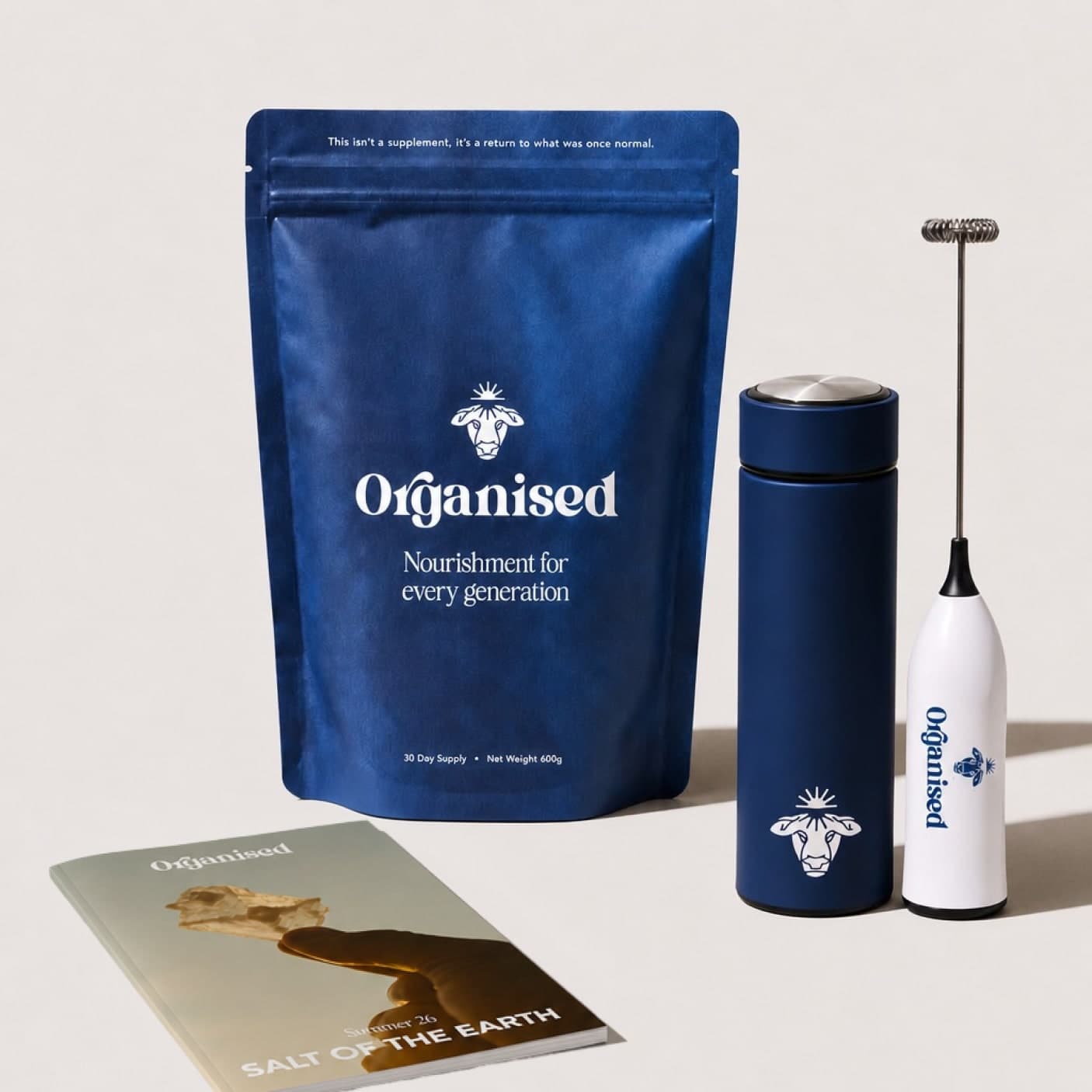
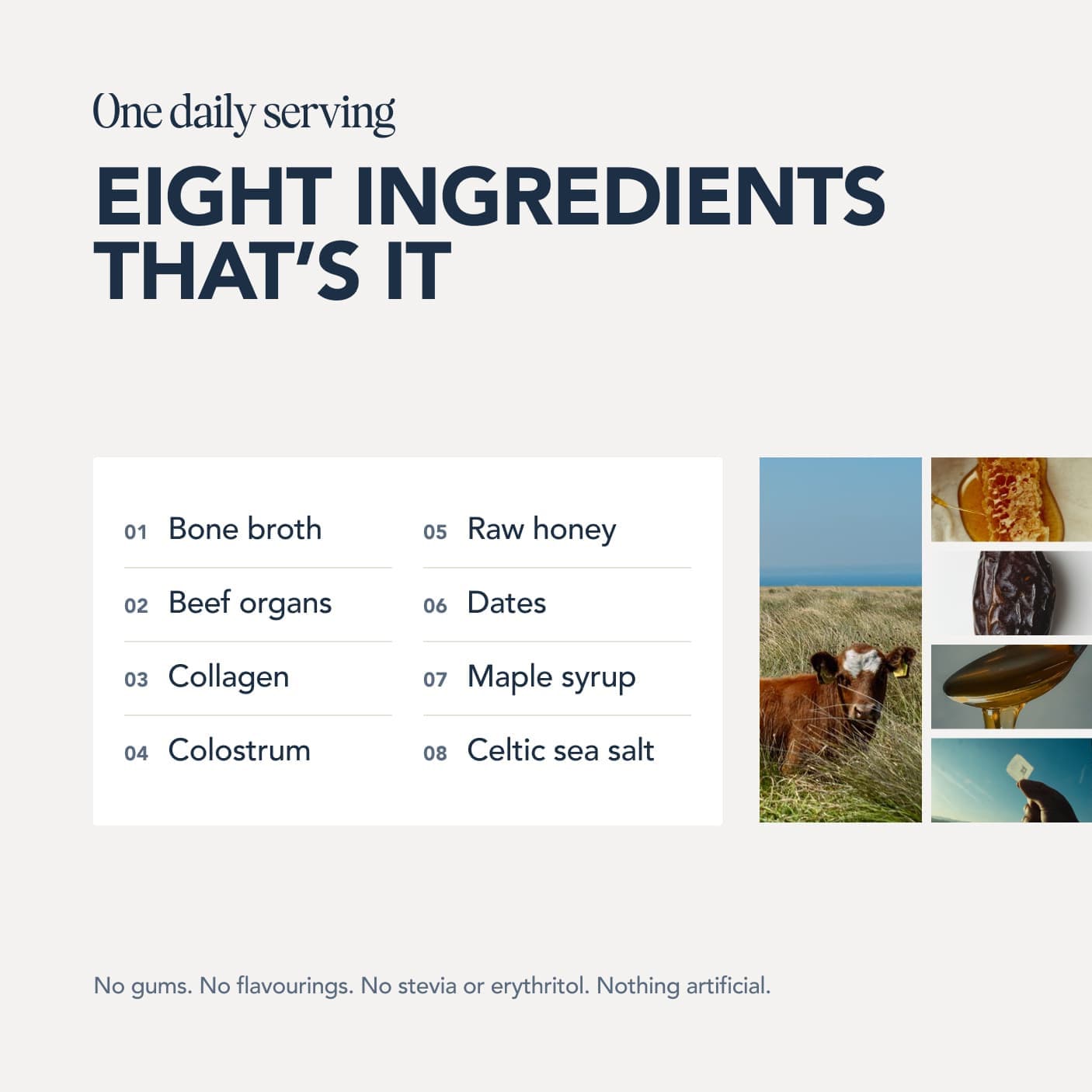
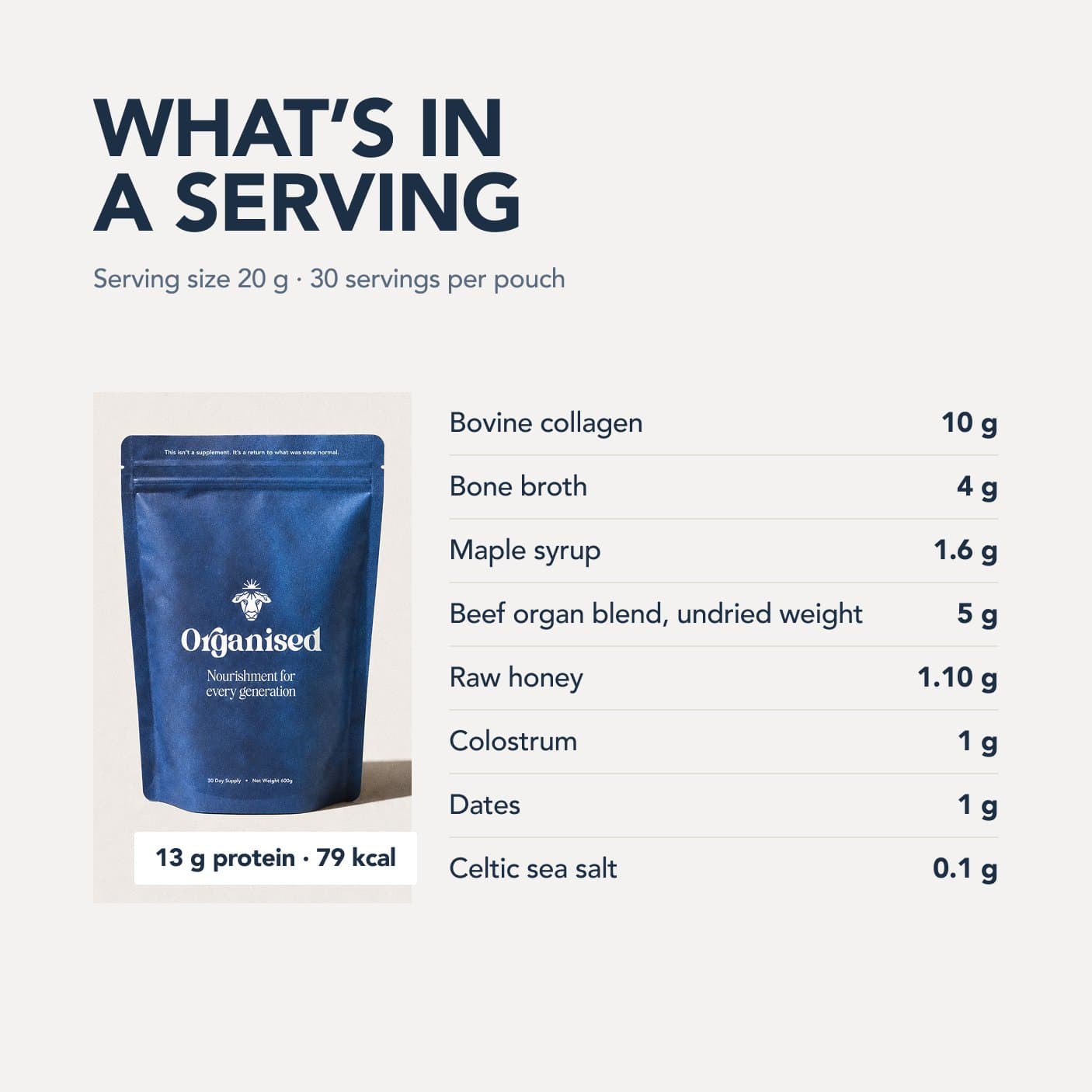
Eight real ingredients built around grass-fed beef organs, collagen and colostrum. Nothing synthetic added.
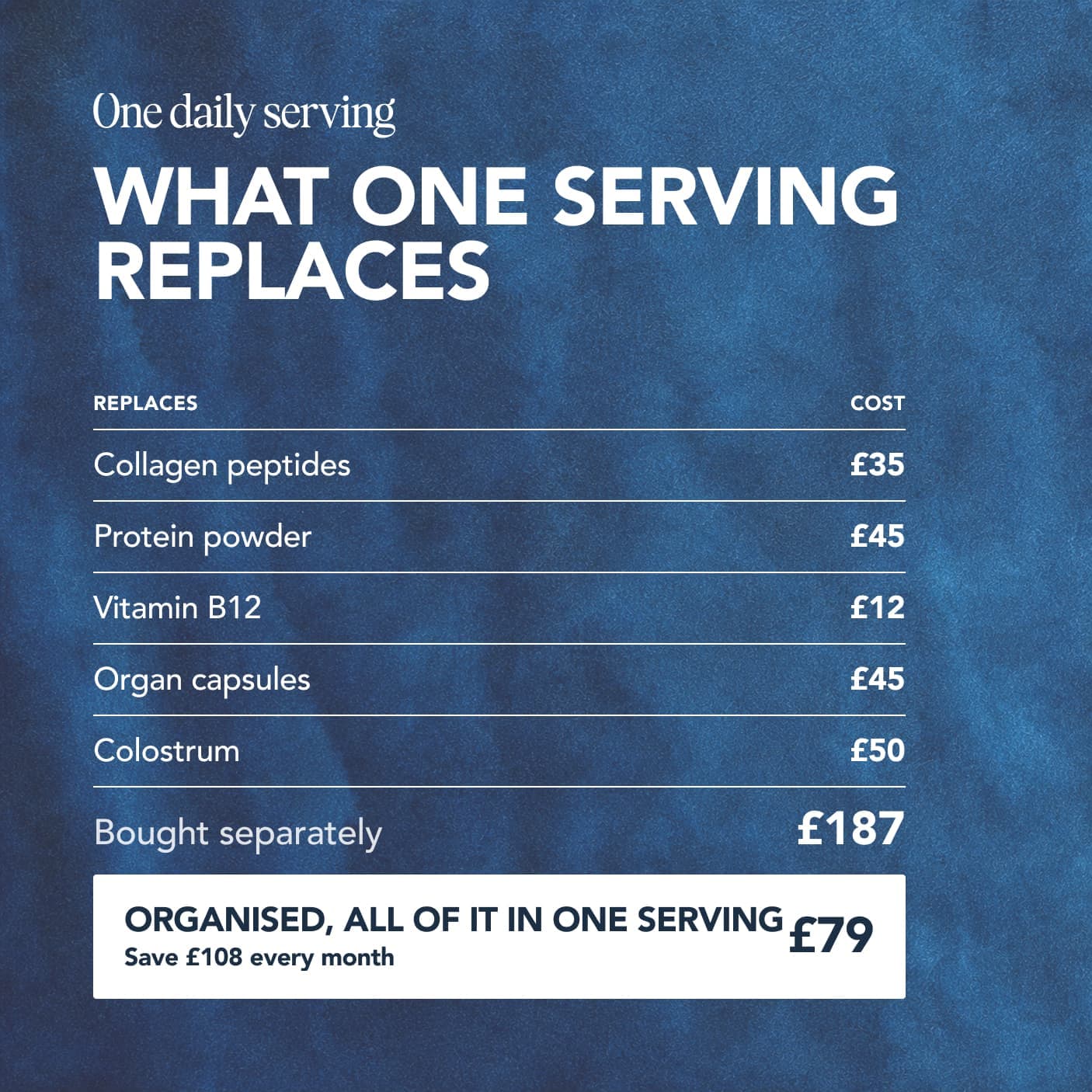
Free with your first order, worth £38. Plus £10 off the pouch with a subscription.
Free UK shipping · Made in England · 100 day money back guarantee on your first pouch · Skip, pause or cancel anytime
The bottom line
The myth exists because people confuse filtering with storing. The liver is not a sponge. It's a chemical processing plant with three phases of metabolism designed specifically to take compounds from your environment, transform them into water-soluble metabolites, and ship them out of your body. It works constantly or you would die. It regenerates constantly, incompatible with toxic storage. It processes everything it encounters and moves it along.
Eating liver, particularly from well-raised animals, is one of the most nutrient-dense choices you can make. The fear is unfounded. The science is clear. Your liver doesn't store toxins. It eliminates them. And that's precisely why it's so valuable to eat. Stop avoiding it out of fear.
References
Every source below was checked on 27 August 2026. Each PubMed, PMC and DOI identifier was resolved against NCBI or Crossref, and what it opens is printed under the citation, so you can see the link goes where the citation says without leaving the page. Where a citation and its identifier disagreed, the citation was corrected to the record or the reference was deleted along with the sentence marker that pointed at it, and where the resolved paper turned out not to support the sentence, the sentence was cut back to what it does support. Borrowed authority is worse than none, because it looks like rigour.
- NHS. Liver disease. https://www.nhs.uk/conditions/liver-disease/ [accessed May 2026].
- Almazroo OA, Miah MK, Venkataramanan R. Drug Metabolism in the Liver. Clin Liver Dis. https://pubmed.ncbi.nlm.nih.gov/27842765/ [accessed May 2026].Checked 27 August 2026: PMID 27842765 opens Almazroo OA, Miah MK, Venkataramanan R, Drug Metabolism in the Liver. Clin Liver Dis 2017;21(1):1-20. PubMed indexes it as: Review.
- Michalopoulos GK, Bhushan B. Liver regeneration: biological and pathological mechanisms and implications. Nat Rev Gastroenterol Hepatol. https://pubmed.ncbi.nlm.nih.gov/32764740/ [accessed May 2026].Checked 27 August 2026: PMID 32764740 opens Michalopoulos GK, Bhushan B, Liver regeneration: biological and pathological mechanisms and implications. Nat Rev Gastroenterol Hepatol 2021;18(1):40-55. PubMed indexes it as: Review.
- European Food Safety Authority. Cadmium dietary exposure in the European population. EFSA Journal. https://www.efsa.europa.eu/en/efsajournal/pub/2551 [accessed May 2026].
Who wrote and reviewed this guide
Niall Kiddle
Author · Founder, Organised
Niall is the founder of Organised. He started the company in 2024 after fixing his own health the slow way: in 2022 he swapped a cupboard of synthetic supplements for real food, raw milk, organ meats, bone broth and honey, and felt the difference within months.
Areas of expertise: Ancestral nutrition, Organ meats, Whole-food supplementation, Gut health, Regenerative sourcing
Read Niall's full profile
Pedro Rodrigues
Reviewer · Agronomist (farming and sourcing only)
Pedro is the agronomist Organised works with on farming and sourcing. His job on the guides is to keep the science honest: he reviews what we publish about soil health, regenerative agriculture, grazing and the way food is actually produced.
Areas of expertise: Regenerative agriculture, Agronomy, Soil health, Grass-fed farming, Food sourcing
Reviewed this guide on
Read Pedro's full profileMore on debunking
View all- Are Organ Meats High in Purines? What Gout Sufferers Need to Know
- Cholesterol in Organ Meats: Should You Be Worried?
- Do You Really Need 5 a Day? What the Evidence Says
- Does Red Meat Cause Cancer? A Nuanced Look at the Evidence
- Is Too Much Protein Bad for Your Kidneys? Separating Fact from Fear
- The Real Reason Your Doctor Says 'Eat Less Red Meat'
- The Saturated Fat Myth: What Modern Research Actually Shows
Browse the guides library
All guidesKeep reading

Science
Are Organ Supplements Just a Trend? Looking at the History
Organ supplements predate modern wellness by a century. In the 1920s, glandular supplements were serious medicine. What changed?
Science
Methylation: What It Is and Why It Matters
Understand methylation, the chemical process fundamental to every cell. Learn how B12, folate, and choline support it, and why organs are key sources.
Science
The Protein Leverage Hypothesis: Why We Overeat
The protein leverage hypothesis from Simpson and Raubenheimer explains how appetite chases a protein target and drives overeating of low-protein foods.
Real food, made effortless
See the blendA few ways to use it
All recipes
Organised Protein Pancakes: A Weekend Favourite
A high-protein pancake recipe using beef protein, eggs, and raw milk. Cooked in cast iron, naturally sweetened with banana and honey. Real food breakfast.

Energy Balls with Organised, Dates and Raw Honey
Make no-bake energy balls with Organised, dates, and raw honey. Perfect lunch box, pre-workout, or on-the-go snack. Simple recipe.

Raw Milk Ice Cream with Organised
Make raw milk ice cream at home with Organised for a seasonal, nutrient-dense treat. Three simple flavours to try whenever the craving strikes.


 Join over 100,000+ members
Build a better food system with us
The Organised community is thousands of people choosing real food and backing the farmers who grow it, all of us trying to leave the world a little better than we found it. If that is what you care about too, you belong here.