Raw Milk Benefits: Enzymes, Probiotics, Digestion and Nutrition
Milk is one of nature’s great miracles. Grass, water and sunshine become a silky food designed to nourish growth. It is biology’s original complete meal.
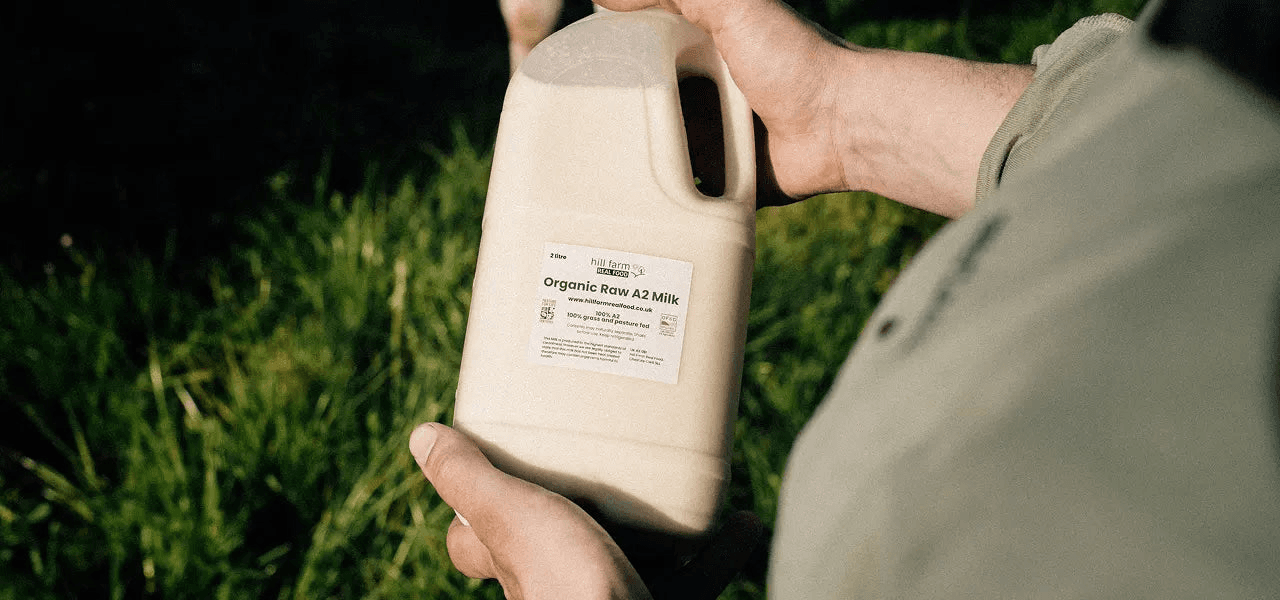

If you want the foundations first, start with our what is raw milk guide. This piece covers the actual benefits of raw milk.
Raw milk is unpasteurised and usually unhomogenised. That means it keeps more of its natural structure and living complexity. Here are the main reasons people choose it.
-
Raw milk keeps natural enzymes that are sensitive to heat.
-
Raw milk contains a living microbial ecosystem.
-
Raw milk contains delicate bioactive compounds like lactoferrin and immunoglobulins.
-
Raw milk can feel easier to digest for some people.
-
Raw milk keeps the cream line, so it is naturally more satiating.
-
Raw milk delivers fat-soluble vitamins in a food-based package.
-
Raw milk can be an A2 option when sourced from the right herds.
-
Raw milk ferments easily into kefir and yoghurt.

Enzymes: why unpasteurised milk can feel gentler
Raw milk contains enzymes that are naturally present in fresh milk, but are reduced or inactivated by pasteurisation. That matters because enzymes help the body break food down efficiently.
Many people describe raw milk as easier on the gut, even though it is creamier and richer.
Probiotics: a living food that supports fermentation
Raw milk is alive. It contains microbes, including lactic acid bacteria, that can guide fermentation in a beneficial direction.
That “living” quality changes what the milk becomes. Clean raw milk tends to sour into cultured foods like kefir and yoghurt. For many people, cultured raw dairy is the easiest entry point because fermentation lowers lactose and pre-digests parts of the milk.
Immune proteins: lactoferrin and immunoglobulins
Fresh milk naturally contains bioactive compounds like immunoglobulins and lactoferrin. These are part of milk’s built in defence system and they are sensitive to heat.
Not medicine, just whole food components that processing can reduce.

Raw milk digestion benefits: why some people tolerate it better
Lactose tolerance exists on a spectrum, and the same person can react differently depending on the milk.
Some people report that raw milk feels easier because it still contains a range of bacteria and enzymes that support breakdown, and because it is often consumed fresher. Others do best starting with cultured raw dairy first, like kefir.
It will not suit everyone, but the form of the food matters.
Fats that matter
The cream line is not a flaw. It is a sign the milk has not been mechanically forced into uniformity.
Fat is where satiety lives. Fat is also the carrier for vitamins A, D, E and K2, the fat-soluble vitamins that support immunity, hormones, bones and skin (we've got a great guide on nutrient absorption if you want to learn more about how to get the most from your food). If you have been living in the land of low fat dairy, this can feel like a homecoming.

Raw milk nutrition: a complete matrix, not isolated nutrients
Milk is not “just calcium”. It is calcium, phosphorus, magnesium, protein, fats and bioactive compounds working together.
Raw milk keeps more of that original matrix intact. Many people notice this as a difference in satiety, taste and tolerance.
A2 raw milk benefits: why the cow matters as much as the milk
Not all milk proteins behave the same in the gut. One of the key differences is A1 vs A2 beta casein.
Many industrial herds produce A1 or mixed A1 and A2 milk. Traditional breeds like Jersey and Guernsey are more likely to be A2. Goat and sheep milk are also naturally A2.
Some people find A2 milk easier to tolerate because it breaks down differently. If dairy has been a problem for you, A2 raw milk is worth exploring, alongside freshness and fermented options.
Flavour: why taste changes your habits
When food tastes good, you choose it. When it feels nourishing, you come back to it.
Raw milk often has a sweetness and depth that processed milk struggles to replicate, partly because the structure is intact and the fat is not stripped or reshaped. The simple version is this: it tastes like it came from an animal, not a factory.
Sourcing matters
Raw milk is only as good as the farm behind it.
The benefits above shine brightest when the milk comes from healthy animals, clean equipment, grass-fed systems, and farmers who test and handle milk properly. If the milk is produced poorly, the conversation changes.
If you want the practical checklist, head over to our raw milk sourcing guide.
A quick raw milk sourcing snapshot
Look for:
-
Pasture-raised or grass-fed animals
-
Clean milking practices and well maintained equipment
-
Frequent testing and transparent communication
-
Proper chilling and storage from farm to fridge
And if raw milk is not accessible or legal where you live, the next best option is usually low temperature pasteurised, non homogenised milk from a source you can trace.

Key takeaways
-
Raw milk keeps more of its natural enzymes, structure and cream line
-
Raw milk is a living food, which supports fermentation and microbial diversity
-
Raw milk contains bioactive compounds that are sensitive to heat
-
Many people find raw milk easier to digest, especially when it is fresh and high quality
-
A2 raw milk can be a game changer for dairy sensitivity
-
The biggest “benefit” is not raw milk in theory, it is raw milk sourced well
Next steps: read the what is raw milk guide, then use the raw milk sourcing guide to make sure you are getting the good stuff.
Frequently Asked Questions
What is A2 raw milk and why do people want it?
A2 milk comes from animals that produce A2 beta-casein rather than A1. Some people find A2 milk gentler because it breaks down differently. If dairy has been an issue for you, A2 raw milk from breeds like Jersey or Guernsey can be worth exploring.
What is the best way to start drinking raw milk?
Start small and pay attention to how you feel. Many people do best starting with fermented raw dairy like kefir or yoghurt first (try our homemade kefir recipe), then moving to fresh raw milk if it suits them.
Can raw milk help with lactose intolerance?
Some people who struggle with conventional supermarket milk report they tolerate raw milk better, especially when it is fresh and when they choose cultured raw dairy like kefir. That said, lactose intolerance varies person to person, and raw milk is not a guaranteed fix.
Is raw milk safe to drink?
Safety depends on farm practices, hygiene, storage, and testing. The strongest argument for raw milk is not ideology, it is standards. If you want a practical checklist for choosing well, use our raw milk sourcing guide and prioritise transparency and testing.
- Ingredients Deep DivesThe Amino Acids in Collagen and Why They MatterCollagen's amino acid profile is unlike whey or plant protein. Discover glycine, proline, and hydroxyproline and why collagen cannot be replaced by other proteins.
- Ingredients Deep DivesGrass-Fed Beef Protein Isolate: What Makes It DifferentWhy grass-fed beef protein isolate is different. Digestion, micronutrient content, and how it compares to whey protein.
- Ingredients Deep DivesBovine Colostrum: The Complete Guide to Nature's First FoodComplete guide to bovine colostrum. Immunoglobulins, gut health, immune support, dosing, and safety for adults.
Nourishment, without the taste.
Cooking organs twice a week doesn’t fit every routine. Organised is an organ blend, grass-fed, freeze-dried, nothing else.