Stop Wasting Nutrients: How To Increase Nutrient Absorption
You can eat “perfectly” on paper and still feel flat.

By Niall Kiddle, Founder, Organised

Reviewed by Pedro Rodrigues, Agronomist (farming and sourcing only) ·
8 min read · Published · Updated
Makers of the Organised Daily blend, a grass-fed beef organ supplement from regenerative UK farms

The label says you hit your protein, iron, magnesium and B vitamins. But your body does not care what is printed on the back of the packet. It cares what actually gets into your cells.
That gap between what you eat and what you absorb is where tiredness, weak immunity, hair loss, low mood and mystery cravings often live. This guide is about closing that gap using food, food pairings and whole food vitamin blends that are built for absorption rather than optics.
This article is general information, not medical advice. Speak to your clinician about your own needs.

What nutrient absorption and bioavailability really mean
“Nutrient absorption” sounds simple: you eat, your body uses it. In reality, it is a three step process.
Release
Food is broken down by chewing, stomach acid, enzymes and bile. Nutrients are freed from the food matrix.Absorption
Nutrients cross the gut lining and enter the bloodstream.Utilisation
Nutrients are delivered to tissues and plugged into enzyme systems, hormones and structures like bone and collagen.Bioavailability is the total fraction that makes it all the way through this chain and is actually usable. The same “30 mg of iron” or “25 g of protein” can behave very differently in the body depending on:
- The food matrix
- The presence of cofactors
- How healthy your gut is
This is why you can eat a clean diet, take a multivitamin, and still feel like something is missing.

What quietly blocks nutrient absorption
Low stomach acid
Stomach acid is needed to:- Unfold proteins so enzymes can access them.
- Activate key digestive enzymes.
- Release minerals like iron, zinc and magnesium from food.
Stress, ageing, chronic low salt diets and acid suppressing medicines can all blunt this step. If this gate is weak, protein and minerals pass through underused.
Unprepared plant foods and antinutrients
Plants are powerful, but they come with natural defence chemicals such as phytates, oxalates and enzyme inhibitors. In large amounts, or when grains, nuts, seeds and legumes are eaten unsoaked and unfermented, these can:
- Bind minerals like iron, zinc and calcium.
- Interfere with digestive enzymes.
- Irritate the gut lining in sensitive people.
We break all of this down in our piece on what the f are anti-nutrients.
Ultra processed foods
Ultra processed foods are often rich in calories and poor in cofactors, while bringing along additives, refined seed oils and sweeteners that burden digestion. They:
- Displace nutrient dense foods.
- Drive low grade inflammation
- Contribute to blood sugar swings that blunt appetite for real food
Gut irritation and dysbiosis
Your gut is a single cell thick barrier. When it is inflamed or overrun by unhelpful bacteria, absorption drops.
If you want to learn how bone broth, collagen rich cuts, gentle carbs and raw dairy can calm the gut so that nutrients can actually cross, read our guide you do not need another overpriced probiotic or gut shot.

Food matrix, cofactors and why whole foods absorb better
Modern nutrition zoomed in on single nutrients. “Take vitamin C for immunity.” “Take iron for energy.”
Real food works differently. You never eat a nutrient alone, you eat a matrix. That matrix includes:
- Proteins
- Fats
- Fibres
- Minerals
- Enzymes
- Plant compounds
Together they decide how much of a nutrient is released, transported and used.
Some simple examples:
Iron
Heme iron from animal foods is much better absorbed than non heme iron from plants. Vitamin C can rescue non heme iron and improve its absorption, while unsoaked grains and tea can block it.Fat soluble vitamins
Vitamins A, D, E and K need fat. Carrots with tallow or butter beat carrots on their own. Egg yolks with a little fat are more powerful than a low fat fortified cereal.
Calcium
When you eat nose-to-tail with real animal fat and properly prepared plants, you are automatically building in better nutrient absorption without needing to think about it. You can read more about this in why eat nose to tail.Whole food vitamin blends vs isolated supplements
This brings us to the big question:
Which vitamin blends are best for absorption?
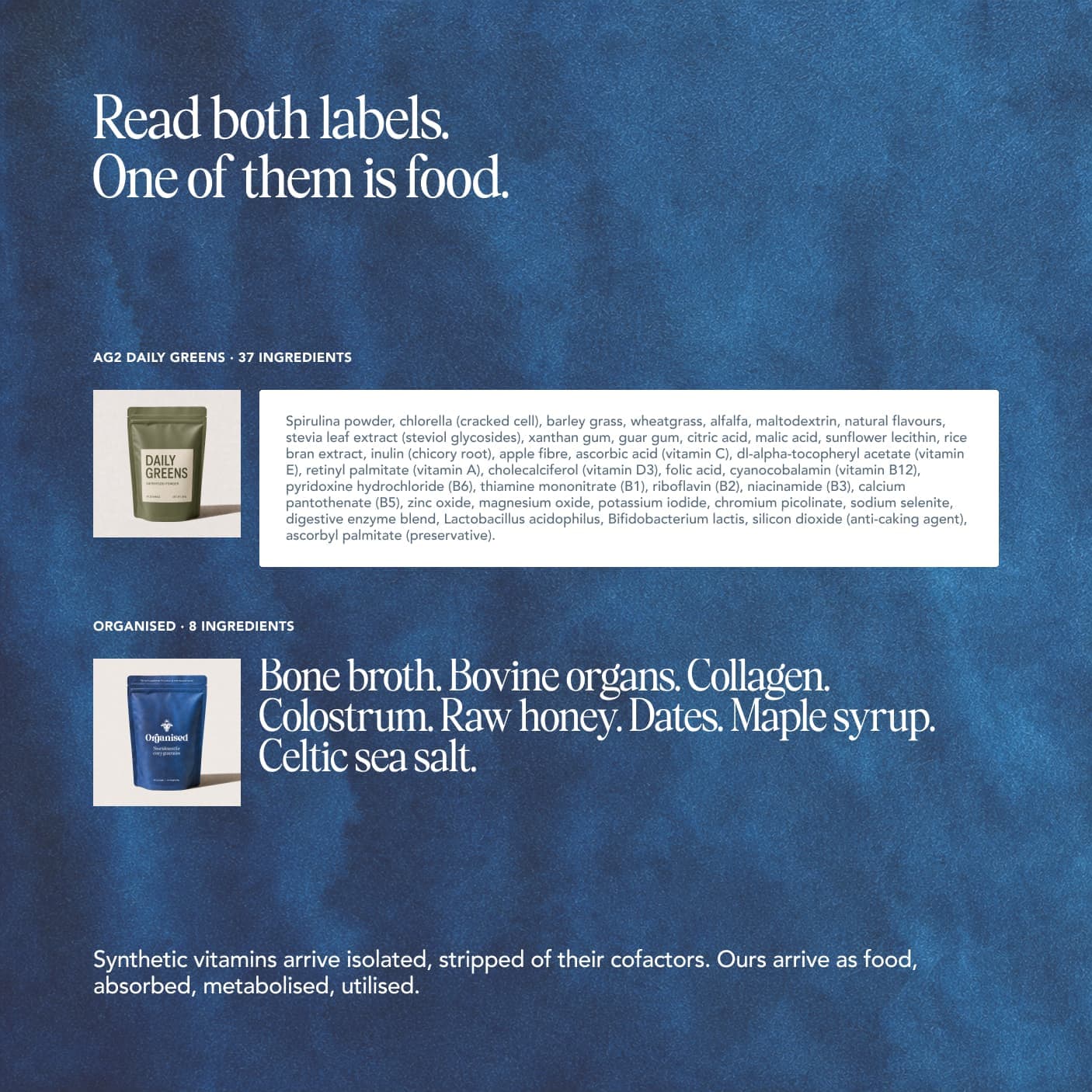
When you compare labels, it can look like synthetic multis “win” because the numbers are higher. In practice, whole food blends usually win on absorption because they act more like food.
Good whole food vitamin blends tend to:
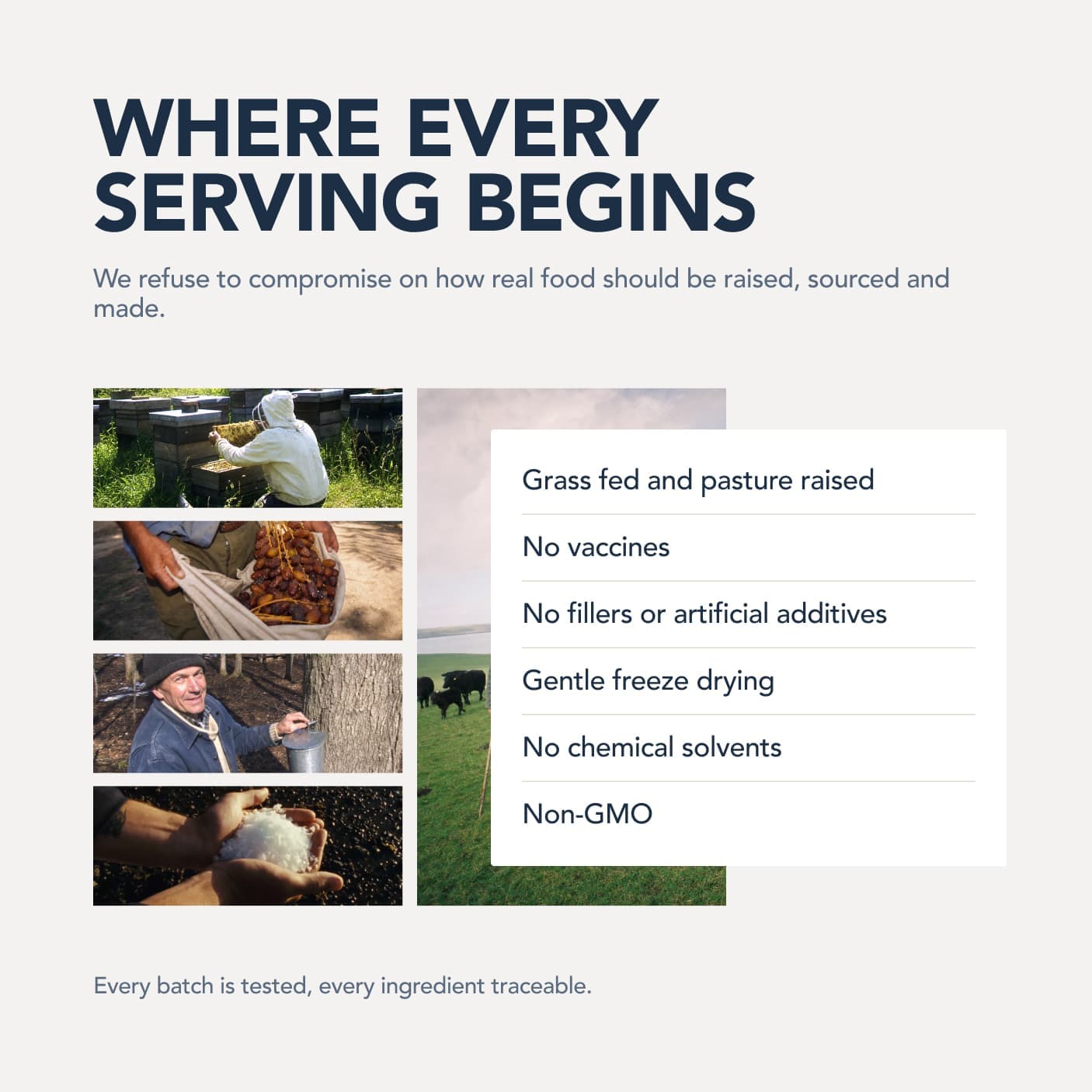
- Start with recognisable foods such as organs, bone, dairy, fruit or vegetables.
- Use gentle processes like freeze drying or low heat rather than harsh extraction.
- Provide nutrients with natural cofactors, not as single isolates.
- Skip cheap fillers, seed oils and artificial sweeteners.
This is the difference between giving your body a crowded spreadsheet and giving it a cooked meal.

Get health guides like this, free
Two short reads a week on eating for energy, gut health, skin, sleep and more.
By signing up you agree to receive emails from us. No spam, unsubscribe anytime.
How Organised supports better nutrient absorption
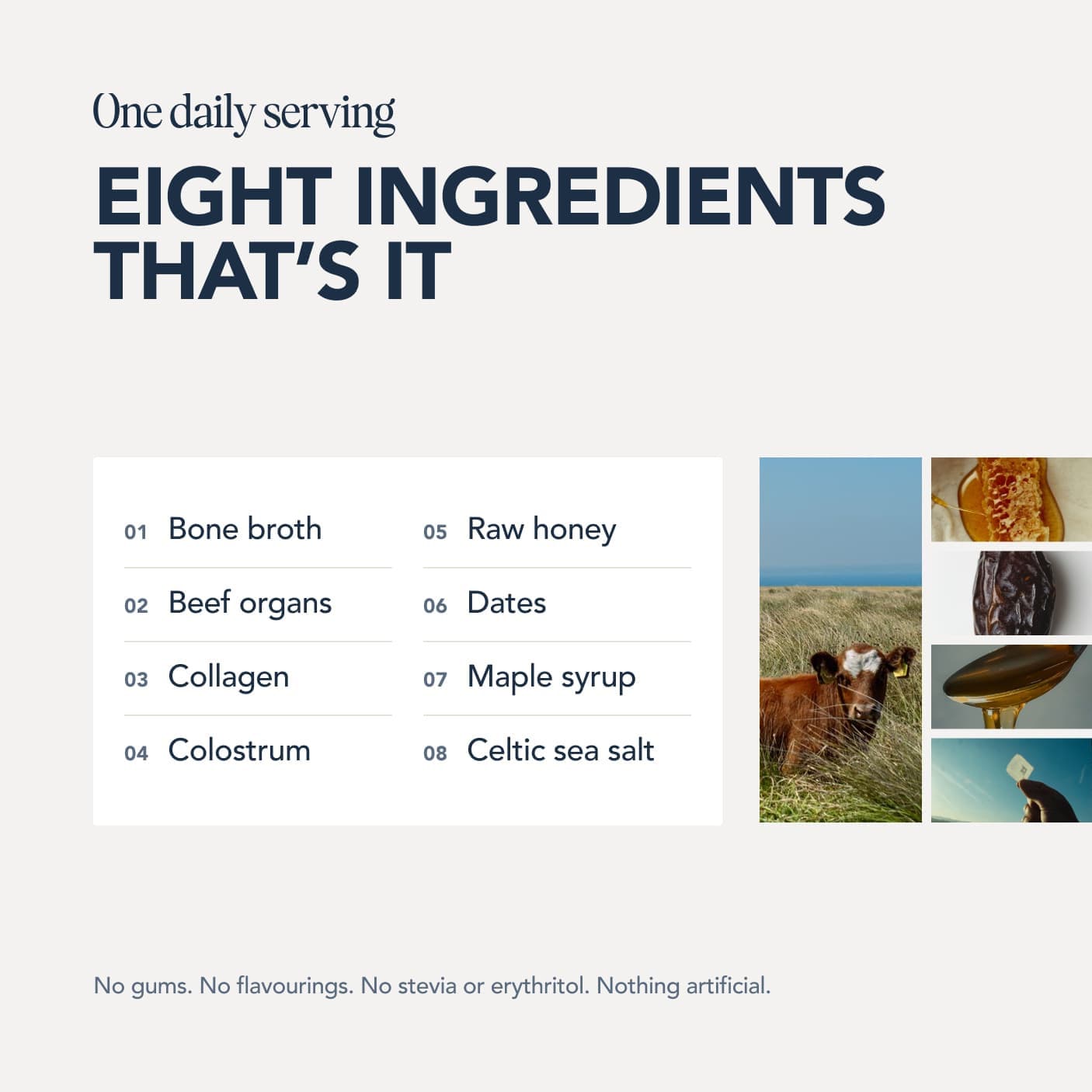
Organised was built as a whole food vitamin blend that you can drink. At the core you have:
- Grass fed bone broth
- Bovine collagen.
- Bovine colostrum
- A beef organ blend
- Raw honey
- Maple syrup
- Dates
- Celtic sea salt
Here is how each piece helps with supporting nutrient absorption.
Bone broth
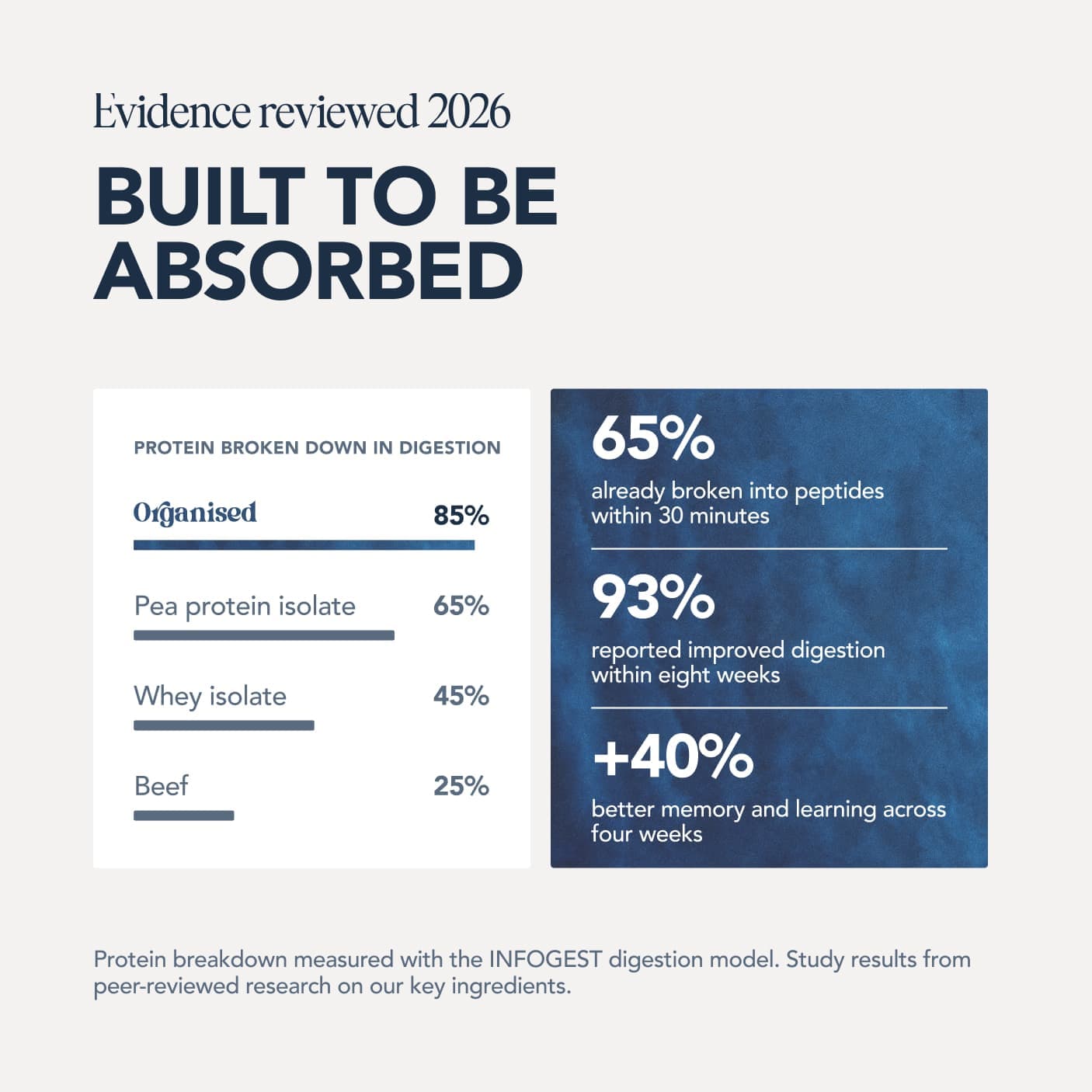
You cannot absorb nutrients without enzymes and transporters, and both are made from protein. Bone broth protein provides a full amino acid profile to:- Build digestive enzymes.
- Support stomach and intestinal tissue.
- Support muscle and metabolic health so your body can handle real meals.
Because it is meat derived, it also brings natural minerals and peptides you will not find in a pea or soy isolate.
Collagen
Collagen is rich in glycine, proline and hydroxyproline. These amino acids help:
- Maintain the gut barrier structure.
- Support the connective tissue that holds the gut in place.
- Provide raw material for the repair work your body does every night.
A stronger, calmer gut lining is a better absorption surface.
Colostrum
Colostrum is sometimes called “liquid gold” for a reason. It is rich in immunoglobulins, growth factors and lactoferrin. In studies, bovine colostrum has been shown to support:
- Intestinal barrier integrity.
- Local immune balance in the gut.
- Recovery after intense physical stress.
Again, less irritation, better uptake.
Beef organs
Organs are nature’s original multivitamin. In Organised, the organ blend brings:
- Retinol, the active form of vitamin A
- B vitamins including B12
- Heme iron and copper
- Zinc and selenium
These are the cofactors needed to make stomach acid, transport oxygen, run antioxidant systems that protect tissues and build and run digestive enzymes.
Raw honey, maple syrup, dates and salt
Absorption is energy hungry. Raw honey, maple syrup and dates provide gentle carbohydrates and potassium to fuel digestion and thyroid function. Celtic sea salt adds:
- Chloride, needed for stomach acid.
- Sodium, needed to transport glucose and amino acids in the small intestine.
- Trace minerals from the sea
The result is not “just a protein powder” but a whole food combo that acts like a condensed ancestral meal.


1 of 9
Daily blend
100,000+ thriving families4.9 on Trustpilot
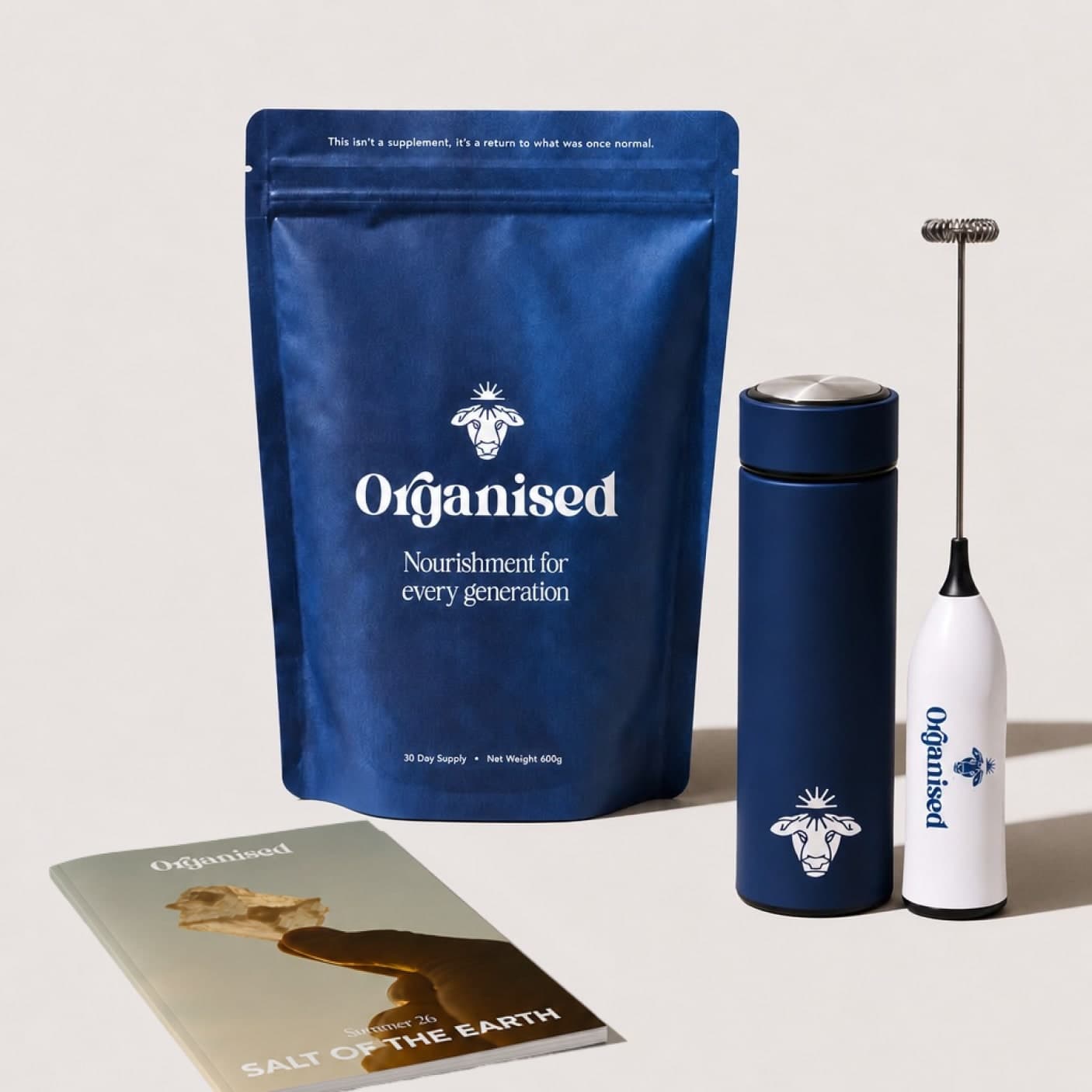
Eight real ingredients built around grass-fed beef organs, collagen and colostrum. Nothing synthetic added.
Free with your first order, worth £38. Plus £10 off the pouch with a subscription.


Free UK shipping · Made in England · 100 day money back guarantee on your first pouch · Skip, pause or cancel anytime
Foods that increase nutrient absorption
Now for the plate. These are practical foods that increase nutrient This is a simple way to get better nutrient absorption from plants you already eat. and simple food combos that improve nutrient absorption.
Iron plus vitamin C
- Steak, mince or organ meats with peppers, tomatoes or citrus.
- Organised smoothie followed by orange or kiwi.
Vitamin C keeps iron in a form your gut can absorb and reduces the impact of plant antinutrients.
Fat soluble vitamins plus fat
- Carrots, squash or sweet potato roasted in butter, ghee or tallow.
- Eggs with cheese or cream.
- Leafy greens cooked in animal fat and finished with olive oil.
Fat acts as the delivery system for vitamins A, D, E and K.
Protein plus fruit
- Steak with ripe fruit and potatoes cooked in animal fat.
- Organised in raw milk with a side of berries or a couple of dates.
Protein provides amino acids for enzymes and hormones. Fruit offers quick glucose and potassium for thyroid and adrenal health. Together, they support the metabolic “engine” underneath absorption.
Dairy and colostrum with carbs
- Raw or lightly processed whole milk with a serving of Organised.
- Yogurt or kefir with honey and fruit.
The dairy matrix helps carry calcium and other minerals. Carbs fuel the intestinal cells that move nutrients across the wall.
Properly prepared plant foods
When you do eat grains, nuts, seeds and legumes, traditional prep reverses a lot of the antinutrient effect. For example:
- Soaked and rinsed oats instead of dry cereal.
- Sourdough bread instead of quick yeast bread.
- Long cooked beans instead of quick canned beans thrown straight in.
This is a simple way to get better nutrient absorption from plants you already eat.

A simple day of eating for better absorption
Here is a realistic day that layers in these principles using Organised as your whole food vitamin backbone.Breakfast
- Raw or gently pasteurised whole milk
- 1 serving Organised
- Optional fruit like a banana or berries
You get protein, collagen, colostrum, organ derived micronutrients, carbs and minerals in one go.
Lunch
- Slow cooked beef or lamb stew made with bone broth.
- Carrots and potatoes in the pot.
- Side of sauerkraut or another fermented vegetable.
Heme iron, collagen, glycine, minerals and probiotic rich plants in an easy to digest form.
Snack
- Cheese or boiled eggs
- Piece of fruit
- Raw carrot salad in olive oil and sea salt if your gut needs extra support.
Dinner
- Liver or heart blended into minced beef for burgers or meatballs
- Root vegetables roasted in animal fat
- Simple fruit dessert with honey and a pinch of salt
At any point you can slot in another serving of Organised, for example as an afternoon drink when you would usually grab a bar or an ultra processed snack.

Building a life that supports nutrient absorption
Support for nutrient absorption is not a single supplement. It is a pattern.
In practice that looks like:
- Building meals around high quality animal foods, especially organs and collagen rich cuts.
- Preparing plants in ways that tame anti-nutrients.
- Pairing foods so that iron, fat soluble vitamins and minerals are easier to absorb.
- Protecting your gut lining with broth, gelatinous cuts and whole food carbs.
- Using whole food vitamin blends such as Organised when life is busy and you want a daily, reliable insurance policy.
From there, the shift is quiet but obvious. You feel full from normal meals. Your energy runs steadier. Cravings calm down. Blood work often looks better without chasing megadoses.
You are no longer only focused on “how much” you eat. You are focused on how well you absorb, which is where real change happens.
Who wrote and reviewed this guide
Niall Kiddle
Author · Founder, Organised
Niall is the founder of Organised. He started the company in 2024 after fixing his own health the slow way: in 2022 he swapped a cupboard of synthetic supplements for real food, raw milk, organ meats, bone broth and honey, and felt the difference within months.
Areas of expertise: Ancestral nutrition, Organ meats, Whole-food supplementation, Gut health, Regenerative sourcing
Read Niall's full profile
Pedro Rodrigues
Reviewer · Agronomist (farming and sourcing only)
Pedro is the agronomist Organised works with on farming and sourcing. His job on the guides is to keep the science honest: he reviews what we publish about soil health, regenerative agriculture, grazing and the way food is actually produced.
Areas of expertise: Regenerative agriculture, Agronomy, Soil health, Grass-fed farming, Food sourcing
Reviewed this guide on
Read Pedro's full profileBrowse the guides library
All guidesKeep reading

Health goals
SIBO: What It Is and How Nutrition Can Help
Understand SIBO, the migrating motor complex, and how nutrition supports recovery. Meal spacing, bitters, and non-fermented approaches.

Health goals
Osteoarthritis: Can Nutrition Slow the Progression?
Osteoarthritis is progressive, but the right nutrition may help slow it. See what the research shows about foods and nutrients that support your joints.
Health goals
Egg Quality and Nutrition: What the Research Suggests
Pastured eggs contain 3x more omega-3s and higher carotenoids. Research on egg quality, choline content, and why your egg source matters.
Real food, made effortless
Start my daily blendA few ways to use it
All recipes
Whole Food Snacks for Busy Days
Practical whole food snacks that travel well and sustain energy. No refined carbs, no seed oils. Real food options for when you're busy.

Organ Bolognese: The Family Dinner That Heals
Practical organ meat recipe using fresh beef liver and heart. Family-friendly bolognese that bridges supplements to whole food.
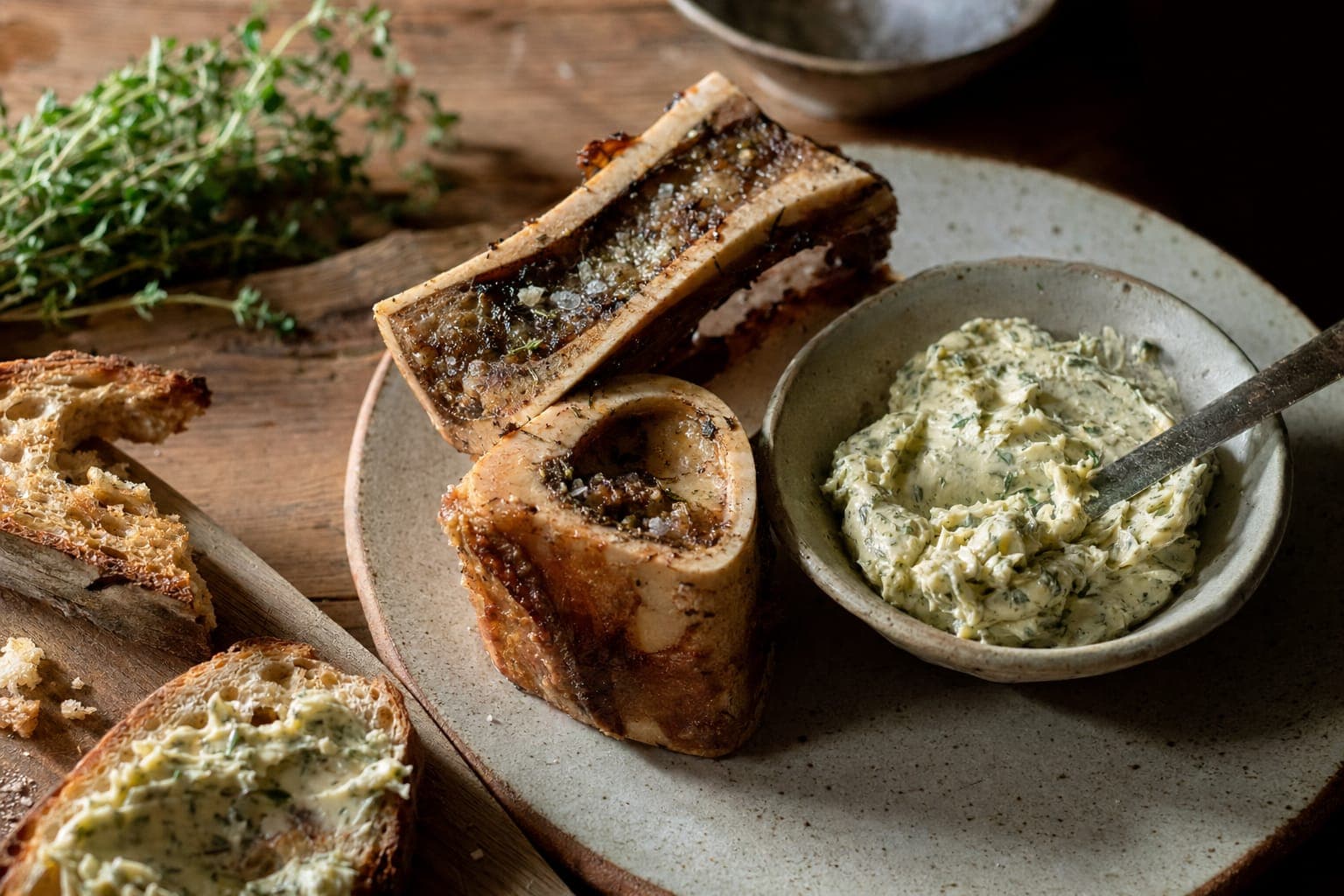
How to Make Bone Marrow Butter
Roast grass-fed marrow bones, scoop the marrow, and mix with butter and herbs. A nutrient-dense spread with fat-soluble vitamins.


 Join over 100,000+ members
Build a better food system with us
The Organised community is thousands of people choosing real food and backing the farmers who grow it, all of us trying to leave the world a little better than we found it. If that is what you care about too, you belong here.