The Rise of Metabolic Disease and What's Really Causing It
One in three British adults now has metabolic dysfunction. Type 2 diabetes is no longer a disease of old age. Fatty liver disease is the leading cause of chronic liver disease in under-40s. Your children are fatter and sicker than you were at their age. This isn't bad genetics. This is bad food. And it's all happened in the last 50 years.

By Niall Kiddle, Founder, Organised

Reviewed by Pedro Rodrigues, Agronomist (farming and sourcing only) ·
7 min read · Published · Updated · 4 cited sources
Makers of the Organised Daily blend, a grass-fed beef organ supplement from regenerative UK farms

That's not coincidence. That's causation.
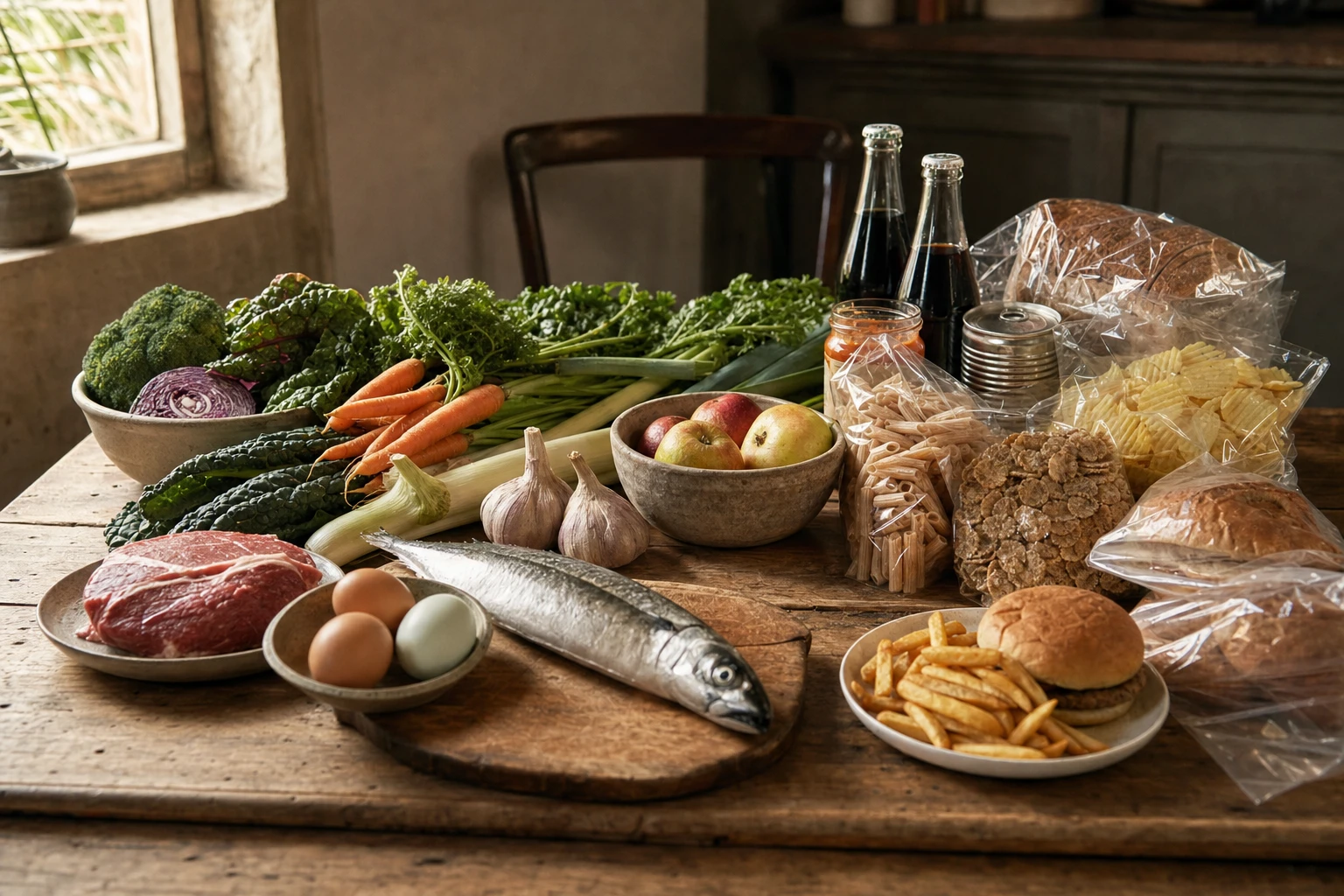
The timeline of metabolic disease
In 1970, obesity was rare. Type 2 diabetes was genuinely rare. Heart disease was increasing, but metabolic disease as an epidemic hadn't started. Then something shifted. Rapidly.
By 1990, obesity had doubled. By 2010, it had doubled again.1 Type 2 diabetes followed the same trajectory. Now, in 2026, metabolic disease is so common that having normal metabolic health is becoming unusual. The disease has become the default.
The standard medical explanation is that people got lazy and ate too much. Calories in, calories out. But that explanation doesn't hold up.3 People didn't suddenly become lazier in 1970. Something changed in the food itself. And the change happened fast.
In 1970, seed oils were still a rarity in home cooking. People cooked with butter, lard, and animal fats. They ate food that was prepared at home. Sugar consumption was high, but it was mostly from table sugar added intentionally. Processed food existed, but it wasn't pervasive.
By 1990, seed oils had invaded every corner of food production. Industrial seed oil (soybean, canola, sunflower) became the default in restaurants, in packaged food, in home cooking. Ultra-processed food was everywhere. Sugar went from something you could see (table sugar) to something hidden in almost everything under dozens of different names.
The rise of metabolic disease didn't happen because people got worse. It happened because the food got worse. And it happened fast.
Seed oils and the omega-6 explosion
Your body needs omega-3 and omega-6 fatty acids. But the balance matters enormously. Your ancestors ate roughly a 1:1 ratio of omega-6 to omega-3.2 That's the ratio your nervous system evolved in.
Your modern diet is somewhere between 15:1 and 25:1 omega-6 to omega-3. The primary driver is seed oils. Soybean oil, canola oil, sunflower oil, safflower oil. These oils are extremely high in omega-6 polyunsaturated fats. When you eat them, you skew your fatty acid ratio catastrophically out of balance.
Omega-6 polyunsaturated fats are fragile. They oxidise easily. When they oxidise, they create compounds called oxidised linoleic acid metabolites (OXLAMs) that are deeply inflammatory. An inflammatory state, chronically maintained, is where metabolic disease thrives.
Seed oils were never meant to be food. They're industrial byproducts. Soybean oil comes from the soybean seed as a waste product of soybean meal production.2 For decades, it had no use. Then the food industry realised it was cheap, profit-adding fat that could be used everywhere. They promoted it as healthy. They replaced animal fats with it. And they fundamentally changed the inflammatory status of the entire food supply.
Your liver, your arteries, your joints are all paying the price of that decision.

Ultra-processed food and continuous feeding
Your ancestors didn't eat every moment of every day. They ate when food was available, then went through periods of scarcity. Their digestive systems got rest. Their insulin had breaks. Their liver had time to repair.
You eat from the moment you wake up until the moment you sleep. Coffee with milk and sugar. Breakfast snacks. Mid-morning snack. Lunch. Afternoon snack. Dinner. Evening snack. You're processing food constantly. Your digestive system never rests. Your insulin is chronically elevated. Your liver is constantly under stress.
Add to that the fact that the food you're eating is ultra-processed, which means it's rapidly absorbed. No fibre to slow digestion. No fat to support satiety. Just fast carbohydrates that spike your blood sugar and demand an insulin response.
That metabolic state, held chronically, is metabolic disease. You're not overeating. You're eating the wrong food, too frequently, without rest. Your body cannot metabolise properly under those conditions.
Your ancestors ate food that was slow to digest, nutrient-dense, and satiating. You eat food that's fast to digest, nutrient-poor, and unsatiating. That's not willpower. That's physics.
The refined carbohydrate epidemic
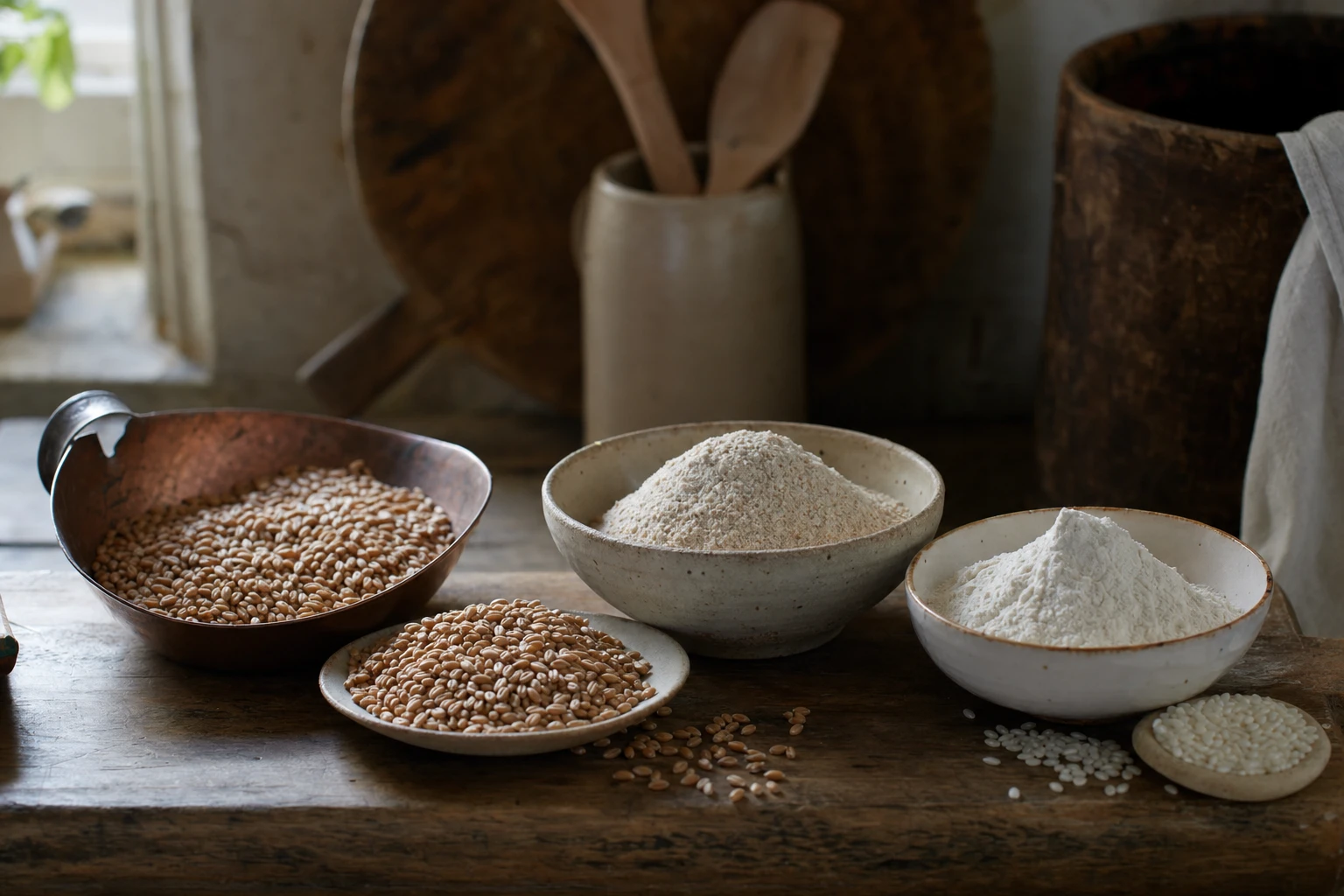
Your body runs on glucose and fat. Both are valid fuels. But the carbohydrates you're eating aren't whole carbohydrates. They're refined carbohydrates. Flour (not whole grain). Sugar. Juice. White rice. These are carbohydrates stripped of everything that slowed their absorption: the fibre, the micronutrients, the fat.
A whole grain carbohydrate comes packaged with fibre, minerals, and fat that slow its absorption and protect your metabolic health. A refined carbohydrate is just fast sugar in a different form. Your body doesn't distinguish much. The metabolic stress is the same.
The food industry prefers refined carbohydrates because they're cheap, they're shelf-stable, and they're addictive. Fibre is expensive and bulky. Whole grains don't store as long. So everything got refined. Bread became white bread. Rice became white rice. Oats became instant oats. Everything that slowed carbohydrate absorption was removed.
What remained was essentially sugar. Your body responds by spiking insulin. Your pancreas gets exhausted trying to manage the constant glucose surges. Eventually, your cells become resistant to insulin. You have type 2 diabetes.
It's not an accident. It's a direct result of eating refined carbohydrates chronically.
Get ancestral nutrition guides, free
Two short reads a week on traditional ways of eating, examined with modern evidence.
By signing up you agree to receive emails from us. No spam, unsubscribe anytime.
Where the money flows
Metabolic disease is the most profitable illness in modern medicine. You get diagnosed with type 2 diabetes, and suddenly you're on medications. Metformin. GLP-1 agonists. Insulin. You're on blood pressure medication. Cholesterol medication. You're seeing specialists. You're getting screening. The pharmaceutical industry makes hundreds of billions a year managing metabolic disease.
But nobody makes money if you don't get the disease in the first place. There's no profit in preventing metabolic disease. There's enormous profit in treating it.
The same food companies that profit from selling you ultra-processed food also fund the organisations that set nutritional policy. They fund the research that tells you their products are healthy. They fund the doctors and nutritionists who tell you to count calories and not worry about where those calories come from. They fund the gyms and fitness industry that tells you metabolic disease is a function of exercise, not food.
The machine is designed to make you sick and then sell you treatments for the sickness. That's not a conspiracy. It's capitalism meeting biology. And you're the product.
The timeline of dietary change
In the 1970s, seed oils represented perhaps 15 per cent of the fat consumed in Western diets. By 2020, they represented over 80 per cent. That's not coincidence. That's systematic industrial replacement of real fat with cheaper, longer-shelf-life seed oil.
In the same period, sugar consumption increased from roughly 50 kilograms per person per year to over 100. And that's just obvious sugar. When you add the hidden sugars in processed food, the number doubles.
Meanwhile, whole food consumption declined. The percentage of meals eaten at home fell from 90 per cent in 1970 to below 50 per cent in 2020. The percentage of home-cooked meals among those eaten at home fell even further.
This isn't personal failure. This is a system that's been systematically restructured to make you sick. The default has shifted from real food to processed food. The default has shifted from fat to seed oil. The default has shifted from occasional sugary treats to constant sugar throughout the day.
And metabolic disease followed predictably.







1 of 9
Daily blend
100,000+ thriving families4.9 on Trustpilot
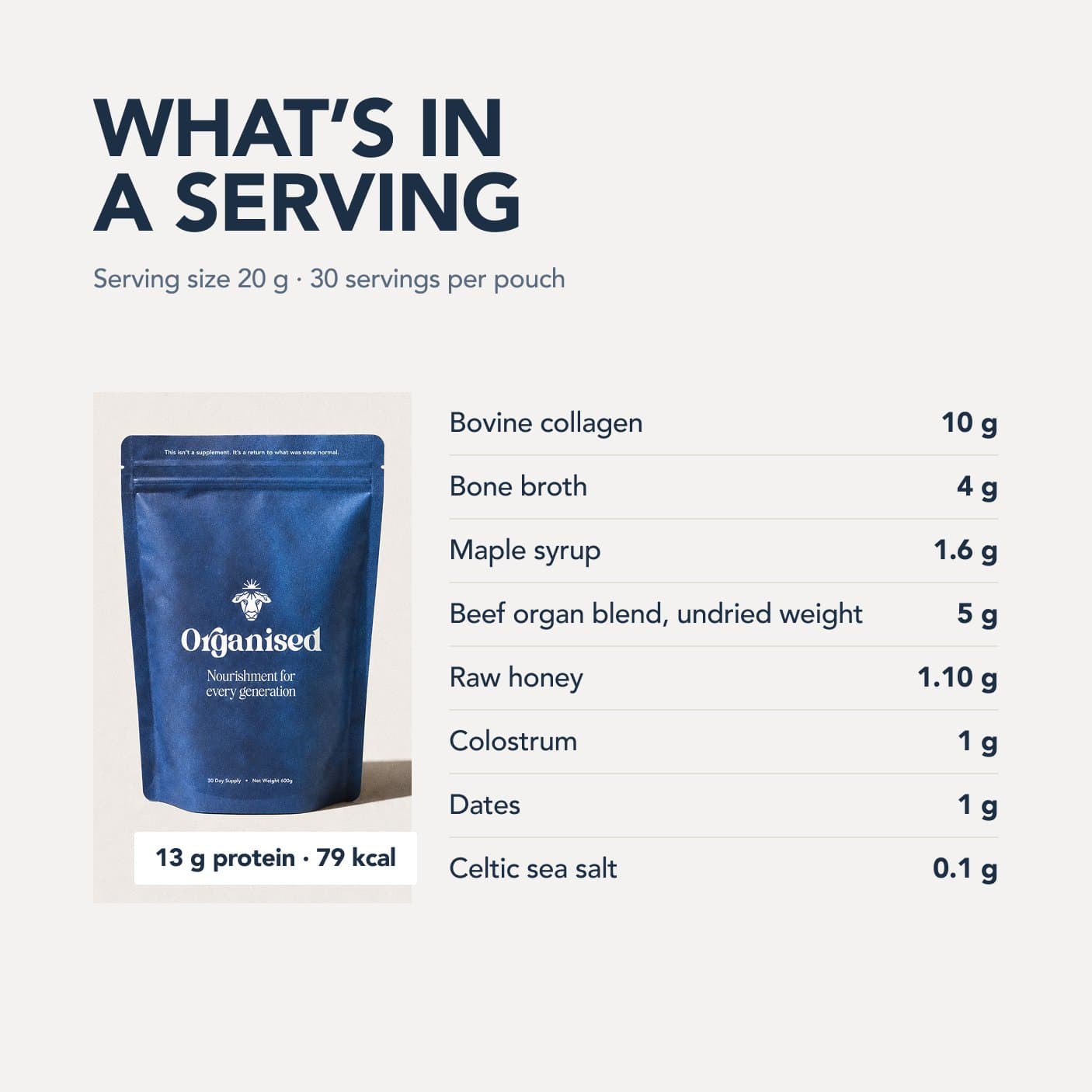
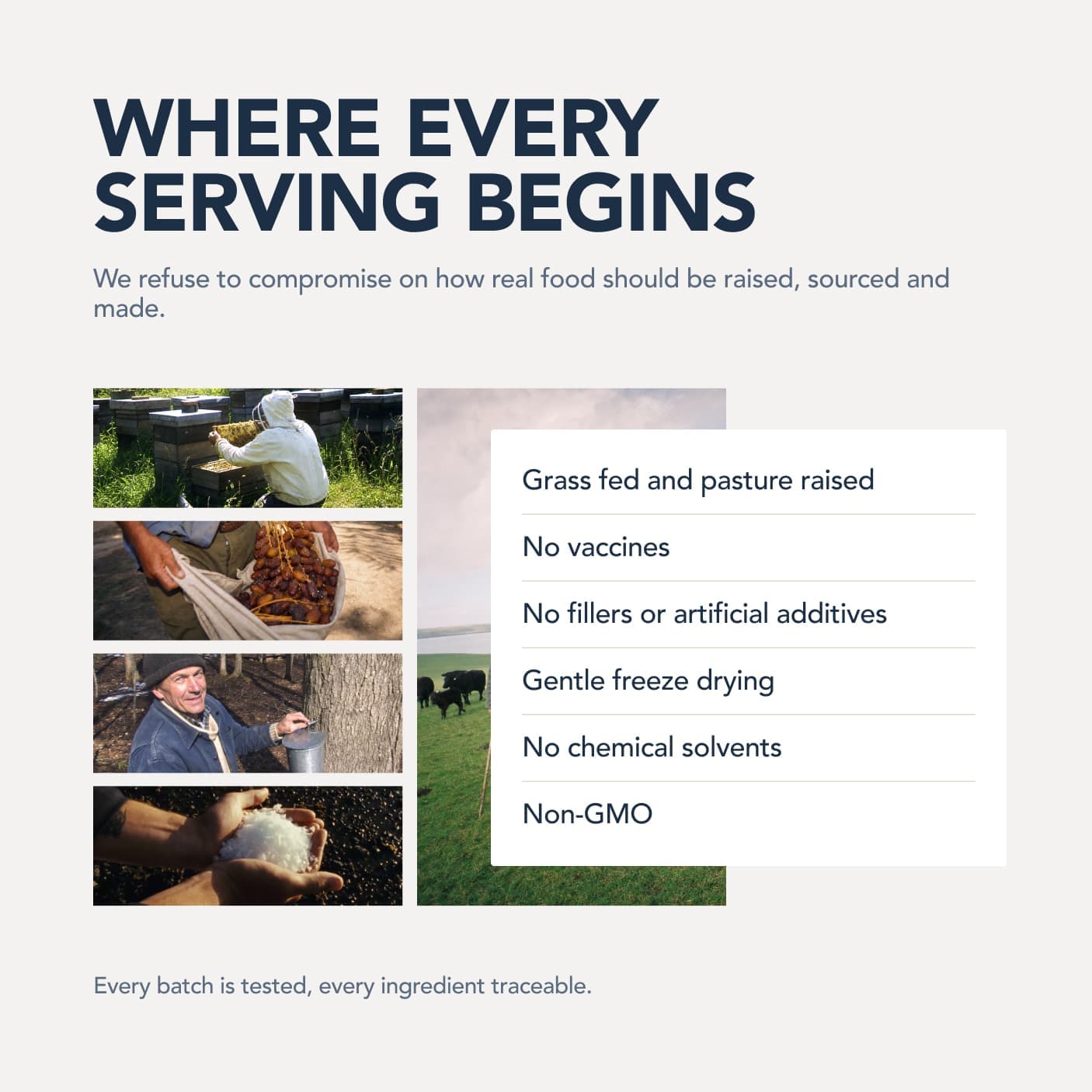
Eight real ingredients built around grass-fed beef organs, collagen and colostrum. Nothing synthetic added.
Free with your first order, worth £38. Plus £10 off the pouch with a subscription.



Free UK shipping · Made in England · 100 day money back guarantee on your first pouch · Skip, pause or cancel anytime
What whole food actually prevents
If you stopped eating seed oils and ultra-processed food and returned to eating real food, your metabolic health would transform. Not because you're eating fewer calories. Because you're eating food your body recognises and can actually metabolise.
Real food is slow to digest. It doesn't spike insulin. It's nutrient-dense, so your body gets satisfied and stops asking for more. It's satiating, so you naturally eat less without restriction. It supports healthy liver function, healthy fat storage, healthy inflammation markers.
Type 2 diabetes can be reversed with real food.4 Fatty liver disease can be healed. Weight normalises. Energy increases. Metabolic markers improve. Not through medication. Through food.
Your ancestors didn't have metabolic disease because they ate whole food. That's not luck. That's biochemistry. When you return to eating the way your body evolved to eat, your metabolic health returns. It's remarkably reliable.
Metabolic disease isn't inevitable. It's not a function of age or genetics or laziness. It's a direct result of what you're eating. Change the food, and the disease disappears.
The food industry knows this. That's why they're so invested in keeping you eating their products. A healthy population that eats real food isn't profitable. A sick population that needs constant management is infinitely profitable.
Your only rebellion is eating what your ancestors ate. Real food. Whole ingredients. No seed oils. No ultra-processed products. No continuous feeding. Rest, digest, and let your metabolism heal.
References
Every source below was checked on 27 August 2026. Each PubMed, PMC and DOI identifier was resolved against NCBI or Crossref, and what it opens is printed under the citation, so you can see the link goes where the citation says without leaving the page. Where a citation and its identifier disagreed, the citation was corrected to the record or the reference was deleted along with the sentence marker that pointed at it, and where the resolved paper turned out not to support the sentence, the sentence was cut back to what it does support. Borrowed authority is worse than none, because it looks like rigour.
- UK Parliament House of Commons Library. Obesity statistics. House of Commons Library SN03336.
- Blasbalg TL et al. Changes in consumption of omega-3 and omega-6 fatty acids in the United States during the 20th century. Am J Clin Nutr. PubMed PMID: 21367944.Checked 27 August 2026: PMID 21367944 opens Blasbalg TL, Hibbeln JR, Ramsden CE et al, Changes in consumption of omega-3 and omega-6 fatty acids in the United States during the 20th century. Am J Clin Nutr 2011;93(5):950-62. PubMed indexes it as: Comparative Study, Historical Article.
- Siri-Tarino PW et al. Meta-analysis of prospective cohort studies evaluating the association of saturated fat with cardiovascular disease. Am J Clin Nutr. PubMed PMID: 20071648.Checked 27 August 2026: PMID 20071648 opens Siri-Tarino PW, Sun Q, Hu FB et al, Meta-analysis of prospective cohort studies evaluating the association of saturated fat with cardiovascular disease. Am J Clin Nutr 2010;91(3):535-46. PubMed indexes it as: Meta-Analysis.
- Lean ME et al. Primary care-led weight management for remission of type 2 diabetes (DiRECT): an open-label, cluster-randomised trial. Lancet. PubMed PMID: 29221645.Checked 27 August 2026: PMID 29221645 opens Lean ME, Leslie WS, Barnes AC et al, Primary care-led weight management for remission of type 2 diabetes (DiRECT): an open-label, cluster-randomised trial. Lancet 2018;391(10120):541-551. PubMed indexes it as: Randomized Controlled Trial.
Who wrote and reviewed this guide
Niall Kiddle
Author · Founder, Organised
Niall is the founder of Organised. He started the company in 2024 after fixing his own health the slow way: in 2022 he swapped a cupboard of synthetic supplements for real food, raw milk, organ meats, bone broth and honey, and felt the difference within months.
Areas of expertise: Ancestral nutrition, Organ meats, Whole-food supplementation, Gut health, Regenerative sourcing
Read Niall's full profile
Pedro Rodrigues
Reviewer · Agronomist (farming and sourcing only)
Pedro is the agronomist Organised works with on farming and sourcing. His job on the guides is to keep the science honest: he reviews what we publish about soil health, regenerative agriculture, grazing and the way food is actually produced.
Areas of expertise: Regenerative agriculture, Agronomy, Soil health, Grass-fed farming, Food sourcing
Reviewed this guide on
Read Pedro's full profileMore on modern food
View allBrowse the guides library
All guidesKeep reading

Ancestral
Seed Oils: A Fair and Evidence-Based Assessment
A fair, evidence-based look at seed oils and health: omega-6 ratios, oxidation, and why a growing body of research suggests a cautious approach is sensible.

Ancestral
What Your Irish Grandmother Knew About Nutrition
Discover the nutrient-dense wisdom of traditional Irish foodways. From raw dairy to root vegetables, what your Irish grandmother understood about real food.

Ancestral
How Fat Became the Enemy (And Why That Was Wrong)
The true history of the fat demonisation myth. How Ancel Keys, sugar industry funding, and flawed science created decades of dietary harm.
Real food, made effortless
Bring it into my routineA few ways to use it
All recipes
Raw Milk Ice Cream with Organised
Make raw milk ice cream at home with Organised for a seasonal, nutrient-dense treat. Three simple flavours to try whenever the craving strikes.

Collagen-Rich Beef Stew: Slow-Cooked Nourishment
Beef stew that delivers collagen from connective tissue and bone broth. Winter comfort food that actually nourishes. Simple slow cooker recipe.

Whole Food Snacks for Busy Days
Practical whole food snacks that travel well and sustain energy. No refined carbs, no seed oils. Real food options for when you're busy.


 Join over 100,000+ members
Build a better food system with us
The Organised community is thousands of people choosing real food and backing the farmers who grow it, all of us trying to leave the world a little better than we found it. If that is what you care about too, you belong here.