Bovine Collagen vs Marine Collagen: Which Is Better?
The collagen supplement aisle is crowded. You'll see two main options: bovine (from beef) and marine (from fish). Both claim superiority. One is actually the better choice for most people.

By Niall Kiddle, Founder, Organised

Reviewed by Pedro Rodrigues, Agronomist (farming and sourcing only) ·
6 min read · Published · Updated · 5 cited sources
Makers of the Organised Daily blend, a grass-fed beef organ supplement from regenerative UK farms
The type I and type III difference
This is where bovine and marine collagen diverge fundamentally.
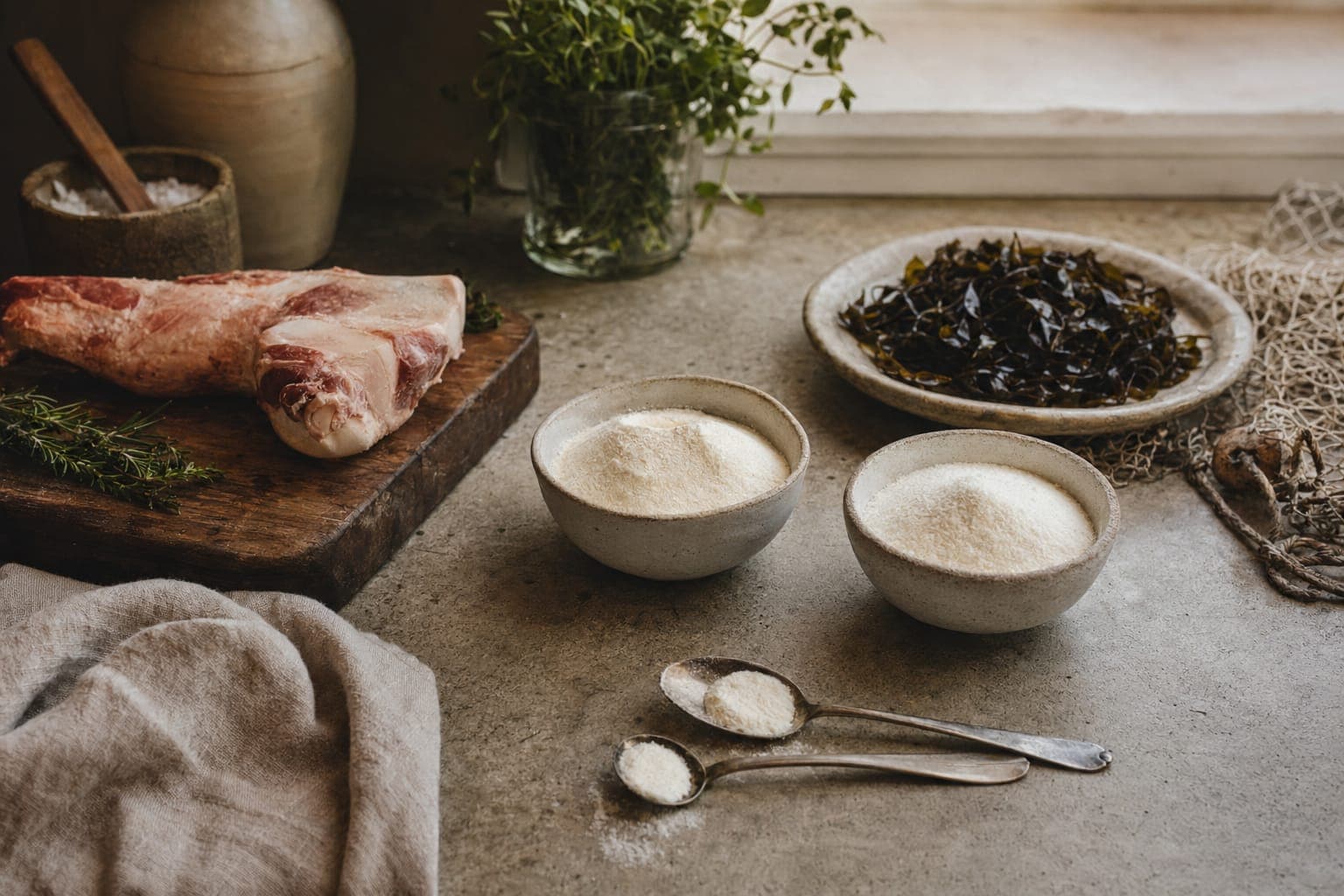
Bovine collagen contains primarily type I (around 85-90%) and type III (around 10-15%) collagen.1 This combination is ideal because type I provides structural strength and firmness, whilst type III provides elasticity. This is why bovine collagen is marketed as a complete collagen solution: it addresses skin, joints, gut health, and connective tissue integrity simultaneously.
Marine collagen is predominantly type I (around 90-95%) with minimal type III. This makes it optimised for skin-specific outcomes: firmness and hydration.2 It's less useful for overall connective tissue health or gut barrier integrity.
If you want one collagen supplement that works for skin, joints, and gut, bovine wins. If you're singularly focused on skin, marine is slightly optimised.
For most people, the broader spectrum of bovine collagen is more valuable than the single-target focus of marine.
Absorption and bioavailability
Both bovine and marine collagen are hydrolysed (broken down into small peptides), so absorption is equally efficient for both. Peptide size is similar, and your gut absorbs both equally well.3
The real difference is in bioavailability context. Grass-fed bovine collagen comes packaged with micronutrients (vitamin A, B vitamins, zinc, copper) that support collagen synthesis. Marine collagen has minimal micronutrient content. If you're supplementing collagen whilst deficient in vitamin C or copper, grass-fed bovine is more likely to produce results because it comes with supporting nutrients.
Marine collagen is sometimes marketed as being absorbed faster, but the evidence for this is thin. Hydrolysed collagen, whether from fish or cow, is absorbed quickly. The speed difference, if it exists, is negligible.
Sustainability and sourcing
This is where bovine wins decisively.
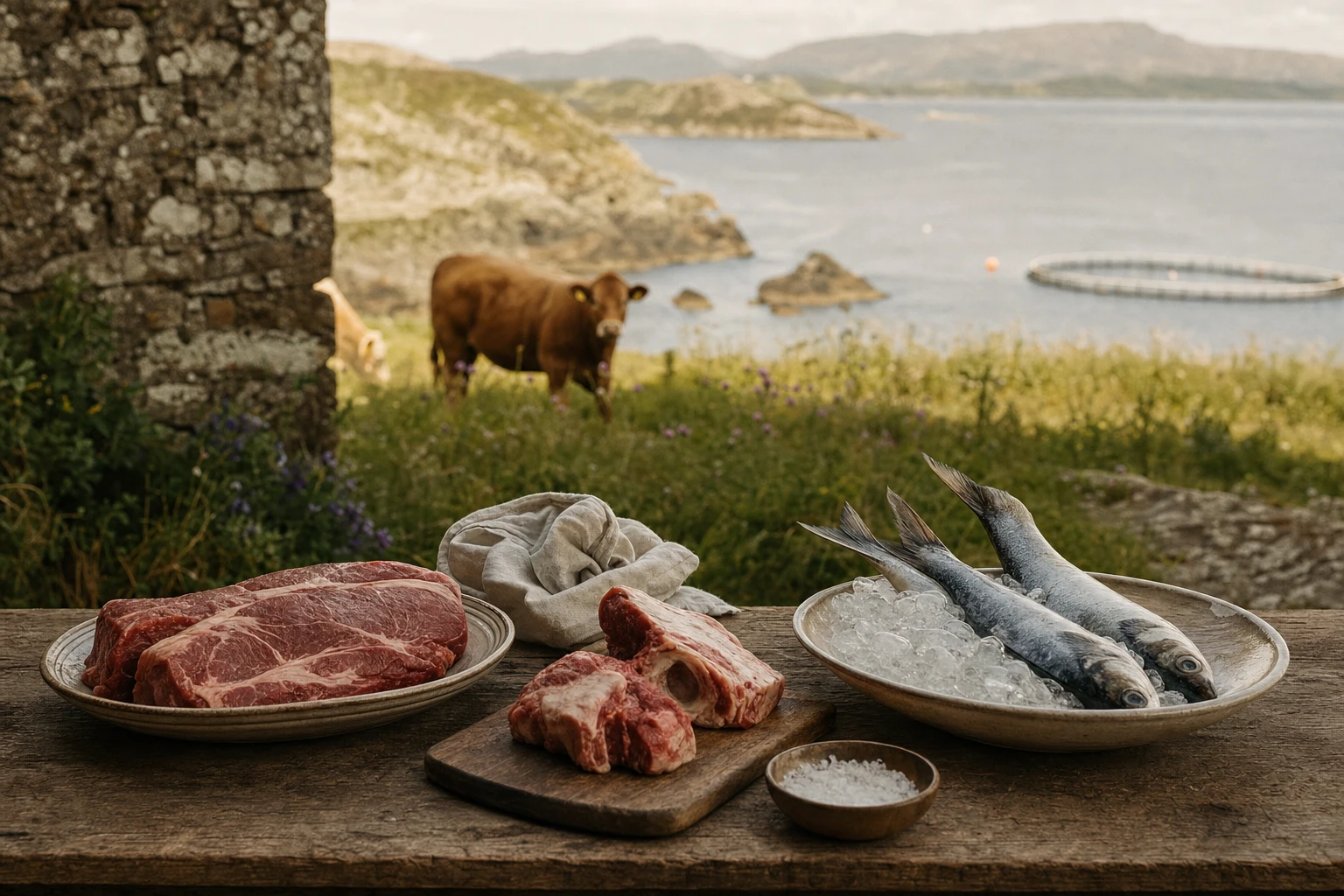
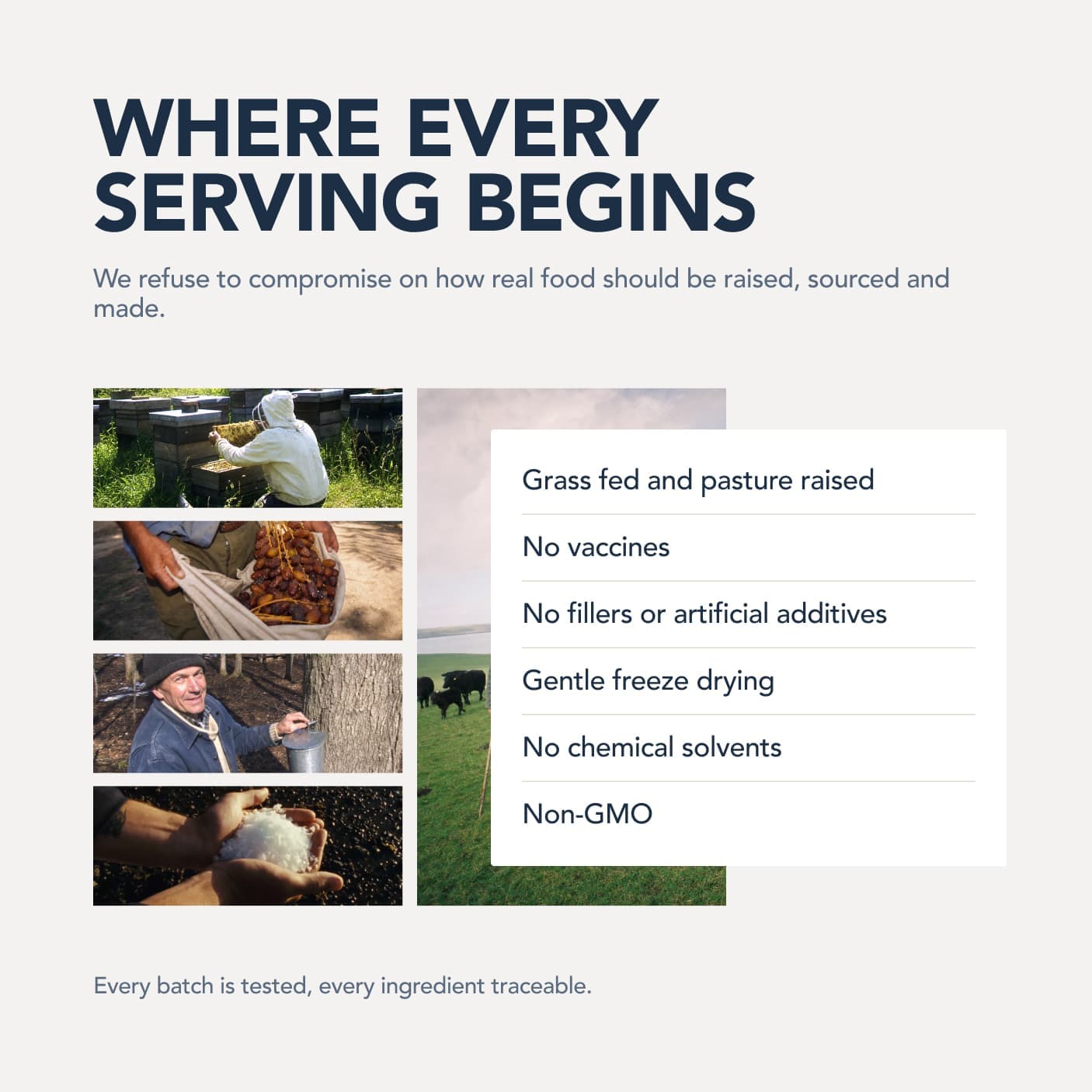
Grass-fed beef is a rotational agriculture system that can improve soil health, sequester carbon, and support biodiversity. Grass-fed farms operated well are genuinely sustainable. And they're increasingly common in the UK and North America.
Fish farming (where most marine collagen comes from) is problematic. Farm-raised fish are kept in high-density, often disease-prone conditions. They're fed pellets made from other fish, creating a net loss of wild fish biomass. Escapes contaminate wild populations. Antibiotic use is common. And the water quality issues in fish farms are significant.
Wild-caught fish collagen is theoretically more sustainable, but it's a tiny fraction of the market. Most marine collagen comes from farmed fish, making it a sustainability concern.
If environmental impact matters to you, grass-fed bovine is the clear choice.

Cost and value
Grass-fed bovine collagen is typically cheaper than marine collagen. You're looking at roughly £15-25 per kilogram for quality bovine collagen, versus £25-40+ per kilogram for marine.
Given that bovine has broader amino acid diversity and comes from a more sustainable source, it's better value across the board. Marine commands a premium primarily due to marketing.
The amino acid composition detail
Both bovine and marine collagen are hydrolysed, meaning they're broken down into their component amino acids and small peptides. The primary amino acids in both are glycine (roughly 30%), proline (roughly 15%), and hydroxyproline (roughly 10%), with smaller amounts of alanine, arginine, and others.4
The amino acid profile is nearly identical between bovine and marine collagen. Both are rich in glycine, which is the most abundant amino acid in collagen and is essential for collagen triple helix formation.4 Both provide proline and hydroxyproline, which stabilise the collagen structure.
The real difference isn't in amino acids; it's in the supporting micronutrients that come alongside the collagen and the collagen types provided. Bovine collagen, coming from animals that were nourished more completely, retains more of the micronutrient ecosystem. Marine collagen has minimal supporting micronutrients.
Collagen types and tissue specificity
Type I collagen provides tensile strength and structural integrity. It's found in skin, tendons, ligaments, bones, and blood vessels. Type III collagen provides elasticity and flexibility. It's found in skin, blood vessels, and organs.5
Bovine collagen provides both, making it a complete collagen supplement. If you want skin firmness (type I), joint strength (type I), and skin elasticity (type III), bovine covers all bases. Marine collagen, being almost entirely type I, is optimised for firmness but lacks elasticity support.
For gut health (where you want elasticity as much as strength), bovine is superior. For joint health (where you want both strength and flexibility), bovine is superior. For systemic connective tissue support, bovine wins on breadth.
Get honest comparisons, free
Two short reads a week cutting through supplement marketing with what the evidence says.
By signing up you agree to receive emails from us. No spam, unsubscribe anytime.
Which one to choose
Choose bovine collagen if:
- You want one supplement that covers skin, joints, gut, and overall connective tissue health
- You care about sustainability and environmental impact
- You want good value for money
- You want the amino acid diversity and micronutrient content that supports collagen synthesis
- You're focusing on overall health, not just aesthetic skin outcomes
- You have any digestive sensitivity or want gut barrier support
Choose marine collagen if:
- You're singularly focused on skin firmness and anti-ageing aesthetics
- You've already confirmed you're getting adequate micronutrients from a comprehensive diet or multivitamin
- You have a beef allergy or bovine intolerance
- You're vegetarian/pescatarian and can't consume beef products
For 80% of people, grass-fed bovine collagen is the better choice: broader benefits, better sustainability, better value, and supporting micronutrient content.
If you're already taking a comprehensive multivitamin and you're only concerned with skin, marine is a valid option. But if you want one supplement that moves the needle on skin, joints, gut, and recovery, bovine is the obvious choice. And bovine is cheaper, making the decision easier.
Sustainability and ethical sourcing
Beyond nutrition, how your collagen is sourced matters.
Grass-fed bovine collagen comes from cattle that have lived on pasture, eating their natural diet of grass. These cattle typically live longer, less stressful lives than grain-fed cattle. The collagen is extracted from hides and bones, parts of the animal that would otherwise be waste. Using them represents true nose-to-tail eating.
Marine collagen is extracted from fish skin and scales. The sustainability question is complex: some marine collagen sources (wild-caught fish processing waste) are genuinely sustainable and use byproducts. Others come from fish farming (which has serious environmental impacts) or overfished species.
When choosing marine collagen, verify the source. Byproduct collagen from sustainable fisheries is ethical. Farmed fish or overfished species is not.
The verdict: grass-fed bovine wins
For most people, grass-fed bovine collagen peptides are the best choice.
Cost, absorption, and results comparison
Grass-fed bovine collagen peptides: Mid-range cost (roughly £20-40 per month for effective dosing). Excellent bioavailability. Provides both Type I and III. Results in skin, hair, nails, and joint health within 8-12 weeks. Aligns with ancestral nutrition philosophy.
Marine collagen peptides: Slightly higher cost (roughly £25-50 per month). Bioavailability similar to bovine. Provides primarily Type I (limited Type III). Results mainly in skin (less effective for joints and bones). Sustainability varies.
For most people, grass-fed bovine collagen is the optimal choice. It's complete, affordable, effective, and philosophically aligned with whole-food nutrition.


1 of 9
Daily blend
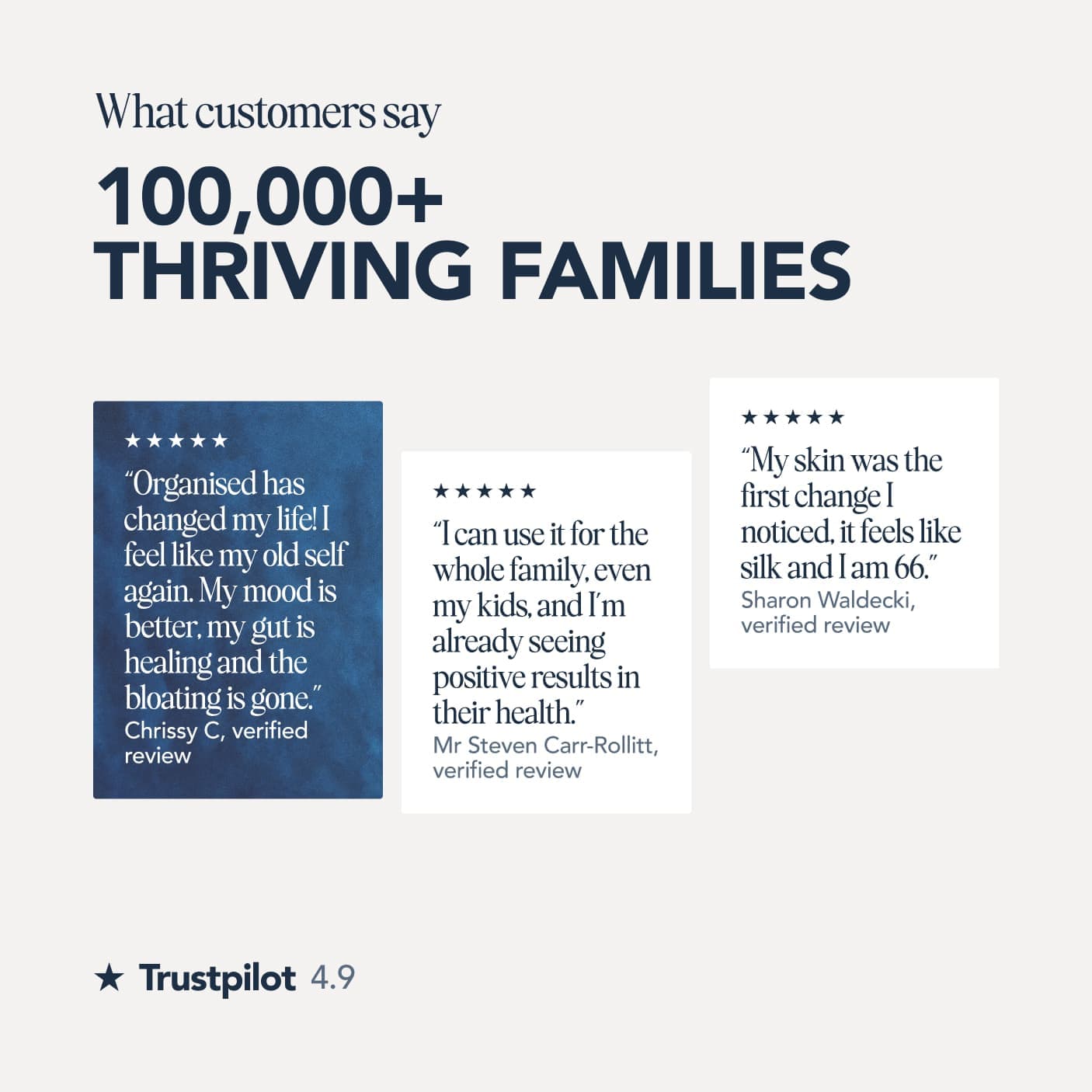
100,000+ thriving families4.9 on Trustpilot
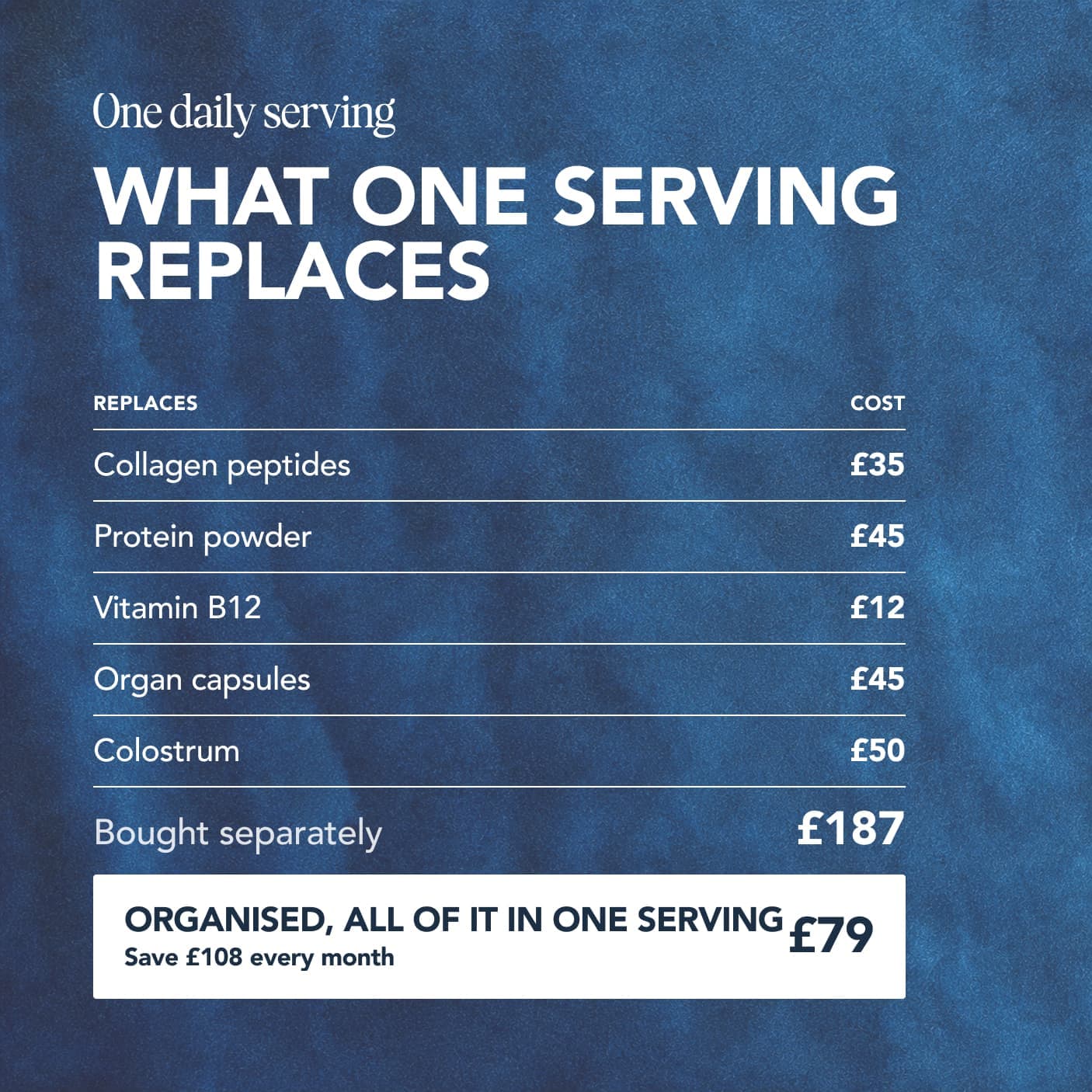
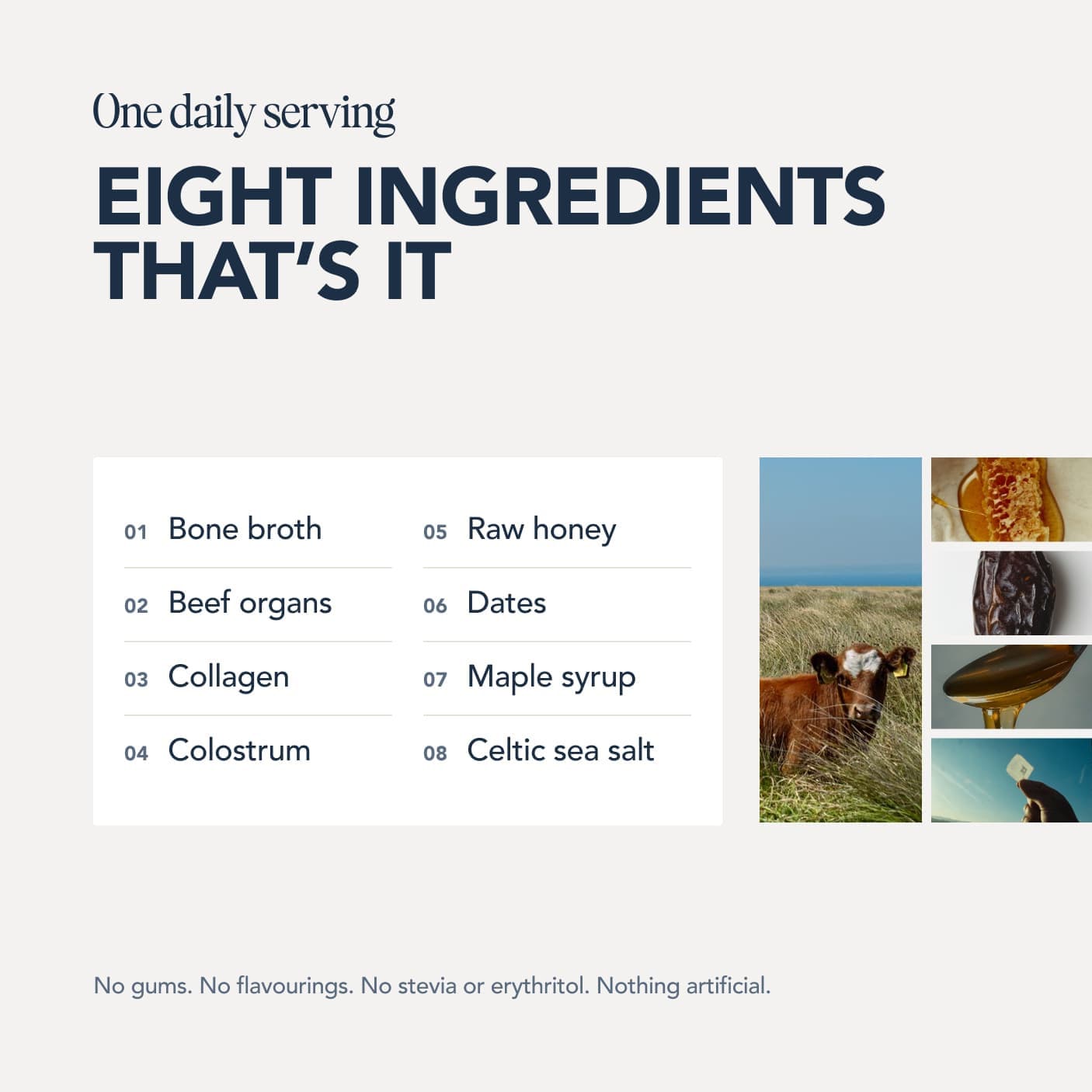
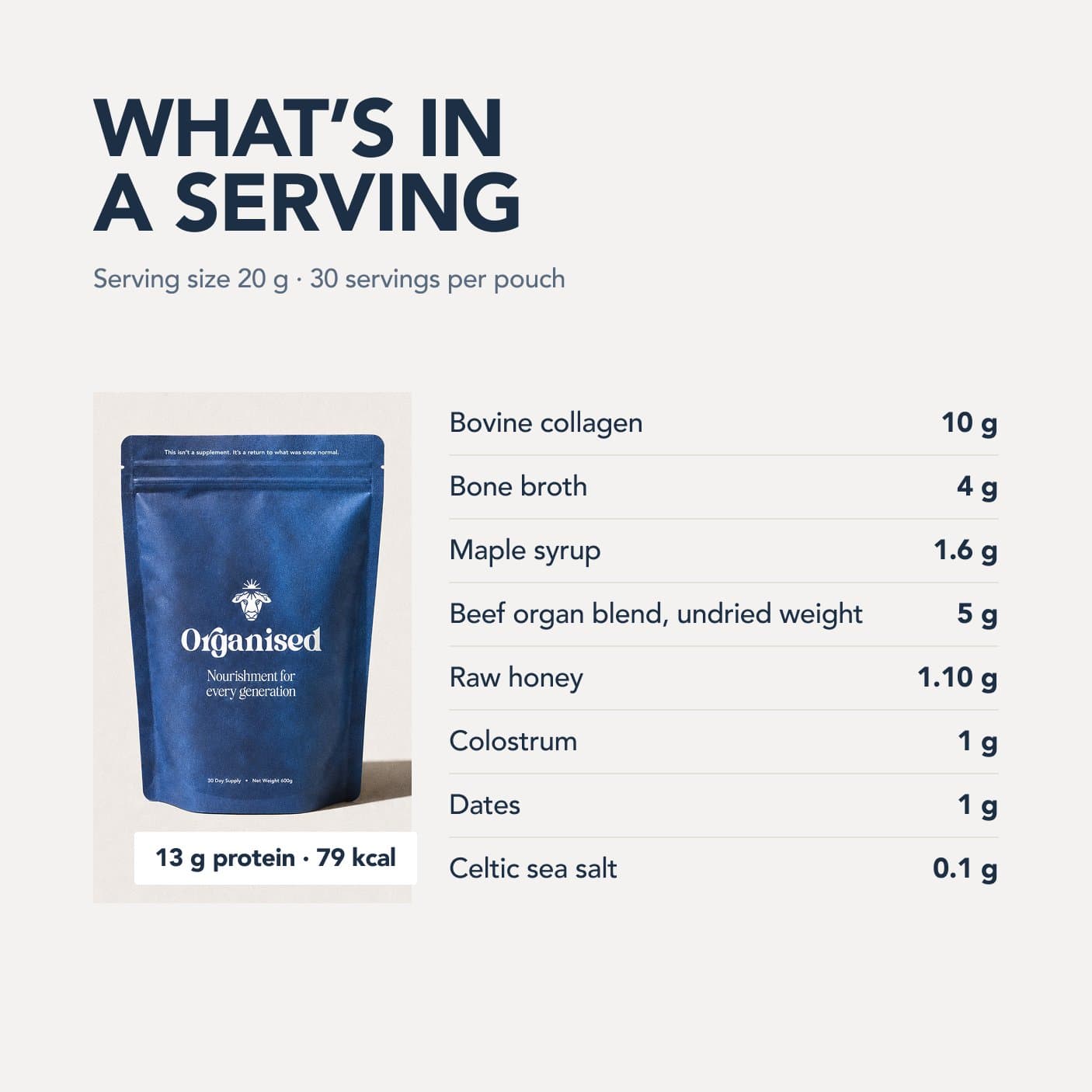
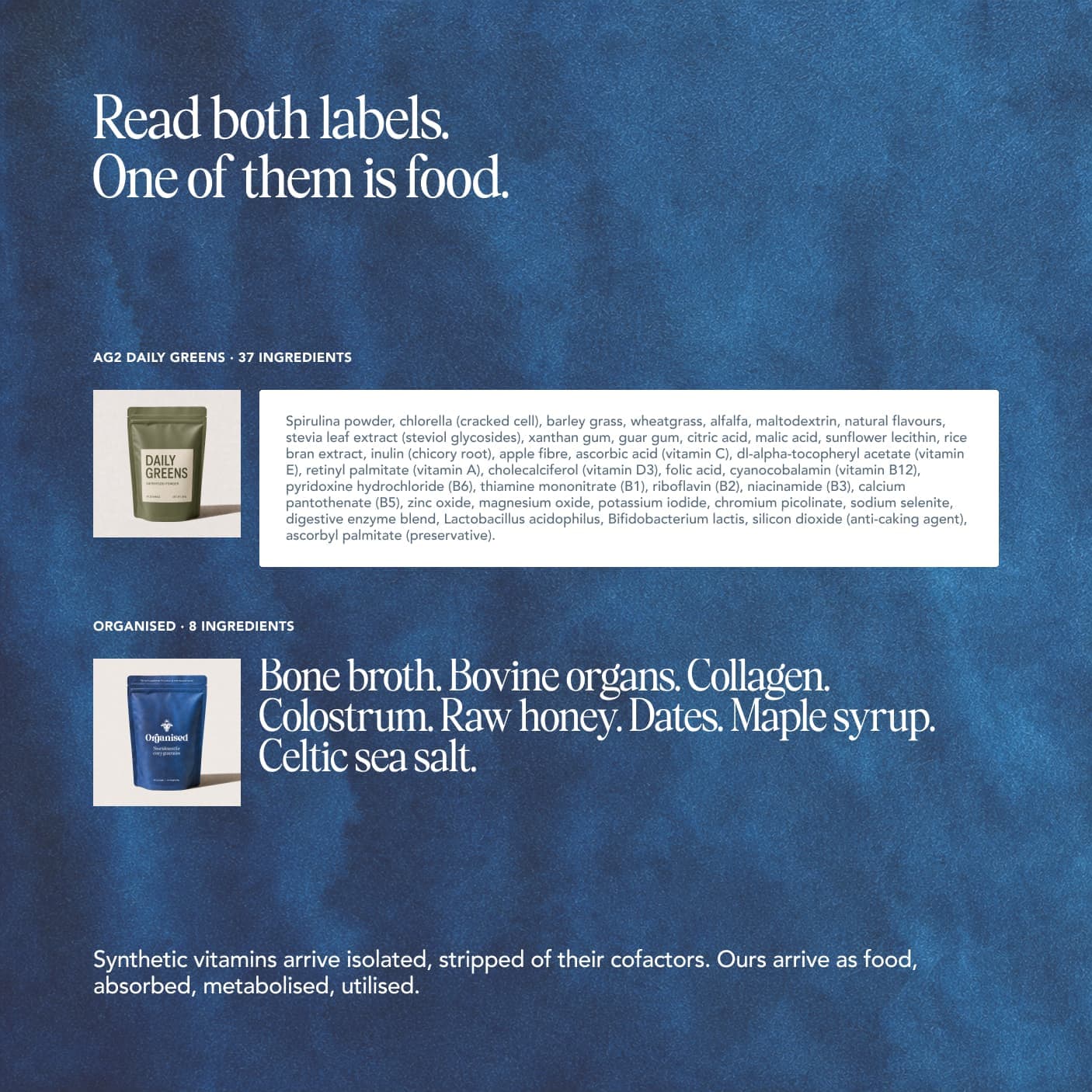
Eight real ingredients built around grass-fed beef organs, collagen and colostrum. Nothing synthetic added.
Free with your first order, worth £38. Plus £10 off the pouch with a subscription.
Free UK shipping · Made in England · 100 day money back guarantee on your first pouch · Skip, pause or cancel anytime
Making the decision
Grass-fed bovine collagen peptides offer complete amino acid profiles, excellent bioavailability, and align with ancestral nutrition principles. It's the clear winner for most purposes.
The bottom line
Bovine collagen wins on spectrum, sustainability, cost, and supporting nutrients. Marine collagen is skin-specific, expensive, and sourced from questionable aquaculture practices. Unless you have a specific bovine intolerance or are vegetarian, grass-fed bovine is the clear choice.
Start with grass-fed bovine collagen peptides. You'll get the same skin benefits as marine but with broader systemic support, better environmental credentials, and lower cost. And you'll likely see improvements in joint health, gut integrity, and overall connective tissue function alongside the skin benefits.
If budget is a concern, grass-fed bovine collagen remains affordable at roughly £30-40 per month for therapeutic dosing. This is less than most skincare routines and more effective than any topical cream.References
Every source below was checked on 27 August 2026. Each PubMed, PMC and DOI identifier was resolved against NCBI or Crossref, and what it opens is printed under the citation, so you can see the link goes where the citation says without leaving the page. Where a citation and its identifier disagreed, the citation was corrected to the record or the reference was deleted along with the sentence marker that pointed at it, and where the resolved paper turned out not to support the sentence, the sentence was cut back to what it does support. Borrowed authority is worse than none, because it looks like rigour.
- Ferraro V et al. Collagen type I from bovine bone: extraction, self-assembly and characterisation. PubMed PMID: 28038914.Checked 27 August 2026: PMID 28038914 opens Ferraro V, Gaillard-Martinie B, Sayd T et al, Collagen type I from bovine bone. Effect of animal age, bone anatomy and drying methodology on extraction yield, self-assembly, thermal behaviour and electrokinetic potential. Int J Biol Macromol 2017;97:55-66.
- Coppola D et al. Marine Collagen from Alternative and Sustainable Sources: Extraction, Processing and Applications. PMC7230273.Checked 27 August 2026: PMC7230273 opens Coppola D, Oliviero M, Vitale GA et al, Marine Collagen from Alternative and Sustainable Sources: Extraction, Processing and Applications. Mar Drugs 2020;18(4). PubMed indexes it as: Review.The authors' own declaration, from the record: The authors declare no conflict of interest.
- Subhan F et al. Marine Collagen: An Emerging Player in Biomedical applications. PMC4519503.Checked 27 August 2026: PMC4519503 opens Subhan F, Ikram M, Shehzad A et al, Marine Collagen: An Emerging Player in Biomedical applications. J Food Sci Technol 2015;52(8):4703-7. PubMed indexes it as: Review.
- Li P, Wu G. Roles of dietary glycine, proline, and hydroxyproline in collagen synthesis and animal growth. Amino Acids. PubMed PMID: 28929384.Checked 27 August 2026: PMID 28929384 opens Li P, Wu G, Roles of dietary glycine, proline, and hydroxyproline in collagen synthesis and animal growth. Amino Acids 2018;50(1):29-38. PubMed indexes it as: Review.
- Shoulders MD, Raines RT. Biochemistry, Collagen Synthesis. StatPearls. NCBI Bookshelf NBK507709.
Who wrote and reviewed this guide
Niall Kiddle
Author · Founder, Organised
Niall is the founder of Organised. He started the company in 2024 after fixing his own health the slow way: in 2022 he swapped a cupboard of synthetic supplements for real food, raw milk, organ meats, bone broth and honey, and felt the difference within months.
Areas of expertise: Ancestral nutrition, Organ meats, Whole-food supplementation, Gut health, Regenerative sourcing
Read Niall's full profile
Pedro Rodrigues
Reviewer · Agronomist (farming and sourcing only)
Pedro is the agronomist Organised works with on farming and sourcing. His job on the guides is to keep the science honest: he reviews what we publish about soil health, regenerative agriculture, grazing and the way food is actually produced.
Areas of expertise: Regenerative agriculture, Agronomy, Soil health, Grass-fed farming, Food sourcing
Reviewed this guide on
Read Pedro's full profileBrowse the guides library
All guidesKeep reading
Ingredients
Collagen Peptides: A Complete Guide to Types, Sources and Benefits
Complete guide to collagen peptides. What they are, why type I and III matter, grass-fed vs marine, and the research behind them.
Comparisons
Retinol from Food vs Retinol in Supplements: Bioavailability Compared
Preformed retinol from liver is nearly 100% bioavailable. Supplements vary widely. Here's what the research actually shows about absorption and safety.
Comparisons
Colostrum vs Bone Broth for Gut Health
Two gut-healing powerhouses work differently. Colostrum seals the barrier with growth factors. Broth feeds it with amino acids. Which do you actually need?
Real food, made effortless
Try the blendA few ways to use it
All recipes
Raw Milk Ice Cream with Organised
Make raw milk ice cream at home with Organised for a seasonal, nutrient-dense treat. Three simple flavours to try whenever the craving strikes.

Organised Protein Pancakes: A Weekend Favourite
A high-protein pancake recipe using beef protein, eggs, and raw milk. Cooked in cast iron, naturally sweetened with banana and honey. Real food breakfast.

Bone Broth from Scratch: A Step-by-Step Guide
Step-by-step guide to making bone broth at home. Stovetop, slow cooker, and Instant Pot methods. Rich in collagen and gut-healing minerals.


 Join over 100,000+ members
Build a better food system with us
The Organised community is thousands of people choosing real food and backing the farmers who grow it, all of us trying to leave the world a little better than we found it. If that is what you care about too, you belong here.